

Your Guide to the Best Dinnerware for Everyday Use
Donna MaloneWhen you're hunting for the best dinnerware for everyday use, you'll quickly find yourself looking at materials like porcelain, stoneware, and bone china. They're the go-to choices for a reason. The sweet spot is finding a set that can survive the microwave, resist chipping, and still look great on your table, whether it’s for a quick breakfast or a slow weekend dinner.
Choosing Your Perfect Everyday Dinnerware
Let’s be honest, picking out dinnerware can feel like a huge decision. You’re trying to find that perfect balance between something that looks beautiful and something that can handle the reality of daily life. This guide is here to walk you through it, so you can make a choice you feel great about.
The best everyday dinnerware has to be a true workhorse. It needs to stand up to everything from cereal in the morning to a big family meal, all while making those simple moments feel a bit more intentional. This isn't just about buying plates and bowls; it's about choosing pieces that will become a part of your daily routine.
Balancing Style and Practicality
Your dinnerware says a lot about your home's personality. It should feel like you, whether your taste is clean and minimalist, warm and rustic, or sleek and modern. Before you fall in love with a look, think about how you actually live:
- Busy Households: If you've got a full house, durability is non-negotiable. Look for chip-resistant options that can handle countless trips through the dishwasher without a fuss.
- Entertaining Often: Maybe you want a set that’s simple enough for a Tuesday night taco dinner but can be dressed up when friends come over. Versatility is your best friend.
- Small Spaces: Is your cabinet space limited? Stackability is a game-changer. Make sure the plates and bowls you choose nest together nicely without turning into a wobbly tower.
It’s clear that people are no longer willing to compromise on their tableware. The market has exploded with high-quality options because we're all looking for that sweet spot where good looks meet solid performance. In fact, the global tableware market was valued at a massive USD 42.52 billion in 2019 and is only expected to climb. It's a trend driven by materials like ceramic, which offers that perfect blend of style and value. You can dive deeper into the growing tableware market trends on Grand View Research if you're curious.
The best everyday dinnerware doesn’t force you to choose between beautiful design and practical function. It seamlessly blends both, making every meal an enjoyable experience without adding cleanup stress.
At the end of the day, the goal is to find a set that truly fits your life. We're going to break down all the important stuff—from how different materials hold up to care instructions and styling tips—so you can find a collection you'll be happy to use every single day. Quality dinnerware, like the curated collections from Fluent Trends, is designed to be both a workhorse and a thing of beauty, making it a smart investment for your home.
Comparing the Most Popular Dinnerware Materials
The material you choose for your dinnerware is its DNA. It dictates everything from how a plate feels in your hand to how well it holds up after years of family dinners. Choosing the right one isn't about finding a single "best" option—it's about finding the material that clicks with your lifestyle.
A bustling home with kids might need the near-indestructible nature of melamine, while someone who savors quiet meals might prefer the refined elegance of bone china.
To figure out what’s best for you, we need to look beyond the labels. Let's dig into the big four—porcelain, stoneware, bone china, and melamine—and see how they actually perform day in and day out. This will give you a real-world feel for their strengths, weaknesses, and the little trade-offs that come with each.
This simple decision tree can help you visualize which material aligns with your priorities, whether you're focused on practicality, beauty, or a bit of both.
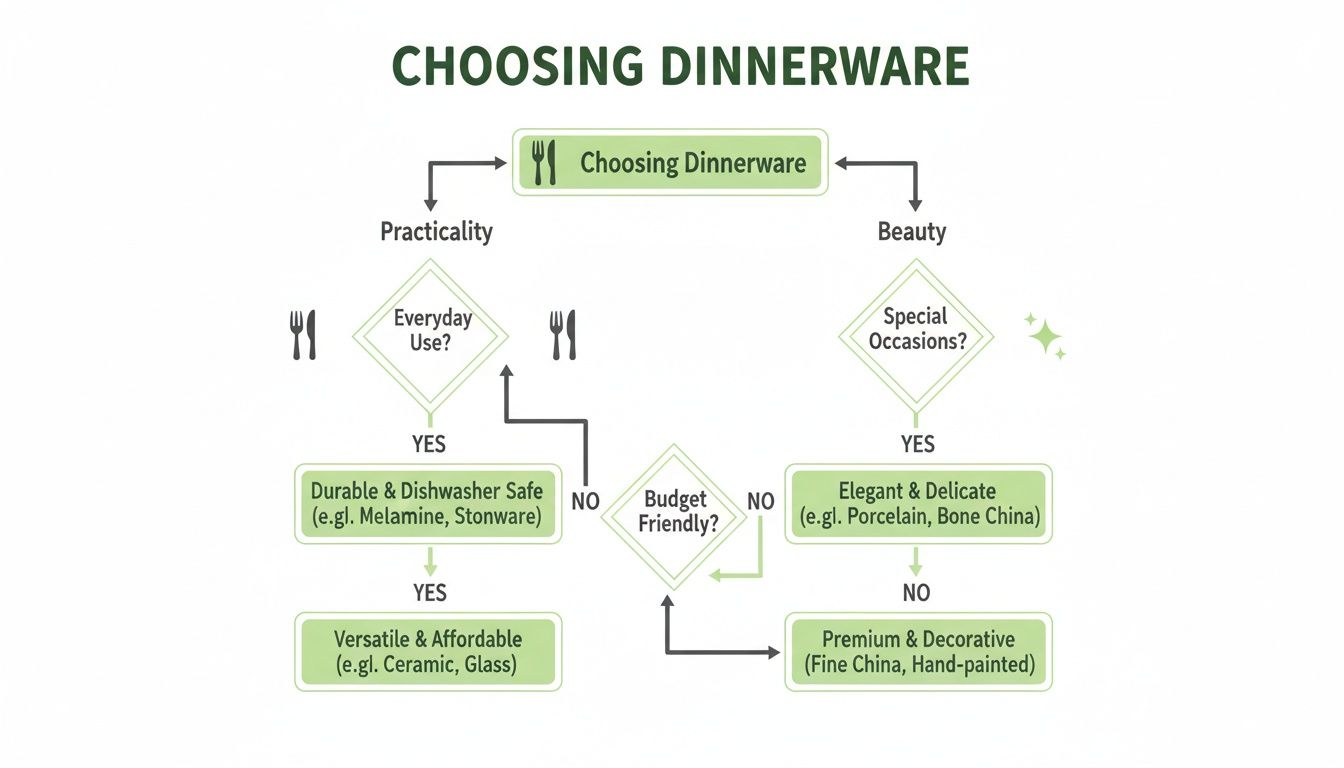
As the chart shows, the perfect material often comes down to a choice between rugged durability for a busy life and a more refined feel for considered dining.
Everyday Dinnerware Material Showdown
To make things even clearer, here’s a quick-glance comparison of the most popular materials. Think of this as your cheat sheet for deciding which one best suits your daily needs, from durability to cost.
| Material | Key Benefit | Best For | Care Level | Price Point |
|---|---|---|---|---|
| Porcelain | Elegant & Durable | Everyday meals and hosting | Low (Dishwasher safe) | $$ - $$$ |
| Stoneware | Rustic & Hearty | Casual dining, cozy kitchens | Low-Medium (Check glaze) | $$ - $$$ |
| Bone China | Surprisingly Strong & Lightweight | A touch of daily luxury | Low (Dishwasher safe) | $$$ - $$$$ |
| Melamine | Nearly Unbreakable | Families with kids, outdoor use | Low (Top-rack safe) | $ - $$ |
Each material brings something unique to the table. Now, let’s get into the details of what makes each one tick.
The Elegant Workhorse: Porcelain
Porcelain is what most people picture when they think of classic, high-quality dinnerware. It’s the sophisticated older sibling in the ceramics family, fired at scorching-hot temperatures to become non-porous, incredibly durable, and brilliantly white.
This intense process creates a material that’s both beautiful and tough enough to handle the daily grind. It's thin and light, yet surprisingly resistant to chipping. That unique combination makes it a go-to for anyone who wants a refined look without tiptoeing around their plates. It’s almost always microwave, dishwasher, and even oven-safe, making it a true all-rounder.
Its enduring popularity is no secret. The global porcelain tableware market was valued at USD 24.8 billion in 2024, a testament to its blend of beauty and function. Plus, modern formulas have boosted its break resistance by up to 50% compared to older, more fragile ceramics.
The Rustic Champion: Stoneware
If porcelain is sleek and city-chic, stoneware is its earthy, warm-hearted cousin. Made from a special clay fired at high heat, it’s thicker, heavier, and often has a beautiful speckled finish. This gives it a rustic, handcrafted charm that’s perfect for casual meals and cozy get-togethers.
Stoneware is a beast when it comes to durability and heat retention—that’s why so many baking dishes are made from it. The weight feels solid and reassuring in your hands.
The only catch? It's a bit more porous than porcelain, so it can be more prone to chipping if you're not careful. The key is to make sure it has a high-quality glaze, which acts as a protective shield. Want to go deeper? We have a complete guide comparing stoneware vs. porcelain dinnerware.
The Surprising Strength of Bone China
Don’t let its delicate, almost translucent look fool you. Bone china is the strongest and most chip-resistant of all ceramic dinnerware. The secret ingredient is actual bone ash, which is mixed with traditional ceramic materials to create something remarkably thin, lightweight, and tough as nails.
Bone china is the peak of dinnerware engineering. It combines the feather-light elegance of fine china with durability that often surpasses even thick, heavy stoneware. It's the ultimate "have your cake and eat it too" material.
Once reserved for formal dining, modern bone china is built for real life. It’s typically dishwasher and microwave safe, so you can enjoy a little bit of luxury with every meal without any extra fuss. The higher price tag simply reflects its complex production and superior performance.
The Unbreakable Hero: Melamine
For homes with young kids, patio parties, or anyone who’s just a bit clumsy, melamine is the undisputed champion. It’s a high-quality, BPA-free plastic that is virtually impossible to shatter. Modern designs are so good you often have to pick it up to realize it’s not ceramic.
Here’s why people love it:
- Nearly Indestructible: It won't chip, crack, or shatter when dropped. Seriously.
- Lightweight: Easy for kids to handle and a breeze to carry outdoors.
- Stylish Designs: Comes in a massive range of colors, patterns, and styles.
The one major trade-off is that melamine is not microwave safe. High heat can damage the material over time. But for cleanup, it’s a dream—just toss it in the dishwasher (top rack is best), and you’re done.
What to Look for Beyond Just the Material
Picking the right material is a fantastic starting point, but it's only half the story. The best dinnerware proves its worth in the small, unglamorous moments of your daily routine—how it handles a dropped fork, a crowded dishwasher, or a cramped cabinet. These are the details that separate a good set from a great one.
Think of it like buying a car. The engine (the material) is crucial, of course. But you also need to know how it handles in tight spots, what the gas mileage is like, and if it's safe for your family. Your dinnerware is no different. It has to perform in the real world, so let's get into the nitty-gritty details that truly matter.
Chip and Scratch Resistance
There’s nothing worse than pulling a plate from the dishwasher and noticing a fresh chip along the rim. Longevity is key, and chip resistance ensures your set looks great for years, not just a few months. Daily stacking, scraping with forks and knives, and just general kitchen chaos will take their toll.
Some materials are just naturally tougher than others.
- Top Performers: You might be surprised to learn that bone china is the champion here. Its unique makeup makes it incredibly strong and resistant to chipping, despite its delicate look. High-quality porcelain is another fantastic choice, with its dense, non-porous surface that stands up to daily abuse.
- Good Contenders: A well-made stoneware set with a thick, high-quality glaze offers solid protection against everyday wear and tear.
- Use With Care: While melamine is basically shatter-proof, it can pick up scratches from sharp knives over time.
For a deeper dive into finding sets that are genuinely built to last, check out our guide to the best quality dinnerware sets. It breaks down durability across different styles and price points.
Keep in mind, "chip-resistant" doesn't mean "chip-proof." Even the toughest dinnerware needs a little TLC. Avoid drastic temperature changes—like rinsing a hot plate under cold water—as this thermal shock can cause cracks in any ceramic.
Microwave and Dishwasher Safety
Honestly, for everyday dinnerware, this is a non-negotiable. Being able to pop leftovers in the microwave on the same plate you ate from is a simple modern luxury. And who wants to hand-wash dishes after a long day? Always, always check for "microwave-safe" and "dishwasher-safe" labels before you buy.
Most porcelain, bone china, and stoneware sets are perfectly fine for both. The main exception? Anything with metallic details, like a gold or platinum rim. Those pretty accents can spark in the microwave and may fade or peel away after too many runs through a hot dishwasher. And remember, as we noted earlier, melamine should never, ever go in the microwave.
Weight and Stackability
This is one of those details people often forget about until it's too late. Dinnerware that’s too heavy can be a real pain to carry from the kitchen to the table, especially if you have kids helping set the table or you're clearing multiple places at once.
Here's what to consider:
- Heft vs. Lightness: Stoneware is usually the heaviest, giving you that substantial, earthy feel. Porcelain and bone china are noticeably lighter and much easier to handle.
- Smart Storage: Look for sets designed to stack neatly. Plates and bowls with uniform shapes and low-profile rims will nest together securely, saving you precious cabinet space. It also prevents those wobbly, heart-stopping towers. Those gorgeous, deep, uniquely shaped bowls might look amazing on the shelf, but they can be a total nightmare to store.
Modern Safety Standards
Finally, and most importantly, you want to choose dinnerware that's safe for your family. Reputable brands ensure their products are lead and cadmium-free, following strict safety regulations. This is particularly important for glazed ceramics, where improper firing could potentially let harmful chemicals leach into your food.
When you purchase from established brands like Fluent Trends, you can rest easy knowing your dinnerware not only looks good and performs well but also meets the highest safety standards. Investing in a set that checks all these boxes means you’ll have beautiful, functional, and safe dinnerware for countless meals to come.
How to Build and Style Your Perfect Set
Alright, you've got the lowdown on materials and what makes a plate last. Now for the fun part: turning all that practical knowledge into a beautiful, functional collection that actually works for your life. Building the right dinnerware set isn't about grabbing the first box you see. It’s about curating pieces that feel like you and fit the rhythm of your home.
The first step is figuring out what you actually need. A classic five-piece place setting includes a dinner plate, salad plate, bread plate, cup, and saucer. But let’s be real—modern life is a bit more casual.
A more practical, contemporary set usually looks like this:
- Dinner Plate: The workhorse of every meal.
- Salad or Appetizer Plate: Perfect for smaller portions, desserts, or a quick lunch.
- Cereal or Soup Bowl: The go-to for everything from oatmeal to pasta nights.
- Mug: For that non-negotiable morning coffee or evening tea.
This simple combo has you covered for just about any meal you can think of, making it the perfect starting point.
How Many Place Settings Do I Need?
This is the question I hear all the time. A good rule of thumb is to own four to six more place settings than the number of people in your household. This little buffer saves you from scrambling for clean plates when the dishwasher is running full.
For a family of four, that means aiming for eight to ten place settings. This gives you enough for daily meals, accounts for the inevitable chip or break over the years, and lets you host a couple of friends without a second thought. If you love to entertain, investing in a set of 12 is always a smart move.
Finding Your Personal Dinnerware Style
Think of your dinnerware as a part of your home’s decor. It should feel like a natural extension of your personal style, whether that’s clean and modern, cozy and rustic, or timeless and traditional. Just look at the vibe of your dining space.
- Modern Minimalist: You probably lean toward simple, clean shapes in neutral palettes—white, charcoal, or black. You’ll want sets with zero fuss, where the beautiful material and pure form are the stars.
- Rustic Farmhouse: This style is all about warmth and texture. Think stoneware with speckled glazes, slightly imperfect organic shapes, and earthy tones that make a table feel cozy and inviting.
- Classic Traditional: If you love timeless elegance, you’ll be drawn to classic porcelain or bone china with subtle details like a simple metallic rim or a delicate embossed pattern. These are the pieces that never go out of style.
Your dinnerware doesn't just hold your food; it sets the mood for the meal. Choosing a style that you genuinely love transforms a simple daily routine into a small moment of joy.
The Art of Mixing and Matching
The days of perfectly matched table settings are over. Mixing and matching your dinnerware is one of the best ways to create a dynamic, curated look that feels completely personal. The trick is to have a common thread tying all the pieces together.
A brilliant strategy is to start with a high-quality, neutral base—like the classic white porcelain from Fluent Trends. A simple white dinner plate is your blank canvas. From there, you can start layering in personality.
Try adding things like:
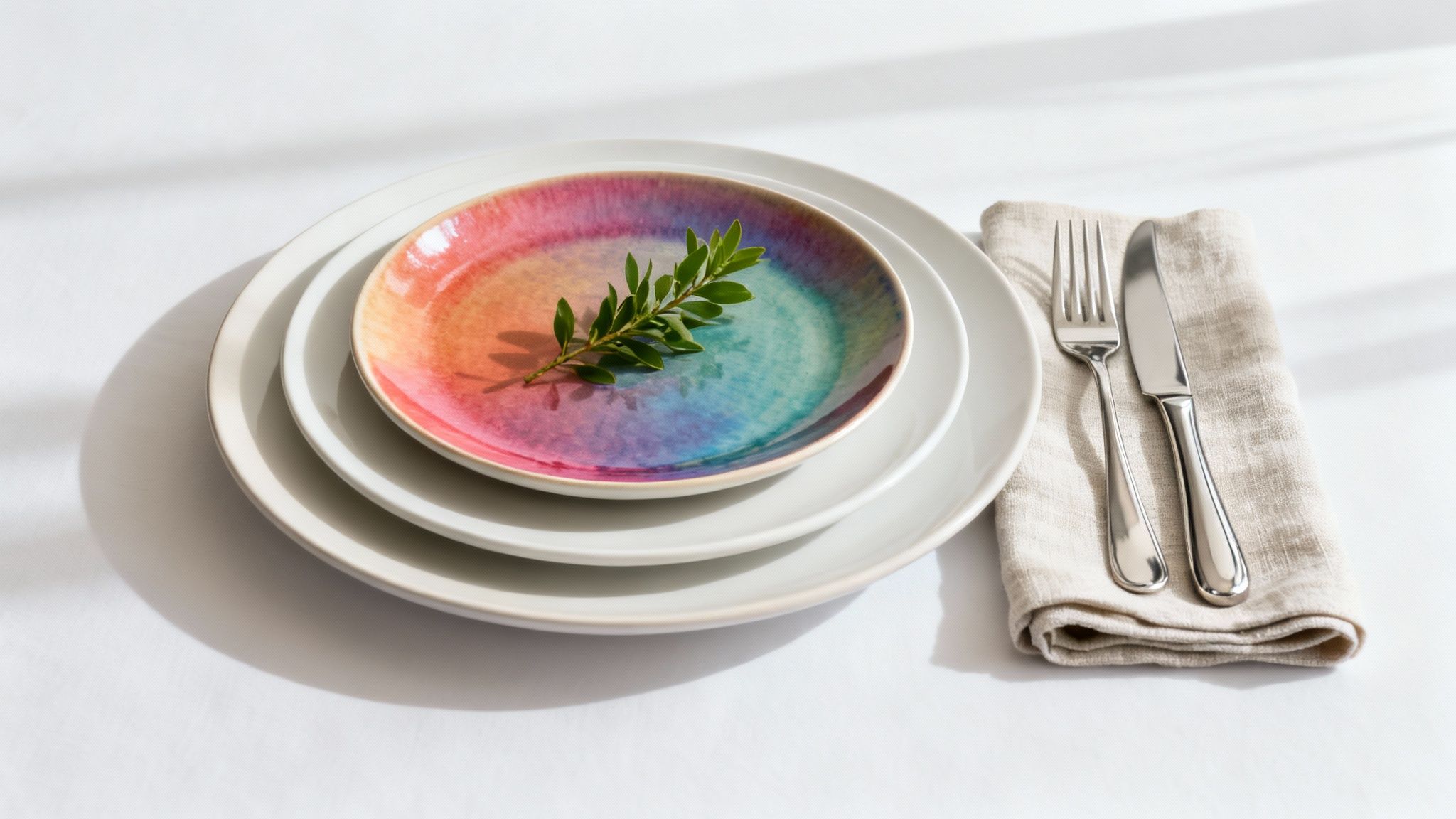
- Colorful Salad Plates: A vibrant, patterned salad plate stacked on a white dinner plate creates an instant pop of visual interest.
- Textured Bowls: Pair smooth porcelain plates with earthy stoneware bowls for a fantastic contrast in texture that you can feel.
- Seasonal Accents: Swap in mugs or dessert plates in seasonal colors to subtly shift the mood of your table throughout the year.
This approach is both stylish and incredibly practical. It lets your collection evolve without needing a complete overhaul. And don't stop at plates and bowls; think about how serving pieces can elevate the experience. You could even learn how to build the perfect charcuterie board to complement your growing collection. By styling your set with intention, you create a collection that’s not just durable for daily use, but a true reflection of your home.
Handpicked Dinnerware for Your Lifestyle
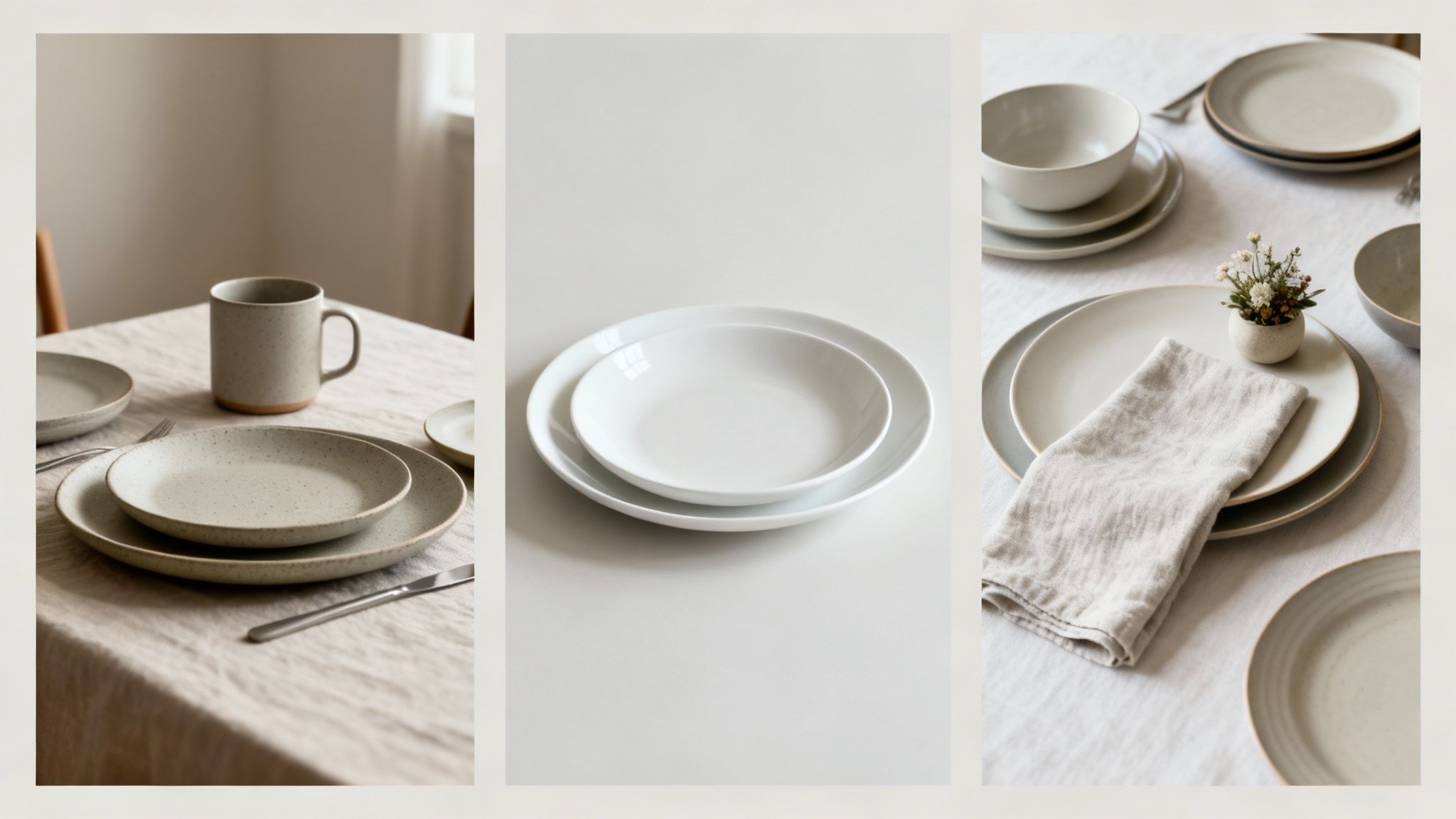
Talking about materials and style tips is one thing, but figuring out what actually works for your life is a whole different ballgame. So, let’s bridge that gap between advice and action. I’ve put together a few curated scenarios to help you visualize which dinnerware collections feel right at home, in your home.
Finding the best dinnerware for everyday use really comes down to matching the plates to your personal rhythm. A set that’s perfect for a quiet couple might not last a week in a house full of kids. It’s all about lifestyle.
For The Busy Family
Life with family is a beautiful kind of chaos, isn't it? It’s a blur of rushed breakfasts, after-school snacks, and lively dinners. You need dinnerware that’s not just nice to look at, but practically bulletproof. It has to stand up to constant use, the occasional drop, and endless trips through the dishwasher without batting an eye.
For this high-traffic, love-filled environment, I always recommend a durable, high-quality stoneware set.
- Why it works: Stoneware has that satisfying, earthy heft and is built to withstand the realities of daily life. Its thicker construction and strong glaze give it excellent chip resistance—a non-negotiable feature when little hands are "helping" set and clear the table.
- Practical benefits: Look for a set with deep, versatile bowls that can handle everything from cereal to chili. Most stoneware is also microwave-safe, which is a lifesaver for reheating leftovers in a flash.
A great stoneware collection from Fluent Trends gives you that perfect blend of rustic charm and rugged performance. It’s the kind of dinnerware that feels inviting and solid, ready for any meal, any day, without you having to be precious about it.
For The Modern Minimalist
If your home is your sanctuary—all clean lines, uncluttered surfaces, and intentional design—then your dinnerware should follow suit. The modern minimalist prioritizes simplicity, quality, and function over fussy details. The goal is a set that acts as a quiet backdrop for your food while being a subtle statement piece on its own.
For this, the answer is almost always a sleek, white porcelain collection.
For a minimalist, dinnerware isn't just a utility; it's an extension of their home's aesthetic. Classic white porcelain offers timeless elegance, allowing the form, feel, and food to take center stage without any unnecessary distractions.
- Why it works: Porcelain is the definition of sophisticated simplicity. Its bright white finish and smooth, non-porous surface create a clean, elegant look that will never feel dated. It’s also surprisingly lightweight and stacks like a dream, saving you precious cabinet space.
- Practical benefits: The versatility of white porcelain is just unmatched. You can dress it down for a simple weekday lunch or elevate it with beautiful linens and flatware for an impromptu dinner party. It’s the ultimate chameleon.
A Fluent Trends porcelain set provides that crisp, gallery-like foundation that makes every meal look more vibrant and thoughtfully prepared. It’s a smart investment in understated luxury that you’ll genuinely appreciate every single day.
For The Frequent Host
Do you live for bringing people together? If you’re the go-to host, your dinnerware needs to be as adaptable as your social calendar. It has to be tough enough for your own daily meals but elegant enough to impress guests during weekend get-togethers, holiday feasts, and big celebrations.
The ultimate solution here is a versatile bone china set.
- Why it works: Bone china truly is the pinnacle of dinnerware materials, offering the best of all worlds. It’s incredibly strong and chip-resistant, yet it’s also wonderfully thin and lightweight. This combination of elegance and resilience means you don’t have to keep one set for "everyday" and another for "good."
- Practical benefits: Its refined, almost translucent quality adds a touch of class to any table. And because it’s so durable, you can use it confidently day in and day out, knowing it will still look flawless when it’s time to entertain.
Choosing a bone china collection means you’re always ready. It moves from a quiet Tuesday dinner to a festive Saturday night without missing a beat, ensuring your table is always set for connection.
Making Your Dinnerware Last a Lifetime
You’ve found a dinnerware set you absolutely love, and you want it to look just as good years from now. The good news is, it's not hard. With just a few simple habits, you can keep your plates and bowls looking pristine and free from those all-too-common chips, stains, and scratches.
It all starts with how you load the dishwasher. So many people make the mistake of packing it too tightly. That’s the fastest way to get chips. Make sure every piece has a little breathing room so they don't clank against each other during the wash cycle.
A good rule of thumb is to put heavier items like dinner plates on the bottom rack, while more delicate pieces go up top. And whatever you do, don't let silverware rest right up against your plates—that’s just asking for scratches.
Simple Care and Storage Tips
Let’s talk stains. Coffee, tea, and tomato sauce can leave their mark on even the toughest dinnerware. Before you grab a harsh scouring pad, stop! That can permanently damage the glaze. A much gentler approach works so much better.
Your secret weapon against stubborn stains is a simple paste of baking soda and water. Just apply it to the spot, let it sit for about 30 minutes, and then gently scrub it away with a soft cloth before rinsing. It works like a charm.
How you store your dinnerware is just as important as how you clean it. Stacking plates and bowls directly on top of each other might seem harmless, but the subtle shifting can create fine scratches over time.
Placing a simple buffer between each piece makes all the difference. You don't need anything fancy:
- Paper towels are an easy, disposable cushion.
- Coffee filters happen to be the perfect shape for separating plates.
- Felt plate dividers are a great reusable, long-term solution.
This one tiny step goes a long way in preserving that beautiful finish, especially on stoneware or pieces with more delicate glazes. Taking these small precautions ensures your investment in quality, like a beautiful set from Fluent Trends, pays off with every single meal, year after year.
A Few Lingering Questions
Even with all the options laid out, it's normal to have a few last-minute questions before you commit. We get it. To make sure you feel totally confident pulling the trigger, here are the most common things people ask when choosing their everyday dinnerware.
What Is the Most Durable Dinnerware?
When you’re talking about sheer, everyday resilience, bone china and porcelain are the heavyweights. Don’t let their delicate looks fool you; bone china is incredibly tough and chip-resistant thanks to its unique makeup. Good-quality porcelain is also a workhorse—it’s dense, non-porous, and can handle the daily grind of microwave and dishwasher cycles without breaking a sweat.
But if your main concern is drops and tumbles (hello, households with kids!), then a high-grade, BPA-free melamine set is easily the most shatter-proof choice out there.
How Many Place Settings Should I Actually Buy?
A good rule of thumb is to have four to six more place settings than the number of people who live in your home. So, for a family of four, that means owning between 8 and 10 settings. This little buffer ensures you're never scrambling for a clean plate when half your dishes are in the dishwasher, and it leaves you with enough for a few guests.
If you're the go-to host for friends and family dinners, just go for a set of 12. You'll be ready for bigger get-togethers and have a comfortable cushion for years, even if a piece or two breaks along the way.
Is It Okay to Mix and Match Dinnerware Sets?
Absolutely! In fact, mixing and matching is one of the best ways to inject your personality into your table. The trick to making it look curated and cool—not chaotic—is to have one unifying element that ties all the pieces together.
Here are a few easy ways to do it:
- Stick to a Color Story: Choose a single color family (like a mix of blues, grays, or earthy neutrals) and then have fun with different patterns and textures within that palette.
- Start with a Neutral Base: A classic white dinner plate is the perfect canvas. From there, you can layer on more interesting salad plates or bowls with bold colors and patterns.
- Play with Texture: Imagine pairing a smooth, sleek porcelain plate with a rustic, slightly rough stoneware bowl. That contrast creates a really dynamic, interesting vibe.
This approach lets you build a collection that's uniquely you over time, turning your everyday plates and bowls into something special.
Ready to find a set you’ll love for years to come? Dive into the curated collections at Fluent Trends and find the perfect dinnerware to make your daily meals feel a little more special.