

Best Flatware Sets for Everyday Use: Durable & Stylish
Donna MaloneThe best flatware for your home is the kind that feels just right in your hand, includes enough forks and spoons for everyone, and is made from durable 18/10 stainless steel. A truly great set will stand up to rust and resist bending, looking fantastic meal after meal, dishwasher cycle after dishwasher cycle.
Choosing Your Perfect Everyday Flatware
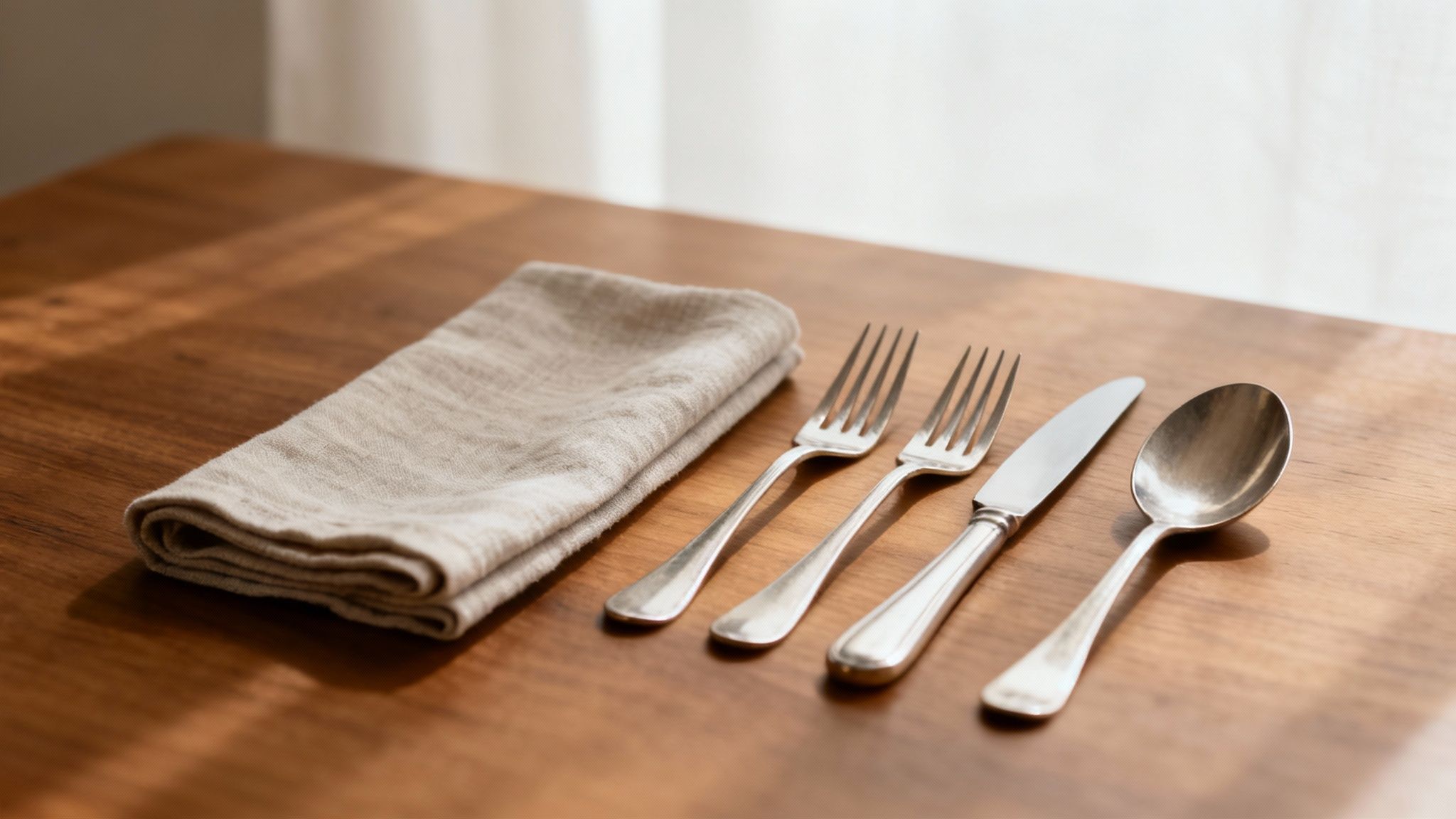
Finding a flatware set that can handle daily breakfasts, messy dinners, and endless trips through the dishwasher—while still looking beautiful on your table—can feel surprisingly complicated. This guide is here to cut through the noise and focus on what really matters for everyday use.
Think of this as your personal roadmap. We'll help you select a set of flatware you'll genuinely love using, day in and day out, for years to come. Our goal is simple: to make sure your investment is both beautiful and built to last.
What to Prioritize in Your Search
It’s easy to get lost in all the different patterns and prices when you’re shopping for everyday flatware. Instead of getting overwhelmed, just start by focusing on the three things that really determine quality and longevity:
-
The Right Material: This is the big one. The grade of stainless steel dictates durability, shine, and how well it resists rust.
-
A Comfortable Feel: How the utensils feel in your hand is crucial. The weight, balance, and handle shape make all the difference in how enjoyable they are to use.
-
The Perfect Set Size: Getting the right number of place settings from the start saves you the frustration of running out of clean forks later on.
A great set of everyday flatware should feel like a natural extension of your hand—substantial but not heavy, elegant but not delicate. It’s a small detail that elevates the simple act of eating.
This approach helps you look past the surface-level aesthetics to find a set that truly fits your life. A well-chosen set will pair beautifully with your tableware, and you can learn more about finding the https://fluenttrends.com/blogs/news/best-quality-dinnerware-sets in our comprehensive guide. While this article focuses on metal options, you might also be interested in a specialized bamboo cutlery set for sustainable and lightweight dining on the go.
Let's dive in and start with the most critical factor: the metal itself.
Decoding the Numbers on Stainless Steel
When you're shopping for a new flatware set, you'll see numbers like 18/10, 18/8, and 18/0 stamped on the back of a fork or spoon. These aren't just random codes—they're the secret to understanding how durable, shiny, and rust-resistant your new utensils will be.
Think of it like a simple recipe. The first number, always 18 in this case, represents the percentage of chromium. This is the ingredient that makes stainless steel hard, strong, and gives it a baseline defense against corrosion.
The second number is where the real magic happens. This tells you the percentage of nickel, the premium ingredient that kicks rust resistance into high gear and gives flatware that beautiful, mirror-like shine. More nickel equals better quality.
What Nickel Does for Your Flatware
A higher nickel content is like adding a protective, high-gloss topcoat to a freshly painted car. The chromium is the sturdy base paint, but the nickel is that extra layer that shields it from the elements, prevents damage, and adds a brilliant luster.
Understanding what those numbers mean, especially the details on 18/10 stainless steel, is the best way to judge a set's quality beyond its price tag or pattern.
Now, let's take a closer look at the three common grades you’ll encounter. This quick comparison will help you understand what you're really getting.
Stainless Steel Grades at a Glance
| Grade | Composition (Chromium/Nickel) | Key Benefits | Best For |
|---|---|---|---|
| 18/10 | 18% Chromium / 10% Nickel | The highest quality. Superior rust resistance, brilliant shine, feels substantial. | Everyday use, special occasions, and anyone wanting a set that will last for decades. |
| 18/8 | 18% Chromium / 8% Nickel | Excellent rust resistance and a bright luster. A durable, high-quality workhorse. | A fantastic choice for daily family meals; it holds up beautifully to heavy use and dishwashers. |
| 18/0 | 18% Chromium / 0% Nickel | More affordable. Still durable but has no nickel, making it more prone to rust or staining. | Budget-conscious shoppers, first apartments, or sets that won't see heavy, daily use. |
For daily-driver flatware that will see countless meals and dishwasher cycles, going with 18/10 or 18/8 is a no-brainer. That bit of nickel is your insurance policy against pitting, rust spots, and dullness, keeping your set looking great for years.
The market backs this up. Stainless steel is the go-to choice for flatware across the globe. Its market is expected to jump from USD 7.15 billion in 2025 to over USD 10.07 billion by 2032, proving just how much people trust its performance and style.
Evaluating Weight, Finish, and In-Hand Feel
Beyond the technical specs and steel grades, the best flatware for everyday use just feels right in your hand. This is where you move past the numbers and into the actual experience of using your utensils day in and day out. It's the subtle difference between a flimsy fork that feels awkward and one that feels like a comfortable, natural extension of your hand.
A well-made piece of flatware has a satisfying heft to it. It shouldn't be clunky or heavy, but it needs enough weight to feel substantial and durable. This quality often comes from being forged—a process where a single piece of steel is heated and hammered into shape, rather than stamped from a sheet like a cookie cutter. Forged flatware is typically stronger, better balanced, and gives you that reassuring sense of quality.
Finding Your Preferred Finish
The finish on your flatware has a huge impact on both its look and how much daily maintenance it needs. You’ll generally find two main options, and each one has its own vibe.
-
Mirror Finish: This is that classic, highly polished look that gleams on the dinner table. It’s elegant and absolutely timeless, but its super-shiny surface can be a magnet for fingerprints and water spots if you're not careful.
-
Satin or Matte Finish: This finish has a softer, almost brushed appearance that gives off a more modern, relaxed feel. It’s also much more forgiving with smudges and tiny scratches, making it a fantastic, practical choice for busy households.
Ultimately, choosing between mirror and satin comes down to your personal style and, honestly, how much you enjoy polishing things.
This little guide helps visualize how the stainless steel grades often line up with the overall quality, finish, and feel you can expect.

As you can see, 18/10 is really the gold standard for that premium sparkle and long-term durability, while 18/0 is a solid, budget-friendly place to start.
The Small Details That Matter Most
Don't forget to look closely at the little design elements that make a big difference in comfort. How does the handle curve into your palm? Is the spoon’s bowl deep enough, or is it frustratingly shallow? A good knife should have fine, sharp serrations that actually cut your food cleanly instead of tearing it.
Try this: pick up a utensil and close your eyes. A well-designed piece will feel balanced, with its weight distributed evenly from the handle all the way to the tip. That balance is a true sign of thoughtful craftsmanship, and you'll appreciate it with every single bite.
These are the small things that separate a mediocre set from the best flatware sets for everyday use. When you find a set that just feels right, you know you’ve found a true companion for your kitchen.
Choosing the Right Set Size for Your Household
Figuring out how many forks you actually need can feel like a weird math problem, but it's one of the most practical decisions you'll make. Getting it right from the start saves you from the classic "we're out of clean spoons" dilemma and keeps you from hunting for mismatched pieces later on.
The bedrock of any flatware collection is the 5-piece place setting. Think of it as a complete toolkit for one person at the table. Once you know what’s inside, you can figure out how many sets you’ll need.
A standard 5-piece setting almost always includes:
-
Dinner Fork: The big, primary fork for your main course.
-
Salad Fork: A smaller fork for salads, appetizers, or dessert.
-
Dinner Knife: Your main knife for cutting and spreading.
-
Soup Spoon: A larger, rounded spoon for soups, stews, or even your morning cereal.
-
Teaspoon: The little spoon for stirring coffee or sneaking a bite of ice cream.
Calculating Your Ideal Set Size
So, how many of these settings do you need? A good rule of thumb is to have enough for everyone in your household, plus at least four extras for guests or those days when you haven't run the dishwasher.
A 20-piece set is the most common starting point for a reason. It provides full service for four people (4 people x 5 pieces each), making it a great choice for individuals, couples, or small families. You can see a beautiful example in our matte black stainless steel 20-piece hand-forged flatware set, which is perfect for a modern table.
If you love to have people over, a bigger set is a smart move. A 45-piece set usually serves eight and often comes with a 5-piece serving set (think a serving spoon, slotted spoon, and meat fork). For larger families or anyone who hosts big holiday dinners, a 65-piece set is the way to go, offering service for twelve plus all the essential serving utensils.
Buying a complete set that already includes the serving pieces is almost always a better deal than buying them separately. Plus, it guarantees your entire tablescape looks cohesive and pulled-together.
Ultimately, choosing the right size is all about anticipating your life. Grabbing a slightly larger set upfront means you’re always prepared. This mindset reflects a bigger trend of consumers wanting well-equipped homes, which is why the global tableware market is projected to jump from USD 53.33 billion in 2025 to USD 83.14 billion by 2032. Flatware has always been a huge part of that market, showing just how central it is to our dining rituals. Getting the size right is your first step toward making a smart, long-lasting purchase.
Making a Smart Investment in Your Flatware
It's tempting to just look at the price tag on a new set of flatware, but the real story is in how long it will last. When you’re weighing a budget-friendly 18/0 set against a higher-end 18/10 collection, you aren't just choosing a price—you’re deciding how soon you’ll be shopping for forks and spoons all over again.
Those cheaper sets, usually made from 18/0 stainless steel, can seem like a great deal at first. The catch? Without any nickel, they’re far more likely to rust, spot, and bend over time. After a few years of daily meals and trips through the dishwasher, you’ll probably find yourself right back where you started: needing a new set.
Longevity Versus Upfront Cost
Spending a bit more on a quality 18/10 or 18/8 stainless steel set almost always pays off in the long run. These pieces are engineered to fight off corrosion and keep their shine, turning a simple purchase into a lasting part of your home. You're paying for durability that really holds up.
Here’s a rough guide to what you can expect at different price points for a standard 20-piece set (which covers four people):
-
Budget-Friendly (Under $50): This is almost always 18/0 steel. It's functional for now but expect to see wear and tear like rust spots or bent tines within a couple of years of heavy use.
-
Mid-Range ($50 - $150): Now we're talking. You'll mostly find quality 18/10 or 18/8 steel here. These sets are the sweet spot, offering the best mix of durability, style, and value for everyday life.
-
Premium ($150+): In this tier, you're getting into designer brands, unique finishes, and incredible craftsmanship, all with top-tier 18/10 steel. These are the sets built to be passed down.
Think of it like buying a good winter coat. You can grab a cheap one that gets you through a season or two, or you can invest in a well-made one that keeps you warm and looking sharp for a decade. High-quality flatware is an investment in countless meals to come.
Choosing the best flatware sets for everyday use is all about finding that perfect balance where your budget meets lasting quality.
Keeping Your Everyday Flatware Looking New
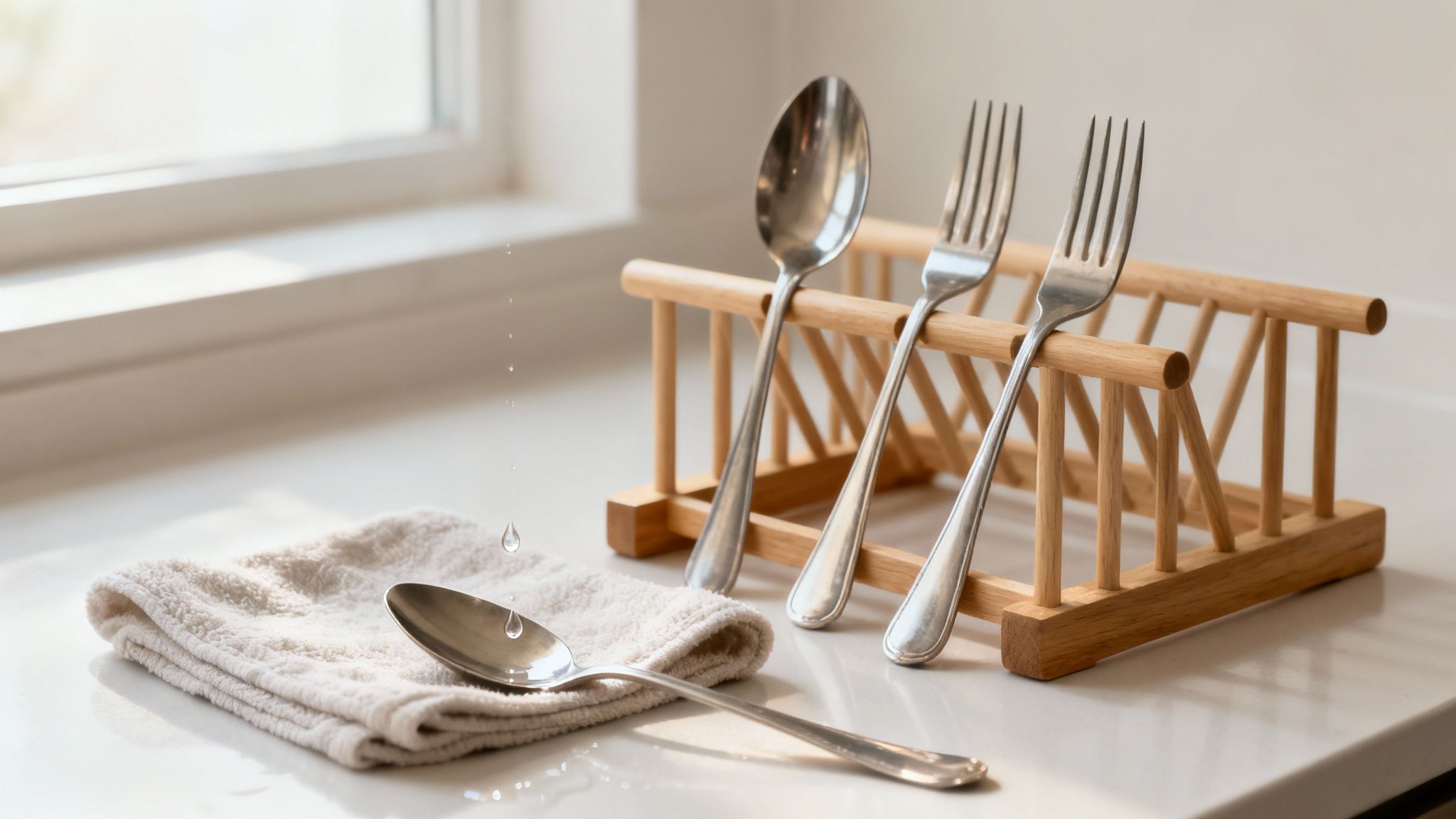
High-quality flatware is built for the long haul, but a few simple habits can keep it looking pristine for decades. These tips aren't about adding another chore to your list; they're about effortlessly preserving your investment so it shines on your table for years to come.
The good news? Most modern stainless steel is completely dishwasher safe, a huge relief for daily use. How you load it and what detergent you use, though, can make a huge difference in preventing spots and discoloration over time. These little adjustments are the real secret to a flawless finish.
Dishwasher Best Practices
To get the best results from your dishwasher and protect your flatware’s finish, keep these simple guidelines in mind. A little bit of care goes a long, long way.
-
Avoid Citrus and Abrasives: Steer clear of harsh detergents, especially those with citrus extracts or chlorine bleach. These can cause tiny pits or spots on the surface of your stainless steel.
-
Mix It Up: Alternate forks, spoons, and knives in the utensil basket. Try facing some handles up and some down. This simple trick prevents them from "nesting" together and ensures water circulates freely for a much better clean.
-
Separate Your Metals: Never, ever wash stainless steel and silver-plated items in the same load. A weird chemical reaction between the metals can cause permanent tarnish and damage to the silver.
The single best thing you can do for your flatware is to either use the dry cycle or dry everything promptly with a soft cloth. This one step is your best defense against those pesky water spots and keeps the finish looking brilliant.
Removing Minor Blemishes
Even with the best care, you might occasionally see a stubborn water spot or a faint, rainbow-like discoloration (which is totally harmless, by the way). For water spots, a quick buff with a soft, dry microfiber cloth is usually all it takes.
For any discoloration, a simple paste of baking soda and water or a touch of white vinegar on a cloth will gently polish it away, restoring that original luster.
Preserving your flatware means you get the maximum value from your purchase, a priority for many of us. This focus on quality is reflected across the market, with global flatware sales projected to grow from USD 2.5 billion in 2023 to USD 3.5 billion by 2032. You can read more about this growing appreciation for quality dining essentials from market research by DataIntelo.
A Few Final Questions on Everyday Flatware
To wrap things up, let's tackle a few common questions we hear all the time. Think of this as a quick chat to clear up any last-minute thoughts, making sure you feel completely ready to pick out the perfect set.
Our goal here is to help you choose the best flatware for your everyday life with total confidence. Let’s dive in.
Is All Stainless Steel Flatware Dishwasher Safe?
Pretty much, yes. Almost all modern stainless steel flatware is designed to handle the dishwasher. But how you wash it really makes a difference in how it looks over the long haul. For the best results, always give your utensils a quick rinse to get rid of acidic foods like tomato sauce or salad dressing before loading them up.
It's also a good idea to steer clear of detergents with citrus or chlorine, since they can cause spotting over time. If you’ve invested in a beautiful matte or colored set, it’s always smart to double-check the manufacturer’s care guide—some might recommend gentle hand-washing to preserve that special finish.
What Is the Difference Between Continental and American Flatware?
The main distinction here really just comes down to size and weight. Continental-style flatware, which you might also hear called European-style, is typically a bit larger, longer, and heavier than its traditional American counterpart. You’ll especially notice this in the dinner forks and spoons, which have a more substantial presence.
Which one is right for you is entirely a matter of personal preference. If you tend to use larger dinner plates or just enjoy a more solid, weighty feel in your hand, you might find the Continental style feels more comfortable and balanced for your daily meals.
Key Takeaway: Think of American style as classic and agile, while Continental style offers a bolder, more robust dining experience. Neither is better—it’s about what feels most natural to you.
How Can I Tell if My Current Flatware Is Good Quality?
You can get a great sense of any flatware's quality with three simple checks. These little clues will tell you a lot about the material and craftsmanship, whether you’re looking at a set you already own or one you’re considering in a store.
-
Check for a Stamp: Flip over a fork or spoon and look for a quality stamp on the back of the handle, like “18/10” or “18/8”. This little mark is the clearest sign you’re holding high-grade, corrosion-resistant stainless steel.
-
Assess the In-Hand Feel: Quality flatware has a pleasant weight to it and feels balanced in your hand. It should never feel flimsy, oddly light, or awkward to hold.
-
Inspect for Wear and Tear: Look closely for any signs of rust, pitting (those tiny little holes), or bending. If a set has stood up to years of use without showing these issues, it's almost certainly made from durable, high-quality material.
Ready to find a set you’ll love using every single day? Explore the curated collections at Fluent Trends and discover designer-approved flatware that combines lasting quality with timeless style. Visit www.fluenttrends.com to find your perfect match.