

Best Furniture for Small Living Rooms to Maximize Space
Donna MaloneThe best furniture for a small living room has to pull double duty. I’m talking about multifunctional pieces like a chic storage ottoman, visually lightweight items that sit up off the floor on elegant legs, and of course, proportionally scaled sofas that fit the room instead of dominating it. When you get this mix right, you maximize every square inch and create an illusion of openness. Your room instantly feels both stylish and so much more spacious.
Transforming Your Small Living Room From Cramped to Cozy
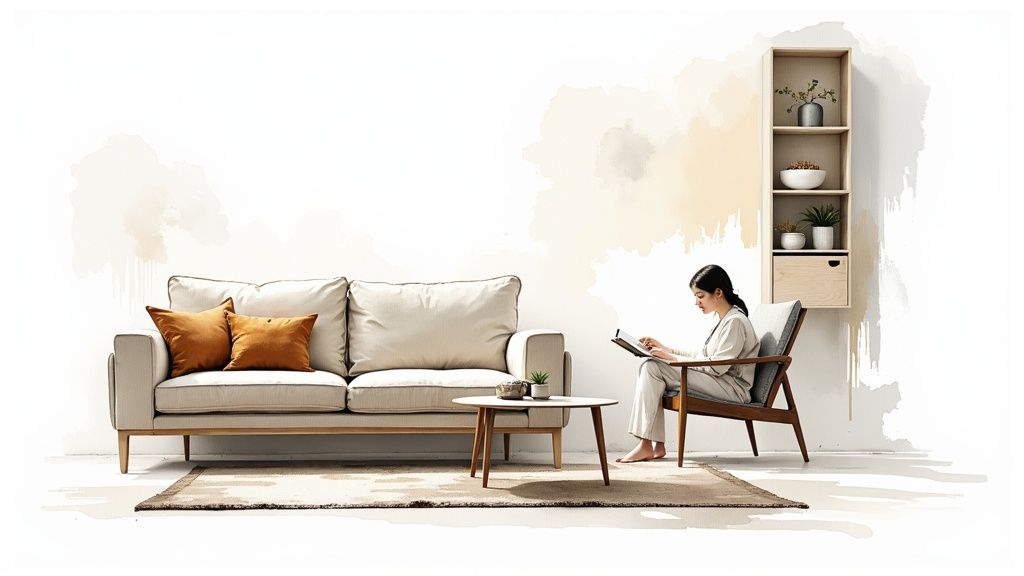
Standing in a small living room can feel like you're trying to solve a puzzle where none of the pieces quite fit. But what if you saw those tight corners and limited floor space not as a problem, but as a creative opportunity? It's time to move past the frustration and see how the right furniture choices can completely unlock your room's hidden potential.
The trick is to think differently about every single item you bring into the space. We're going to explore how to use vertical space, embrace clever multifunctional designs, and play with visual tricks that create a genuine sense of openness. Forget the old myth that you have to choose between style and function—the best furniture for small living rooms brings them together beautifully.
One of the most common mistakes I see is people buying furniture that's just a shrunken-down version of what belongs in a huge room. Smart, space-saving design isn't just about size; it's about visual weight, perfect proportions, and true versatility.
The Foundation of a Spacious Feel
Before we get into picking out specific pieces, let's nail down the core principles that make a small space really work. Think of these as the foundation for every decision you'll make, from choosing a sofa to placing a lamp. A truly successful small living room is built on just a few key pillars:
-
Functionality First: Every piece needs to earn its keep, and ideally, it should do more than one job. Think of a coffee table with drawers for remotes or a pouf that can be a seat, a footrest, or even a tiny table.
-
Creating Flow: Your layout absolutely must allow for easy movement. You can't just style your way out of a bad traffic jam, so planning clear pathways is non-negotiable.
-
Visual Lightness: Look for furniture that doesn't feel heavy or bulky. Pieces with exposed legs, thin frames, or even reflective surfaces like glass or mirrors help keep the atmosphere airy and bright.
This guide is your roadmap. It's all about selecting smart, beautiful pieces that make your living room feel intentional, inviting, and surprisingly spacious. Let's get started on creating a home you truly love spending time in.
Choosing Your Anchor Furniture for a Perfect Fit
Let's talk about the hero of your living room: the sofa. It's where you binge-watch shows, nap, and catch up with friends. But in a small space, the wrong sofa can turn into the villain, gobbling up every last inch and making the room feel tight and uncomfortable.
The secret isn’t just about measuring length and width. It’s about understanding a piece’s visual weight.
Think of it this way: a huge, overstuffed sofa with giant rolled arms is like wearing a bulky winter parka indoors. A sleek sofa with thin arms and raised legs? That's more like a tailored blazer—just as functional, but way lighter and less overwhelming. This one little shift in thinking is the key to mastering small-space furniture.
Deconstructing the Perfect Small-Space Sofa
When you’re out shopping for a sofa, loveseat, or even a small sectional, you need to look past the basic measurements. Certain design tricks can fool the eye and make your room feel much bigger than it actually is.
Here’s what to hunt for:
-
Slender Arms: Those big, puffy arms are just dead weight. A sofa with slim track arms—or even no arms at all—can save you precious inches and looks so much more sophisticated.
-
Exposed Legs: Furniture that sits flat on the floor feels heavy and casts big shadows. When a piece is lifted up on legs, you can see the floor underneath, which creates a wonderful sense of openness and lets the light move around.
-
Low Profile: A sofa with a lower back won’t block your line of sight. This is a game-changer in a small room because it lets your eyes travel across the space, making everything feel larger and more connected.
Your goal is to find a sofa that’s comfy and substantial but doesn't visually hog the entire room. It’s all about striking that perfect balance between scale, proportion, and smart design.
Making a Smart Investment in a Growing Market
Picking the right furniture is a big deal, and the market is definitely catching on. The U.S. living room furniture market is on track to hit USD 70.51 billion by 2025, largely because so many of us are looking for modern, clever pieces that work in smaller homes and apartments. It’s a direct response to city living, where every square foot is prime real estate.
Of course, finding the right size is only half the battle—style matters, too. Exploring different looks like mid-century modern or minimalist can point you toward sofas and chairs that naturally have those slender, space-saving profiles you’re after. For a little more guidance, our comprehensive furniture style guide is a great place to start.
Once you get a feel for proportion, you can invest with confidence in a sofa that truly complements your room instead of consuming it. That's how you get lasting comfort without the clutter.
Unlocking Space With Multifunctional Furniture
When you're working with a small living room, every single piece of furniture has to earn its keep. This is where multifunctional design stops being a neat little "hack" and becomes your most powerful strategy. The idea is brilliant in its simplicity: furniture that works double-duty saves you a ton of space and, frankly, makes life easier.
Forget the lumpy, awkward sofa beds of the past. The market today is flooded with seriously clever solutions. We're talking coffee tables that glide up to become the perfect work-from-home desk, chic ottomans that secretly house your blanket collection, and nesting side tables that expand in a snap when company comes over. These pieces are proof you don't have to sacrifice a dining area for a lounge space—you can absolutely have both.
This infographic really nails down what makes a piece of "anchor" furniture, like your sofa, work in a tight space.

As you can see, things like slender arms, raised legs, and a lower profile all work together to make a sofa feel less heavy and bulky, which in turn makes the whole room feel bigger and brighter.
The Rise of Smart, Adaptable Furniture
The hunger for this kind of furniture isn't just a passing trend; it's a full-blown global movement. With more people moving to cities and living in smaller homes, the worldwide market for small-space furniture hit about USD 23.4 billion in 2023. That number is expected to nearly double by 2032, which tells you just how many of us are looking for smarter ways to live. It's a direct response to our need to make every square inch count. You can dig into more data on this expanding market to get the full story.
The best furniture for small living rooms is adaptable. It should be able to transform to meet the needs of the moment, whether that's hosting a movie night, working from home, or simply relaxing.
Your Multifunctional Furniture Playbook
So, where do you start? First, take a hard look at your living room and figure out everything you need it to do. Is it your home office, your dining room, and your chill-out zone? Be honest about its jobs.
Once you have your list, you can start shopping for pieces that pull double (or even triple) duty. These are some of the most popular and effective options out there.
Top Multifunctional Furniture for Small Living Rooms
| Furniture Type | Primary Function | Space-Saving Feature | Best For |
|---|---|---|---|
| Lift-Top Coffee Table | Coffee Table | Lifts to become a desk or dining surface; contains hidden storage. | Creating a workstation or casual dining spot without a separate table. |
| Storage Ottoman | Footrest / Seating | Hollow interior provides ample storage for blankets, games, or pillows. | Hiding clutter while offering extra seating or a surface for a tray. |
| Nesting Tables | Side Table | A set of tables that stack together, expanding when more surface area is needed. | Flexible surface space for guests without taking up a large footprint. |
| Convertible Sofa | Seating | Folds out or converts into a bed for overnight guests. | Combining a guest room and living room into one, saving an entire room. |
Choosing even just one or two of these hard-working pieces can completely change how your room functions.
Let's break down the most popular choices:
-
Lift-Top Coffee Tables: These are absolute game-changers. They seamlessly transition from a low-profile table for your coffee to a comfortable height for working or eating. Plus, the hidden storage inside is perfect for stashing laptops, magazines, and all those pesky remotes.
-
Storage Ottomans and Benches: An ottoman is so much more than a place to put your feet up. A sturdy one with a flat top can easily double as a coffee table (just pop a tray on it), provide extra seating in a pinch, and hide away everything from throw pillows to kids’ toys.
-
Nesting Tables: Why have one bulky side table when you can have two or three that tuck away neatly? Nesting tables give you incredible flexibility. Keep them stacked for everyday use, then pull them out when you need more spots for drinks and snacks.
-
Convertible Sofas and Daybeds: Modern sofa beds are a world away from the clunky, uncomfortable versions you might remember. Today's designs are sleek, easy to convert, and genuinely comfortable for both sitting and sleeping. It’s like having a guest room on demand.
By thoughtfully picking a few pieces that work overtime, you can create a room that’s as versatile as it is beautiful. This is how you make every square foot count and help your small living room live large.
Using Color and Materials to Create Visual Space
When you're picking furniture for a small living room, it's not just about the tape measure. It's about pulling off a little bit of magic. How a room feels is every bit as important as its actual square footage, and the right colors and materials can trick the eye into seeing a space that’s way more open and airy than it really is.
Picture a heavy, dark oak bookcase—it's like a visual full stop. Your eye just lands on it and goes no further. Now, imagine a sleek glass-and-metal shelving unit in its place. Your gaze travels right through it, making the wall behind feel miles away. That's the power of choosing visually lightweight materials.
Let the Light In
To make your living room feel bigger, you need to pick furniture that doesn't block light or your line of sight. These materials are your secret weapons in a small space because they cut down on visual clutter and let the room breathe.
Keep an eye out for pieces made from:
-
Glass or Acrylic: A see-through coffee table or console almost disappears. It keeps the floor visible and makes the whole room feel less stuffed.
-
Metals with Slender Profiles: Furniture with skinny legs in finishes like brushed brass or black metal literally lifts everything off the floor. That little bit of negative space underneath works wonders.
-
Light-Colored Wood: Dark woods can feel dense and heavy, but paler woods like ash, maple, or a light oak bounce light around and add to that airy vibe.
Wood is still a go-to for most people thanks to its classic look and durability—it’s expected to make up about 57% of furniture sales in 2025. What's cool is how designers are now mixing it with other materials to get the best of both worlds. You’ll see minimalist steel shelving paired with wood, or glass tabletops on a wooden base to create that illusion of openness. You can see more examples of how these elements work together in these material trends for the small furniture market.
The whole game is about choosing furniture that lets light pass over, under, and through it. It’s a simple trick, but it stops your room from feeling crowded, no matter how much you need to squeeze in.
A Smart Approach to Color
Making a room feel bigger isn't about drenching everything in stark white. It’s about being strategic. Try a monochromatic palette with soft shades of cream, gentle gray, or beige for your biggest items, like the sofa. This helps them blend into the walls instead of screaming for attention.
Once you have that calm, cohesive backdrop, you can bring in pops of bold color with smaller things that are easy to swap out. Think vibrant throw pillows, a statement piece of art, or a colorful vase. These little accents give the room personality and create fun focal points without making the space feel busy. With a few smart choices in materials and color, you can turn a cramped room into a genuinely inviting and open-feeling home.
Smart Storage Solutions That Conquer Clutter
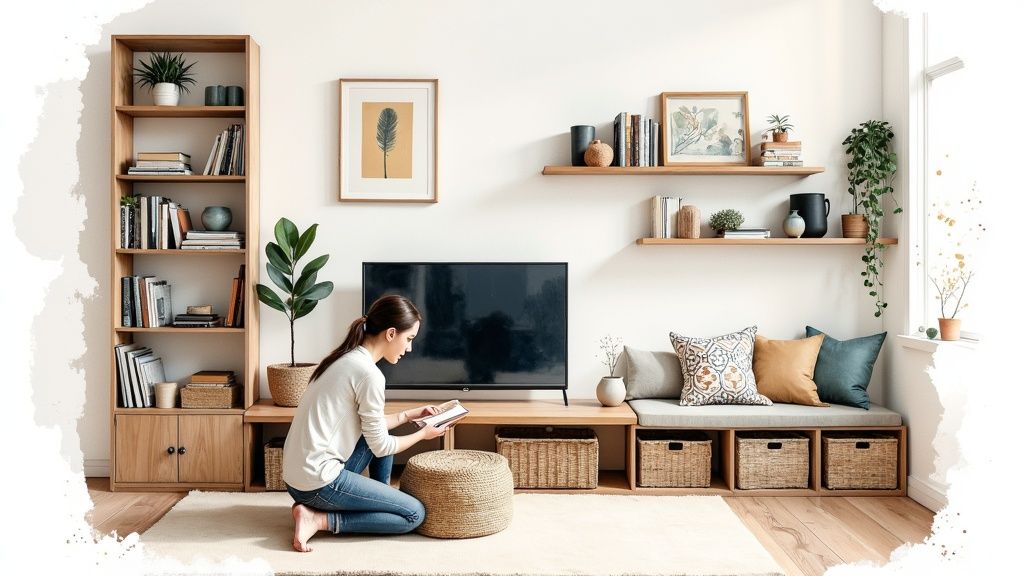
There's one thing that shrinks a small living room faster than anything else: clutter. Every stray book, remote, and tangled cord seems to steal a little bit of your precious space and peace of mind. But the answer isn't necessarily to become a minimalist overnight. It's about getting clever with your storage—finding stylish pieces that blend right into your decor.
The golden rule for small-space storage is to think vertically. When your floor is prime real estate, the only direction left to go is up. This simple mindset shift does wonders, drawing the eye upward to create a feeling of height and openness while seriously multiplying your storage options.
Reclaiming Wall Space
Forget that wide, low-slung media unit that hogs half the room. Instead, look for a sleek wall-mounted console. By floating your entertainment center, you instantly free up the floor beneath it, which makes the whole room feel bigger. Plus, you’ve just created the perfect spot for things like decorative baskets or a slim subwoofer that would otherwise be shoved in a corner.
And it doesn't stop at the TV. Your walls are basically blank canvases for functional, beautiful storage:
-
Tall, Narrow Bookcases: A slender “ladder” or étagère-style bookcase gives you tons of shelving without looking heavy or bulky. Their open-sided designs keep things feeling light and airy.
-
Floating Shelves: These are fantastic for showing off photos, little plants, and your favorite decor. Arranging them in a staggered pattern or a neat column can turn a boring wall into a personal style statement.
This whole "going vertical" thing isn't just a practical trick; it's a design illusion. You're encouraging people to look up, which emphasizes the room's height and makes the entire space feel a bit grander than it is.
The goal is to create a designated home for everything. When your belongings are organized and out of sight, your carefully chosen furniture can finally be the star of a calm, tidy room.
Discovering Hidden Opportunities
Some of the most brilliant storage is the kind you don't even see. Many of the best furniture for small living rooms are secretly masters of disguise, hiding compartments designed to tuck away all of life's necessities. It’s all about finding and using those overlooked nooks and crannies.
Keep an eye out for furniture that pulls double duty with built-in storage:
-
Storage Benches and Ottomans: We've mentioned them before, and for good reason. These are the undisputed champions of hidden storage, perfect for stashing blankets, board games, or extra throw pillows.
-
Side Tables with Deep Drawers: A simple end table can become a secret weapon for organization. It's the perfect spot to tuck away coasters, charging cords, and that stack of magazines you've been meaning to read.
-
Coffee Tables with Shelves or Drawers: Opt for a coffee table with a lower shelf for books or drawers for remotes. It keeps the tabletop clear and uncluttered for, you know, your coffee.
When you combine smart vertical strategies with furniture that has its own hidden compartments, you can officially declare victory over clutter. This two-pronged attack ensures your living room stays serene, organized, and inviting—proving that even the tiniest rooms can feel spacious and orderly.
Arranging Furniture for Better Flow and Function
You can have the most beautiful furniture in the world, but if the layout feels awkward, the entire room will feel off. Getting the arrangement right isn't just about looks—it's about creating a space that’s easy and enjoyable to live in. Think of it this way: your layout is the foundation, and no amount of styling can fix a bad one.
Start by identifying a clear focal point. This is the natural spot where the eye is drawn—a big window, a cozy fireplace, or maybe your entertainment center. Arrange your primary seating, like your sofa, to face it. This one move immediately gives the room a sense of purpose.
From there, it's all about creating comfortable conversation areas. You want to place chairs and sofas close enough for easy chatting without having to raise your voice, but with enough space to move around freely. This is what turns a room full of furniture into a truly functional living space.
Mastering Pathways and Placement
One of the most common mistakes people make in small rooms is pushing every piece of furniture flat against the walls. It might seem like a space-saver, but it can actually make a room feel boxy and uninspired. Try "floating" your sofa even a few inches away from the wall. That small gap creates an illusion of depth that makes the room feel much airier.
Clear pathways are just as important. You should be able to walk through your living room without navigating an obstacle course of coffee tables and chair legs. As a rule of thumb, aim for at least 30 inches of clearance for your main walkways. This ensures the room feels comfortable and easy to use day-to-day.
A well-chosen area rug is your secret weapon for anchoring a seating area. Make sure it's large enough for at least the front legs of your sofa and chairs to rest on it. A rug that's too small will only make the space feel choppy and disconnected.
Key Layout Principles to Follow
Once you grasp a few core principles, you can adapt them to any room shape. If you want to dive deeper, our complete guide on how to arrange living room furniture has even more strategies.
For now, here are a few simple tips to get you on the right track:
-
Define Zones with Rugs: A large area rug is perfect for defining your main seating area, visually separating it from the rest of the room.
-
Balance Visual Weight: Avoid putting all your large, heavy furniture on one side. Distribute pieces throughout the room to create a more balanced, harmonious feel.
-
Prioritize Function First: Always figure out your layout before you start decorating. Make sure the room works for your daily life, and then add the stylish finishing touches.
Got Questions About Small Living Rooms? We’ve Got Answers.
When you're trying to furnish a small living room, a few tricky questions always seem to pop up. Let's clear the air and tackle some of the most common design dilemmas so you can get back to creating a space you love.
What’s the Right Rug Size for a Small Living Room?
This is a big one. The golden rule is to choose a rug that’s large enough for the front legs of your sofa and any accent chairs to sit on. This trick instantly anchors your seating area, making the whole room feel connected and surprisingly bigger.
Whatever you do, avoid the classic “floating rug” mistake—that tiny rug stranded in the middle of the floor. It chops up the visual space and makes everything feel smaller and more chaotic.
Can I Really Use Dark Furniture in a Small Space?
Yes, you absolutely can! The secret is all about balance. If you’ve fallen for a dark sofa or bookshelf, just make sure to surround it with lighter elements. Think bright walls, a light-colored rug, and good lighting to keep the room from feeling weighed down.
Even better, look for dark pieces that have a lighter feel to them—things with slim profiles or raised legs. This creates a bit of breathing room underneath and minimizes their visual footprint.
How Do I Squeeze in a Workspace Without Creating Clutter?
It’s totally possible. The key is to find a desk that doesn’t scream “office.” Look for a slim, minimalist design that blends right in.
A few ideas that work wonders:
-
A "secretary" desk that can be closed up when you're done for the day.
-
A simple floating shelf mounted to the wall.
-
A narrow console table that can pull double duty as a workspace.
Just tuck it into a quiet corner and find a stylish chair that slides completely underneath. Out of sight, out of mind.
Ready to put these ideas into action with furniture that’s both smart and stunning? Check out the curated collections at Fluent Trends to find designer-approved pieces that fit perfectly in any space. Find your new favorite at https://www.fluenttrends.com.