

How to Find the Best Home Decor Websites for Your Style
Donna MaloneThe best home decor websites feel less like a transaction and more like a partnership. They bring together curated product selections, high-quality materials, and customer-first policies to build an experience that’s not just inspiring, but genuinely trustworthy.
The top players in this space aren't just selling you stuff; they're helping you create a home that truly feels like you.
What Really Makes a Home Decor Website the Best?
Let's be honest: navigating the world of online home decor can feel like scrolling through a digital warehouse that never ends. With a million options just a click away, how do you separate the real gems from the mass-produced noise?
The answer isn’t just about pretty pictures or chasing the latest trends. The best home decor sites operate on a completely different level, building a foundation of trust and quality that makes shopping feel both exciting and secure.
Think of an amazing decor website as your favorite local boutique owner, not a clerk at a big-box store. Instead of burying you in thousands of so-so options, they present a thoughtful collection where every single piece has been chosen for its design, quality, and value. This curated approach is a lifesaver—it means you’re browsing a gallery of vetted pieces, not sifting through a messy bargain bin.
Beyond the Shopping Cart
The experience also has to go way beyond the products themselves. A top-tier site invests heavily in making its digital space a joy to use. We’re talking about intuitive navigation, stunning high-resolution photos from every angle, and detailed descriptions that tell you everything from exact dimensions to where the materials came from.
A truly great home decor website doesn't just sell you a chair. It helps you picture that chair in your living room, answers every question you have about its construction, and makes sure it lands safely on your doorstep.
This commitment to the customer shows up in their policies, too. Clear, no-fuss returns, easy-to-reach customer service, and honest reviews are non-negotiable. These sites get that buying a sofa or dining table online is a big deal, and they give you the support and confidence you need to make the right choice.
The Rise of Digital Decor Shopping
This laser focus on quality and trust is more crucial than ever. We're all shopping online more, and the global home decor market is absolutely booming because of it.
Market analysts predict that online sales in the home decor space will jump from 32.8% of total sales in 2025 to a whopping 37.7% by 2029. That’s a massive shift away from brick-and-mortar stores. Discover more home decor statistics on electroiq.com. As we all migrate online, knowing how to spot the websites that actually deliver on their promises is the key to creating a home you'll love.
The Seven Pillars of an Exceptional Decor Website
What separates a frustrating online shopping trip from a truly delightful one? It’s not just about finding a pretty vase. The best experiences are about the entire journey, from the moment you land on the homepage to the day your order arrives at your door.
The best home decor websites are built on a foundation of seven key pillars. Think of them as the essential ingredients in a recipe—if one is missing, the final dish just isn't as satisfying. A great website masters them all, turning casual browsers into lifelong fans.
This diagram shows how product, quality, and policies come together to create a fantastic customer experience.

As you can see, a top-notch experience is impossible without exceptional products, dependable quality, and clear, customer-friendly policies holding everything up.
1. Product Curation and Selection
First up is thoughtful curation. A top-tier website acts more like a skilled gallery curator than a cluttered warehouse manager. Instead of overwhelming you with thousands of mediocre options, they present a carefully selected collection where each item feels intentional and special.
This saves you time and builds confidence. It’s a clear signal that experts have already vetted the collection for style and quality, so you can focus on discovering pieces that truly speak to you.
2. Material Quality and Craftsmanship
Next is material quality. Since you can’t touch items online, the best sites work hard to communicate quality through the screen. They provide detailed descriptions that specify materials—is it solid oak or laminate? Is it 100% linen or a polyester blend?
They also showcase craftsmanship with high-resolution images, letting you zoom in on stitching, wood grain, and texture. This kind of transparency shows the brand stands behind its products and has nothing to hide.
3. Website Usability and Experience
A beautiful product is useless if you can't find it. That's why website usability is so critical. The digital experience has to be intuitive, fast, and easy to navigate. This means logical categories, powerful search filters, and a clean layout that doesn’t feel chaotic.
The goal of a well-designed website is to make the technology disappear, allowing you to focus completely on the joy of discovering and planning your space. A clunky, slow, or confusing site creates friction and erodes trust instantly.
A site that loads quickly and works flawlessly on your phone is no longer a bonus; it's the bare minimum. A great user experience respects your time. For a deeper dive, you can explore the foundational principles of good website design.
4. Visual Inspiration and High-Quality Imagery
Shopping for decor is a visual journey, which makes inspiration the fourth essential pillar. The best websites invest heavily in professional photography, showing products in beautifully decorated, real-life settings to help you imagine how a piece might look in your own home.
Look for sites that offer:
-
Multiple Angles: See every side of a piece of furniture before you commit.
-
Scale Shots: Photos that include other objects to give you a true sense of size.
-
Lifestyle Imagery: See the product in a fully styled room for context and ideas.
-
Customer Photos: Real-world images from other buyers provide the most authentic insight.
5. Clear and Transparent Policies
Trust is everything online, and that trust is built on transparent policies. Before you add anything to your cart, you should be able to easily find and understand the website's rules for shipping and returns.
Vague or restrictive policies are a major red flag. The best sites make this information easy to find and write it in plain language, so there are no nasty surprises after you’ve clicked "buy."
6. Responsive and Helpful Customer Service
Even on the best websites, questions pop up. That’s where accessible customer service comes in. A great decor site makes it easy to get help through live chat, email, or even a phone number.
The quality of the support matters just as much as its availability. You want to connect with someone knowledgeable and empathetic who can resolve your issue quickly and without a headache.
7. Social Proof and Genuine Reviews
Finally, we have social proof. Without in-person recommendations, online reviews are incredibly powerful. The best home decor websites feature authentic, unfiltered customer reviews—including the not-so-perfect ones. A mix of feedback is far more believable than a flawless five-star record.
Many of the very best online home decor stores master this by encouraging customers to upload their own photos, providing a genuine look at how products perform in real homes.
Evaluation Checklist for Home Decor Websites
To pull it all together, here’s a quick checklist you can use to size up any new home decor website you come across. It’s a simple way to make sure you’re shopping somewhere that values quality, transparency, and a great customer experience.
| Pillar | What to Look For | Why It Matters |
|---|---|---|
| Product Curation | Is the collection focused and well-edited, or is it a random assortment of everything? | A curated selection saves you time and signals a strong brand point of view. |
| Material Quality | Are materials clearly listed? Are there high-res images to show texture and detail? | Transparency about materials builds trust in the product's longevity and value. |
| Website Experience | Is the site fast and easy to navigate? Does it work well on mobile? | A seamless experience shows respect for your time and makes shopping enjoyable. |
| Visual Inspiration | Does the site show products in real-life settings? Are there multiple angles and customer photos? | Contextual images help you visualize items in your own space and buy with confidence. |
| Policies | Can you easily find the shipping and return policies? Are they clear and fair? | Clear, customer-friendly policies prevent surprises and show the company is trustworthy. |
| Customer Service | Is it easy to find contact information? Do they offer multiple support options (chat, email, phone)? | Accessible support ensures you can get help when you need it, reducing shopping anxiety. |
| Social Proof | Are there customer reviews? Do they seem authentic and include a mix of feedback? | Genuine reviews provide unbiased insight and build confidence in your purchase. |
By keeping these seven pillars in mind, you can cut through the noise and find online stores that not only sell beautiful products but also deliver an experience that makes you want to come back again and again.
Shopping Smarter by Decor Category
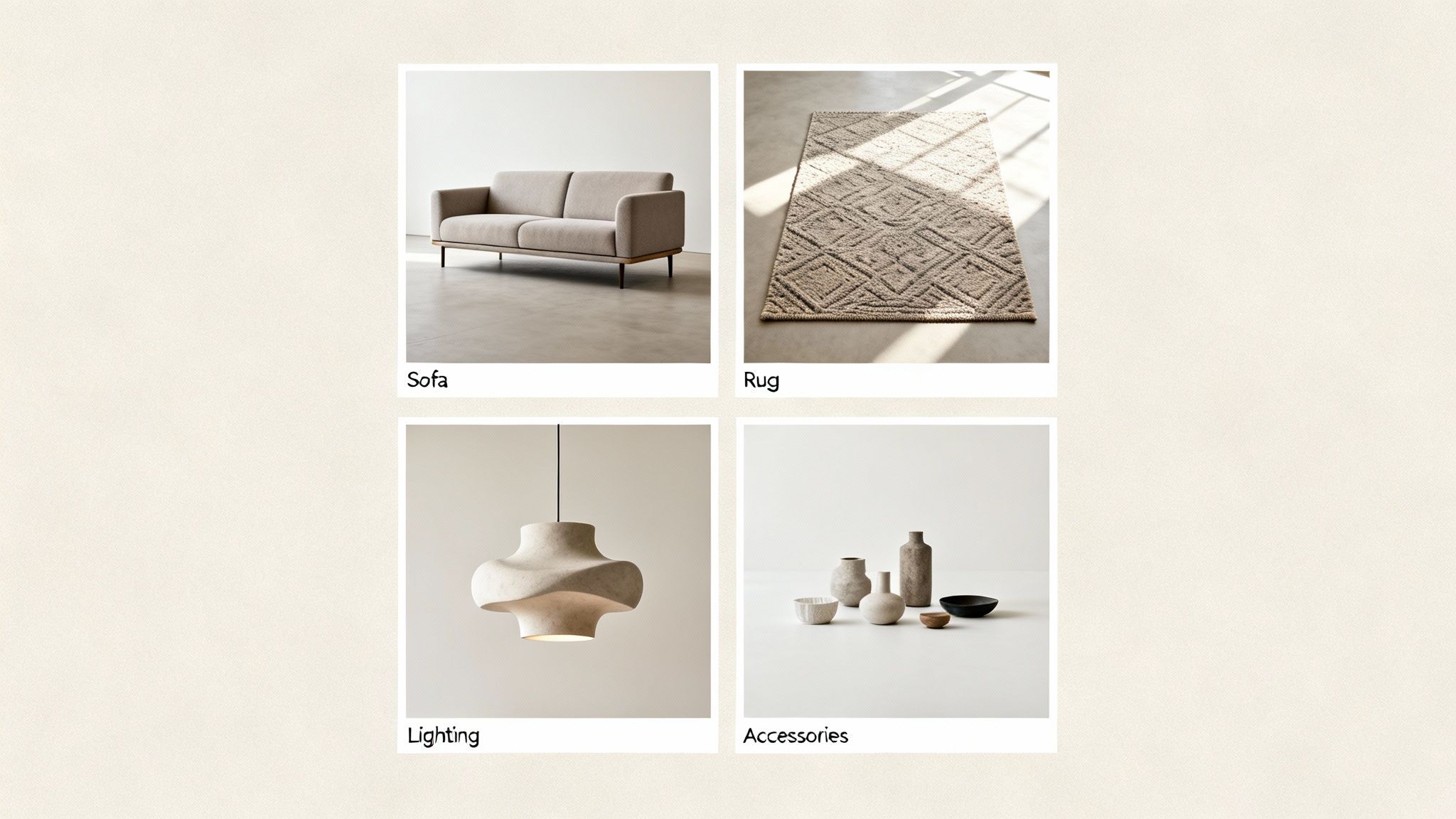
Let's be honest: hunting for a statement sectional is a completely different mission than picking out a new set of dinner plates. The very best home decor websites get this, but it’s still on you to switch up your strategy based on what you’re buying. A one-size-fits-all approach just doesn’t cut it when the cost, size, and shipping headaches vary so dramatically.
The real key to making smart purchases every time is applying those seven pillars we just covered to specific shopping scenarios. This means you’ll prioritize different criteria depending on whether you're investing in a forever-sofa or just adding a small, decorative touch. When you tailor your evaluation, you can navigate any online store with total confidence.
Navigating Large Furniture Purchases
Buying big-ticket items like sofas, beds, or dining tables online can feel like a high-stakes gamble. These pieces have a huge impact on your space, and a mistake is often costly and a real pain to fix. For these kinds of purchases, your focus needs to be laser-sharp on two things: material quality and transparent policies.
This is where you become a material detective. Don't just settle for a generic "wood finish" description. You need to dig for specifics—is it "solid kiln-dried oak" or "MDF with a walnut veneer"? The best sites aren’t afraid to give you that level of detail. Just as crucial are the return policies. Since you can't exactly test-drive a sofa for comfort, a fair and clear return policy is your only safety net.
Look for sites that offer a generous return window—at least 30 days—and spell out who pays for return shipping on bulky items. This information speaks volumes about the brand's confidence in its own products.
And don’t forget to scour the reviews for customer photos. These real-world images are pure gold for judging an item's true color and scale, cutting right through the polished perfection of professional product shots.
Selecting Rugs and Textiles Online
When it comes to shopping for rugs, throws, or curtains, the biggest challenge is judging texture and color through a screen. This is where high-quality imagery and visual inspiration become your best friends. The top-tier websites know this and provide ultra-high-resolution photos that let you zoom way in to see the actual weave and texture up close.
Many leading rug retailers are now rolling out "view in your room" augmented reality (AR) features. These tools are surprisingly good, using your phone's camera to digitally place a rug on your floor so you can get a real sense of its size and pattern in your own space.
For any textiles, keep an eye out for these details on the product page:
-
Pile Height (for rugs): This number (e.g., 0.5 inches) is a dead giveaway for how plush or flat a rug will actually feel underfoot.
-
Material Composition: Is that cozy throw blanket 100% merino wool or a synthetic blend? This detail tells you everything about its feel, durability, and care.
-
Care Instructions: When a brand makes cleaning info easy to find, it shows they’re thinking about the product's long-term life in your home.
Finding Lighting and Small Accessories
For smaller finds like lamps, vases, and other decorative objects, it’s all about product curation. These are the pieces that inject personality and flair into a room, so you want a site that has already done the hard work of sourcing interesting, well-designed items for you. This is where those niche boutiques and thoughtfully curated collections really shine.
The North American market is a powerhouse for home decor, and it's expected to account for a commanding 38% of global revenue in 2025. This growth is fueled by a strong consumer appetite for frequent home updates, which has flooded the internet with options. To make your life easier, it helps to use platforms that let you search home decor products effectively and cut through the noise.
One last tip for smaller items: always double-check the dimensions. It is incredibly easy to misjudge the scale of a vase or table lamp from a photograph. The best sites will always list the height, width, and depth, saving you from the disappointment of unboxing something that’s way bigger—or smaller—than you imagined.
Telling Good from Bad: How to Spot Quality and Sustainable Materials
These days, smart shoppers are looking for a whole lot more than just a good deal. We want to know the story behind our stuff—where did it come from? What’s it actually made of? Was it created with respect for the planet and the people who made it?
This shift in thinking has lit a fire under the best home decor websites, pushing them to be more transparent. They’re making it easier for us to find and invest in pieces that aren't just beautiful, but are genuinely built to last.
Figuring out what's truly high-quality and what's just clever marketing takes a little detective work. It’s all about learning to read between the lines of a product description and recognizing the tells of a brand that’s truly committed. Think of it like grocery shopping—you learn to ignore the flashy claims on the front of the box and flip it over to read the actual ingredients.
The good news? The best brands make this easy because they’re proud of their standards. They know that quality and conscious consumerism are huge selling points.
What “Sustainable” Actually Looks Like
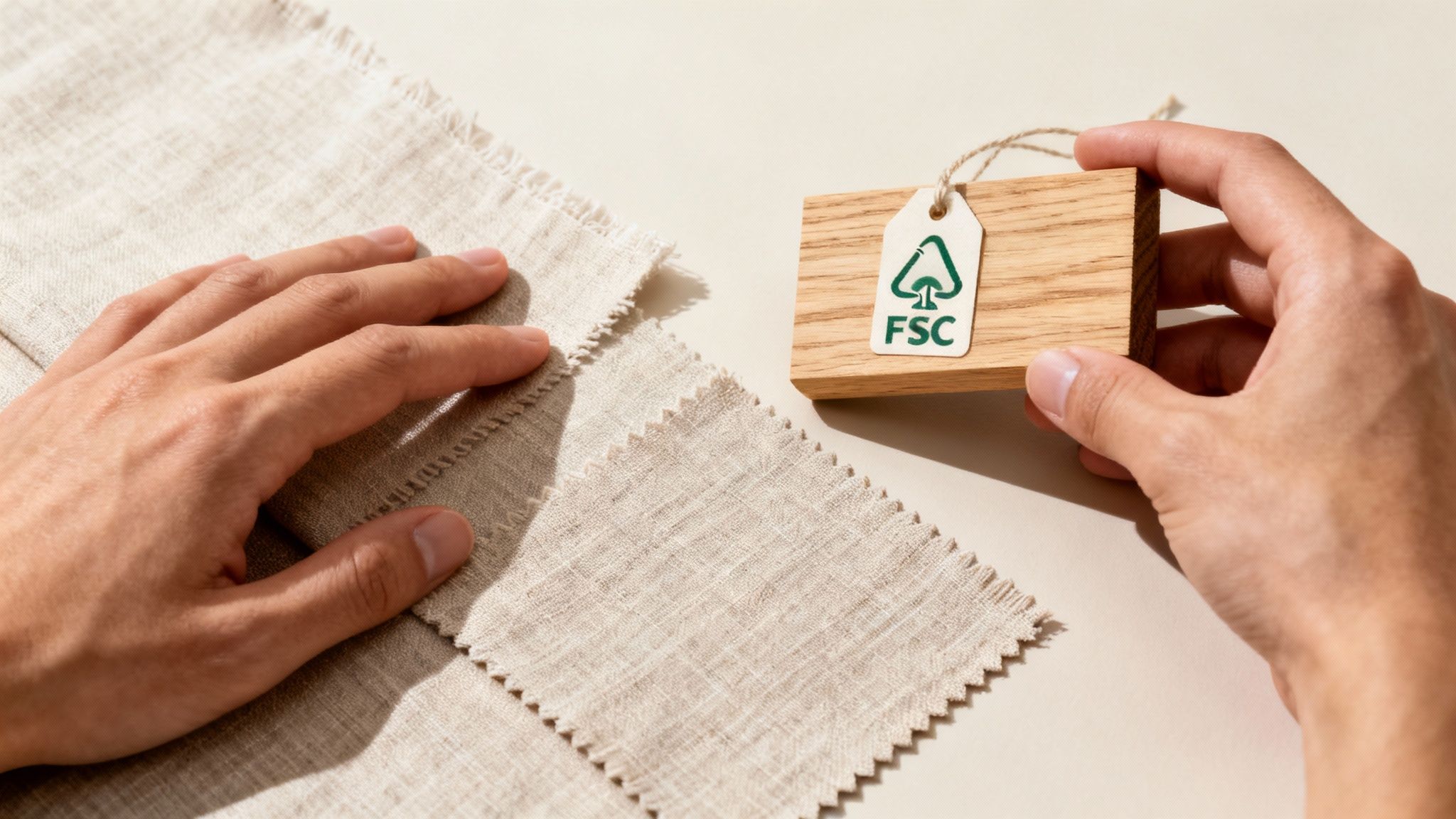
When you’re browsing, the first thing to zero in on is how specific they get with materials. Vague terms like “natural fibers” or “wood construction” should raise an eyebrow. A trustworthy site will tell you exactly what you’re buying.
Sustainability is a huge deal in home decor right now. Textiles and furniture are leading the charge as more of us demand eco-friendly options. In fact, home furniture alone is on track to make up 28.60% of the global home decor market's revenue by 2025, with a massive lean towards sustainable woods and modular designs. You can dig into more data on the growth of the home decor market on futuremarketinsights.com.
This trend means more brands are eager to show off their green credentials. Here are the real signs of a brand that’s walking the walk:
-
Official Certifications: Keep an eye out for legit labels like FSC (Forest Stewardship Council) for wood, GOTS (Global Organic Textile Standard) for fabrics, or Fair Trade for ethically made goods. These aren't just buzzwords; they mean a company has passed a tough, third-party inspection.
-
Recycled and Reclaimed Materials: Brands using recycled content—like rugs made from plastic bottles or tables built from reclaimed barn wood—are actively designing waste out of the system.
-
Non-Toxic Finishes: A focus on low-VOC (Volatile Organic Compounds) paints and natural, chemical-free finishes is a great sign that a product is healthier for your home and the planet.
The Hallmarks of Quality Construction
Beyond sustainability, you need to be able to judge the craftsmanship. Since you can’t exactly knock on a table or feel the weight of a chair through your screen, the product page has to do all the heavy lifting for you. The best sites give you a ton of information to help you figure out if an item will hold up to real life.
A well-crafted piece of furniture is an investment, not a disposable trend. The details on a product page—from the type of wood joinery to the fabric's rub count—are the clues that tell you if that investment will pay off for years to come.
Pay close attention to the language. High-quality brands use very specific terms to describe how things are made because it signals superior durability. For a deeper dive, you might find our guide on top sustainable furniture brands useful—it highlights companies that obsess over these very details.
Your Quality-Spotting Checklist for Any Product Page
To become a pro at spotting quality online, train your eyes to look for these three things on every product page. They'll give you the most reliable clues about whether a piece is built to last.
-
Material Specifics: Is that table made from solid oak, or is it just MDF with a thin wood veneer? Is the sofa upholstered in 100% top-grain leather, or a "bonded" leather composite that will peel in a year? These details make a world of difference in how an item wears over time.
-
Construction Details: For furniture, look for phrases like “kiln-dried hardwood frame” (which prevents warping) or “dovetail joinery” (a classic sign of strong, skilled craftsmanship). For textiles, check the “double rub count,” which is a standardized test that tells you how durable the fabric is.
-
High-Resolution Imagery: A brand that’s confident in its quality will give you crystal-clear photos. They’ll let you zoom way in to see the wood grain, the stitching on a cushion, or the texture of a rug. If the images are blurry or only show the item from a distance, it’s a huge red flag.
Your Pre-Purchase Smart Shopper Checklist
Alright, you've learned what makes a store great and how to spot quality materials from a mile away. Now it's time to put it all into practice. Think of this checklist as your final walkthrough before you hit that "confirm purchase" button.
It’s a simple, three-step routine that helps you catch common slip-ups and make sure every piece you bring home is one you'll absolutely love. Following these steps will shift you from just browsing to buying with total confidence. Let’s get into it.
Step 1: Pre-Purchase Research
Before you fall head-over-heels for that perfect armchair, a few minutes of homework can save you a world of hurt. This is all about checking the store's credibility and knowing the rules before you play the game.
First up, find the return policy and actually read it. Is there a 30-day window? If that huge media console shows up damaged, will they cover the return shipping, or are you stuck with a massive freight bill? A straightforward, fair policy is one of the best signs of a trustworthy retailer.
Next, venture beyond the website. Do a quick search for the store’s name plus "reviews" to see what people are saying on third-party sites. This is where you get the real, unfiltered scoop on everything from shipping delays to customer service wins.
Step 2: Product Page Scrutiny
Time to put on your detective hat. The product page is packed with clues that tell you whether an item will truly fit your space and live up to your expectations. Don't just glance—dig in.
Your main targets are the dimensions and materials.
-
Verify Measurements: Seriously, grab a tape measure. Compare the listed height, width, and depth to your actual space. It's so easy to misjudge scale on a screen.
-
Check Material Specifics: Don’t settle for vague terms. You want to see "solid acacia wood," not "wood composite." Is that throw blanket "100% linen" or just a "polyester blend"? Hazy descriptions are a definite red flag.
-
Analyze High-Resolution Images: Zoom in on every single photo. Look at the texture, the stitching on the upholstery, the joints on wooden furniture, and the evenness of the finish. The best sites aren't afraid to show you the details up close because they stand by their quality.
A product page isn’t just a sales pitch; it's a contract of expectations. Scrutinizing the details ensures the reality of what arrives on your doorstep matches the vision you fell in love with online.
Step 3: Secure Checkout Confirmation
You’ve done your homework, you love the piece, and you're ready to make it yours. This final step is all about making sure the checkout process is transparent and secure, so you don't get hit with surprises.
Before your fingers even touch the keyboard to enter payment info, double-check the total cost. Look for any sneaky shipping fees, taxes, or handling charges that weren't obvious before. A reputable store will show you a clear, itemized breakdown before asking for a dime.
Finally, give the website's security a quick glance. You should see a little padlock icon in your browser's address bar and the URL should start with "https://," not just "http://." That "s" means your connection is encrypted, keeping your personal and financial details safe.
Following this simple system takes the guesswork out of the equation, empowering you to make purchases you'll be happy with for years to come.
Answering Your Top Home Decor Shopping Questions
Diving into the world of online decor can feel a bit like a leap of faith. Even with a solid plan, it’s normal to have a few questions before you click "buy." After all, you’re inviting these pieces into your home, sight unseen.
To help you shop with total confidence, we’ve rounded up the most common questions we hear from shoppers trying to find the best home decor websites. Here are the clear, straightforward answers you need to make your next decor hunt a massive success.
How Can I Judge the Quality of Decor Without Seeing It in Person?
This is the big one, isn't it? Without being able to run your hand over a fabric or test the sturdiness of a chair, how do you know you're getting something that will last? The best online stores get this, and they give you the tools to bridge that gap.
First, look for high-resolution photos from every angle and, ideally, videos. A great site will show you the product in a real-life setting, zoom in on the details, and often include a short clip that gives you a sense of its texture and scale. This visual proof is your first and best clue.
Second, become a detective when you read product descriptions. Vague language is a major red flag. You want to see specifics that show a real commitment to quality, like "solid, kiln-dried acacia wood" instead of just "wood construction," or "100% top-grain leather" instead of a flimsy "bonded leather." The details make all the difference.
Customer reviews with photos are your secret weapon. They give you an unfiltered peek at the product’s true color and size in a real home, cutting through the perfect lighting and styling of professional shots.
Finally, a truly premium brand might offer material swatches for big-ticket items like sofas or armchairs. Getting these little samples of fabric or wood in your hands is a fantastic way to judge the color and feel for yourself. Any company that’s confident in its quality is happy to send them.
What Are the Biggest Red Flags on a Home Decor Website?
Just as there are signs of quality, there are definite warning signs that should make you hit the brakes. Spotting these can save you a ton of frustration and buyer's remorse down the line.
The most glaring red flag is a sloppy, unprofessional website design. If a site is full of blurry images, typos, or broken links, it signals a lack of care that probably extends to their products and customer service. A slow, clunky site is another immediate turn-off.
Next, do a little digging into their contact and policy pages.
-
Vague or Missing Contact Info: A real business makes it easy to get in touch. Look for a physical address, a customer service phone number, and a dedicated email. If it's hard to find, they might not want to be found.
-
A Tricky Return Policy: Always, always read the return policy before you buy. If it’s buried, confusing, or feels overly restrictive (like super short return windows or high restocking fees), think twice.
-
Only Gushing Five-Star Reviews: It might sound good, but a site with nothing but perfect, generic reviews could be hiding something. Real review sections have a healthy mix of detailed praise and some constructive feedback.
Finally, make sure the checkout is secure. Before you type in a single credit card number, check that the URL starts with "https://" and you see a little padlock icon in your browser’s address bar. This is non-negotiable—it means your data is encrypted and safe.
Are Niche Boutique Websites Better Than Large Retailers?
This is a classic debate, but the truth is, one isn't "better" than the other. They just serve different needs. The smartest way to shop is to understand what each does best and use them both to create a home that’s uniquely yours.
Large retailers like Wayfair or The Home Depot are amazing for their huge selection and competitive pricing. If you need the basics, are on a tight budget, or just want to see a massive range of options for one specific thing, these marketplaces are incredible resources. The only downside is that the sheer volume can sometimes lead to decision fatigue.
On the other hand, niche boutique websites offer a totally different, more focused experience. These shops are all about highly curated, unique selections. They have a specific point of view, making them the perfect place to find those artisanal, high-quality statement pieces you won't see in everyone else's home.
Think of it this way: a large retailer is the supermarket where you get all your essentials. A niche boutique is the local artisan bakery where you go for that one-of-a-kind loaf of bread that makes the whole meal. A well-designed home needs both. Use the big stores for the functional workhorses and turn to the boutiques for the special pieces that make your space feel like you.
Ready to discover a collection where every piece is handpicked for its style, quality, and craftsmanship? At Fluent Trends, we bring together designer-approved aesthetics with the transparency and service you deserve. Explore our curated furniture, decor, and tabletop essentials to find pieces that will truly elevate your home.