

Best Modern Dinnerware Sets: Top Picks for a Chic Table
Donna MalonePicking out the best modern dinnerware set is about so much more than just finding pretty plates. It's about curating a collection that truly works for you—one that nails the balance between great design, everyday function, and your own personal style. Today's best sets are all about minimalist aesthetics, smart materials, and versatile shapes (like the ever-popular 'blate') built for the way we live and eat now.
What Makes a Dinnerware Set Truly Modern?
Try to think of your dinnerware as more than just a place to put your food. It’s a key player in your home's overall vibe and a set of tools that should make your daily routine a little easier and a lot more beautiful. The whole idea of "modern" here isn't one specific look; it's more of a philosophy that champions simplicity, practicality, and thoughtful design.
A truly modern dinnerware set just feels right for right now. It trades the fussy, elaborate patterns of old-school china for clean lines, organic shapes, and sophisticated, understated finishes. These sets are designed for how we actually eat—think deeper bowls perfect for pastas and grain bowls, and do-it-all plates that look just as good holding a quick Tuesday morning breakfast as they do a Saturday night dinner with friends.
The Core Principles of Modern Design
Modern dinnerware isn't a fleeting trend. It’s a design approach built on a few simple, powerful ideas. Once you get a feel for them, you’ll be able to spot the perfect set for your home in no time.
-
Function Over Formality: Modern sets are made for real life, period. That means they are almost always dishwasher and microwave safe, stack neatly to save you precious cabinet space, and are tough enough to handle daily use without chipping. The goal is ease and convenience, not just looking pretty for a special occasion.
-
Minimalist Aesthetics: You'll recognize modern style by its clean lines, uncluttered surfaces, and often neutral or muted color palettes. This isn't code for boring. Instead, the beauty shines through in the piece's shape, texture, and the quality of the material itself, not from a bunch of busy decoration.
-
Innovative and Sustainable Materials: While classics like porcelain and stoneware are still cornerstones of dinnerware, the modern approach also welcomes new and eco-friendly options. It's not uncommon to find beautiful sets made from recycled glass, bamboo, or even high-quality, durable melamine that's perfect for taking the party outside.
-
Versatility in Every Piece: The days of needing a special plate for every conceivable course are long gone. Modern collections are all about multi-functional pieces. The 'blate'—that clever hybrid of a bowl and a plate—is a perfect example, ideal for everything from a big salad to a hearty stew. This kind of versatility means you can do more with fewer pieces.
At its heart, the best modern dinnerware set is one that fits so seamlessly into your life you barely have to think about it. It should feel just as right for a quiet meal alone as it does for a table full of friends, making the moment better without asking for any extra fuss.
This guide will walk you through everything you need to know, from telling the difference between bone china and stoneware to spotting the small details that signal quality and longevity. We're here to help you go beyond just buying dishes and start building a collection that makes every meal feel a little more special.
What Are Your Dishes Really Made Of? A Guide to Modern Dinnerware Materials
Picking out a new dinnerware set is about more than just color and pattern. The material itself is the foundation—it dictates the look, the feel, the weight, and, most importantly, how well the dishes will hold up to your daily life. It’s the difference between a set that lasts decades and one that chips the first time you load the dishwasher.
From the elegant, almost translucent quality of bone china to the earthy, substantial feel of stoneware, each material brings its own personality to your table. This choice is a big deal, and it's something people are willing to invest in. The global ceramic dinnerware market was valued at a whopping USD 90.74 billion in 2024 and is expected to climb to USD 156.05 billion by 2035. That's because more and more of us are looking for that perfect blend of style and durability that fits a modern home.
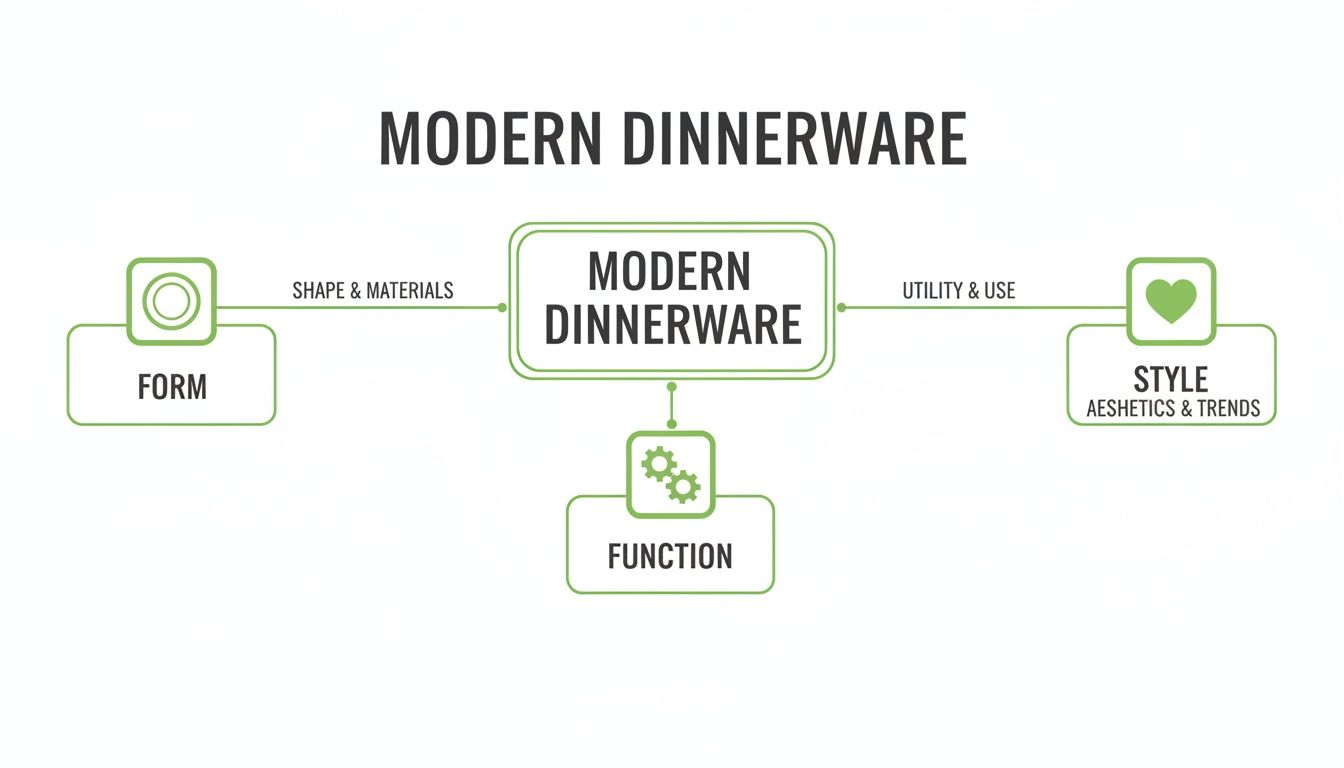
As this shows, the best dinnerware hits the sweet spot where form (the material and shape), function (how you use it), and style (the look you love) all come together.
The Classic Ceramics: Porcelain and Bone China
When you think of classic, high-quality dinnerware, you’re probably picturing porcelain. It’s the true workhorse of the ceramics world. Fired at incredibly high temperatures, porcelain is non-porous, tough as nails, and has a sleek, refined finish. It’s like the perfect white t-shirt of dinnerware—effortlessly stylish for a fancy dinner party but durable enough for Tuesday night tacos.
Bone china is porcelain’s more elegant cousin. The secret ingredient is, you guessed it, bone ash. This addition makes the final product remarkably thin, lightweight, and gives it a signature translucent, creamy-white glow. But don't let its delicate appearance fool you. Bone china is often stronger and more resistant to chipping than standard porcelain, making it a fantastic investment for those who want beauty backed by brawn.
The Earthy Alternatives: Stoneware and Earthenware
If you're drawn to a more rustic, handcrafted vibe, stoneware is your go-to. It’s thicker and heavier than porcelain, often finished with beautiful, speckled glazes that make each piece feel unique. Think of it like a favorite ceramic mug—it’s comforting, sturdy, and perfect for everyday, cozy meals.
Stoneware is prized for its durability and warm, organic aesthetic, making it an excellent choice for daily use. Just be aware that if it's not fully glazed, its slightly porous nature can make it more prone to chipping or cracking with sudden temperature shifts.
Earthenware is one of the oldest types of pottery, and it has a distinctly rustic, handmade charm. It’s thick and often has a beautiful, raw feel. However, it's the most fragile of the bunch. Because it's more porous, it chips easily and often isn't safe for the microwave or dishwasher, making it better for special occasions or decorative pieces.
To see how two of the most popular options compare head-to-head, take a look at our detailed guide on stoneware vs. porcelain dinnerware.
To help you visualize the differences, here’s a quick comparison of the most common materials.
Modern Dinnerware Material Comparison
| Material | Key Characteristics | Best For | Care Level |
|---|---|---|---|
| Porcelain | Non-porous, very durable, chip-resistant, microwave & dishwasher safe. | Everyday use and formal dining. A true all-rounder. | Low |
| Bone China | Lightweight, translucent, surprisingly strong, elegant. | Formal occasions but durable enough for daily use. | Low-Medium |
| Stoneware | Opaque, thick, sturdy, often with a rustic or speckled glaze. | Casual, everyday meals and cozy gatherings. | Low-Medium |
| Earthenware | Porous, thick, rustic, and the most fragile of the ceramics. | Decorative use or very occasional, gentle serving. | High |
| Melamine | High-quality plastic, lightweight, virtually unbreakable. | Outdoor dining, picnics, and families with kids. | Low |
| Vitrified Glass | Thin, lightweight, highly chip- and break-resistant. | Busy households that need durable, space-saving dishes. | Low |
| Bamboo | Eco-friendly, lightweight, sustainable, natural look. | Casual meals, outdoor use, and eco-conscious homes. | Medium (Hand-wash) |
This table shows there’s a material for every lifestyle, from the nearly indestructible to the exquisitely delicate.
Contemporary and Casual Materials
Ceramics aren't the only game in town. A few other materials have become incredibly popular, especially for more casual settings.
-
Melamine: This isn't your grandma's picnic-ware. Modern melamine is a durable, high-quality plastic that is almost impossible to break. It’s light, comes in endless patterns, and is dishwasher-safe, making it the undisputed champion for backyard BBQs or households with small children.
-
Vitrified Glass: You probably know this material by the brand name Corelle. It’s made by laminating layers of glass together, creating a plate that is exceptionally resistant to chips and breaks. Plus, it's incredibly thin and lightweight, so it stacks neatly and saves a ton of cabinet space.
-
Bamboo: For those looking for a sustainable option, bamboo is a fantastic choice. It's a fast-growing, renewable resource that produces lightweight, durable, and biodegradable dinnerware with a wonderfully natural, modern look. It usually needs to be hand-washed, but it’s a small trade-off for its eco-friendly credentials.
Ultimately, choosing the right material comes down to balancing how you live, what you need, and the style you love. Whether you go for the timeless elegance of bone china or the rugged charm of stoneware, understanding what they’re made of is the first step to finding a set you'll be happy to eat off of for years.
What Makes a Dinnerware Set Great?
Picking the right material is step one, but it’s the little details—the specific features—that separate a good dinnerware set from a truly great one. These are the practical things that make a set a joy to use day in and day out, not just something pretty to look at.
Think of it like buying a great coat. The fabric matters, of course, but it’s the deep pockets, the sturdy zipper, and the comfortable lining that you’ll appreciate every single time you wear it. For dinnerware, these features are all about making your life easier.
Is It Built for Real Life?
In a busy home, convenience isn't a luxury; it's a necessity. We just don't have time to hand-wash delicate dishes after every meal. That's why these features have become the gold standard for any set worth its salt.
-
Microwave-Safe: Popping leftovers on a plate and hitting 'reheat' is a modern-day ritual. You need dishes that can handle it. High-quality ceramics like porcelain and stoneware are fired at incredibly high temperatures, making them stable enough to go in the microwave without cracking or getting scarily hot to the touch.
-
Dishwasher-Safe: This is the ultimate time-saver, no questions asked. Look for sets that are explicitly marked "dishwasher-safe." It's a promise from the manufacturer that the material and glaze can stand up to high heat and harsh detergents, cycle after cycle, without fading or chipping.
-
Oven-Safe (The Ultimate Bonus): Some stoneware and porcelain sets can even go into the oven, usually up to around 350°F. This is a fantastic perk for keeping a dish warm before everyone sits down to eat, or even for baking a small appetizer right in the serving bowl.
This craving for beautiful, yet hardworking, dinnerware is reshaping the industry. The global market for porcelain tableware alone is expected to more than double, hitting USD 21,552.2 million by 2035. Why? Because we all want dishes that look fantastic but can also handle the realities of a modern kitchen.
Smart Design for Durability and Storage
Beyond the basics, the best dinnerware is simply designed better. It’s engineered to last and to be stored without a headache. A gorgeous plate isn't much use if it chips the first time you put it in the cupboard.
A truly well-designed dinnerware set doesn't just look good on the table; it performs beautifully in the cabinet. Thoughtful design considers the entire lifecycle of a piece, from serving to cleaning to storing.
Chip and Scratch Resistance is a big one. The secret here is in the glaze. A hard, expertly applied glaze is like a coat of armor for your dishes, fending off scratches from forks and knives and protecting against accidental bumps. No ceramic is totally bulletproof, but a premium set is noticeably tougher. For a deeper dive into what makes some dishes stronger than others, check out our guide to the best quality dinnerware sets.
Stackability might sound minor, but it reveals a lot about the quality of the design. Plates and bowls with a consistent shape and a low-profile rim stack into a neat, stable tower. This saves a ton of cabinet space and prevents that wobbly, nerve-wracking lean that can lead to chips.
The Overlooked Power of "Open Stock"
Finally, here’s a pro tip: always look for open stock availability. It’s one of the most practical features you can find. "Open stock" simply means you can buy individual pieces from the collection, not just the whole boxed set.
Let’s be real, life happens. A bowl gets dropped, a mug gets a crack, or you realize you need a few extra plates before hosting a party. If your set is open stock, you can just buy a single replacement. This is a huge advantage over "set-only" collections, where one broken piece means your set is forever incomplete. Choosing an open-stock set is a smart move that protects your investment for years to come.
Matching Dinnerware Style to Your Home
Your dinnerware is so much more than just a bunch of plates and bowls; it’s a direct extension of your home's personality. Think of choosing the right set like picking out the perfect piece of art. It should feel like it belongs in the space, reflect your personal taste, and make you happy every time you pull it out of the cupboard.
The best modern dinnerware sets are designed to blend right into your life, elevating your decor instead of clashing with it. Your dining table is the canvas, and your dinnerware is the final brushstroke that brings the whole picture together. Whether your home is a minimalist sanctuary or a vibrant, colorful retreat, there’s a style that will feel just right.
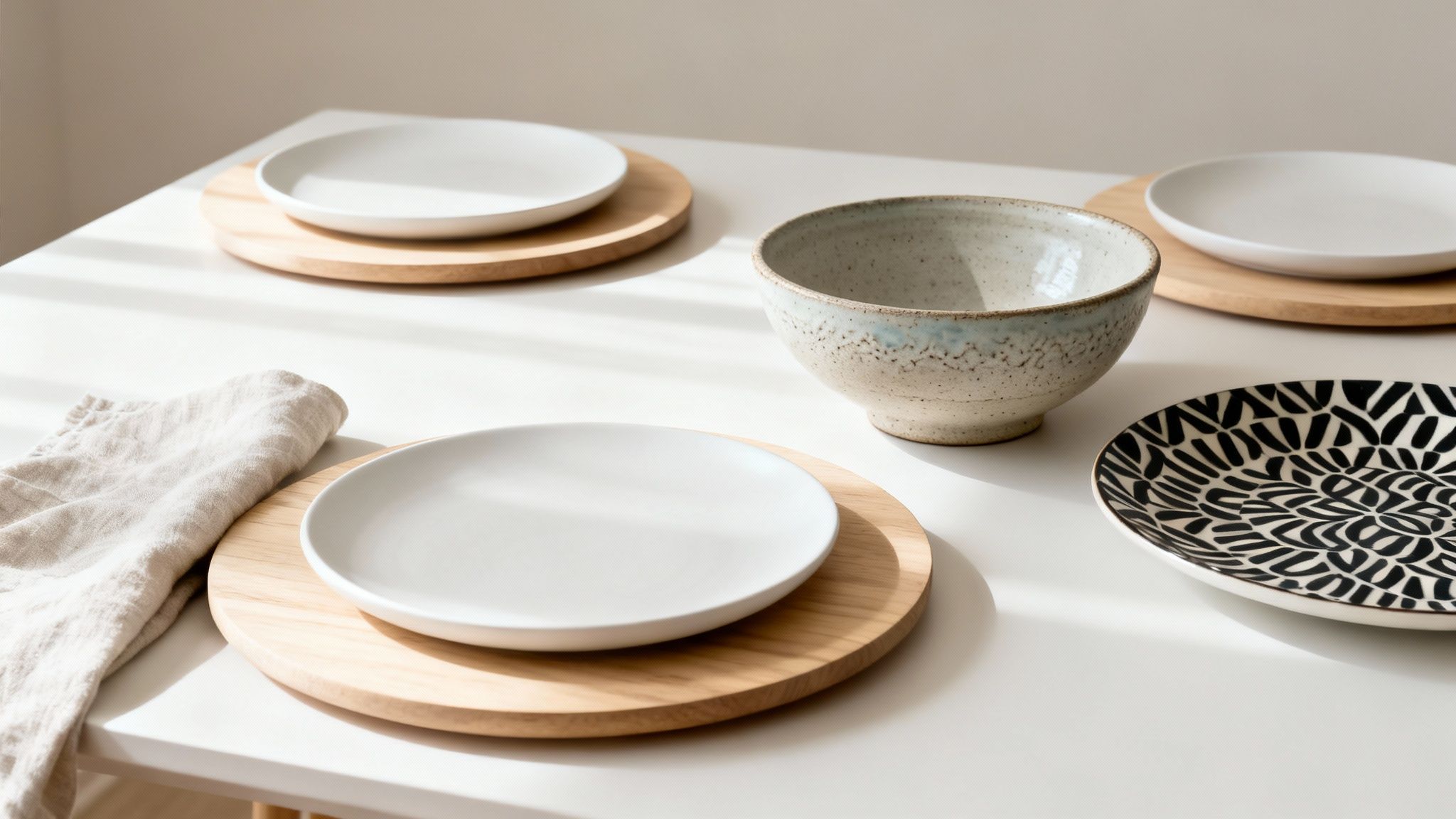
Scandinavian Minimalism: Clean Lines and Muted Tones
Is your home all about clean lines, natural light, and a "less is more" mindset? A Scandinavian-inspired dinnerware set will be a perfect match. This style is all about simplicity and function, usually featuring a quiet color palette of whites, grays, beiges, and soft pastels. The real beauty is in the subtle details—a gentle coupe shape, a soft matte finish, or a delicate, thin rim.
These sets are the true chameleons of the dinnerware world. Their understated elegance makes them incredibly versatile, looking just as good for a quick weekday breakfast as they do for a formal dinner party. They create a calm, uncluttered backdrop that lets your food be the star of the show.
Artisanal and Organic: Earthy Textures and Unique Glazes
If your home leans more rustic, bohemian, or eclectic, artisanal dinnerware can add a wonderful layer of warmth and character. This style celebrates imperfection. You’ll find organic shapes, slightly uneven edges, and unique reactive glazes that guarantee no two pieces are exactly the same. The textures are often earthy and tactile, making you want to pick them up and hold them.
These sets often come in rich, nature-inspired colors like deep ocean blues, mossy greens, and sandy terracottas. They bring a handcrafted, personal feel to your table, making every meal feel a little cozier and more grounded.
Bold and Graphic: Patterns That Make a Statement
For those who love color and aren't afraid to go bold, modern graphic dinnerware is a fantastic choice. This style uses striking geometric patterns, abstract designs, or vibrant color-blocking to turn every meal into a mini celebration. It's a brilliant way to inject personality and energy into a dining space, especially one with otherwise neutral decor.
Don't be afraid to mix and match. A set of bold appetizer plates can be the perfect complement to your everyday minimalist dinner plates, allowing you to create a dynamic, layered look for special occasions without committing to a full patterned set.
The trick is to choose patterns that connect with other elements in your home, whether it’s a piece of art, a throw pillow, or a colorful area rug. This creates a cohesive look that feels intentional and well-curated. How you store and display these sets also matters, as the overall aesthetic of your kitchen plays a huge role. For some great ideas, check out these tips for organizing your kitchen for a tidy space.
The market is always changing to meet these stylistic demands. Trends for 2025 are pointing toward textured ceramics, minimalist stackable designs for smaller homes, and versatile mix-and-match pieces. This reflects a growing global porcelain market that is projected to reach USD 2.51 billion by 2030. At the end of the day, the goal is simple: find a set that you’ll be genuinely excited to use every single day.
How to Choose the Right Set for Your Lifestyle
Choosing a dinnerware set is a surprisingly personal decision. It goes way beyond just picking a color or pattern; it’s about finding dishes that genuinely fit the rhythm of your life. Before you get lost in the aesthetics, take a minute to think about how you actually live and eat.
Are you juggling rushed weekday breakfasts and chaotic family dinners? Or are you the kind of person who loves crafting a beautiful meal and wants the plate to be part of the presentation? A little self-reflection here is the single best thing you can do to land a set you'll still be happy with years from now.
Assess Your Household and Habits
What works for a solo city dweller is going to be completely different from what a family of five needs. Let's walk through a few common scenarios to help you figure out what your top priorities should be.
For Busy Families:
Your mantra should be durability, durability, durability. You need plates and bowls that can handle the daily grind without you having to constantly worry about chips and cracks.
-
Best Materials: Stick with the workhorses like porcelain, vitrified glass (think Corelle), or a really solid stoneware. These are built to last.
-
Key Feature: Non-negotiable: Every single piece must be 100% dishwasher and microwave safe. Anything less is just creating more work for yourself.
-
Piece Count: Go for a service for 8 or 12. This gives you plenty for the family, a few extras for guests, and a buffer for the inevitable moment a piece gets broken.
For Couples or Individuals:
You’ve got a lot more freedom to play with style and unique pieces. This is where you can prioritize aesthetics and space-saving designs, which is a huge plus in smaller homes or apartments.
-
Best Materials: The world is your oyster. Feel free to explore delicate bone china, earthy, handmade stoneware, or anything in between.
-
Key Feature: Stackability is your secret weapon for saving precious cabinet space. Look for sets with low-profile rims that nest together without wobbling.
-
Piece Count: A service for 4 is usually the sweet spot. You can always supplement with a few cool, mismatched statement plates for when friends come over.
The best dinnerware isn't just for special occasions; it's about elevating everyday moments. A set that perfectly matches your lifestyle simplifies cleanup, enhances your meals, and brings a small spark of joy to your daily routine.
For the Passionate Host:
If you live for dinner parties, your dinnerware is a key part of the whole experience. You'll want a versatile and expansive set that makes a statement and can easily accommodate a crowd.
-
Best Materials: Bone china or high-quality porcelain are fantastic choices. They have a timeless, elegant look that instantly elevates a table setting.
-
Key Feature: Check for "open stock" availability. This is critical. It means you can easily buy a single replacement plate or add serving platters and pasta bowls to your collection down the road.
-
Piece Count: Start with a service for at least 12. From there, think about adding essential serving pieces like a large platter, a few serving bowls, and maybe even a gravy boat for holiday meals.
Your Modern Dinnerware Decision Checklist
Feeling a little overwhelmed? No problem. This checklist is a simple tool to help you think through your specific needs and zero in on what truly matters for your home.
| Consideration | For a Family | For a Couple/Individual | For a Frequent Host |
|---|---|---|---|
| Primary Goal | Durability & Convenience | Style & Space-Efficiency | Elegance & Versatility |
| Material Focus | Porcelain, Vitrified Glass | Stoneware, Bone China | Bone China, High-End Porcelain |
| Must-Have Feature | Dishwasher/Microwave Safe | Stackability | "Open Stock" Availability |
| Ideal Piece Count | Service for 8-12 | Service for 4 | Service for 12+ |
| Budget | Mid-Range ($$) | Flexible ($ - $$$) | Investment ($$$) |
Use this as your guide. Being honest about your dining habits, storage space, and how much you really want to spend will make the final decision much easier.
Decoding Place Settings and Piece Counts
When you're shopping, you’ll see sets sold as "service for 4," "service for 8," and so on. A classic 5-piece place setting is old-school formal: it includes a dinner plate, salad plate, bread plate, teacup, and saucer.
Honestly, most modern sets have adapted to how we eat now. They usually ditch the teacup and saucer for a much more useful mug and a deep soup or cereal bowl.
A great rule of thumb is to have at least two to four more place settings than the number of people in your house. For a family of four, that 16-piece "service for 4" set is going to feel tight very quickly. A 24-piece set (service for six) gives you a much more comfortable buffer, ensuring you're not stuck washing dishes in the middle of a party.
Caring for Your Dinnerware to Make It Last
So, you've found the perfect modern dinnerware set that feels just right for your home. Now, how do you keep it looking that way for years to come? The secret isn't about tons of work; it's about building a few simple, smart habits. With the right care, you can fend off the chips, scratches, and fading that can make even the best dishes look tired.
Think about loading your dishwasher. It's not just about fitting everything in; it's about giving each piece its own space. When plates rattle against each other during a wash cycle, that's when chipping happens. Giving them a little breathing room is the easiest way to prevent this.
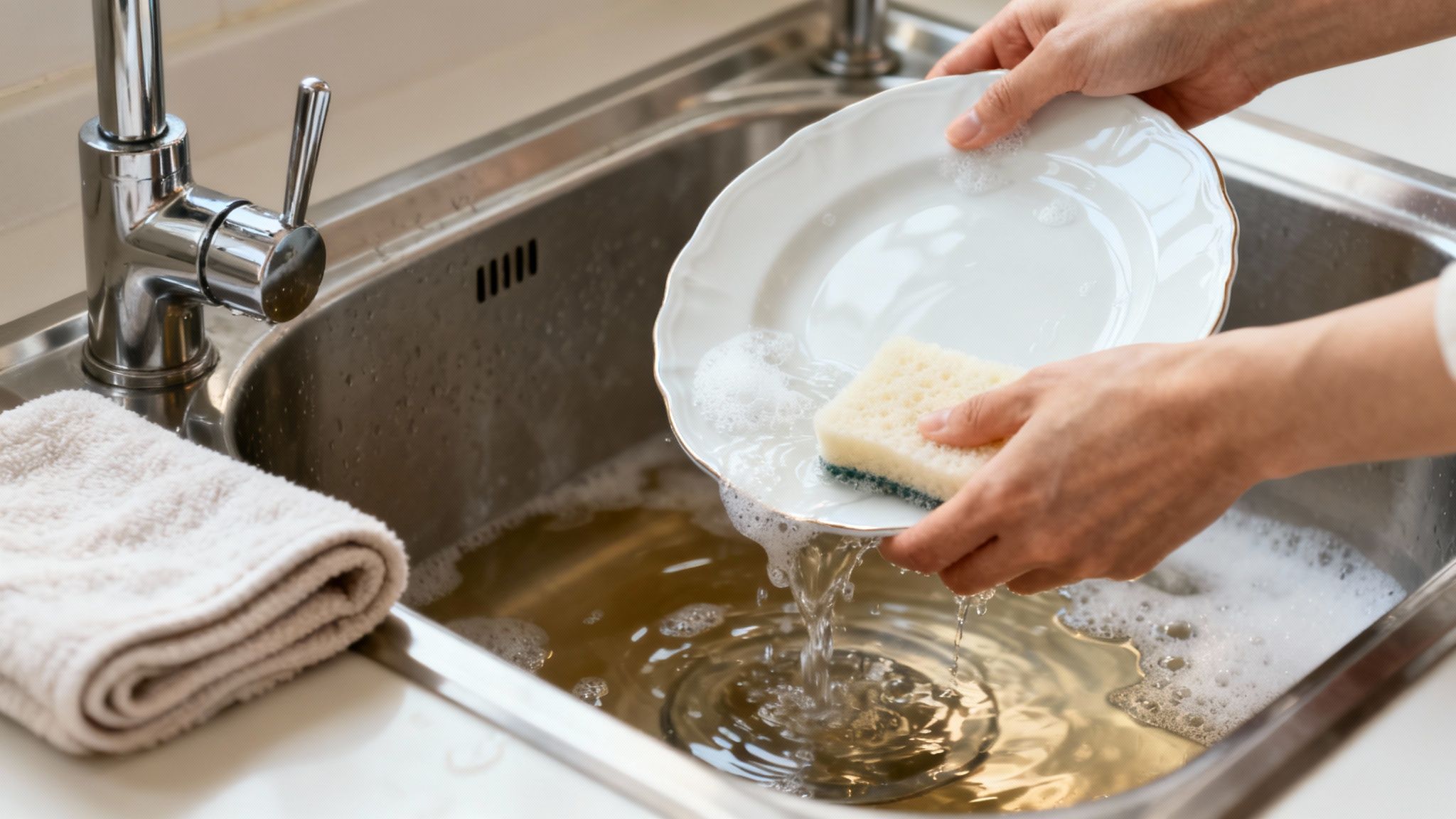
Of course, for those extra-special pieces—like hand-painted stoneware or anything with gold or platinum accents—handwashing is your best friend. A soft sponge and gentle soap are all you need. Steer clear of abrasive pads, which can easily scratch those beautiful glazes and finishes.
Pro Tips for Common Problems
Even when you're careful, little things can pop up. Have you ever noticed those faint gray lines on your matte plates? They look like scratches, but they're usually just tiny metal deposits left behind by your silverware.
The good news is that most utensil marks are superficial. They can typically be buffed away with a gentle, non-abrasive paste cleaner, restoring the original finish without damaging the glaze.
Here are a few tricks for keeping your dinnerware looking flawless:
-
Removing Utensil Marks: A paste made from baking soda and water works wonders. You can also use a product like Bar Keepers Friend. Just rub it gently over the marks with a soft cloth and rinse well.
-
Tackling Stains: Coffee and tea have a knack for staining mugs. To lift them, let the mug soak in warm water with a tablespoon of baking soda.
-
Preventing Water Spots: If you live in a hard water area, a rinse aid in your dishwasher is a game-changer. It helps prevent those chalky mineral spots from drying on your clean dishes.
Don't forget that the machine doing the cleaning needs to be clean, too. Your dishes will come out sparkling if you focus on maintaining a clean dishwasher.
Finally, think about storage. Stacking plates and bowls is standard, but adding a small cushion between them can make a huge difference. A simple paper towel, a napkin, or one of those felt plate dividers is all it takes to prevent the glaze from getting scratched, keeping your set looking brand new.
Common Questions About Modern Dinnerware
You're almost there! You've figured out what materials you like, the style that fits your home, and how you'll use your new dishes. But a few lingering questions might still be bouncing around in your head.
Let's tackle those final "what ifs" so you can choose your perfect dinnerware set with total confidence. Think of this as the last-minute chat with an expert before you make your decision.
What Is the Difference Between Porcelain and Bone China?
This is a classic question, and it really comes down to one key ingredient. Porcelain is the tough, all-purpose champion of the dinnerware world. It's made from a dense clay called kaolin that’s fired at incredibly high temperatures, making it super durable and non-porous. It has that familiar, bright white look we all know.
Bone china, as the name suggests, has an extra ingredient: bone ash. This addition makes the final product surprisingly lightweight and thin, with a beautiful, almost translucent quality and a softer, warmer white tone. Don't let its delicate appearance fool you; bone china is remarkably strong, often even more chip-resistant than standard porcelain.
How Many Place Settings Should I Buy?
My go-to rule of thumb is to have enough place settings for your household, plus four to six extras. This simple formula means you’re covered for guests and you won’t have to frantically wash dishes in the middle of a dinner party.
-
For a family of four, a set that serves 8 or 12 is perfect. You'll have plenty for daily use with a comfortable buffer for when friends drop by.
-
For couples or individuals, a service for 4 or 6 is usually the sweet spot. It’s enough for everyday meals without cluttering up your cabinets.
-
If you love hosting, don't hesitate to get a set for 12 to 16. It’s a smart investment that saves a lot of future stress.
The goal is to find that perfect balance—enough dishes for how you really live, without creating a storage nightmare. A few extra settings now are always worth it later.
Are Matte Finish Dinnerware Sets Prone to Scratching?
This is a great question, and something people worry about a lot with matte finishes. The truth is a little more complex than a simple "yes" or "no." Matte glazes can be more likely to show utensil marks. These look like scratches, but they're actually tiny metal deposits left behind by your silverware, not permanent damage to the dish itself.
High-quality stoneware and porcelain with a well-made matte glaze will resist these marks much better. And the best part? Even when they do appear, you can almost always scrub them away with a gentle abrasive cleaner. A simple paste of baking soda and water or a product like Bar Keepers Friend usually does the trick. It's always a good idea to peek at customer reviews to see how a specific set’s finish holds up to real-world, daily use.
Ready to elevate your dining experience? Explore the curated collection of modern dinnerware at Fluent Trends. Find the perfect set that blends timeless design with everyday durability.
.