

Finding the Best Online Home Furnishing Stores
Donna MaloneTrying to find the right online furniture store can feel like you’re lost at sea. There are thousands of options out there, and while the best online home furnishing stores nail that perfect blend of style, quality, and value, figuring out which ones they are is the real challenge. Without a clear game plan, it’s easy to get overwhelmed. This guide will give you a simple framework to shop with confidence.
How to Navigate the World of Online Furniture Shopping
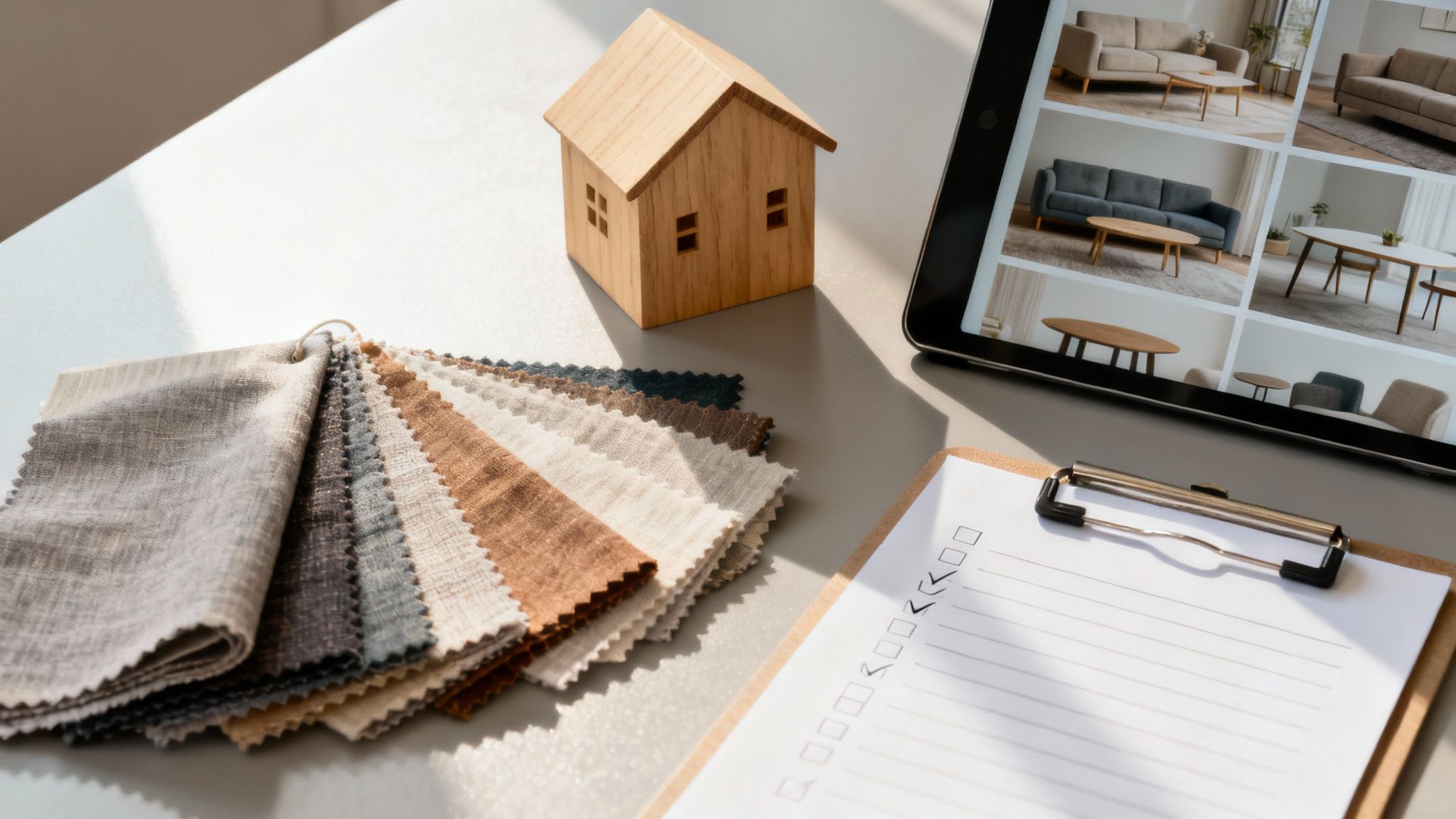
Think about it this way: choosing an online furniture store is a lot like hiring a contractor to build your dream home. You wouldn’t just look at a single pretty picture and sign on the dotted line. You’d want to know about their craftsmanship, where they source their materials, and if their design vision clicks with yours. Applying that same mindset here can turn a stressful hunt into a truly rewarding project.
And this market is only getting bigger. It's projected to hit around $74.3 billion in revenue by 2025, which shows just how many people are making the switch to online—and how many choices we all have.
Four Pillars of a Great Online Store
To cut through the noise and find a store that’s genuinely great, it helps to focus on four core pillars. This approach gets you past the glossy marketing photos and helps you make a choice that actually fits your budget, your style, and your life.
-
Quality & Materials: How durable is it? Is the craftsmanship solid?
-
Value & Pricing: Look beyond the price tag. Is it built to last or will you be replacing it in a year?
-
Logistics & Service: What’s the deal with shipping? Are returns a nightmare? Is customer service actually helpful?
-
Style & Curation: Does their aesthetic really speak to you?
Once you get the hang of evaluating stores this way, you’ll start spotting true quality from a mile away. Of course, finding the right piece is only half the battle; knowing how it will fit in your space is just as important. A good guide to arranging bedroom furniture for a perfect layout can be a lifesaver when your new finds arrive.
A well-built house stands the test of time, and in the same way, a well-chosen piece of furniture becomes a lasting part of your home's story. The goal is to find retailers who build their collections with that same integrity and vision.
While furniture sets the foundation, it's the accessories that bring a room to life. After you've found the perfect sofa or dining table, check out our guide on the best online home decor stores to find those perfect finishing touches.
What Makes an Online Furniture Store Truly Great?
So, what’s the real difference between an online store you can trust and one that’s just a roll of the dice? It’s not just about slick photos or prices that seem too good to be true. The best online home furnishing stores deliver on four key promises that make for a great experience, from the moment you start browsing to the day your new piece arrives.
Think of it like buying a house. You wouldn’t just look at the paint color, right? You’d check the foundation, the plumbing, and the overall craftsmanship. Shopping for furniture online is the same. You need to inspect the quality, the style, the real value, and how they get it to your door. Let's dig into how you can size up each of these like a seasoned pro.
Quality and Materials
First things first: what is this furniture actually made of? A stunning design means nothing if it’s built from flimsy materials that will start to chip, warp, or fall apart in a year. Since you can’t touch or feel the product online, you have to become a detective, reading between the lines of every product description.
Keep an eye out for specific terms that signal real durability. For example, "solid wood" is in a completely different league than "engineered wood" or "MDF with veneer." Solid woods like oak or walnut are built to last for generations. For anything upholstered, pay close attention to the frame. A "kiln-dried hardwood frame" is the gold standard because it means the wood has been treated to prevent it from bending or warping over time.
A great online store is an open book about its materials. They’ll give you detailed specs, show you close-up shots of the joinery and fabric, and clearly explain why their product is built to last. Vague descriptions are almost always a red flag.
Curation and Style
Next up, take a look at the store’s overall vibe. A great furniture retailer isn't just a massive digital warehouse overflowing with random items. It’s a curated collection with a clear point of view. Whether their thing is Mid-Century Modern, laid-back Coastal, or clean Scandinavian, the entire shop should feel intentional and put-together.
Good curation saves you a ton of time by filtering out all the noise that doesn’t match your personal taste. It also tells you there’s a real buying team behind the scenes that actually cares about design, not just moving boxes.
Ask yourself these questions as you browse:
-
Is there a consistent style? Does the whole collection tell a cohesive story?
-
Do they have unique pieces? Or is it the same stuff you see everywhere else?
-
Does it get you excited? A well-curated store should spark your imagination and make you want to redecorate.
Pricing and True Value
Of course, price matters. But it shouldn't be the only thing that matters. True value is all about what you get for your money in the long run. A cheap sofa that you have to replace in two years is a whole lot more expensive than a well-made one that you’ll love for a decade.
To figure out the real value, compare the materials and craftsmanship to the price tag. A $2,000 solid oak dining table offers way more long-term value than a $500 particleboard look-alike that will scratch and sag. You should also think about sustainability—well-made pieces often come from more responsible makers. Our guide to finding the best sustainable furniture brands can point you toward retailers who care about both quality and their impact on the planet.
Shipping and Returns
Finally, even the most perfect piece of furniture can turn into a total headache if the logistics are a disaster. This is where a lot of online stores stumble. A top-tier retailer will have a shipping and return policy that is clear, fair, and easy to understand before you even think about clicking "buy."
Look for clear explanations of their delivery options, like:
-
Curbside Delivery: They’ll leave the item at the edge of your property.
-
In-Home Delivery: They’ll bring the item just inside your front door.
-
White-Glove Service: The delivery crew brings the item to the exact room you want, assembles it, and takes all the messy packaging with them.
Knowing what these options are and what they cost is key to avoiding nasty surprises. A flexible and simple return policy is your safety net, giving you the peace of mind that you won't get stuck with something that just isn't right.
Using a Scorecard to Compare Online Stores
With so many factors flying around, trying to compare the best online home furnishing stores can feel like guesswork. How do you actually weigh a store's amazing style against another one's better return policy? It gets chaotic.
To cut through the noise, a simple scorecard can be your best friend. Think of it as a supercharged pro-con list that turns a jumbled decision into a clear, systematic evaluation. This little tool helps you assign a score to each of your must-haves—product quality, value, shipping, and more—for every single retailer you're looking at. It’s a straightforward way to see which store really lines up with what you need, so you don't get sidetracked by a pretty picture and forget about hidden shipping fees.
This structured approach is a lifesaver in the crowded online furniture market, which is on track to hit $26.85 billion in the U.S. by 2025. With countless brands all vying for your attention, a clear comparison tool is non-negotiable. You can learn more about the competitive landscape of online home decor to see just how packed the field is.
How to Build Your Scorecard
Putting your scorecard together is easy. Just list the essential criteria we've been talking about down the first column. Next, create a separate column for each store you're considering. As you dig into each retailer, rate them on a simple scale—say, 1 to 5—for every category.
It helps to think in terms of priorities. Start with the foundational stuff like materials and craftsmanship, then consider style and value, and finally, look at the practical details like shipping and returns.
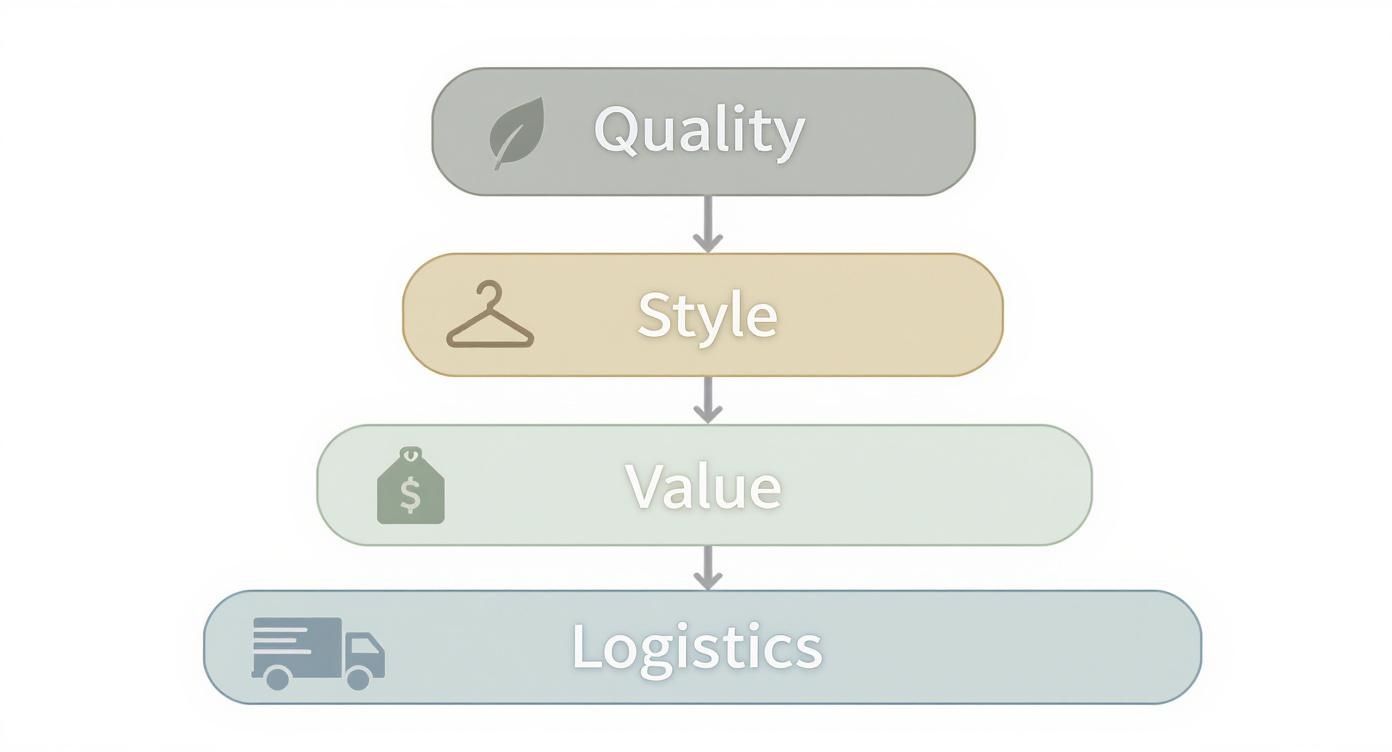
This hierarchy makes it clear: while logistics are important, they come after you've established that the quality, style, and value are there.
To help you get started, I’ve put together a simple template you can use. Just fill it out as you research each store.
Online Furniture Store Evaluation Scorecard
Here’s a practical checklist to methodically score and compare the online stores on your shortlist. Rate each criterion on a scale of 1 (poor) to 5 (excellent).
| Evaluation Criteria | Store A Score (1-5) | Store B Score (1-5) | Notes |
|---|---|---|---|
| Material Quality | 4 | 3 | Store A uses solid wood; Store B uses MDF. |
| Curation & Style | 5 | 4 | Store A perfectly matches my aesthetic. |
| Price & Value | 3 | 5 | Store B offers better prices for similar items. |
| Shipping Costs | 4 | 2 | Store B has high, non-transparent shipping fees. |
| Return Policy | 5 | 3 | Store A has a 30-day free return window. |
| Total Score | 21 | 17 | Store A is the clear winner. |
Tallying up the points gives you an at-a-glance winner, making your final choice much easier.
Putting It Into Practice
Let's walk through a quick example. Imagine you’re trying to decide between "Luxe Living Co." (Store A) and "Urban Nest" (Store B).
Luxe Living might score high on quality (they use solid wood and handcrafted details) and nail your personal style, but their prices are a bit steep. Meanwhile, Urban Nest has trendy designs at great prices but scores poorly on materials (mostly veneers) and has a tricky 14-day return policy with a restocking fee.
By adding up the scores, you get an unbiased final number. Suddenly, the decision is clear. Store A, despite being pricier, offers better overall value and a safer purchasing experience, making it the smarter long-term investment.
This method pulls the emotion and marketing hype out of the equation. It forces you to look at the whole picture, ensuring you pick a store that delivers across the board. Once you build this scorecard, you can reuse it for every future furniture hunt, making you a consistently smarter, more confident shopper.
Smart Buying Strategies for Different Furniture Types
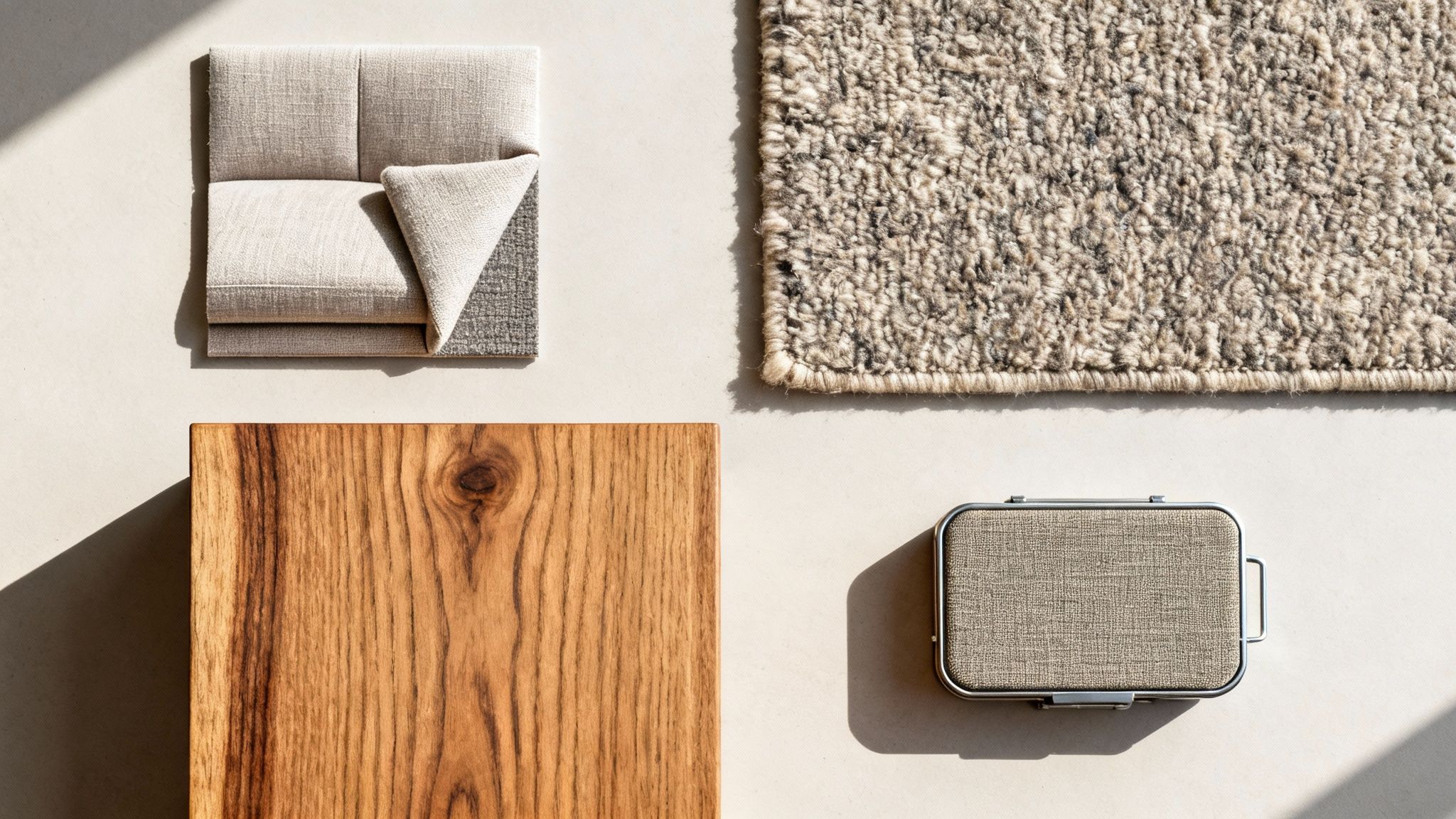
Buying a sofa online is a completely different ballgame than picking out a dining table. Each category comes with its own set of potential traps and tell-tale signs of quality. To avoid disappointment, you have to know what to look for, whether you’re buying a plush rug or a sturdy patio set.
Think of it like shopping for produce. You don't use the same squeeze test for a ripe avocado that you would for a crisp apple. In the same way, the best online home furnishing stores give you the detailed specs you need to apply the right criteria to every single purchase.
Let's break down some category-specific advice to help you shop smarter and sidestep those common online buying blunders.
Sofas and Upholstered Furniture
A sofa is the heart of a room, but trying to judge its real-life comfort and sturdiness through a screen is tricky. To get it right, you need to learn how to decode the product details and zero in on three crucial components.
First up, the frame construction. Keep an eye out for the magic words: "kiln-dried hardwood frame." This is the undisputed gold standard. It means the wood has been properly treated to stop it from warping or cracking down the line, giving you a solid foundation that’s built to last.
Next is the cushion fill, which dictates both comfort and how well the sofa ages. High-density foam is firm, supportive, and holds its shape. Down-filled cushions are unbelievably soft but need a good fluffing now and then. The best of both worlds? Many top-tier sofas use a hybrid, like a foam core wrapped in a layer of down.
Finally, don't forget fabric durability. The key metric here is the Martindale or Wyzenbeek score, often just called a "double rub count." A score between 15,000 to 25,000 is solid for everyday family use. If you have kids or pets, look for anything over 30,000—that’s considered heavy-duty.
Rugs and Floor Coverings
When you’re hunting for the perfect rug online, it really boils down to two things: the material it’s made from and its pile height. The material determines everything from how it feels underfoot to how much upkeep it will need.
-
Wool: A fantastic long-term investment. It's naturally stain-resistant, incredibly durable, and feels soft and warm. Just expect a bit of shedding at first.
-
Synthetics (Polypropylene, Nylon): These are the workhorses. They're budget-friendly, super tough against stains, and a breeze to clean, making them ideal for high-traffic zones like hallways and dining areas.
-
Natural Fibers (Jute, Sisal): If you love texture and a relaxed, earthy vibe, these are for you. Just know they can feel a bit coarse and don't play well with water.
Pile height is simply how thick the rug is. A low pile (under 1/4 inch) is practical and easy to vacuum, perfect for entryways. A high pile (over 1/2 inch) is pure luxury and adds a ton of coziness to bedrooms and living rooms.
Dining Tables and Chairs
For dining furniture, your focus should shift to stability and surface durability. The tabletop material is your biggest decision. Solid wood is a classic that can be refinished, but it’s prone to dings and scratches. Wood veneers give you a similar look for less, but once they're damaged, you can't just sand them down.
For a modern and practically indestructible option, check out materials like sintered stone or high-quality laminates. They resist heat, scratches, and stains—perfect for a busy household. When it comes to chairs, check the joinery. You want to see solid connections like mortise-and-tenon or dowel joints, not just simple screws.
A dining table isn't just a piece of furniture; it's the hub of daily life. Choosing a surface that can withstand spills, homework sessions, and family dinners ensures it remains beautiful and functional for years to come.
Outdoor Furniture
Outdoor furniture has the toughest job of all—it has to stand up to the elements. Here, material choice is absolutely everything. Stick to pieces made from powder-coated aluminum, teak, or all-weather wicker (HDPE). These materials are specifically engineered to fight off rust, rot, and sun-fading.
The fabric is just as crucial. Cushions need to be made with solution-dyed acrylics (Sunbrella is a popular brand name) because they have UV protection woven right in to stop fading and are designed to resist mold and mildew. A great pro-tip? Check that the cushions have mesh bottoms or quick-dry foam so water can drain right through after a downpour.
Spotting Red Flags Before You Buy

Shopping for furniture online is mostly a fantastic experience, but you have to keep a critical eye out. Just like in any bustling marketplace, alongside the incredible finds and quality pieces, there are stores that just don't measure up. Knowing how to spot the warning signs is your single best defense against a purchase you’ll regret.
The online furniture world is massive—forecasts predict it will hit $436 billion by 2029. With that much money at stake, it's no surprise that some retailers are more focused on their bottom line than on your happiness. Learning to recognize these red flags will save you time, money, and a world of frustration. If you're curious about the numbers, you can explore these US online household furniture market insights.
Vague or Unfair Return Policies
This is one of the biggest ones. Before you even think about adding that gorgeous sofa to your cart, hunt down the returns page and read every word. If the language is fuzzy, confusing, or seems intentionally designed to make returns a nightmare, that’s a huge problem.
Keep an eye out for these specific issues:
-
Final Sale Items: Be very cautious if a store marks most of its products—especially big-ticket items—as "final sale."
-
High Restocking Fees: A fee of 15% or more just to send something back? That’s not a good sign.
-
Short Return Windows: A policy that gives you just a few days to unbox, inspect, and report a problem is completely impractical for furniture.
A truly great online store will have a crystal-clear, fair policy that makes you feel confident, not trapped.
Inconsistent Product Imagery
Take a good, hard look at the photos. Do they all have that sterile, perfect studio lighting, looking like they were swiped from a generic catalog? When a store relies too heavily on stock photos, it can be a sign they don’t even have their own inventory or, worse, are trying to hide what the product actually looks like.
The best online retailers supplement professional photos with customer-submitted images or "in-situ" shots showing the furniture in real homes. This transparency allows you to see how the piece looks in different lighting and settings, giving you a much more accurate picture of what to expect.
Deciphering Customer Reviews
Reviews are pure gold, but you have to know how to sift through them. Don't just glance at the star rating. Dive deep into the negative reviews and look for patterns. Are people complaining about the same exact thing over and over again?
For instance, if you see a dozen reviews all mentioning that their tables arrived with chipped corners, that points to a serious, ongoing issue with their packaging or shipping partners. The same goes for customer service; if you see repeated complaints about emails going unanswered, you know exactly what to expect if something goes wrong with your order. A pattern of unresolved problems is one of the most reliable clues that you’re dealing with a subpar store.
Still Have a Few Questions? Let's Clear Them Up.
Even after you've done your homework, a few nagging questions can pop up when you're about to buy furniture online. It’s totally normal. Those little "what if" moments can make anyone hesitate before clicking "purchase."
We get it. So, let's tackle the most common concerns head-on. Think of this as your final checklist to shop with total confidence.
How Can I Tell What a Color or Texture Really Looks Like Online?
This is probably the biggest hurdle in online furniture shopping. You’ve found the perfect sofa, but is that "oatmeal" fabric more beige or grey?
The single best way to know for sure is to order fabric or material swatches. Most reputable home furnishing stores offer them, sometimes for free or a small fee. Getting a swatch lets you see the material in your home, under your lights, and feel its actual texture. It removes all the guesswork.
Another pro tip? Dig into the customer reviews for real-life photos. These are gold because they show the piece without professional studio lighting, giving you a much truer sense of its color, scale, and how it looks in an actual home.
A product's digital image is its best-case scenario. Customer photos and physical swatches are your reality check, ensuring what you see is truly what you get.
Is "White Glove Delivery" Actually Worth the Extra Money?
In a word: yes. Especially for big pieces. White glove delivery isn't just a standard curbside drop-off. It's a premium service where the delivery team does all the heavy lifting for you.
They will:
-
Carry the furniture into your home and place it in the exact room you want it.
-
Handle all the assembly (which can sometimes be a real headache).
-
Unpack everything and haul away all the giant boxes and styrofoam.
If you’re ordering a sectional sofa, a big dining set, or a bed frame, paying extra for this service is almost always worth it. It saves you the back-breaking work, the frustration of assembly, and the pain of figuring out how to get rid of a mountain of packaging.
What Do I Do If My Furniture Shows Up Damaged?
Don't panic—but do act fast. If your order arrives with a dent, a scratch, or any other issue, the first thing you need to do is document everything.
Pull out your phone and take clear photos of the damage to the furniture itself. Just as important, snap pictures of any damage to the box or packaging it came in. Hold onto all the packaging.
Then, contact the store's customer service team immediately. Most have a 24 to 48-hour window for reporting damage. Have your order number and photos ready to go. Any good store will have a straightforward process to fix the problem, whether that means shipping a replacement part, sending a whole new item, or arranging a return.
At Fluent Trends, we take the stress out of the equation. We curate only designer-approved pieces and provide detailed specs and clear, simple policies, so you can feel great about every choice you make.
Ready to find something you'll love? Explore our collections and bring lasting style into your home today at https://www.fluenttrends.com.