

The Best Rugs for High Traffic Areas Revealed
Donna MaloneSo, what are the best rugs for those parts of your home that see the most action? The champions are almost always made from incredibly resilient materials like wool, nylon, or polypropylene. These powerhouses are built to handle constant wear, fight off stains, and resist getting crushed flat, making them perfect for busy entryways, hallways, and living rooms.
Choosing the right one is all about striking that perfect balance between a soft, natural feel, a budget that makes sense for you, and pure, long-lasting durability.
Finding the Perfect Rug for Your Busiest Spaces
Let's be honest—shopping for a rug for a hallway, entryway, or family room can feel like a battle between style and sensibility. You’ve found a design you love, but then the doubts creep in. Can it really handle muddy shoes, surprise spills, and the daily chaos of a busy home? How do you pick a rug that won’t look sad and worn out in just a few months?
The secret isn’t just about the color or pattern. It’s all in the construction: the material it's made from, the way it’s woven together, and the height of its fibers.
This guide is here to cut through the confusion. We're going to look past the pretty pictures and get into the nitty-gritty of what makes a rug truly tough. We’ll show you exactly why certain materials and weaves are the unsung heroes of hardworking homes.
The most beautiful rug is one that continues to look beautiful after years of real-life use. Durability isn't a feature—it's the foundation of a smart, long-lasting design choice.
By focusing on these core elements, you can confidently choose a rug that not only completes your room but also stands up to everything life throws at it. Think of it as a smart investment in your home's comfort and style. We'll give you the inside scoop to make sure your new rug is a practical workhorse for years to come.
First, let's get a quick lay of the land with the top-performing materials.
Top Rug Materials for High Traffic Areas at a Glance
Think of this table as your cheat sheet. It’s a quick comparison of the most durable rug materials, highlighting their key features so you can make a smarter choice right from the start.
| Material | Durability Rating | Stain Resistance | Feel | Best For |
|---|---|---|---|---|
| Wool | Excellent | Good (Natural) | Soft, Luxurious | Living Rooms, Family Rooms |
| Nylon | Excellent | Excellent | Soft, Resilient | Hallways, Entryways, Stairs |
| Polypropylene | Very Good | Excellent | Varies (Can be coarse) | Dining Rooms, Kids' Rooms |
| Sisal/Jute | Good | Fair | Textured, Firm | Low-Moisture Areas, Offices |
Now that you have an overview, we can dive deeper into what makes each of these materials a fantastic choice for different areas of your home.
Understanding Rug Materials: The Foundation of Durability
So, where do you start when choosing a rug for a busy part of your home? The first, most important question is simple: What's it made of?
The material is the single biggest factor that will decide how a rug holds up to daily life. Think of it like buying tires for your car—you wouldn't put slick racing tires on a 4x4 hitting the trails. In the same way, the fibers in your rug are designed for very specific jobs. A rug's material dictates its strength, its ability to shrug off stains, and ultimately, how long it will last.
This simple flowchart breaks down the key decisions you'll face, and it all starts with that foundational choice of material.
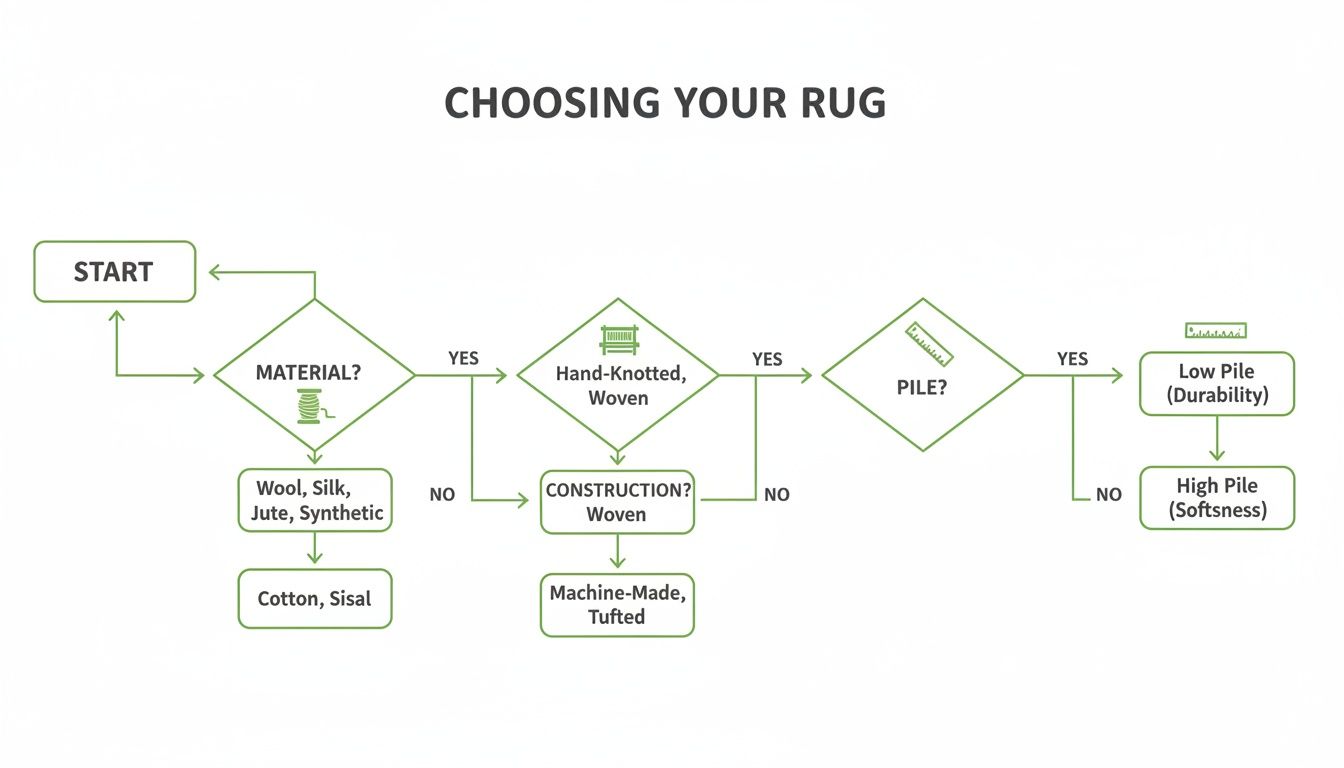
As you can see, everything is connected—construction, pile, you name it. But the material you pick sets the stage for everything else to come.
Natural Fibers: The Classic Choice
There’s a reason natural fibers have been the go-to for centuries. They bring an organic, timeless quality into a room, known for their built-in strength and unique textures.
-
Wool: If there’s a gold standard for rug materials, wool is it. Its fibers have a natural crimp to them, which works like a tiny spring that bounces right back after being stepped on. This makes it a fantastic choice for living rooms and family spaces that see nonstop action. Wool even has a natural coating of lanolin that gives it a head start against stains.
-
Sisal and Jute: These plant-based fibers deliver incredible texture and an earthy, rustic vibe. Sisal is famously strong and one of the most durable natural fibers out there. Jute is a bit softer underfoot, but both are happiest in dry areas like a home office or sitting room, as they can be prone to staining if they get wet.
Synthetic Fibers: The Modern Workhorses
Welcome to the problem-solvers of the rug world. Synthetic materials are literally engineered to tackle the chaos of modern life—spills, muddy paws, and constant foot traffic. They offer incredible performance, often at a friendlier price point.
-
Nylon: Think of nylon as high-performance athletic gear, but for your floor. It's famous for its exceptional resilience and toughness, making it a top contender for the most demanding spots in your home, like hallways, stairs, and entryways. A quality nylon rug can easily keep its good looks for 10-15 years with the right care, which is a fantastic return on investment for any busy household. Just remember, knowing the material is the first step, as this guide on the best way to clean rugs points out.
-
Polypropylene (Olefin): Need a rug that can handle just about anything you throw at it? Polypropylene is your hero. It’s practically stain-proof and incredibly resistant to moisture and fading, which is why you’ll often find it in dining rooms, basements, and even covered outdoor areas. In fact, many of the best indoor-outdoor rugs are made from this stuff. It might not have the plush feel of wool, but its unbeatable toughness makes it a true champion for families with kids and pets.
Match the Material to Your Lifestyle
The best material isn't just about specs on a label; it's about what works for your life. A polypropylene rug in the dining room means you won't break a sweat when a glass of juice takes a tumble. A dense wool rug in the living room offers a soft landing for family movie night while standing up to years of foot traffic.
Picking the right material is your first and most critical step. Once you understand the core strengths of each fiber—whether it's the natural springiness of wool or the engineered grit of nylon—you’re well on your way to finding a rug that’s perfectly suited for the busiest parts of your home.
How Weave and Pile Dictate a Rug's Performance
So, you’ve landed on a tough material like wool or nylon—that’s a fantastic start. But if you want to get into the nitty-gritty of what makes a rug truly invincible in a busy home, you have to look at how it’s actually constructed. The weave (how the fibers are locked together) and the pile (the height of those fibers) are just as critical as the material itself.
Think of it like this: a tightly woven, low-pile rug is like a sturdy brick road. It's built from the ground up to handle constant use, distributing pressure and shrugging off wear. On the other hand, a high-pile shag rug is more like a lush, ornamental lawn—gorgeous, but not meant for a stampede. For the best rugs for high-traffic areas, you want that brick road every time.
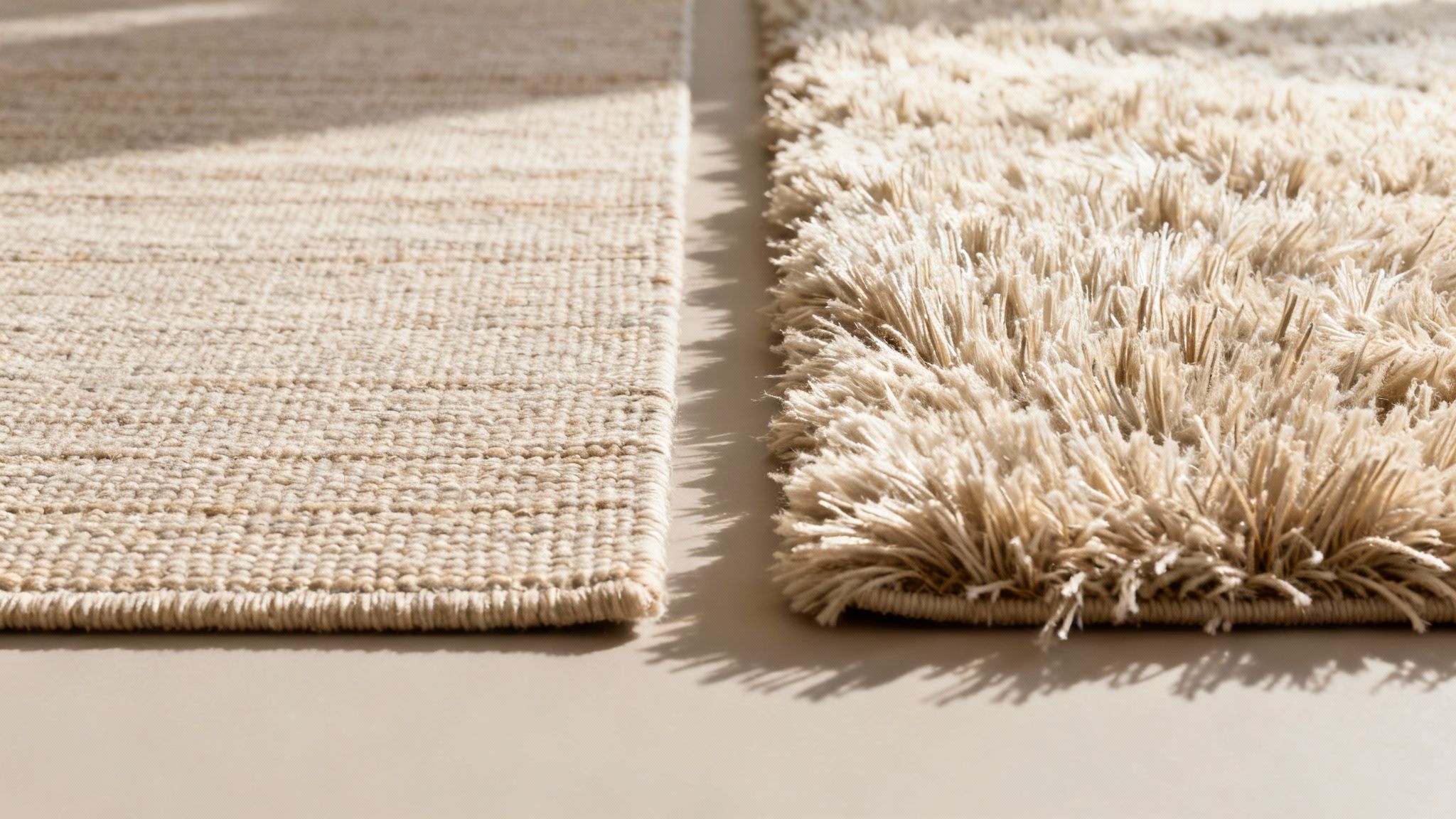
This construction is what makes the difference between dirt sitting on the surface for a quick cleanup and getting trapped deep in the fibers. It’s the secret to avoiding those sad, matted-down lanes that appear over time.
Why a Low Pile Is Your Best Friend
Pile height is simply the measurement of how tall the rug’s fibers are. For spots that see a ton of action, shorter is almost always better. A low-pile rug is generally one with fibers measuring a quarter-inch (0.25") or less.
This compact design gives you a few major wins in a busy home:
- It Resists Crushing: There’s simply less fiber to bend and flatten, so a low pile holds its original look for much, much longer. Those high-pile rugs can quickly develop permanent traffic lanes that are nearly impossible to fluff back up.
- It's a Breeze to Clean: Dirt, crumbs, and pet hair have nowhere to hide. They sit right on top, making every pass of the vacuum incredibly effective.
- It's Safer: Low-pile rugs are less of a tripping hazard, and they let doors swing open without getting snagged—a small but crucial detail for entryways and hallways.
A low pile isn’t just about looks; it's a practical choice. By picking a rug with a pile under 0.25", you're actively fighting wear and tear, simplifying your cleaning routine, and making your home safer.
Sure, a plush, high-pile rug feels amazing underfoot, but it's best saved for quiet zones like a bedroom. In your hallway, living room, or dining area, a low pile delivers the resilience you need without giving up on style or comfort.
The Power of a Tight Weave
The weave is the technique used to put the rug together. A dense, tight weave creates an incredibly strong surface where all the fibers support each other, keeping them from shifting or pulling apart under stress. This density is the key to a rug’s long-term toughness.
Keep an eye out for these powerhouse weaves when you're shopping for a rug that can take a beating:
- Flatweave: Just like the name implies, these rugs have no pile at all. The yarns are woven together to create a flat, thin, and unbelievably durable textile. They're amazing at repelling dirt and are often reversible, which basically doubles their lifespan.
- Machine-Loomed (Power-Loomed): These rugs are made on automated looms that produce extremely tight, consistent weaves. The process creates durable, precise patterns and a stable structure that stands up beautifully to constant foot traffic.
- Loop Pile (Berber): On these rugs, the fibers are looped instead of cut. This creates a firm, textured surface that’s a champion at hiding footprints and dirt. The tightly packed loops are super resilient and bounce back easily.
When fibers are woven tightly, they form a formidable barrier. This structure doesn't just hold up to foot traffic; it actively stops dirt from working its way deep into the rug’s base. By pairing a low pile with one of these durable weaves, you get a rug that is truly built to last.
Choosing a Style That Hides Wear and Tear
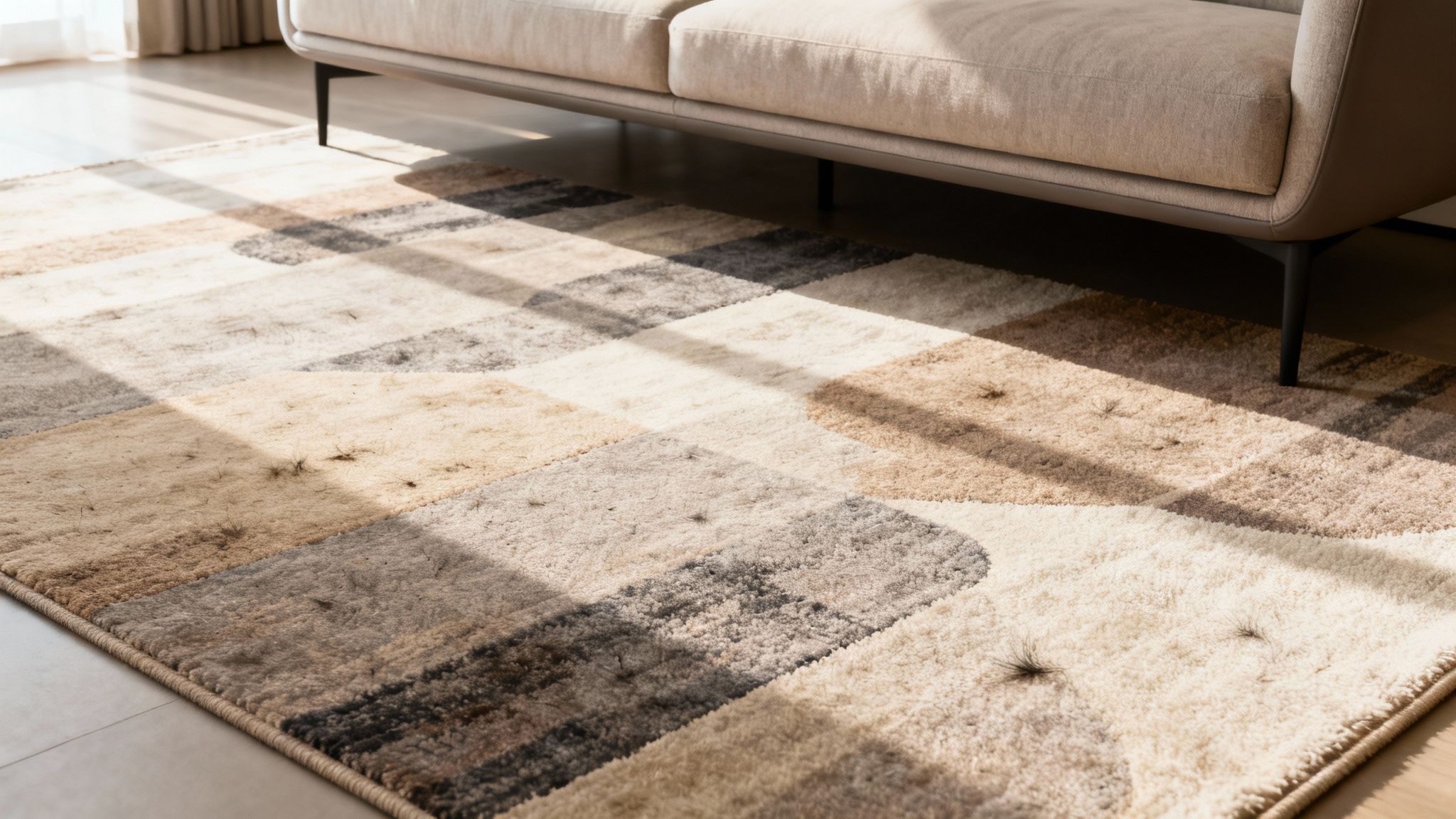
A truly hardworking rug does more than just stand up to foot traffic—it cleverly hides the evidence of a life well-lived. Durability doesn’t mean you have to sacrifice your home's aesthetic. In fact, by picking the right colors and patterns, you can find a gorgeous rug that also acts as your best defense against visible dirt, crumbs, and the inevitable pet hair.
Imagine a solid, light-colored rug as a freshly painted white wall; every single scuff and speck of dirt screams for attention. Now, picture a rug with a vibrant pattern and a mix of colors. It’s more like a beautiful mural—a small imperfection just blends into the bigger picture, becoming almost invisible. This is the secret to finding a low-maintenance rug that always looks fantastic.
Embrace Strategic Patterns
When it comes to hiding daily grime, patterns are your best friend. Intricate designs create a kind of visual texture that naturally pulls the eye away from tiny specks of dirt or a stray piece of fuzz. Honestly, the more complex the pattern, the better it is at camouflaging the little messes that pile up between vacuuming.
Here are a few high-performing styles to look for:
- Oriental and Persian Designs: These timeless classics are packed with detailed motifs and rich color palettes, making them exceptionally forgiving in busy living rooms and dining areas.
- Geometric Patterns: Bold, repeating shapes create tons of visual movement, which does a fantastic job of obscuring footprints and minor stains.
- Abstract or Marbled Designs: These modern styles often mimic natural variations, which makes them masters of disguise for random spills and tracked-in dirt.
At the end of the day, a busy pattern breaks up the rug's surface, making it much harder for your eye to zero in on any single imperfection.
A well-chosen pattern doesn't just add style; it adds practicality. It works tirelessly to keep your space looking clean, even when life gets a little messy.
Leverage the Power of Color and Tone
Beyond patterns, your color strategy can make a world of difference. It's tempting to think a solid dark rug is the answer, but they can be surprisingly bad at showing lint and dust—just as much as light colors show dirt. The real sweet spot is usually somewhere in the middle.
Multi-tonal and heathered rugs are especially brilliant. These rugs weave together several shades from the same color family, creating a subtle, textured look that excels at hiding both dirt and wear.
Here’s how to pick the perfect color palette:
- Choose Medium Tones: Think charcoal gray, deep blue, warm taupe, or olive green. These shades are dark enough to hide dirt but not so dark that they put every speck of dust on display.
- Look for Multi-Tonal Weaves: A rug with flecks of different colors—almost like a tweed effect—is one of the most practical choices you can possibly make for a high-traffic spot.
- Match Colors to Your Environment: Think about the kind of debris your rug is likely to face. If you have a golden retriever, a rug with warm, golden-brown tones will be way more forgiving than a stark navy blue one.
By combining a smart pattern with a multi-tonal color scheme, you create a powerful duo that stays beautiful with minimal fuss. This approach ensures your rug isn't just a durable workhorse but also a stunning centerpiece that serves your style without creating extra work. Your entryway or living room will thank you for it.
Your Smart Shopper’s Guide to Buying a Durable Rug
Okay, now you're armed with the inside scoop on materials, weaves, and patterns. It’s time to shop with confidence. Picking the right rug for a high-traffic area isn’t about snagging the cheapest deal—it’s about making a smart, long-term investment in your home.
Think of it this way: buying a flimsy, low-quality rug for your entryway is like using paper plates for a big family dinner. Sure, they work for a night, but you'll be running back to the store for more in no time. Investing in a durable wool or nylon rug is like buying a beautiful set of ceramic plates. They cost more upfront, but they’ll serve you well for years and years.
What to Look for When Shopping
When you’re browsing online, the product description is your best friend. Don't just glance at the pretty photos; you need to dig into the details. A good retailer, like Fluent Trends, will be transparent and give you all the information you need to make a solid choice.
Here’s a quick checklist of what to keep an eye out for:
- Material Composition: Is it 100% nylon, a wool blend, or polypropylene? The specifics matter.
- Weave or Construction: Look for terms like "machine-loomed," "flatweave," or "loop pile."
- Pile Height: For maximum durability, you want a pile that’s 0.25 inches or lower.
- Backing Material: A solid backing like jute or latex is a good sign—it adds stability and helps the rug last longer.
- Care Instructions: Easy-to-clean materials will save you a world of headaches later on.
This is the stuff that tells you the real story of how a rug will hold up in your home.
Rethinking Your Rug Budget
It’s so easy to get fixated on the price tag, but a truly durable rug actually saves you money over time. While premium materials like wool naturally come with a higher cost, tough synthetic options have made amazing durability more accessible than ever.
Today, polypropylene and olefin-based rugs make up about 40-45% of the residential market for a reason—they strike a fantastic balance between performance and price. These rugs fight off moisture, stains, and fading, often looking great for 7-10 years even in the busiest homes. It just goes to show that a smart budget can absolutely get you a rug that lasts. You can find more insights on these long-lasting rug materials on MarkandDay.com.
A quality rug is an investment in your home's comfort, safety, and style. The right choice prevents the recurring cost and hassle of replacing a worn-out rug every few years.
The Non-Negotiable Add-On: A Quality Rug Pad
Finally, whatever you do, don't underestimate the power of a good rug pad. It’s a critical piece of the puzzle that often gets overlooked, but it does three essential jobs:
- Safety: It keeps the rug from slipping and bunching up, which is a major hazard in busy hallways and entryways.
- Protection: It acts as a buffer between the rug and your floor, protecting beautiful hardwood or tile from scratches.
- Longevity: It absorbs the constant impact of foot traffic, which reduces wear and tear on the rug fibers themselves.
Skipping the rug pad is a classic case of false economy. It's a small extra cost that dramatically extends the life of your main investment—the rug itself. Follow this guide, and you’ll find a beautiful, hardworking rug that you’ll love for years to come.
Essential Maintenance to Extend Your Rug's Life
You picked out the perfect durable rug—that's a huge win! But the real secret to its longevity isn't just about the material; it’s about simple, consistent care.
Think of it this way: a little proactive attention goes a long, long way. A well-maintained rug can look stunning for years, while a neglected one quickly shows its age. The good news? It's not complicated.
The absolute foundation of rug care is vacuuming, and more often than you might think. For the best rugs for high traffic areas, you’ll want to pull out the vacuum at least twice a week. This simple habit stops dirt and grit from getting ground deep into the fibers, where they act like sandpaper and cause permanent damage.
Creating a Simple and Effective Cleaning Routine
Beyond vacuuming, a smart cleaning plan boils down to two things: acting fast on spills and scheduling the occasional deep clean. Once you have a routine, you can handle any mess without that "oh no" panic.
When a spill happens, speed is your best friend. The longer a stain sits, the more it wants to become a permanent resident. Keep a basic spot-cleaning kit nearby with a clean cloth and a gentle, rug-safe cleaner. For a wider look at keeping your floors pristine, these effective floor protection strategies are a fantastic resource.
Pro Tip: Always blot, never rub. Rubbing a spill just grinds it deeper into the fibers and can make the stain spread. Instead, press a clean, dry cloth firmly onto the spot to soak up as much as possible before you start treating it.
Handling Common Spills and Scheduling Deep Cleans
The right way to tackle a mess often depends on your rug's material. If you spill soda on a synthetic polypropylene rug, its moisture-wicking magic gives you plenty of time to blot it away. On the other hand, if a muddy paw print appears on a wool rug, it's best to let the mud dry completely, then gently scrape it off and vacuum up the rest.
Even with the best daily care, some grime will inevitably work its way deep into the pile. That's why a professional deep clean every 12 to 18 months is a game-changer. It’s like a factory reset for your rug, pulling out the deep-seated dirt that a household vacuum just can't reach and bringing its color and texture back to life.
Here's a quick cheat sheet for your rug care schedule:
- Daily: A quick spot-check for crumbs or obvious debris.
- Twice a week: A thorough vacuum, hitting those high-traffic pathways a few extra times.
- As needed: Tackle spills the moment they happen with the blotting method. Our guide on how to clean indoor-outdoor rugs has some great specific tips that work wonders on many durable synthetic rugs.
- Annually: Rotate your rug 180 degrees. This is a simple but brilliant trick to make sure wear and tear from foot traffic and sunlight is distributed evenly.
By sticking to these straightforward steps, you're not just cleaning your rug—you're protecting your investment and ensuring it remains a beautiful centerpiece in your home for years to come.
Common Questions About High Traffic Rugs
Even after you've done all the research, a few lingering questions always seem to pop up right before you make a decision. It's easy to get stuck on these final details, but getting them sorted out is the key to buying your new rug with total confidence. Let’s walk through some of the most common concerns I hear from homeowners.
Think of this as your final gut-check before you bring home the perfect rug for your space, from navigating color choices in busy rooms to understanding the one accessory that will make or break your investment.
Are Light Colored Rugs A Bad Idea?
This is probably the biggest myth in the world of rug buying! While it's true that dark colors and busy patterns are masters of disguise when it comes to hiding dirt, you absolutely can have a light-colored rug in a high-traffic area. You just have to be smart about the material.
The trick is to choose a rug made from stain-resistant synthetic fibers like polypropylene or nylon. Many of these are treated with some pretty amazing stain-guard technology that literally creates a barrier against spills, stopping them from sinking in. This makes cleanup surprisingly easy and gives you the freedom to go for that bright, airy look you really want.
What Is The Best Rug for Homes with Pets and Kids?
When your home is a whirlwind of kids and pets, you need a rug that’s practically bulletproof. Durability and cleanability aren’t just nice to have—they're everything.
For this, Nylon is usually my top recommendation. It's the champion of resilience and stain resistance, engineered specifically to handle heavy foot traffic, resist getting crushed down, and stand up to everything from muddy paws to spilled juice.
Polypropylene (sometimes called olefin) is another fantastic choice, and it's often a bit friendlier on the wallet. It's famous for being moisture-proof, fade-resistant, and incredibly simple to clean. Both materials are built to handle the beautiful chaos of family life and still look great for years.
A rug pad is non-negotiable for high-traffic areas. It provides safety by preventing slips, adds a layer of comfort underfoot, and acts as a crucial shock absorber. This simple addition significantly extends your rug's life and protects your floor.
Do I Really Need a Rug Pad?
Yes, one hundred percent. A quality rug pad isn't just an add-on; it's a crucial part of the system for any rug in a busy spot. It does three incredibly important jobs.
First, it keeps the rug from slipping and bunching up, which is a huge safety issue in a bustling hallway or entryway. Second, it adds a lovely bit of cushioning that just feels better to walk on. But most importantly, it acts like a shock absorber, taking the impact of every footstep. That single function dramatically reduces the wear and tear on your rug’s fibers, which is the real secret to making it last.
At Fluent Trends, we believe a durable rug should also be a beautiful one. Explore our curated collection of high-performance, designer-approved rugs built to withstand real life. Find the perfect foundation for your busiest spaces by visiting us at https://www.fluenttrends.com.