

Best throw pillows for couch: Cozy, chic ideas
Donna MaloneThe best throw pillows for your couch are the ones that feel like they were made for your space. It’s about more than just matching colors. The secret to that high-end, designer look lies in the details: mixing up sizes (like 20-inch and 22-inch squares), investing in quality inserts that don't go flat, and fearlessly blending different textures and patterns.
Your Guide to Choosing the Perfect Couch Pillows
Think of throw pillows as the jewelry for your living room. They're the finishing touch, the easiest way to take a couch from just a piece of furniture to a true style statement. This guide is your roadmap to selecting pillows that not only boost comfort but also inject your personality into the room and pull the whole look together. We're going to move past the generic advice and help you choose with the confidence of an interior designer.
This isn't just about grabbing a few cushions that catch your eye at the store. It's about building a thoughtful collection that feels intentional and curated. The right mix can make a simple sofa look incredibly luxe or give a neutral room a much-needed pop of seasonal color.
Why Pillows Matter More Than You Think
Decorative pillows are far more than just fluff; they’re a cornerstone of modern home decor. It's a big deal, too—the global decorative pillow market is valued at around USD 4.06 billion and is expected to climb to USD 7.28 billion by 2035. In fact, data shows that 38% of consumers buy them specifically to elevate their home's look and feel. Find out more about the decorative pillow market trends.
This isn't just a trend; it's a testament to how important these accessories are. Well-chosen pillows serve a few critical roles:
-
They Add Real Comfort: Let's be honest, they provide crucial back support and make an afternoon nap or movie night that much cozier.
-
They Introduce Color & Pattern: Pillows are the perfect low-commitment way to play with a bold color or a wild pattern you've been eyeing, without having to repaint a whole wall.
-
They Create Visual Depth: Layering different materials—think smooth velvet against rustic linen or a chunky knit—adds a rich, tactile dimension that makes your sofa look and feel more inviting.
Mastering a few simple principles of size, texture, and color is all it takes. Once you do, you can arrange the best throw pillows for your couch in a way that looks both effortless and professionally styled.
At the end of the day, your pillows are a reflection of your unique taste. If you're looking for something truly one-of-a-kind, you might want to explore collections of custom pillows that can be designed to perfectly match your vision. In the next sections, we'll break down exactly how to make the right choices for your home.
Mastering Pillow Size and Fit for Your Sofa
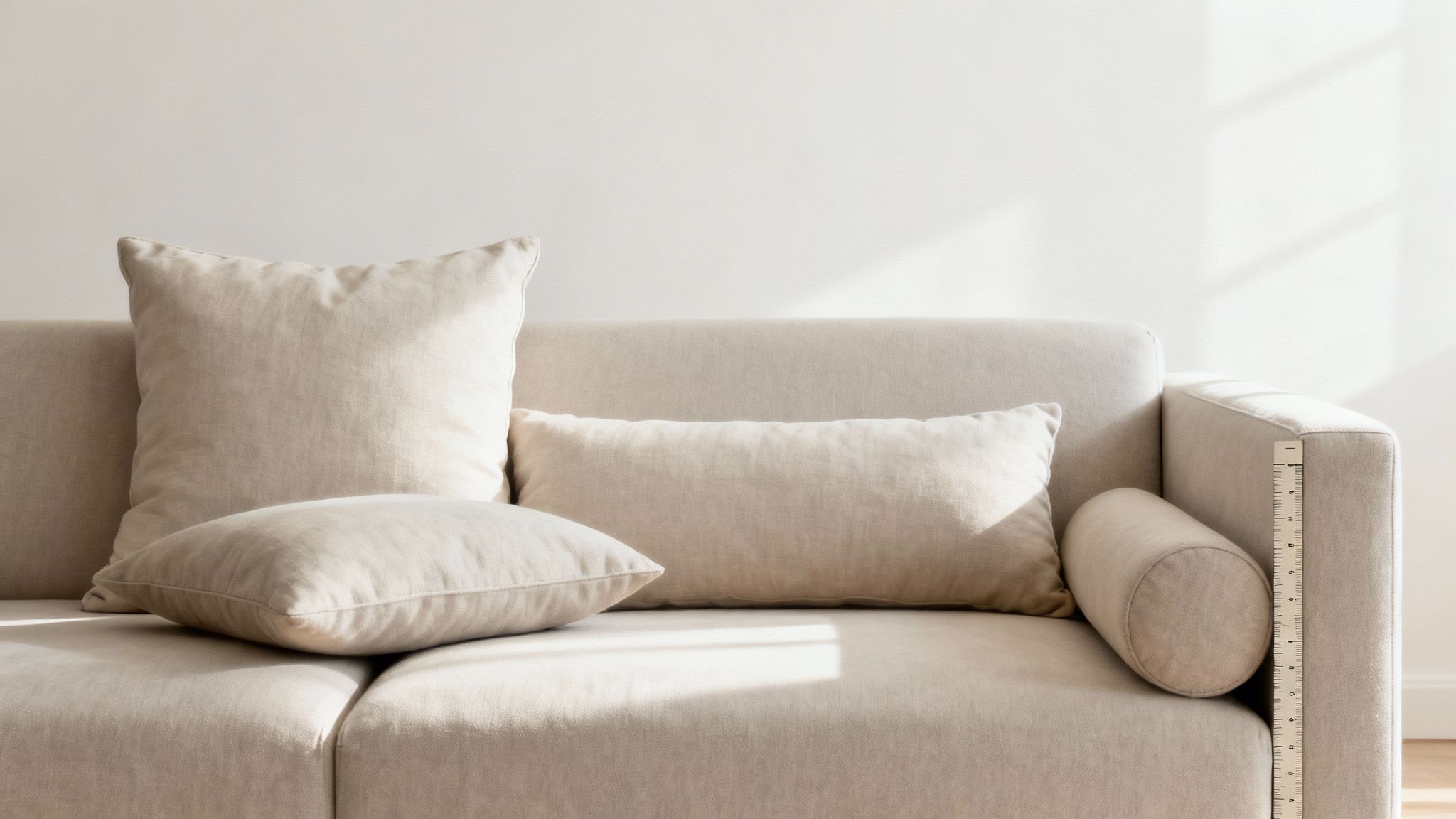
Before you even think about colors and fabrics, let's talk about the single most important factor: getting the proportions right. It’s a lot like tailoring a suit—the perfect fit is what takes the whole look from just okay to absolutely stunning.
When pillows are too big, they can completely swallow a small loveseat. Too small, and they just look sad and lost on a big sectional. Nailing the scale is the foundation of a well-styled sofa, making it look intentional and inviting rather than like an afterthought.
Decoding Standard Pillow Sizes
Pillow shopping is a lot simpler once you know the language. There are a few standard sizes, and each one has a specific job to do when you're building out your arrangement.
-
Large Squares (22x22 to 24x24 inches): I call these the anchors. You'll want to place them in the far corners of your sofa to create a solid, substantial base for everything else.
-
Standard Squares (18x18 to 20x20 inches): These are the true workhorses. They're the most common size for a reason—they layer perfectly in front of larger squares and can easily stand on their own on smaller couches.
-
Lumbar Pillows (e.g., 12x20 to 14x24 inches): The rectangular shape of a lumbar pillow is perfect for breaking up all the squares. They work beautifully in the center of a sofa or on an armchair to add a pop of style and some nice back support.
It's no surprise that pillows are big business. The global market was valued at a whopping USD 35.9 billion in 2023 and is on track to more than double by 2032. This trend, especially in North America, shows just how much we love using small touches to personalize our homes. You can explore more insights on the throw pillow market growth to see just how popular they've become.
Matching Pillow Size to Your Couch
There’s no one-size-fits-all rule here. The size and shape of your sofa should always be your guide.
A huge, sprawling sectional, for example, can easily handle a few big 24-inch pillows without looking cluttered. On the other hand, a sleek, modern loveseat might only need two 20-inch squares and one lumbar to feel just right.
Pro Tip: When you're not sure, it's almost always better to go a little bigger. The number one mistake I see is people choosing pillows that are too small for their sofa. It can instantly make an expensive couch look cheap.
To make it even easier, here's a quick cheat sheet for matching pillows to your specific couch.
Recommended Pillow Sizes for Different Couch Types
This simple table will help you find that perfect balance of size and quantity for the most common types of sofas.
| Couch Type | Recommended Pillow Sizes (Inches) | Ideal Number of Pillows |
|---|---|---|
| Standard Sofa (72-84 inches) | 20x20, 22x22, plus a lumbar | 3 to 5 |
| Loveseat (48-71 inches) | 18x18, 20x20 | 2 to 3 |
| Sectional Sofa | 22x22, 24x24, plus lumbars | 5 to 7 |
| Apartment Sofa (under 72 inches) | 18x18, with one smaller accent | 2 to 3 |
Think of these as starting points—feel free to adjust based on the look you're going for!
The Secret to a Plush, Professional Look
Ever wonder why the pillows in magazines and showrooms look so incredibly full and luxurious? The secret isn't in the pillow cover—it's the insert.
If you want that high-end, plump look that holds a perfect "karate chop," you need to buy your insert in a larger size than your cover. This one simple trick is the difference between a sad, saggy pillow and one that looks generous and inviting.
Just follow this easy rule of thumb:
-
For square pillows 18x18 inches or larger: Get an insert that is two inches larger than the cover. So, for a 20x20 inch cover, you'll want a 22x22 inch insert.
-
For lumbar or smaller square pillows (under 18 inches): Go up by just one inch. For a 12x20 inch cover, a 13x21 inch insert is perfect.
This ensures the cover is filled out all the way to the corners, giving it that firm, structured shape that looks polished and feels great. Getting this right is truly the first step to styling your sofa like a pro.
Choosing the Right Fills and Fabrics

Alright, you’ve figured out the perfect sizes. Now for the fun part: deciding what your pillows are made of, both inside and out. The fill and fabric are truly the heart and soul of a throw pillow, dictating everything from its sink-in softness to its visual punch.
Think of it like buying a great coat. The filling provides the warmth and substance, while the outer material provides the style and durability. Getting this combination right is what separates a pillow you like from one you absolutely love for years to come. Let's dig into the options so you can find that perfect match.
Understanding Different Pillow Fills
The insert is what gives a pillow its personality. Is it soft and squishy, firm and supportive, or that perfect cloud-like sweet spot in between? Each type of fill has a totally different feel and function.
-
Down and Feather: This is the gold standard for a reason. Natural down and feather fills give you that luxurious, plush feel that’s incredibly malleable—perfect for getting that classic "karate chop" dent. More down means a softer, lighter pillow; more feathers add a bit of supportive structure.
-
Down Alternative/Polyester Fiberfill: A fantastic and popular choice, especially if you’re on a budget or have allergies. High-quality synthetic fills do a great job of mimicking the softness of real down. They hold their shape really well, making them a practical workhorse for family rooms and high-traffic sofas.
-
Foam and Memory Foam: If you need firm, consistent support, foam is your best bet. These inserts are less likely to get squished flat over time and are brilliant for lumbar pillows where you actually need that back support. Just know they aren't as plush or "chop-able" as their feathery counterparts.
For that truly high-end experience that blends structure with softness, we always recommend a mix. Our premium duck down and fine feather throw pillow inserts are specifically designed to give you that ideal combination of sink-in comfort and supportive loft.
The right fill is about more than just feel—it's about function. A formal living room benefits from a structured feather-and-down blend that holds its shape beautifully. For the family sofa that sees movie nights and pillow forts, a resilient down alternative is the more practical, low-maintenance choice.
Selecting the Perfect Pillow Fabric
The fabric cover is where your personal style truly comes to life. It’s the first thing you see and touch, adding all the color, texture, and character to your couch.
It’s no surprise that the global indoor throw pillow market is projected to hit around $5.5 billion by 2025. We're all spending more time making our homes feel like a true sanctuary, and that means we have more beautiful fabric choices than ever before. Learn more about the home-centric lifestyle trend.
Common Throw Pillow Fabrics
Let's break down some of the most popular materials and where they really shine.
-
Cotton: A true classic. This natural fiber is breathable, durable, and a breeze to clean, which makes it a godsend for homes with kids or pets. Cotton is also a perfect canvas for patterns, from crisp stripes to intricate florals.
-
Linen: If you're after that relaxed, airy vibe, linen is your answer. It has a beautiful natural texture that adds depth and a touch of effortless elegance. Yes, it wrinkles a bit, but that's all part of its casual, lived-in charm.
-
Velvet: Nothing says "luxury" quite like velvet. Its soft, dense pile catches the light in the most beautiful way, creating a rich visual that feels incredibly sophisticated. It's a go-to for adding a cozy, high-end feel to any space.
-
Faux Fur and Knits: Want to dial up the cozy factor? Faux fur, chunky knits, and nubby boucle are your best friends. These ultra-tactile fabrics are perfect for fall and winter, instantly making your sofa feel like a warm, inviting hug.
-
Leather and Faux Leather: For a more modern, edgy, or industrial look, a leather pillow is a seriously cool accent. It offers a sleek, smooth texture that creates a fantastic contrast when paired with softer fabrics like wool or linen.
Ultimately, finding the best throw pillows for your couch comes down to pairing a fill that meets your comfort needs with a fabric that reflects your lifestyle and personal style. Once you understand these two key components, you’re ready to pick pieces that not only look amazing but feel incredible, too.
Getting Creative with Color, Texture, and Pattern
Alright, you've nailed down the basics of size and fill. Now for the fun part—where you really get to play designer. This is all about moving beyond single pillows and starting to think like a stylist, creating a complete look for your sofa that feels cohesive, intentional, and uniquely you.
Don't just grab pillows you like individually; a well-styled couch is a curated collection. Think of it as telling a story with color, texture, and pattern. With a few simple guidelines, you can arrange pillows in a way that looks effortlessly chic. Let's demystify the process and turn what feels like a decorating puzzle into a creative adventure.
Building Your Color Palette
Here's a little secret: the perfect color palette for your pillows is probably already in your room. Before you even browse online, take a good look at your existing decor. The best color schemes don't come out of nowhere; they connect to the space.
Your goal is to find colors that will make the pillows look like they truly belong. Look for inspiration in these key places:
-
Your Area Rug: A patterned rug is a goldmine. Pull two or three shades from its design—a main color and a couple of accents. It's a ready-made palette just waiting to be used.
-
Artwork: That painting or print you love? It’s a professionally curated color story right on your wall. Borrow from it!
-
Curtains or Upholstery: The subtle tones in your window treatments or a nearby accent chair can provide beautiful, nuanced hues to weave into your pillow collection.
Once you’ve identified these colors, they become your roadmap. This ensures that even if you mix wild patterns and varied textures, that shared color DNA will tie everything together beautifully.
The Magic Rule of Three for Patterns
Mixing patterns can feel intimidating. Will it look too busy? Will they clash? Relax. There’s a nearly foolproof formula designers swear by: the Rule of Three. This method is all about combining three different patterns in three different scales to create a look that's dynamic and balanced, not chaotic.
Think of it like putting together an outfit. You wouldn't wear head-to-toe plaid, but you might pair a plaid scarf with a solid coat and finely textured pants. Same logic, different canvas.
Here’s how to do it:
-
Start with Your Lead Pattern (Large-Scale): This is your "hero" pillow. It’s the one with the bold, attention-grabbing design—think oversized florals, wide cabana stripes, or a dramatic geometric print. This pillow sets the tone and often the color palette for the whole group.
-
Add a Supporting Pattern (Medium-Scale): Your second pattern should be about half the scale of your hero. This could be a classic plaid, ticking stripes, or a medium-sized botanical. It should complement the lead pattern, not compete with it.
-
Finish with a Subtle Pattern (Small-Scale or Solid): The final piece should be either a solid color with great texture or a very subtle, small-scale print like a tiny dot, a tight herringbone, or a simple pinstripe. This pillow acts as a visual resting place, grounding the other two and keeping the arrangement from feeling overwhelming.
By combining a large, medium, and small-scale pattern that all share a common color thread, you create a sophisticated look that feels professionally styled. This simple formula is the key to mixing and matching with confidence.
Texture is Your Secret Weapon
If color and pattern are the stars of the show, texture is the supporting actor that makes the whole production shine. Texture adds depth, dimension, and that all-important tactile quality that invites you to lean back and get comfortable. A couch full of solid-colored cotton pillows can look a bit flat, but when those solids are in a mix of different materials? The result is instantly richer and more sophisticated.
Imagine a group of pillows all in shades of cream. One is a chunky cable knit, another is smooth, lustrous velvet, and the third is a nubby, textural boucle. Even with zero pattern, the combination is visually compelling because of the way the different surfaces play off each other.
To bring in more textural interest, think about mixing materials like:
-
Smooth & Sleek: Velvet, silk, or faux fur for a touch of glam.
-
Structured & Natural: Linen, woven cotton, or even a touch of leather.
-
Cozy & Tactile: Chunky knits, embroidered fabrics, or fringe and tassel details.
Layering these different surfaces creates a high-end look that elevates your entire sofa. It’s the subtle detail that takes a good arrangement and makes it truly exceptional. When you master the interplay of color, pattern, and texture, you're not just decorating your couch—you're crafting an experience.
How to Arrange Throw Pillows Like a Pro
Alright, you've picked out the perfect pillows. Now for the fun part: making them look incredible on your couch. Styling pillows isn't about following strict, unforgiving rules. It’s more of an art—a way to shape the personality of your living space.
Think of it as the final touch that pulls everything together. The goal is to create an arrangement that looks intentionally stylish but completely effortless. With a few go-to designer strategies, you can easily find a layout that feels right for you and makes your sofa the star of the room.
The whole process builds on itself, starting with your color choices, then layering in textures, and finally adding a pop of pattern.
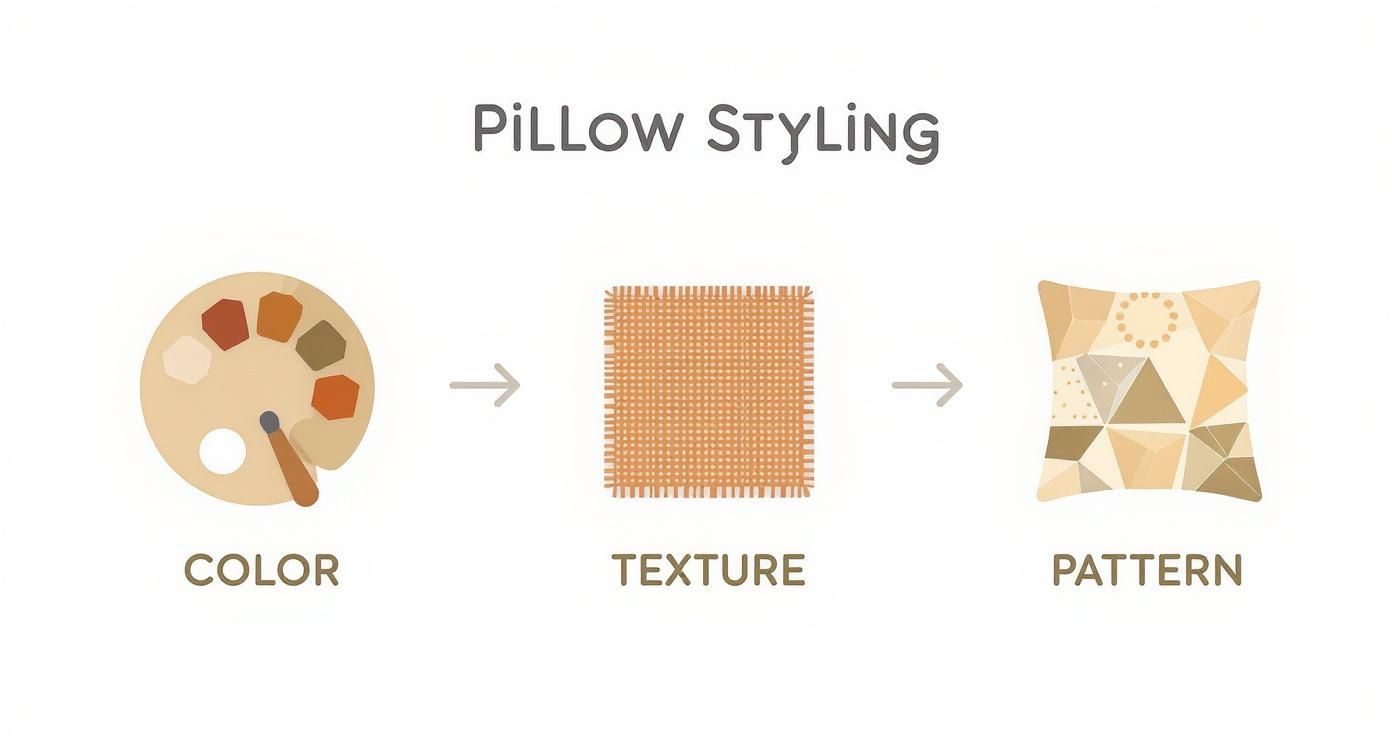
When you layer your design choices this way, the final look feels thoughtful and put-together, not random.
Symmetrical Arrangements for a Classic Look
If you're drawn to a clean, orderly, and more traditional vibe, a symmetrical arrangement will be your best friend. This classic approach creates a sense of calm and balance, making a room feel polished and formal. It's a timeless look that just works, especially on standard-sized sofas.
The trick is simple: mirror what you do on one side of the couch on the other. Start by placing your two largest, identical pillows in the far corners. These are your anchors. From there, layer a slightly smaller pair in front of them, maybe in a contrasting pattern or a rich texture. To finish it off, you can add a single, standout lumbar pillow right in the center to connect both sides.
This method is practically foolproof:
-
Start with Anchors: Place two large matching pillows (like 22x22 inch solids) in each corner.
-
Add the Second Layer: Tuck two medium matching pillows (say, 20x20 inch patterns) in front of the anchors.
-
Finish with the Centerpiece: Place one unique lumbar pillow (a 12x20 inch textured velvet, perhaps) in the middle.
This creates a classic 2-1-2 layout that looks sophisticated and intentional. It's the perfect starting point if you're new to styling pillows because the structure is so easy to get right.
Asymmetrical Arrangements for a Modern Vibe
Want something a bit more relaxed, modern, or eclectic? An asymmetrical layout is the way to go. This approach feels more casual and alive by playing with odd numbers of pillows to create visual interest. It's absolutely perfect for sectionals, where a perfectly mirrored look can feel a little stiff.
The most popular asymmetrical formulas are the 2-1 or 3-2 arrangements. This just means you create a group of two or three layered pillows on one side of the couch and place just one or two on the other. This slight imbalance is what makes it look so effortlessly chic—it draws your eye across the sofa.
The real beauty of an asymmetrical arrangement is its "perfectly imperfect" feel. It signals a lived-in, comfortable space where style doesn’t feel forced. For the best results, don't be afraid to mix up sizes, shapes, and textures.
For instance, on a big sectional, you might cluster a 24-inch, a 22-inch, and a lumbar pillow together in the deep corner. Then, at the other end of the L, you could simply place two coordinating 20-inch pillows. This approach gives you so much more creative freedom and is ideal for showing off a more diverse pillow collection. Knowing these layouts is a huge part of learning how to arrange living room furniture for a truly cohesive space.
Styling for Different Decor Aesthetics
Ultimately, your personal style is what should guide your final pillow arrangement. The number and type of pillows you choose can completely shift the mood of your room.
-
Minimalist: Less is definitely more here. Try just two matching pillows placed neatly in the corners, or go even simpler with a single, elegant lumbar pillow centered on the sofa. Stick to high-quality fabrics and a quiet, neutral palette.
-
Maximalist: Go for it—more is more! A maximalist sofa is a canvas for an abundance of color, pattern, and texture. Feel free to pile on five, seven, or even more pillows, confidently mixing bold florals with sharp geometrics and plush velvets with nubby linens.
-
Bohemian: This style is all about creating a relaxed, textured haven. Layer pillows with tassels, fringe, and chunky knits. An asymmetrical arrangement is a natural fit here, creating a cozy and inviting vibe.
At the end of the day, arranging the best throw pillows for your couch is a creative game. Don't be afraid to experiment. Move things around, step back, and see what feels right. The perfect layout is simply the one that makes you smile and want to curl up on your beautifully styled sofa.
Keeping Your Couch Pillows Fresh and Clean
You’ve put in the work to find the perfect pillows—now let’s make sure they last. Think of your throw pillows like a favorite sweater; a little bit of care goes a long way in keeping them looking and feeling brand new.
Without regular upkeep, everyday dirt and oils can settle deep into the fabric, making your beautiful pillows look tired and dingy. The good news is, you don’t need to spend hours cleaning. A few simple habits will keep them looking fantastic for years.
Routine Care and Cleaning
Before you do anything else, find the care tag. That little label is your roadmap, telling you exactly how to clean the cover without accidentally shrinking, fading, or ruining it. It's the most important first step.
Many of our favorite durable fabrics, like cotton and linen, are a breeze to care for because they're often machine washable. If that’s the case, stick to a gentle cycle with cold water to keep the colors vibrant and the fibers intact.
The secret to long-lasting pillows isn't intense cleaning; it's consistent, gentle maintenance. A quick fluff and spot treatment are often more effective than a harsh wash.
For those more delicate, high-maintenance fabrics, the approach is a bit different:
-
Velvet and Silk: These beauties are best left to the pros. Professional dry cleaning is the safest way to preserve their luxe texture and sheen.
-
Wool and Knits: To avoid any shrinking disasters, hand wash these in cool water using a mild soap.
-
Faux Fur: Most faux furs can handle a delicate cycle in the machine, but always air dry them. High heat from a dryer can melt and mat the fibers.
By adopting a few easy habits, you can prevent stains and keep fabrics fresh, which means less heavy-duty cleaning for you down the road.
Reviving and Storing Your Pillows
Even the plumpest pillow inserts can get a little squashed over time. The fix is easy! A vigorous fluffing every few days brings them right back to life. If you have down or feather inserts, don't be afraid to give them a good old-fashioned "karate chop" right down the middle—it really helps redistribute the filling and restore their shape.
When it's time to switch out your pillows for the season, storage is key. Tuck them away in breathable cotton bags or bins and stash them in a cool, dry spot, like the top of a closet. Just be sure to avoid plastic bags, as they can trap moisture and lead to musty smells or even mildew.
Got Questions? We've Got Answers
You've got the roadmap, but sometimes a few specific questions pop up right before you hit "add to cart." Don't worry, it happens to everyone. We’ve pulled together the most common questions we hear to clear up any lingering doubts.
Think of this as a quick chat with a designer to make sure you’ve covered all your bases. Getting these final details right is what separates a good-looking couch from a great one.
So, How Many Pillows Is the Right Number?
This is probably the number one question we get, and the truth is, it depends on the vibe you're after. For a more relaxed, modern feel, always go with an odd number—three or five pillows just look more intentionally styled. Even numbers can feel a bit stuffy and overly formal.
A handy rule of thumb: On a standard three-seater sofa, five pillows is the sweet spot. It gives you enough to create interesting layers and groupings on each end, maybe with a unique lumbar pillow in the middle, without making it look like you can't sit down.
Is It Okay to Mix High and Low-Priced Pillows?
Not only is it okay, it’s one of the best tricks in the book! This is how designers get that effortlessly chic, layered look. Go ahead and splurge on one or two "showstopper" pillows with a gorgeous texture or a high-end designer print.
Then, round out the look with more budget-friendly solids or simple patterns. This high-low mix makes the whole arrangement look expensive and thoughtfully collected over time, not like you bought everything in a single set.
Should My Pillows Perfectly Match My Couch?
Please don't! When your pillows are too matchy-matchy with your sofa's color, they just fade into the background. You lose all the texture, depth, and personality you're trying to add. The whole point is to create a little contrast and visual excitement.
A much better approach is to pull colors from other items in the room. Look at your area rug, the curtains, or that piece of art above the fireplace. When your pillows echo those accent colors, they'll pop against the couch while still feeling perfectly connected to the rest of your space. It's the secret to a truly cohesive room.
Ready to build a pillow combination that feels completely you? Dive into the curated collection at Fluent Trends, where you’ll find designer-quality pieces to bring your vision to life. Shop our pillow collection now.