

Bouclé Fabric Review: Is It Durable Enough for Daily Use?
Yuatinia LeakLast Updated: November 2, 2026
Quick Summary
Bouclé fabric is durable enough for daily use when the loops are small and tight and the weave is dense. Wool bouclé resists crushing best, while loose loops and short cotton fibers pill and snag sooner. Match the loop structure and fiber to how hard the piece will be used.
- Small, tight loops wear better than large, loose loops that snag easily.
- Wool fibers have natural crimp that resists crushing and holds loops through years of sitting.
- Vacuum weekly with a brush attachment on low suction and skip the beater bar.
- Trim pulled loops level with sharp scissors instead of tugging them loose.
- Check the care code: W means water-based cleaner, S means solvent only.
Table of Contents
- Bouclé Fabric at a Glance: What the Loops Really Mean
- Bouclé Upholstery: Wool, Cotton, and Synthetic Fibers Compared
- Is Bouclé Fabric Durable Enough for Everyday Furniture?
- Bouclé Fabric Care: Cleaning, Snags, and Stain Removal
- Choosing a Bouclé Sofa That Fits Your Room and Your Life
- Bouclé vs. Similar Textured Fabrics: What Actually Differs
- Durable Furniture for Daily Use: What to Check Before You Buy
- Sustainability and Sourcing: Reading Bouclé Labels Honestly
- Which Bouclé Piece Belongs in Your Home This Season
- Frequently Asked Questions
Bouclé Fabric at a Glance: What the Loops Really Mean
Bouclé fabric is a woven or knitted textile made from looped yarn, and those loops are the whole story. They sit proud of the surface instead of lying flat. That is why the fabric looks nubby, feels dense, and photographs like a texture study. We source bouclé pieces from reputable purveyors, and loop size plays a big role in how long a piece lasts. Here is the short version. Small, tight loops wear better. Large, loose loops feel dreamier but snag more. Keep reading, because the loop structure decides almost everything else in this guide.
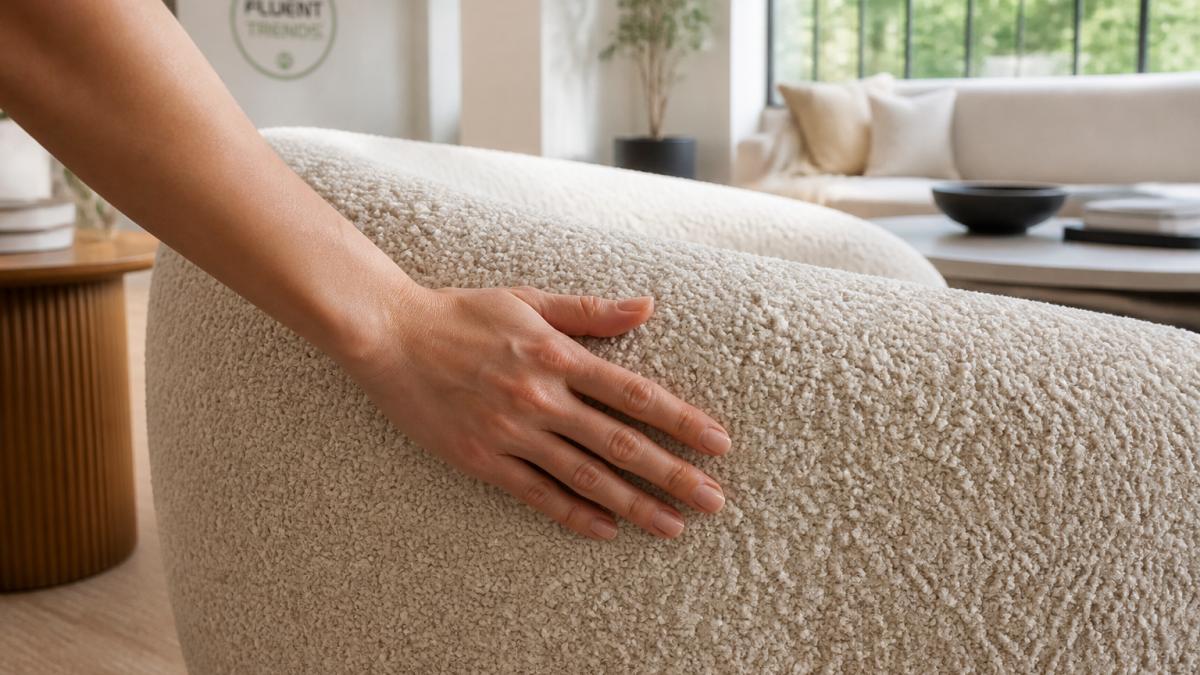
The French Word Behind the Texture
The word bouclé comes from the French verb boucler, which means to curl or to loop. That is the entire etymology, and it explains the look perfectly. A bouclé yarn is literally a curled yarn. The French word describes the physical structure, not a brand or a region. When you see a bouclé fabric described as "curly" or "looped," the writer is just translating the name. Nothing more.
How Looped Yarn Becomes Bouclé Fabric
Bouclé yarn is usually a three-ply yarn. Individual strands twist together, and one strand loops back on itself. That loop is the curl you feel. Spinning creates the loops, then weaving or knitting locks them into the fabric structure. Loop size depends on tension and yarn thickness. Tight spinning gives you a compact, hard-wearing looped fabric. Loose spinning gives you the plush, irregular surface people love. Both are real bouclé fabric. They just behave differently under daily use.
Bouclé Upholstery: Wool, Cotton, and Synthetic Fibers Compared
Fiber content decides how a bouclé sofa ages, so read the label before you fall for the texture. Wool bouclé is a popular choice for upholstery. Wool fibers have a natural crimp that acts like a tiny spring. That crimp is why wool resists crushing, bounces back after a movie night, and holds its loops through years of sitting. Organic cotton bouclé feels softer and breathes well, but cotton fibers are smoother and shorter, so they rub loose and pill faster on high-traffic seats. Synthetic fibers, usually polyester blends, cost less and clean easily. They also flatten sooner under body weight and hold static, which attracts pet hair. Natural fibers age gracefully. Synthetic fibers age visibly. That is the tradeoff in one line.
Fiber |
Durability |
Pilling Risk |
Best For |
|---|---|---|---|
Wool bouclé |
High, resists crushing |
Low |
Sofas, daily seating |
Organic cotton bouclé |
Moderate |
Moderate |
Accent chairs, low traffic |
Synthetic blend |
Moderate, flattens |
Higher |
Budget pieces, rentals |
Wool-synthetic mix |
Good balance |
Moderate |
Family rooms |
Why Wool Holds Up and Cotton Pills
The difference comes down to fiber length and crimp. Wool fibers are long and naturally wavy, so they interlock and spring back. Cotton fibers are shorter and smoother, so friction works them loose over time. Those loose fibers roll into little balls, which is pilling. A tight loop structure slows pilling on cotton, but it does not stop it. That matters on a bouclé chair you use every day.
Where Synthetics Win and Where They Fail
Polyester bouclé wins on price and stain resistance. It also dries fast after cleaning. But polyester fibers are smooth and straight, so they crush under weight and stay crushed. A synthetic bouclé sofa looks great in year one and flat in year three. Blends try to split the difference. A wool-synthetic mix keeps some wool bounce while lowering cost. Read the percentage. A 70/30 wool-rich blend behaves much closer to pure wool than a 30/70 blend does.
The Fibers Competitors Rarely Mention
Milk/casein fiber is a regenerated protein fiber made from milk casein. It feels silky and breathable, and it is naturally hypoallergenic. Silk blends, including mulberry and habotai, add sheen and a cool hand to bouclé accents, though they need gentler care. If a piece is labeled hypoallergenic, ask which fiber earns that claim. OEKO-TEX certification is the label to look for, because it confirms the textile was tested for harmful substances.
Is Bouclé Fabric Durable Enough for Everyday Furniture?
Yes, bouclé fabric can handle everyday furniture, but only when the construction matches the use. Loop size and yarn construction matter more than the fiber name on the tag. Tight, small loops on a dense weave resist pilling and snagging. Loose, chunky loops look luxurious and demand gentler handling. The ASTM International textile test standards cover abrasion and pilling resistance, and upholstery graded for heavy use passes stricter thresholds. Ask what a piece was rated for. A bouclé sofa built for daily family use is a different animal from a decorative bouclé chair.
Loop Size, Yarn Construction, and Pilling Risk
Pilling happens when loose fibres rub together and form little balls. Long loops and loosely spun yarn create more friction, so they pill sooner. A common mistake is judging bouclé by photos alone. In practice, a tight looped fabric with a dense weave outperforms a fluffy one every time. Watch out: cheap bouclé often uses short fibres that work loose within months. Run your hand across the seat. If loops lift easily, expect snags.
Bouclé Fabric Care: Cleaning, Snags, and Stain Removal
Bouclé fabric care is mostly about small habits done often. The loops trap dust, so weekly vacuuming with a brush attachment on low suction keeps grit from grinding into the yarn. Skip the beater bar. It pulls loops and fuzzes the surface fast. Rotate seat cushions every couple of weeks so wear spreads evenly. Keep pets' nails trimmed and offer a throw blanket on the favorite seat.
Spills and Stains: Act Fast, Blot Don't Rub
Blot spills immediately with a clean, dry cloth. Press down and lift. Never rub, because rubbing pushes liquid into the loop base and spreads the stain sideways. For water-based spills like coffee or juice, a tiny drop of mild dish soap in cool water works on most wool and synthetic bouclé. Test it on the back or underside first. For oil-based stains like butter or lotion, sprinkle cornstarch on the spot and let it sit for fifteen minutes. Vacuum it up, then blot with a cloth dampened with a small amount of isopropyl alcohol. Wool bouclé tolerates alcohol well. Organic cotton bouclé can fade, so test first. Never use bleach on any bouclé. It weakens the fibers and yellows wool.
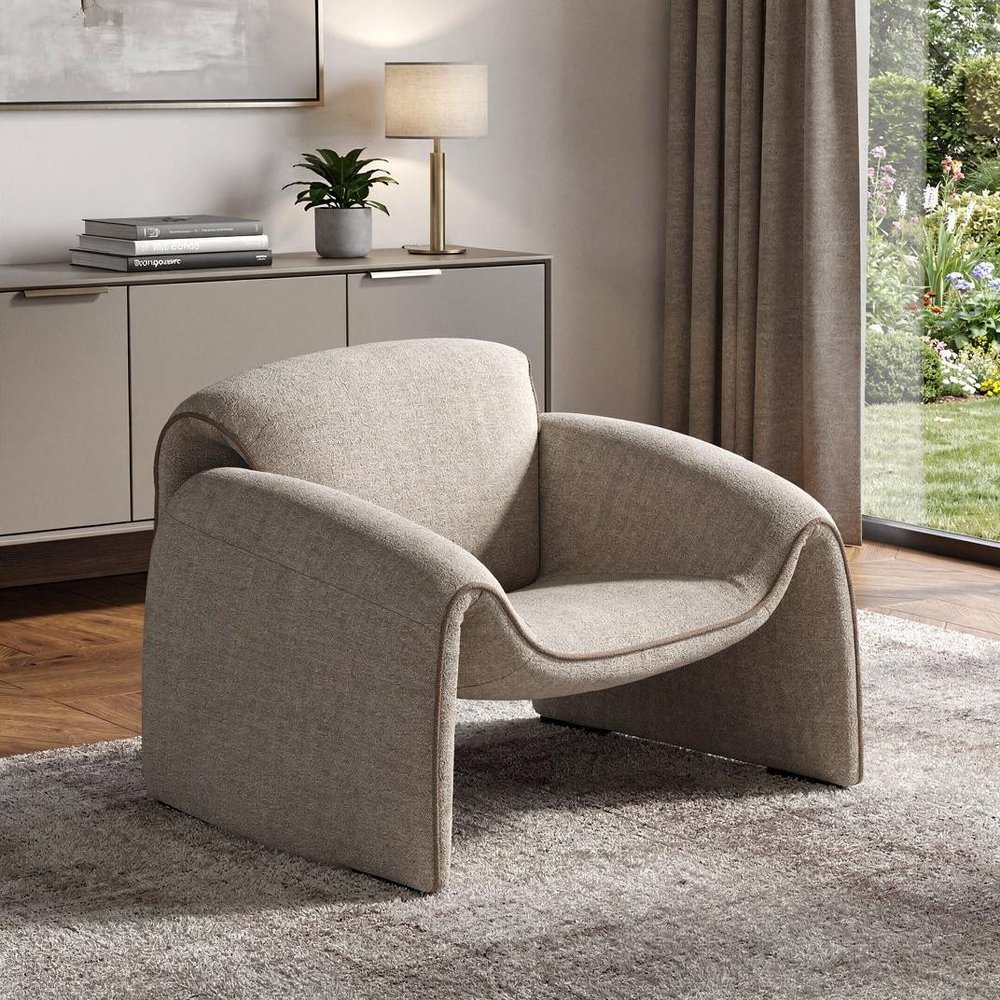
Sculpted Taupe Bouclé Lounge Chair | 39″ Wide →
Snags and Pulled Loops: Trim, Don't Tug
A pulled loop is not a crisis. Take small, sharp scissors and trim the loop level with the surface. Do not pull it. Pulling one loop loosens its neighbors and creates a run. If a loop has already pulled into a long strand, thread it back through with a blunt needle from the back side, then trim the tail. For a snag that keeps reopening, a tiny dot of clear fabric glue on the back side holds it without stiffening the face. This is the single most useful repair skill for any looped fabric, and it takes about a minute.
Deep Cleaning and When to Call a Pro
Check the care code on the tag before any wet cleaning. W means water-based cleaner is fine. S means solvent only, so water can shrink or stain the fabric. WS means either is safe. X means vacuum only, no liquids. Most upholstery bouclé is W or WS, but always confirm. For a full piece, use a low-moisture upholstery cleaner and work in small sections. Over-wetting is the most common mistake. It leaves water rings and can cause the loop base to felt. Dry with a fan or open windows, not direct heat. Call a professional when a stain covers more than a few inches, when the fabric is silk-blend or milk/casein fiber, or when the piece is a structured bouclé sofa with glued seams.
- Vacuum weekly with a brush head, low suction
- Blot stains, never scrub
- Trim snags, never pull
- Rotate cushions to spread wear
- Keep pets' nails trimmed to reduce pulls
- Test any cleaner on a hidden area first
- Match the cleaner to the care code: W, S, WS, or X
Choosing a Bouclé Sofa That Fits Your Room and Your Life
Start with the room, then the lifestyle, then the fabric. A bouclé sofa in a busy family room needs tight loops and a dense weave. A sculptural piece in a quiet sitting room can afford looser texture. Measure your space and your doorways before ordering anything. Then think about who sits there daily. Kids and pets push you toward compact loops and darker tones. If you want to see how a real option fits that brief, browse the Modern Minimalist Ivory Bouclé Sectional Sofa for clean lines and deep comfort. You can also compare the Light Gray Bouclé L Shaped Two Piece Sofa and Chaise Sectional With Toss Pillows if a chaise layout suits your room better.

Bouclé vs. Similar Textured Fabrics: What Actually Differs
Bouclé is not the only textured fabric, and the differences are practical. Bouclé uses looped yarn. Sherpa uses a brushed, fuzzy pile. Teddy fabric mimics fleece with a plush hand. Tweed is woven from colored wool yarns with a rougher grid. Chenille has a velvety, tufted surface that drapes softly. Bouclé holds shape better than chenille and resists matting better than sherpa. It also shows texture more dramatically than tweed. If you love the sculptural look, see how the loops read on a full piece like the Ivory Bouclé Sculptural Curved Modular Sectional.

Durable Furniture for Daily Use: What to Check Before You Buy
Durability lives in the frame and the joinery, not just the fabric. Check the frame material first. Kiln-dried hardwood and corner-block-reinforced joinery hold up for years. Look at the cushion fill and the weight capacity. A piece rated for heavier loads usually carries sturdier internal construction. Our durable furniture for daily use collection groups pieces chosen on exactly these points. When you evaluate wood furniture, hardness matters. Sheesham wood scores around 1,410 lbf on the Janka hardness scale, which measures resistance to denting. That makes it harder and more scratch-resistant than teak at roughly 1,000 lbf. Properly seasoned sheesham resists warping, and its heartwood naturally repels termites and fungi.
Sustainability and Sourcing: Reading Bouclé Labels Honestly
Sustainability claims need evidence, so read labels with a skeptical eye. OEKO-TEX certification means a textile was tested for harmful substances, which matters for anything you touch daily. Look for named fibers, country of manufacture, and care instructions that match reality. Vague words like "eco" mean little without a standard behind them. For a deeper look at why sourcing choices matter, read why ethically sourced home goods matter. Watch out: a "natural fiber" label tells you nothing about how the fiber was processed.
Which Bouclé Piece Belongs in Your Home This Season
Not every room needs a full bouclé sofa, and that is fine. A lounge chair delivers the texture without the commitment. The Sculpted Taupe Boucle Lounge Chair at 39 inches wide fits a reading corner or a bedroom nook. Its foam-filled cushions and tight back hold their shape, and the steel legs support up to 300 pounds. Pair it with an Avenida in Bosque 18" x 18" pillow for contrast. If your space leans modern minimalist, a single curved bouclé accent does more than a matching suite. Start small, live with the texture, then scale up.
Frequently Asked Questions
What material is bouclé actually made from?
Bouclé is a fabric structure, not a single fiber. The loops can be made from wool, cotton, linen, silk blends, or synthetic fibers like polyester and acrylic. Wool bouclé tends to feel springy and resists crushing. Cotton bouclé is lighter and easier to clean. Synthetic versions cost less and hold color well but can pill faster. Always check the fiber content tag, since two bouclé sofas at similar prices can behave very differently after a year of daily sitting.
Is bouclé fabric durable enough for a family room?
It can be, depending on fiber and loop size. Tight, small-loop bouclé in a wool or wool-blend upholstery grade holds up well to daily use. Loose, large loops snag on zippers, pet claws, and jewelry. Look for a tight weave, a reinforced frame, and foam cushions that keep their shape. A bouclé sofa rated for everyday seating, with corner-blocked joinery and a solid wood frame, will outlast a decorative chair used twice a month.
How do you clean and care for bouclé upholstery?
Vacuum weekly with a brush attachment on low suction to lift dust from the loops. Blot spills right away with a clean white cloth; rubbing pushes liquid deeper into the yarn. For most bouclé fabric care, use a mild detergent mixed with water and test it on a hidden spot first. Never scrub a snag. Trim it carefully with small scissors instead of pulling. Professional dry cleaning is safest for wool blends and full sofas.
Does bouclé snag or pill easily?
Pilling depends on fiber length and how tightly the yarn is spun. Short-staple wool and loose synthetic blends pill more. Tightly spun, long-fiber yarns resist it. Snagging is mostly about loop size: large, loose loops catch on everything, while small, dense loops stay tidy. Rotate cushions, keep pets' nails trimmed, and avoid placing a bouclé chair next to a rough wall or a zipper-heavy coat rack.
Is bouclé a trend or a timeless choice?
The texture has appeared in fashion and interiors for decades, so it is closer to a modern classic than a passing fad. What dates a piece is usually the silhouette, not the loop. A curved bouclé chair or a clean-lined sectional in a neutral taupe or ivory tends to age well. Pair it with solid wood, natural fibers, and simple shapes, and the fabric reads as intentional rather than trendy.
Bouclé rewards buyers who look past the photos and check the loops, the fiber, and the frame. That is the standard we hold every piece to at Fluent Trends. Our curated selection favors ethically made goods, sustainably sourced materials, and construction built to last for years of daily life. Explore the collection and find the bouclé piece that fits how you actually live. Get started with Fluent Trends and bring home texture that holds up.
