

Creative Childrens Toy Box Ideas for Tidy Homes
Yuatinia LeakIntroduction
Every parent knows the feeling — standing in the middle of a room that somehow transformed into a toy explosion by the end of the day. You’re not alone. The best children’s toy box ideas don’t just hide the clutter; they turn that creative chaos into a beautifully integrated part of your home.
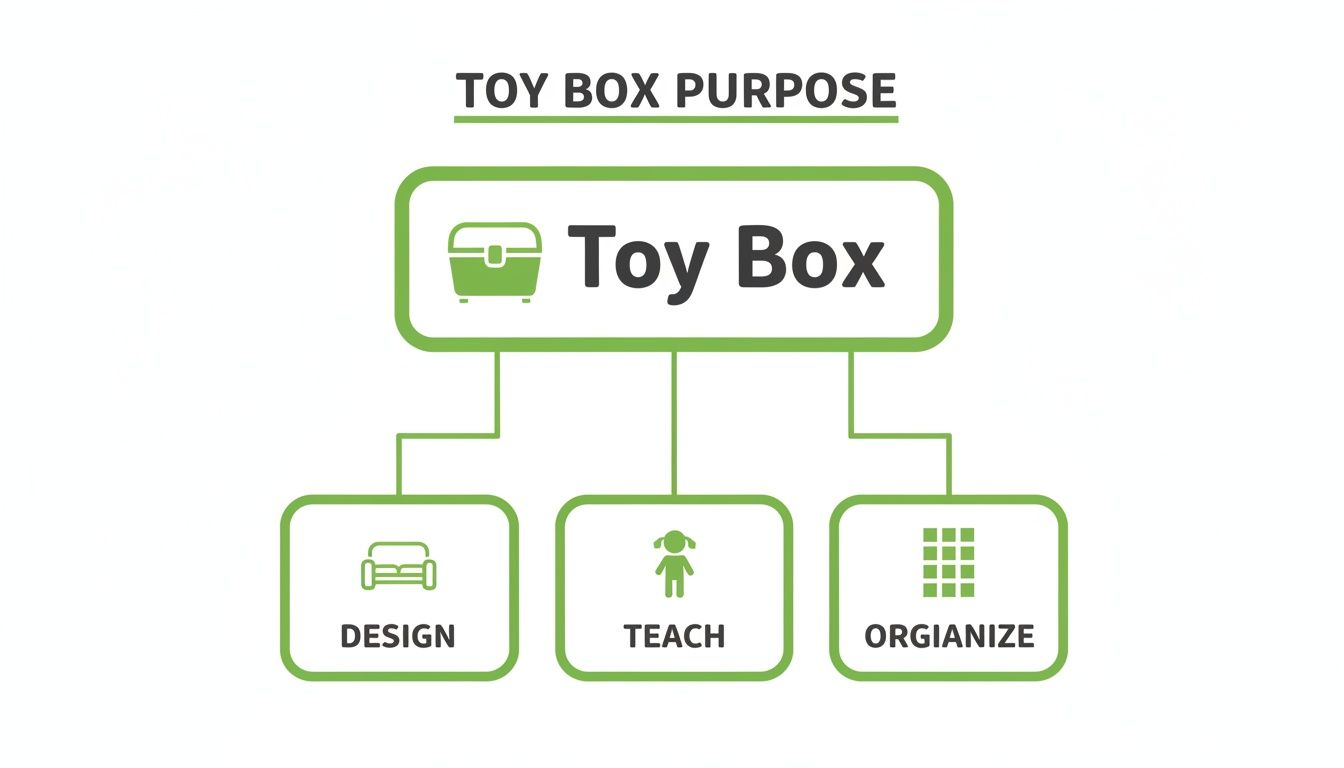
The right toy box is more than storage. It’s a design statement, a subtle teaching tool, and the first step toward a calmer, more organized living space — especially in homes where every square inch matters.
Beyond Clutter: The Purpose of a Perfect Toy Box
A child’s room is a whirlwind of color, imagination, and—let’s be honest—constant clutter. While it’s easy to think of a toy box as a simple end‑of‑day catch‑all, its purpose reaches far beyond a quick cleanup. The right toy box becomes the quiet hero of a well‑styled home and a surprisingly meaningful part of your child’s daily development.
At its core, a toy box creates order. It gives every block, doll, and race car a designated home, preventing toys from migrating across the house and taking over your living room floor. That single act of containment instantly shifts a space from chaotic to calm, making your home feel more intentional, more organized, and more livable.
More Than Just Storage
A toy box isn’t just a container — it’s a child’s first lesson in caring for their world.”
The magic of a well‑chosen toy box goes far beyond aesthetics. It quietly introduces children to the foundational concepts of responsibility and organization. That simple daily ritual of “putting toys away” becomes a meaningful, hands‑on lesson in caring for their belongings — an early, confidence‑building step toward lifelong tidiness.
Think of a toy box as a child’s first personal filing system. When they know exactly where their favorite things belong, they gain a sense of control and independence that feels empowering rather than overwhelming.
The goal isn’t merely to hide toys, but to create a system that supports your child’s growth. An effective toy box turns cleanup from a dreaded chore into a simple, satisfying routine — one they can proudly manage on their own.
A Tool for Growth and Style
“The right toy box doesn’t just store toys — it supports the way your child learns, grows, and lives.”
The right toy box can play a meaningful role in your child’s development. For toddlers, simple open‑top bins encourage early sorting by color or type, building foundational cognitive skills. As children grow, lidded chests introduce them to simple latches and help them plan out their cleanup routine — small steps that nurture independence and confidence.
And of course, a toy box is still a piece of furniture. It deserves to look intentional. The right design can complement your home’s aesthetic rather than compete with it, blending seamlessly into your living space while still serving a practical purpose.
Design Integration: A toy box can be a statement piece, a subtle accent, or even double as multifunctional furniture, like a bench or side table.
Teaching Responsibility: It creates a clear, achievable task that helps children learn to care for their belongings.
Creating Order: It establishes a simple system that reduces visual clutter and makes it easier for everyone to find that one specific toy.
This guide is your complete playbook for choosing the perfect solution. From materials and safety features to clever organization systems and DIY ideas, you’ll find options that bring peace, style, and a touch of practical magic to your home.
Finding the Right Toy Box Type and Material
Choosing a toy box is about far more than finding a place to tuck toys out of sight. It’s a balance of practicality, safety, and the design language of your home. The right piece should feel intentional — whether it’s a classic wooden chest that doubles as a reading bench or a set of lightweight bins a toddler can confidently manage on their own.
Think of it like choosing a backpack. You wouldn’t hand a preschooler a full‑sized hiking pack, and you can’t expect a simple tote to hold a week’s worth of camping gear. In the same way, the ideal toy box depends on your child’s age, the types of toys they love, and the aesthetic you want to maintain.
Now, let’s explore the most popular options so you can find the perfect fit for your home and your child’s needs.
Classic Wooden Toy Chests
“A wooden toy chest isn’t just storage — it’s a piece of childhood that can last a lifetime.”
Wooden toy chests are the timeless workhorses of toy storage. Crafted from materials like pine, oak, or MDF, they offer a level of durability that can genuinely last for generations. Their solid construction makes them ideal for corralling bulkier items — the stuffed‑animal mountains, oversized blocks, and sports gear that never seem to stay put.
Many wooden chests also pull double duty. A flat‑topped design can transform into a charming window seat or a small bench at the foot of a bed, making it a smart space‑saving solution for compact rooms. Their natural warmth and sturdiness pair beautifully with the many benefits of wooden toys, creating a cohesive, classic playroom aesthetic that feels both intentional and enduring.
Versatile Plastic Bins And Organizers
Plastic storage continues to dominate modern playrooms thanks to its unmatched flexibility and affordability.
Practical, lightweight, and endlessly adaptable — plastic storage is the quiet hero of everyday organization.”
For families looking for convenience and budget‑friendly solutions, plastic bins are hard to beat. From colorful stackable containers to large wheeled chests, these options are lightweight, easy to clean, and available in nearly every shape and size imaginable.
Their popularity isn’t just anecdotal — it’s global. The plastic toy storage market was valued at $4.51 billion in 2022 and is projected to reach $7.7 billion by 2032, a clear sign of how much parents appreciate practical designs that help keep playroom chaos under control.
The most effective toy storage systems often blend materials. Pair a large wooden chest for bulky items with smaller, open‑top plastic or fabric bins for the toys kids reach for daily. This mix‑and‑match approach creates a setup that’s organized, intuitive, and genuinely easy for children to maintain.
A toy box is more than a container — it’s a design piece, a teaching tool, and an organizational lifesaver woven seamlessly into your home’s decor.
Soft And Accessible Fabric Baskets
Lightweight, safe, and endlessly adaptable — fabric baskets make organization feel effortless for little hands.
Fabric toy baskets are a wonderful choice, especially for families with younger children. Their soft, pliable structure makes them exceptionally safe for nurseries and toddler rooms — no sharp corners, no heavy lids, just easy, approachable storage. They’re perfect for corralling plush toys, dress‑up outfits, and cozy blankets.
-
Portability: Their feather‑light design makes it easy for kids to carry them from room to room, turning cleanup into part of the adventure.
-
Style: With endless colors, textures, and patterns, fabric baskets add a gentle, textural layer to your décor while keeping the space feeling warm and inviting.
-
Accessibility: Open‑top designs make it simple for little ones to see their toys and — ideally — help out when it’s time to tidy up.
Because many fabric baskets are collapsible, they’re also a lifesaver in small spaces where storage needs to appear and disappear on demand. This makes them one of the most adaptable toy‑storage solutions for modern homes where every square foot counts.
Comparing Common Toy Box Materials
Choosing the right material shapes everything — from durability and safety to how well the toy box blends with your home’s aesthetic.
| Material | Pros | Cons | Best For |
|---|---|---|---|
| Wood | Highly durable with a timeless, elevated look; offers multifunctionality — many wooden chests double as benches or window seats, adding both charm and utility. | Heavier than other materials; may include sharp corners; typically more expensive; heavy lids can pose pinch risks without proper safety hardware. | Storing bulky toys, heirloom‑quality pieces, and serving as multifunctional furniture in playrooms, bedrooms, or shared family spaces. |
| Plastic | Lightweight, budget‑friendly, and incredibly easy to clean; available in a wide range of colors and sizes, making it simple to customize any playroom setup. | More prone to cracking over time; may not blend seamlessly with all décor styles; generally less eco‑friendly than other materials. | Flexible, everyday organization — especially for smaller toys, arts and crafts supplies, building sets, and high‑traffic play areas. |
| Fabric | Soft, lightweight, and exceptionally safe for young children; often collapsible and available in a wide range of stylish colors, textures, and patterns. | Less structured than wood or plastic; not ideal for heavy or sharp items; fabric can show dirt more easily and may require occasional spot cleaning. | Nurseries and toddler rooms, storing plush toys, blankets, dress‑up clothes, and other soft, lightweight items. |
Ultimately, the best material is the one you enjoy seeing in your home and that your child can use safely and independently. Whether you prefer the classic charm of wood or the soft approachability of fabric, the right choice turns tidying up into a natural, effortless part of play.
Essential Safety Features for Any Toy Box
When you’re searching for the perfect toy box, it’s easy to get swept up in aesthetics and storage capacity. But truly, nothing outweighs safety. Before anything enters your child’s space, you have to see it from their perspective — as something they’ll climb on, crawl into, lean against, and interact with every single day.
A few thoughtful design features can turn a toy box from a potential hazard into a completely worry‑free part of their room. These aren’t optional add‑ons or “nice‑to‑haves.” They’re the non‑negotiable essentials that create a safe, child‑friendly environment where play and peace of mind can coexist.
Preventing Pinched Fingers and Trapped Toddlers
The biggest red flag on a traditional toy chest has always been the lid. A heavy, fast‑closing top can seriously injure little fingers, and even worse, there’s the frightening possibility of a child becoming trapped inside.
Fortunately, modern designs have evolved to eliminate these risks. Here’s what to look for:
Soft‑Close Hinges: A non‑negotiable feature. Quality lid supports or safety hinges prevent slamming by guiding the lid down slowly, giving little hands plenty of time to move away.
No Latching Lids: Avoid any toy box that clicks shut or locks automatically. An unlatching lid ensures a child can never accidentally trap themselves inside.
Ventilation Cutouts: Proper airflow is essential and often overlooked. Look for small gaps or cutouts—typically under the handles or along the back—that allow air to circulate even when the lid is closed.
These features are intentionally designed to prevent the most common and most serious toy‑box‑related accidents.
Safety isn’t an add‑on — it’s the foundation of a toy box built for real childhood curiosity.
Ensuring Stability and Non-Toxic Materials
Beyond the lid, the structure of the toy box itself plays a major role in safety. A wobbly design can tip over easily, and the wrong finish can expose kids to chemicals you definitely don’t want in your home.
Parents are more aware of these risks than ever, and it’s reshaping the market in meaningful ways. More than 70% of urban households now prioritize durable, hazard‑free designs to keep playtime safe. For a deeper look at how this safety‑first mindset is influencing today’s options, you can explore additional insights on toy storage market trends.
As you shop, pay attention to these essential construction details:
Rounded Corners and Edges: Sharp corners are an accident waiting to happen. Smooth, rounded edges are far kinder to wobbly toddlers and energetic kids who love to run, climb, and explore.
Sturdy and Stable Base: Give the toy box a gentle shake. A well‑designed piece should have a wide, solid base that won’t tip if a child leans on it or tries to pull themselves up.
Non‑Toxic Finishes: Always check the label. Paints, stains, and sealants should be certified non‑toxic and free from lead and harmful VOCs. Look for terms like “child‑safe finish” or “zero‑VOC” to ensure the materials are truly safe.
By prioritizing these features, you can feel confident that the toy box you choose isn’t just a stylish addition to the room — it’s a safe, thoughtfully designed home for all their favorite things.
Smart Systems for Organizing Toys Effectively
A beautiful toy box is a fantastic starting point, but without a thoughtful system inside, it can quickly turn into a “doom box” — a chaotic catch‑all where forgotten toys go to disappear. The real transformation happens when you move beyond simply containing the mess and start building a system that supports how your family actually plays. That’s what turns cleanup from a dreaded chore into a natural, everyday rhythm.
Think of it like setting up your kitchen. You wouldn’t toss all your utensils, pots, and pantry staples into one giant drawer. You use dividers, containers, and labels to create order and flow. The same logic applies to toy storage: when everything has a place, kids know where things go, and cleanup becomes intuitive instead of overwhelming.
Getting this right matters more than ever. After the toy industry saw a 7% sales rebound in 2025 — with building sets up 18% and collectibles up 32% — the demand for smart, functional storage surged right alongside it. With the global toy market now valued at USD 120.5 billion, thoughtful organization isn’t just about aesthetics; it’s about protecting the toys you’ve invested in. For more insight into the toy market’s growth, you can explore additional data over at circana.com.
Creating Categories with Bins and Dividers
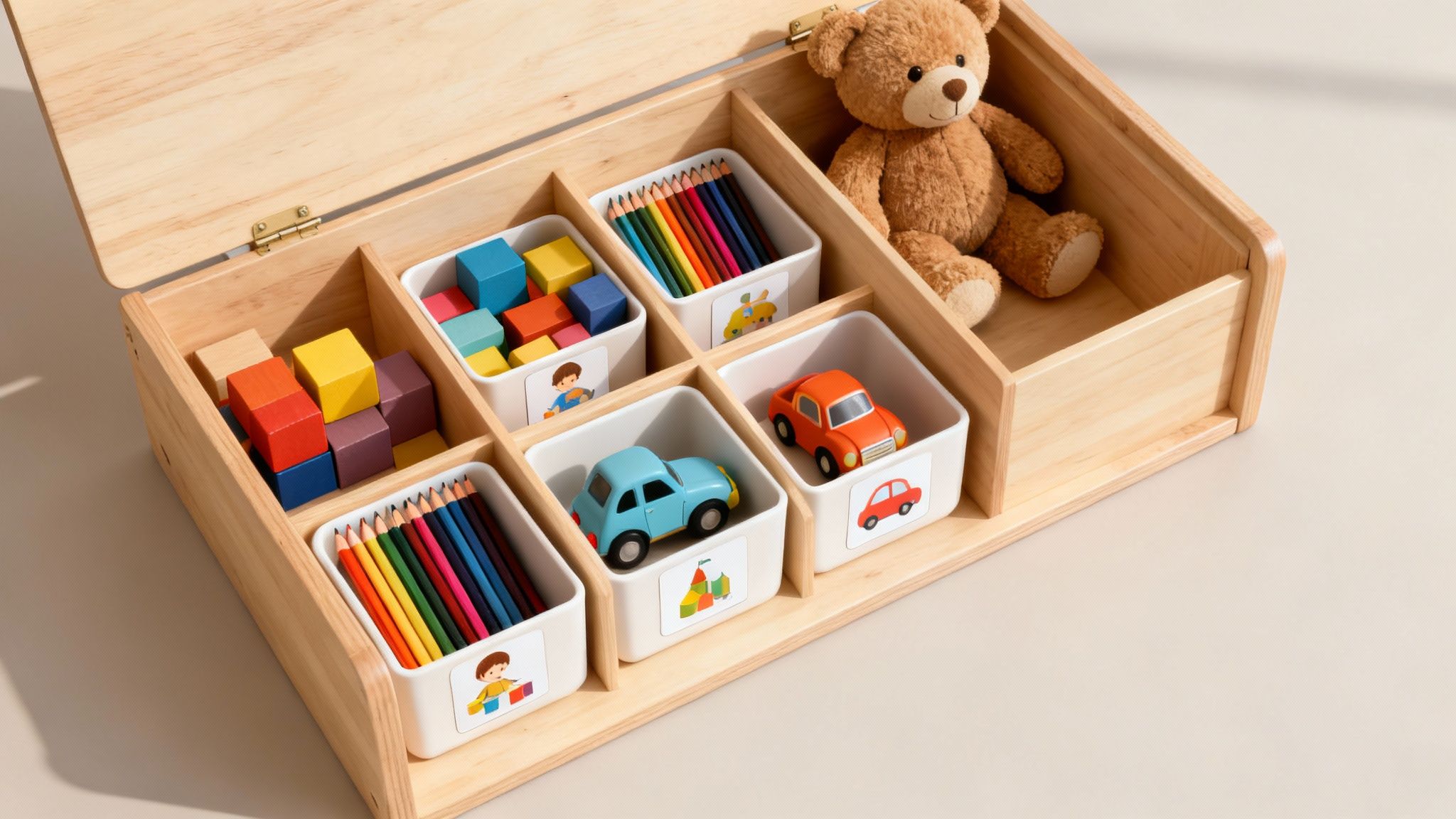
First things first: divide and conquer. Instead of relying on one big, bottomless cavity, create smaller, intentional zones inside the toy box. This simple shift makes it far easier for kids to find what they need — and, more importantly, return everything to its proper place.
Internal Bins: Add a few smaller, open‑top fabric or plastic bins inside the main toy box. Dedicate one to LEGOs, another to action figures, and a third to art supplies. These mini‑stations keep everything contained and easy to access.
DIY Dividers: Tension rods or custom‑cut plywood panels can create permanent sections inside a wooden chest. It’s an ideal way to separate bulky board games from slim puzzle boxes without everything collapsing into one pile.
Color‑Coding: Assign a color to each toy category — red for cars, blue for blocks, yellow for dolls. These visual cues are incredibly effective for young children who respond well to simple, intuitive systems.
This strategy eliminates the dreaded “toy box dig,” where every single item ends up on the floor just to find one tiny car. It brings order, clarity, and a sense of calm to the daily play‑and‑cleanup cycle.
The Power of Kid-Friendly Labeling
Once your categories are in place, the next step is labeling. A clear, age‑appropriate labeling system gives kids real ownership over the cleanup process. The key is choosing labels that match their developmental stage so the system feels intuitive rather than overwhelming.
Your goal is to create a system so simple that a child can understand it at a glance. Visual labels turn cleanup into a matching game, making it intuitive and even fun.
For little ones who aren’t reading yet, picture‑based labels are the perfect starting point.
Picture Labels: Snap a quick photo of the toys — a pile of LEGOs, a handful of crayons — print it, and attach it to the corresponding bin. Kids instantly know what goes where.
Stickers or Drawings: Simple, recognizable stickers work beautifully too. You can even let your child draw their own labels, which adds a personal touch and helps them feel invested in the system.
As kids grow and begin reading, you can transition to word labels. It’s a subtle way to reinforce literacy skills while helping them continue to manage their own space with confidence. A little organization truly goes a long way; explore even more strategies in our earlier guide, How to Organize Kids Toys: Easy Tips for a Tidy Playroom.
Making Cleanup a Consistent Routine
Even the best organization system only works if it’s used consistently. The final step is weaving cleanup into your child’s daily rhythm — making it a non‑negotiable, yet positive, part of wrapping up playtime. When it’s predictable, it feels natural rather than forced.
Try turning it into a game by setting a timer or playing a special “cleanup song.” When tidying becomes a shared, lighthearted activity, it shifts from a power struggle to a simple habit. And while a dedicated toy box is a powerful tool, you can take your organization even further by exploring broader strategies on how to organize a messy room from top to bottom.
How to Style a Toy Box in Any Room
Let’s be honest: a toy box shouldn’t be a brightly colored eyesore you’re constantly trying to hide. For parents who care about their home’s aesthetic, the best children’s toy box ideas are the ones that blend seamlessly into the space, functioning as both storage and décor. The right piece doesn’t compete with your style — it enhances it, becoming a beautiful, intentional part of the room.
Think of a toy box less as a necessary evil and more as a design accent, the same way you’d choose a throw pillow, a side table, or a piece of art. Yes, it solves a problem — the endless sea of toys — but it can also contribute to the room’s overall mood and visual harmony. The key is choosing a toy box that speaks the same design language as the rest of your space.
Matching Toy Storage to Your Decor
The first step in choosing a toy box that truly works is taking a close look at your home’s dominant style. A sleek, modern bin will feel out of place in a rustic farmhouse living room, and an ornate wooden chest will clash in a minimalist space. The goal is harmony — storage that blends in so seamlessly it feels like it was always meant to be there.
For the Minimalist Home: Choose clean lines and a soft, neutral palette. White, grey, or light‑wood toy boxes with hidden hardware keep the look streamlined. A simple lidded bench or a set of matching fabric bins in muted tones maintains the calm, uncluttered aesthetic minimalism is known for.
For the Bohemian Space: Lean into natural textures. A large wicker or rattan trunk brings warmth and an easy, lived‑in vibe. Woven seagrass baskets are perfect for soft toys and blankets, adding to the layered, eclectic feel that defines boho style.
For Mid‑Century Modern Rooms: Look for toy boxes with iconic tapered legs and clean geometric shapes. A low‑profile credenza with sliding doors can discreetly store toys while doubling as a stylish media console or entryway piece.
When the material, shape, and tone of your toy box echo the furniture around it, the entire room feels intentional. It doesn’t just fit — it belongs.
Styling Tricks for Any Room
Once you’ve chosen a toy box that fits your aesthetic, a few thoughtful styling techniques can help it blend even more seamlessly into your space. This is where the piece truly connects to its surroundings and becomes part of the room’s visual story.
The secret to stylish toy storage is treating it like furniture. When you place it with purpose and style it thoughtfully, it stops being ‘just a toy box’ and becomes an integrated part of your home’s design.
Try a few simple but game‑changing techniques. In the living room, slide a wooden toy chest beneath a window and layer a couple of decorative cushions on top — suddenly, you’ve created a cozy reading nook. In a bedroom, a slim storage trunk at the foot of the bed can hold extra blankets right alongside playtime favorites.
Another clever approach is using a large, attractive basket as a planter for a faux tree, with toys tucked neatly around the base inside. It’s hiding in plain sight, and it works beautifully. Exploring different ways to style your home can spark even more ideas for making every single piece in your house pull its weight, functionally and aesthetically.
Ultimately, it all comes down to creativity. Whether you tuck the toy box under a console table, use it as an end table, or turn it into a colorful focal point in a playroom, the right styling transforms clutter control into a genuine design win.
Inspiring DIY Toy Box Projects and Upgrades
Ready to roll up your sleeves and add a truly personal touch to your child’s space? Creating or upgrading a toy box is one of those wonderfully rewarding projects that doesn’t require expert woodworking skills. These DIY ideas let you infuse personality and charm without stretching your budget — a reminder that a little creativity can go an impressively long way.
Whether you’re building from scratch or refreshing a well‑loved hand‑me‑down, the DIY route gives you complete control. You get to choose every detail, from the perfect paint shade and hardware to clever functional add‑ons. The result is a piece that fits your home’s style beautifully and supports your child’s needs with intention.
Simple Project: From Crate to Chest
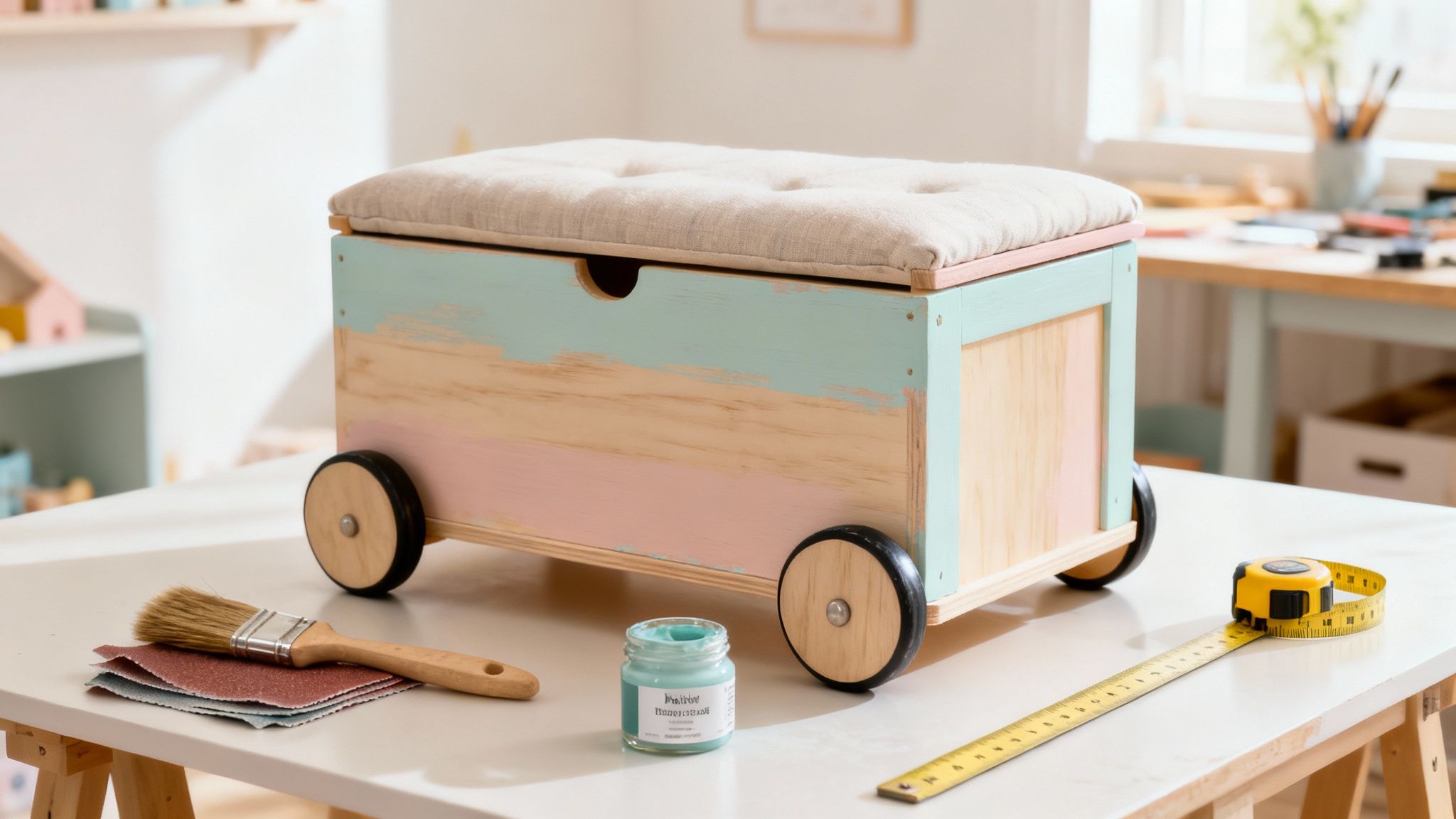
Transforming a basic wooden crate into a chic, functional toy chest is one of the easiest DIY upgrades you can take on. It’s budget‑friendly, beginner‑friendly, and incredibly satisfying — the kind of project that delivers maximum impact with minimal effort.
Prep the Surface: Start by sanding the crate inside and out to smooth any rough spots and eliminate splinters. Wipe it clean with a damp cloth so your finish goes on flawlessly.
Add a Personal Touch: Paint or stain the crate using child‑safe, non‑toxic products. This is your moment to get creative — add stencils, a name, or a simple pattern to make it feel custom.
Install Wheels: Attach four caster wheels to the bottom corners. Not only does this make the chest easy to move, but kids love the playful mobility.
Consider a Lining: Add a soft fabric lining to the bottom to protect both the toys and the wood. It gives the whole piece a polished, finished look.
This quick project turns an everyday crate into a stylish, practical storage solution that feels completely personalized.
Refresh an Old Toy Box with Modern Style
Got an old‑fashioned toy box gathering dust in the attic, or maybe you spotted a diamond in the rough at a thrift store? A quick refresh can completely transform it into a modern piece that looks brand new. It’s a fantastic, sustainable way to achieve a high‑end look for less.
A fresh coat of paint and new hardware is the quickest way to update any piece of furniture. This simple upgrade can make an old, tired toy box look like a designer piece that perfectly coordinates with your home.
Start by removing any old hardware and giving the box a thorough clean and sand. A quality primer is essential — it helps the new paint glide on smoothly and ensures the color looks rich and even. Once painted, replace the dated knobs or handles with something more contemporary, like sleek brass pulls or playful leather straps. It’s a small update with a big payoff, instantly elevating the entire piece.
Create a Cozy Reading Nook Topper
If you’re feeling a bit more ambitious, adding an upholstered top to a sturdy wooden toy chest is a true game‑changer. This clever upgrade transforms a simple storage box into a comfortable, dual‑purpose bench — perfect for curling up with a book, tying shoes, or creating a quiet little corner your child can call their own.
To build the seat, you’ll need a piece of plywood cut to match the lid, a thick foam cushion, batting, and a durable fabric you love. Layer the foam and batting over the plywood, stretch the fabric tightly across the top, and secure everything underneath with a staple gun. Once your cushion is complete, attach it to the toy box using sturdy hinges. And don’t skip the most important detail: soft‑close safety hinges to keep little fingers safe. It’s a single project that delivers seating, style, and smart storage all at once.
Answering Your Top Toy Box Questions
Choosing the right toy storage often brings up a few common questions. From when to introduce a toy box to how to actually get kids excited about using it, these answers help you set the stage for long‑term success. Getting these details right from the beginning makes all the difference.
When Is the Right Time to Introduce a Toy Box?
You can start with simple, open‑top bins as soon as your baby begins reaching for their first toys. It’s an easy, gentle way to introduce the idea that everything has a home.
The real learning moment arrives around 18 to 24 months — the age when toddlers can follow simple directions and begin helping you put things away. This is the perfect time to weave cleanup into the daily play routine.
By the preschool years (ages 3–5), you can upgrade to a toy box with a lid. Just be sure it’s equipped with soft‑close hinges to protect little fingers. The goal is to make tidying up a consistent, positive part of their day from the very start.
How Do You Get Kids to Actually Use Their Toy Box?
Here's the secret: make it a game, not a chore. If you frame cleanup as a fun challenge, you’ll sidestep the daily power struggle and build a great habit instead.
A few tried-and-true solutions:
Beat the Clock: Set a timer and cheer them on as they race to get everything put away before it buzzes.
Turn It Into a Sorting Game: Challenge them to find all the blue blocks or return every doll to its “home.”
Cue the Cleanup Song: Play a special tune that only comes on when it’s time to tidy up — a simple ritual that signals the end of playtime.
The real magic is in consistency and positive reinforcement. When tidying up is a shared, upbeat activity you do together, kids are so much more likely to join in without a fuss.
Are Toy Boxes Better Than Shelves?
It’s a great question — but it’s not really an either/or situation. The most functional playrooms use both, because toy boxes and shelves serve different purposes and complement each other beautifully.
Think of the toy box as a treasure chest. It’s ideal for scooping up dozens of loose, mismatched items and instantly hiding visual clutter.
Toy Boxes Shine For:
LEGOs and building blocks
Action figures and small dolls
Stuffed animals and dress‑up clothes
Toy cars, trains, and all their tracks
Shelves, on the other hand, are perfect for displaying favorite toys, lining up storybooks, and keeping larger items accessible. The winning combination is simple: a toy box for the jumble and shelves for the curated pieces.
Ready to bring harmony, function, and style into your child’s space? Explore our curated selection of kids’ furniture and storage baskets at Fluent Trends — thoughtfully chosen to help every room feel beautifully pulled together.
Discover the full collection at https://www.fluenttrends.com