

How to Style Your Home for a Cohesive Designer Look
Donna MaloneIf you really want to style your home like a pro, you have to get a handle on the core principles: color, scale, layering, and focal points. This isn't about just buying pretty things; it’s about understanding why certain combinations work and how to create a space that feels intentional and harmonious.
Mastering the Fundamentals of Home Styling
Before you even think about moving a single piece of furniture, let’s talk about the foundational concepts that designers use to make a room feel just right. Think of these less as rigid rules and more as a trusted guide for making decisions you’ll be happy with. Learning how to style your home is really about creating a space that’s not only beautiful but truly works for your life.
This desire for homes that are both stylish and functional is huge right now. It's a major reason the global home decor market is projected to hit around $770 million in 2025 and is on track to balloon to nearly $1,047.9 million by 2032. This isn't just a trend; it's a worldwide shift towards creating personalized, well-designed homes. You can dig into more of the data on home décor market trends to see just how much consumer tastes are changing.
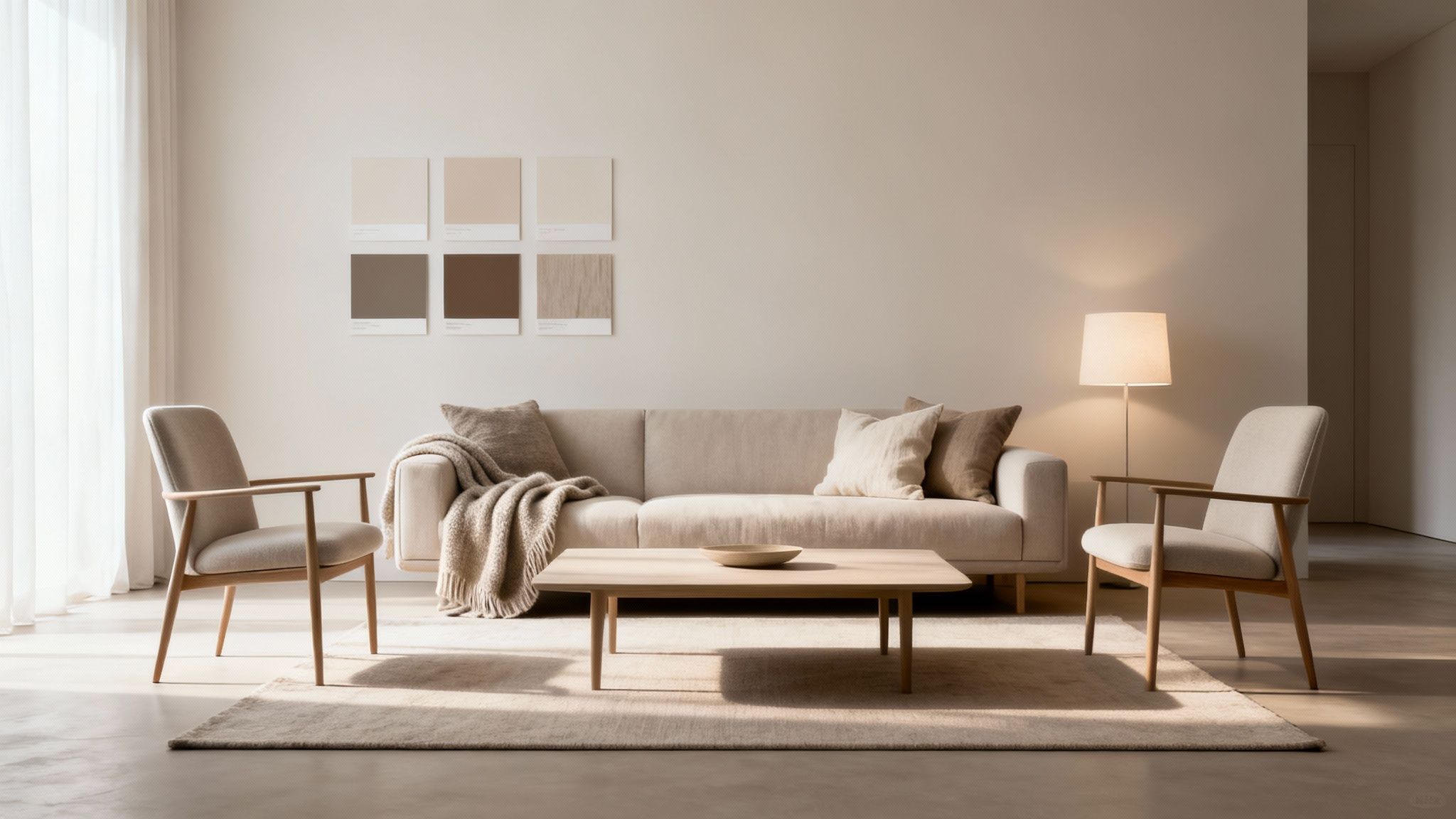
Here's a quick cheat sheet to get you started.
Core Styling Principles at a Glance
This table breaks down the essentials—the fundamental ideas that will guide every decorating decision you make.
| Principle | What It Means | Quick Tip |
|---|---|---|
| Color | Using a consistent palette to create a cohesive flow throughout your home. | Find a piece of art or a rug you love and pull three colors from it for an instant, no-fail palette. |
| Scale | The size of objects in relation to each other and the room itself. | Before buying, use painter's tape to mark the dimensions of a new furniture piece on the floor to visualize its footprint. |
| Balance | The distribution of visual weight in a room to create harmony. | Balance a large sofa on one wall with two smaller armchairs and a floor lamp on the opposite wall. |
| Layering | Adding depth and interest with a mix of textures, lighting, and decor. | Combine a mix of materials: a smooth leather couch, a chunky knit throw, and a plush wool rug. |
Getting these basics down is the first step toward creating a home that looks and feels thoughtfully designed.
Building Your Color Palette
Think of your home’s color story as the glue that holds everything together. A cohesive palette doesn’t mean every room has to be painted the exact same shade. It’s about making sure the colors flow naturally as you move from one space to the next.
A fantastic and easy place to begin is with the 60-30-10 rule. It’s a classic design trick that just works.
-
60% is your dominant color: This is the main event, usually what goes on your walls. It sets the tone for the entire room.
-
30% is your secondary color: This shade supports your main color and adds some extra interest. Think furniture, curtains, or maybe an accent wall.
-
10% is your accent color: This is where you inject some personality! It’s used sparingly on smaller items like throw pillows, artwork, or cool vases.
A simple tip: Choose a piece of multi-colored art or a patterned rug you love. Pull your three colors directly from that item to create an instantly harmonious palette that feels professionally curated.
Understanding Scale and Balance
Ever walk into a room and feel like something is just... off? Chances are, the problem is scale and balance. Scale is all about the size of things in relation to each other and to the room they’re in. A massive sectional will completely overwhelm a small apartment, just as a few tiny chairs will look lost in a huge, open-plan living area.
Balance, on the other hand, deals with the visual weight of the objects in your space. There are two main ways to think about it:
-
Symmetrical Balance: This is your classic, more formal look. Picture a fireplace with an identical armchair on either side. It’s mirrored, orderly, and very calming.
-
Asymmetrical Balance: This feels more modern, casual, and dynamic. You might balance a large sofa on one side of the room with two smaller chairs and a side table on the other. The visual weight feels about the same, but the actual items are different.
The Power of Layering
Layering is what makes a room feel lived-in, warm, and full of character. It’s what separates a sterile showroom from a cozy, inviting home. The key is to think about layering different textures, lighting, and decor to create a rich visual experience.
A great place to start is by mixing up your materials. Pair a smooth leather sofa with a chunky knit throw, a sleek metal coffee table, and a plush wool rug. Each texture provides a different feel, making the room far more engaging.
Lighting is another make-or-break layer. A single, harsh overhead light is never the answer. Instead, you want to combine different sources:
-
Ambient Lighting: This is your main source of light, like recessed lighting or a central chandelier.
-
Task Lighting: This is focused light for specific activities, like a reading lamp next to your favorite chair.
-
Accent Lighting: Use this to highlight things you love, like a piece of art or cool architectural details.
This multi-layered approach to lighting gives you total control over the mood, letting you switch from bright and energetic for a party to soft and intimate for a quiet night in.
Defining Your Personal Design Vision
A beautifully styled home needs to feel like you. It shouldn't look like a generic page torn from a catalog. This is where the real fun begins—getting personal and figuring out what you truly love, not just what's trending.
Forget about squeezing your taste into a neat little box like 'farmhouse' or 'mid-century modern'. Instead, let's zero in on the colors, textures, and overall vibes that you're genuinely drawn to.
Think about the places where you feel most at ease. Is it a cozy library, filled with the scent of old books, dark wood, and worn leather? Or maybe it's a bright, airy coffee shop buzzing with energy, featuring light woods and massive windows. These feelings are the breadcrumbs leading you to your personal aesthetic.
Start with Inspiration, Not Imitation
The goal here isn’t to create a carbon copy of a room you saw on Pinterest. It's to understand why you were drawn to it in the first place. Start collecting images that make you stop and stare—from magazines, Instagram, or even screenshots of a film set you loved. Don't second-guess yourself; if it speaks to you, save it.
Once you have a solid collection of 20-30 images, it's time to play detective and look for the common threads.
-
Color Patterns: Are you consistently saving images with warm, earthy tones, or do you lean towards cool, crisp blues and grays?
-
Materiality: What materials keep showing up? Is it a lot of natural wood, sleek metal, or soft, touchable textiles like velvet and linen?
-
Overall Mood: Do the spaces feel energetic and vibrant, or are they mostly calm and serene?
This little exercise is all about decoding your own unique preferences. You're building an authentic foundation, translating an abstract feeling—like 'cozy' or 'welcoming'—into tangible design choices you can actually use.
Create Your Visual Roadmap
After you’ve identified those common themes, it's time to build your mood board. Honestly, this is the single most important tool you'll have for staying on track. A mood board is just a collage—either physical or digital—of your favorite inspiration images, color swatches, fabric samples, and photos of potential furniture.
Your mood board becomes the ultimate gut check for every single design decision. When you're tempted by that trendy decor item in the store, pull up your board. If it doesn't align with the vision, you know to walk away. This simple check is your best defense against impulse buys and a mishmash design.
As you map out your home's aesthetic, remember that every layer matters, right down to the floors. The finish on your wood floors, for instance, can completely set the tone for a room. If you happen to have oak floors, you can explore top oak hardwood floor stain colors to see just how different stains can either clash or harmonize with your vision.
Think of your mood board as a living document. Add to it, tweak it, and let it evolve as your ideas get clearer. This roadmap ensures that every single piece you bring into your home, from the sofa to the smallest vase, works together to tell one cohesive story—your story. This step is what separates a room full of nice things from a thoughtfully designed home that truly feels like your own.
Your Room-by-Room Styling Blueprint
Okay, you’ve got the core principles down and a vision board that actually feels like you. Now for the fun part: making it all happen. This is where we take those big ideas about color, scale, and layering and apply them, room by room. Because styling a home isn't one giant project; it’s a series of smaller, more manageable ones, each with its own purpose.
Thinking about your home in sections is the only way to stay sane, trust me. It all starts with the big stuff—the furniture. It’s more than just a place to sit; it’s the anchor for your entire design. It's no surprise that the home furniture market is set to make up 28.6% of all home decor spending in 2025. We're all investing in creating spaces that feel both beautiful and functional.
So, let's get into it and break down how to handle the most important rooms in the house.
Crafting a Welcoming Living Room
The living room pulls double, sometimes triple, duty. It’s where you crash after a long day, but it’s also where you host friends for game night. The secret to making it work for everything is creating what designers call conversation zones.
Forget pushing all your furniture against the walls. That's a classic rookie mistake that creates a weird, empty void in the middle of the room. Instead, pull your pieces in to form cozier, more intimate groupings. A sofa facing a pair of armchairs with a coffee table in the middle is a timeless setup for a reason—it just works. It practically invites people to sit down and talk.
If you’re feeling stuck, browsing through different living room makeover ideas is a great way to see how other people have solved common layout puzzles.
Layout Tips for Every Living Room:
-
Anchor with a Rug: A great area rug is your best friend. It defines the main seating area and makes it feel like a cohesive unit. Just make sure the front legs of your sofa and chairs are on the rug.
-
Mind the Traffic Flow: You need to be able to move around without bumping into things. Leave about 30-36 inches for major walkways so the room doesn't feel like an obstacle course.
-
Vary Furniture Heights: A room where everything is the same height can feel a bit boring. Mix it up! Pair a low-slung sofa with a tall, elegant floor lamp or a high-backed accent chair to create some visual rhythm.
This is the creative process in a nutshell—from that first spark of an idea to a clear, actionable plan.
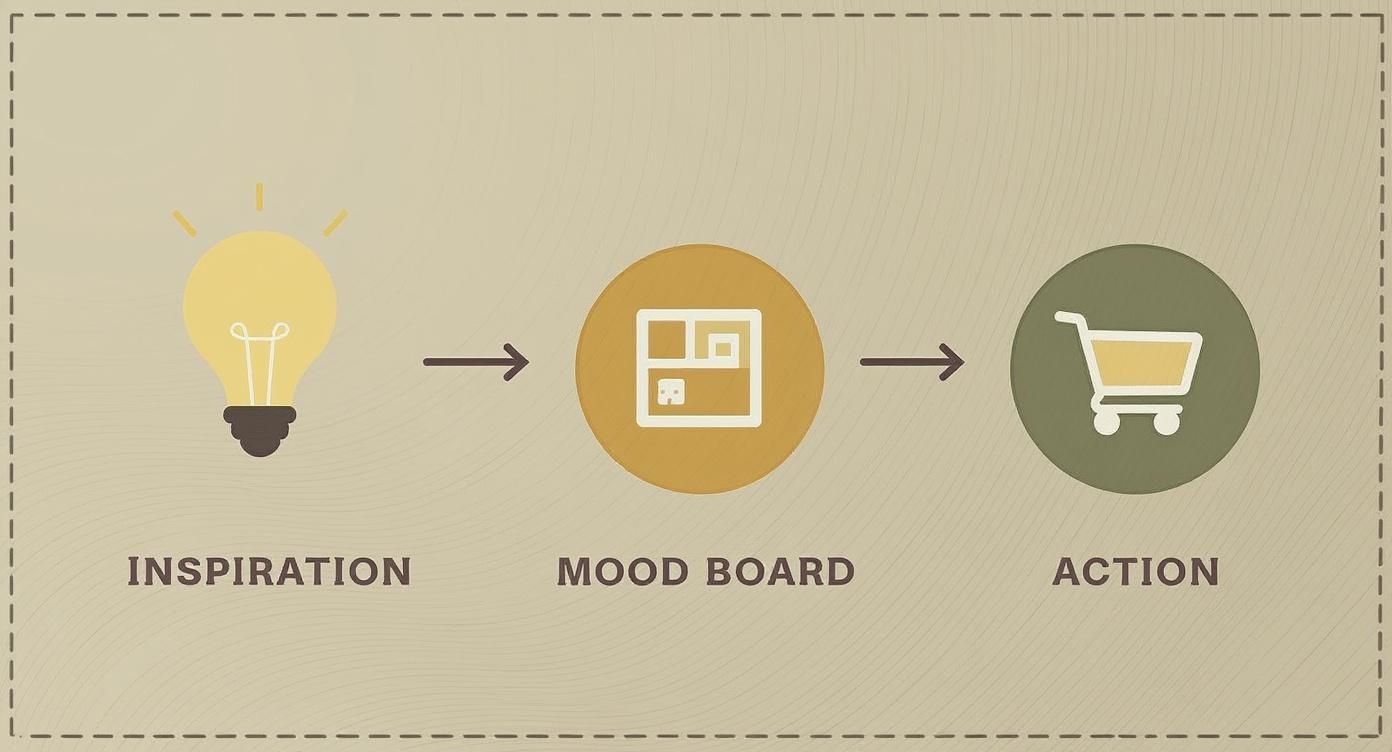
You’ll be using this exact flow as you move from one space to the next.
For a much deeper dive, our complete guide on how to arrange living room furniture is packed with more layouts and pro tips.
Designing a Serene Bedroom Retreat
Your bedroom is your sanctuary. It’s the one place in the house that should be all about rest and recharging. The goal here is simple: cut the clutter and turn up the calm.
Everything starts with the bed—it’s the undeniable focal point. A beautifully made bed with layers of soft bedding can make the whole room feel more pulled-together and luxurious. I'm talking crisp sheets, a fluffy duvet, and a curated pile of pillows in different textures and sizes.
Pro Tip: Want the fastest route to a tranquil vibe? Symmetry. Placing matching nightstands and lamps on either side of the bed creates an instant sense of calm and order. It’s a simple trick that always delivers.
To really elevate your bedroom, focus on these details:
-
Soothing Color Palette: Pull the softest, most muted shades from your whole-home color scheme. Gentle blues, earthy greens, and warm neutrals are scientifically proven to help you relax.
-
Layered Lighting: Get rid of that single, harsh overhead light. Use a mix of softer sources, like table lamps on your nightstands and maybe a floor lamp for a cozy reading nook. Dimmers are a game-changer here.
-
Textural Comfort: Layers aren’t just for looks; they’re about how the room feels. Think about a plush rug your bare feet sink into, a soft velvet headboard, or a chunky knit throw you can wrap up in.
Even a tiny bedroom can feel like a five-star hotel. Use a large mirror to bounce light around and create the illusion of more space, and choose furniture with hidden storage to keep surfaces clear. A clear space equals a clear mind.
Balancing Style and Function in the Dining Area
Whether you have a formal dining room or just a little breakfast nook, this space is all about bringing people together. The design needs to be practical enough for Tuesday night pizza but special enough for a holiday dinner.
The dining table is obviously the main event, and getting the scale right is crucial. One of the most common mistakes I see is a table that’s way too big for the room, leaving everyone shimmying sideways to get to their seat. As a rule of thumb, you need at least 36 inches of clear space between the edge of the table and the walls.
Dining Room Styling Checklist:
-
The Right Rug: A rug can define the dining space, but it has to be big enough. You want to be able to pull the chairs out completely without their back legs catching on the edge of the rug.
-
Statement Lighting: Nothing elevates a dining area like a gorgeous pendant light or chandelier hanging over the table. It’s both functional and a powerful design statement.
-
Versatile Centerpiece: Keep it simple and low-profile. You don't want anything so tall that it blocks conversation. A tray with a few candles or a simple vase with fresh greenery works perfectly for everyday.
By tackling your home one room at a time, the whole process feels so much more achievable. You can make focused, intentional choices for each space that all add up to a home that looks and feels completely, cohesively you.
Choosing Furniture and Decor with Confidence
Alright, let's talk about the part that can feel the most intimidating: actually choosing the pieces that bring your vision to life. This is where your budget meets your taste, and making the right calls is everything. The real secret isn't just picking things you love, but knowing where to invest your money and where you can save to create a look that lasts.
I always tell people to think about their budget in two main categories: the forever pieces and the fun accents. Your "forever" or foundational items are the workhorses of your home—the sofa you sink into every night, the dining table that hosts countless dinners, the bed you crash into. These are the pieces where quality really, truly matters, and they are worth the investment.
Then you have the trendy, personality-packed pieces like throw pillows, cool vases, or a funky little side table. These are perfect for saving on! You can swap them out with the seasons or whenever you feel like a change, and it won't cost you a fortune. This high-low approach is exactly how designers create rooms that feel curated and personal, not like they came straight out of a catalog.
Your Investment Guide: Splurge vs. Save
Trying to decide where your money is best spent can be a head-scratcher. That high-quality sofa could last a decade, but a trendy accent chair might feel tired in a year or two. Here’s a little guide to help you decide where to allocate your budget for the biggest impact and best longevity.
| Item Category | Splurge On... | Save On... |
|---|---|---|
| Seating | Your main sofa or sectional. You live on this thing, so comfort, frame construction, and durable fabric are non-negotiable. | Accent chairs, ottomans, or poufs. Go for trendy colors or patterns here—you can always change them later. |
| Tables | A solid wood dining table or a well-made coffee table. These pieces anchor their entire rooms. | Side tables and console tables. It's easy to find stylish, affordable options that look fantastic without the high price tag. |
| Textiles | The area rug for your main living space. It needs to withstand foot traffic and it literally sets the stage for the room. | Throw pillows and blankets. They are by far the easiest and most budget-friendly way to inject new colors and textures. |
| Lighting | A statement chandelier or a unique pendant light that acts as a focal point in a dining room or entryway. | Table lamps and floor lamps. So many affordable options offer great style and do the job perfectly. |
Sticking to this strategy helps you build a solid foundation of quality pieces that will stand the test of time, while still giving you the freedom to play with what's new and exciting. It’s the most practical way to style a home you'll love for years.
The "Measure Twice, Buy Once" Rule
Before you even think about clicking "add to cart," please, grab your measuring tape. This is the one step you absolutely cannot skip—it will save you so much money and frustration down the line. Measure the room's dimensions, of course, but also map out where the windows, doors, and electrical outlets are.
A great little trick is to use painter's tape on the floor to outline the footprint of a potential furniture piece. This helps you visualize not just if it fits, but how it will impact the flow of the room. You need to be able to walk around without shimmying past a bulky armchair.
A Quick Tip from Experience: Don't forget the journey! Measure every single doorway, hallway, and staircase that the new piece has to pass through to get to its final spot. There is nothing more heartbreaking than watching your dream sofa get sent back because it couldn't make it through the front door.
Mix It Up for a Curated Look
The most interesting homes feel like they were collected over time, not decorated in a weekend. The best way to get that vibe? Mix it up! Confidently pair different materials, styles, and even price points. Think a sleek, modern sofa with a rustic, reclaimed wood coffee table. Or a vintage-inspired rug under a super contemporary dining set.
This mix-and-match approach is what gives a room depth and character. If you want to get better at spotting and combining different styles, our comprehensive furniture style guide is a fantastic place to start building your design vocabulary.
This desire for personalized, functional homes isn't just a local trend; it's a global movement. The Asia Pacific region, for example, is becoming a huge player in the home decor market, with projected growth of around 8.49% CAGR through 2030, according to global home decor market insights on MordorIntelligence.com. This is largely driven by a demand for smart, multifunctional furniture that suits modern life.
By focusing on smart investments, taking careful measurements, and curating a thoughtful mix of styles, you can choose every piece of furniture and decor with total confidence. You'll end up with a space that's not just beautiful, but perfectly, uniquely yours.
Adding Finishing Touches That Tell Your Story
This is the part I love—where a house starts to feel like your home. You’ve got the big pieces in place, the colors are on the walls, but now it’s time for the magic. The finishing touches are what breathe life and personality into a space. These final layers are all about telling your story and surrounding yourself with things that bring you joy.
The secret isn't about filling every empty space; it's about intentional curation. Think of your bookshelves, coffee table, and mantel as little canvases waiting for your personal stamp. These are the details that take a room from "nicely decorated" to uniquely and authentically "you."
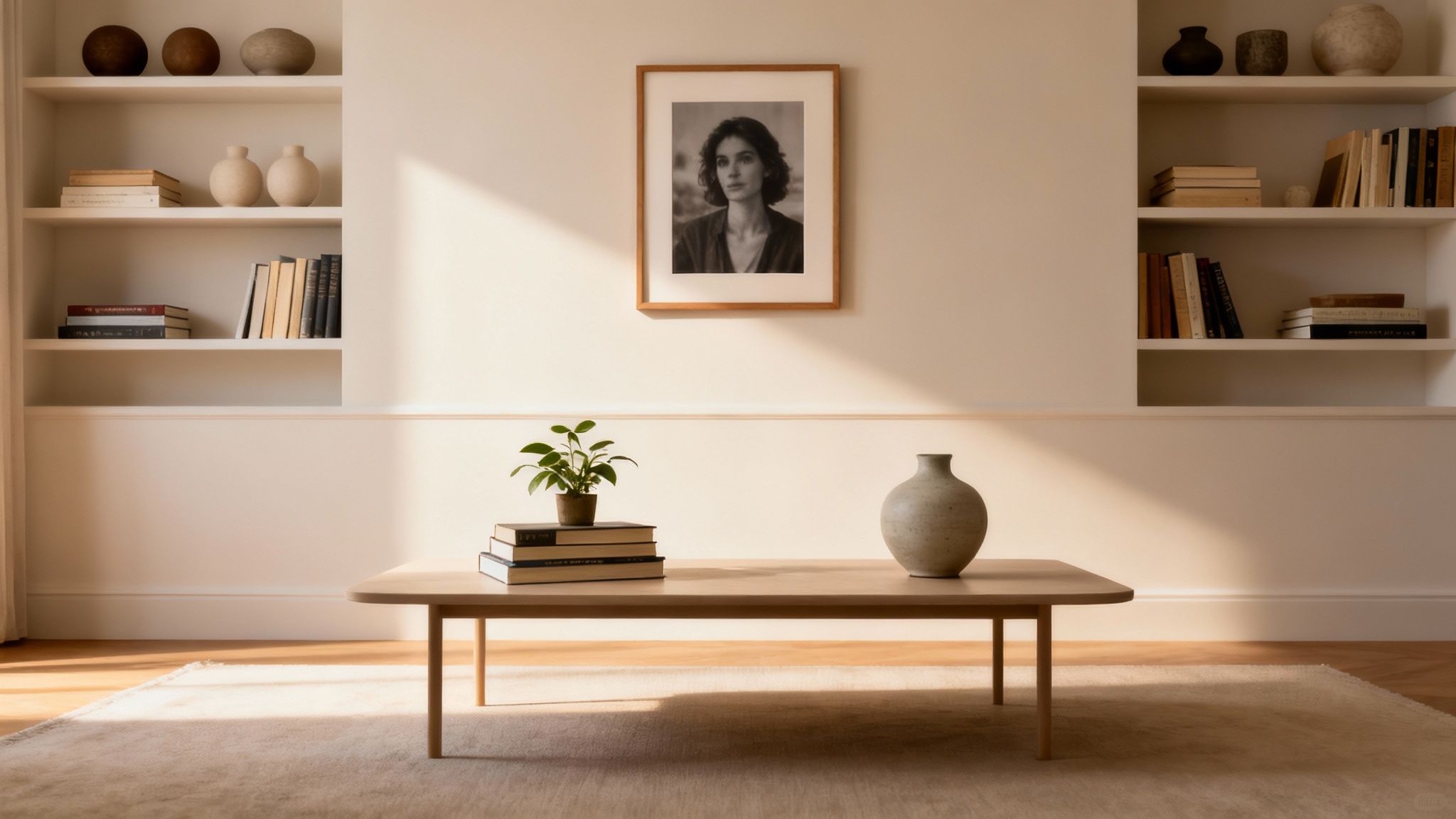
Styling Surfaces Like a Pro
Ever wonder how designers make a coffee table look so effortlessly chic? There are a few go-to tricks, and my favorite is the "Rule of Threes." There’s just something about grouping items in odd numbers, especially threes, that feels balanced and pleasing to the eye.
Instead of just lining things up, think about creating little vignettes. On your coffee table, you could try a combination like this:
-
A short stack of two or three of your favorite art books.
-
A beautiful tray to gather smaller things like coasters and a candle.
-
Something with a bit of life or an interesting shape, like a small vase of fresh flowers or a unique sculptural piece.
This simple grouping adds layers and interest without making things feel cluttered.
The Art of the Gallery Wall
Art is one of the fastest ways to inject personality into a room, but how you hang it matters. A classic mistake I see all the time is artwork hung way too high. As a rule of thumb, the center of your piece (or the whole gallery wall) should be at eye level—somewhere around 57-60 inches off the floor.
Putting together a gallery wall that feels collected and cohesive takes a little prep work.
-
Find Your Vibe: Your "theme" can be super simple. Maybe it’s all black-and-white family photos, a collection of botanical prints, or snaps from your travels.
-
Frame it Up: For a clean, modern look, stick with frames in the same color. If you're going for a more eclectic, gathered-over-time feel, mix up the frame styles but tie them together with a common element, like a color that appears in each piece of art.
-
Map it Out First: Please, don’t start hammering right away! Trace your frames onto kraft paper, cut them out, and use painter's tape to play with the arrangement on the wall. You can move things around until the balance and spacing feel perfect.
The best gallery walls tell a story. Don't be afraid to mix in a child's drawing, a postcard from a memorable trip, or even a framed piece of fabric. It’s those personal touches that make it truly yours.
Bring Your Space to Life with Greenery
Never, ever underestimate what a few plants can do for a room. They literally bring life inside, adding a pop of natural color, cleaning the air, and softening all the hard lines of furniture and architecture.
And you don’t need a master gardener’s green thumb to make it work. Start with some famously forgiving houseplants that thrive on a little neglect.
My Go-To Easy-Care Plants:
-
Snake Plant: This one is nearly indestructible and does just fine in low light. Its tall, spiky leaves add great vertical interest.
-
ZZ Plant: Another hero for busy people. It’s drought-tolerant and happy in almost any light situation.
-
Pothos: I love how this one trails. It’s perfect for draping down a high shelf or hanging in a corner to draw the eye up.
Try to vary the size and shape of both your plants and their pots. A tall fiddle leaf fig in a corner, a tiny succulent on a side table, and a trailing pothos on a bookshelf create beautiful green layers that make any room feel instantly fresher and more inviting.
Common Home Styling Questions Answered
Even with the best-laid plans, you’re going to hit a few roadblocks. That’s just part of the creative process. Instead of getting frustrated, let’s tackle some of the most common questions I hear all the time. Think of this as your cheat sheet for getting unstuck.
How Much Should I Budget for Styling?
This is always the first question, and the real answer is, there’s no magic number. Your budget is your budget. A much better way to think about it is to work backward. Figure out the total you’re comfortable spending, then get strategic about where every dollar goes.
I always tell people to put their money where it will make the biggest impact. For most rooms, that means focusing on these three things first:
-
Paint: Nothing transforms a room faster or more affordably. It’s a no-brainer.
-
Anchor Furniture: Think of your sofa or dining table. This is the piece that sets the whole mood.
-
Area Rugs: A great rug pulls everything together, defines the space, and adds that crucial layer of texture.
Once you’ve sorted out those big-ticket items, you can see what’s left in the pot for all the fun accessories. Remember, incredible style has very little to do with a massive budget and everything to do with smart, intentional choices.
What If I Have an Awkward Layout?
Trust me, you’re not alone. Funky layouts are incredibly common, especially in older homes or tight city apartments. The trick isn't to fight the room's quirks, but to lean into them. The goal is always to create clear, functional zones.
Take a long, skinny living room, for example. The worst thing you can do is push all the furniture against the walls—it creates a runway effect. Instead, break up the space. Float a sofa to create a cozy seating area at one end, and use the other for a small desk or a reading nook, each grounded by its own rug.
Don't see an odd corner or a strange nook as a problem—see it as an opportunity. That awkward space under the stairs could become the perfect spot for a built-in bench, or a narrow wall could host a stunning vertical gallery display.
How Do I Mix Different Design Styles?
A truly beautiful room rarely comes from a matching furniture set. The most personal, curated spaces feel like they’ve been collected over time, blending different styles. The secret to making it all work without looking like a mess is to find a common thread.
This unifying element can be simpler than you think:
-
A Consistent Color Palette: If your colors play nicely together, you can absolutely put a modern sofa next to a vintage armchair.
-
Similar Wood Tones: Try to stick to one or two wood finishes. It helps pieces from different eras feel like they’re part of the same family.
-
Repeated Shapes: Notice the clean, straight lines of your coffee table? Echo that shape in your picture frames or a lamp.
It’s all about creating connections. The pieces don't have to be identical, but they should feel related. When in doubt, always go back to your core color palette. It’s the easiest way to guarantee a harmonious look, no matter what styles you’re mixing.
Ready to find those perfect foundational pieces and finishing touches? The curated collections at Fluent Trends are designed to bring your vision to life with designer-approved furniture and decor. Explore our new arrivals and start building your dream space today.