

Choosing the Right Rug Size for Any Room
Donna MaloneSelecting a rug that’s too small can fragment your seating area. Too large, and it swallows the furniture in one vast expanse. Choosing the right rug size instantly anchors living, dining, and bedroom zones—giving each section its own purpose and personality.
Why Rug Size Matters
A rug does more than look pretty. It roots your furniture, directs foot traffic, and brings harmony to any layout.
Before you dive into styling, here’s a quick cheat sheet to keep on hand:
Quick Rug Size Reference
| Room Type | Rug Size Range |
|---|---|
| Living Room | 8×10 to 9×12 ft |
| Dining Room | 6×9 to 8×10 ft |
| Bedroom | 5×8 to 8×10 ft |
| Hallway | 2.5×8 to 3×10 ft |
| Office | 5×7 to 6×9 ft |
Use this guide as your starting point—then fine-tune based on furniture groupings and room shape.
Real World Makeovers
- In a boho living room, a floating 5×7 rug left chairs looking like they were drifting apart.
- A 12×15 rug in a minimalist bedroom swallowed the bed, making the space feel oversized and empty.
Aim for a visible floor border around furniture—it frames each zone naturally and avoids that “floating island” effect.
Proper rug sizing creates natural flow, highlights focal points, and prevents returns.
The global carpet and rug market was valued at approximately USD 55.87 billion in 2024 and is projected to grow to USD 88.41 billion by 2030. These numbers reflect a rising demand for rugs that truly complement room dimensions and furniture layouts. Learn more at Grand View Research.
By looking at everyday makeovers—from eclectic lounges to serene bedrooms—you’ll see that accurate dimensions are the unsung hero of lasting style and satisfaction.
Benefits Of Correct Sizing
- Brings furniture legs together on the rug for a cozy, unified look.
- Directs movement with clear walkways that respect traffic patterns.
- Prevents odd proportions that make rooms feel either cramped or barren.
Never guess—measure twice and test with tape or cardboard cutouts for foolproof results.
Measuring Your Space Precisely
Before you pick a rug, you need a rock-solid understanding of your room’s exact footprint. Uneven walls, door swings and floor transitions can all throw off a seemingly simple measurement. Spotting these quirks now means you won’t face nasty surprises later.
Gather your basic gear—tape measure, laser level, graph paper and painter’s tape—and sketch a rough plan marking walls, windows and built-ins. Then use painter’s tape right on the floor to outline where the rug will sit. This hands-on trick reveals traffic patterns and furniture clearances instantly.
Tools for Accurate Measurement
Below is a quick reference for measurement tools, their specific uses, and expert tips to get precise readings.
Tools for Accurate Measurement
| Tool | Purpose | Tips |
|---|---|---|
| Tape Measure | Basic linear measurements | Pull tape tight along edges, then mark twice for accuracy |
| Laser Measure | Long spans and high ceilings | Hold steady for 2–3 seconds, avoid reflective surfaces |
| Graph Paper | Scaled room sketch | Work to scale (e.g., 1 square = 1 foot) and label fixtures |
| Painter’s Tape | Floor outlines | Tape corner-to-corner, check alignment from above |
| Level | Check floors and walls | Spot uneven areas before finalizing your diagram |
Keep this cheat sheet handy as you plan your layout.
Drafting Your Room Sketch
Instead of winging it, start with a scaled drawing. On graph paper, draw each wall segment and mark door swings. Add any radiators, vents or floor-level changes so nothing sneaks up on you.
Use a simple legend to note outlets, built-ins and window placements. Transfer your measurements carefully, double-checking each number as you go.
- Label wall lengths and window widths
- Indicate door arcs and required clearance
- Mark built-in units like shelving or benches
Pro Tip: Outlining your rug on the floor with painter’s tape is like a dress rehearsal for your decor—no surprises when your rug arrives.
Visualizing Rug Placement
Once your sketch feels right, bring it to life with cardboard cutouts or a quick digital mockup. These previews show exactly how a rug interacts with sofas, chairs and tables.
Factor in 6–8 inches of visible floor around furniture legs and leave at least 18 inches for walkways in high-traffic areas. For a slick digital approach, try interior design software that layers dimensions over a room photo.
Bedroom layouts need extra care around headboards and nightstands. Our guide on how to choose bedroom furniture walks you through balancing mattress borders with rug edges.
- Low-profile furniture: allow a 6-inch inset
- Tall pieces: plan for 8-12-inch clearance
- Built-ins: follow the exact footprint of the fixture
Key Takeaway: Physical or digital mockups save time, money and the hassle of returns.
If you’re eyeing an 8×10 ft rug under a sectional with 12-inch legs, add an extra 6 inches on each side for a balanced look.
Happy measuring!
Room By Room Size Guide
Every room has its quirks, and the wrong rug can turn a cozy space into an obstacle course. Picking the right dimensions makes seating areas feel intentional and balanced.
In open-plan layouts, you can use a 9×12 ft rug to ground the living zone while a 6×9 ft piece anchors the dining area—two distinct areas, no walls needed.
Regional habits matter, too. North American homes often favor rugs from 5×8 ft up to 9×12 ft, whereas in tighter Chinese apartments, mid-sizes like 3×5 ft and 6×9 ft reign supreme. For deeper insight, check out the full research on the carpet and rug market.
Before you click “buy,” always double-check your room’s measurements and the vendor’s stock sizes.
Living Room Guidelines
Center your main rug so every sofa and chair leg rests on it. This simple move ties the entire seating ensemble together.
- Center an 8×10 or 9×12 rug to catch all legs.
- Keep 6–8 inches of bare floor showing around furniture for a neat frame.
- Leave at least 18 inches between the couch and coffee table for easy movement.
- Layer a smaller rug under a coffee table to introduce a lounge-style vibe.
For a complete walkthrough of sofa and chair placement, see our detailed guide on arranging living room furniture.
Below is a quick reference for typical rooms and their go-to rug dimensions:
Recommended Rug Sizes by Room
| Room Type | Typical Room Size (ft) | Rug Size Options (ft) |
|---|---|---|
| Living Room | 15×20 | 8×10, 9×12 |
| Dining Room | 12×14 | 6×9, 8×10 |
| Bedroom | 10×12 | 5×8, 6×9, 8×10 |
| Hallway | 3×12 | 2.5×8, 3×10 |
| Home Office | 10×10 | 5×7, 6×9 |
Keep this chart handy when you’re shopping. It’ll help you dodge the trap of rugs that feel too small or overpowering.

Dining Room Suggestions
Dining chairs need room to slide back without catching rug edges. Aim for a rug that extends 12 inches beyond each table side.
- Ensure 30 inches from rug edge to nearest wall or console.
- Choose proportions that complement nearby furniture.
- Maintain a consistent border so everything feels intentional.
In one apartment, a 6×9 under a 72-inch table felt cramped. Swapping to an 8×10 added breathing room and seamless chair pulls.
Tip: Low-pile flatweaves resist snags and make cleanup a breeze.
A 6 ft diameter flatweave works wonders under a 42-inch round table, framing breakfast nooks without overwhelming the space.
A balanced border around a table is just as vital as under a sofa.
Near patio doors or windows, a quality rug pad helps resist moisture and extends your rug’s life by reducing friction.
Bedroom Considerations
Let rugs peek out about 24 inches on three sides of the bed to soften the floor and add warmth.
- A 5×8 rug pairs nicely with twin or full beds.
- Choose 8×10 or 9×12 for queen and king setups.
- Position nightstand legs fully on the rug to create symmetry.
Layering a vintage kilim over a larger neutral base injects personality without sacrificing scale.
I once used a 4×6 and ended up with awkwardly floating legs. Upgrading to a 6×9 instantly grounded the whole room.
- Tuck the top edge under the headboard and let it extend 24 inches past the footboard.
- Align the rug’s longest side with your room’s longest wall.
- Place a thin pad underneath to prevent curling and slippage.
Key insight: Proper margins mean you land on soft toes every time you get out of bed.
For dressers and benches, stick with low-pile options to avoid snags during drawer pulls and seating.
Hallway And Office Tips
Hallways look best with runners that leave 3 inches of floor on each side.
- In a 3×12 corridor, a 2.5×8 or 3×10 runner works beautifully.
- Break up extra-long hallways with two shorter runners for visual interest.
- In home offices, place a 5×7 or 6×9 rug under your desk to define the workspace.
- Choose a tight loop pile so rolling chairs glide without fuss.
A real-world project featured a 7×9 rug under a mid-century desk—it defined the desk area and protected the hardwood during swivel sessions.
Always round up to the next standard size rather than squeeze into the minimum. Oversized rugs create a smooth transition between zones.
Measure twice, visualize the layout, and then enjoy floors that really tie your room together.
Choosing Rug Shapes and Materials
Pairing shape and size feels more like art than math. A circular rug under a round table softens the setting and invites conversation. In a narrow corridor, a runner quietly guides footsteps toward the next space.
An octagonal or custom-cut piece can showcase a bay window or architectural niche beautifully. In open layouts, mixing shapes—say, a square rug beside a round one—creates unexpected visual interest. Once you settle on shape, furniture layout and traffic flow naturally fall into place.
- Round Rugs soften seating clusters and work wonders under circular tables.
- Runners carve out clear paths in tight halls and entryways.
- Octagonal Rugs highlight unique angles like bay windows.
- Custom Shapes fit awkward corners or odd layouts without fuss.
Material choice influences style, performance, and upkeep. Wool feels plush in chilly bedrooms and naturally resists spills. Low-pile Synthetics shrug off heavy foot traffic and clean up with minimal effort.
Comparing Common Materials
| Material | Best Use |
|---|---|
| Wool | Bedrooms, living areas |
| Synthetic | Entryways, playrooms |
| Jute | Low-traffic spaces |
| Pet-Friendly Fibers | Homes with pets |
Before you commit, test a small sample in your space. Color and texture can look very different under various lights.
- Bring home 12×12 inch swatches to compare against your décor.
- Lay samples near windows and lamps to catch any color shifts.
- Walk across the swatch to judge pile height and slip resistance.
A quick market check can steer your material pick, too. The rug-specific segment of home décor is projected to reach USD 57.30 billion by 2032, with North America favoring larger 8×10 feet styles for extra insulation, while India leans toward 5×7 rugs for everyday living. Discover more at Maximize Market Research.
Care And Maintenance
Flatweaves thrive in damp areas, since they dry fast and resist mildew. Wool and natural-fiber rugs love a seasonal rotation to wear evenly.
- Vacuum synthetic rugs weekly to lift dirt.
- Shake out jute and cotton pieces outdoors to keep them springy.
- Blot spills immediately with a mild detergent; don’t rub.
- Rotate every six months to prevent uneven wear.
A little regular attention keeps your investment looking sharp and feeling cozy.
Spotting Shape Benefits
Every rug silhouette brings its own perks. Circular pieces inject curves that break up a boxy furniture layout. Rectangles deliver order in a long room.
- Circle designs soften corners in living areas.
- Rectangle rugs reinforce clean lines in hallways and dining rooms.
- Square rugs work perfectly in snug reading nooks.
- Abstract shapes add eclectic flair to creative studios.
“Choosing a runner instead of a standard shape can instantly stretch a space visually.” – Interior Designer Tip
Material Performance In Zones
Busy entryways need low-pile synthetics that shrug off dirt. Plush wool sinks into your toes in a cozy bedroom. Natural fibers like jute and sisal excel under gentle foot traffic in sunrooms.
- Place durable synthetics by front doors for easy cleanup.
- Lay wool rugs in bedrooms for warmth and noise reduction.
- Layer jute or sisal in living areas for inviting texture.
- Opt for pet-friendly polypropylene in family zones to fend off stains.
Styling Tips And Tricks
Layering smaller rugs over a larger base creates depth without competing patterns. Offset a coffee table on a round rug to break symmetry. Mix textures—think wool over flatweave—to keep things visually rich.
- Always leave at least 6 inches of bare floor visible around the rug edge.
- Use painter’s tape outlines on the floor to preview scale.
- Match rug texture to your furniture’s feel: plush sofas pair with low-pile rugs, and sleek metal legs look crisp on flatweaves.
Next Steps For Your Rug Purchase
Measure thoughtfully, test shapes in place, and compare fibers against your daily routine. Sketch your room to overlay different rug shapes before you shop. Don’t forget to note door swings and furniture clearances.
- Map out your space on paper or with a simple drawing app.
- Mark any door swings or heater vents that could affect rug placement.
With shape, material, and size dialed in, you’ll choose a rug that not only looks stunning but also stands up to real life. Enjoy tying your room together!
Common Mistakes To Avoid
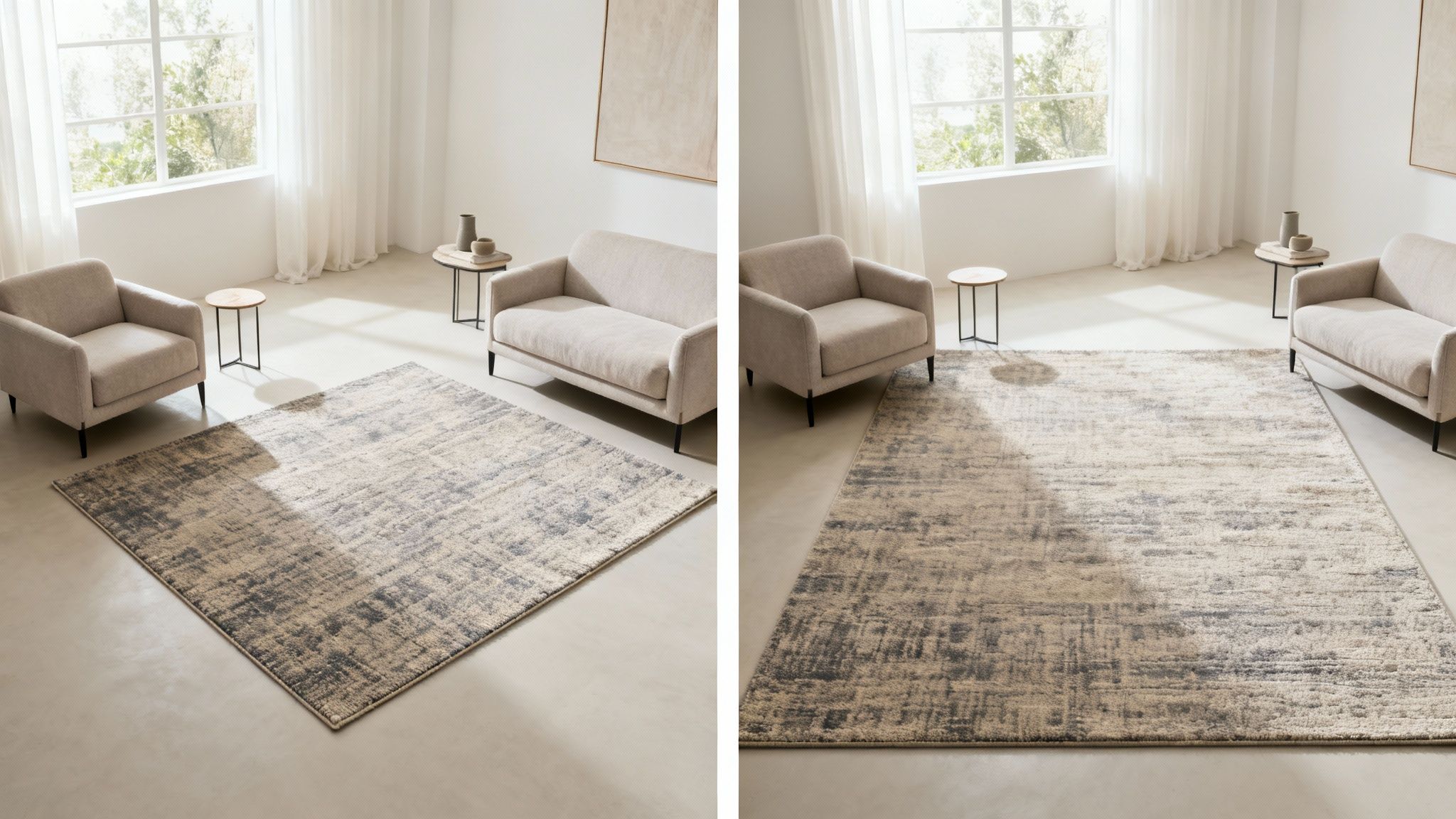
It often comes down to inches. One off measurement can leave a room feeling awkward and unplanned.
A rug that’s even an inch too narrow splits up seating and throws off traffic flow.
Watch out for these slip-ups before clicking “add to cart”:
- Pairing a small rug with a full sofa set leaves furniture floating in space.
- A hallway carpet stretched wall-to-wall might block door swings.
- Ignoring natural footpaths turns an open area into a maze.
- Dining chairs can snag against high-pile rugs if you overlook pile height.
- No pad under a hardwood floor invites slipping and curling corners.
I once helped a friend whose TV nook felt cramped—a 5×7 rug barely reached the stand, so viewers dangled their feet off the edge. Swapping to a 6×9 transformed the space overnight.
It’s about more than style. A well-sized rug should frame your furniture with at least 6 in of bare floor around seating zones and 18 in along main walkways.
Using Rug Pads For Stability
A quality pad is the unsung hero beneath any rug. It stops shifting, mutes footsteps, and shields your floors.
- Choose a pad just a fraction smaller than the rug so its edges stay hidden.
- Non-slip pads on hardwood guarantee 100% contact and zero movement.
- For heavier furniture, thicker pads prevent those annoying indentations.
- Trim the pad around edges for a seamless fit every time.
In a 1920s urban loft, a flimsy pad let a 9×12 area rug scoot around during movie nights. Swapping in a denser pad not only stopped the slide but also improved sound quality.
Curling corners? That’s usually low-friction at work. I’ve seen wool rugs in dining rooms lift under chairs—tucking pad edges beneath the pile keeps everything flat.
| Mistake | Quick Fix |
|---|---|
| Hallway rug covers full width | Swap to a runner leaving 3 in of floor on sides |
| Neglected traffic mapping | Outline rug with tape to reveal true clearances |
Key Takeaway
Rugs and pads work as a team to secure placement and extend rug life.
Pre-Purchase Placement Testing
Seeing is believing. Laying out painter’s tape or cardboard cutouts lets you spot trouble spots long before you order.
- Cut cardboard to the rug’s exact dimensions.
- Secure tape outlines at the edges of your furniture.
- Walk the intended paths to confirm clearances.
A client almost ordered a 4×6 for their TV wall—cardboard testing showed it looked lost, so we went with a 5×8 instead, and every couch leg now sits solidly on the rug.
That same mockup revealed a cabinet door swing interference; shifting the outline by 6 in cleared the overlap and kept traffic smooth.
Before you hit “buy,” remember:
- Measure twice and mock up placement to slash returns.
- Ensure a minimum of 12 in under every dining chair.
- Add 2 ft extra diameter for round rugs under tables.
- Keep at least 6 in of natural floor border for scale.
For extra assurance, consult a design professional or try online placement-modeling tools.
Buying And Caring For Your Rug
Finding the perfect dimensions for a rug is only half the journey. To make that investment last, you need smart shopping habits and a maintenance plan you’ll actually stick to.
Start with a quick seller audit: clear photos, honest specs and, ideally, material certificates that back up fiber claims.
Vetting Online Sellers
Reputable vendors go beyond pretty pictures. They list weave density, fiber origin and realistic color swatches so you know exactly what you’re getting.
- Read customer photos alongside reviews
- Test color accuracy in different lights (morning vs. afternoon)
- Check labels like 100% New Zealand wool to ensure fiber purity
| Return Window | Fee | Conditions |
|---|---|---|
| 30 days | None | Standard size returns |
| Custom orders | 15% | Request within 14 days of delivery |
A quick live-chat check once saved me a surprise restocking fee.
Key Insight
Always confirm return rules on bespoke dimensions before you finalize your cart.
Seasonal Care Schedule
A simple routine keeps dirt at bay and fibers vibrant. Mark these tasks on your calendar.
- Weekly vacuuming around edges and under furniture
- Immediate spot treatment with a mild detergent solution
- Annual deep-clean by professionals for a thorough refresh
- Rotate the rug 180° every six months to even out wear
High-traffic areas by entryways might call for an extra touch-up every two weeks.
For a full breakdown on tackling stains and periodic cleanings, see this guide on how to clean area rugs at home.
Pad Choices And Fringe Handling
The right underlay adds cushion, cuts noise and stops shifts. Match your flooring and lifestyle.
| Pad Type | Benefit |
|---|---|
| Felt | Extra softness & warmth |
| Rubber | Strong grip & durability |
| Memory Foam | Plush comfort underfoot |
When it comes to fringe, tuck the pad edges just under the pile. That simple trick prevents unraveling and keeps fibers safe.
- Watch your home’s humidity—wool can swell in damp conditions
Pro Tip
Layering two pads not only boosts insulation but also reduces echo in open rooms.
Final Shopping And Care Confidence
Follow these tactics and you’ll enjoy a rug that stays plush, colorful and perfectly shaped.
- Use reminders or a planner for monthly spot checks
- Tie professional cleaning to seasonal events like spring refresh or holiday prep
A thoughtful shopping approach, paired with a steady care schedule, means your rug won’t just look great—it’ll stand the test of time.
Rug Size FAQ
Ever stared at endless rug options and wondered where to begin? These answers tackle the sizing puzzle.
-
Can a 4×6 ft rug work in a small living room? A well-placed accent rug under your coffee table instantly carves out a cozy conversation nook. Keep the front legs of sofas and chairs resting on the edge—this anchors the layout without making the rug look like an island.
-
Is it possible to repurpose a large rug in a studio apartment? Slide an 8×10 ft piece beneath your bed and let it stretch into a reading corner. That seamless transition visually unites sleeping and lounging zones in one open sweep.
-
What’s the best way to clean and maintain a generous area rug? Vacuum high-traffic paths twice weekly, tackle spills with a gentle detergent and a soft cloth, flip or rotate every six months, and book a professional deep-clean once a year for lasting freshness.
-
Which rug shape pairs best with a round dining table? Aim for a circular rug that extends 2 ft beyond the table edge. Standard options include 8×8 ft and 10×10 ft, letting chairs glide on and off without catching an edge.
Expert Tip
Lay down painter’s tape at your rug’s future corners to see real-life scale. It’s the simplest hack to gauge traffic flow and furniture clearance.
For flawless proportions, always mock up the rug footprint before buying.
Those few strips of tape let you walk around, move chairs, and feel the balance.
Quick Review
These size pointers simplify your search:
- 4×6 ft: Defines small living areas
- 8×10 ft: Unifies studio layouts
- Regular vacuuming, spot-cleaning, rotation, plus annual professional care
- Add 2 ft beyond a round table’s edge—common in 8×8 ft or 10×10 ft circles
Ready to find the right scale? Explore our curated selection at Fluent Trends
Fluent Trends