

Current Trends in Home Decor Explained
Donna MaloneWe’re seeing a major shift in home decor right now. It’s less about chasing fleeting fads and more about creating personal sanctuaries that feel good to live in. The focus has landed squarely on sustainability, well-being, and smart, integrated technology. The goal isn't a picture-perfect showroom, but an authentic, lived-in space filled with eco-conscious materials, helpful tech, and personal touches that tell your story.
Defining the Modern Home Aesthetic
So, what does today's interior design really look like? It’s a definite move away from rigid perfection and a warm embrace of a more mindful, functional, and expressive way of living. Our homes have become the central hub for everything, and we want them to reflect our values while adapting to our changing needs.
Think of yourself as a composer, not just a decorator. Each element—the rough texture of a recycled-fabric throw, the warm glow of a smart lamp—is a single note. Your job is to bring them together to create a beautiful, harmonious melody. It’s far less about sticking to one specific style and much more about curating a collection of pieces that genuinely resonate with you.
Core Pillars of Today's Decor
A few foundational ideas are shaping this new, more intentional approach to decorating.
-
Sustainability as a Standard: Making eco-friendly choices is no longer a niche trend; it’s the new baseline. People are actively seeking out reclaimed wood, organic textiles, and low-VOC paints. They’re choosing these not just to be green, but because these materials bring a rich, natural beauty and texture into a space.
-
Seamless Technology Integration: The best smart home is one where the technology feels almost invisible. It’s not about showing off the latest gadgets. Instead, it’s about using smart automation to genuinely improve your daily life—think of lighting that syncs with your body's natural circadian rhythms or climate control that quietly saves energy in the background.
-
Deep Personalization and Storytelling: Your home should feel like a visual biography. This is about having the confidence to mix a brand-new contemporary sofa with a treasured vintage find from a flea market. It’s about commissioning art that means something special to you. A great, playful example of this is the Barbiecore home decor trend, which proves how even nostalgic, personal tastes can create a completely unique and stylish look.
The ultimate goal is to create a space that feels uniquely yours—a sanctuary that supports your well-being, simplifies your routines, and tells your story without saying a word.
This guide will be your roadmap to navigating these big shifts. If you're looking to furnish your space with pieces that capture this spirit, understanding the differences between styles is a great place to start. You can learn more about what is contemporary furniture design to see how its clean lines and forward-thinking feel fit right into this modern, personalized approach. We'll dive into the materials, colors, and concepts that define today's home decor, helping you create a home that feels both perfectly current and truly timeless.
Why Sustainable Decor Is Here to Stay
The idea of what makes a home beautiful is changing. It's no longer just about how a room looks; it's about the conscious choices we make to create that look. Sustainable decor isn't just a passing trend—it’s a real shift in how we think about our living spaces, moving from a niche interest to a top priority for homeowners everywhere.
This doesn't mean you have to give up on style. Far from it. It's about finding the deep, inherent beauty in materials that have a story to tell. Think of reclaimed wood marked with history, recycled textiles with incredible textures, and light, airy materials like bamboo. These pieces prove that a home can be both gorgeous and responsible.

And this isn't just a gut feeling; it’s a powerful market force. The global home decor market, valued at around USD 747.75 billion, is expected to climb to USD 802.26 billion. A huge driver behind this growth? You guessed it: consumer demand for environmentally friendly design. It’s clear proof that shoppers are putting their money where their values are. You can dig into the numbers yourself in this detailed home decor market analysis.
Materials That Make a Difference
Getting to know the materials at the heart of this movement is the first step toward building a more eco-conscious home. Each one brings something special to the table, both for your space and for the planet.
-
Reclaimed Wood: Pulled from old barns, factories, and warehouses, reclaimed wood has a soul that new lumber just can't match. Its aged patina, old nail holes, and saw marks tell a story, adding instant warmth and character.
-
Recycled Textiles: Believe it or not, fabrics made from things like plastic bottles or old cotton scraps can be stunning. They dramatically reduce waste and come in a massive range of colors and textures, perfect for everything from cozy rugs to statement upholstery.
-
Bamboo and Cork: These two are the rockstars of renewable resources. Bamboo grows at an incredible pace, and cork is harvested from the bark of oak trees without ever harming the tree itself. It’s a truly regenerative material.
Choosing sustainable decor is like casting a vote for a healthier planet with every purchase. It’s an empowering way to ensure your home not only looks good but also does good.
Beyond Materials: Healthier Choices for Your Home
A truly sustainable home goes beyond furniture and fabrics—it’s about the very air you breathe. One of the biggest and easiest changes you can make is choosing low-VOC paints.
So, what are VOCs? They're Volatile Organic Compounds, which are chemicals that get released into the air from everyday products, especially traditional paints. They can tank your indoor air quality and even lead to health issues. Low-VOC or zero-VOC paints, on the other hand, are made to keep those harmful emissions to an absolute minimum, creating a much safer environment for you and your family.
Making this simple swap is a huge win for a healthier home, and you don’t have to compromise on color or quality at all.
How to Identify Genuinely Sustainable Brands
Navigating the world of "eco-friendly" products can be tricky, but there are a few things to look for that will help you spot the real deal. The best brands aren't shy about being transparent.
Do they share details about their supply chain? Are they open about where their materials come from and who makes their products? Reputable companies are proud of their process and will often have the certifications to back it up. For a head start, check out our guide on shopping from top sustainable furniture brands. This focus on transparency is a hallmark of current trends in home decor, empowering you to build a home that truly reflects your values.
Weaving Smart Tech Seamlessly into Your Decor
Walk into a thoughtfully designed modern home, and you'll notice something different. It’s not just about what you see—it's about how the space feels and functions. The best smart technology today doesn't scream for attention with a mess of wires and blinking lights. Instead, it works quietly behind the scenes, making life a little easier and your home more beautiful.
We've moved beyond filling our homes with gadgets and are now creating genuinely intelligent living spaces. This is where interior design's new frontier lies: technology and aesthetics aren't separate checkboxes anymore; they're woven together from the very first design choices.

This shift is a huge driver in the industry. The home decor market is on track to grow at a CAGR of 5.9%, hitting a value of USD 432.2 billion by 2035. The United States is leading the charge, holding 26.4% of the global market share, thanks in large part to the boom in smart homes. You can dig deeper into the future of the home decor market for more on these trends.
More Than Just a Smart Speaker
When you hear "smart home," your mind probably jumps to a voice assistant on the counter or maybe some color-changing lightbulbs. And while those are fantastic starting points, true integration goes much, much deeper. It’s about creating an environment that responds to you, where the tech is felt more than it's seen.
Think about these less obvious, yet incredibly impactful, integrations:
-
Automated Window Treatments: Imagine your blinds and curtains opening on their own to greet the morning sun and closing at dusk for privacy. It’s not just about convenience; it helps regulate your home's temperature, saving energy and adding a touch of quiet luxury.
-
Human-Centric Lighting: This is a game-changer. Advanced systems can now mimic the natural cycle of daylight, shifting from bright, cool tones in the morning to a warm, soft glow in the evening. This actually supports your body's circadian rhythm, helping you feel more energized during the day and sleep better at night.
Blending Tech with Timeless Style
The real magic happens when the technology disappears into the design itself. A well-executed smart home should feel calm and intuitive, not like you’re living inside an electronics store. It’s all about clever placement and choosing the right products.
Here’s how to nail that invisible integration:
-
Hide the Charging Clutter: Ditch the tangled cords. Furniture with built-in wireless charging is a simple, elegant solution. Side tables, desks, and even lamps now offer this feature, keeping your surfaces beautifully clear.
-
Embrace Smart Mirrors: Perfect for bathrooms and entryways, a smart mirror looks like a classic, stylish mirror until you need it. It can display the time, weather, or your calendar, then fade away, leaving just a reflective surface.
-
Use Voice as the Universal Remote: Instead of juggling multiple remotes and fumbling for light switches, centralize control with a discreet voice assistant. This eliminates wall clutter and creates a clean, minimalist look.
The smartest home is one where convenience is embedded into the very fabric of the decor. It’s when your environment actively works to simplify your life, proving that modern design should function as beautifully as it looks.
Building a Cohesive Smart Ecosystem
For your smart decor to feel truly effortless, all the individual pieces need to speak the same language. A fragmented system—where your lights don’t talk to your blinds and your thermostat is off doing its own thing—is more frustrating than helpful.
Think of it like conducting an orchestra. Each smart device is an instrument. They can all play a solo, but the beautiful music happens when a conductor—a central hub like Apple HomeKit, Google Home, or Amazon Alexa—brings them together in harmony. This lets you create "scenes," like a "Movie Night" mode that dims the lights, lowers the shades, and turns on the TV with a single command. Now that's a smart home.
Making Your Home Uniquely Yours
In a world flooded with picture-perfect interiors on social media, one of the biggest shifts we're seeing is a return to real, authentic living. The days of the cookie-cutter showroom feel are numbered. Instead, there's a growing desire for homes that tell a story—your story.
Think of it less like decorating and more like creating a visual autobiography. Your space should feel like a collection of memories and passions, where every piece has a purpose or a past. It’s about curating a home that feels genuinely lived-in, not just staged for a photo.
This craving for individuality isn't just a feeling; it's driving the market. The global home decor market is expected to jump from USD 770.0 million to USD 1,047.9 million by 2032. North America is leading the charge, holding a 38% market share, fueled by a culture that embraces renovation and unique design. You can dive deeper into the home decor market's personalization trends to see the data for yourself.
Mixing Eras with Confidence
One of the most effective ways to make a space truly your own is to mix and match furniture and decor from different design periods. This is how you create a layered, dynamic look that feels collected over time and completely unique.
Pairing old with new might sound like a designer-level skill, but it's really about finding a common thread to tie everything together.
-
Stick to a Color Story: A unified color palette is your secret weapon. It can make a Victorian armchair and a sleek, minimalist coffee table feel like they were made for each other.
-
Find a Common Material: Look for a connecting material, like a warm walnut wood tone or a repeated brass finish. This creates a subtle sense of harmony between pieces from different decades.
-
Echo a Shape: Sometimes the link is a shared silhouette. The gentle curve of an art deco mirror, for instance, can beautifully complement the soft, rounded edges of a modern sofa.
The real magic of mixing eras is that it creates a conversation between your belongings. It’s this quiet dialogue that gives a room its soul, making it feel thoughtfully curated rather than bought in one go.
The Rise of Bespoke and Custom Pieces
For those who want to take personalization to the next level, bespoke furniture and custom art are becoming the go-to solution. A one-of-a-kind piece guarantees your home won’t look like anyone else’s.
Commissioning something custom might sound expensive or complicated, but it's more accessible than ever. You can start small—maybe a local artist creates a painting with your favorite colors, or a carpenter builds shelving perfectly suited to that awkward nook. Online platforms have also made it incredibly easy to connect directly with makers and artisans.
We all want a home that's a true reflection of ourselves. The table below breaks down a few popular ways to add that personal touch, giving you an idea of the impact, effort, and cost involved with each.
Key Personalization Trends in Home Decor
| Personalization Trend | Description | Potential Impact | Effort & Cost Level |
|---|---|---|---|
| Mixing Design Eras | Combining furniture and decor from different time periods (e.g., modern with vintage) to create a layered, collected look. | High | Low to Medium |
| Custom Artwork | Commissioning paintings, sculptures, or prints from artists to reflect your personal taste, colors, and interests. | High | Medium |
| Bespoke Furniture | Having a piece of furniture (like a bookshelf or dining table) custom-made to fit your exact space and style. | Very High | High |
| DIY Projects | Upcycling old furniture, creating your own decor, or tackling small-scale projects to inject personality. | Medium | Low (Cost), High (Effort) |
| Personalized Textiles | Customizing items like pillows, curtains, or rugs with specific patterns, monograms, or unique fabrics. | Medium | Low to Medium |
Choosing the right path depends entirely on your budget and how hands-on you want to be. Even a small, thoughtful change can completely transform the feel of a room.
Visualizing Your Unique Space
Jumping into a bold vintage find or a custom order can feel like a big commitment. The good news is that technology has made it simple to test-drive your ideas without spending a dime.
| Tool Type | How It Helps Personalize Your Space |
|---|---|
| Augmented Reality (AR) Apps | Use your phone’s camera to "place" a virtual sofa or lamp in your living room to see how it fits. |
| Digital Mood Boards | Platforms like Pinterest are perfect for collecting images, colors, and textures to hone your vision. |
| Online Room Planners | Create 2D or 3D models of your room to play with furniture layouts and find what really works. |
With these tools at your fingertips, you can experiment with confidence and finally break free from those outdated design "rules." At the end of the day, the only trend that truly matters is creating a home that you love—one that is an authentic extension of who you are.
The Colors and Textures Defining Today
How a room feels is every bit as important as how it’s laid out. I’m talking about the sensory stuff—the way light catches a surface, the texture of a rug under your feet, or the immediate comfort of a well-worn fabric. The best rooms engage all the senses, and right now, the biggest trends are all about creating spaces that feel as good as they look. We're using color and texture to build mood, comfort, and a real connection to the natural world.
The palettes we’re all gravitating towards are a direct reaction to our collective need for a little more calm and stability. We're finally stepping away from the cold, clinical grays that dominated for so long and wrapping our homes in colors that feel grounding and restorative. Think of it as painting with a palette borrowed straight from the earth.
The New Neutrals: Earthy and Warm
The foundational colors of the moment are warm, soft, and deeply comforting. These aren't just beige backdrops; they're the main event, creating a serene canvas that feels both sophisticated and genuinely welcoming. There's a quiet strength to them that can make any space feel like a true sanctuary.
-
Terracotta and Clay: These sun-baked, reddish-brown tones bring instant warmth and a touch of rustic character. Even something as small as a single terracotta pot or a feature wall in this shade can make an entire room feel cozier.
-
Sage and Moss Green: I see these soft, muted greens everywhere, and for good reason. They have an incredible ability to connect us with nature. It’s no surprise that studies show being around the color green can actually reduce stress, making it a perfect choice for bedrooms and living areas.
-
Muted Mustard and Gold: Forget bright, loud yellows. Today's popular shades are rich and earthy, providing a gentle energy without being overwhelming. They look absolutely stunning paired with deeper browns and natural wood tones.
The core idea here is to build a palette that feels nurturing. These are colors that wrap you in a sense of calm, turning your home into a genuine escape from the chaos of the outside world.
Biophilic Design: Bringing Nature In
This shift toward earthy colors is part of a much larger movement we call biophilic design. It’s a simple but powerful concept: we humans have an innate need to connect with nature, and bringing natural elements indoors can significantly improve our well-being. This is about so much more than just adding a few houseplants.
Biophilic design is what’s pushing us to embrace materials that are raw, honest, and perfectly imperfect. It's about celebrating the natural grain of wood, the cool smoothness of stone, and the gentle, organic weave of natural fabrics.
Textures That Tell a Story
Texture is the secret weapon for creating a room that feels layered, rich, and interesting. A space filled with only flat, smooth surfaces can feel cold and one-dimensional. By mixing in a variety of textures, you create a deep sensory experience that’s both visually stunning and incredibly inviting to the touch.
Here are some of the key materials really defining today's interiors:
-
Unfinished and Light Woods: Woods like oak, ash, and maple are being left in their most natural state. The focus is on matte or oiled finishes that highlight the wood’s beautiful grain and subtle character, not cover it up.
-
Natural Stone: Marble, travertine, and slate are making a huge statement on everything from coffee tables to kitchen backsplashes. Their organic patterns and cool, solid feel provide a beautiful, grounding contrast to softer textiles.
-
Linen and Bouclé: When it comes to textiles, it's all about touchability. The nubby, looped texture of a bouclé chair just begs you to curl up in it, while the relaxed, breathable quality of linen brings a sense of effortless elegance to bedding and curtains.
-
Woven Fibers: Rattan, jute, and seagrass are still going strong, and it's because they add instant organic texture and a handmade feel. A large jute rug can anchor an entire living room, while a rattan light fixture adds a touch of breezy, natural style.
Pulling together a cohesive color and material story is a bit like composing music. You start with a foundational melody—your warm, earthy neutrals. Then, you layer in the different instruments—the rough texture of a stone table, the soft feel of a linen sofa, the rich grain of a wooden cabinet. The result is a harmonious and deeply inviting space that resonates with a sense of calm and authenticity, which is the true hallmark of the best current trends in home decor.
Bringing These Home Decor Trends to Life
It’s one thing to read about big ideas like sustainability and smart homes, but it's another thing entirely to bring them into your own space. This is where the real fun begins—translating those concepts into a home that not only looks incredible but feels uniquely you.
Think of it as a playbook. We'll walk through how to apply today's biggest trends, room by room, so you can create a home that's as functional as it is beautiful. Every room in your house has its own purpose and personality, offering a fresh canvas to get creative.
The Living Room: An Evolving Hub
Forget the stuffy, formal living rooms of the past. Today's living room is a flexible, multi-purpose space built for real life, whether that means relaxing, entertaining, or working from home. The trick is to choose pieces that can adapt on the fly.
-
Modular Sofas: Look for sectionals made with sustainable materials, like recycled fabrics or FSC-certified wood. Their biggest advantage is flexibility; you can rearrange them for a cozy movie night with the family or open up the space for a party.
-
Intuitive Smart Lighting: This is a game-changer for setting the mood. Smart bulbs or dimmers let you shift from bright and energetic to warm and cozy with a voice command or a tap on your phone. You can even program a "relax" scene that automatically dims the lights for you at the end of the day.
The Kitchen: A Fusion of Nature and Tech
The modern kitchen is where organic beauty and smart efficiency meet. The goal is a seamless workflow in a space that feels calm and connected to nature.
Start with materials that make a statement. Countertops in durable, natural stones like quartzite or marble bring a one-of-a-kind pattern into the heart of your home. To keep the look clean and uncluttered, go for integrated appliances that blend right into the cabinetry. An induction cooktop, for instance, offers a sleek, minimalist surface that's also energy-efficient and a breeze to clean.
This mind map shows how the core idea of biophilic design—our innate need to connect with nature—shapes the materials and textures we're all drawn to right now.
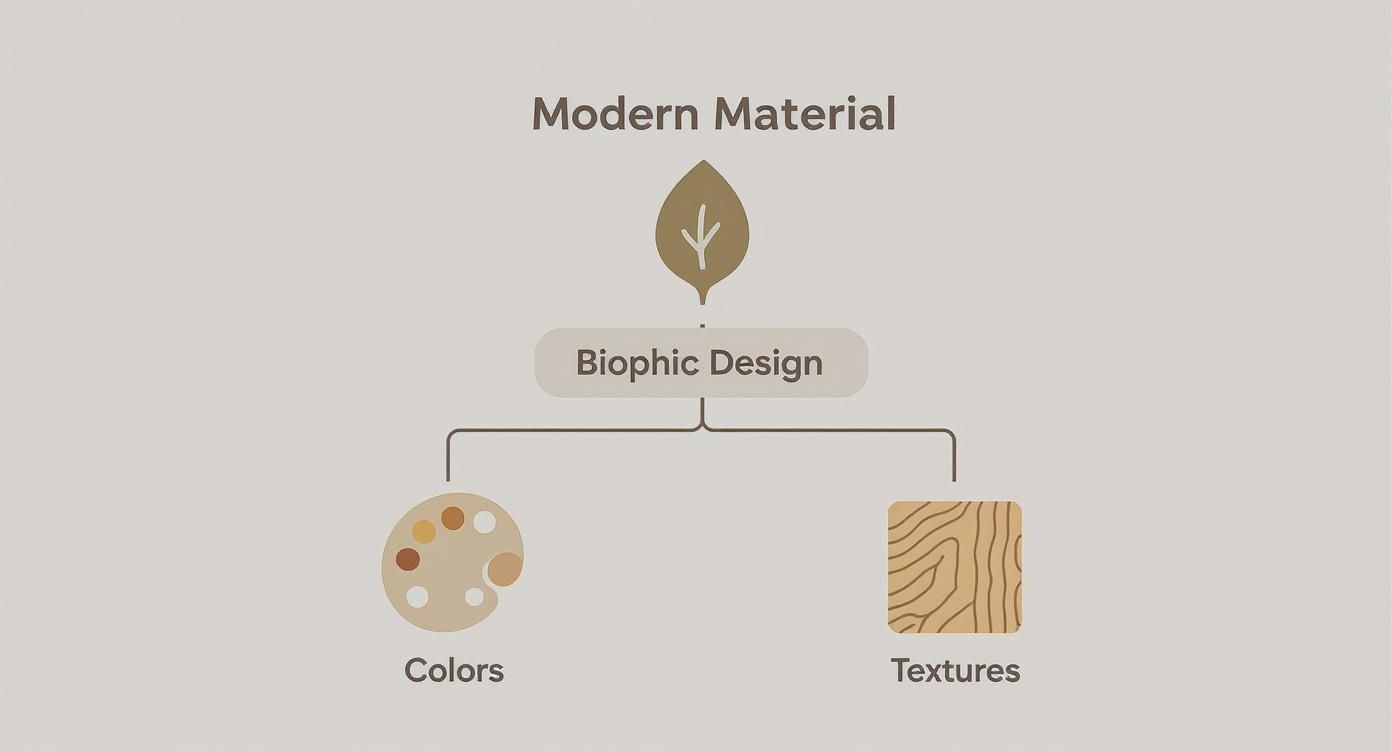
It’s a great visual reminder that a single guiding principle can influence everything from the paint on your walls to the finish on your floors.
The Bedroom: A Serene Sanctuary
More than any other room, your bedroom should be a true retreat—a place designed purely for rest and rejuvenation. The focus here is all on comfort, wellness, and personal touches.
Start with a foundation of organic textiles. High-quality bedding made from linen, organic cotton, or bamboo is not just a sustainable choice; it’s also incredibly soft and breathable, which can genuinely help you sleep better. To make the space your own, curate a gallery wall with art that means something to you, whether it's family photos or prints from an artist you love. For another layer of personal style, find some guidance on displaying crystals for beauty and energy to create a truly restorative vibe.
The Home Office: A Productive Oasis
As remote work becomes a long-term reality for so many, the home office needs to be more than just a desk in a corner. It has to be a space that supports both focus and well-being.
An ergonomic chair and a sit-stand desk are non-negotiable for your physical health. But to keep you mentally sharp, bring the outdoors in. If you can, position your desk near a window to get as much natural light as possible—it’s a proven mood and productivity booster. And don't forget the plants! A few easy-care options like snake plants or pothos will help purify the air and add a dose of calming green to your workday.
Room-by-Room Trend Application
Here’s a quick-reference guide to help you visualize how the 3 biggest macro-trends—Sustainability, Smart Tech, and Personalization—can come to life in different areas of your home.
| Room | Sustainability Tip | Smart Tech Idea | Personalization Touch |
|---|---|---|---|
| Living Room | Choose a rug made from recycled or natural fibers like jute or wool. | Install smart blinds that adjust automatically based on the time of day. | Display a collection of unique, handcrafted decor from your travels. |
| Kitchen | Set up a stylish composting bin on your countertop. | Use a smart refrigerator that helps you track groceries and reduce food waste. | Create a custom spice rack with personalized, labeled jars. |
| Bedroom | Opt for a reclaimed wood headboard or nightstands. | Use a smart alarm clock that simulates a natural sunrise. | Hang a custom piece of art or a treasured family photograph. |
| Home Office | Use furniture made from bamboo, a rapidly renewable resource. | Invest in a smart notebook to digitize your notes and reduce paper use. | Design a custom mousepad or desk organizer with your favorite colors. |
Using this as a starting point, you can begin mixing and matching ideas to build a home that's not just on-trend but is also a perfect reflection of you.
Answering Your Top Home Decor Questions
Keeping up with interior design trends can feel like a full-time job. One minute, it's all about minimalism; the next, maximalism is back in a big way. It's easy to feel a little lost, so let's tackle some of the most common questions people have when trying to create a stylish home that still feels like them.
How Can I Keep Up With Trends Without Breaking the Bank?
You don't need a massive budget to make your home feel current. The secret is to focus on small changes that deliver a big impact.
Think about swapping out your throw pillows and blankets for new colors and textures. A fresh coat of paint on a single accent wall can completely shift the energy of a room. Even something as simple as changing the knobs on your kitchen cabinets or dressers can make a huge difference.
And don't forget the thrill of the hunt! Second-hand stores and flea markets are gold mines for unique pieces that bring character and story to your space without costing a fortune.
Which Trends Are Actually Worth Investing In?
The trends that stick around are the ones that connect back to how we want to live. Think less about fleeting fads and more about foundational shifts.
For example, the move toward sustainability, biophilic design (our innate need to connect with nature), and highly personalized spaces isn't just a momentary phase. These ideas are rooted in well-being and self-expression.
Investing in high-quality pieces made from natural materials like wood, stone, and linen is always a smart move. The same goes for smart home tech that genuinely makes your life easier. These elements will feel relevant long after specific color palettes have come and gone.
Here's a pro tip for making different pieces work together: find a common thread. It could be a consistent color you weave throughout the room or a specific type of wood that appears in multiple pieces. This simple trick creates a sense of cohesion and intention.
Feeling inspired to get started? Head over to Fluent Trends to explore our curated collections of furniture and decor. You'll find everything you need to build a space that feels both stylish today and loved for years to come.