

Decorate Your Home on a budget: Budget-friendly Ideas to Refresh Your Space
Donna MaloneLet's be honest, creating a home you love shouldn't require a second mortgage. The real secret isn't a massive budget; it's smart planning and a little bit of creativity. The magic happens when you define your style, lock in a budget, and pick your battles by prioritizing rooms. This simple framework is what separates a thoughtful, cohesive home from a collection of random, expensive impulse buys.
Your Blueprint for Affordable Home Style
Before you even think about hitting the shops, the most important work happens right at your kitchen table. I know, it's tempting to dive headfirst into browsing for that perfect throw pillow, but trust me—without a clear vision, you'll end up with a space that feels disjointed and costs way more than it should. A solid plan is your guide for every single decision, making sure every dollar works as hard as you do.
A great space should feel like you. So, before we talk furniture or paint, let's figure out what your personal style actually is. Are you a fan of clean, modern lines, or do you find yourself drawn to the warm, lived-in feel of rustic charm?
-
Go on an inspiration hunt: Start a Pinterest board or even just a folder on your phone. Pin and save everything that catches your eye. Don't overthink it—just save what you love.
-
Look for the patterns: After a week or so, look back at what you saved. Do you see a lot of light woods, moody colors, or plush, cozy textures? Those are your clues.
-
Give it a name: Try to describe your dream space in just a few words. Maybe it’s "calm and airy," "bold and eclectic," or "warm and sophisticated." This becomes your north star.
Setting a Realistic Budget You Can Stick To
Okay, now for the numbers. A budget isn't a ball and chain; it's your ticket to freedom. It puts you in control. Be brutally honest with yourself about what you can comfortably spend, whether that’s $200 for a quick weekend refresh or $2,000 for a bigger project.
The biggest mistake I see people make is decorating without any budget at all. They nickel and dime themselves on small, forgettable accessories and then have nothing left for the sofa or rug that would have actually transformed the room.
Prioritize Zones for the Biggest Impact
Here's another pro tip: don't try to do everything at once. You'll burn out and your wallet will hate you. Instead, focus on the rooms that will give you the most bang for your buck.
Start with the space where you and your family spend the most time, like the living room. Or, tackle a high-impact area that sets the tone for your whole home, like the entryway. Focusing on one zone at a time makes the entire process feel less overwhelming and stretches your budget further. For more in-depth guidance on getting that perfect look, these professional paint and decorating tips are a goldmine for achieving a polished, high-end finish.
Mastering the Art of Smart and Savvy Shopping
Turning your budget into your greatest asset is the real secret to smart decorating. I've learned over the years that success isn't about having more money; it's about knowing exactly where to spend it for the biggest impact. This is where adopting a "splurge versus save" mindset becomes your most powerful tool.
Some pieces in your home just work harder than others. Think about your sofa, your mattress, or your dining table. These are the foundational items you and your family use every single day. Investing in real quality here pays off in spades with better comfort, durability, and a high-end feel that elevates everything else around them.
On the flip side, trendy or purely decorative items are the perfect places to hunt for bargains. Accent pieces like throw pillows, vases, and little decor objects can be swapped out easily as seasons or your tastes change, so there's absolutely no need to break the bank on them.
This simple flowchart breaks down the core steps to starting your design journey with a solid, budget-friendly plan.
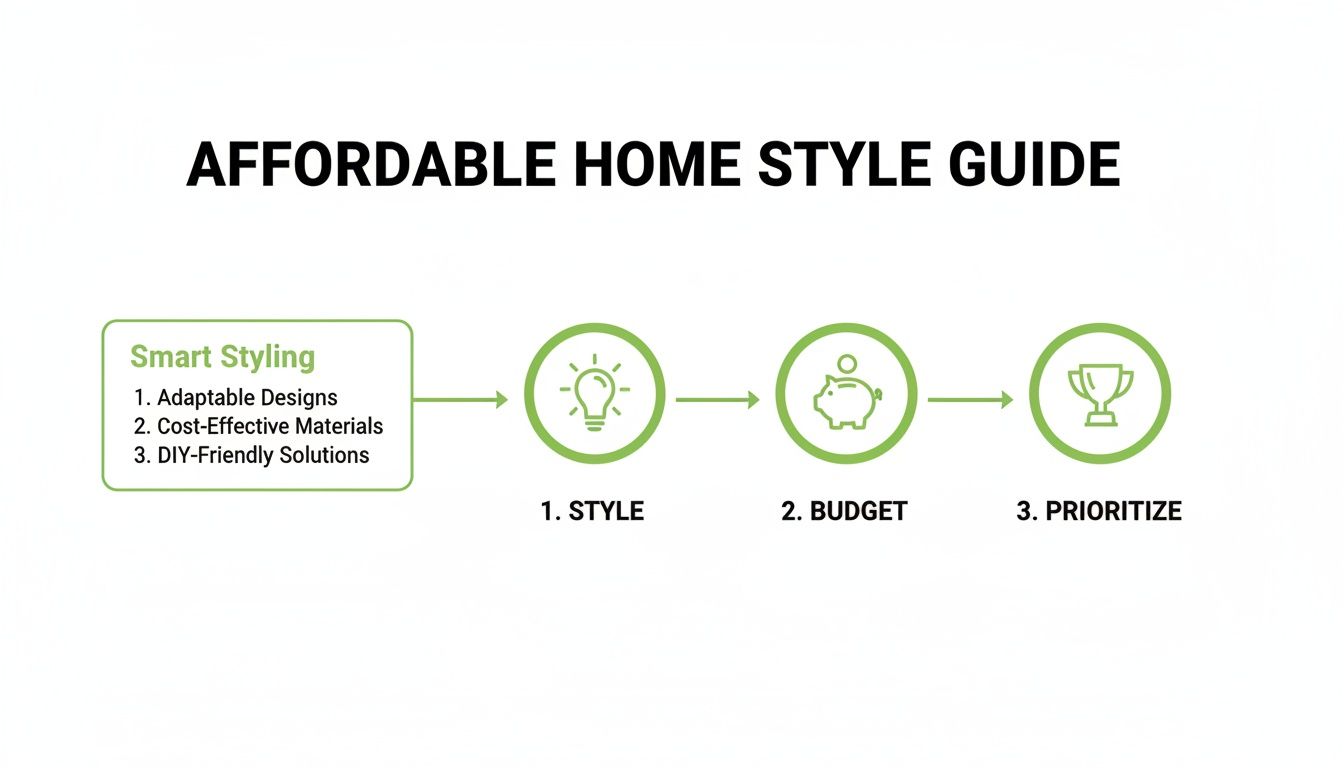
It’s a great visual reminder that figuring out your style, setting a budget, and prioritizing which rooms to tackle are the pillars you need to build before you even think about shopping.
The Splurge vs Save Decorating Guide
Knowing where your money will truly make a difference is key. Think of it as a strategic game—balancing long-term investment pieces with fun, affordable finds that bring in personality without the high price tag.
Here’s a quick guide I use to help decide where to put the big bucks and where to save.
| Item Category | Splurge (Invest Here) | Save (Find Bargains Here) | Why It Matters |
|---|---|---|---|
| Seating | Sofa, Sectional, Accent Chairs | Throw Pillows, Blankets | A well-made sofa provides comfort and structure for years. Textiles are cheap and easy to swap when you want a fresh look. |
| Surfaces | Dining Table, Coffee Table | Side Tables, Nightstands, Decorative Trays | High-traffic surfaces need to be durable to withstand daily life. Small accents can easily be thrifted or found on sale. |
| Lighting | Statement Pendant Lights, Floor Lamps | Table Lamps, Lamp Shades | A great main fixture sets the entire mood of a room. Smaller lamps are a perfect opportunity for fun, budget-friendly finds. |
| Floor | High-Quality Area Rug | Small Accent Rugs, Doormats | A large, quality rug anchors the whole room and has to endure foot traffic. Small ones are great for adding a pop of personality. |
This table really simplifies the process. When you get the big, foundational items right, the smaller, less expensive details just fall into place.
The goal is to build a room around a few high-quality "hero" pieces. When your sofa and rug feel substantial and well-made, you can get away with inexpensive art and accessories, and the entire room will look more expensive.
Hunting for Bargains Like a Pro
Finding amazing deals requires a bit of patience and a good eye, but the payoff is huge. Secondhand stores, estate sales, and online marketplaces are absolute treasure troves if you know what to look for. My rule when thrifting is to always prioritize items with good bones—things like solid wood furniture, lamps with classic shapes, or unique pottery.
Don't be scared off by a few scratches or a dated finish. A little bit of paint or some new hardware can completely transform an old piece into something spectacular. And don't forget, you can always explore some of the best online home decor stores for end-of-season sales and clearance events on new items.
This savvy approach is more popular than ever. The global home decor market is absolutely booming, projected to hit an incredible $432.2 billion by 2035. This massive growth means more competition, which translates to better prices on affordable textiles and accents for shoppers who know where—and when—to look.
Unleash Your Creativity with DIY and Upcycling Projects
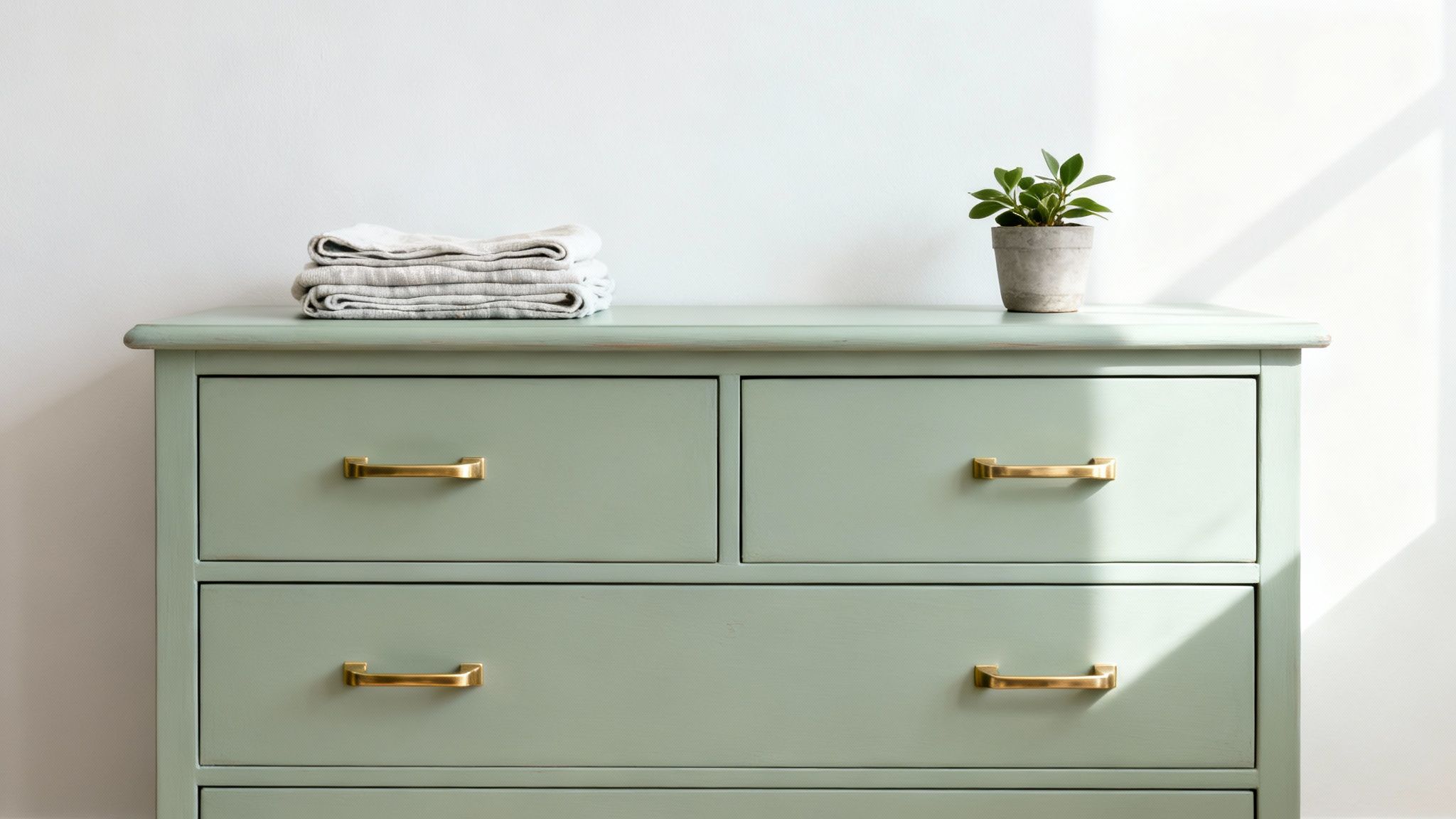
Let’s be honest, the most interesting pieces in any home aren't the ones that come straight out of a box. They're the ones with a story behind them. This is where DIY and upcycling shine, letting you turn forgotten items into true conversation starters. It’s a core strategy when you decorate a home on a budget, allowing you to transform thrifted finds into one-of-a-kind treasures.
We're not talking about clunky, homemade crafts here. The goal is to create polished, intentional pieces that look high-end. It all comes down to seeing the potential in an item, not just what it is right now. That tired wooden dresser at the flea market? It's your next masterpiece waiting to happen.
Start with High-Impact, Low-Effort Projects
You don't need a full woodshop or years of experience to make something incredible. In fact, some of the most dramatic transformations are shockingly simple and require just a few basic tools. The key is to pick projects that give you a huge visual payoff without a huge headache.
Here are a few ideas to get the ball rolling:
-
Furniture Face-Lifts: An old dresser or side table is the perfect candidate for a glow-up. With some light sanding, a coat of quality paint in a bold color, and some new hardware, a $20 thrift-store find can easily pass for a $500 boutique piece.
-
Create Your Own Art: We all know how expensive large-scale art can be. So why not make your own? Grab a cheap, oversized canvas and create a minimalist abstract painting using two or three colors from your room’s palette. It’s simple, fast, and completely custom.
-
Textile Transformations: If you can sew a straight line, you've got this. Instead of buying pricey designer pillows, pick up some fabric remnants and create your own cushion covers. You can play with trendy patterns and textures for a fraction of the cost.
These projects do more than just save you money; they inject your personality directly into your home in a way that mass-produced items never can. You're not just filling space—you're curating it.
Upcycling isn't just a budget-friendly tactic; it's a sustainable choice that gives old items new life. It’s about being resourceful and creative, which is the very heart of good design.
Learn to See the Potential Everywhere
Once you get into an upcycling mindset, you'll start seeing opportunities everywhere you look. That old mirror with a hideous gold frame? A few coats of matte black spray paint will give it a modern, sophisticated edge. A stack of old hardcover books from a yard sale? Strip off the paper covers to reveal the beautiful, neutral bindings underneath and use them as risers on a shelf.
The most beautiful homes feel collected, not bought. They come together slowly, one piece at a time. Every DIY project you complete adds another layer to your home's story. Embracing this process is the most powerful way to build a space that feels deeply personal and looks incredible, proving that a tight budget might just be your greatest creative asset.
The Power of Placement and Professional Styling Tricks
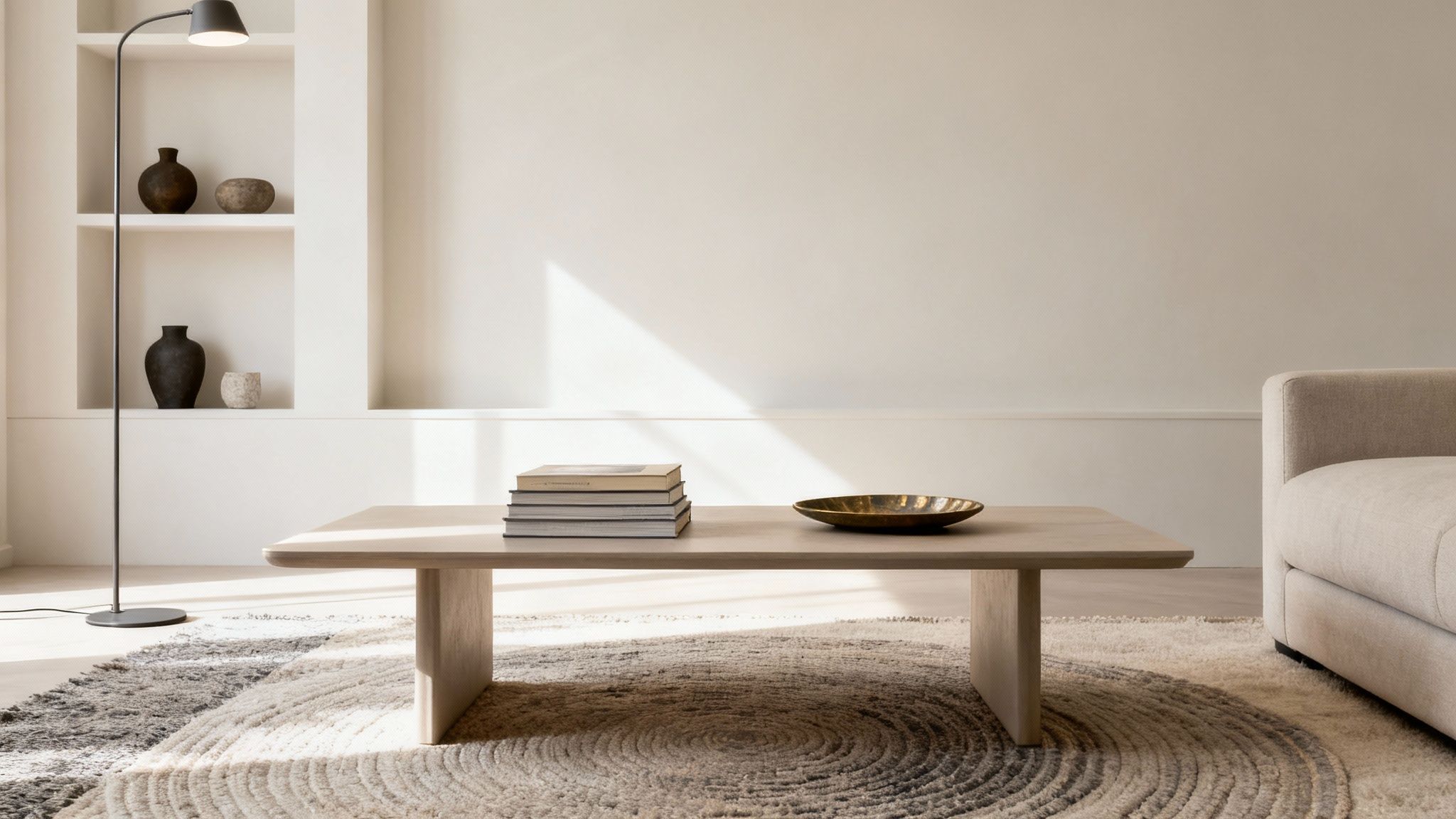
You can have the most incredible collection of furniture and decor, but if it’s all just sort of… there, the room will always feel a little off. The real magic isn't just in what you own, but in how you arrange it.
This final layer—styling—is where you get to play designer. These tricks don't cost a dime, yet they can take a space from feeling cluttered and random to looking intentionally polished. It’s all about using what you have to create harmony and flow, proving that a good eye is way more valuable than a huge budget.
Create Little Moments with Vignettes
Ever wonder how designers make a simple bookshelf look so good? They create vignettes—small, curated groupings of objects that tell a little story. Instead of just lining up your favorite things on a console or coffee table, cluster them together to create a focal point.
It’s easier than it sounds. Just think about varying the height, shape, and texture of your items. Here’s a can't-fail formula for a beautiful little display:
-
Something Tall: A vase with a few branches, a tall candle, or a skinny lamp gives the arrangement a vertical anchor.
-
Something Low: A decorative tray, a stack of your favorite books, or a beautiful bowl grounds the whole look.
-
Something with Character: Finish it off with an object that has an interesting shape—a small plant, a piece of unique pottery, or a meaningful souvenir.
A trick straight from the pros is the "Rule of Threes." For some reason, our eyes love things grouped in odd numbers. Arranging items in clusters of three, five, or seven almost always looks more dynamic and natural than grouping them in pairs. It just works.
Finally Hang Your Art the Right Way
This is one of the most common decorating mistakes I see, and it's such an easy fix. Hanging art too high or too low can throw off the entire balance of a room, but getting it right makes your space feel instantly more professional.
The golden rule is to hang artwork so the center of the piece is at eye level, which for most people is somewhere between 57 to 60 inches from the floor.
If you’re hanging a piece above furniture, like your sofa or headboard, make sure the bottom of the frame is just 6 to 8 inches above the top of the furniture. This little gap connects the two visually, so they feel like a cohesive unit instead of two random things floating on the same wall.
Layer Textures to Add Warmth and Depth
A room with only one texture feels flat and, frankly, a little boring. The secret to making a space feel cozy and lived-in is to layer different materials that invite you to touch them. The best part? You can probably do this with things you already own.
Look around the room and think about how you can mix and match different tactile feelings:
-
Toss a chunky knit throw over a smooth leather chair.
-
Add a couple of velvet pillows to your crisp linen sofa.
-
Place a sleek metal coffee table on top of a soft, high-pile rug.
These little contrasts are what give a room its richness and personality. It’s this kind of attention to detail that elevates a space from just being furnished to being truly well-designed.
Room-by-Room Ideas for High-Impact Updates
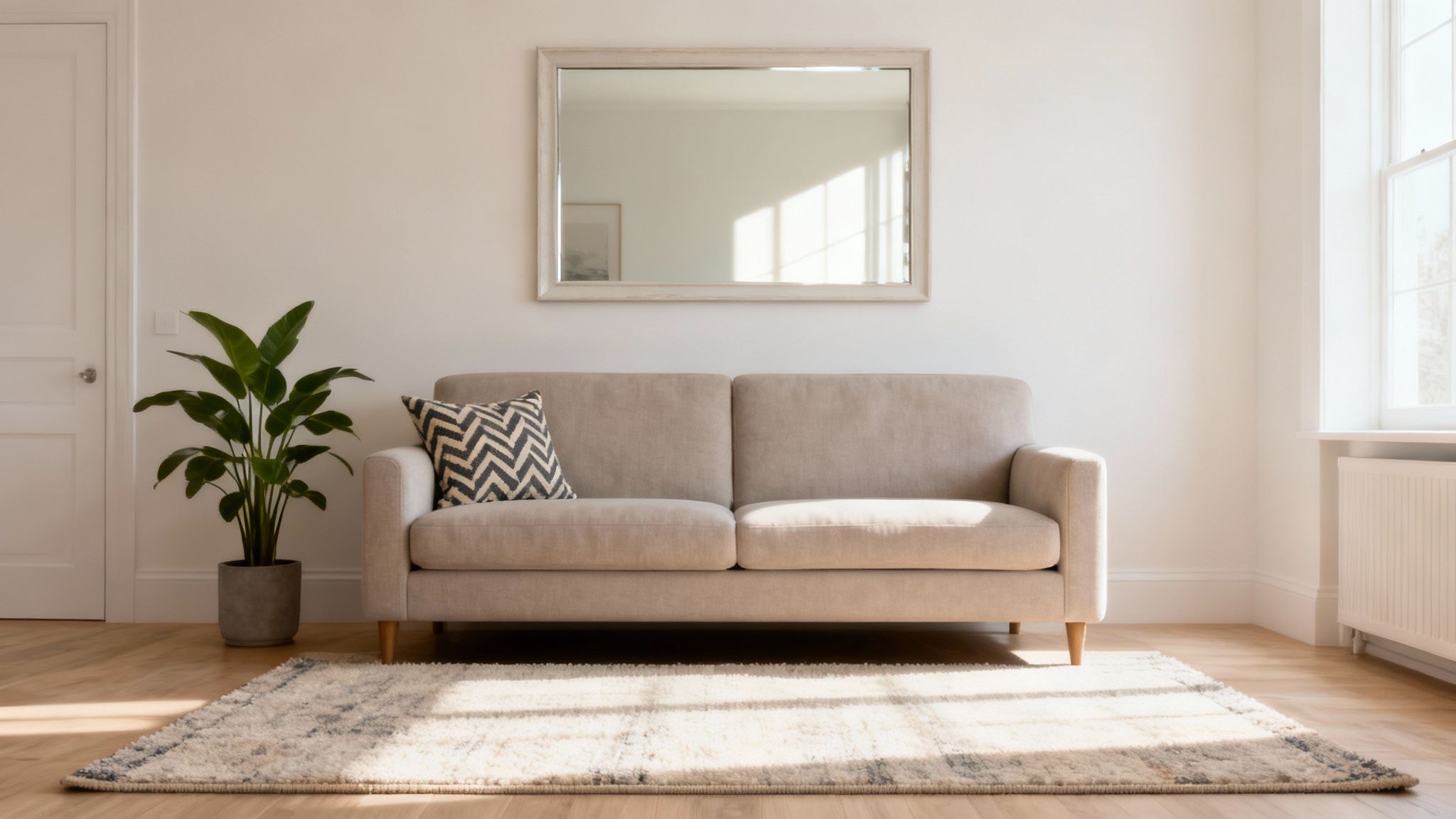
Alright, let's get practical. Knowing the principles of budget decorating is great, but the real fun starts when you apply them to an actual room. This is where you see how a few smart choices can completely change the vibe of your home.
We're not talking about gut renovations here. The goal is to pinpoint the changes that give you the biggest bang for your buck—the tweaks that make a room feel fresh and new without draining your bank account.
The Living Room: A Welcoming Refresh
Your living room is where life happens, so even small updates can have a massive impact on your home's overall feel. Forget about replacing the big-ticket items like your sofa. Instead, let's focus on the supporting cast that pulls everything together.
A new area rug, for instance, can single-handedly redefine the space's color scheme and personality. Another one of my favorite designer tricks? Hang a large mirror on the wall opposite a window. It’s a classic for a reason—it bounces light everywhere, making the entire room feel brighter and more expansive for minimal cost.
If you're looking for more ways to spruce up this central space, we've gathered a bunch of other great decorating ideas for your living room.
Sometimes, seeing the numbers makes it all click. Here’s a quick breakdown of how you could give your living room a major facelift with a $500 budget.
Sample Living Room Refresh on a $500 Budget
| Item | Estimated Cost | Impact Level |
|---|---|---|
| Area Rug (5x8) | $150 | High |
| Throw Pillows (Set of 4) | $80 | High |
| Cozy Throw Blanket | $50 | Medium |
| Wall Mirror (Large) | $100 | High |
| Potted Plant & Pot | $50 | Medium |
| DIY Art/Thrifted Frames | $40 | Medium |
| Side Table (Secondhand) | $30 | Medium |
This simple plan shows that you don’t need thousands of dollars. By focusing on textiles, reflection, and a touch of greenery, you can create a space that feels intentional and beautifully styled.
The Bedroom: Your Budget-Friendly Sanctuary
Your bedroom should be your personal escape, and you don’t need a huge budget to make it feel like one. Your secret weapon here is textiles. Seriously, just swapping out old bedding for a fresh duvet cover and some truly plush pillows can make the whole room feel more luxurious.
Feeling crafty? Look up a DIY headboard tutorial. You can create something that looks incredibly high-end with a sheet of plywood, some batting, and a few yards of fabric you love. It’ll cost a fraction of what you’d pay in a store. Also, consider installing a dimmer switch—it’s a cheap upgrade that gives you instant mood lighting.
A key takeaway for any room is to focus on what creates the biggest sensory impact. In the bedroom, that's almost always texture and lighting. Soft fabrics and warm, dimmable light create a sense of calm that no amount of expensive decor can replicate on its own.
The Dining Space: Effortless Elegance
You don’t need a stuffy, formal dining set to make meals feel special. Often, a simple and striking centerpiece is all it takes. Try grouping different-sized candles on a tray or placing a few fresh branches clipped from the yard into a large vase for instant drama.
Even something as small as a new set of placemats or cloth napkins can elevate your everyday table. These little details are what turn a regular dinner into a more memorable experience.
Kitchen and Beyond
This mindset of small, impactful changes works everywhere. A high-impact kitchen makeover on a budget might mean just painting the cabinets and swapping out the hardware. It's about being savvy.
This isn’t just a niche trend; it’s a massive shift in how people approach their homes. In fact, a post-pandemic wave saw 60% of households take on DIY projects between 2020-2024, choosing cost-effective updates over expensive renovations. This move toward smarter, more personal home improvement is here to stay.
Common Questions About Budget Decorating
So, you’ve decided to tackle decorating on a budget. Awesome. But as you get started, a few questions always seem to come up. Getting these sorted out first will save you a ton of headaches and help you feel way more confident moving forward.
Let's clear up some of the most common challenges decorators run into.
What Is the First Thing to Do When Decorating on a Budget?
Before you even think about opening a shopping tab, the very first thing you need to do is declutter and deep clean the room. I know it's not the fun part, but this step is a game-changer. It costs zero dollars and instantly makes a space feel bigger, brighter, and way more open.
Doing this gives you a truly blank canvas. It lets you see what you actually have, what you genuinely need, and stops you from buying more stuff that just adds to the chaos. Once the room is cleared out, you can make a solid plan and a realistic budget without all the extra noise.
How Can I Make My Home Look Expensive for Less?
Want that high-end look without the matching price tag? The secret is to focus on three things: lighting, textiles, and hardware. Swapping out a boring, builder-grade light fixture for a statement piece can single-handedly transform the entire vibe of a room.
Next, layer in different textures with good-quality throws and pillows. It just adds a sense of depth and luxury. And finally, one of my favorite tricks is updating hardware. Changing out the pulls on your kitchen cabinets or the knobs on your doors is a small, cheap fix that looks surprisingly high-end. A cohesive color palette also goes a long way in making a space feel pulled together and thoughtfully designed.
A huge mistake I see people make is buying a bunch of small, cheap trinkets to fill space. You're much better off saving that money for one larger, more impactful piece. A home with real character comes from mixing styles and textures, not just collecting clutter.
Where Should I Splurge for the Biggest Impact?
Put your money where you spend your time. The things you use every single day are what deserve the biggest slice of your budget. For most people, that means the sofa in the living room, the mattress in the bedroom, or the dining table where everyone gathers. These are the foundational pieces that set the tone for the whole room.
For everything else, go with a "high-low" approach. Invest in one amazing piece of art or a quality accent chair you're obsessed with. Then, fill in the gaps with more affordable finds from thrift stores or budget-friendly spots. That balance is what makes a space look curated and personal, not just expensive. It's the best way to decorate your home on a budget without skimping on the things that truly matter.
At Fluent Trends, we believe creating a home you love shouldn't be complicated or crazy expensive. Check out our curated collection of designer-approved furniture and decor to find those perfect "splurge" pieces that will anchor your space in style. Start building your dream home by visiting us at https://www.fluenttrends.com.