

Ceramic vs Porcelain: What’s the Difference?
Donna MaloneCeramic vs. Porcelain: A Matter of Refinement
At its core, the difference between ceramic and porcelain plates is all about refinement. Porcelain is technically a type of ceramic—but it’s the more elegant, high-performing cousin. Crafted from purer, finer clay and fired at extreme temperatures, porcelain transforms into a denser, stronger, and less porous material than everyday ceramic dinnerware.
At a Glance: What Sets Them Apart
Before diving into the details of how each is made and how they perform, let’s step back for a high-level view. Both begin as humble clay, but their journeys from earth to table couldn’t be more different. Porcelain’s intense kiln process creates a glassy, vitrified body, while traditional ceramics retain their rustic, earthy charm.
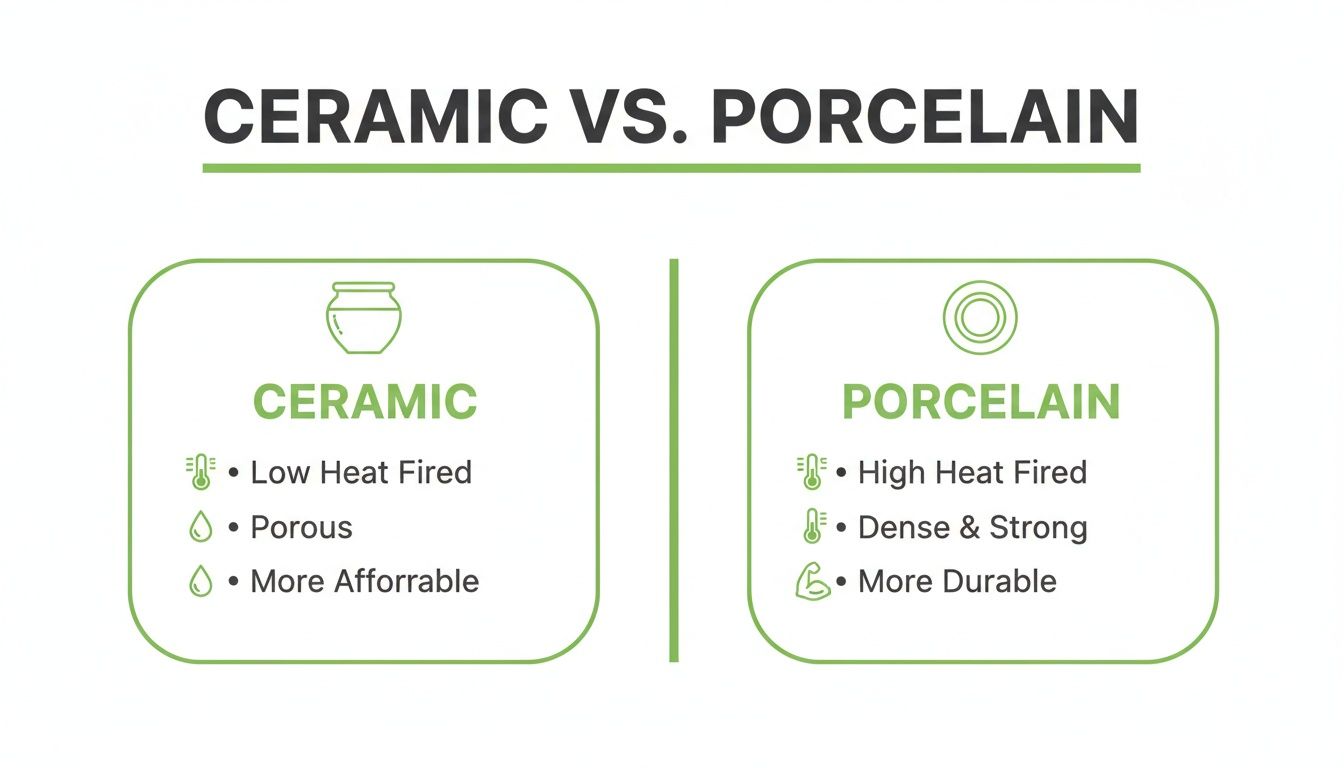
This infographic lays out the key distinctions visually—giving you a quick, elegant summary of how they compare.
Porcelain’s Signature Strength
As the infographic shows, high-heat firing isn’t just a technical detail—it’s the defining factor behind porcelain’s durability and nearly waterproof finish. It’s what elevates porcelain from everyday ceramic to a refined, resilient choice for modern homes
How Key Features Compare
To make the differences crystal clear, here’s a quick-reference guide that breaks down the defining traits of ceramic and porcelain plates. Understanding these characteristics helps you choose the material that best fits your lifestyle, aesthetic, and everyday needs
Key Differences Between Ceramic and Porcelain
| Characteristic | General Ceramic Plates | Porcelain Plates |
|---|---|---|
| Material Composition | Made from various, less refined clays like earthenware or stoneware. | Crafted from a highly refined, pure white clay (kaolin), often mixed with feldspar and quartz. |
| Firing Temperature | Fired at lower temperatures, usually between 1,000°C and 1,200°C. | Fired at extremely high temperatures, from 1,200°C up to 1,450°C. |
| Durability | Tends to be heavier and more prone to chipping and cracking with daily use. | Lighter in weight but significantly more durable and chip-resistant due to vitrification. |
| Water Absorption | Higher porosity with a water absorption rate of 3-5%, making it more likely to stain. | Virtually non-porous with a water absorption rate of less than 0.5%, resisting stains and odors. |
| Typical Cost | Generally more budget-friendly and widely available for everyday use. | Carries a higher price tag due to the premium materials and energy-intensive firing process. |
This side-by-side breakdown highlights how subtle differences in clay refinement and firing techniques result in two distinct materials — each with its own strengths. Ceramic offers rustic charm and affordability, while porcelain delivers elegance, resilience, and long-term value.
Understanding How Your Plates Are Made
The journey from raw clay to finished dinnerware is a fascinating transformation of heat, pressure, and precision. While both ceramic and porcelain begin as earth, the way they’re crafted defines everything—from weight and texture to durability and elegance.
General ceramics, like earthenware or stoneware, are made from less refined clays and fired at relatively low temperatures—typically around 1,000°C. This process hardens the clay but leaves it slightly porous, resulting in a heavier, more rustic finish.
The Refined Process of Porcelain
Porcelain is a different story entirely. It begins with kaolin—a pure, fine white clay—blended with minerals like feldspar and quartz to create a smooth, dense slurry. This mixture is then fired at extreme temperatures, often between 1,200°C and 1,450°C.
At that heat, the materials undergo vitrification, a process where everything melts together into a single, glass-like body. The result is a plate that’s thin yet incredibly strong, non-porous, and perfectly suited for elegant, everyday use.
Porcelain’s ability to balance delicate design with real-world durability is what makes it a favorite for both home and hospitality settings.
Market Dominance and Material Science
Porcelain’s refined process doesn’t just show up at the dinner table—it dominates the market. With a commanding 58.50% share of the global ceramic tableware market, its popularity is rooted in material science. Firing kaolin clay above 1,200°C creates a vitrified body that’s more resistant to chips, cracks, and stains than standard ceramics.
If you’re curious about the numbers, you can explore the data in this detailed industry report on MordorIntelligence.com (mordorintelligence.com in Bing).
Ultimately, ceramic offers rustic charm, but porcelain delivers refined strength and long-term value. It’s the difference between a plate that simply holds food—and one that elevates the entire dining experience.
Durability for Everyday Life
The science behind how plates are made is one thing—but how they survive the daily chaos of your kitchen is what really counts. When we talk about the difference between ceramic and porcelain plates, durability is where porcelain truly pulls ahead, making it the clear winner for busy households. It’s not just about raw strength—it’s about how the material handles everything from a clumsy bump against the sink to a stubborn pasta sauce stain.
Porcelain is fired at incredibly high temperatures, a process that vitrifies the clay and creates a dense, non-porous, almost glass-like material. This gives it a serious advantage in real-world, everyday use.
Porosity and Stain Resistance
A plate’s long-term resilience largely comes down to porosity—how much liquid it absorbs. Here, the difference between ceramic and porcelain is dramatic.
-
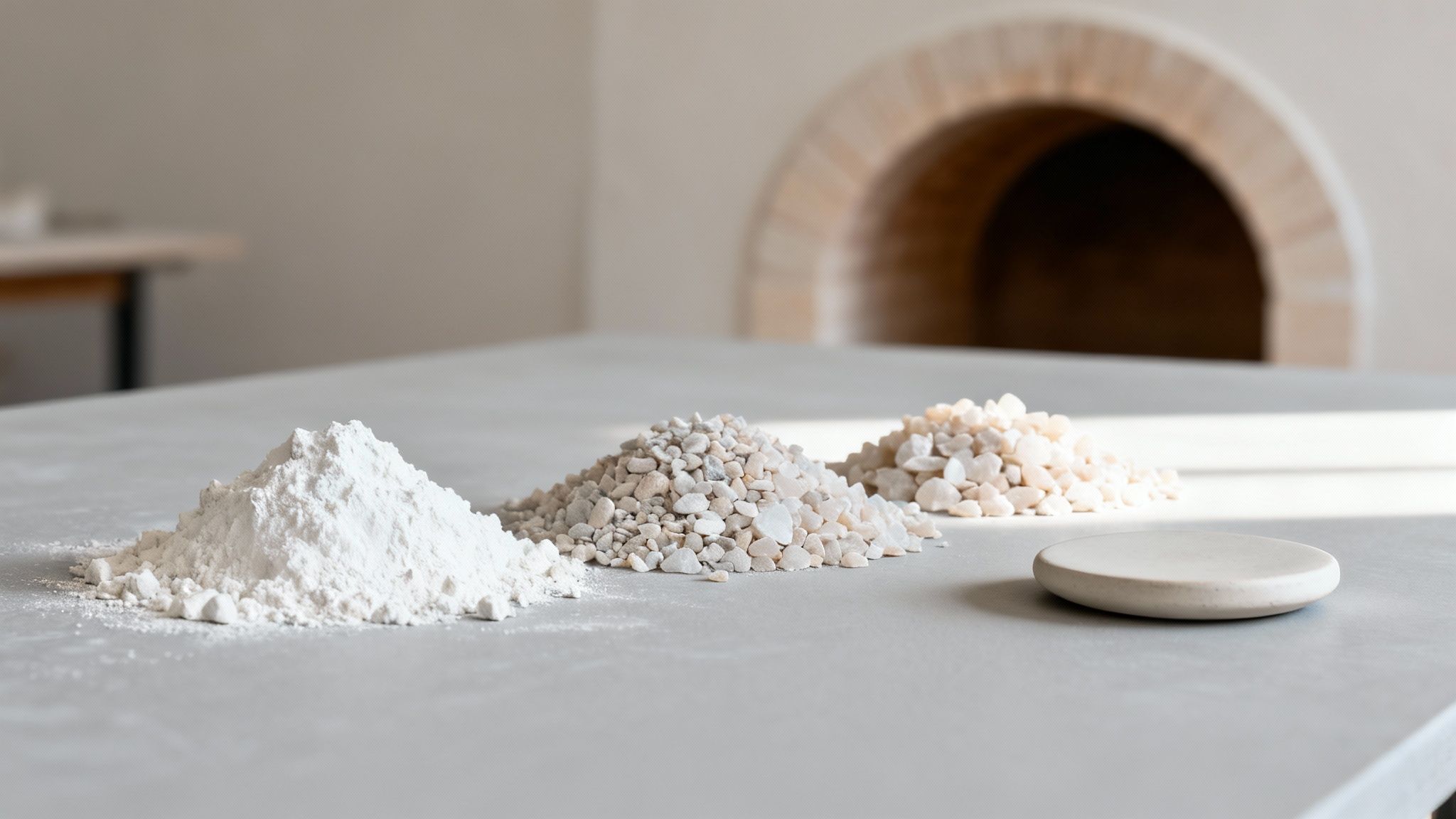
Porcelain Plates: With an extremely low water absorption rate—typically under 0.5%—porcelain is practically waterproof. It shrugs off common stain culprits like coffee, red wine, and tomato sauce.
-
Ceramic Plates: More porous by nature, ceramic plates often have an absorption rate between 3-5%. If the glaze gets scratched or wears down over time, they’re more likely to soak up liquids and develop stains.
This difference has a direct impact on hygiene, too. Bacteria has a much harder time clinging to a non-porous surface, making porcelain a smarter choice for health-conscious homes.
Because porcelain is fully vitrified, its dense structure repels moisture, odors, and bacteria. This ensures your plates not only look pristine for years but also remain more hygienic through countless meals and washes.
Chip Resistance in Action
Think about the life of your plates: stacked high in a cabinet, bumped against the faucet during washing, or rattling around in the dishwasher. Porcelain’s dense, uniform body makes it far more resistant to chipping than standard ceramic. Of course, a hard drop can break anything—but in everyday use, porcelain holds its own remarkably well.
Ceramic plates, by contrast, are softer and more porous, which makes their edges more prone to chipping with regular handling. That’s a major factor when you’re considering the long-term value and appearance of your dinnerware. If you want to dive deeper into how different materials compare, check out our guide on stoneware vs porcelain dinnerware.
The market reflects this growing demand for durability. The global ceramic porcelain tableware market, valued at USD 31.33 billion, is projected to reach USD 42.59 billion by 2034. Consumers are increasingly choosing durable, hygienic options, and as MarketResearchFuture.com notes, porcelain's low absorption rate can significantly reduce bacterial growth compared to more porous ceramics.
Ultimately, if you’re looking for a set that will stand up to the rigors of daily life and still look beautiful years from now, porcelain is almost always the more resilient long-term investment.
Exploring the Look and Feel of Your Dinnerware
Your plates do more than hold food—they set the mood. The choice between ceramic and porcelain isn’t just about durability; it’s about the atmosphere you want to create. This is where the subtle differences in their craftsmanship truly come to life.
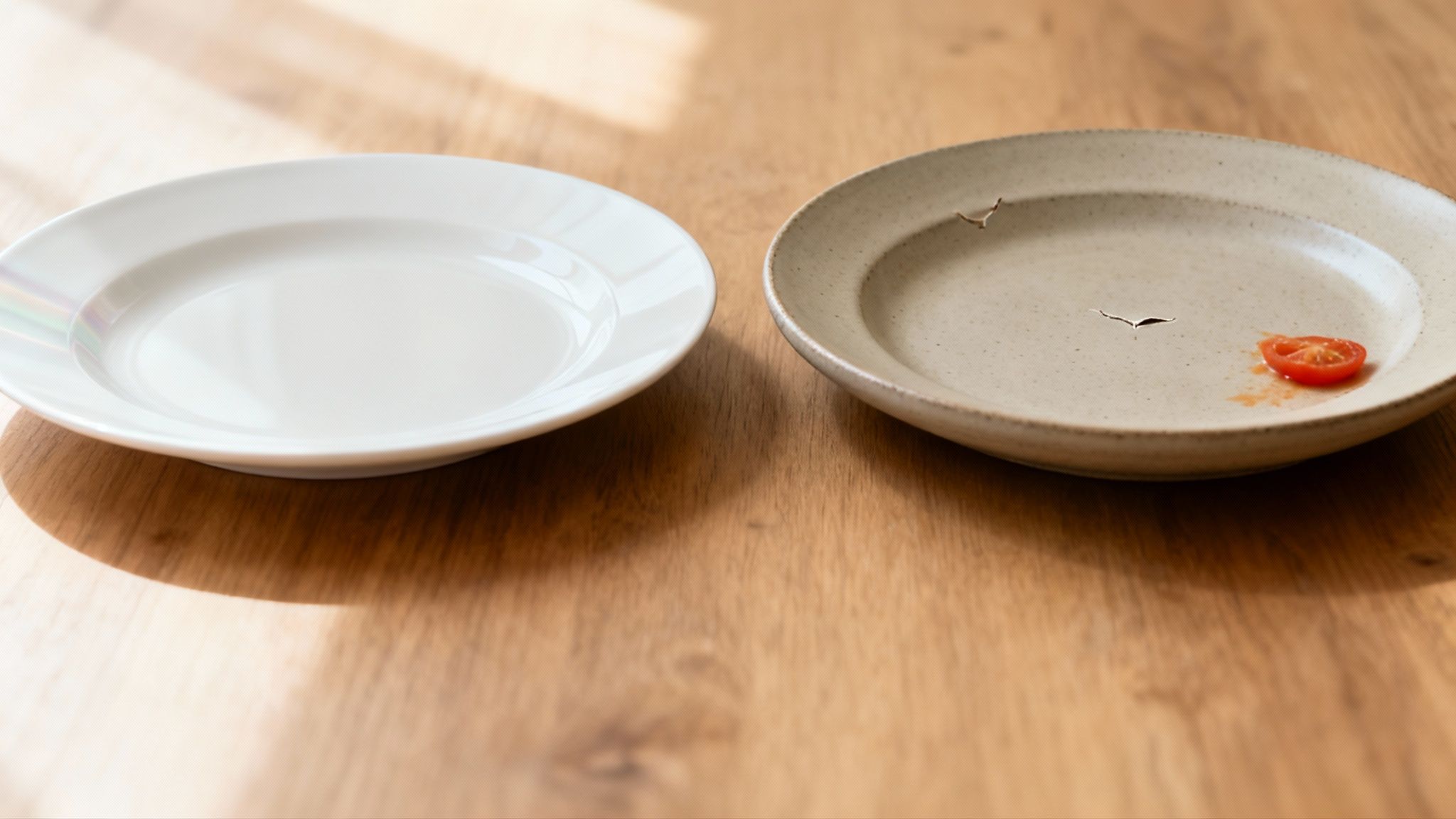
Porcelain, made from refined kaolin clay and fired at intense heat, carries an undeniable elegance. It’s often thinner, surprisingly lightweight, and yet incredibly strong. This balance gives porcelain a graceful, sophisticated presence that feels refined in your hands.
The Signature Look of Porcelain
One of porcelain’s most captivating traits is its subtle translucence. Hold a plate up to the light and you’ll see a soft, warm glow—a telltale sign of its vitrified, glass-like body. Paired with its signature bright white base, porcelain becomes a perfect canvas for vibrant colors and intricate designs to shine.
Porcelain’s smooth, non-porous surface feels almost silky. This polished finish isn't just for looks; it resists stains and elevates the entire dining experience, making both everyday meals and special occasions feel a bit more refined.
Ceramics like stoneware or earthenware offer a completely different vibe. They’re thicker, heavier, and fully opaque—bringing a grounded, rustic charm to the table. Their coarser texture and earthy tones create a warm, casual setting that feels comforting and artisanal.
Matching Dinnerware to Your Home Décor
Understanding the difference between ceramic and porcelain plates helps you choose a set that complements your personal style.
-
For a modern, minimalist, or formal homes, porcelain is a natural fit. Its clean lines, bright white finish, and sleek profile pair beautifully with contemporary décor.
-
For a rustic, farmhouse, or bohemian spaces, ceramic plates offer a weighty, handcrafted feel that enhances cozy, welcoming environments.
Think of your plates as the final layer in your home's design story. Whether you lean toward the polished elegance of porcelain or the hearty charm of ceramic, your choice shapes how every meal feels—visually, emotionally, and experientially.
Choosing the Right Plates for Your Lifestyle
Knowing the technical differences is a great start—but the real test is how your dinnerware fits into your actual life. It’s not about finding a universally “better” material. It’s about choosing what works for your routines, your style, and your family.
Let’s move past the specs and look at how you live. Whether it’s a chaotic Tuesday morning breakfast with the kids or an elegant Saturday night dinner party, your daily rhythm is the best guide for selecting the right plates.
For Busy Families and Everyday Use
If you’ve got kids running around or simply need plates that can handle the daily grind, porcelain is the clear winner. Its dense, vitrified body makes it highly resistant to chips—a major plus when plates bump against countertops or rattle in the dishwasher.
Porcelain’s non-porous surface also resists stains and odors, so last night’s spaghetti sauce won’t linger.
Porcelain’s resilience makes it a workhorse for daily life. It's typically dishwasher and microwave safe, simplifying both cooking and cleanup, which is a major win for any busy family.
There’s a reason the hospitality industry—accounting for 60% of demand—relies so heavily on porcelain. Built to endure constant use, it’s no surprise the global porcelain market, valued at USD 9.89 billion, continues to grow as more households recognize its long-term value.
For the Avid Entertainer and Home Décorator
If you love hosting or treat your dining table as a design canvas, the choice becomes more nuanced. It’s all about the mood you want to create.
-
Porcelain for Elegance: Its bright white, ultra-smooth finish creates a refined backdrop that lets food shine. Perfect for formal dinners or minimalist décor.
-
Ceramic for Charm: With its earthy textures and handcrafted feel, ceramic stoneware brings warmth and character to rustic, farmhouse, or bohemian settings.
Porcelain also offers a functional edge: thermal shock resistance. Its fine-grain structure gives it 20-30% greater resistance to cracking from sudden temperature changes. You can confidently take a porcelain serving dish from a warm oven straight to the table—adding versatility to its elegance.
In the end, it’s about balancing practicality with personal style. If durability and ease of care top your list, porcelain is a smart investment. For a deeper dive into materials and styles, check out our guide on best dinnerware for everyday use.
Comparing Cost and Long-Term Value
Let’s talk price. When you’re standing in the aisle comparing dinnerware, cost is a major factor. But the sticker doesn’t tell the full story—especially when it comes to longevity.
Porcelain costs more because it’s a premium product from start to finish. It’s crafted from highly refined kaolin clay, which is purer and more expensive than standard ceramic clay and fired at extreme temperatures—often over 1,200°C—requiring specialized kilns and high energy. That intense process is exactly what gives porcelain its legendary toughness.
The Investment in Longevity
While a basic ceramic set may seem like a bargain upfront, porcelain almost always wins in the long run. Its dense, non-porous body means fewer chips, fewer replacements, and years of pristine use.
Think of porcelain as a sleek, high-performance trick for your home. It’s built to withstand years of family dinners, endless dishwasher cycles, and the occasional bump, looking just as good as the day you bought it
Ceramic may save you money today, but frequent replacements add up. A quality porcelain set can last for decades—turning that higher initial cost into lasting value.
A Balanced Perspective
This doesn’t mean all ceramics are a poor choice. High-quality stoneware is durable and serves as a fantastic mid-range option. But if you’re looking for the best in performance and longevity, porcelain remains the undisputed champion. It’s that rare blend of delicate beauty and workhorse strength that delivers true, lasting value.
Common Questions About Ceramic and Porcelain
Even with all the details covered, a few questions always pop up. Let’s clear up the most common ones so you can feel confident in your choice.
Are Both Ceramic and Porcelain Plates Microwave and Dishwasher Safe?
Yes—most ceramic and porcelain plates are microwave and dishwasher safe. But always check the manufacturer’s care instructions. Some ceramic plates with metallic finishes may appear oven-safe but aren’t.
Porcelain’s non-porous surface makes it a safer bet for repeated microwave use. Ceramics, being more porous, may absorb moisture and degrade over time. And remember: anything with metallic rims or delicate hand-painted details should always be hand-washed.
How Can I Tell the Difference Between Ceramic and Porcelain?
You don’t need a trained eye—just a few simple tests:
-
Weight and Thickness: Porcelain is thinner and lighter. Ceramic feels heavier and more substantial.
-
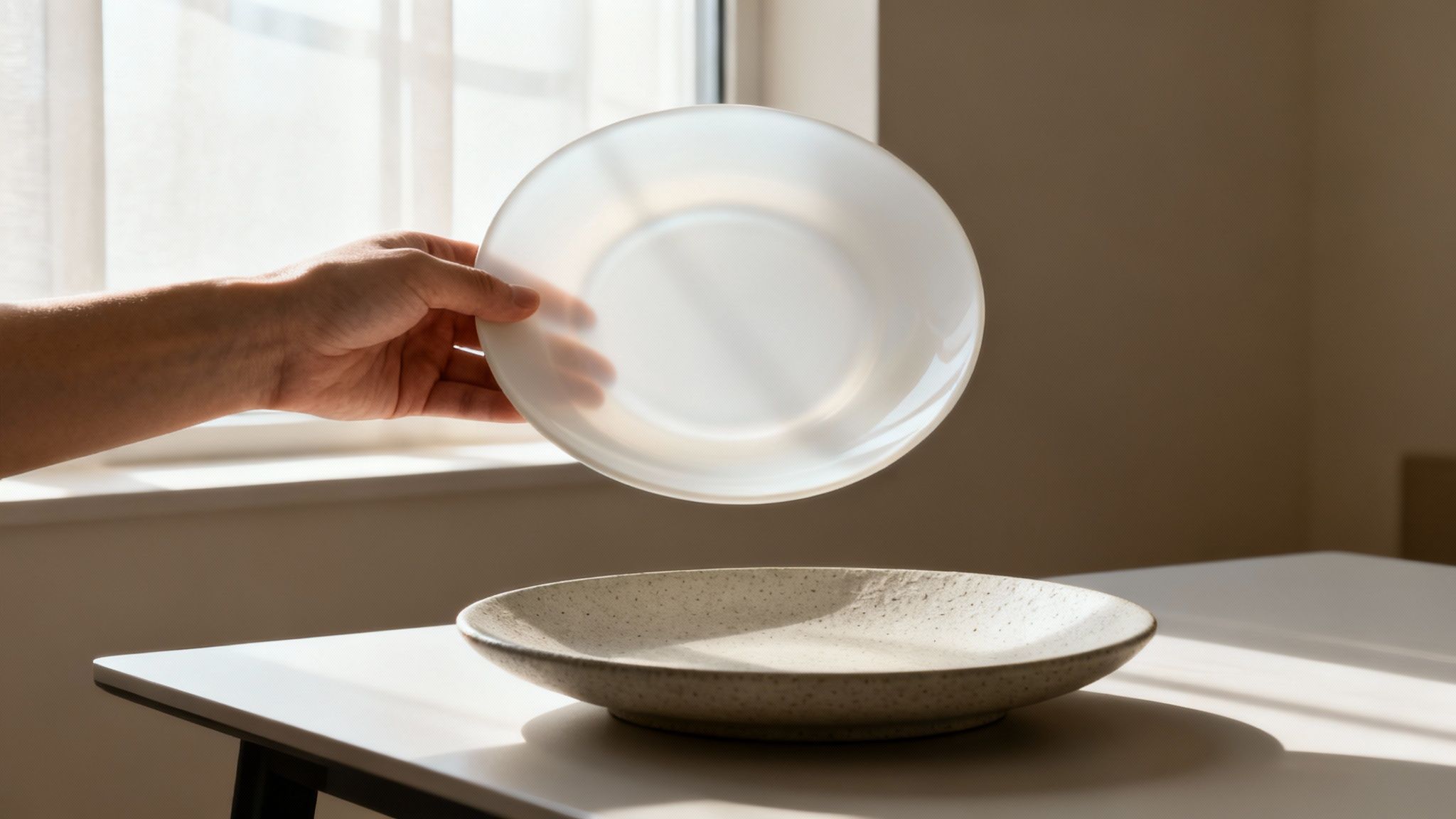
The Light Test: Hold the plate up to the light. A soft glow means porcelain. Ceramic is fully opaque.
-
Surface and Finish: Flip the plate and feel the unglazed rim. Porcelain is smooth; ceramic feels slightly gritty.
This light test is the easiest, most foolproof trick in the book. It’s the vitrified, glass-like structure of porcelain that allows light to pass through—a beautiful quality that opaque ceramic just doesn’t have.
Is Bone China a Type of Porcelain?
Yes—bone china is a premium, highly refined type of porcelain. It starts with the same base but adds bone ash, giving it extra chip resistance and a signature milky-white translucency. It’s famous for being feather-light yet surprisingly strong.remaining surprisingly strong.
Final Thought
At Fluent Trends, we believe your dinnerware should be both beautiful and built to last. Explore our curated collections of premium dinnerware to find the perfect set that combines timeless style with everyday resilience.