

Difference Between Flatware and Silverware: A Clear Guide to Utensils
Donna MaloneLet's settle the great flatware versus silverware debate right from the start. The core difference isn't as complicated as it seems—it all comes down to the metal.
Think of flatware as the catch-all term for your everyday forks, spoons, and knives. More often than not, the sets you'll find in modern home boutiques are crafted from stainless steel. It’s the practical, durable stuff you reach for without a second thought.
Silverware, on the other hand, is exactly what it sounds like. It refers to utensils made from sterling silver or those with a layer of silver plated over another metal. This isn’t just a fancy name; the material completely changes the game in terms of cost, care, and even the weight of the utensil in your hand.
It’s simple, really: All silverware is a type of flatware, but not all flatware is silverware.
Getting this basic distinction down is the key to choosing the right set for your home. It helps you know whether you're investing in a practical workhorse for daily meals or a treasured heirloom for special occasions.
Here's a quick breakdown of how they stack up against each other.
| Feature | Flatware (Stainless Steel) | Silverware (Sterling or Plated) |
|---|---|---|
| Primary Material | Stainless steel, other base metals | Sterling silver or a base metal coated in silver |
| Common Use | Everyday dining, casual entertaining | Formal occasions, special events, heirlooms |
| Maintenance | Low; typically dishwasher-safe | High; requires regular polishing to prevent tarnish |
| Cost | Generally affordable and budget-friendly | Higher initial investment, considered a valuable asset |
Decoding the Materials Behind Your Utensils
Beyond the broad labels, the real story of flatware versus silverware is told by the metals they're made from. The quality, feel, and performance of your utensils are directly tied to their composition, which makes understanding the materials a crucial part of choosing the right set for your home.
The Science of Stainless Steel
Ever noticed the numbers 18/10 or 18/0 stamped on the back of a fork? That’s not just a random code—it's the recipe for its durability. The first number, "18," stands for 18% chromium, the workhorse element that gives the steel its hardness and impressive resistance to rust and corrosion.
The second number is all about the nickel content, and it's what really separates good flatware from great flatware.
-
18/10 Stainless Steel: This means the utensil contains 10% nickel. That extra nickel gives it a beautiful, bright luster, superior rust resistance, and a pleasing weight in your hand. It's really the gold standard for high-quality, everyday flatware that lasts.
-
18/0 Stainless Steel: As you might guess, this blend contains 0% nickel. It's still a strong, rust-resistant option, but it tends to have a more muted, matte finish and can be a bit more vulnerable to staining over the long haul.
This infographic breaks down the fundamental difference between the two main categories of utensils.
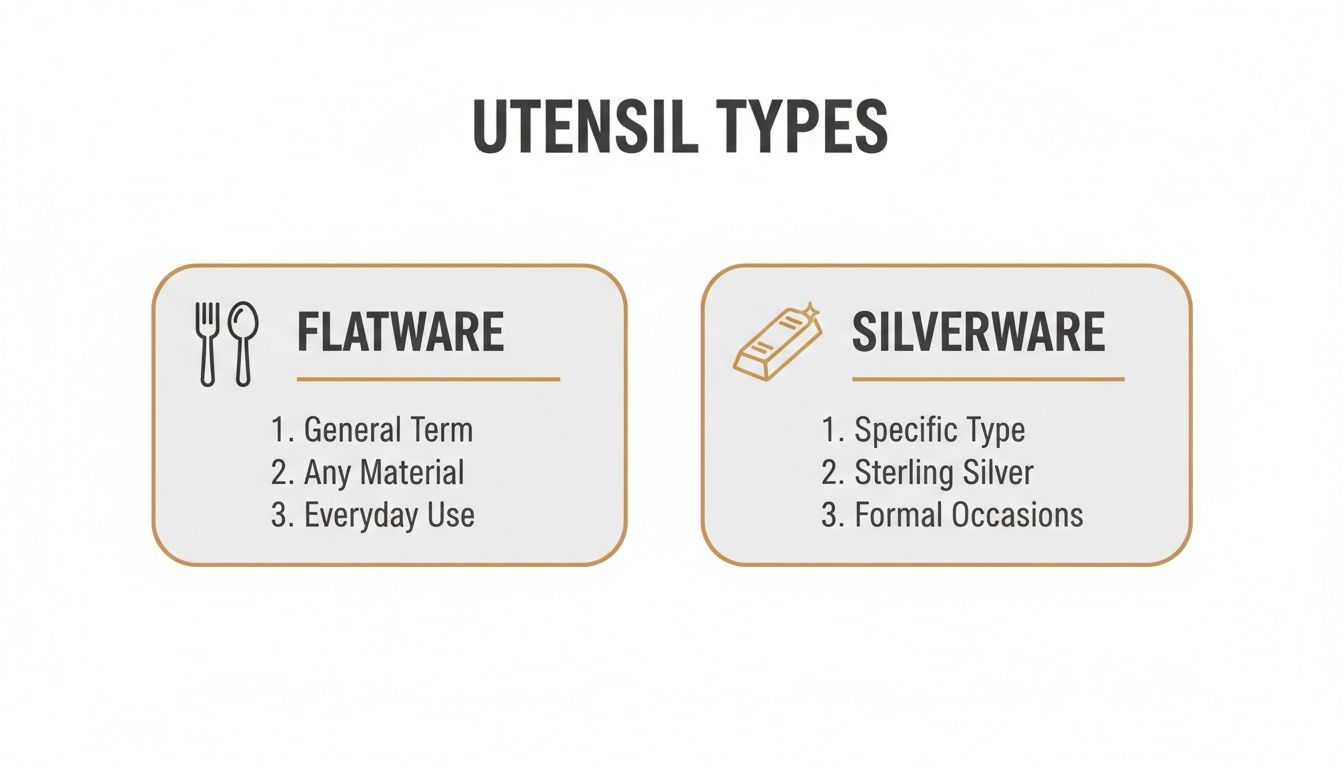
As the visual shows, it really comes down to this: flatware is defined by modern, practical materials, while silverware is all about the precious metal content.
Sterling Silver vs. Silver-Plated
The world of silverware is split into two camps, and it all hinges on silver purity and construction. This distinction is so significant that it shapes the entire industry, with stainless steel dominating the everyday market while true silver occupies a more luxurious niche. You can see how these material choices impact the global flatware market in more detail.
Sterling silver is the real deal. To earn the name, it must legally contain 92.5% pure silver, which is why you'll often see it stamped with "925" or "Sterling." The other 7.5% is usually copper, added to give the soft precious metal some much-needed strength for daily use.
In contrast, silver-plated pieces are made from a less expensive base metal—like nickel or brass—that has been coated with a very thin layer of pure silver. While it delivers the classic look of sterling at a fraction of the cost, that plating can eventually wear thin after decades of use and polishing.
This handy table breaks down the key attributes of each material side-by-side, helping you see exactly what you're getting.
Material Breakdown Flatware vs Silverware
| Attribute | Stainless Steel Flatware | Silver-Plated Ware | Sterling Silverware |
|---|---|---|---|
| Composition | Iron, 18% chromium, 0-10% nickel | Base metal (nickel, brass) with a thin silver coating | 92.5% pure silver, 7.5% alloy (usually copper) |
| Durability | High; resistant to rust, corrosion, and bending | Medium; plating can scratch or wear off over time | Low; soft metal, prone to scratching and tarnishing |
| Maintenance | Low; dishwasher-safe | High; requires hand-washing and regular polishing | Very High; needs frequent, careful polishing and hand-washing |
| Value | Practical, everyday value | Lower initial cost, minimal long-term value | High intrinsic and heirloom value; an investment |
| Best For | Daily use, casual dining, busy households | Formal occasions on a budget, decorative sets | Special occasions, family heirlooms, fine dining |
Understanding this distinction is key, whether you're thinking about your flatware as a long-term investment or simply choosing a set that will stand up to years of family dinners.
The Cultural Significance of Your Dining Set
The story of our dining utensils is really a story about us. It tracks the journey of forks, spoons, and knives from rare treasures owned by the wealthy to the everyday tools we all have in our kitchen drawers. For centuries, sterling silverware wasn't just for eating—it was a declaration of wealth and social status, often becoming a precious heirloom passed down through generations. These sets were symbols of family, legacy, and stability.
Everything changed in the 20th century with the invention of stainless steel. This breakthrough democratized dining forever, bringing affordable, durable, and low-maintenance utensils to the masses. Suddenly, stylish and functional flatware wasn't just for the elite. It became a staple in nearly every household, shifting the focus from status to pure, simple practicality.
From Status Symbol to Everyday Essential
This history is why we still see flatware and silverware so differently. Sterling silver holds onto its air of tradition and formality, usually saved for special occasions where every detail is meant to impress. To see this in action, checking out some inspiring table setting ideas can really show you how the right utensils help create a memorable dining experience.
Stainless steel flatware, on the other hand, is the undisputed champion of daily life. We love it for its resilience and effortless ease of use. Understanding this legacy gives real meaning to the set you choose for your own table.
It’s also fascinating to remember that utensils weren't always a given. While forks and spoons started appearing in Europe between the 14th and 17th centuries, they didn't become standard at American tables until the early 1800s. Today, an estimated 1.5 billion people use the Western knife-fork-spoon system, but that’s just one of many dining traditions across the globe.
This cultural backdrop is why choosing a dining set is so personal. It reflects not just your style, but also the occasions you wish to celebrate, from grand holiday meals to simple weekday dinners.
Whether you're planning a multi-course feast or a casual weekend brunch, the utensils you put out play a huge role in setting the tone. Our guide on how to set a formal dining table can walk you through mastering the art of presentation for those truly special moments.
Choosing the Right Utensils for Your Lifestyle
Knowing the difference between flatware and silverware is one thing, but the real trick is picking the set that actually fits your life. Your daily habits, how you entertain, and what you value in the long run should be your guide. Let’s move past the technical stuff and get into what really matters.
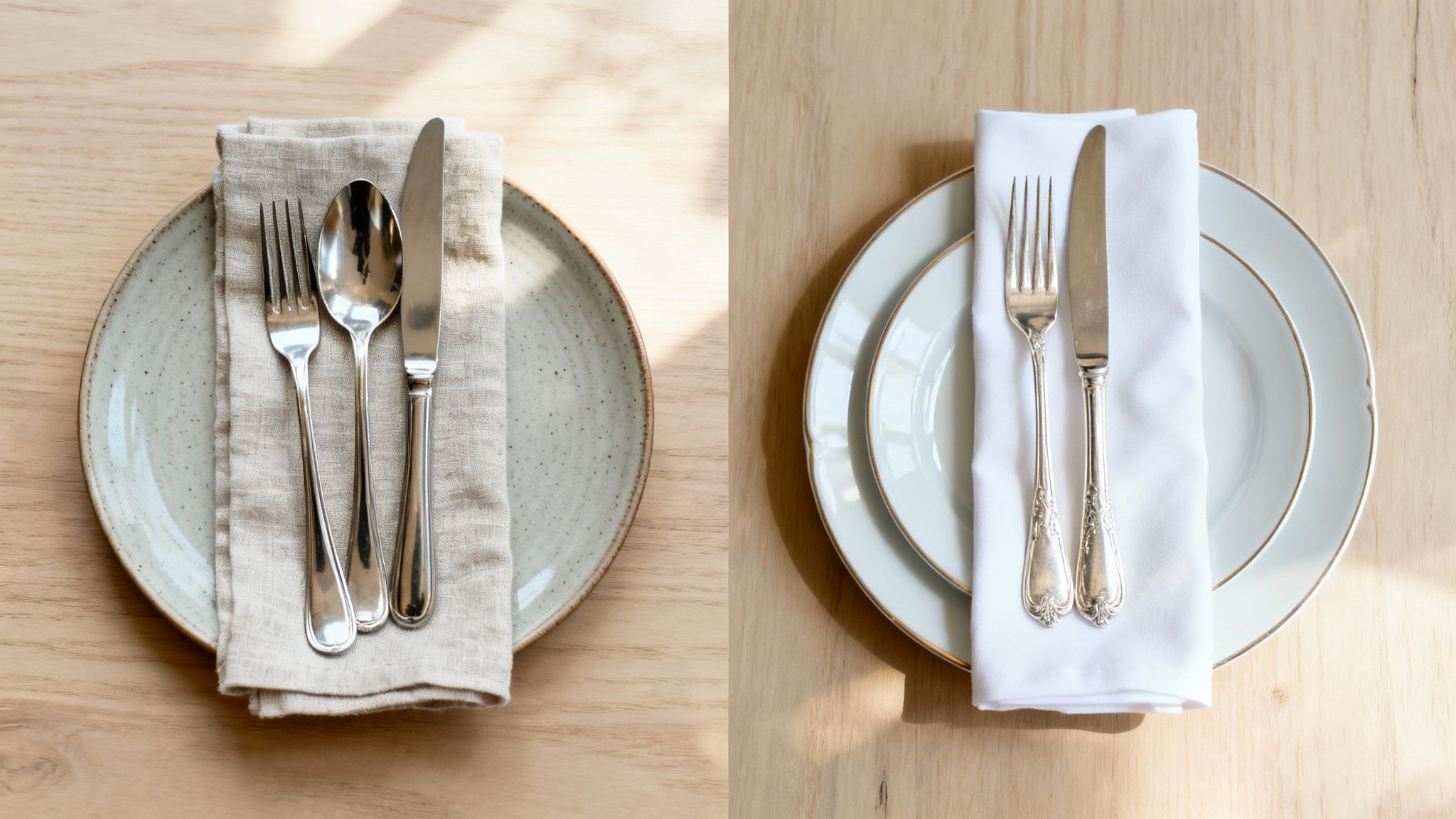
This isn't about following old-fashioned rules. It’s about being honest with yourself. Are you outfitting a chaotic family kitchen where convenience is everything, or are you curating a collection for elegant holiday dinners?
Daily Dining vs. Special Occasions
When it comes to the daily grind, stainless steel flatware is the hands-down winner. It’s tough, it’s dishwasher-safe, and it’s ready for anything you throw at it—from a quick breakfast to a messy spaghetti night. You can find some fantastic workhorses by exploring the best flatware sets for everyday use, which are all designed to handle constant use without any fuss.
On the other hand, sterling or high-quality silver-plated silverware is what turns a meal into an event. It has a certain weight and history that brings an unmatched elegance to a formal table. Yes, it needs a bit more TLC, but for those big moments—holidays, anniversaries, important dinner parties—that ceremonial feel is simply irreplaceable.
The key is to match the material's demands to your lifestyle's reality. A beautiful sterling set will lose its charm if its required upkeep feels like a burden rather than a ritual.
A Practical Decision-Making Framework
To make things easier, just think through these key points. There’s no right or wrong answer—only what truly works for your home.
-
Frequency of Use: Will this be your go-to set or one you pull out a few times a year? Your daily driver needs to be tough and low-maintenance.
-
Household Needs: If you have a big, busy family, you'll be prioritizing durability and easy cleaning. Stainless steel is the only logical choice here.
-
Design Aesthetic: Are you drawn to a clean, modern vibe or a classic, ornate style? Your taste will naturally point you toward either sleek flatware or traditional silverware patterns.
-
Budget and Investment: Think of stainless steel as a practical purchase for today. Sterling silver, however, is a long-term investment that actually holds intrinsic value.
Protecting Your Investment with Proper Care
The lifespan of your dining utensils really comes down to how you look after them, and the rules of the game are completely different depending on the material. Following the right routine is the key to making sure your chosen set—whether it's everyday flatware or treasured silverware—stays beautiful for years to come.
Stainless steel flatware is famous for being incredibly low-maintenance, but a few simple habits can keep common annoyances like water spots and rust at bay. After washing (by hand or in the dishwasher), the best thing you can do is dry the pieces right away instead of letting them air dry. It’s a tiny step that makes all the difference in maintaining their luster.
If you run into tougher spots, it's worth knowing what makes a good cleaner for stainless steel so you can tackle them without accidentally damaging the finish.
Caring for Sterling and Silver-Plated Items
Silverware, on the other hand, needs a much gentler touch. It’s a softer metal and has a natural tendency to tarnish—that dark, dull layer that forms when silver reacts with sulfur in the air.
Proper care isn't about harsh scrubbing; it's about consistent, gentle maintenance. The secret to preserving silverware really boils down to two things: how you clean it and how you store it.
-
Hand-Washing is Non-Negotiable: Always wash your silver by hand with warm water and a mild, non-citrus soap. Dishwasher detergents are far too harsh, and the high heat can lead to pitting and discoloration over time.
-
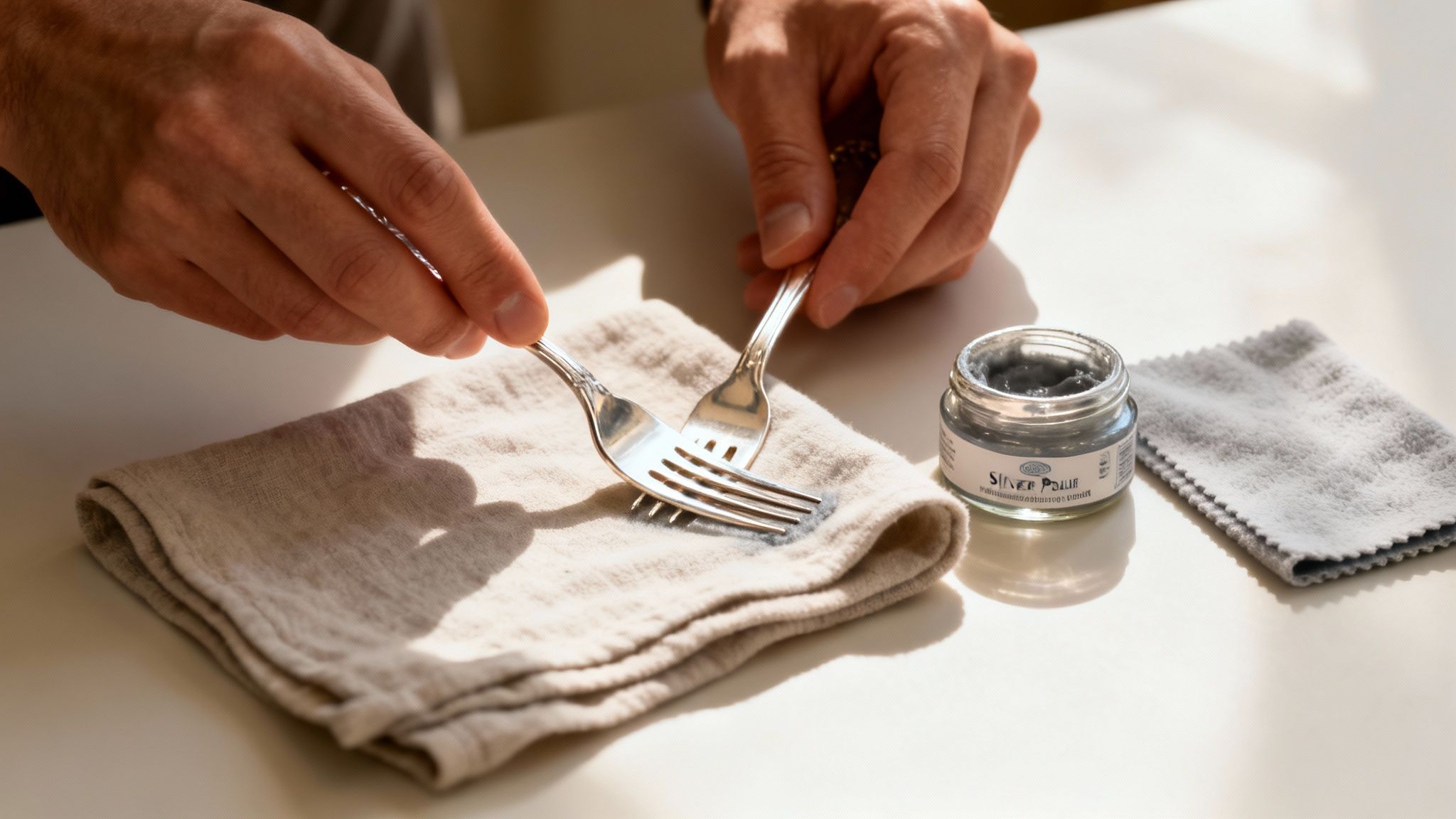
Polish with Care: Use a soft cloth and a high-quality polish made specifically for silver. When you polish, rub in gentle, straight lines—never in circles—to avoid creating tiny scratches on the surface.
-
Store It Smartly: Keep your clean, dry silverware tucked away from the open air. A felt-lined chest or a special drawer insert is perfect because the fabric helps absorb moisture and airborne elements that cause tarnish.
Here's the best-kept secret for keeping silverware bright: use it often. The simple act of handling and washing your pieces naturally slows down the tarnishing process. The more you enjoy your beautiful set, the less you'll find yourself needing to polish it.
Understanding Cost Value and Market Dynamics
When you're choosing between flatware and silverware, you're not just picking out utensils—you're deciding between a practical daily tool and a genuine long-term investment. A solid set of stainless steel flatware can easily be found for under $100, which makes it a fantastic, accessible choice for everyday meals.
Sterling silverware, on the other hand, is in a completely different league. A full service can run into the thousands, a price that directly reflects the precious metal it's made from.
This massive price gap comes down to simple market forces. The value of sterling silverware is tied directly to the global commodity price of silver, so it ebbs and flows with the financial markets. This makes a sterling set a tangible asset that holds real monetary value, far beyond its purpose at the dinner table.
The market draws a very clear line between these two. Stainless steel is a volume product for the masses, while sterling silver is a high-value, niche investment for collectors and families marking life's biggest moments.
Interestingly, the market is also giving a major boost to stainless steel, thanks to a growing focus on sustainability. As more of us turn away from single-use plastics, the demand for durable, reusable stainless flatware has skyrocketed.
In fact, market forecasts predict the stainless steel flatware market will hit $10.07 billion by 2032. This growth is fueled by both sustainability trends and the purchasing power of an expanding middle class. You can dig deeper into these stainless steel flatware market trends to see where things are headed.
Your Questions Answered
Even after getting the basics down, a few questions always pop up when choosing and caring for flatware. Let’s clear up some of the most common ones so you can feel completely confident in your decisions.
Is Silver-Plated Flatware Considered Real Silverware?
It absolutely is. Anything with a layer of actual silver on its surface, whether it's plated or solid, falls under the "silverware" umbrella. The key distinction to make is between sterling silver and silver-plate, as that's what really affects value, care, and longevity.
Can Sterling Silverware Go in the Dishwasher?
I strongly advise against it. Think of sterling as a luxury fabric for your table—it needs gentle care. The combination of harsh dishwasher detergents, high heat, and potential clanking against stainless steel can cause pitting and dark spots that are difficult, if not impossible, to remove. Always hand-wash your sterling pieces with a mild soap to keep them looking beautiful for generations.
What Does 18/10 on Stainless Steel Flatware Mean?
You'll often see this stamped on high-quality stainless steel, and it's a great sign. The numbers refer to the metal's composition: 18% chromium and 10% nickel. Chromium is the workhorse, providing durability and rust resistance. Nickel is what gives the flatware that brilliant, silver-like shine and an extra boost of protection against corrosion. An 18/10 set is a fantastic choice for durable, beautiful flatware that can handle daily life.
At Fluent Trends, we know that the details make the meal. From everyday dinners to special celebrations, the right utensils elevate the entire experience. Dive into our curated collection of designer-approved flatware and serveware to find the perfect match for your table.