

Furnishing a Home on a Budget: Smart Tips for Big Style
Donna MaloneFurnishing a Home on a Budget: How to Get Big Style Without Overspending
Furnishing a home on a budget doesn’t mean settling for less style. With the right plan, you can create a space that feels polished, comfortable, and uniquely yours—without stretching your finances thin. The key isn’t just hunting for deals; it’s making intentional choices that reflect your lifestyle and design vision.
Before you buy a single piece of furniture, take a moment to step back and strategize. A thoughtful furnishing blueprint helps you avoid impulse purchases, stretch your budget further, and create a cohesive look that feels curated rather than chaotic. Whether you’re furnishing your first apartment or refreshing a well-loved space, smart planning is the foundation of big style on a modest budget.
Create Your Budget-Friendly Furnishing Blueprint
Before you start adding items to your cart, take a moment to map out your vision. A thoughtful furnishing blueprint helps you stay focused, avoid impulse buys, and make choices that truly support your lifestyle. When you know what you need—and what you don’t—you can stretch your budget further without sacrificing style.
Start by identifying the rooms you use most and the pieces that will make the biggest impact. Your blueprint should reflect your personal aesthetic, your daily routines, and the atmosphere you want to create. This is where intentionality becomes your greatest money‑saving tool. When every purchase has a purpose, even a modest budget can deliver a beautifully cohesive home.
Prioritize and Allocate Your Funds
First things first: not all rooms are created equal. Where do you spend the most time?
Start by listing your rooms and ranking them by how critical they are to your daily life. For most of us, the living room and primary bedroom are at the top—these are the spaces for relaxing and recharging. The dining room, home office, or guest rooms usually come next.
Once you have your priorities straight, you can divvy up your total budget. A good rule of thumb looks something like this:
-
Living Room: This is where life happens, so give it the biggest slice of the pie—around 40-50%. This covers the workhorses like your sofa and seating.
-
Bedroom: Your personal sanctuary deserves a good chunk, too. Plan for about 30-35% here, with a focus on a quality mattress and bed frame.
-
Dining Room & Others: The rest, around 15-20%, can be allocated to your dining set and any other secondary spaces.
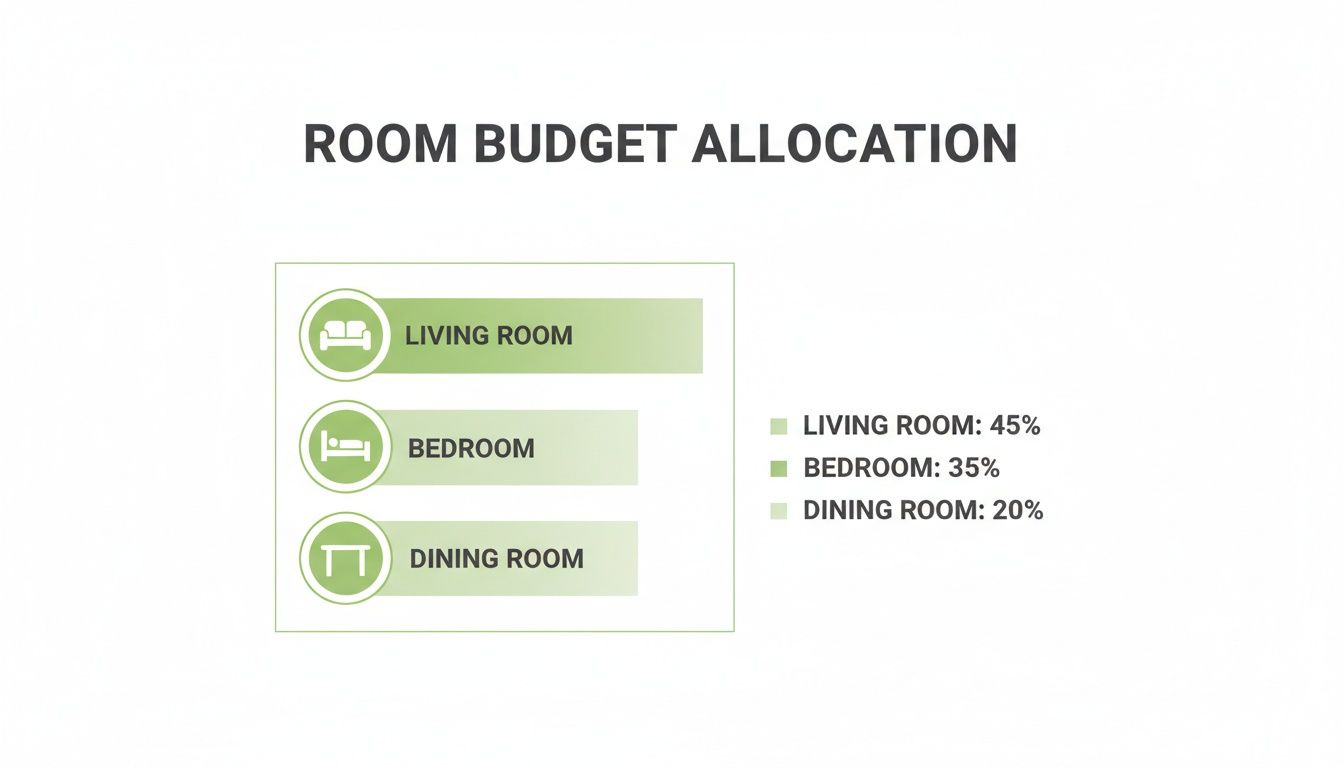
This simple visual is a great starting point for seeing how your funds should flow toward the areas that get the most daily use.
Embrace the Splurge vs. Save Mindset
Furnishing on a budget doesn’t mean choosing the cheapest version of everything. That’s a fast track to regret—and replacements. The real strategy lies in knowing where to invest and where to save.
Start by identifying the pieces you interact with daily. A well‑made sofa or a high‑quality mattress will elevate your comfort and last for years. These are your splurge items—worth every penny for the value they bring to your everyday life.
Invest in the pieces you touch every day. A durable, comfortable sofa or a high-quality mattress will improve your daily life way more than a fancy lamp ever could. These are your "splurge" items.
On the other hand, save items are the stylish accents that don’t need to endure heavy wear. Think throw pillows, side tables, and decorative accessories. These pieces offer visual impact without demanding a big investment, and they’re easy to swap out as your style evolves.
This mindset helps you organize your budget with intention. Below is a sample table to help you visualize how to allocate funds by room—highlighting where to invest for long‑term impact and where to get creative to save.
Sample Room-by-Room Budget Allocation
Use this guide as a flexible starting point—not a rigid formula. Your lifestyle, habits, and priorities should shape how you allocate funds across each space.
| Room | Suggested Budget Allocation (%) | Key Splurge Items | Key Save Items |
|---|---|---|---|
| Living Room | 40-50% | Sofa, Coffee Table, TV Stand | Throw Pillows, Decor, Side Tables |
| Bedroom | 30-35% | Mattress, Bed Frame | Nightstands, Lamps, Wall Art |
| Dining Room | 15-20% | Dining Table | Chairs (can be thrifted/upcycled), Decor |
This framework helps you visualize where to invest for long-term comfort and where to get creative with savings. If you love hosting, you might shift more funds toward the dining room. If you work from home, your office setup may take priority. Adjust the percentages to reflect how you actually live.
As you build out your plan, don't forget to account for all the little extras. Window treatments, for example, can be a significant line item, so it’s wise to understand your potential shutter installation cost early on.
This thoughtful approach is more relevant than ever. The global home furnishing market was valued at over USD 1,018.2 billion in 2024 and it's still growing. For savvy decorators like us, a massive, competitive market means more options and better prices—making a beautiful home more accessible than ever.
Master the Art of Secondhand and Upcycled Finds
One of the most rewarding ways to furnish your home on a budget is by embracing secondhand treasures. This isn’t about settling for worn-out leftovers—it’s about discovering story-rich pieces that add character, charm, and individuality to your space for a fraction of the cost.
With a little patience and a discerning eye, you can uncover timeless gems in thrift stores, estate sales, and online marketplaces. Look past surface flaws—a dated fabric or orange-toned wood—and focus on craftsmanship. Many vintage pieces are built with solid wood and quality joints, far superior to today’s mass-produced alternatives.
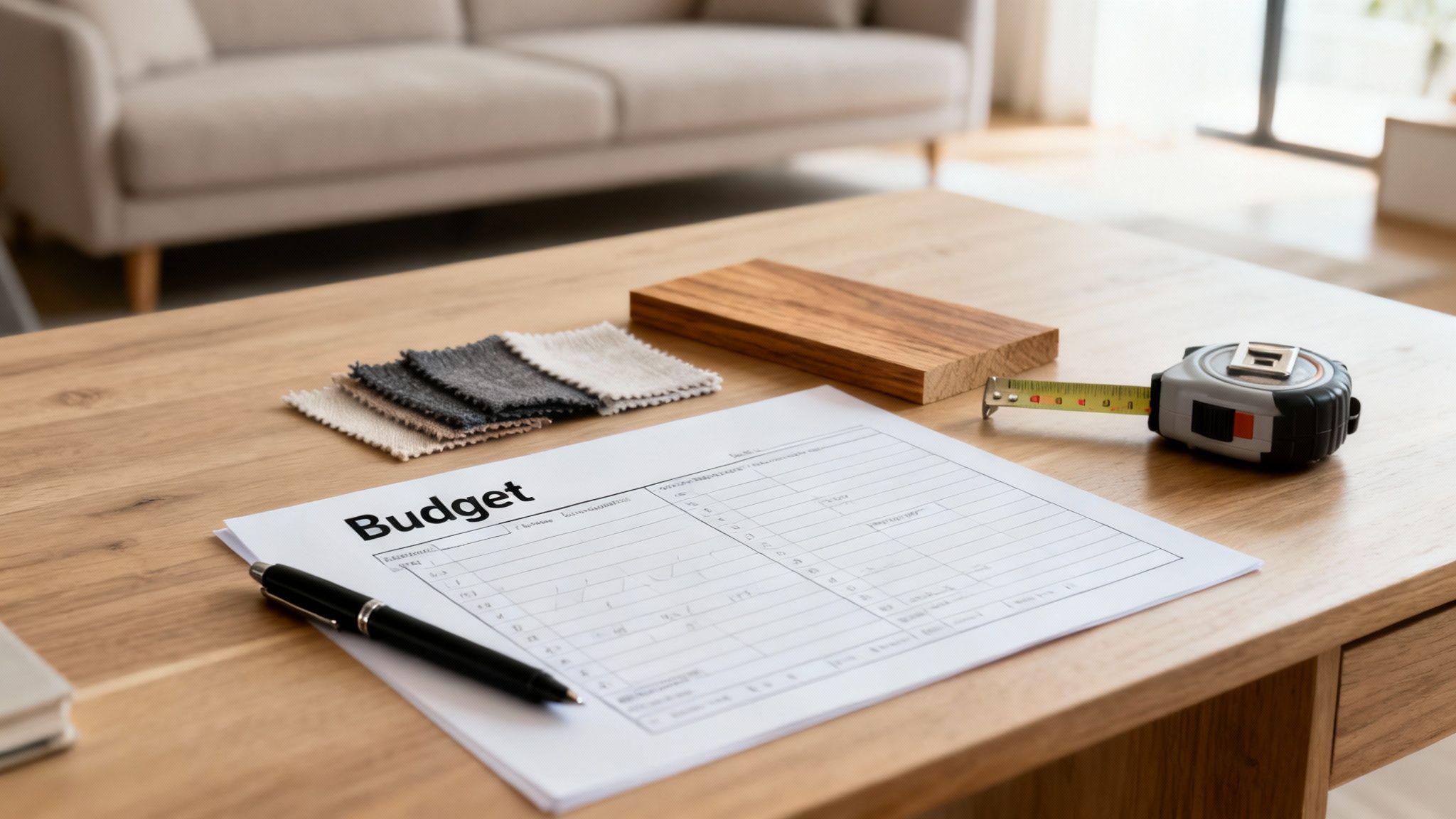
Where to Hunt for Hidden Gems
Your treasure hunt starts with knowing where to look—and visiting often. Great pieces don’t stick around long, so consistency is key.
-
Online Marketplaces: Facebook Marketplace and OfferUp are goldmines for local finds. Set alerts for specific items like “mid-century dresser” or “solid wood dining table” to stay ahead of the crowd.
-
Thrift Stores: Goodwill, Salvation Army, and local charity shops rotate inventory daily. Quick, frequent visits are more effective than marathon browsing sessions.
-
Estate Sales and Auctions: Ideal for scoring high-quality vintage and antique pieces. You’ll often find well-preserved sets or one-of-a-kind decor with real craftsmanship.
How to Inspect Secondhand Furniture Like a Pro
Start with structure. Give the piece a gentle shake—does it feel sturdy? Open drawers and doors to check for smooth function. Minor scratches are easy to fix, but a cracked frame is a deal-breaker.
Next, assess materials. Solid wood is always preferable to particleboard or MDF. Look for dovetail joints in drawers—these signal quality construction.
Finally, measure everything. A beautiful piece is only valuable if it fits your space and serves a purpose. Don’t buy just because it’s a deal—buy because it’s right for your home
Don't be afraid to dig! The best finds are often hidden in a dusty corner or buried under a pile of other stuff. A little effort can uncover a true masterpiece.
Finally, think about function. It's so easy to fall in love with a beautiful piece, but does it actually fit your space and meet your needs? Always, always measure before you buy. Don’t get something just because it’s a good deal; make sure you truly love it and have a specific place for it in your home.
The Magic of Upcycling and DIY
Finding a great piece is just the beginning. The real magic happens when you transform it to reflect your style.
A dated dresser can become a modern statement with a good cleaning, light sanding, and a few coats of paint. Swap out old hardware for sleek knobs or pulls to instantly elevate the look. Dining chairs can be reupholstered, coffee tables refinished—these simple DIYs save hundreds and result in pieces that feel custom and personal.
This hands-on approach not only stretches your budget, but fills your home with items you’ve curated and crafted with intention.
Get Smart About Shopping for New Furniture
While secondhand finds offer charm and savings, sometimes you want something fresh and new. The key isn’t spending more—it’s shopping smarter. With the right timing, tech tools, and insider strategies, you can furnish your home with brand-new pieces without blowing your budget.
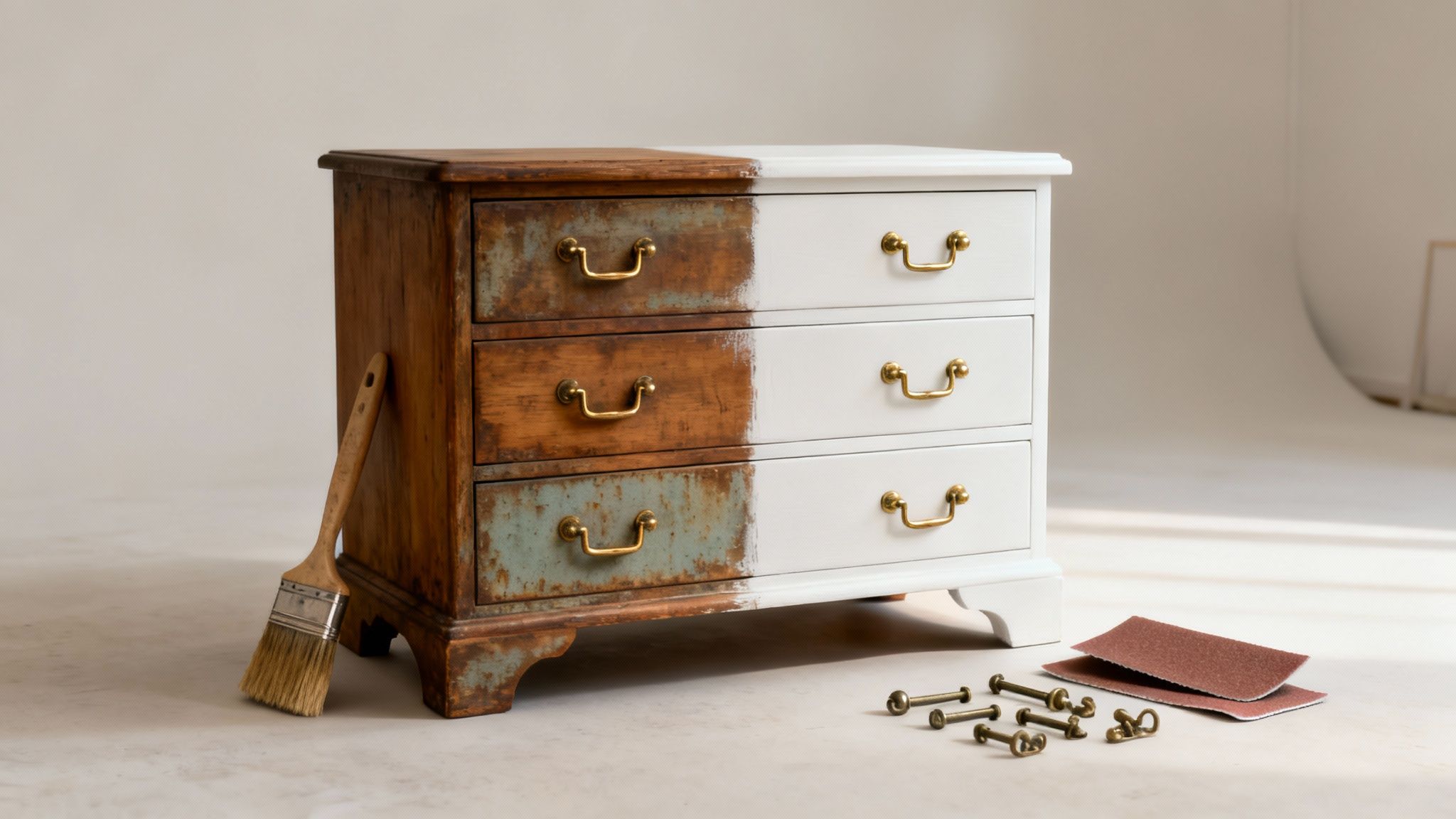
It really comes down to a little bit of timing, a dash of tech, and some insider knowledge. With the right approach, you can fill your home with beautiful, brand-new pieces without blowing up your budget.
Time Your Buys to Save Big
Furniture retailers follow predictable inventory cycles, which means strategic timing can unlock major savings. New collections typically arrive in spring and fall, so the best deals on last season’s styles appear in late winter (January/February) and late summer (August/September).
Holiday weekends are also prime time for price drops. Mark your calendar for:
-
Presidents' Day Weekend (February)
-
Memorial Day Weekend (May)
-
Fourth of July sales
-
Labor Day Weekend (September)
-
Black Friday and Cyber Monday (November)
Planning your purchases around these windows can save you hundreds—sometimes even thousands—on big-ticket items.
Let Technology Hunt for Deals
Why chase discounts manually when tech can do it for you? Browser extensions and price-tracking tools monitor sales and alert you when your chosen item drops in price.
Setting up price alerts on pieces you've already decided on is a total game-changer. It takes the emotion and guesswork out of the equation, so you know you're buying at the lowest possible price without having to constantly stalk websites.
Tools like Honey or CamelCamelCamel (for Amazon) even show you an item's price history, helping you spot real deals versus marketing fluff. These quiet helpers turn you into a strategic, informed shopper—without the stress.
H2: Household Essentials and Finishing Touches
Go Straight to the Source
The furniture market has shifted dramatically, creating new opportunities for budget-conscious shoppers. Many modern retailers now source directly from global manufacturers, reducing markups and offering stylish pieces at more accessible prices.
For shoppers, this means more options and better value than ever before. Whether you’re buying from a direct‑to‑consumer brand or a curated marketplace like Fluent Trends, the benefit is the same: access to high-quality, on-trend pieces without the traditional retail overhead.
Use Flexible Payments for Those Big Investments
Even with smart shopping, anchor pieces like sofas or bed frames can be a big upfront expense. Flexible payment options like Shop Pay or Afterpay allow you to split the cost into smaller, interest-free installments—making it easier to invest in quality without draining your budget.
This frees up cash for other essentials and lets you furnish your space with intention. Our guide to the best places to buy furniture online highlights retailers that offer these helpful payment plans.
Style Your Space With High-Impact, Low-Cost Decor
The best-looking rooms aren’t just furnished—they’re styled. Thoughtful styling elevates even the most affordable pieces, making your space feel curated and cohesive.
Layering is key. Add personality through textures, colors, and small visual moments. This is where budget-friendly decor can shine—creating richness without excess.
Weave in Personality With Textiles
Textiles are your secret weapon. They add warmth, softness, and style—instantly transforming a room.
Start with an area rug to anchor your space and introduce color. Then layer in throw pillows and blankets to build texture and comfort. Mix materials like velvet, linen, and chunky knits for a sophisticated, lived-in look.
Create Vignettes That Tell Your Story
Vignettes—small, artful groupings of objects—are what make a space feel personal and collected. Whether on a coffee table, bookshelf, or console, these little moments add depth and meaning.
Follow these styling principles:
-
Vary the Height: Combine tall, mid-size, and small objects for visual balance.
-
Mix Materials: Contrast textures like ceramic, wood, and metal to create depth.
-
Work in Threes: Odd-numbered groupings are naturally more appealing to the eye.
The real secret to a great vignette is blending your affordable decor finds from Fluent Trends with personal items. A framed photo, a cool rock from a memorable hike, or a souvenir from a trip—these are the things that tell your story.
Master the Art of Light and Reflection
The way you handle light and reflection can completely transform the feel of a room, and you don’t need to call an electrician. These two elements are essential for making any space feel larger, brighter, and more inviting.
Mirrors are your best friend when decorating on a budget. A large, well-placed mirror can visually double the size of a room while bouncing light around to create an airy, open feel. Thrift stores and flea markets are great places to find mirrors with unique frames that add character.
Layering your light sources is just as important. Relying on a single overhead fixture can make a room feel flat and harsh. Instead, create warmth and dimension by combining
-
Ambient Lighting - Your main ceiling fixture
-
Task Lighting - Focused light for reading, cooking, or working
-
Accent Lighting - Soft illumination to highlight decor or create mood
This layered approach adds depth and comfort to your space. For more clever tricks, explore our guide to DIY interior design on a budget that looks expensive. And for broader inspiration, check out our complete guide on how to decorate your home on a budget.
Future-Proof Your Purchases for Long-Term Value
Furnishing your home is a marathon, not a sprint. Once you’ve found the right pieces—whether brand new or thrifted—the next step is making them last. A little care now can save you from costly replacements later.
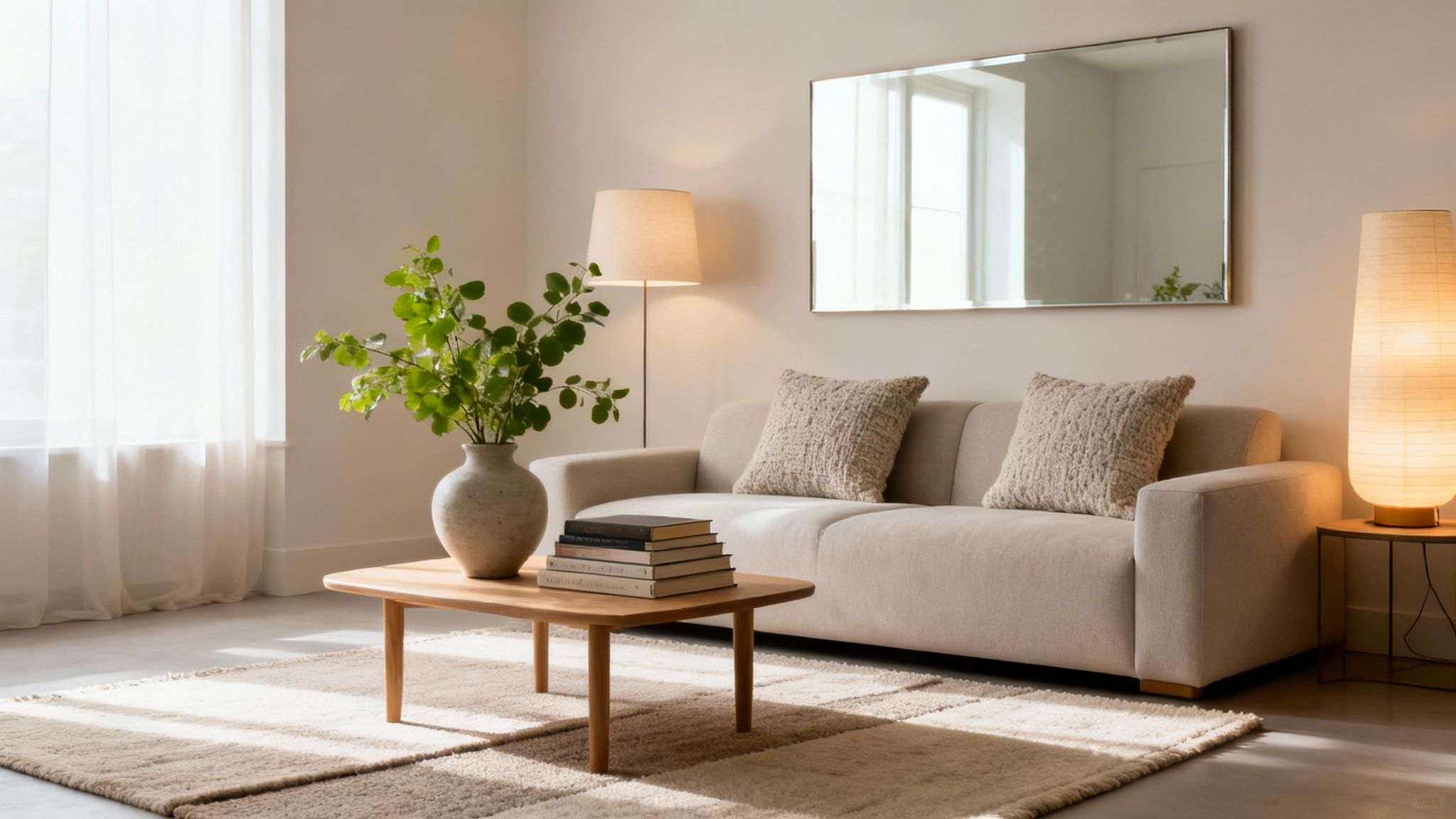
This is more than just cleaning; it's about adopting a mindset of longevity. By picking versatile items and learning a few simple upkeep tricks, you ensure the affordable choices you make today stay valuable and stylish for years. It’s the ultimate way to maximize every dollar you’ve spent.
Simple Maintenance for Everyday Durability
You don’t need to be an expert to keep your furniture looking its best. A few consistent habits go a long way.
• For wood: dust regularly with a soft cloth and always use coasters. Minor scratches? A touch-up marker or even a walnut can work wonders.
• For upholstery: vacuum with an attachment to remove dust and crumbs. If spills happen, blot—never rub—and test cleaners on hidden areas first.
The most beautiful homes are curated slowly over time. Think of furniture care as part of that curation process—it’s about preserving the story and value of each piece you bring into your space.
Mastering Minor Repairs Yourself
Before you toss that wobbly chair or call a pro, consider a quick DIY fix. Many common issues are surprisingly easy to solve.
• Tighten loose screws or bolts
• Use toothpicks and wood glue to repair stripped screw holes
• Keep a small “furniture first-aid” kit on hand:
-
Wood Glue – essential for tightening joints and repairing small splits
-
Touch-Up Markers – perfect for disguising scratches on wood surfaces
-
An Allen Wrench Set – a must-have for tightening modern flat-pack furniture
-
Felt Furniture Pads – protect floors and make heavy pieces easier to move
These simple tools can extend the life of your furniture and save you money.
Choose Pieces That Evolve With You
The smartest purchases are the ones that grow with you. Your style and needs will change—your furniture should be able to keep up.
A neutral sofa in a classic shape can be refreshed endlessly with new pillows and throws. Modular pieces like shelving units or sectionals can be reconfigured to suit new layouts. These adaptable items offer long-term value and flexibility.
Got Questions About Furnishing on a Budget? We’ve Got Answers.
Budget decorating can feel overwhelming. How do you mix old and new? What’s safe to buy secondhand? This section is your cheat sheet for those tricky moments—offering clear, practical advice to help you build a home you love, one smart decision at a time.
Start with a defined color palette—two or three core tones that unify your space. A vintage side table, a new navy sofa, and a mustard pillow can look cohesive when they share a color theme.
You can also create unity through materials and textures. Repeat wood tones or metal finishes across furniture and decor to tie everything together. A walnut coffee table and a thrifted frame in the same finish create instant harmony.
The most beautiful homes feel like they were collected over time, not purchased in a single afternoon. Your unique blend of old and new is a strength, not a weakness—it’s what tells your story.
What Should I Never Buy Secondhand?
Thrifting is a budget decorator's superpower, but for health, hygiene, and safety, some things are always better bought new. Knowing where to draw the line is key to creating a home that’s not just stylish, but also safe and clean.
Here’s a quick rundown of what to snag and what to skip when you’re on the hunt.
Your Secondhand Shopping Cheat Sheet
| Category | Go For It! (Generally Safe) | Better to Buy New (Avoid If Possible) |
|---|---|---|
| Upholstery | Chairs with removable, washable covers. | Soft furniture like sofas, mattresses, and upholstered headboards. The risk of bed bugs, allergens, and mystery stains is just too high. |
| Case Goods | Solid wood dressers, tables, and bookshelves. They're built to last, a breeze to clean, and simple to refinish or repaint. | Chipped or water-damaged particleboard. It’s nearly impossible to repair well and won't hold up over time. |
| For Kids | Wooden toys, books, and some clothing. | Cribs, car seats, and high chairs. Safety standards change fast, and you don't want to risk an older, recalled model. |
| Decor | Vases, picture frames, mirrors, and lamps. These are easy wins for adding instant personality to your space. | Rugs and carpets. They can hold onto years of deep-set dirt, mold, and odors that you’ll never truly get out. |
When in doubt, trust your gut. If a piece looks or smells funky, walk away. The right find is out there waiting for you.
How Can I Stay Motivated When It’s Taking Forever?
Furnishing a whole home is a marathon, not a sprint—especially on a budget. It’s so easy to feel discouraged when you’re living in a half-empty space. The trick to staying positive is to focus on progress, not perfection.
Break it down. Instead of thinking, "I have to furnish this entire living room," give yourself one small, high-impact project for the month. Maybe your only goal is to find the perfect area rug. Nailing that one thing feels like a huge win and gives you the energy to move on to the next piece, like tracking down a great coffee table.
It’s also so important to make every room feel livable as you go. Even if your dining room is just a table and two folding chairs for now, put a vase of fresh flowers on it. Light a candle. Making the space feel welcoming—even while incomplete—turns the entire process from a stressful chore into a creative journey.
Ready to find those perfect, high-impact pieces to pull it all together? At Fluent Trends, we curate designer-approved furniture and decor that pair beautifully with both new and vintage treasures.
Explore our collections and start building the home you’ve been dreaming of.