

Furnishing a New Home Checklist: Budget & Style
Donna MaloneThe secret to furnishing a new home you'll love for years isn't about buying everything at once. It’s about having a solid game plan. The most successful projects start with a simple but powerful furnishing a new home checklist that covers your budget, your space, and your style before you even think about adding anything to a cart. This initial groundwork is what saves you from costly mistakes and buyer's remorse down the road.
Laying the Groundwork Before You Buy Anything
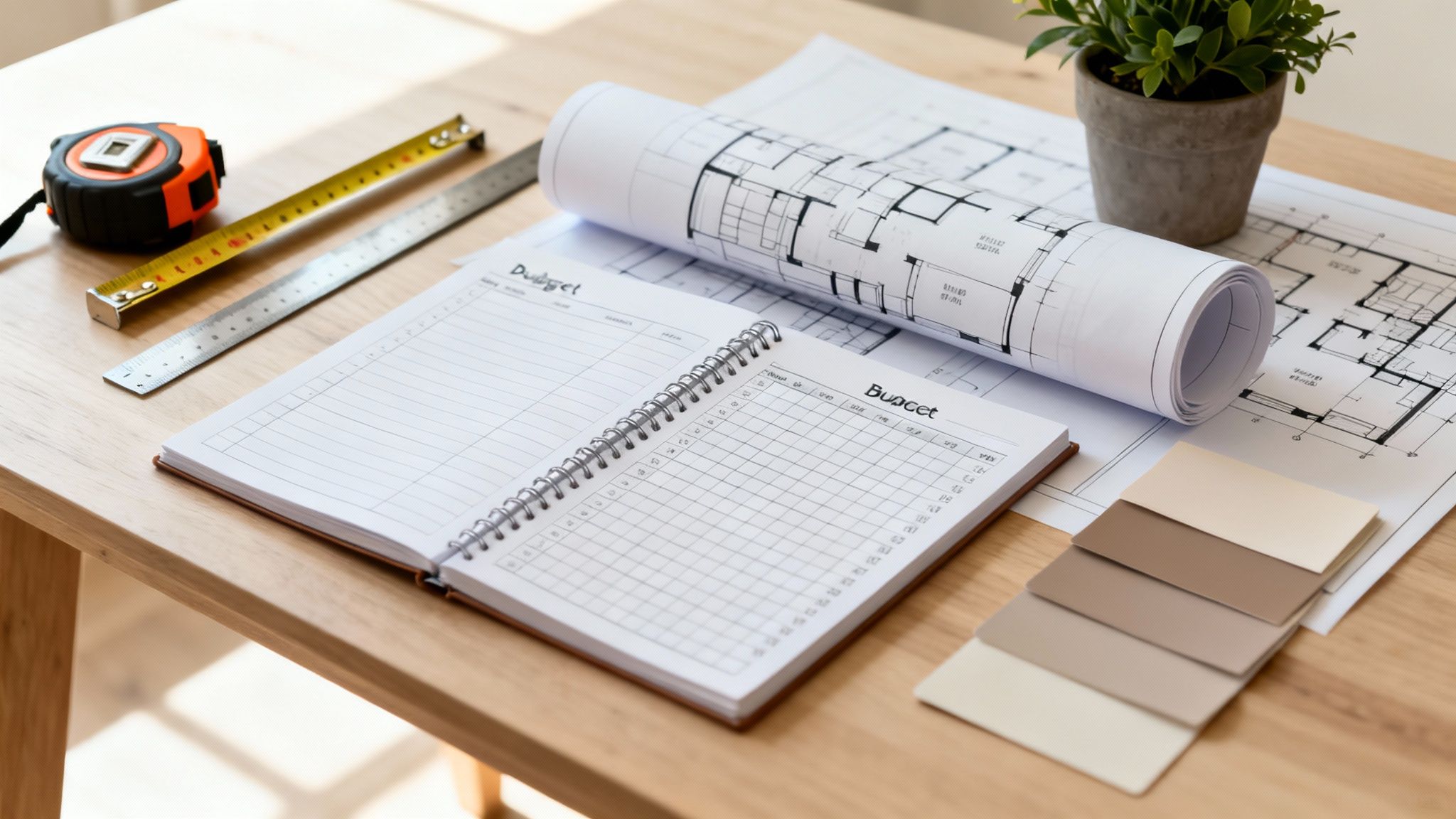
That new-home excitement is powerful. It makes you want to fill every empty corner immediately. But giving in to that urge is a classic trap that leads to impulse buys you'll regret later. The most important work happens long before you step into a showroom or browse a single website. It’s all about creating a smart blueprint for your space.
This foundational phase boils down to three key things: budgeting honestly, measuring obsessively, and defining your personal style. Skipping these steps is like trying to build a house without a foundation—it might look okay for a minute, but you're setting yourself up for problems.
Create a Functional Furnishing Budget
Your budget isn’t just a single number; it's the financial roadmap for your entire project. With the average cost to furnish a house ranging anywhere from $10,000 to over $30,000, you need to know exactly where your money is going.
Start with your absolute maximum spending limit. Then, break that number down room by room, giving priority to the spaces you'll use the most, like the bedroom and living room. One of the biggest mistakes people make is only budgeting for the price tag on the item itself. A truly functional budget accounts for all the "hidden" costs.
Don't forget to factor in these expenses:
-
Delivery Fees: Big pieces almost always have a shipping charge, and it can easily add hundreds of dollars.
-
Assembly Costs: Are you ready to tackle that flat-pack wardrobe, or do you need to hire a professional?
-
Taxes: Sales tax can add a surprisingly large amount to your final bill.
-
Accessories and Decor: All those little things—lamps, rugs, curtains, art—add up incredibly fast.
Here’s a sample framework to help you allocate your funds. Think of it as a starting point, and adjust the percentages based on what's most important to you.
Sample Home Furnishing Budget Framework
Use this sample budget allocation to prioritize your spending and ensure you cover the essentials without overspending on any single category.
| Category | Suggested Budget Allocation (%) | Example Items |
|---|---|---|
| Living Room | 25-30% | Sofa, coffee table, TV stand, area rug, lighting |
| Primary Bedroom | 20-25% | Bed frame, mattress, dresser, nightstands, bedding |
| Dining Room/Area | 10-15% | Dining table, chairs, sideboard/buffet |
| Home Office | 5-10% | Desk, office chair, shelving/storage |
| Decor & Accessories | 10% | Art, mirrors, curtains, throw pillows, plants |
| Miscellaneous & Contingency | 10-15% | Kitchen essentials, bathroom accessories, unexpected costs |
This kind of detailed planning gives you the freedom to spend confidently on the pieces that truly matter.
A well-planned budget isn't restrictive; it's empowering. It gives you the freedom to spend confidently on the pieces that matter most, knowing you’ve accounted for the entire process from purchase to placement.
Measure Everything Twice
There's no furnishing mistake more heartbreaking than falling in love with a sofa, waiting weeks for it to arrive, and then discovering it won't fit through the front door. This is why knowing your home's exact dimensions is non-negotiable. Learning how to accurately measure your space for new appliances and furniture will save you from this all-too-common headache.
Grab a tape measure and sketch out a basic floor plan for each room, noting the length and width. But don't stop there. You have to measure every single entry point the furniture will pass through on its way in.
Here’s what your measurement checklist must include:
-
Room Dimensions: Wall-to-wall measurements and, just as importantly, ceiling height.
-
Entry Points: The width and height of all exterior and interior doorways.
-
Pathways: The width of hallways, staircases, and any tricky corners or turns.
-
Obstructions: Pinpoint the location of windows, outlets, radiators, and light switches that could get in the way of your ideal furniture placement.
Define Your Personal Style and Vision
Before you look at a single product, take a minute to think about how you want your home to feel. This goes deeper than just picking a color scheme; it’s about crafting a cohesive vision that reflects who you are and how you live.
A great way to start is by gathering inspiration. Create a board on Pinterest or save images of rooms that catch your eye. As you collect them, you'll start noticing common threads. Are you consistently drawn to clean lines and neutral palettes (minimalist), or do you love warm woods and cozy textures (rustic)? With the global home furnishing market expanding to an estimated USD 1,098.1 billion, the variety of styles and options has never been greater.
By nailing down your core style first, you empower yourself to make intentional choices that build a unified, welcoming home instead of a random collection of stuff.
Your First 30 Days: What to Actually Buy First
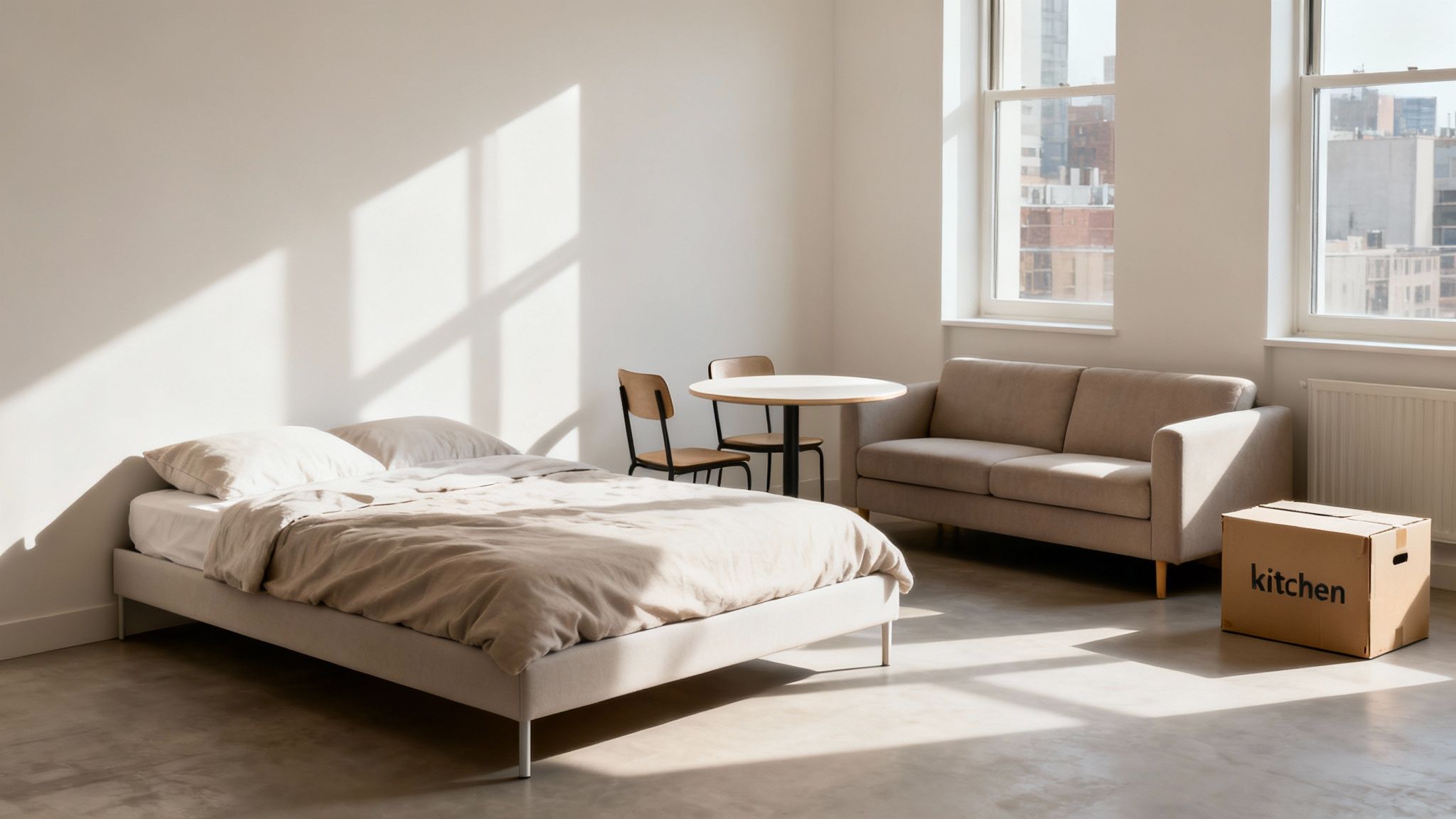
Okay, you have the keys, a plan, and a budget. Now for the fun (and slightly overwhelming) part: turning those empty rooms into a real home. The urge to get everything perfect right away is intense, I get it. But trust me on this—a deliberate, phased approach in your first month will save you a world of headaches and buyer's remorse.
For now, forget about the picture-perfect look. The goal is to make your space livable. It's all about tackling your most basic needs first: a good night's sleep, a comfortable place to sit, and the ability to make a simple meal. Nail these three, and you give yourself the breathing room to truly learn your home's personality—its weird corners, how the light changes during the day, and how you actually live in it—before making those bigger, more permanent decisions.
The Sleep Sanctuary: Your First Priority
Your first night in a new place shouldn't feel like you're camping in your own hallway. A comfortable place to sleep is non-negotiable and the absolute first thing you should sort out. Bad sleep impacts everything, so putting your initial budget towards a quality mattress is one of the smartest moves you can make. When you consider that the average person spends about a third of their life in bed, it’s clear this isn't the place to skimp.
Here’s your bedroom checklist for week one. Keep it simple:
-
A Mattress: This is the big one. If you can, go test them out in a store to find what works for your sleeping style.
-
Bed Frame: Don't overthink it. A simple, sturdy frame is perfect to start. You can always upgrade to that gorgeous headboard you've been eyeing down the road.
-
Pillows and Bedding: Treat yourself to new pillows. Also, grab two sets of sheets (one for the bed, one for the wash), and a duvet or comforter.
-
Basic Window Coverings: Privacy and light control are key to quality sleep. A set of simple blinds or blackout curtains will make a huge difference from day one.
Hold off on buying a full, matching bedroom set. Get these essentials in place, live with them for a bit, and then you'll have a much better idea of what kind of dresser, nightstands, or extra lighting will actually work for you.
Creating a Zone for Rest and Relaxation
After a day of wrestling with boxes, you're going to want a place to collapse that isn't the floor. This is where your living room essentials come in. While fully furnishing a living room can cost anywhere from $3,000 to $7,000, your day-one investment will be a fraction of that.
Right now, the mission is to create one functional spot to sit down and unwind. Forget about filling the whole room. Just focus on a primary piece of seating that makes sense for your space and your life. Will you be binge-watching shows, having a friend over, or curling up with a good book? Let that guide your choice.
Your first sofa is more than just furniture; it’s the anchor of your daily life at home. Choose it for comfort and durability first, and let the rest of the room’s style evolve around it over time.
Aim to get these items for your living area within the first month:
-
A Comfortable Sofa: This is probably your biggest initial purchase. Measure twice, buy once! A durable, neutral fabric is always a safe bet, as it can adapt as your tastes change.
-
A Coffee Table or Side Table: You just need a place to put down a mug or your phone. A small, inexpensive table will do the job perfectly for now.
-
Basic Lighting: That harsh overhead light fixture just isn't cozy. A simple floor lamp or table lamp will instantly create a warmer, more welcoming atmosphere.
Resist the magnetic pull of buying accent chairs, a giant area rug, or a full-blown media center right out of the gate. I call those "Phase Two" purchases—things you can choose with more confidence once you have a real feel for the room's flow.
Equipping the Kitchen for Basic Meals
Let's be real: eating takeout from a box on the floor gets old (and expensive) really fast. A functional kitchen is what makes a place truly start to feel like home. You don't need a chef-grade setup on day one—just the bare necessities to make a simple meal. This part of your furnishing a new home checklist is all about function.
Start with the absolute minimum you need to cook, eat, and clean. You can slowly and happily build your collection of gadgets and specialty pans over the years.
Here’s your kitchen starter pack:
-
Essential Cookware: One good frying pan, a saucepan, and a baking sheet will cover most of your bases.
-
Basic Utensils: Think spatula, a large spoon, and a can opener.
-
Dinnerware and Cutlery: A service for four is a great starting point: plates, bowls, mugs, and a basic set of forks, knives, and spoons.
-
A Quality Knife: Seriously, one sharp chef’s knife is a hundred times more useful than a whole block of dull, cheap ones.
By tackling these three core areas—sleep, rest, and food—within your first 30 days, you build a comfortable, functional base. This smart approach keeps you from blowing your budget and making rushed decisions you might regret later.
The Room-by-Room Essentials Checklist
Alright, with the day-one survival kit sorted, it's time to get down to the fun part: making this house a home, one room at a time. Trying to furnish everything at once is a surefire recipe for overwhelm and budget burnout.
Instead, let’s go room by room. We’ll break down what you absolutely need now, what you’ll want soon, and what can wait. This way, you’re building a space that truly works for you, not just filling it with stuff.
The Bedroom: Your Personal Retreat
Think of your bedroom as your sanctuary, the place you go to recharge. Getting this room right is less about decoration and more about engineering great sleep. While a master bedroom can cost anywhere from $3,000 to $6,000 to furnish, you can start smart by focusing on the core elements first.
-
The Must-Haves: This is your non-negotiable sleep setup.
-
A Quality Mattress & Bed Frame: Don't skimp here. This is the single most important purchase for your well-being.
-
Pillows & Bedding: Get pillows that suit how you sleep (side, back, stomach) and at least two sets of sheets. You’ll thank yourself on laundry day.
-
Window Coverings: Simple blinds or blackout curtains are essential for privacy and light control from the very first night.
-
A Light Source: An overhead light or even a basic lamp will do for now.
-
-
The Next Steps: Once you're sleeping soundly, add these for function.
-
Nightstands: You need a spot for your phone, a glass of water, and a book.
-
Dresser or Chest: Unless you’re blessed with a massive closet, you’ll need dedicated storage for clothes.
-
A Full-Length Mirror: Not just for checking your outfit—it will make the room feel bigger and brighter.
-
-
The Finishing Touches: These can wait until you've lived in the space.
-
Area Rug: Adds so much warmth and texture underfoot.
-
Accent Chair or Bench: Perfect for creating a small reading nook or a place to sit while putting on shoes.
-
Layered Lighting: Bedside lamps are a game-changer for winding down at night.
-
Your bedroom is your personal recharge station. Prioritize anything that helps you rest and relax. The pretty stuff can wait until you have a better feel for the room's vibe and your own needs.
The Living Room: The Social Hub
This is where life unfolds—from Netflix binges and game nights to long conversations with friends. Your goal here is to create a space that’s as comfortable as it is functional for how you actually live.
The home furnishing market is huge. The furniture segment alone was valued at USD 419.80 million way back in 2019, and it has only grown since. That means you have a dizzying array of materials and styles to choose from. Knowing a little about your options, especially for big-ticket items like a sofa, can save you a lot of headaches. You can learn more about the home furnishings market to see how trends might shape your choices.
-
The Must-Haves: These pieces form the core of your living space.
-
A Comfortable Sofa: This is the anchor of the room. Measure your space carefully and think hard about the material.
-
A Coffee Table: You need a central place to put down drinks, remotes, and your feet.
-
Primary Lighting: A floor lamp or an overhead fixture is crucial.
-
Window Coverings: Curtains or blinds are a must for privacy.
-
-
The Next Steps: Add these in for better organization and comfort.
-
Media Console: A dedicated spot for your TV and other devices helps keep cords from taking over.
-
Side Tables: So handy for placing a lamp or a drink right next to your seat.
-
Area Rug: This is what pulls the whole seating area together, defines the space, and adds a ton of comfort.
-
-
The Finishing Touches: These are the personality pieces.
-
Accent Chairs: Great for extra seating and a perfect way to introduce a bold color or interesting shape.
-
Bookshelves or Storage: For showing off your books, photos, and favorite objects.
-
Throw Pillows & Blankets: The easiest, most affordable way to inject color, texture, and coziness.
-
Choosing the right sofa is a big deal, so it pays to understand what you're buying. Here's a quick breakdown of common materials to help you decide.
Living Room Sofa Buying Guide
A quick comparison of common sofa materials to help you choose the best fit for your budget, space, and daily life.
| Material | Pros | Cons | Best For |
|---|---|---|---|
| Leather | Durable, easy to clean, develops a nice patina over time. | Can be expensive, susceptible to scratches, can feel cold or sticky. | Families with kids and pets, or anyone looking for a long-lasting, timeless piece. |
| Cotton | Breathable, comfortable, comes in a huge variety of colors and patterns. | Stains easily, can wrinkle, not as durable as other options. | Casual living rooms and homes without heavy traffic from pets or young children. |
| Linen | Very strong, naturally anti-microbial, has a relaxed and elegant look. | Wrinkles very easily, prone to staining, requires professional cleaning. | More formal, adult-only living spaces where a sophisticated look is prioritized. |
| Velvet | Luxurious and soft, rich color options, surprisingly durable. | Can be a magnet for pet hair, requires regular maintenance to look its best. | Adding a touch of glamour and coziness, especially in lower-traffic areas. |
| Microfiber | Stain-resistant, easy to clean, very durable, and soft to the touch. | Can generate static, may not feel as high-end as natural fibers. | Busy households with pets and children, or anyone on a practical budget. |
Ultimately, the best sofa material is the one that fits seamlessly into your life. Be honest about how you'll use it, and you can't go wrong.
The Kitchen and Dining Area: The Heart of the Home
Nothing makes a new house feel like home quite like the ability to cook a meal. You don't need a professional chef's setup on day one, but a few key items will get you through those first few weeks.
-
The Must-Haves: Your get-cooking-immediately kit.
-
A Place to Eat: Whether it's a full dining set or just a pair of stools at the counter, you need a designated spot.
-
Basic Cookware: A good frying pan, a saucepan, and a baking sheet will handle 90% of your needs.
-
Dinnerware & Flatware: Start with a service for four: plates, bowls, glasses, mugs, and utensils.
-
Key Utensils: A spatula, a big spoon, a can opener, and a decent chef's knife are absolutely essential.
-
Trash Can: It sounds obvious, but you’d be surprised how many people forget this until they're standing there with an empty pizza box.
-
-
The Next Steps: Items that make daily life much easier.
-
Food Storage Containers: For leftovers and keeping your pantry from becoming a chaotic mess.
-
Small Appliances: A microwave, toaster, and coffee maker are the trifecta of kitchen convenience.
-
Dish Rack & Towels: Because the dishes won't wash themselves (unfortunately).
-
-
The Finishing Touches: Build your collection as you go.
-
Sideboard or Buffet: Invaluable storage for extra dishes and linens if you have a dining room.
-
Bar Cart: A fun and stylish way to organize drinks and glassware.
-
Specialty Gadgets: Wait to buy things like a stand mixer or air fryer until you know you'll actually use them.
-
How to Handle Sourcing and Delivery Logistics
You’ve got your lists, you’ve double-checked them, and you know exactly what each room needs. Now for the fun part—actually getting it all. But this is where the puzzle gets tricky: where do you buy everything, and how do you get it into your home without turning your move into a logistical nightmare? It’s time to shift from planning to action.
Let's be honest, navigating the world of furniture shopping can feel like a full-time job. The sheer number of options is overwhelming, and the choice you make will directly impact your budget, your timeline, and the final vibe of your home.
Choosing Your Furniture Sources
The furniture retail world is huge, but it helps to know the key players. Did you know that supermarkets and hypermarkets actually grab a massive 32.7% of the global market share? It makes sense—people love the convenience of grabbing basic home essentials while they're out getting groceries.
Beyond the supermarket aisle, you’ve got a few main paths to take:
-
Big-Box Retailers: Think IKEA, Target, or Wayfair. These places are great for affordable finds and a massive selection. You can see a ton of options all in one go, whether in-person or online. The trade-off? The quality can be a mixed bag, and you might see your new coffee table in your neighbor’s living room.
-
Direct-to-Consumer (DTC) Online Brands: Companies like Article or Burrow have really changed the game. They often deliver stylish, solid-quality furniture without the crazy retail markup. If you're looking for more great online spots, we put together a guide on the https://fluenttrends.com/blogs/news/best-online-home-furnishing-stores.
-
Secondhand Marketplaces: This is where the real treasure hunting happens. Platforms like Facebook Marketplace, consignment shops, and your local thrift stores can be goldmines for unique, well-made pieces at a steal. It takes patience, but the payoff can be a one-of-a-kind home.
This simple breakdown can help you decide where to shop. Are you looking for a forever-sofa or a trendy side table you might swap out in a few years?
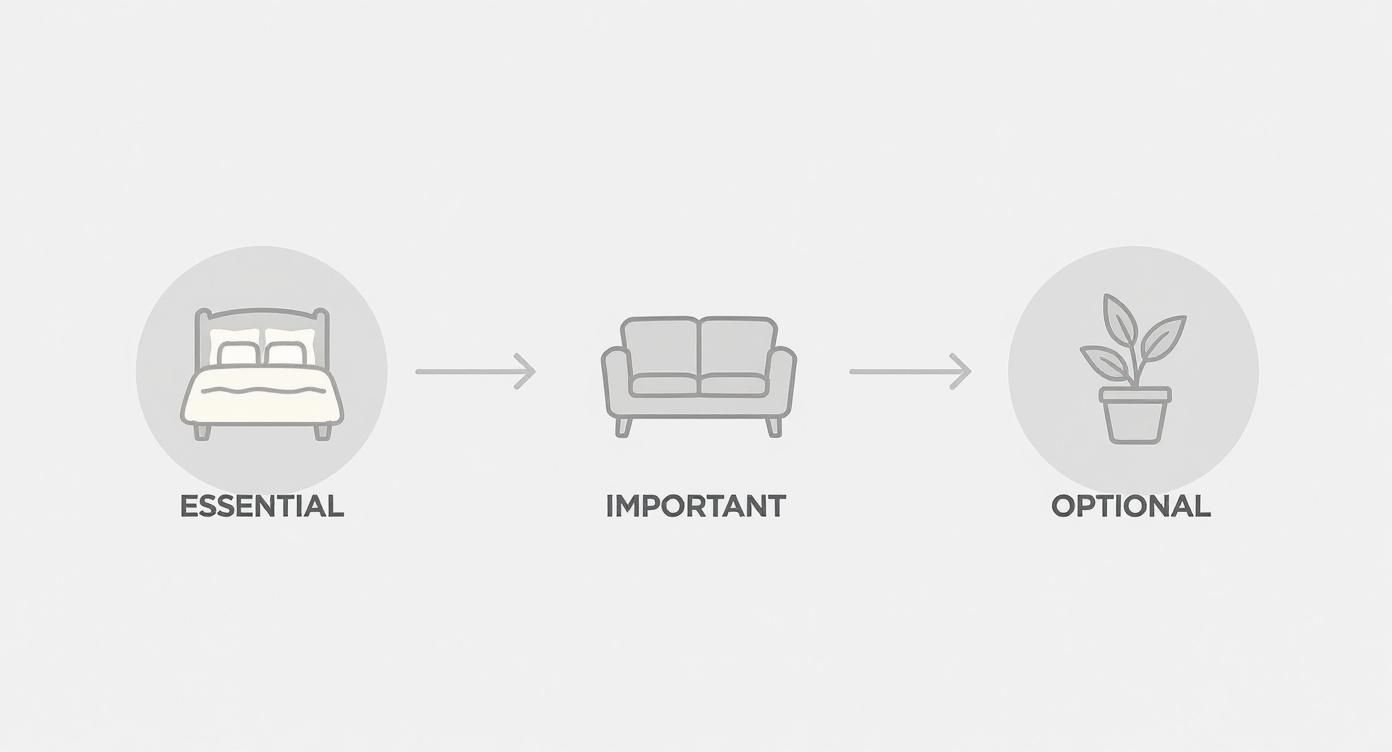
This visual really drives the point home: focus your energy—and your money—on the foundational "Essential" items first. You can always find the fun, optional pieces later.
Mastering the Ordering and Delivery Process
Finding the perfect piece is one thing; getting it delivered is another. Before you hit that "buy" button, put on your logistics hat for a minute. Ask the important questions now to avoid headaches later. What’s the real lead time? Is the company known for delays? What’s the return policy, and who pays for shipping if it doesn’t work out?
Getting clarity on the full cost—including delivery, assembly, and potential returns—is just as important as the sticker price. This foresight prevents your budget from being derailed by unexpected expenses.
When delivery day finally arrives, be ready. Clear a path from your front door to where the piece will live. As soon as the delivery team arrives, resist the urge to just sign the paperwork and let them leave. Inspect every single item for damage. Look for cracks, scratches, or tears in the fabric before they're gone.
If you spot an issue, take pictures immediately and make a note of it on the delivery receipt. This is your proof. For big-ticket items or international orders with complicated shipping, looking into freight forwarding services can demystify the process.
Tackling Assembly Yourself or Hiring Help
Last but not least: assembly. So much furniture, especially from online stores, arrives in flat-pack boxes. This is the moment for some real self-awareness. Do you have the skills, the tools, and the patience for this?
Building it yourself can definitely save you some cash. But a wobbly, poorly assembled piece of furniture isn’t just an eyesore—it can be unsafe. If you're even a little hesitant, hiring a pro from a service like TaskRabbit is money well spent. It ensures your new furniture is sturdy and secure, saving you from a weekend of frustration and a potentially costly mistake.
Making Your New House Feel Like Home
Alright, the heavy lifting is done. You’ve got the bed, the sofa, the table—your new house is officially functional. But now comes the fun part. This is where you transform it from a collection of rooms into a space that genuinely feels like home.
This final stage is all about injecting your personality, warmth, and character. Think of the big furniture pieces as your canvas. Now, it's time to pick up the brush and add the colors, textures, and details that tell your story. Don't worry about rigid rules here; it's about exploring your personal style. If you're still figuring that out, a good furniture style guide can be a fantastic source of inspiration.
Give Every Room a Focal Point
Ever walk into a room and it just feels… scattered? It’s likely missing a focal point. Every well-designed space needs one key feature that immediately draws your eye and anchors everything else. It gives your eyes a place to rest and makes the whole room feel more intentional.
It doesn’t have to be anything over-the-top. A great focal point can be:
-
Something architectural: A beautiful fireplace, a large picture window, or even built-in bookshelves are natural anchors.
-
A statement piece: Think a bold, colorful sofa, a uniquely crafted headboard, or a stunning dining table.
-
A large work of art: A single, captivating painting or photograph hung above your sofa or bed can instantly command the room.
-
An accent wall: This is a classic for a reason. Painting one wall a different color or applying an interesting wallpaper is a simple but incredibly effective trick.
Once you’ve picked your focal point, arrange the rest of your furniture to complement it. This single principle brings an immediate sense of order and harmony.
Layer Your Lighting for Mood and Function
Please, don't make the classic mistake of relying on a single, harsh overhead light. It's the fastest way to make a space feel flat and clinical. The real secret to a warm, inviting atmosphere is layered lighting.
What does that mean? It just means having three different types of light working together in each room.
-
Ambient Lighting: This is your main light source—the overhead fixture or recessed lights that illuminate the whole room.
-
Task Lighting: This is targeted light for getting things done. A desk lamp for work, a floor lamp by your favorite reading chair, or under-cabinet lights in the kitchen all count.
-
Accent Lighting: This is the fun layer! Think of wall sconces that highlight a piece of art, a small lamp tucked into a bookshelf, or the cozy glow of candles.
Combining these three gives you total control. You can have a bright, functional space for daily tasks and a soft, relaxing one for the evening, all with the flip of a few switches.
Warm Things Up with Textiles and Greenery
This is where your house really begins to feel like a home. Textiles like rugs, curtains, throw pillows, and blankets are your best friends for adding softness, texture, and warmth. An area rug can define a conversation pit, curtains add a touch of elegance, and a few well-chosen pillows can completely transform a plain sofa.
And don't forget the plants! They literally bring life into your space, improve air quality, and add a beautiful, natural touch. You don't need a green thumb, either. Plenty of low-maintenance options like snake plants or pothos can thrive even if you forget to water them occasionally.
A home should be a collection of what you love. Don't be afraid to display personal items—photos, travel souvenirs, inherited pieces—that hold meaning for you. It’s these personal touches that make your space uniquely and beautifully yours.
It's also interesting to see how market trends can shape our options. For example, North America holds a massive 39.4% share of the global home furnishing market. For shoppers, this means access to an incredible variety of styles and brands, making it that much easier to find those perfect finishing touches that truly reflect your personality.
Answering Your Top Furnishing Questions
Stepping into the world of home furnishing can feel a little overwhelming. Suddenly, you're faced with a mountain of decisions, from budget breakdowns to style choices. It's totally normal to have questions, so I've put together some straightforward answers to the challenges I see people run into most often.
How Do I Decide Where to Splurge Versus Save?
This is the big one, isn't it? The key to a smart furnishing budget is knowing where your money makes the biggest difference. My rule of thumb is simple: splurge on the pieces that work the hardest for your comfort and daily life.
You'll want to invest in:
-
Your Mattress: Don't skimp here. Quality sleep is foundational to your health, and a great mattress is a 10-year investment in your well-being.
-
The Sofa: This is the anchor of your living room and where you'll spend countless hours. A durable frame and high-quality fabric will look better and feel more comfortable for years to come.
-
Your Desk Chair: If you work from home, even part-time, an ergonomic chair is a must. It’s not just about comfort; it's about protecting yourself from back pain and staying productive.
On the flip side, you can easily save on items that are more decorative or can be swapped out later. Think accent tables, lamps, throw pillows, and most wall art. Get the core pieces right first—those high-quality essentials—and then fill in the gaps with more affordable finds that show off your personality.
What's the Biggest Mistake People Make When Furnishing?
Hands down, the most common mistake I see is buying everything at once. It’s so tempting to fill every empty corner the moment you move in, but that rush almost always leads to regrets. You might fall in love with a gorgeous armchair, only to realize it completely blocks the flow of traffic into the kitchen.
My best advice is to practice patience. Move in with only the absolute necessities—a bed, a place to sit, a table. Then, just live in the space for a few weeks. This "settling in" period is incredibly valuable.
You’ll start to understand how the morning light hits the bedroom, where you naturally drop your keys, and how you actually move through the rooms. This real-world experience leads to much smarter, more intentional purchases than a floor plan ever could.
Should I Buy Matching Furniture Sets?
While grabbing a full matching set is undeniably convenient, it often leaves a room feeling a bit flat and impersonal—like you bought it straight off a showroom floor. A home with character feels collected over time, not ordered in a single click.
Instead of matching, aim for coordination. You can create a beautifully cohesive space by mixing pieces that share a few common threads:
-
A Consistent Color Palette: Tie the room together with a defined color scheme.
-
Similar Finishes or Leg Styles: Maybe your coffee table and media console both have black metal legs, or your wood pieces are all in a warm walnut tone. These subtle links create harmony.
-
A Mix of Materials: Texture adds so much depth. Imagine pairing a soft fabric sofa with a worn leather chair, or a rustic wood dining table with sleek, modern metal chairs. That contrast is what makes a room interesting.
Where Are the Best Places to Find Furniture on a Budget?
You absolutely do not need a massive budget to create a home you love. You just have to know where to look.
For brand-new, affordable pieces, stores like IKEA and Target, or online giants like Wayfair, are always reliable.
But don't stop there. The real magic often happens in the secondhand market. I've found some of my favorite pieces on Facebook Marketplace, at local thrift stores, and in consignment shops. These are goldmines for unique furniture with character, often at a tiny fraction of the original price. Also, keep an eye out for estate sales and floor model sales from higher-end stores—they're fantastic opportunities to get premium-quality furniture for a steal.
Ready to bring your vision to life? Explore the curated collections at Fluent Trends to find designer-approved furniture and décor that will turn your new house into a home you love. Find your new favorite pieces here.