

Discover handcrafted jewelry near me: Find local artisans
Donna MaloneWondering how to find beautiful, one-of-a-kind handcrafted jewelry right in your own backyard? The best approach is usually a mix of smart online searching and a little bit of old-fashioned, in-person exploring.
Getting specific is key. Think beyond generic searches and try phrases like "artisan jewelry [your town]" or "handmade silver rings [your city]". Then, get offline and wander through local art co-ops, farmers' markets, and the seasonal craft fairs that pop up. These are the places where you cut through the noise of mass-produced goods and meet the actual creators.
Your Guide to Finding Local Handcrafted Jewelry
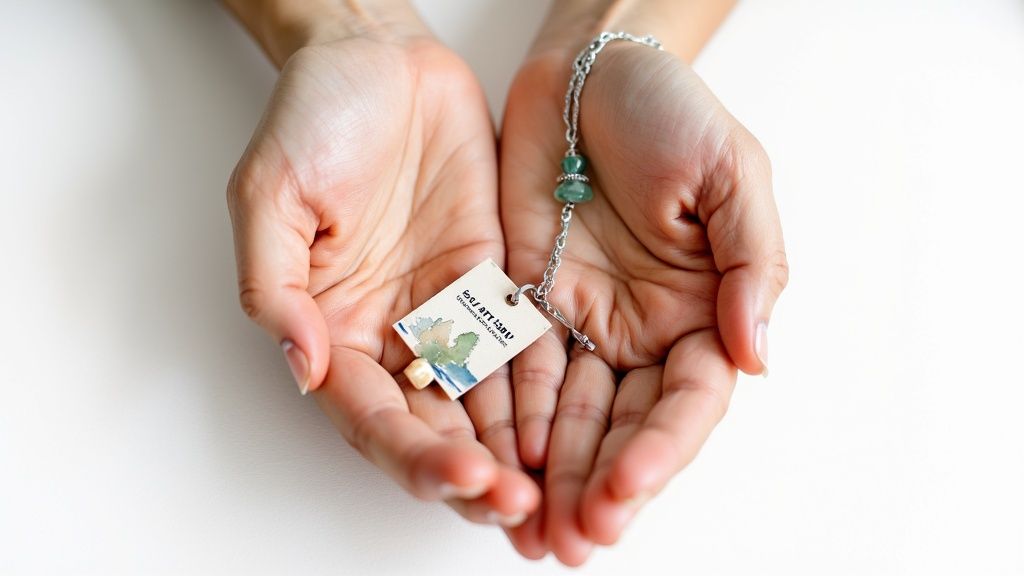
When you look past the big-name stores, you open the door to discovering jewelry with real soul. Buying from a local artisan isn't just a transaction; it's an experience. You’re not just getting an accessory—you're getting a story, supporting a skilled maker, and finding a piece that is truly yours.
This isn't just a niche interest, either. The desire for unique, sustainable goods is fueling major growth in the handmade jewelry market. Projections show the market is set to expand at a Compound Annual Growth Rate (CAGR) of 13.3% between 2025 and 2030. This boom reflects a massive shift in what people value: authenticity over assembly lines. You can see the market analysis for yourself to understand the trend better.
Why Choosing Local Is a Game-Changer
Picking a piece from a local maker gives you a few things you’ll never find at a big-box retailer. It turns shopping from a chore into a genuine connection.
-
A Personal Story: You often get to meet the artist behind the work. You can hear about their inspiration and understand the process that brought your piece to life.
-
Built to Last: Local artisans live by their reputations. They’re focused on incredible quality and detail, not on cutting corners to produce more.
-
Community Support: Your money goes directly to a small business owner in your town, strengthening your local economy with every purchase.
The real beauty of handcrafted jewelry is in the human touch—the slight imperfections that make each piece unique. It's a tangible piece of someone's creativity, something mass-produced items can never truly offer.
Kicking Off Your Search
Finding that perfect piece of handcrafted jewelry is like a treasure hunt, and it's a fantastic way to plug into the creative heartbeat of your community. Ready to start? Here's a look at the most common places to begin your search.
Quick Guide to Finding Local Handcrafted Jewelry
This table breaks down the best places to start looking for local artisans, giving you a snapshot of what to expect from each method.
| Search Method | Best For | Potential Pros | Potential Cons |
|---|---|---|---|
| Local Craft Fairs | Discovering new and emerging artists in a single location. | High variety, festive atmosphere, meet makers in person. | Can be seasonal, sometimes crowded, quality can vary. |
| Artisan Co-ops & Galleries | Finding curated, high-quality work from established local artists. | Vetted artists, knowledgeable staff, well-displayed pieces. | Prices may be higher, less direct interaction with the artist. |
| Farmers' Markets | Casual browsing and finding rustic, earthy, or bohemian styles. | Relaxed vibe, support small-scale makers, often affordable. | Limited selection, jewelry may be a side offering. |
| Online (Etsy, Instagram) | Searching by specific style, material, or location from home. | Huge selection, filter by location, read reviews. | Can't see the piece in person, shipping costs. |
Each of these avenues offers a different experience, so think about what you're looking for. Do you want the energy of a bustling market, or the quiet, curated experience of a gallery? Knowing your preference will help you start in the right place.
Mastering Your Digital Search for Local Jewelers
Forget just typing "jewelry near me" into a search bar. If you want to find truly authentic, handcrafted pieces, you need to search with the same intention an artist puts into their work. It's time to get a little more creative with your digital sleuthing to find the makers hiding just around the corner.
The real goal here is to sidestep the endless scroll of mass-produced items and find a direct line to local creators. With a few smart moves, your phone or computer can become your best tool for uncovering those hidden gems.
Harness the Power of Social Media
For most jewelers today, social media is their living, breathing portfolio. Instagram, in particular, is where they show off new designs, give you a peek into their workshop, and connect with people who love their craft. To find them, you have to think like they do and use the hashtags they're actually using.
Generic tags like #handmadejewelry will get you a worldwide flood of posts. Instead, get specific and local with your search:
-
Go for City-Specific Hashtags: Think #SeattleJewelry, #MiamiGoldsmith, or #AustinArtisan.
-
Drill Down to the Neighborhood: Get even more granular with tags like #BrooklynMetalsmith or #SilverlakeJewelry.
-
Search by State: If you want to broaden the net a bit, try something like #HandmadeColorado or #FloridaJewelryDesigner.
Here's another pro tip: pay attention to the location tags on their posts. An artist will often tag their studio, a local boutique that carries their collection, or the weekend art market where they have a booth. These tags are a breadcrumb trail leading you right to them.
Unlock Etsy’s Hidden Local Features
Everyone knows Etsy is a massive marketplace for handmade goods, but most people completely miss one of its best features: the location filter. It's a game-changer that turns a global giant into your personal, curated local directory.
It’s incredibly simple. Just search for what you’re looking for, like "handcrafted silver necklace," and then find the "Shop location" filter on the side. Pop in your city or zip code, and suddenly you’ll see makers who might be just a few miles away. This is perfect if you want to arrange a local pickup and avoid shipping, or if you just love the idea of supporting a creator from your own town.
A targeted digital search isn’t just about convenience. It's about finding the artists who give your city its creative pulse. When you use location-specific tools, you're not just buying a product—you're connecting with a person and their story.
Go Beyond the Obvious Platforms
Instagram and Etsy are fantastic places to start, but don't stop there. Some of the best finds are a little more off the beaten path. Check out the websites for your local arts council, city magazine, or even regional lifestyle blogs. They often run features or maintain directories of local artisans. A quick search for "local artist directory [Your City]" can turn up some amazing, professionally vetted lists.
Another less-obvious source is wholesale platforms like Faire. While it's built for retail buyers, you can browse by location to see which local jewelers are established enough to be selling wholesale. That's usually a good sign of consistent quality and professionalism. For even more strategies, our guide on how to find incredible artisan jewelry near me can point you in the right direction. Sometimes, the most rewarding discoveries are found on the roads less traveled.
Getting Out There: Finding Artisans in Your Own Backyard
Sure, you can find a lot online, but nothing beats the thrill of finding that perfect piece of handcrafted jewelry near me out in the real world. This is your chance to step away from the screen and dive into the creative pulse of your own town. It’s all about the tangible experience—seeing, touching, and connecting with a piece in person.
When you explore your community's artistic hubs, you're not just shopping; you're connecting directly with the creators. You can feel the satisfying weight of a silver cuff, see how a particular gemstone really looks in the sunlight, and have a real conversation with the person who made it. These are the moments that transform a purchase into a memory.
Hit the Local Art Markets and Fairs
The most straightforward way to find a concentration of local talent is to go where they gather. Think farmers' markets, seasonal craft fairs, and those big annual art festivals. These events are basically pop-up galleries, bringing together dozens of artisans in one lively, easy-to-browse spot.
A quick online search is your best first step. Try phrases like "[Your City] craft fair," "local art market," or "holiday artisan fair." I also recommend checking your city's official website or local news outlets—they often have event calendars that are planned out months in advance.
-
Farmers' Markets: Don't just go for the produce! These weekend staples almost always have a section for local makers. It's a casual, low-pressure way to see everything from earthy, hammered metalwork to delicate beaded pieces.
-
Seasonal Craft Fairs: These are the bigger, often holiday-themed events. You'll get a much wider variety of artists and styles here, from jewelers just starting out to seasoned pros with established collections.
-
Juried Art Festivals: These are the big leagues. Artists have to apply and be accepted, so the quality is consistently top-notch. If you're looking for the best of the best in your region, this is the place to be.
Check Out Local Boutiques and Artist Co-ops
If the buzz of a market isn't your thing, independent boutiques and artist cooperatives offer a calmer, more curated experience. These shops are the unsung heroes of the local arts scene and a goldmine for finding high-quality, pre-vetted work.
Boutiques will have a handpicked selection from regional jewelers that fits the shop’s unique vibe. Artist co-ops are a little different—they're galleries actually owned and run by the artists themselves. This means the person behind the counter is often one of the makers whose work is on display, giving you a direct connection to the creative community.
My best advice? Never be shy about talking to the staff in a local gallery or boutique. They live and breathe this stuff and can give you amazing background on a jeweler's technique, materials, or the story that inspired a collection.
When you walk into one of these places, you’re doing more than just shopping. You’re supporting a small business that, in turn, keeps other local artists in business. Suddenly, finding handcrafted jewelry near me feels less like a search and more like becoming part of your community's creative ecosystem.
How to Confidently Judge Jewelry Craftsmanship
So, you've found a piece that speaks to you. It's beautiful, unique, and you can already picture yourself wearing it. But how can you be sure it's built to last? Let's get into the nitty-gritty of what separates a flimsy piece from a future heirloom.
You don't need to be a jeweler to spot quality. A few simple checks—examining solder joints, testing clasps, and checking how stones are set—can tell you everything you need to know.
Key Indicators of Strong Core Construction
First, get up close and personal with the piece. Look at the solder lines where metal pieces join. You want to see smooth, polished seams with no visible gaps. If you spot rough edges or, even worse, traces of glue, it’s a red flag that the piece was assembled in a hurry.
Next, play with the functional parts. Hinges and clasps should feel secure and satisfying, clicking firmly into place without any wobble. Here are a few other things to look for:
-
Consistent Finish: Scan the entire surface. Is the color and texture even? Inconsistencies could hint at poor plating that will wear off quickly.
-
Feel the Weight: A piece with a bit of heft often indicates solid metal rather than hollow tubing. While not a universal rule, heavier pieces can be a sign of quality materials.
-
Look for Hallmarks: Check for small stamps on the metal, like 925 for sterling silver or a unique maker’s mark. These are signatures of quality and authenticity.
These simple observations can quickly demystify the construction and help you compare different pieces with a more discerning eye.
Differentiating Metals and Finishes
Understanding what you're buying is crucial, especially when it comes to metals. Learning to tell the difference between solid sterling silver and silver-plated jewelry can save you from the disappointment of a piece that tarnishes or wears away.
For instance, true sterling silver is 92.5% pure silver. It will naturally develop a patina over time, but you can always polish it back to its original shine. Plated jewelry, on the other hand, has a thin layer of precious metal over a less expensive base. If that plating is thin or the base metal is low-grade, it can start to wear off within months.
-
Don't be shy—ask the artisan what alloys they work with. If it's plated, ask how many microns thick the plating is.
-
Use bright light to your advantage. Tilt the piece and look for any hints of the base metal color showing through, especially on high-wear areas.
-
Ask about care. Does the finish need regular polishing, or is it sealed with a protective coating?
Knowing a bit about the science behind the metals ensures you're making a smart investment.
The market for handmade goods is booming, driven by shoppers like you who want something unique and personal. In fact, the handmade jewelry market is projected to be valued at around $5 billion in 2025. While this popularity is great for finding amazing artists, it also means you have to be savvy to distinguish true quality from the mass-produced items masquerading as "artisanal." You can find more detail on market trends at Data Insights Market.
Questions to Ask Artisans
A great artisan is passionate about their work and happy to talk about it. Asking thoughtful questions not only gives you crucial information but also helps build trust.
Here are a few great conversation starters:
-
What grade of metal do you use, and what made you choose it for this piece?
-
How are the gemstones secured? I want to make sure they won’t loosen over time.
-
Could you tell me about your finishing process? Is there any protective coating I should know about?
-
Do you have any advice for cleaning or maintaining it, especially for daily wear?
A well-crafted piece is designed for life, not just for looks—demand to see the behind-the-scenes process.
Checking Wearability and Comfort
A piece can be beautifully made, but if it's not comfortable, it will just end up sitting in your jewelry box.
Always try things on. Slide a ring over your knuckle to feel how it fits. Gently bend a cuff bracelet to test its tension and see how it feels on your wrist. While a delicate, lightweight chain might seem perfect, make sure the links aren't so fine that they'll easily snap.
-
Open and close clasps a few times. Do they feel sturdy and reliable?
-
Move pendants along their chains. You don't want them to rub and leave marks.
-
For earrings, consider the weight. A stunning drop earring shouldn't pull uncomfortably on your earlobe.
For more guidance on picking pieces that will hold their value and become staples in your collection, take a look at our guide on the best jewelry investment pieces.
Whether you're looking at a brand-new design or a vintage find, these checks are key. If you're considering an older piece, always ask about any restoration work to ensure its beauty and value have been properly maintained.
By combining a keen eye, smart questions, and a practical comfort test, you can feel completely confident and genuinely excited about finding that perfect piece of handcrafted jewelry near me.
Connecting with Makers and Supporting Local Art
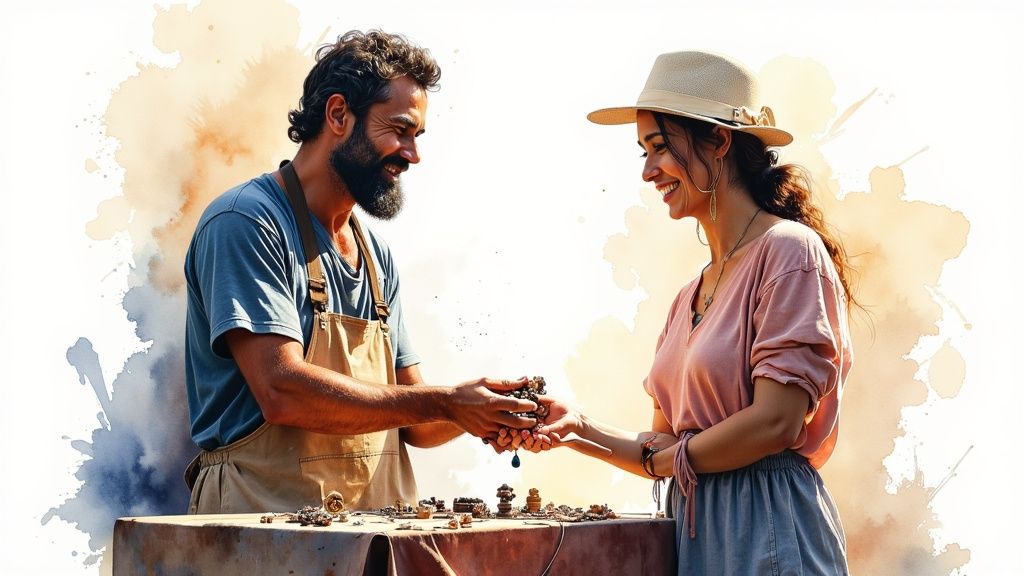
Finding a beautiful piece of handcrafted jewelry is one thing. Finding it and getting to know the person who made it? That’s something else entirely. It’s an invitation to step into a local creative world.
When you connect with the artist, a simple purchase becomes a real, meaningful exchange. That accessory is no longer just an object; it’s a story you get to carry with you. This is where the real magic happens. By supporting local artisans, you're putting your money directly behind the passion and skill of someone in your own community. You’re helping a small business thrive, keeping traditional crafts alive, and making your local economy just a little bit stronger.
Starting a Genuine Conversation
I get it—walking up to an artist at a craft fair or sending a direct message on Instagram can feel a little intimidating. But trust me, most makers are genuinely excited to talk about their work with someone who’s truly interested. They pour their hearts into what they do, and they love to share that.
Not sure what to say? Here are a few easy ways to break the ice and get a great conversation going:
-
Ask about their inspiration: "I love the organic shapes in this collection. What inspired this design?"
-
Inquire about materials: "The color of this stone is incredible. Could you tell me more about where you find your materials?"
-
Show you appreciate their technique: "The detail on this metalwork is amazing. How did you get this texture?"
Questions like these open the door to a real dialogue. You’ll walk away with a much deeper appreciation for the time, skill, and creativity that went into the piece you’re admiring.
When you buy from an artist, you're buying more than just an object. You're buying hundreds of hours of errors and experimentation. You're buying years of frustration and moments of pure joy. You're not just buying a thing, you're buying a piece of a heart, a piece of a soul… a small piece of someone else's life.
The Power of Your Purchase
Your decision to search for handcrafted jewelry near me has a real impact. The global jewelry market is massive—valued at around $366.79 billion in 2024—but the handmade corner of that world is where you can make a real difference.
By supporting a local artist, you’re voting with your wallet for a more sustainable and ethical marketplace, one that values craftsmanship over mass production.
Thinking About a Custom Commission?
Sometimes, the piece you’re dreaming of doesn’t exist yet. That’s when commissioning a custom design becomes an exciting option. It’s a chance to collaborate directly with a maker to bring your unique vision to life.
If you decide to go this route, a little preparation goes a long way. Have a general idea of your budget, the materials you like, and the overall style you’re after. It's incredibly helpful to show them examples of their own past work that you love—this gives the artist a clear window into your taste. Just remember, custom work is a creative partnership built on good communication and mutual trust.
Got Questions About Finding Local Jewelry? Let's Talk.
Stepping into the world of local artisans can feel a little different if you're used to big-box stores. It's only natural to have a few questions. Getting a handle on things like authenticity and value helps you shop with confidence and walk away with a piece you'll absolutely love.
Think of this as your go-to guide for making smart choices, from figuring out if something is really handmade to understanding why that price tag is what it is.
How Can I Tell If Jewelry Is Genuinely Handmade?
This is a fantastic question. The best artists are almost always transparent about their work—they're proud of it! A great first step is to check their website or social media. Look for a studio address or, even better, photos and videos of them actually making the pieces.
You can also look closely at the jewelry itself. Truly handcrafted items have character. You might notice tiny, unique marks or slight variations that you'd never find on a mass-produced, machine-made piece. And don't be shy—ask the artist about their process. Their passion for their craft will shine through in their answer.
A true artisan’s story is embedded in their work. When you ask about their process, you're not just verifying authenticity—you're connecting with the heart of their craft.
Is Handcrafted Jewelry Always More Expensive?
Sometimes, yes—but it's crucial to understand what that price reflects. With handcrafted jewelry, you're paying for the artist's time, their years of skill, and high-quality materials. You're not paying for a massive corporate markup, a marketing department, or a fancy storefront in a mall.
You're really investing in a one-of-a-kind piece of art that’s built to last, which often makes it a better value in the long run. Think about it: a $150 pair of handcrafted silver earrings that you'll wear for decades is a smarter buy than a $30 plated pair from a fast-fashion brand that turns green after a few wears.
What’s the Best Way to Care for My New Piece?
When in doubt, just ask the maker! They know the exact materials and techniques they used and can give you the most specific advice for keeping your new treasure looking its best.
That said, a few general rules almost always apply:
-
Keep It Dry: Always take your jewelry off before you hop in the shower, go for a swim, or slather on lotions and perfumes. Chemicals and moisture are the enemy of shine.
-
Store It Smart: To prevent scratches and tangles, tuck your pieces away in a soft pouch or a lined jewelry box with separate compartments.
-
Clean Gently: For most metals like sterling silver, a simple polishing cloth is all you need. It works wonders on natural tarnish and brings back that beautiful luster.
Following these simple tips will help ensure your handcrafted piece stays as stunning as the day you first saw it.
At Fluent Trends, we're all about celebrating the unique beauty and incredible quality of artisan-made accessories. We invite you to discover our curated collection of handcrafted jewelry and decor to find a piece that truly tells your story. Explore our collections today at https://www.fluenttrends.com.