

How to arrange decorative pillows on bed: A Designer-Approved Guide
Donna MaloneArranging decorative pillows on your bed isn't just about throwing a few cushions around. It's an art of layering, a bit like creating a painting. You start with a background and build forward, from the largest pillows at the back to the smallest, most eye-catching ones right at the front.
The real secret? It’s all in the mix of sizes, shapes, and textures. This is what creates that visual depth and gives your bed a shot of personality. For a look that’s clean, curated, and totally foolproof, a simple combo of four sleeping pillows and one long lumbar pillow can be stunningly effective.
Mastering The Fundamentals Of Pillow Styling
Before you even think about tossing a single cushion onto your duvet, let's talk about a few core principles. Don't worry, these aren't rigid rules. Think of them more as a foundation that helps turn a random pile of pillows into a deliberate, gorgeous design statement.
This is the prep work that separates a cluttered, messy bed from a chic, inviting one. The end goal is to create a look that feels both utterly luxurious and uniquely you.
Know Your Pillow Players
Every pillow in a well-styled arrangement has a specific job to do. To really nail the look, it helps to know who's who in the lineup. Some are workhorses, others are the stars of the show.
Here’s a quick-reference table to get you started. Think of this as your personal toolkit for building the perfect pillowscape.
Your Pillow Styling Toolkit
| Pillow Type | Common Size | Primary Role in an Arrangement |
|---|---|---|
| Euro Pillow | 26" x 26" | The foundational backdrop. Sits against the headboard for height and support. |
| Sleeping Pillow | 20" x 26" (Standard) | The functional layer. Often hidden behind decorative shams. |
| Decorative Sham | 20" x 26" (Standard) | The main decorative layer. Matches or complements the duvet. |
| Accent Pillow | 16" to 20" Square | Adds a pop of color, pattern, or texture. Placed in front. |
| Lumbar Pillow | 12" x 24" or longer | The finishing touch. Its long, rectangular shape breaks up the squares. |
| Bolster Pillow | 6" x 16" or longer | A cylindrical accent that adds a unique, often vintage-inspired, shape. |
Getting familiar with these types and their roles is the first step. Once you know what each piece does, you can start combining them with confidence.
The Power of Scale and Layers
A thoughtfully styled bed almost always starts with a good understanding of scale. Those big, square Euro shams (typically 26" x 26") are your best friend here. They act as a backdrop, sitting right up against the headboard to create an anchor for the whole arrangement.
This first layer adds crucial height and a plush foundation. From there, you just build forward with smaller layers. It’s a critical first step—without this solid base, smaller accent pillows can end up looking lost and totally insignificant.
After the Euros, you’ll typically place your standard sleeping pillows (the ones you actually use at night). In front of those come the fun, decorative players: standard shams, accent pillows in different shapes (squares, lumbars, bolsters), and maybe that one standout cushion that ties it all together.
How Many Pillows Is Too Many?
The "right" number of pillows really depends on your bed size and the vibe you're going for. A minimalist might stick to just a few, while a maximalist will go all out.
Recent trends are showing a clear move toward personalization and luxurious, touchable textures. In fact, the demand for faux fur pillow covers shot up by 74% between May and October, which tells you people are craving cozy, tactile elements.
So, how does this translate to your bed? A twin or full-size bed usually looks fantastic and complete with three to five pillows. On the other hand, a sprawling king bed can easily handle six to eight for a truly lavish, hotel-worthy feel. You can dive deeper into these decorative trends over on Accio.com.
Finding a Cohesive Palette
This is where your personality really gets to shine through! A simple guideline I love to follow is the "Rule of Threes." Just choose three complementary colors or patterns to work with. The easiest way to do this is to pull those shades directly from your existing decor—a piece of art on the wall, your curtains, or a beautiful Fluent Trends area rug.
A great starting point is to vibe-check your room. Is it formal and serene, or cozy and eclectic? Once you've defined the mood, extract a three-color scheme from your room's main elements. This ensures your pillows feel connected to the space, not like an afterthought.
This little strategy works wonders to keep the final arrangement from looking chaotic. For example, you might use a solid neutral for your Euro shams, pull a primary color from your rug for the next layer of standard shams, and then use a bolder, contrasting shade for your smallest accent pillow at the front. This creates a beautiful sense of harmony and visual balance.
Getting the fundamentals of color and scale right is just as important as knowing how to choose bedroom furniture that truly fits your space and style.
Alright, time to move from the drawing board to the bedroom. This is where the real fun starts. While there’s no single "right" way to style pillows, a few tried-and-true formulas can give you a solid starting point for a beautifully balanced bed.
The trick is to think about scale. What works for a sprawling king bed will look completely different on a cozy twin.
Think of these as designer-approved recipes. You can follow them to the letter or riff on them to create something that’s uniquely you. We'll walk through the best layering strategies for common bed sizes, so your setup always looks intentional and inviting—never sparse or overstuffed.
This simple visual breaks down the creative process into three manageable chunks. It’s all about nailing the vibe first, then the colors, and finally, mixing up the textures and shapes.
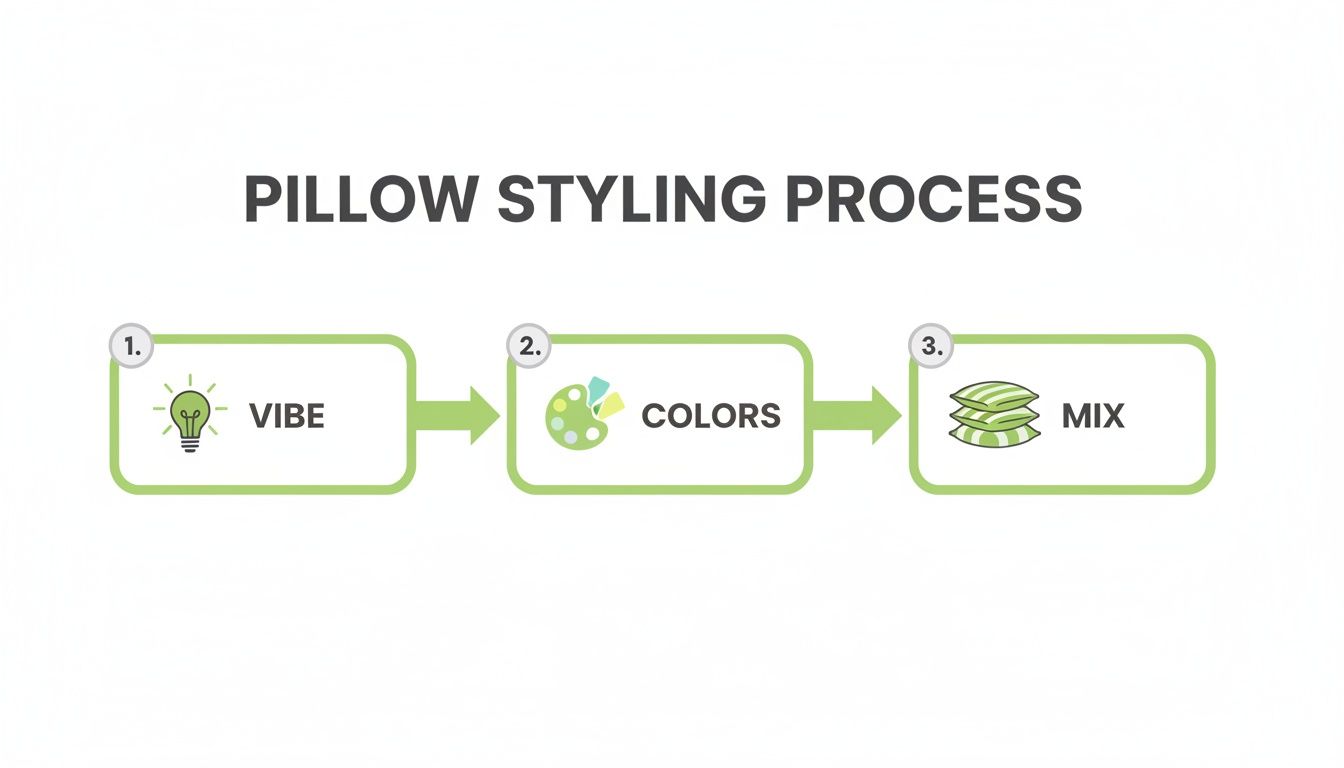
Seeing it this way—defining the vibe, picking colors, and then playing with the mix—makes the whole thing feel so much less intimidating.
The Luxe King Bed Formula
A king bed is a generous canvas, practically begging for a full, luxurious pillowscape. Skimping here can leave the whole bed looking a bit underwhelming. The goal is to fill the width without it feeling cluttered.
- Pillow Count: You're looking at a total of 6 to 8 pillows.
- The Foundation: Start with three 26x26 inch Euro shams right up against the headboard. This creates a solid, clean backdrop that spans the entire width of the bed.
- The Middle Layer: In front of the Euros, lean two king-sized sleeping pillows (20x36 inch). This adds that next layer of plush comfort.
- The Finish: Bring it all together with two or three smaller accent pillows up front. A single long lumbar pillow works great here, too. This is your chance to inject personality with bold colors or interesting textures.
The Versatile Queen Bed Formula
The queen is the most popular bed size for a reason—it’s just so flexible. You can achieve that full, layered look without needing the sheer volume of pillows a king demands. It’s all about finding that perfect balance.
Emerging design guidelines for 2025 point to using 4 to 6 decorative pillows on a queen. The focus is shifting away from perfectly matched sets toward more curated, eclectic arrangements with artisanal textures and a dynamic mix of shapes—think squares, lumbars, and even unique bolsters.
For a foolproof setup, prop your two standard sleeping pillows upright at the back. Layer on two larger 22x22 inch squares, and then finish with a 16x26 inch lumbar or a couple of smaller accents in contrasting patterns to create some real depth. If you want to dive deeper into what's new, check out the latest pillow arrangement trends on The Global Stitch.
A common pitfall with queen beds? Using pillows that are too small. Make sure your main decorative pillows are at least 20x20 inches so they feel substantial and proportional.
The Chic Twin Bed Formula
On a smaller bed, less is definitely more. You want to add a touch of style without completely taking over the bed. A simple, curated collection is always more effective than a crowded jumble.
- Pillow Count: Keep it simple with 3 to 5 pillows total.
- The Foundation: Use one 26x26 inch Euro sham as your main anchor against the headboard.
- The Middle Layer: Place one standard sleeping pillow (20x26 inch) right in front of the Euro.
- The Finish: Add one or two smaller accent pillows to bring it home. A 16-inch square paired with a small lumbar is a fantastic combination. This minimalist approach adds that perfect pop of style while leaving plenty of room to actually, you know, sleep.
The Art of Mixing Pillow Colors and Textures
Okay, so you've got the placement down. Now for the fun part—making it yours. This is where you graduate from simply arranging pillows to actually styling them. A truly designer-level bedscape comes alive in the mix of color, pattern, and texture.
This is how your bed stops being just a place to sleep and becomes the stylish focal point of your entire room. It’s all about creating a look that feels thoughtful, collected, and completely personal.
Building a Harmonious Color Palette
If you’re staring at a wall of pillow colors and don't know where to start, try the 60-30-10 rule. It’s a classic interior design trick that works wonders for creating a balanced look.
- 60% Primary Color: This is your foundation. It’s the dominant hue, usually a neutral that anchors everything. Your largest pillows, like the Euros at the back, are perfect for this.
- 30% Secondary Color: This is where you add a little more personality. It’s a complementary shade used for the next layer of pillows, like your standard shams or medium squares.
- 10% Accent Color: Here’s your pop! This is the boldest color, reserved for the smallest pillow right at the front. It’s meant to catch the eye and pull the whole look together.
Following this simple formula keeps your color choices from feeling random or chaotic. For example, you might start with beige Euros (60%), layer on some soft blue shams (30%), and finish with a single, eye-catching terracotta lumbar pillow (10%). See? Instant harmony.
Confidently Pairing Patterns
I get it—mixing patterns can feel a little risky. But the secret is surprisingly simple: vary the scale. If you try to mix two big, bold patterns, they'll just fight for attention. But when their scales are different, they complement each other beautifully.
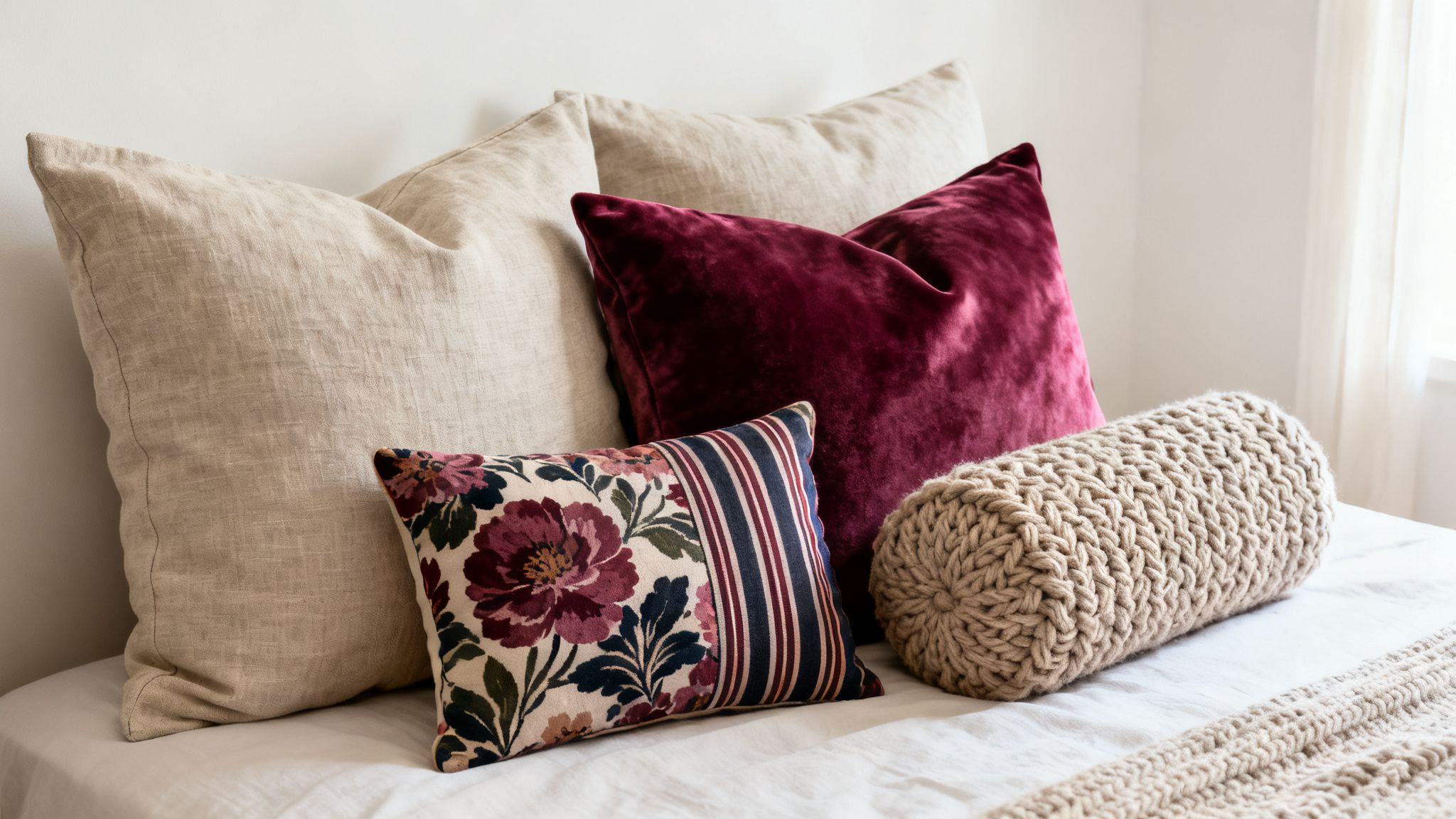
The trick is to pair a large-scale pattern with a small-scale one. Got a pillow with huge, dramatic floral prints? Don't put it next to another large geometric. Instead, pair it with something subtle, like a tight pinstripe or a tiny polka dot. The contrast in size gives each pattern room to shine.
We put together a little cheat sheet to make it even easier.
Pattern Pairing Cheat Sheet
Here are some simple, go-to rules for mixing pillow patterns without creating a chaotic mess.
| Pattern Combination | Key to Success | Example |
|---|---|---|
| Large Floral + Small Stripe | The organic flow of the floral is grounded by the linear structure of the stripe. | A big, painterly rose print pillow with a classic navy-and-white pinstripe lumbar. |
| Bold Geometric + Subtle Solid | The geometric provides the "wow" factor, while the solid (with texture!) gives the eye a place to rest. | A black-and-white chevron square paired with a chunky cream knit pillow. |
| Animal Print + Ditsy Floral | The key is scale. A large-scale leopard print works surprisingly well with a very small, delicate floral pattern. | A velvet leopard lumbar in front of two pillows with a micro-floral print. |
| Abstract + Polka Dot | The unstructured, artistic vibe of an abstract print is balanced by the playful, repetitive nature of dots. | An abstract watercolor pillow next to a simple black-and-white polka dot square. |
Think of it this way: your large pattern is the star of the show, and the small pattern is the supporting cast. This principle is a game-changer, whether you're styling a bed or learning how to choose throw pillows for a sofa. It just works.
The Crucial Role of Texture
Texture is what brings a pillow arrangement to life. It’s the secret ingredient that adds depth and makes your bed look and feel ridiculously cozy and luxurious. A bed with nothing but cotton pillows can fall a bit flat, but the second you introduce different materials, the whole vibe changes.
It’s all about creating a tactile experience. Try pairing a smooth, crisp linen pillow with a chunky, hand-knitted one. Or place a plush velvet cushion from Fluent Trends next to a more rustic, woven lumbar. These contrasts are what make a bed inviting.
Don't hold back here. Mixing different fabrics like faux fur, silk, wool, and intricate embroidery is precisely what gives your pillow arrangement that professionally styled, "I want to jump right in" feeling.
Choosing Between Symmetrical and Asymmetrical Layouts
How you arrange your decorative pillows sends a distinct message about your room's personality. Deciding between a balanced, mirrored layout and something a bit more free-flowing is one of those key styling choices that really shapes the entire atmosphere of your space.
Let's break down both design philosophies. One isn't necessarily better than the other; it’s all about matching your pillow arrangement to the feeling you want to create. This is where you move from just placing pillows to making a deliberate styling statement.
The Calm of Symmetrical Arrangements
Symmetry is your go-to for creating a sense of balance, order, and calm. Picture a high-end hotel room—everything is crisp, clean, and perfectly mirrored on both sides. This approach is a natural fit for more traditional, classic, or formal bedrooms where a feeling of peaceful structure is the goal.
A symmetrical layout feels intentional and polished. It gives off a quiet confidence and is visually very easy on the eyes, which can contribute to a more restful environment. If you're someone who appreciates clean lines and a composed aesthetic, this is probably your best bet.
A perfectly symmetrical pillow arrangement is the fastest way to create a feeling of restful formality. By mirroring each pillow from left to right, you establish a visual rhythm that feels calm and intentional.
To nail this look, you’ll be working with even numbers. Every pillow on the left side of the bed needs a direct counterpart on the right.
- Start with your foundation: Begin with two or three large Euro pillows lined up neatly against the headboard.
- Build the next layer: Place two standard shams directly in front of the Euros, one on each side.
- Add the final touch: Finish with two identical accent pillows, perfectly centered in front of each stack. The only exception to the "even" rule can be a single, long lumbar pillow placed right in the front to tie it all together.
The Charm of Asymmetrical Arrangements
On the flip side, an asymmetrical layout feels more relaxed, modern, and artfully curated. It's less about perfect mirroring and more about creating a visual balance through a collection of different shapes, sizes, and textures. This style is perfect for eclectic, bohemian, or contemporary spaces where you want to show off a bit more personality.
This approach tells a story, almost like you’ve gathered a cherished collection of pillows over time. It’s dynamic and adds a wonderful layer of visual interest to your bed, making the room feel more lived-in and approachable.
To master asymmetry, you'll often use an odd number of pillows, like three or five, for your front accent layer.
- The grouping principle: Instead of mirroring individual pillows, think about creating a single, visually pleasing group that feels balanced as a whole.
- A common formula: You can still start with symmetrical base layers (Euros and shams). Then, create an off-center cluster with three accent pillows of varying sizes—maybe a 20-inch square, an 18-inch square, and a small lumbar. Just place the largest pillow on one side and have the two smaller ones slightly overlap it.
Refreshing Your Pillowscape for Every Season
A perfectly styled bed isn't a static museum piece; it should breathe and change with the seasons. Thinking about how to arrange pillows is the perfect excuse to switch things up. You don't need to buy a whole new bedding set—a few strategic swaps can completely transform the vibe of your bedroom, keeping it fresh and inviting all year long.
This is also a fantastic opportunity to make more thoughtful, sustainable choices. A recent survey found that a whopping 68% of American consumers prefer home textiles made from materials like organic cotton, linen, or recycled fabrics. This shift in preference is helping the global pillow cover market grow toward $3 billion, proving that great style and sustainability really do go hand-in-hand. You can dive deeper into these market trends and future prospects on Fabdivine.com.
Warm Weather Styling for Spring and Summer
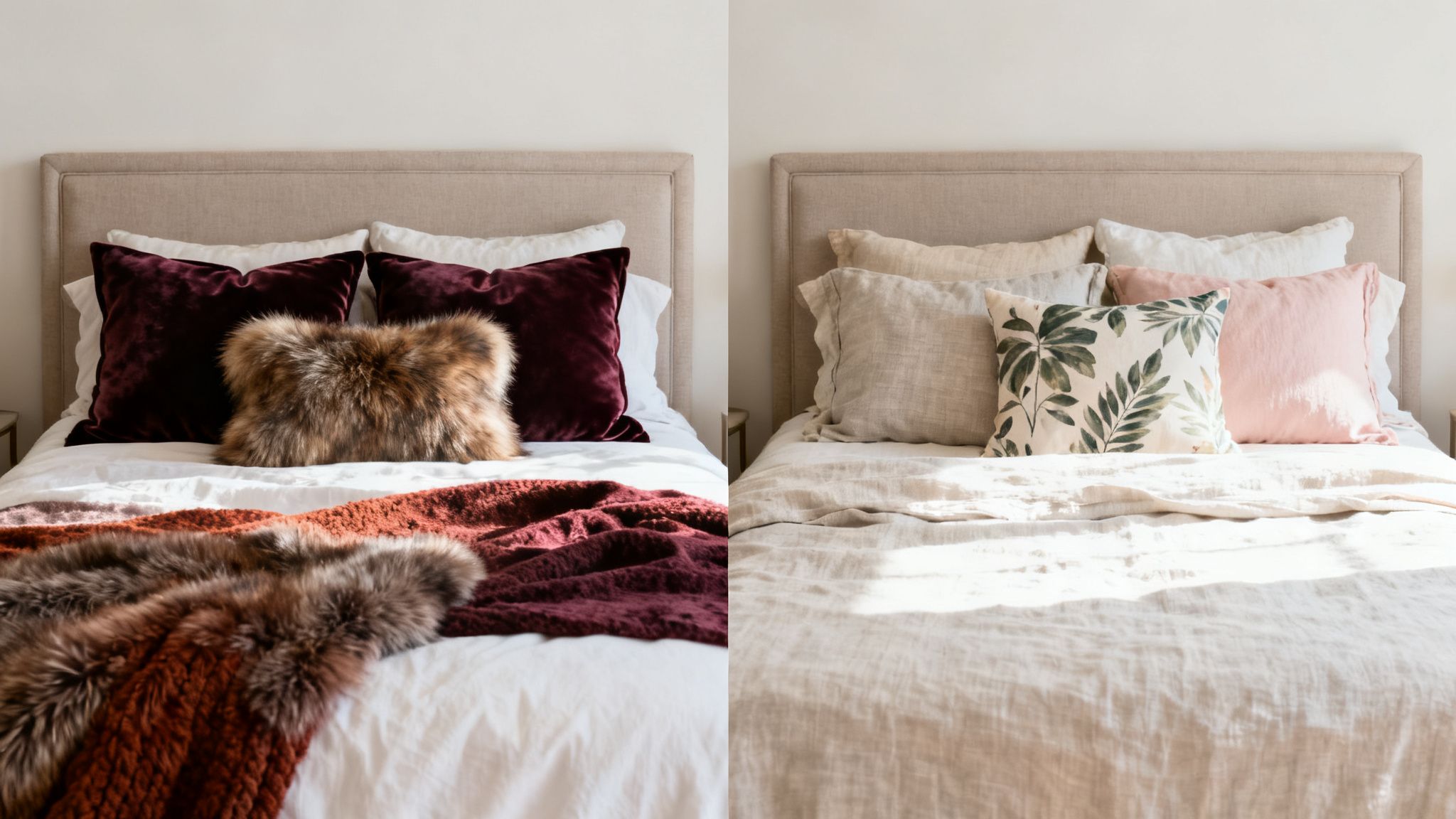
When the days get longer and the sun streams in, your bed should feel just as light and airy. It's time to put away the heavy, dense textures and bring in fabrics that feel cool to the touch.
The goal here is a sense of breezy calm. Often, just swapping one or two of your front-most pillows is enough to signal the change of season.
- Fabric Focus: Think lightweight and breathable. Linen, cotton percale, and chambray are your best friends for warmer months, offering a crisp, cool feel.
- Color Palette: Lighten up! Soft pastels, clean whites, or even a pop of a vibrant botanical print can instantly make the room feel more expansive and alive.
- Pattern Play: Spring and summer are the perfect seasons for more playful patterns. Try out large-scale florals, classic coastal stripes, or subtle geometric designs to inject some sunny personality.
Pro Tip: A single linen lumbar pillow in a cheerful hue, like a soft sky blue or a buttery yellow, can be the catalyst for a whole new seasonal look without having to buy a whole new set.
Cool Weather Styling for Fall and Winter
As soon as the temperature dips, your bedroom should feel like a cozy, warm retreat. We're shifting away from light and bright and leaning into rich textures and warm tones, creating a space you can't wait to curl up in.
This is when texture truly gets to be the star of the show. Think about materials that you instinctively want to touch, adding a tangible layer of comfort to your bed.
- Fabric Focus: Time to get plush. Velvet, chunky knits, wool, and even faux fur bring incredible depth and that cozy, hygge feeling we all crave.
- Color Palette: Go for a richer, moodier vibe. Deep jewel tones like emerald and sapphire, warm neutrals like caramel and charcoal, and earthy terracotta shades create an instantly warm atmosphere.
- Layering Strategy: More is more in the colder months. Don’t be shy about adding an extra throw blanket at the foot of the bed that complements a new velvet accent pillow from a collection like Fluent Trends.
Your Top Pillow Styling Questions, Answered
Even with the best formulas, a few questions always seem to pop up. Honestly, getting these final details right is what takes a bed from looking nice to looking professionally styled. Let's dig into some of the most common questions I hear when people are figuring out how to arrange their decorative pillows.
Think of this as your cheat sheet for those little uncertainties that can make or break the final look.
How Many Decorative Pillows Is Too Many?
There's a fine line between a bed that looks lush and one that just looks... cluttered. While there’s no single magic number, the real goal is a full, inviting look, not an obstacle course you have to navigate every night.
A good rule of thumb is to let your bed size guide you:
- King Bed: Anything from 6 to 8 pillows usually hits the mark, giving you enough to fill out that wide space without it looking sparse.
- Queen Bed: I find the sweet spot is around 4 to 6 pillows. This creates that plush, layered feel without overwhelming the frame.
- Twin Bed: Simplicity is key here. Stick to 3 to 5 pillows to add a pop of style while still leaving room to, you know, sleep.
Here’s the real test: if it takes you more than a minute to clear the pillows off before you get into bed, you might want to edit your collection. The arrangement should showcase your bed, not hide it completely.
Should Decorative Pillows Match My Comforter?
They should absolutely coordinate, but please, don't let them be a perfect match! Those "bed-in-a-bag" sets where everything matches exactly can look a bit dated and miss out on that curated, designer feeling. The secret is to create harmony, not uniformity.
A better approach is to pull one or two key colors from your comforter or duvet and feature them in your accent pillows. This creates a cohesive look that feels thoughtful and put-together. Another great trick is to mix in some complementary neutrals—think creams, grays, or beiges—to ground the whole palette.
The most interesting and high-end looking beds play with a mix of patterns and textures. A perfectly matched set just misses the chance to add that depth and personality. You want a collection that looks like it was thoughtfully gathered over time.
What Is the Pillow "Karate Chop"?
Ah, the classic "karate chop"! It's a simple styling trick where you use the side of your hand to create a sharp crease down the middle of a plush pillow. This is purely for looks—it gives pillows a casual, lived-in vibe that feels effortlessly chic.
It works best on square pillows with soft, squishy inserts like down or a down-alternative. The chop creates shadows that highlight the pillow's fluffiness and give it that high-end, designer touch. If you're going for a more crisp, formal look, or if your pillows have firm foam inserts, it's probably best to skip this move.
Where Do I Put All These Pillows at Night?
Whatever you do, don't just toss them on the floor! That's a surefire way to get them dusty and damaged. The best solution is to have a dedicated landing spot for them as part of your nightly routine.
Having a go-to place keeps your pillows clean and makes restyling the bed a breeze in the morning.
- A large woven basket: This is a super popular and stylish option. Just place one at the foot of the bed or in a nearby corner.
- A storage bench: A bench with a lift-top lid is perfect for hidden, dust-free storage.
- A nearby armchair: If you have an accent chair in your bedroom, it’s the perfect spot to neatly stack your pillows.
- A wide windowsill: For rooms with deep-set windows, this can be an easy, out-of-the-way spot.
Ready to build your own designer-approved pillowscape? Explore the curated collection of luxurious accent pillows, throws, and bedding at Fluent Trends to find the perfect pieces that reflect your unique style. Find your next statement piece at https://www.fluenttrends.com.