

How to Choose Throw Pillows for Your Sofa Like a Pro
Donna MaloneChoosing the right throw pillows for your sofa really comes down to three things: picking sizes that are proportional to your couch, choosing colors and patterns that vibe with your room, and then arranging them in a way that looks intentional and inviting.
If there's one common slip-up I see, it's using pillows that are just too small. When in doubt, 20x20 inch squares are a super safe bet for most standard sofas.
Mastering Pillow Size and Scale
Before you get swept away by a gorgeous pattern or a luxe fabric, let’s nail down the absolute foundation of throw pillow styling: size and scale.
Getting this right is what separates a sofa that looks thoughtfully pulled together from one that feels like an afterthought. The goal is simple: create a visual balance where the pillows complement your sofa’s proportions, rather than overwhelming it or looking comically tiny.
This is one of those details that really elevates a space. And it’s not just about looks; it’s about creating a seating area that’s actually comfortable and functional. Pillows that are too big can make a sofa feel cluttered and unusable, while ones that are too small just get lost.
Matching Pillow Size to Your Sofa Type
The size of your sofa should be your guide. A massive, deep-seated sectional needs much more substantial pillows than a petite, vintage-style loveseat. A one-size-fits-all approach just won’t cut it here.
-
Standard Three-Seater Sofas: For the most common sofa size, you'll want to anchor the corners with larger squares. I always suggest starting with a pair of 22x22 inch or 24x24 inch pillows. From there, you can layer slightly smaller ones, like 20x20 inch squares, right in front.
-
Loveseats and Small Sofas: To keep things from looking crowded, you'll need to scale down. An 18x18 inch or 20x20 inch pillow is usually the perfect starting point. Two or three pillows are often all you need.
-
Large Sectionals: With so much more real estate, you have room to play! Anchor the corners and the chaise with big 24x24 inch pillows. Then you can fill in the gaps with a mix of 22-inch and 20-inch squares to get that lush, layered look.
This little guide can help you visualize the most common pairings to get you started.
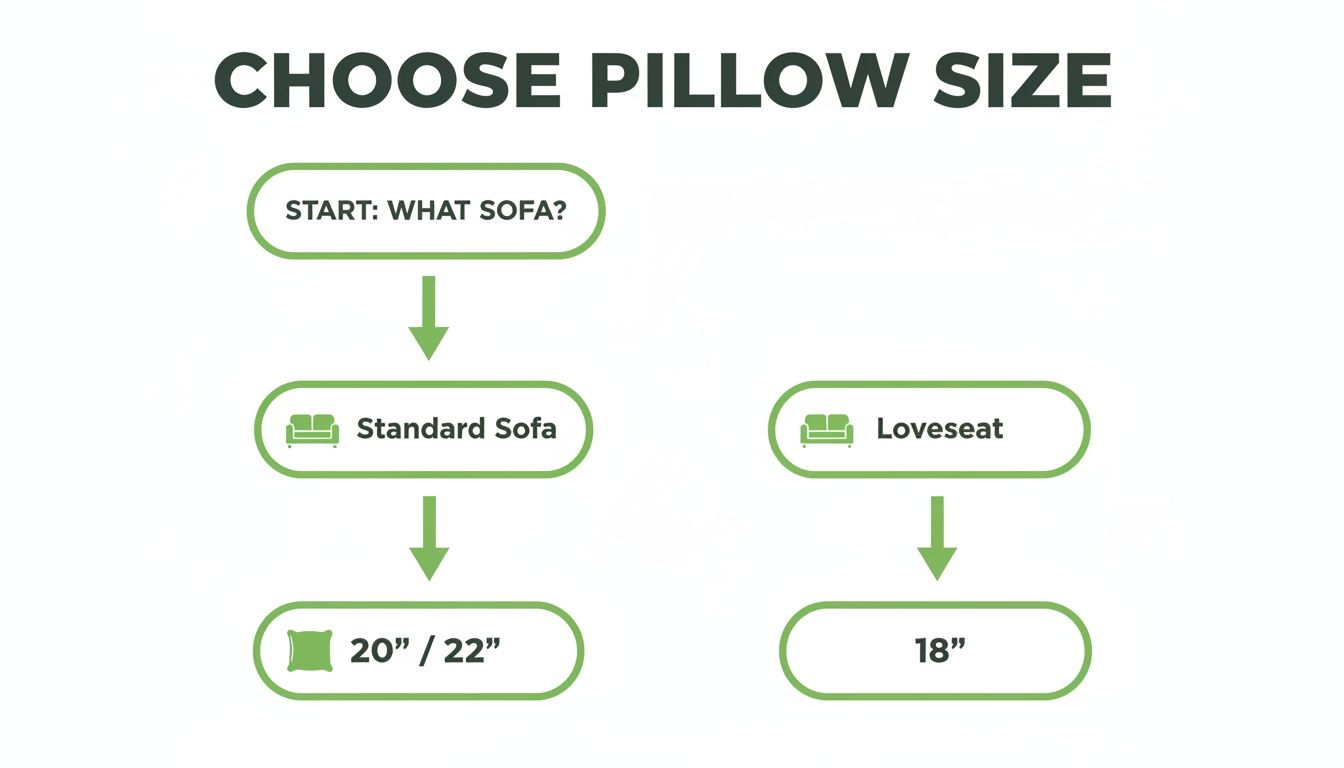
The main takeaway? Bigger sofas need bigger anchor pillows. They create the foundation you can build on with smaller, more decorative accents.
Exploring Shapes Beyond the Square
Sure, square pillows are a classic, but bringing in different shapes is what adds real personality and solves specific styling needs. Mixing it up is a pro move that creates a much more dynamic and curated arrangement.
To help you get started, here's a quick reference chart for picking the right pillow shapes and sizes.
Pillow Size and Shape Guide for Sofas
| Pillow Type | Common Sizes | Best For | Styling Tip |
|---|---|---|---|
| Square | 20"x20", 22"x22", 24"x24" | Anchoring corners, creating a classic base layer. | The workhorse of any arrangement. Use the largest sizes on the ends. |
| Lumbar | 12"x20", 14"x24", 16"x36" | Adding lower back support, breaking up square shapes. | Place one in the very front, centered, to finish the look. |
| Round | 16" to 20" Diameter | Softening modern lines, adding a playful accent. | Use a single round pillow as a fun, unexpected centerpiece. |
| Bolster | 6"x16" to 9"x36" | Traditional sofas, daybeds, adding formal structure. | Tuck them into the arms of a sofa for a tailored, classic feel. |
This table should make it easier to visualize how different pieces can fit together to create a cohesive and stylish look on your sofa.
One of the most common design mistakes I see is a flat, uniform row of identical pillows. Tossing in varied shapes instantly adds depth and personality, making the whole setup feel more organic and collected over time.
Think about how different shapes can work for you, both in form and function:
-
Lumbar Pillows: These rectangular pillows (you'll often see them in 12x20 or 14x24 inches) are fantastic for extra back support. They also look amazing centered on an armchair or as that final front layer on your sofa.
-
Round Pillows: A round or spherical pillow is perfect for breaking up all the straight lines of a sofa. It adds a soft, almost playful touch. Use one as a central accent to soften a room with a lot of geometric patterns.
-
Bolster Pillows: These classic cylindrical pillows have a more traditional, tailored feel. They work beautifully on daybeds or sofas with elegant, rolled arms, adding a touch of formality.
Ready to start browsing? Looking through a wide selection of cushions can give you a feel for what’s out there and spark some ideas.
It's fascinating to see how much people value these little details. The global decorative pillow market is huge—valued at USD 4.31 billion—because we all want our homes to look beautiful and be comfortable. In fact, research shows that 38% of buyers pick out pillows specifically to improve both the look and comfort of their space, proving these accessories are truly a dual-purpose investment.
Choosing the Right Fills and Fabrics
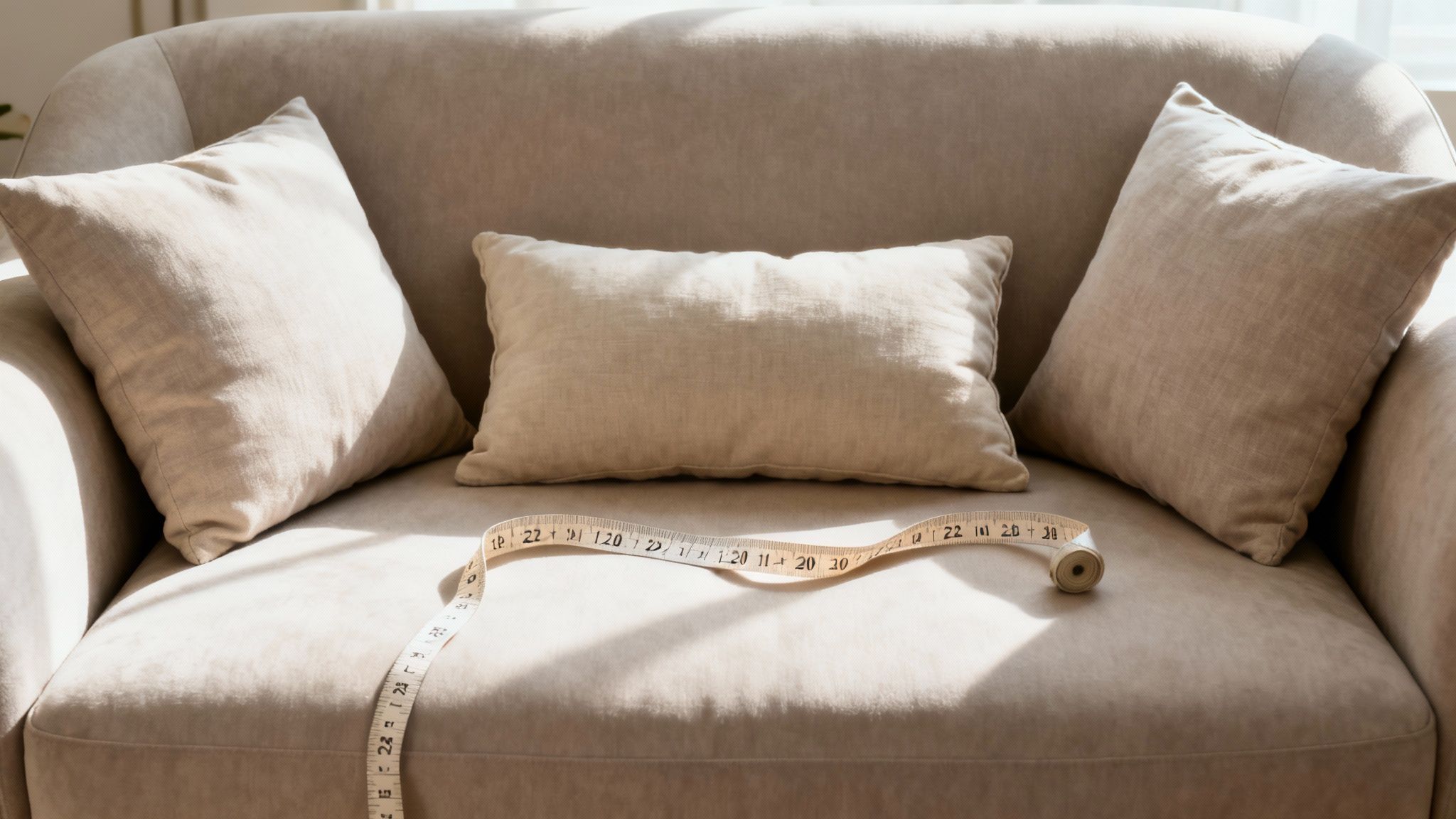
While size and shape get the ball rolling, the fill and fabric are where your pillows truly come to life. It’s easy to fall for a pretty pattern, but it's the feel and durability that make a pillow a long-term win. Getting this right is the difference between a sofa that just looks good and one that feels genuinely inviting.
Think of the insert as the heart of your pillow. It’s what gives it that plush shape and support. A floppy, sad-looking pillow can drag down the whole look of your sofa, but a quality insert creates that full, designer feel we're all after.
Decoding Pillow Inserts
When you’re picking an insert, you're really balancing feel, maintenance, and budget. The three most common fills each bring something different to the table, so think about what you really need for your space.
-
Down and Feather: This is the luxury option for a reason. These inserts are ridiculously soft and easy to shape, giving you that perfect, satisfying "karate chop" indent. They're the peak of comfort but do need a good fluffing every now and then to stay lofty.
-
Down-Alternative/Polyester: A fantastic, budget-friendly, and hypoallergenic choice. Down-alternative does a great job of mimicking the softness of down without triggering allergies. These inserts hold their shape incredibly well with almost no effort, making them a practical pick for busy family rooms.
-
Memory Foam: You'll usually find this in lumbar pillows, and for good reason. Memory foam provides firm, contouring support. It’s less about fluff and more about function, offering amazing comfort for your lower back during a movie marathon.
While cotton has long been a go-to, market trends show that down and feather pillows are gaining serious traction. People are more willing to invest in their superior comfort and longer lifespan, which makes the higher upfront cost worth it. You can see more on this in an industry analysis on throw pillow materials.
Pro Tip: For a full, plump look, always choose an insert that is one to two inches larger than your pillow cover. So, for a 20x20 inch cover, grab a 22x22 inch insert. This one little trick prevents droopy corners and makes your pillows look so much more high-end.
Selecting Fabrics for Your Lifestyle
The cover fabric is where your personality shines through, but it also has to stand up to your daily life. That gorgeous silk pillow might look stunning in a formal living room, but it won’t survive a week in a house with kids and a dog.
Here’s a quick rundown of common fabrics and where they work best:
-
Cotton and Linen: These natural fibers are loved for their relaxed, breathable vibe. They’re durable, easy to clean, and bring a casual elegance that fits with almost any decor, from modern farmhouse to coastal cool.
-
Velvet and Silk: If you want a touch of opulence, look no further. Velvet adds incredible color depth and a soft, inviting texture, while silk provides a delicate, glamorous sheen. These are best reserved for lower-traffic areas where they can be appreciated without too much wear and tear.
-
Performance Fabrics: An absolute game-changer if you have kids, pets, or just love to entertain. These fabrics are engineered to be stain-resistant, fade-resistant, and super durable, so you can wipe away spills without a second thought.
-
Wool, Boucle, and Knits: When your goal is to add cozy, touchable texture, these are your go-to materials. A chunky wool knit or a nubby boucle pillow adds instant visual warmth, making your sofa the ultimate snuggle spot, especially during the cooler months.
Making the right choice here is a huge part of learning how to choose throw pillows for a sofa that you’ll love for years to come. For a deeper dive into some great options, check out our guide on the best throw pillows for your couch. By pairing the perfect insert with a fabric that fits your life, you'll create pillows that are not only beautiful but truly built to be lived with.
Creating a Cohesive Color Palette
Okay, you’ve nailed down the right sizes and fabrics. Now for the fun part: creating a color story that pulls everything together. This is your chance to really inject some personality into the room and make your sofa look intentionally styled, not just like a landing pad for a random assortment of pillows.
Forget scrolling endlessly for inspiration—the best starting point is right in your own living room. Take a good look around. What colors are in your area rug? Your curtains? That piece of art hanging over the fireplace? Pulling two or three of those existing shades is the quickest way to guarantee your new pillows will feel right at home.
Building Your Color Story
If you're wondering how to balance everything, there's a classic designer trick that works wonders for pillows: the 60-30-10 rule. It’s a simple formula for distributing color in a way that just feels right to the human eye.
Here’s how it breaks down for a pillow arrangement:
-
60% Anchor Color: This is your main color, the foundation of your look. It’s usually a solid or a very subtle texture and should connect back to the sofa itself or another large item in the room.
-
30% Secondary Color: Here’s where you bring in a complementary shade or a medium-sized pattern. This layer adds some real visual interest without overwhelming the anchor.
-
10% Accent Color: Think of this as the jewelry. It’s that final pop of a bold, contrasting color or a single, eye-catching pattern that gives the whole arrangement a dose of charisma.
Let's say you have a gray sofa and a rug with navy and blush tones. Your anchor pillows could be a solid navy. The secondary pillows might introduce that soft blush pink. And for the final accent? Maybe a single lumbar pillow with a cool pattern that ties in the navy and blush with a hint of metallic gold. See? Suddenly, it feels curated.
Using Color Theory for Impact
Want to take your palette to the next level? A little color theory goes a long way. You don’t need a degree in art—just a basic grasp of how colors interact on the color wheel.
Two of the most helpful concepts are complementary and analogous schemes.
Complementary colors are total opposites on the wheel (like blue and orange). They create a vibrant, high-energy vibe. Analogous colors are neighbors (like blue, green, and teal) and give you a much more serene, cohesive look.
The right choice just depends on the mood you’re going for. If you want a calm, peaceful living room, an analogous scheme of soft blues and greens is perfect. If you want your sofa to make a statement, a pop of a complementary color will do the trick every time.
When you figure out your color palette before you start shopping, you can mix and match different patterns and textures with confidence, knowing the final look won't feel chaotic. For more ideas on putting together a beautiful look, you can explore stunning color combinations for textiles and apply those same ideas to your pillows. Getting this part right ensures every pillow works together to create a cohesive, beautifully styled sofa.
Mixing Patterns and Textures with Confidence
Alright, you've got your color palette locked in. Now for the fun part—layering in patterns and textures. This is where a nice pillow arrangement becomes a truly stunning one, brimming with depth and your unique personality. It might seem like a dark art, but designers have a simple little formula that nails it every time.
The trick is all about scale. When every pattern is the same size, they just end up fighting for your attention, creating a jumble of visual noise. By mixing up the scale, you create a clear focal point and an arrangement that feels totally intentional.
The Foolproof Formula for Mixing Patterns
The easiest way to mix patterns like a pro is to combine three key players: one large-scale pattern, one small-scale pattern, and one solid. This trio strikes the perfect balance—it’s harmonious without being chaotic or, worse, boring.
Here’s how you put that into practice:
-
Start with Your Hero: Pick one large-scale pattern to be the star of the show. This could be a bold floral, an oversized geometric print, or a classic wide stripe. This pillow will usually be your largest or the one you place front and center.
-
Add a Supporting Player: Next, bring in a small-scale pattern. Think thin stripes, tiny dots, a tight herringbone, or a subtle organic motif. This one is here to complement your hero, not steal the spotlight.
-
Ground with a Solid: Finally, add a solid-colored pillow. This is crucial. It gives your eyes a place to rest and anchors the whole look. Think of it as the visual "full stop" that pulls everything together.
Let’s say you have a neutral sofa. You could pair a large-scale navy and cream floral pillow with a smaller tan and cream striped one. To finish it off? A rich, solid navy velvet pillow. The shared cream and navy colors are the glue that makes the whole thing feel cohesive.
The secret to successful pattern mixing is ensuring every pillow shares at least one unifying color. This common thread is what makes a bold floral, a classic stripe, and a rich solid feel like they belong in the same family.
Elevate Your Design with Tactile Textures
While patterns bring the visual energy, texture brings the warmth, depth, and that all-important cozy factor. A smart mix of interesting textures can make even a simple monochromatic pillow arrangement feel incredibly rich and sophisticated. It’s that secret ingredient that makes you want to reach out, touch, and really experience the space.
Don't be shy about layering materials that feel completely different. The contrast is what creates that high-end, professionally styled vibe.
Here are a few powerful textural combos to get you started:
-
Smooth and Chunky: Imagine a sleek velvet or faux leather pillow snuggled up next to a chunky wool knit. The play between the smooth, light-reflecting surface and the soft, matte knit is just so good.
-
Crisp and Nubby: Try combining a crisp, clean linen pillow with a nubby boucle one. The relaxed, airy feel of linen is a beautiful counterpoint to the cozy, teddy-bear texture of boucle.
-
Glam and Natural: Mix a little glam—like a faux fur or subtly sequined pillow—with something earthy like a cotton or jute-trimmed one. This creates a fascinating tension between rustic and refined.
This kind of tactile variety is a huge part of learning how to choose throw pillows for a sofa that truly look and feel amazing. It adds a layer of quiet luxury that pattern alone just can't deliver. You're creating a feast for the senses, turning your sofa from just a place to sit into a destination for comfort. A well-chosen texture can make a solid pillow just as interesting as a patterned one, giving it depth while letting your bolder prints really shine.
Arranging Pillows for a Polished Look
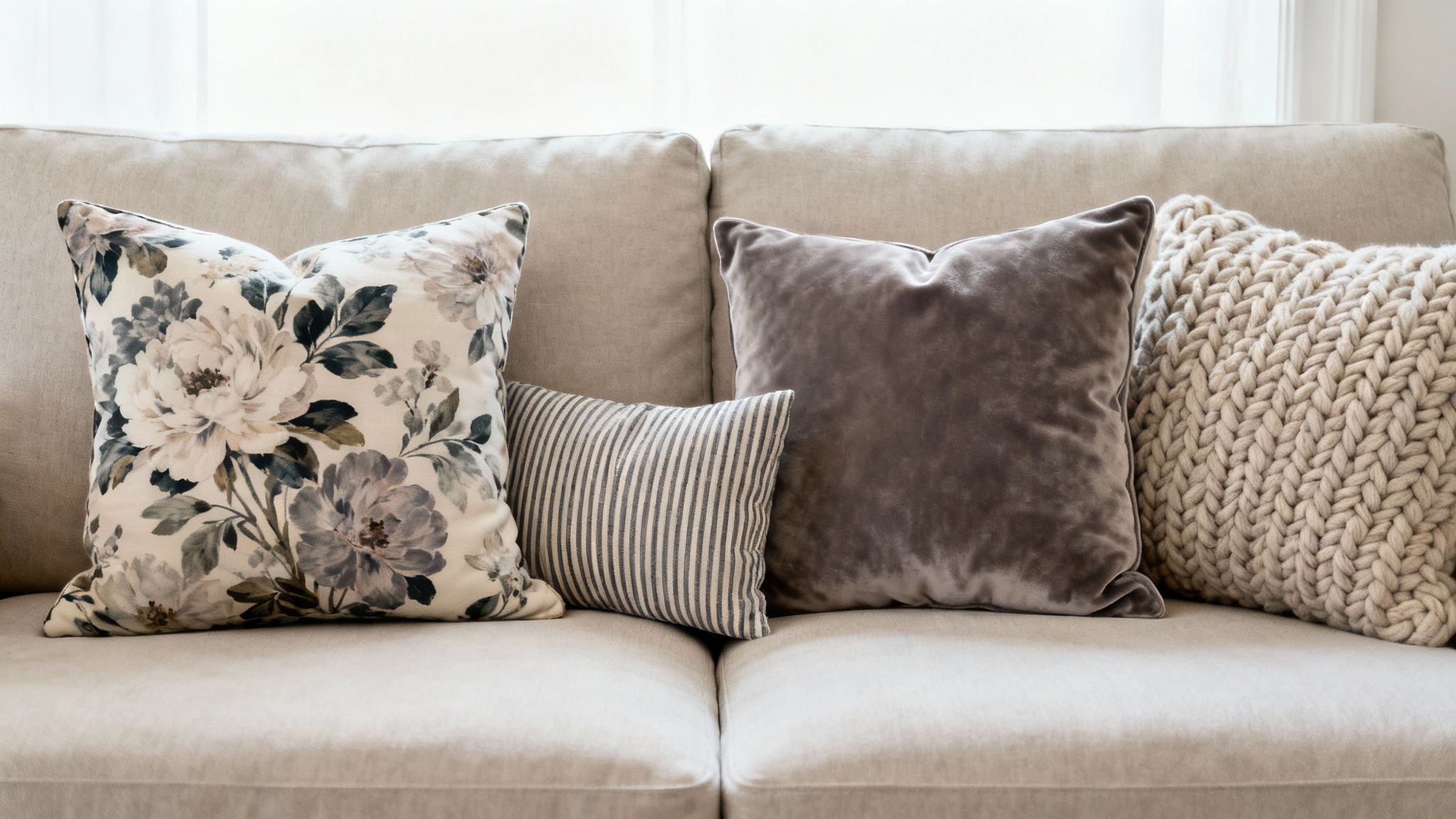
You’ve found the perfect pillows—now for the fun part. Arranging them is what really brings the whole look together, turning your sofa from just a piece of furniture into an inviting, stylish focal point.
The goal here isn't to create a random pile but to build a look that feels both intentional and completely effortless. It's less about strict rules and more about a few simple formulas that work, whether your style is buttoned-up traditional or laid-back modern.
Finding the Right Number of Pillows
One of the first questions I always get is, "How many pillows is too many?" It’s a great question. While you can do whatever you want, an odd number—like three, five, or seven—almost always feels more dynamic and visually interesting. Even numbers can come off as a bit stiff.
Let your sofa's size be your guide.
-
Standard Three-Seater Sofa: Five is the sweet spot. It creates a full, layered look without hogging all the seating space. Three also works beautifully for a cleaner, more minimalist vibe.
-
Loveseat: Less is more here. Stick with two or three pillows. Anything more, and you'll overwhelm its smaller frame, leaving nowhere to sit.
-
Large Sectional: This is where you can really play. A generous grouping of five or seven pillows, spread across the length and tucked into the corner, feels perfectly balanced.
In the end, you want the pillows to enhance the sofa, not bury it. It should look plush and inviting, not like a fortress.
Classic vs. Modern Pillow Arrangements
Once you’ve got your number, it’s time to decide on a layout. The two main schools of thought are symmetrical and asymmetrical. Neither is right or wrong—it just depends on the story you want to tell in your space.
A classic, symmetrical arrangement brings a sense of order and calm. It’s a timeless approach that fits perfectly in traditional homes. A go-to technique is the 2-1-2 method: place two large, matching square pillows in the corners, layer two slightly smaller pillows in front of them, and pop a single lumbar pillow right in the center.
For a more relaxed, contemporary feel, go asymmetrical. This arrangement feels much more casual and collected. Try grouping three different pillows—say, a 22-inch solid, a 20-inch pattern, and a lumbar—in one corner, leaving the other side open or with just one pillow for balance.
Pillow Arrangement Formulas by Sofa Type
To make it even easier, I've put together a quick cheat sheet. This table breaks down some simple, no-fail formulas for different sofa styles.
| Sofa Type | Ideal Pillow Count | Classic Arrangement | Modern Arrangement |
|---|---|---|---|
| Three-Seater | 3 or 5 | 2 matching pillows on each end. | 2 pillows in one corner, 1 on the other. |
| Loveseat | 2 or 3 | 1 pillow at each end. | A cluster of 3 different pillows on one side. |
| Sectional | 5 or 7 | Symmetrical groups in each corner. | An eclectic mix layered in the main corner. |
These are just starting points, of course. Feel free to mix and match until you find what feels right for your home.
The Finishing Flourish
Finally, a word on the "karate chop." This is that little crease designers often put in the top of a down or feather pillow. It creates a sharp, high-end look and really emphasizes a pillow's plushness.
But if your style is more about lived-in comfort, a simple fluff and plump is all you need to make your pillows look welcoming. The right arrangement doesn't just complete your sofa; it helps connect everything in the room. For more ideas on creating a cohesive space, check out our guide on how to arrange living room furniture.
Keeping Your Pillows Fresh: Care Tips and Seasonal Swaps
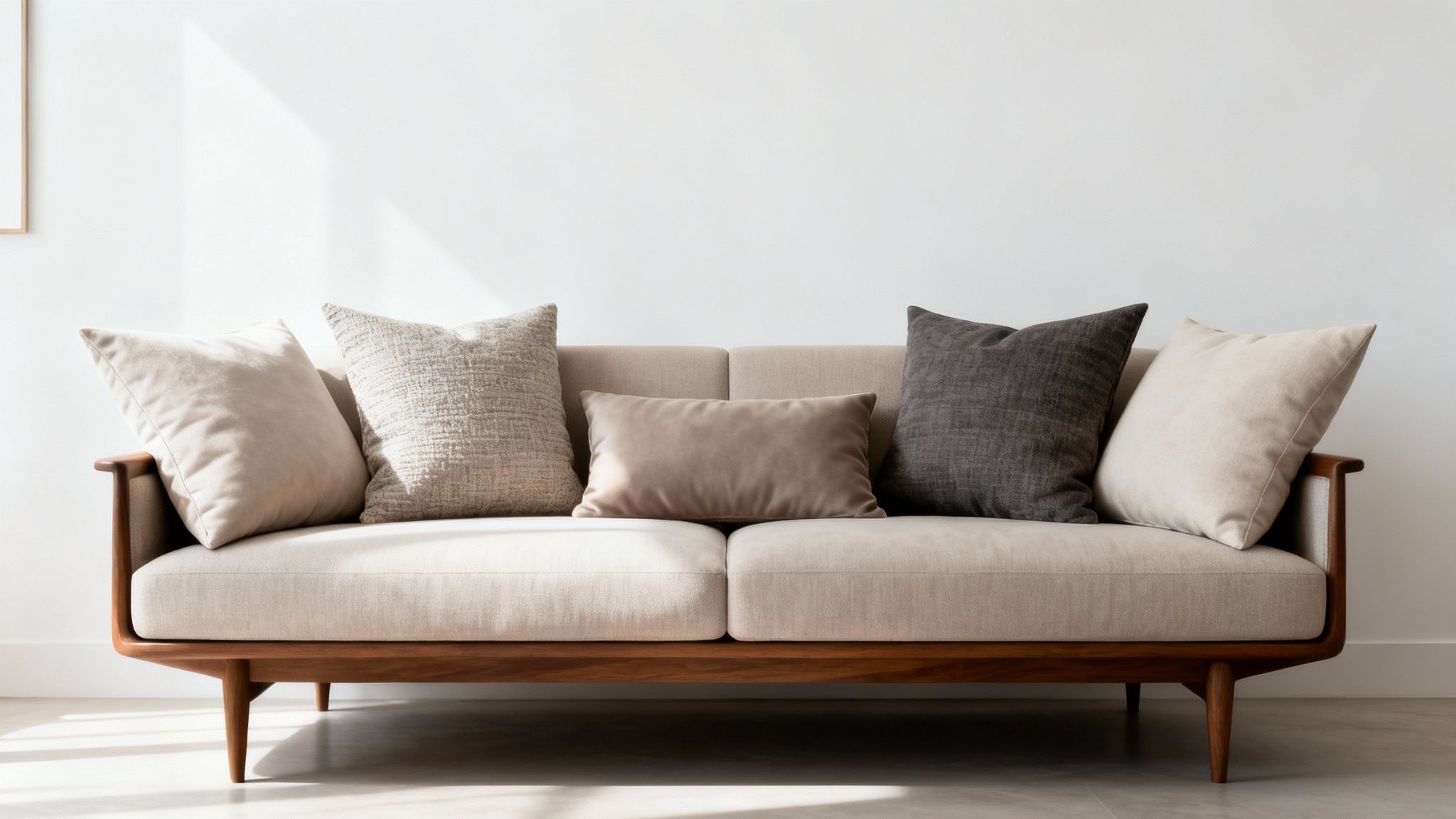
You’ve put in the work to find the perfect pillows for your sofa—now, let's make sure they stay looking as good as the day you brought them home. A little bit of care and a clever seasonal strategy will keep them looking great for years and keep your whole living space feeling refreshed.
The first rule of thumb? Always check the care label. It’s your roadmap to avoiding any laundry disasters, especially with those delicate, specialty fabrics.
Day-to-Day Pillow Maintenance
Every pillow is a little different. That durable cotton cover can probably handle a trip through the washing machine, but a luxe velvet or hand-embroidered pillow needs a much gentler approach.
Here are a few of my go-to tips for keeping pillows in top shape:
-
Spot-Cleaning Is Your Best Friend: For tricky materials like velvet, silk, or wool, spot-cleaning is the only way to go. Just blot any spills with a clean, damp cloth and a touch of mild soap. Whatever you do, don't rub—that’s a fast track to damaged fibers.
-
Machine Wash with Care: If you have machine-washable fabrics like cotton or linen, always use a gentle cycle with cold water. I like to turn the covers inside-out before washing to keep the color and texture from fading.
-
Fluff and Aerate Often: Pillow inserts, especially down and feather-filled ones, need a good fluffing every now and then to keep their shape. A vigorous shake or a few minutes in the dryer on a no-heat setting will bring them right back to life and help get rid of dust.
My favorite trick for freshening up pillows is to toss the inserts (not the covers!) in the dryer on an air-only cycle for 10-15 minutes. You’ll be shocked at how much dust the lint filter catches, leaving them cleaner and loftier.
The Power of a Seasonal Swap
One of the easiest, most affordable ways to give your living room a makeover is to simply swap out your pillow covers as the seasons change. It’s a small effort with a massive impact, instantly shifting the entire mood of the room. Plus, storing flat-folded covers takes up way less space than a pile of bulky pillows.
This little strategy is a huge part of learning how to choose throw pillows for a sofa that can evolve with your home all year long. It gives you the freedom to play with new trends and colors without making a big, expensive commitment.
Build Your Sofa's Seasonal Wardrobe
Think of your pillow covers like a closet for your sofa. A small, curated collection for the different seasons keeps your decor from feeling stale and shows a thoughtful touch.
Here are some ideas to get you started:
-
Spring & Summer: This is the time for light and airy fabrics. Think crisp linens and soft cottons in bright colors, muted pastels, or fun botanical prints. A pop of sage green, blush, or sky blue will make the whole room feel sunnier.
-
Autumn & Winter: It’s all about creating a cozy vibe. Bring in rich textures like velvet, chunky wool knits, or even some faux fur. Warm, deep colors like rust, olive, mustard, and charcoal gray create that perfect "snuggle up and get comfortable" atmosphere.
By mastering a few basic care tricks and embracing the seasonal swap, your pillows will stay beautiful and functional for years. It’s a simple approach that guarantees your sofa always looks polished, inviting, and perfectly in sync with the time of year.
Answering Your Top Throw Pillow Questions
Even with the best game plan, a few questions always seem to pop up right when you’re about to click “add to cart.” I get it. To help you feel completely confident in your choices, I’ve pulled together answers to the questions I hear most often. Getting these last few details right is what separates a good sofa from a great one.
Should My Throw Pillows Match My Sofa?
Honestly? It's better if they don't. While you can create a very subtle, monochromatic vibe by matching your pillows to your sofa, you miss out on a huge opportunity to inject some personality into your space.
Think of your pillows as the jewelry for your sofa—they’re meant to accessorize and add contrast. A brilliant strategy is to pull colors from other key pieces in the room, like your area rug, a favorite piece of art, or even the curtains. If you have a neutral sofa, this is your chance to get a little wild with color and pattern. On the flip side, if your sofa is a bold statement color, layering in neutral pillows with lots of different textures adds dimension without overwhelming the eye.
How Do I Mix Patterns Without It Looking Like a Mess?
The secret sauce to mixing patterns like a pro is all about varying the scale of the prints while sticking to a tight color story. When all the patterns are the same size, they just fight each other for attention. But when you mix large, medium, and small-scale prints, you get a look that feels layered and intentional.
Here’s a can’t-mess-it-up formula I always come back to:
-
One large-scale pattern: This is your "hero" print. Think bold florals or wide, graphic stripes.
-
One small-scale pattern: This one plays a supporting role. Look for a tight geometric, a subtle pinstripe, or a delicate dot.
-
One solid color: This is your anchor. It gives the eye a place to rest and pulls everything together.
The non-negotiable rule is to make sure every pattern shares at least one common color. That’s what creates a sense of unity. For instance, a big navy floral print, a tan-and-navy stripe, and a solid tan pillow will always look like they were meant to be together.
The goal is a collected, curated look, not a chaotic jumble. A unified color story is the secret ingredient that makes different patterns feel like part of the same happy family.
What’s the Best Fill for Sofa Pillows?
Okay, "best" is a little subjective here. It really boils down to what you’re looking for in terms of feel, maintenance, and budget. There’s no single right answer, but knowing the pros and cons makes the decision a whole lot easier.
Down and feather inserts are the top-tier, luxury choice. They give you that super soft, squishy feel and are responsible for the classic, designer "karate chop" look. The only catch is they need regular fluffing to stay lofty and full.
A fantastic, and often more practical, alternative is a down-alternative or polyester fill. These inserts are hypoallergenic, hold their shape beautifully with almost zero effort, and are much easier on the wallet. For most homes, a high-quality down-alternative or a feather-and-down blend strikes the perfect balance between sink-in comfort, great looks, and easy care.
How Many Pillows Should I Put on My Sofa?
When in doubt, go with an odd number. An odd number of pillows—like three or five—almost always creates a more modern, relaxed, and visually interesting arrangement. Even numbers can sometimes feel a bit too rigid and symmetrical, almost like a formal hotel lobby.
For a standard three-seater sofa, three or five pillows is the sweet spot. On a smaller loveseat, two or three is usually plenty to keep it from feeling swamped. But if you have a big sectional, you’ve got more real estate to play with! Five, seven, or even nine pillows can look incredible, creating that lush, inviting corner you just want to curl up in. The real goal is to make your sofa look welcoming, not so stuffed with pillows that you have to toss half of them on the floor to sit down.
At Fluent Trends, we believe the right accessories have the power to completely transform a space. Explore our hand-picked collection of designer-approved pillows and find the perfect finishing touch for your home.