

How to Choose a Sofa A Practical Guide
Donna MaloneI’ve seen it happen a thousand times: someone falls head over heels for a gorgeous sofa in a showroom, only to get it home and realize it’s a total disaster. It either swallows the entire room, can't make it through the front door, or gets destroyed by the dog in a week.
The secret to avoiding this common and costly mistake? Don't start with style. Start with your space and your life.
Before you even think about fabrics or colors, these practical first steps will set you up for a purchase you'll love for years, not just for a few frustrating weeks.
Start with Your Space and Lifestyle
The journey to the perfect sofa begins right in your living room with a tape measure and a good, honest look at how you live. Getting these foundational details right makes every other decision—from the frame to the fabric—so much easier.
Measure Everything, Then Measure It Again
This is the most critical and most often skipped step. Don't eyeball it. Grab a tape measure and get specific numbers for a few key areas:
- Sofa's Future Home: Measure the length and height of the wall where you plan to put the sofa. This gives you your maximum possible dimensions.
- Living Space: You need room to actually live around your sofa. Make sure you have at least 18 inches of clearance between the sofa and a coffee table. For main walkways, you'll want a comfortable 30 inches.
- The Delivery Gauntlet: This is the big one. Measure the height and width of every doorway, hallway, and stairwell the sofa will have to navigate to get into the room. There’s nothing more heartbreaking than a beautiful new sofa stuck in the hall.
Once you have these numbers, a quick sketch on paper or a simple online room planner can be a lifesaver. It helps you visualize traffic flow and see how a potential sofa will truly fit. Thinking about how to arrange your furniture early on prevents a lot of headaches later. For some great ideas on layouts, check out our guide here: https://fluenttrends.com/blogs/news/how-to-arrange-living-room-furniture.
Be Brutally Honest About Your Lifestyle
Now, it’s time for a reality check. That stunning, cream-colored linen sofa might be your dream, but is it a nightmare waiting to happen in your reality? A little honesty now saves a lot of regret later.
Ask yourself:
- Who uses this sofa? Is it for you and your partner, or will it be a jungle gym for your kids and a napping spot for your 90-pound golden retriever?
- How will it be used? Is this a formal, rarely-used piece, or is it where everyone piles on for movie nights with popcorn and pizza? Will it need to double as a guest bed?
- Are pets part of the family? Claws, fur, and the occasional muddy paw print demand fabrics that are durable, stain-resistant, and easy to clean.
This simple thought process—space first, then lifestyle, then style—is the key to finding a sofa that truly works for you.
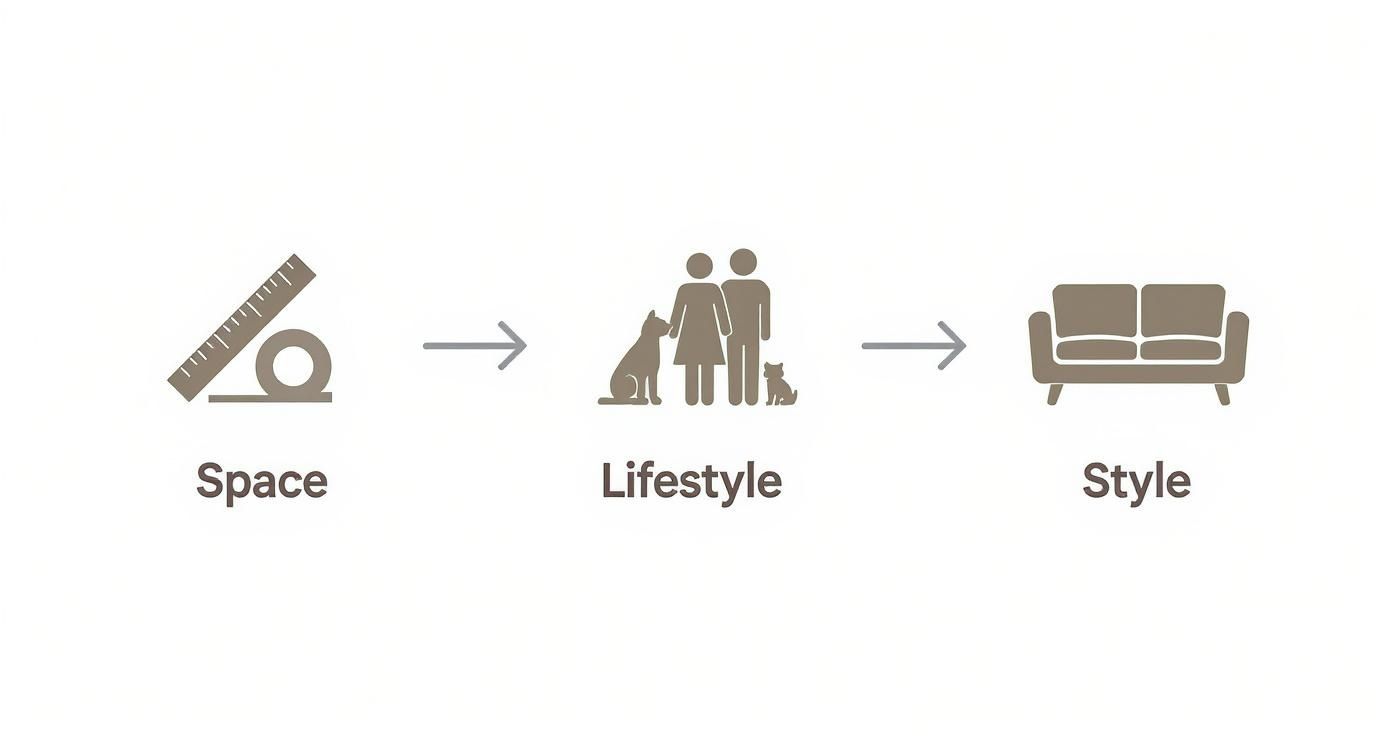
As you can see, the practical stuff has to come first. Once you know your size limits and functional needs, you can have fun narrowing down the aesthetics.
Finding the Right Fit and Scale
The scale of your sofa needs to feel right for the room it's in. A massive, overstuffed sectional will make a small apartment feel cramped and tiny, while a delicate loveseat will look completely lost in a great room with vaulted ceilings.
It's a common problem—in fact, 45% of shoppers say that finding a sofa to fit their space is their biggest challenge. This has led to a huge rise in flexible furniture, with 35% of people now choosing modular sofas that can be configured to fit their exact needs.
To help you get started, here's a quick reference for matching common sofa types to different living situations.
Quick Guide to Sofa Types and Their Best Use
| Sofa Type | Best For | Space Consideration |
|---|---|---|
| Sectional | Large families, movie nights, frequent entertaining | Ideal for large, open-concept rooms or to define a corner in a multi-use space. |
| Loveseat | Couples, small apartments, secondary seating areas | Perfect for smaller living rooms, dens, or as a complement to a larger sofa. |
| Sofa Bed/Sleeper | Homes without a guest room, multi-functional spaces | Great for small apartments or offices that need to double as guest quarters. |
| Chesterfield | Formal living rooms, home offices, traditional decor | A statement piece. Needs room to breathe; can overpower a small, cluttered room. |
| Modular Sofa | Renters, oddly shaped rooms, changing needs | Ultimate flexibility. Can be reconfigured, expanded, or split up as needed. |
Remember, this is just a starting point. If you find that standard sizes and styles just aren't cutting it for your unique space, it might be worth exploring a guide to the perfect custom sofa to get something made just for you.
3. Look Under the Hood: What Really Makes a Quality Sofa
A sofa can look incredible on the showroom floor, but what you can't see is what really counts. Its true quality—the kind that stands up to movie nights, kids, and pets for years to come—is all about the internal construction. Knowing what to look for beneath the fabric will help you tell the difference between a sofa that’s just a pretty face and one that’s built to last a lifetime.
Start with a Strong Skeleton: The Frame
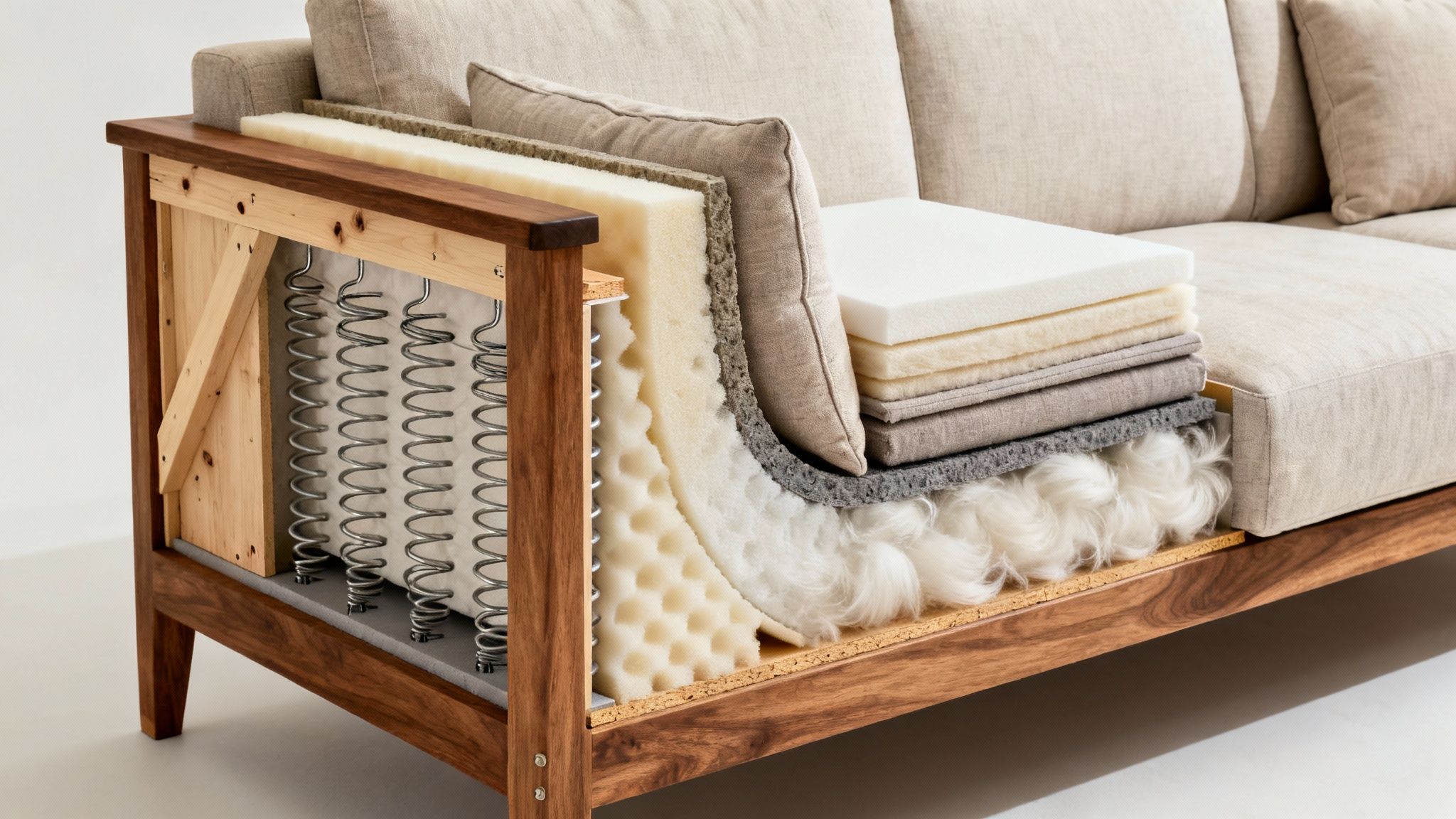
The frame is the absolute foundation of your sofa. If it's weak, nothing else matters. The undisputed champion here is a frame made from kiln-dried hardwood, like oak, maple, or ash. Why "kiln-dried"? This process zaps moisture from the wood, which is crucial for preventing it from warping or cracking as the years go by. It’s a huge step up from the particleboard, plastic, or soft woods you'll find in cheaper pieces, which can easily break under the stress of daily life.
How the frame is put together is just as important as the material. The best frames use joints that are dowelled, screwed, and glued. This triple-threat construction creates an incredibly strong bond. Steer clear of frames held together only by staples—they are a sure sign of a wobbly future.
Expert Tip: Don't be shy in the store. Try the "lift test." Grab one of the front corners of the sofa and lift it about six inches off the ground. If the other front leg lifts with it, you've got a rigid, solid frame. If the frame twists or the other leg stays put, walk away.
The industry knows this, too. That's why kiln-dried hardwood frames account for nearly 70% of sofas produced worldwide—their strength is simply proven. For more details on what's happening in the furniture world, you can check out sofa market trends from sources like Infinity Market Research.
Feel the Bounce: The Spring System
Under those comfy cushions is the suspension system, which dictates both support and how well the sofa resists sagging. There are a few key types to know.
The gold standard is the eight-way hand-tied spring system. It’s a classic for a reason. In this system, each spring is tied to its neighbors from eight different angles using strong twine. This creates a web of interconnected springs that move together, offering incredible support and comfort. It's labor-intensive and pricey, but it’s the best you can get.
A much more common and still excellent alternative is sinuous springs. These are S-shaped steel wires that run from the front of the frame to the back. They provide great support and are a fantastic middle-ground for quality and cost. The one to avoid? Simple webbing suspension. It might feel fine at first, but it will almost certainly stretch out and sag over time.
Sink In or Sit Up: Choosing Your Cushion Filling
Finally, we get to the part you feel every time you sit down: the cushion filling. This determines the immediate comfort and how well the sofa keeps its shape.
- High-Resilience (HR) Foam: This is a fantastic all-around choice. It’s firm but comfortable and bounces back into shape beautifully. For seat cushions, look for a density of at least 1.8 pounds per cubic foot or higher to ensure it won't flatten out.
- Down and Feathers: For that cloud-like, sink-in feeling, nothing beats a down-blend cushion. The trade-off? They require constant fluffing to look their best and can be one of the more expensive options.
- Polyester Fiberfill: This is a common budget-friendly filling. While soft initially, be warned that it tends to compress and clump over time, leaving you with lumpy, unsupportive cushions.
By getting familiar with these internal components, you can confidently look past a sofa's stylish exterior and invest in a piece of furniture that's truly built for the long haul.
Pick the Right Upholstery for Your Real Life
The fabric on your sofa is much more than a style statement—it's the frontline defense against everything your life throws at it. From movie night spills to muddy paws, the right upholstery is a crucial balance between the look you love and the durability you actually need. This choice will define not just how your sofa looks, but how it feels, how you clean it, and ultimately, how long it lasts.
Generally, you're choosing between natural and synthetic fibers. Natural fabrics like cotton, linen, and wool feel fantastic and breathe well, but they can be a bit high-maintenance, prone to staining and wrinkling. On the flip side, synthetics like polyester, nylon, and microfiber are engineered workhorses. They're built for durability and are often a breeze to clean, which is a lifesaver in a busy home.
For Homes with Kids and Pets
If you've got a bustling household with kids or four-legged family members, durability isn't just a feature—it's a necessity. You need a fabric that can stand up to the challenge.
- Microfiber: This synthetic material is a go-to for a reason. It's incredibly soft yet tough, and its tight weave makes it a champion at resisting stains. Liquids often bead up on the surface, giving you a critical window to grab a paper towel before a disaster sets in.
- Performance Fabrics: The name says it all. Brands like Crypton and Sunbrella have engineered fabrics specifically to repel stains, moisture, and even fading from sunlight. They give you the beautiful look of natural textiles without the high-maintenance headache.
- Leather: A classic choice that can be surprisingly family-friendly. High-quality leather is exceptionally durable and easy to wipe clean. The one major caveat? Sharp claws. If you have a cat that likes to climb or a dog that digs, those scratches can be permanent.
When you're comparing fabrics, look for the "rub count," sometimes called a Martindale rating. It's a standardized test that measures how many rubs a fabric can take before it shows wear. For a sofa that gets daily use, you should be looking for a rub count of at least 25,000.
A Quick Guide to Leather
The term "leather" covers a huge range of quality, and the price tag usually tells the story. Understanding the lingo will help you know exactly what you're paying for.
- Full-Grain Leather: This is the best of the best. It's the top layer of the hide with all its natural textures and imperfections left intact. It’s incredibly strong, breathes beautifully, and develops a rich, gorgeous patina over the years. It’s an investment, but one that can last a lifetime.
- Top-Grain Leather: Still a fantastic, high-quality option, top-grain is the same cut as full-grain, but the surface has been lightly sanded to remove blemishes. This gives it a more uniform, polished look while retaining most of the durability.
- Bonded Leather: Be very careful with this one. Bonded leather isn’t a true hide; it’s a composite material made from leather scraps shredded and glued together onto a backing. It might look good on the showroom floor, but it’s notorious for peeling and cracking, often within just a year or two. It’s a budget choice that rarely pays off in the long run.
Find a Sofa Style That Fits Your Home
Okay, you've handled the practical stuff—size, construction, materials. Now for the fun part: making sure your new sofa actually looks right in your room. A sofa is the centerpiece of your living space, so it needs to feel like it belongs, not like an awkward guest that overstayed its welcome.
The style options can feel endless. You've got everything from the sleek, clean lines of a Mid-Century Modern design to the classic, tufted comfort of a traditional Chesterfield. Maybe you love the flexibility of a big sectional or the formal, upright feel of a Camelback. Don't get bogged down in the terminology. Just think about the overall vibe you're going for.
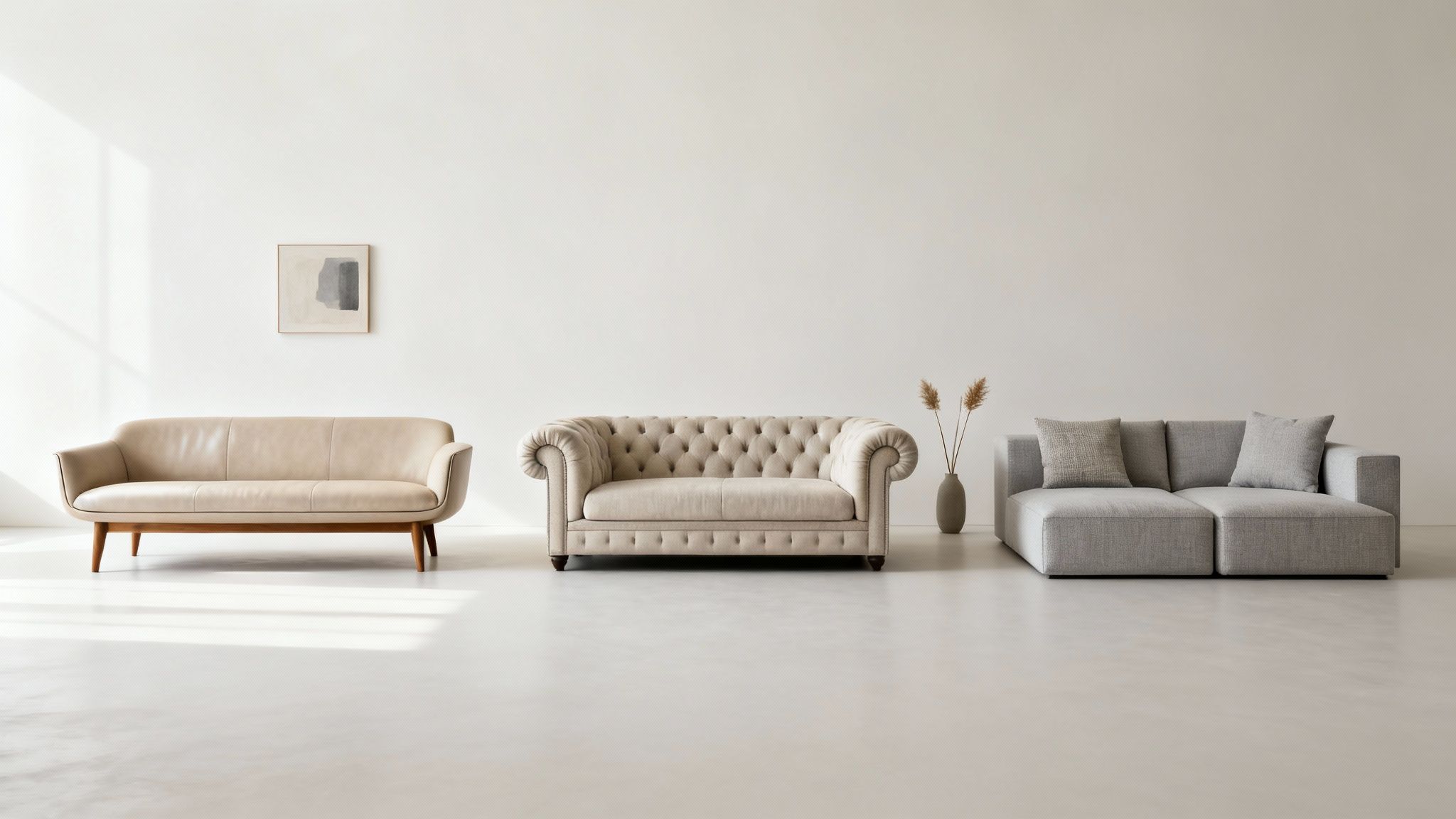
If you're still trying to pin down your personal taste, our comprehensive furniture style guide is a great place to start. It really breaks down the defining features of different design eras.
Nail the Scale and Visual Weight
A sofa's size isn't just about its physical footprint; it's also about its visual weight. Think of it as how heavy the piece looks in the room. A bulky, skirted sofa that hides its feet feels much heavier than a streamlined one on tall, slender legs where you can see the floor underneath.
It’s all about creating balance. A huge, overstuffed sectional can completely overpower a small apartment living room, while a tiny, delicate loveseat will look lost and insignificant in a massive great room.
If your space is on the smaller side, look for a sofa with exposed legs and a lower profile. This simple trick creates an illusion of more space. On the other hand, if you're working with high ceilings and an open floor plan, you'll need a more substantial piece with a higher back to anchor the room properly.
Here's a pro tip I always share with clients: Avoid buying the matching three-piece living room set. Your sofa and accent chairs should complement each other, not look like identical twins. Contrast is what makes a room feel curated and interesting.
It's All in the Details
The little things—the shape of the arms, the style of the legs—are what truly define a sofa's personality. These details are your secret weapon for making the new piece work with the furniture you already own.
Get familiar with a few key features:
- Arm Styles: Do you prefer the classic curve of a rolled arm, the crisp, straight line of a track arm, or the more dramatic flared arm? Each one sets a completely different tone.
- Leg Styles: A tapered wooden leg is a dead giveaway for Mid-Century Modern style. A chunky block foot feels more contemporary and solid. An ornate, curved cabriole leg is a signature of traditional furniture.
Take a quick inventory of your room. Does your coffee table have sharp angles and clean lines? A sofa with track arms will echo that modern aesthetic beautifully. Do you have a lot of antique wooden pieces? A sofa with turned legs or classic rolled arms will feel right at home. The goal is to find common threads in shapes and materials that tie everything together, creating a room that feels intentional and thoughtfully designed.
It's Time to Talk Money: Budgeting for a Sofa That Lasts
Alright, let's get down to the brass tacks: the budget. This is where the dreamy vision of your perfect sofa meets the reality of your wallet. Setting a clear budget right from the get-go is the single best way to avoid getting overwhelmed and to focus your search on what really matters—finding the absolute best value for your money.
The sofa market is enormous, with a global valuation of around USD 30.25 billion. What does that number mean for you? It means you have an incredible amount of choice, from budget-friendly basics to bespoke, handcrafted masterpieces. This competition is a good thing, as it gives you more power to find something great at a price you're comfortable with. You can dig deeper into the growing global sofa market and its trends to see just how diverse it is.
Ultimately, you get what you pay for. A higher price often points to superior guts—we're talking kiln-dried hardwood frames and eight-way hand-tied springs. Those aren't just fancy terms; they're the components that determine whether your sofa will be a cherished part of your home for years or a saggy disappointment in a few.
What Does "Good Value" Really Mean?
To make sense of the prices you'll see, it helps to think in tiers. Of course, costs can swing wildly based on where you live and shop, but this general breakdown will help you manage your expectations.
-
Budget-Friendly (Under $1,000): Sofas in this range are perfect for a first apartment, a kid's playroom, or a temporary fix. You'll likely find frames made from engineered wood or pine with simpler spring systems. The biggest compromise here is usually longevity.
-
Mid-Range ($1,000 - $3,000): This is the sweet spot for most families, and for good reason. You can expect solid hardwood frames, dependable sinuous spring systems, and a wide selection of durable performance fabrics or even top-grain leather.
-
High-End ($3,000+): When you enter this territory, you're investing in true craftsmanship. Think premium materials, hand-tied springs, designer silhouettes, and often the ability to customize. These are heirloom pieces, built to be passed down.
Here's the most important thing to remember: value isn't the same as the lowest price. A $2,500 sofa that holds up for 15 years is a much smarter buy than a $700 sofa that you have to replace in three.
Your Final Pre-Purchase Checklist
Before you pull the trigger, a few final checks can save you a world of headaches later. No matter how perfect a sofa seems online or on the showroom floor, don't skip these crucial last steps.
1. The "Sit Test" is Non-Negotiable
Comfort is completely subjective. You have to sit on a sofa to know if it feels right to you. Is the seat deep enough for your long legs? Does the back hit you in the right spot? Don't just perch on the edge—lounge on it, lie down on it, and mimic how you'll actually use it at home.
2. Dig Into the Warranty
A manufacturer's warranty is basically their vote of confidence in their own product. Look for one that covers the frame for a minimum of five years, though lifetime warranties are the gold standard. Pay close attention to what's covered for the cushions and fabric, as that's often where wear and tear shows up first.
3. Know the Return Policy Cold
Even with the best planning, sometimes a sofa just doesn't work once you get it into your space. Understand the store's return policy completely. Is there a return window? Will you be hit with a restocking fee? Knowing this information is your safety net.
Answering Your Final Sofa Questions
Even with all the planning in the world, a few last-minute questions always seem to pop up right before you pull the trigger. Let's tackle some of the most common ones I hear, so you can make your final choice with total confidence.
How Long Should a Good Sofa Actually Last?
This all comes down to what’s going on inside the frame. A truly high-quality sofa, the kind built with a solid, kiln-dried hardwood frame, is an investment that can easily last 15 to 20 years. With a little care, these are the pieces that can move with you for decades.
Stepping into the mid-range, you’ll find sofas with good hardwood frames and reliable sinuous springs. These are the workhorses, and you can realistically expect about 7 to 10 years of solid, comfortable use from them. Budget-friendly models, often made with engineered wood, are really designed for shorter-term living situations, lasting around 3 to 5 years before they start to sag and show their age.
What's the Best Sofa Material for a House with Pets and Kids?
If your living room sees a lot of action, your fabric choice is everything. You need something that can stand up to spills, paws, and the occasional crayon.
- Performance Fabrics: Look for these! Synthetics like microfiber or specially treated blends are miracle workers. They have a tight weave that repels stains, and many messes can be cleaned up with just a bit of water.
- Leather: Don't overlook genuine leather. It's incredibly tough and wipes clean in a flash. The only real watch-out is sharp claws, which can leave scratches.
On the flip side, I'd strongly advise against delicate materials like silk, untreated linen, or standard velvet. They look beautiful, but they stain if you just look at them wrong and can be a nightmare to clean.
Your goal is to find a sofa you can live on, not one you have to constantly police. Choosing a pet- and kid-friendly material from the get-go saves so much stress down the line.
Is Buying a Sofa Online a Terrible Idea?
Not at all! You just have to be a little more strategic about it. Shopping online often gives you way more selection and better prices, but you lose out on the critical "sit test." To avoid buyer's remorse, you need to put on your detective hat.
First things first: always order fabric swatches. A color on your screen can look completely different in the light of your own home. Trust me, this is a non-negotiable step to avoid a major color catastrophe.
Next, dive deep into the customer reviews. I mean, really read them. Look for patterns in comments about long-term comfort, how the fabric is holding up, and whether the product photos were accurate. Finally, measure everything three times, and get crystal clear on the company's warranty and return policy before you add it to your cart.
Should I Choose Comfort or Style?
This is the classic dilemma, isn't it? While we all want that perfect sofa that looks like it came out of a magazine and feels like a cloud, comfort has to win if it comes down to a choice.
Think about it: a drop-dead gorgeous sofa that you hate sitting on will quickly become your least favorite piece of furniture. It’s just an expensive sculpture at that point.
My advice is to first narrow down your options based on your practical needs—the size, depth, and cushion support that feel right to you. From that smaller, pre-approved list, you can then pick the one that best fits your home's style. That way, you’re guaranteed to end up with a sofa that not only looks fantastic but truly feels like home.
At Fluent Trends, we believe you shouldn't have to choose between impeccable style and lasting quality. Explore our curated collection of designer-approved sofas and find the perfect centerpiece for your living space today. https://www.fluenttrends.com