

How to Choose an Area Rug: A Simple Guide to Size, Material & Style
Donna MaloneWhen you’re choosing an area rug, there’s one thing that matters more than anything else: getting the size and placement just right. I’ve seen it time and time again—a rug that’s too small can make an entire room feel off-balance and disjointed. But the right one? It grounds the space and pulls all your furniture together into one cohesive, inviting whole.
Mastering Rug Size and Placement
Nothing throws off a beautiful room faster than a tiny rug floating in the middle of the floor. It looks like an afterthought, making the furniture seem disconnected and the room itself feel smaller. The real goal here is to find a rug that creates a unified zone for your seating or dining area.
So, before you fall in love with a pattern or texture, grab your tape measure. Trust me, it’s the single best tool you have to avoid that sinking feeling of buyer's remorse.
The Painter's Tape Trick
It's one thing to see a rug's dimensions online, but it's another thing entirely to visualize it in your own home. This is where a little trick I swear by comes in handy: painter's tape.
- First, find the dimensions of the rug you're eyeing.
- Next, use painter's tape to mark out that exact rectangle on your floor.
- Finally, place your furniture around and on it just as you would with the real rug. At a minimum, the front legs of your major pieces should be on the tape.
This simple move takes all the guesswork out of the equation. You can immediately see how it feels to walk around, whether the proportions are right, and how it interacts with your furniture. No more crossing your fingers and hoping for the best.
This simple infographic breaks down the process perfectly.
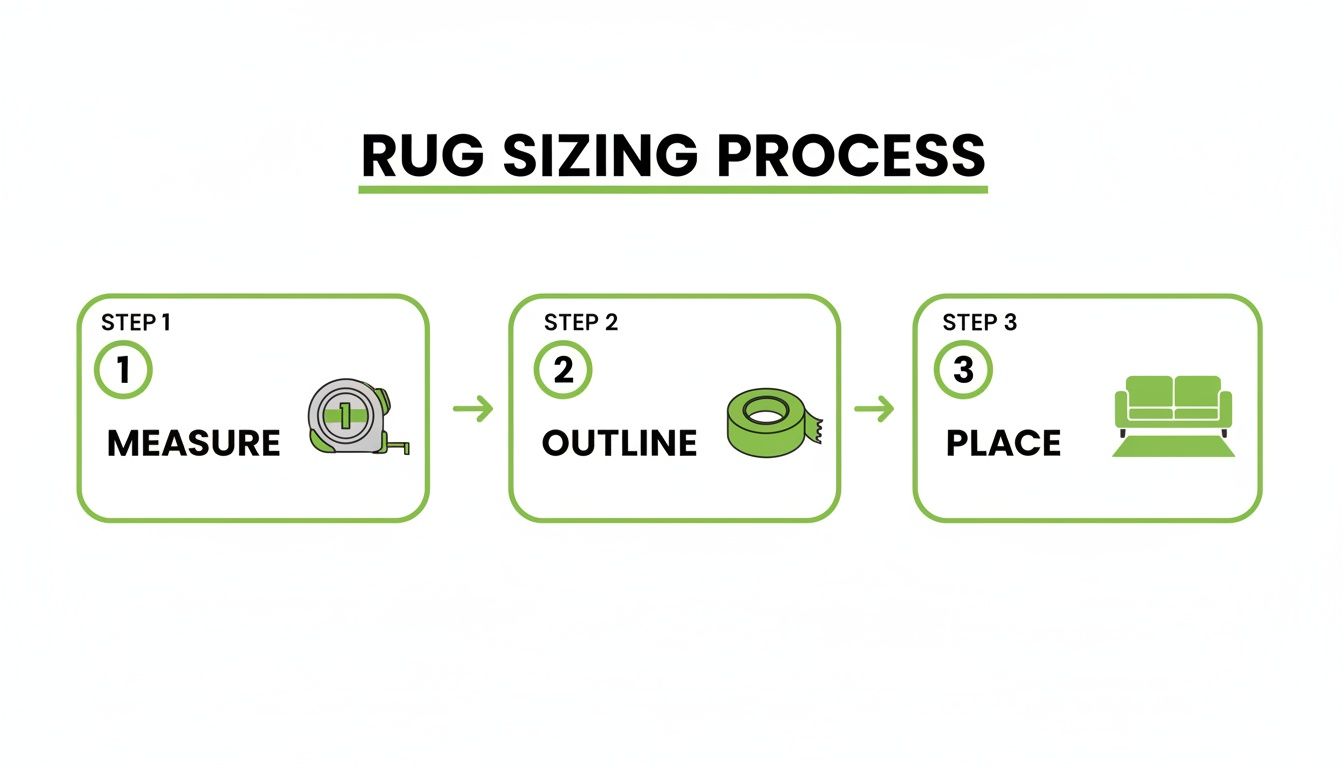
Seeing the flow from measuring to taping to placing really shows you how to build confidence before you click "buy."
Quick Guide to Rug Sizing by Room
To make things even easier, here’s a quick cheat sheet with some standard sizes and placement tips for the most common rooms in the house.
| Room | Recommended Size (ft) | Placement Pro Tip |
|---|---|---|
| Living Room | 8x10 or 9x12 | All furniture legs on the rug is ideal, but at least the front two legs of your sofa and chairs should be on it to anchor the space. |
| Dining Room | 8x10 or 9x12 | Ensure the rug extends at least 24 inches beyond the table on all sides. Chairs should still be fully on the rug when pulled out. |
| Bedroom (Queen) | 8x10 | Place the rug horizontally under the bed, leaving about two-thirds of it exposed at the foot and sides. |
| Bedroom (King) | 9x12 | Same placement as a queen, but the larger size accommodates the wider bed frame, giving you a generous border to step onto. |
While these are great starting points, always remember to measure your specific room and furniture layout. Every space is a little different!
Living and Dining Room Rules
Every room has its own logic when it comes to rug placement. In a living room, your rug should be the piece that connects your main seating.
Pro Tip: Always aim for at least the front two legs of your sofa and chairs to be sitting comfortably on the rug. This creates a defined conversation area and makes the design feel intentional and cozy.
The dining room is all about function. The rule here is simple and non-negotiable: all four legs of a dining chair must stay on the rug, even when someone pulls it out to sit down. If the back legs catch on the edge, your rug is definitely too small.
This is a huge pain point for shoppers. In fact, sizing mistakes are the #1 regret, with up to 40% of buyers feeling their rug is too small for the room. To avoid this, experts recommend your dining rug should extend at least 24 inches past your table on every side.
Of course, rug placement is deeply connected to your overall furniture plan. Learning how to arrange living room furniture is a great next step for creating a truly cohesive design.
Getting these details sorted out first ensures your new rug won't just look amazing, but will actually work for your everyday life. For an even more detailed breakdown of measurements and room-by-room examples, check out our guide on how to choose the right rug size.
Matching Rug Materials to Your Lifestyle
Once you’ve nailed down the right size and placement, the next big question is material. This is a huge decision. The fiber you pick determines pretty much everything—how it feels under your feet, whether it can handle your day-to-day life, and how often you'll be on your hands and knees cleaning it. Think of it like a long-term relationship; you want a rug that fits your life, not one that makes you change it.
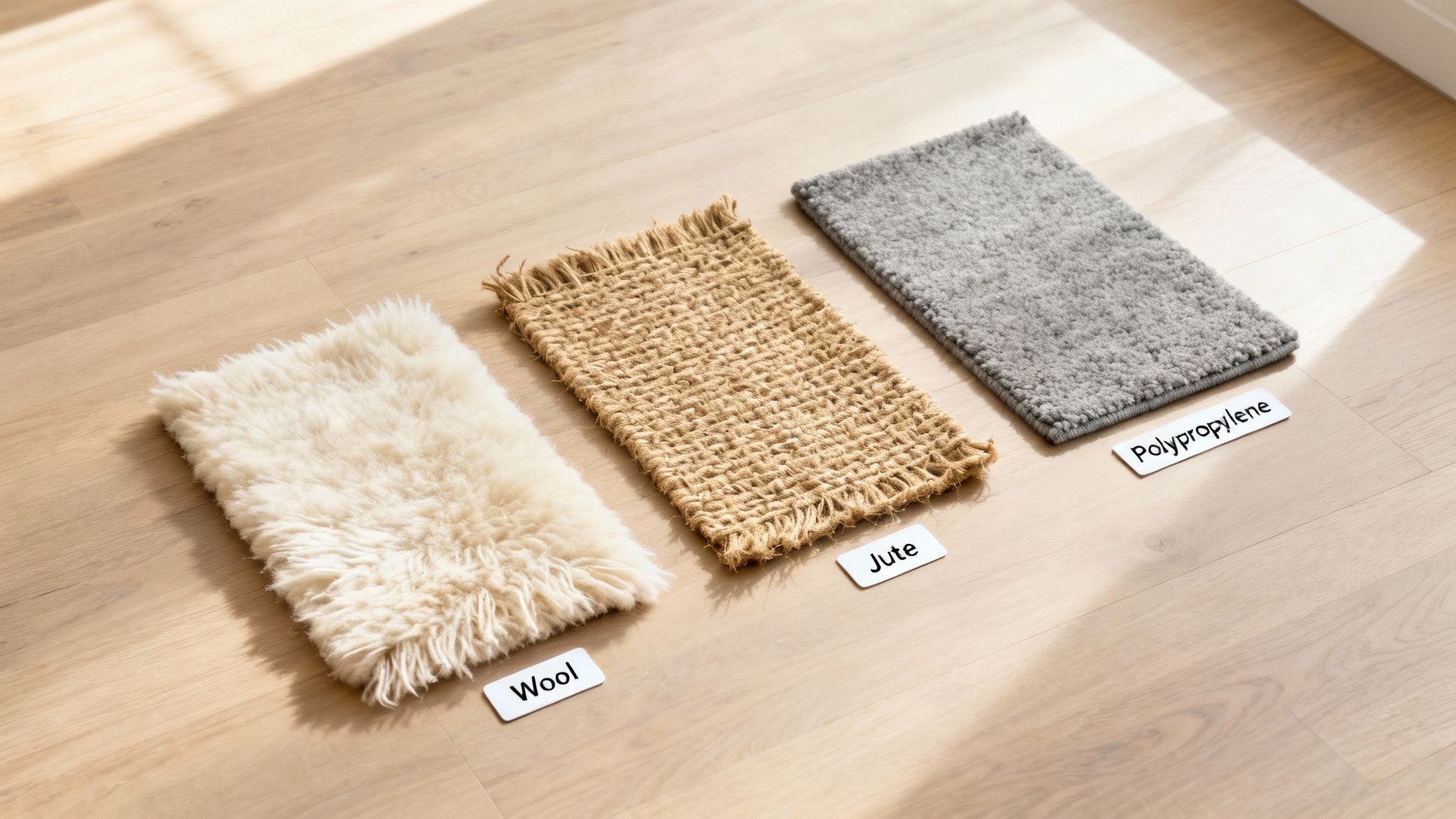
If you've got a bustling home with kids or pets running around, durability and stain resistance are your best friends. But for that quiet, low-traffic bedroom? That’s where you can indulge in something a bit more delicate or luxe. It’s really about being honest with yourself about how you actually live.
Natural Fibers: The Timeless Choice
When you think of natural materials, wool is the undisputed king. It's incredibly durable, feels amazing underfoot, and has a natural lanolin coating that makes it surprisingly stain-repellent. A good wool rug is a true investment that can last for decades, which is why you see them so often in living rooms and other high-traffic spots.
Then you have jute and sisal. These bring a wonderfully earthy, organic texture to a room and are fantastic for layering to get that casual, coastal feel. Just be aware they can feel a bit coarse and don't play well with water stains, so they’re better off in drier spaces like a home office or bedroom.
The market definitely shows a love for these lasting materials. North America is poised to account for 38% of global growth in the rug market through 2029, with shoppers clearly favoring resilient fibers. Wool rugs alone hold a massive 25% market share and can last 20-25 years with good care, resisting wear 50% better than many synthetics in busy homes. And with 60% of millennials prioritizing sustainability, the demand for eco-friendly options like jute and sisal is only growing. You can dive deeper into these trends by exploring the latest area rug industry analysis.
Synthetic Fibers: Practical and Powerful
Now, let's talk about the workhorses of the rug world: synthetics. Materials like polypropylene, nylon, and polyester are engineered for real life. They’re generally more affordable, super stain-resistant, and a breeze to clean—perfect for homes with pets, kids, or spill-prone zones like the dining room.
- Polypropylene (Olefin): This stuff is a champ for both indoor and outdoor rugs. It’s tough, fade-resistant, water-resistant... it can handle pretty much anything.
- Nylon: Famous for its incredible durability, nylon is what you want for the busiest parts of your home—think hallways and family rooms. It holds up to heavy foot traffic without losing its texture.
- Polyester: If you want vibrant, lasting color and a soft feel, polyester is a great pick. It’s best for adding a pop of color in lower-traffic areas like a bedroom.
It’s no surprise that synthetics make up about 45% of the market. Their quick-dry nature and serious stain resistance are exactly what modern family life calls for.
Understanding Pile Height
Finally, let's touch on pile. This is just a term for the height and density of the rug’s fibers, and it has a huge impact on how a rug looks and feels.
- Low-Pile Rugs: These have short, dense fibers, making them easy to vacuum and perfect for busy areas. That flat surface is also great for putting under furniture—no more struggling to slide a dining chair back.
- High-Pile Rugs (Shag): Think plush, shaggy, and oh-so-luxurious underfoot. These rugs add instant warmth and cozy texture, making them ideal for places where comfort is the top priority, like bedrooms. Be warned, though: they demand a bit more effort to keep clean.
Choosing Colors and Patterns That Tell Your Story
This is the fun part. The color and pattern you choose will transform a simple floor covering into the heart of your room. It’s your chance to decide: will the rug be a quiet, unifying foundation or a bold statement piece that commands attention? Your choice really sets the mood, so it’s worth thinking about the story you want your space to tell.
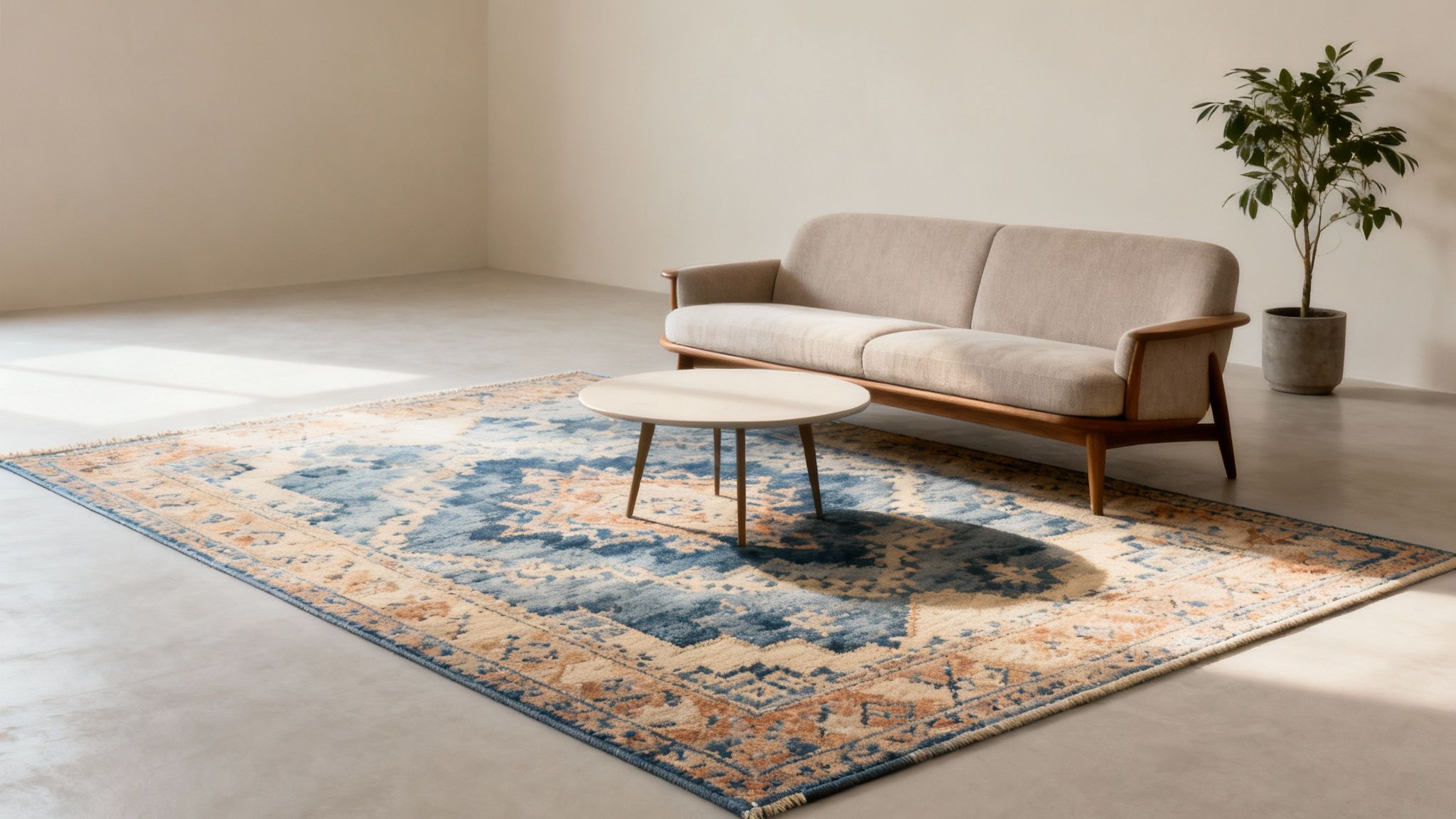
If your room is already full of life with vibrant furniture or patterned curtains, a neutral or subtly textured rug can bring a much-needed sense of calm. It grounds all the other elements without competing for the spotlight.
On the flip side, in a room with mostly solid, neutral furniture, a rug with a dynamic pattern or rich color can inject a huge dose of personality. It instantly becomes the room's stunning focal point.
Applying the 60-30-10 Rule
A classic interior design trick that works wonders here is the 60-30-10 rule. It's a simple, foolproof framework for creating a balanced color scheme.
- 60% Dominant Color: This is usually your wall color and other big surfaces.
- 30% Secondary Color: Think furniture, curtains, and other medium-sized pieces.
- 10% Accent Color: These are your smaller pops of color from throw pillows, art, and decor.
So, where does the rug come in? It can fit into any of these roles. A large, neutral rug might contribute to your 60% dominant shade. A colorful rug could easily be your 30% secondary color, pulling together different shades from your furniture. Or, a boldly patterned rug could introduce or reinforce that 10% accent color, tying the whole look together with a final flourish.
Your rug doesn't have to match everything perfectly. In fact, it's often more interesting if it doesn't. Think of it as a piece that coordinates with and complements your existing palette, rather than just mimicking it.
Pattern Scale and Color Psychology
The scale of a pattern can completely change how a room feels. Big, bold patterns tend to make a room feel more intimate and dynamic. Meanwhile, small, intricate patterns can read as a subtle texture from a distance, adding depth without overwhelming the eye.
Color itself has a powerful psychological effect, too.
Cool tones like blues and greens often create a sense of calm and serenity, which is why they're so popular for bedrooms and living rooms. Warm tones like reds, oranges, and yellows can make a space feel vibrant, energetic, and welcoming—perfect for dining rooms or social areas.
If you're worried about making a mistake, layering neutrals is a great, stylish strategy. Industry data shows that a whopping 65% of shoppers end up regretting bold color and pattern mismatches. You can avoid a chaotic look by choosing colors that complement 60-80% of what's already in the room.
In fact, neutral tones like beige and gray are the top choice for 55% of buyers and can even boost a home's resale value by 12%. You can dive deeper into these trends by reading the full area rug market report. This kind of insight really helps when deciding how to choose an area rug that you'll love for years to come.
The Final Details: Rug Pads and Smart Maintenance
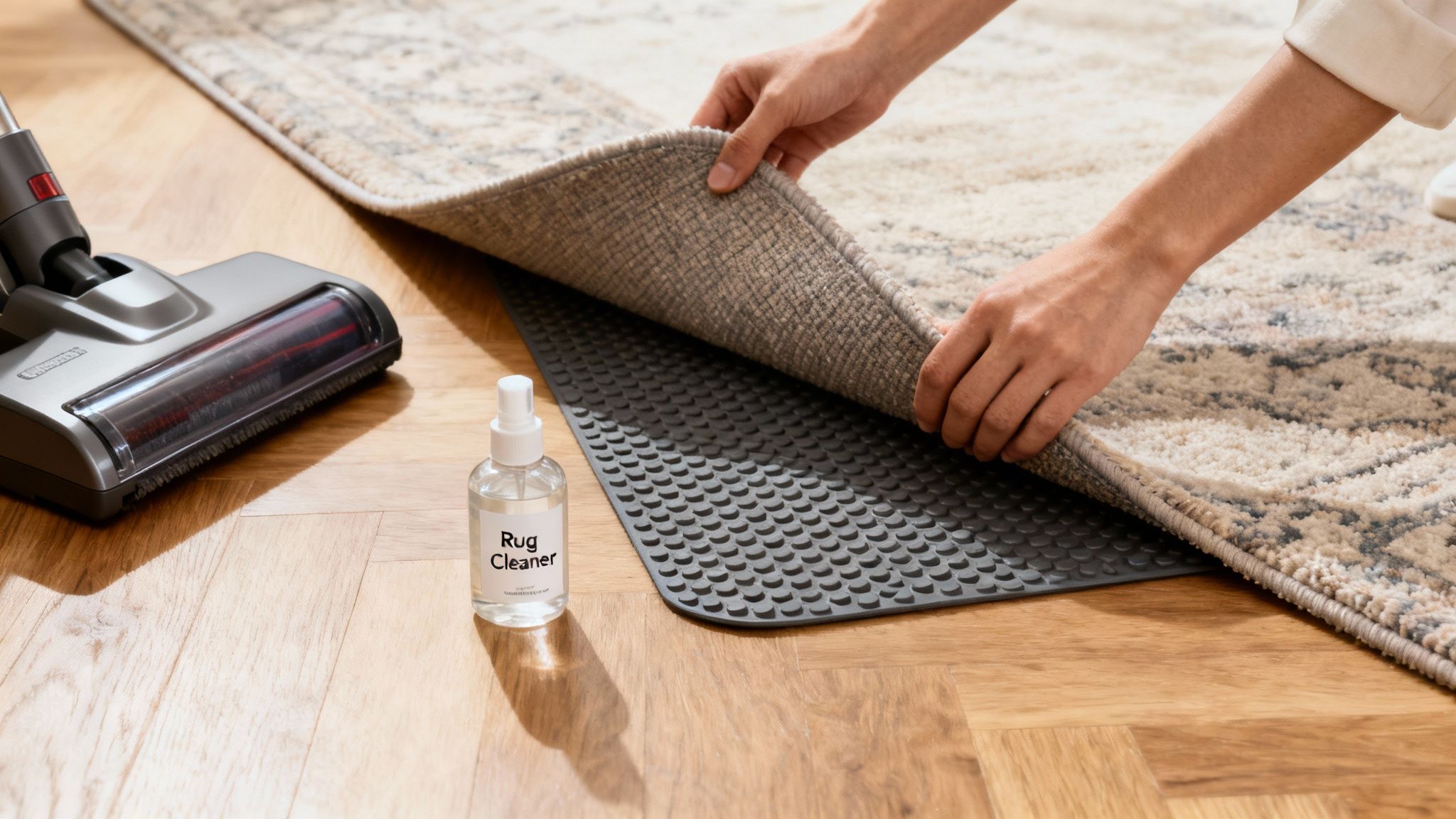
You’ve found the one. The perfect rug is ready to come home. But before you roll it out, there's one final detail that I consider absolutely non-negotiable: a quality rug pad.
Think of it as the unsung hero of your whole setup. It does way more than just stop your rug from becoming a slip-and-slide. A good pad adds a surprising layer of plushness underfoot, protects your beautiful hardwood floors from scratches, and even helps your rug last longer by absorbing the daily impact of foot traffic.
Honestly, skipping the rug pad is one of the biggest mistakes I see people make. A solid pad improves air circulation, which makes vacuuming more effective and prevents moisture from getting trapped. It's a small extra investment that pays off in a huge way.
Matching the Pad to Your Needs
Rug pads aren’t a one-size-fits-all product. The right choice really comes down to your flooring and the specific rug you've chosen.
- For Preventing Slips: If your main goal is to keep a rug from shifting on a slick surface like tile or wood, a thin, grippy rubber or PVC pad is your best bet.
- For Added Cushion: Want that luxurious, sink-in feeling? Look for a thicker felt pad. A felt-and-rubber combo is even better, giving you the best of both worlds—cushion and grip.
- For Large, Heavy Rugs: Big, hefty rugs tend to stay put from their own weight. In this case, a simple felt pad is often all you need for extra comfort and floor protection.
Here's a pro tip: Always make sure your rug pad is about one inch smaller than your rug on all sides. This lets the rug's edges taper down nicely to the floor and prevents a tripping hazard.
Keeping Your Rug Looking New
Once your rug is perfectly placed, a simple maintenance routine is all it takes to protect your investment. Regular vacuuming is key—just be sure to turn off the beater bar for delicate or high-pile rugs to avoid snagging the fibers.
I also recommend rotating your rug every 6-12 months. This simple step ensures it wears evenly, especially if it’s in a sunny spot where one side might fade faster than the other.
For routine cleaning, you can find great advice on how to clean indoor-outdoor rugs, as many of the same techniques apply to other rug types. And since spills are bound to happen, knowing some effective methods for removing stubborn carpet stains is a lifesaver. The number one rule? Tackle spills immediately by blotting—never rubbing—with a clean, dry cloth to stop the stain from setting.
Your Smart Rug Shopping Checklist
Shopping for a rug online can feel like a gamble. You're scrolling through endless options, trying to imagine how a digital image will translate to your living room floor. How do you make sure the rug that shows up is the one you actually fell in love with?
It all starts with dissecting the product description like an expert. Don't just skim it—zero in on the keywords that reveal the rug's true character.
- Construction: Is it hand-knotted, hand-tufted, or machine-made (power-loomed)? Hand-knotted is the gold standard for durability and a serious investment. Machine-made rugs are budget-friendly and consistent, while hand-tufted options sit in the middle but can be prone to shedding.
- Material: What's it actually made of? Check if it's 100% wool or a blend. If you're looking at synthetics, is it polypropylene (a workhorse for durability) or polyester (loved for its softness and vibrant colors)?
- Pile Height: Look for the actual measurement. Anything under 0.25 inches is considered low pile, making it a breeze to clean. Once you get over 0.75 inches, you're in plush, high-pile shag territory.
Why You Should Never, Ever Skip the Sample
If you take only one piece of advice from this guide, let it be this: always order a sample. I can't stress this enough. A screen can't possibly capture the real-life color and feel of a rug.
What looks like a warm, creamy beige on your laptop might show up as a cool, sterile gray under your home's lighting. It happens all the time.
Ordering a sample is the only way to see how the rug really looks next to your sofa, against your wall color, and on top of your floors. It lets you feel the texture before you commit to something that's a huge pain to return.
The Not-So-Fun Stuff: Logistics and Fine Print
Before you click "add to cart," do a quick check on the practical details. Big rugs are big items, and they often come with their own set of rules for shipping and returns.
- Shipping Costs: Is it actually free, or is there a sneaky freight charge for oversized items?
- Return Policy: How long do you have to send it back? And more importantly, who pays for return shipping? Trust me, trying to repackage a giant 8x10 rug and footing the bill to ship it back is not a fun weekend project.
- Customer Photos: This is my secret weapon. Always dig through the reviews for photos from other buyers. Seeing the rug in a real person's home gives you a much better sense of its true color and scale than a perfectly lit studio shot.
A lot of retailers are also rolling out "View in Your Room" AR tools. While they're no substitute for a real sample, they're fantastic for a quick gut check on whether the size and pattern scale will work in your space.
To make it even easier, I've put together a quick checklist to run through before you finalize that online purchase.
Online Rug Buying Checklist
Think of this as your final pre-flight check. Running through these points can save you from a major headache and ensure the rug you order is the rug you'll love for years.
| Check Point | What to Look For | Pro Tip |
|---|---|---|
| Material & Construction | Confirm the exact fiber (wool, polypropylene, etc.) and weave (hand-knotted, machine-made). | Match the material to the room's traffic. Wool is a champ, but polypropylene is great for spill-prone areas. |
| Pile Height | Find the specific measurement in inches or millimeters. | A low pile (< 0.25") is best for under dining tables and in entryways for easy cleaning and door clearance. |
| Sample Ordered? | Did you get a physical sample and test it in your room's lighting (day and night)? | Tape the sample to the floor where the rug will go. Live with it for a day or two to see how the color shifts. |
| Return Policy | Check the return window, return shipping costs, and any restocking fees. | Keep the original packaging until you are 100% sure you're keeping the rug. Repackaging is a nightmare without it. |
| Customer Reviews & Photos | Look for consistent feedback and scroll for real-life photos submitted by other buyers. | Pay close attention to comments about color accuracy. Reviewers will often say if it's "warmer" or "cooler" in person. |
| Augmented Reality (AR) View | Use the "View in Your Room" feature if available to check the pattern's scale. | This is less about color and more about confirming a bold pattern won't overwhelm your space. |
Going through these steps might feel like extra work, but it's the difference between a frustrating return and finding the perfect piece that pulls your entire room together. Happy hunting
Your Last-Minute Rug Questions, Answered
You've measured, you've browsed, you've narrowed it down. But just before you click "buy," a few little questions might be holding you back. I've heard them all, so let's clear up those final uncertainties and get you to the finish line with total confidence.
Can I Really Put an Area Rug on Top of Carpet?
You bet you can! Layering an area rug over wall-to-wall carpeting isn't just okay; it's a brilliant design move. It's my go-to trick for carving out distinct zones in a room—think of it as creating a "room within a room," like a cozy seating arrangement in a big living space.
It also injects a dose of personality with extra color, pattern, and texture, making the whole room feel more polished and thought-out. The secret is to create contrast. A low-pile rug with a fun pattern looks fantastic over a simple, low-pile neutral carpet. Just steer clear of putting a fluffy shag rug on top of an already plush carpet—it’s a bit wobbly and can look overstuffed.
Is a Rug Pad Actually Necessary?
I get asked this one constantly, and my answer is always a hard yes. A rug pad is not just an upsell; it's an essential part of the equation, even for a heavy rug that doesn't seem like it will budge.
Here’s why I never skip it:
- Safety First: It’s the single best way to prevent dangerous slips and bunching, especially in hallways or entryways.
- Floor Protection: Think of it as a bodyguard for your floors. It stops scratches, scuffs, and even potential color bleeding from the rug's dye.
- Rug Longevity: The pad absorbs the constant shock from footsteps, which dramatically reduces wear and tear on the rug fibers. It's the secret to making your investment last years longer.
- Added Comfort: A quality pad provides that extra layer of cushioning that makes a rug feel so much more plush and luxurious underfoot.
Help! My New Wool Rug Is Shedding Everywhere!
First off, take a deep breath. If your brand-new wool rug is leaving little fluff balls all over the place, it doesn't mean it's defective. This is completely normal and expected for a quality wool rug.
This initial shedding, sometimes called "fluffing," is just the rug shaking off the excess, loose fibers from when it was made. It will slow down significantly over the first few months. Regular, gentle vacuuming (make sure the beater bar is off!) is all you need to do. Honestly, it's a sign you've got a genuine, natural fiber rug on your hands.
Think of it like a brand-new wool sweater. It's a little fuzzy at first, but it settles down after a few wears. The initial shedding is just your rug getting comfortable in its new home before it provides years of beauty.
What Do I Do if My Rug Won't Lie Flat?
It's the classic unboxing dilemma: you unroll your new rug, and the edges immediately curl up. Don't worry, it's just been cooped up during shipping and needs a little encouragement to relax.
My favorite trick is reverse rolling. Tightly roll the rug in the opposite direction of the curl, secure it, and let it sit for a day or two. When you unroll it, you should see a huge difference. For any truly stubborn corners, place a stack of heavy books or the leg of a sofa on them overnight to flatten them out. Time and a little patience are your best friends here.
Ready to roll out the perfect piece for your room? At Fluent Trends, we’ve handpicked a collection of designer-quality indoor and outdoor rugs that blend style with real-life durability. Find the foundation that will pull your entire space together. Shop our exclusive rug collection today.