

How to Choose Energy-Efficient Lighting for a Modern Luxury Home
Yuatinia LeakLast Updated: November 9, 2026
Quick Summary
The best energy efficient lighting for a modern luxury home uses LED fixtures that pair strong lumens with low wattage, a color rendering index of 90 or higher, and dimmable controls. Plan each room's ambient, task and accent layers first, then pick fixtures that match.
- Plan each room's lighting before buying any individual fixture.
- Compare LEDs on lumens first, then check wattage.
- Look for a color rendering index of 90 or higher.
- Keep one room within a single color temperature range.
- Pair dimmable LEDs with an LED-rated dimmer switch.
Table of Contents
- Why Energy Efficient Lighting Matters in a Luxury Home
- Start With a Room-by-Room Lighting Plan
- Choose LED Fixtures That Compare Well on Lumens and Wattage
- Pick the Best Energy Efficient Ceiling Lighting for Luxury Homes
- Layer Ambient, Task and Accent Light in Living Spaces
- Set Color Temperature to Match the Mood of Each Room
- Add Smart Dimmable LED Lighting and Controls
- Check Installation Pitfalls and Lifecycle Costs Before You Buy
- Your Next Step: Mapping Out Lighting for Your Home
- Frequently Asked Questions
Why Energy Efficient Lighting Matters in a Luxury Home
Energy efficient lighting cuts power use without cutting the glow you want. For a home with statement fixtures and layered rooms, that matters more than most people expect. The right fixtures do two jobs at once: they look refined and they keep your bills in check. If you want a hardwired pendant you can buy right away, see the Lag Lamp Pendant Light options.

Luxury homes tend to run more lights than average. Recessed cans, pendants, wall sconces and accent lamps add up fast. LED bulbs generally use far less energy than older incandescent bulbs, and they tend to last longer (Saving American Families and Businesses Money through Lighting Efficiency). Fewer replacements can mean less waste.
Here's the catch. Cheap LEDs can flicker, look blue or harsh, and clash with warm wood and stone finishes. So efficiency alone is not the goal. You want light that is efficient, comfortable and beautiful together.
This guide walks through how to choose that light, room by room.
Start With a Room-by-Room Lighting Plan
Don't buy fixtures one at a time. Plan the whole home first.
Walk each room and write down what happens there. If you are planning the furniture around your lighting, this guide to styling a sculptural sideboard shows how the two work together. A kitchen needs bright task light over the counters. A living room needs soft ambient light and a few accents. A bedroom needs gentle light for reading and dressing.
Once you know the job of each room, the fixtures follow. A reading corner might need a table lamp with a warm, dimmable LED. An entry hall might suit a single pendant.
Sketch a simple floor plan, mark every switch and outlet, and note the ceiling heights. This takes an afternoon and saves months of mismatched fixtures.
Choose LED Fixtures That Compare Well on Lumens and Wattage
Lumens tell you how bright a bulb is. Watts tell you how much power it uses. For LEDs, a good light gives plenty of lumens for very few watts.
Compare bulbs on lumens first, then check wattage. As a general guide, a bulb producing roughly 800 lumens is roughly equivalent to an older 60-watt incandescent.
Check the packaging for the Energy Star label, a widely recognized sign of efficiency. You can learn more about how that program rates products on the U.S. Department of Energy's lighting efficiency guidance.
Also look at the color rendering index, or CRI. A CRI of 90 or higher makes skin tones, fabrics and finishes look true. That matters a lot in a luxury room where materials are the point.
Pick the Best Energy Efficient Ceiling Lighting for Luxury Homes
Ceiling lighting sets the base layer of a room, so it deserves the most thought. But the best choice is not just about looks. You want a fixture that delivers the right lumens for the space, accepts efficient bulbs, and holds up over years of daily use.
Start with the job of the room. A dining room needs a pendant that hangs low enough to light the table without glare. An entry needs a fixture that throws light wide and warm. A hallway can use a flush mount that spreads light evenly. Write down the room's size and ceiling height before you shop.
Now compare fixtures on three numbers. First, lumens, which tell you how bright the light is. Second, wattage, which tells you how much power it uses. Third, color rendering index, or CRI. Look for 90 or higher so wood grains, stone, and fabrics look true.
A hardwired pendant works well over a dining table or in an entry. The Lag Lamp Pendant Light, at $540.00, is one option to consider. It is made from three translucent layers of unbleached organic cotton and comes in hardwired or plug-in versions, so you can match it to the wiring you already have. Check that the bulb base matches your dimmer and that the fixture is rated for LED bulbs.
For a more sculptural look, the Ripple Ceramic Pendant Light, priced at $740.00, uses a ceramic shade with undulating surfaces. It is a strong choice when the fixture itself should be a focal point.
When you shop ceiling lights, check three things: the bulb type it accepts, the maximum wattage, and whether the fixture is LED compatible. Some decorative fixtures are not built for LEDs, and that mismatch can shorten their life. Also confirm the fixture's trim and finish will not yellow or fade under heat.
Watch out: a fixture rated for a 60-watt incandescent may not be rated for an LED bulb that draws similar wattage but produces more heat at the base. Always follow the label.
Finally, think about maintenance. Fixtures with open shades collect dust and need frequent cleaning. Enclosed glass or ceramic shades stay cleaner longer. In a luxury home, the best ceiling light is one you rarely have to think about after it is installed.
Here is how the main lighting choices compare at a glance.
| Fixture | Best for | Key check |
|---|---|---|
| Lag Lamp Pendant Light ($540.00) | Dining tables and entries | Hardwired or plug-in version |
| Ripple Ceramic Pendant Light ($740.00) | Focal-point fixtures | Sculptural ceramic shade |
| Lumens | Brightness of the bulb | Compare before wattage |
| CRI | True color of finishes | Look for 90 or higher |
| Bulb rating | Safe wattage limit | Follow the fixture label |
Layer Ambient, Task and Accent Light in Living Spaces
One ceiling light rarely does enough. Layering uses three types of light together:
- Ambient light fills the room evenly. This is usually your ceiling or recessed fixtures.
- Task light lets you read, cook or work. Under-cabinet lights and desk lamps fall here.
- Accent light draws the eye to art, shelves or architecture.
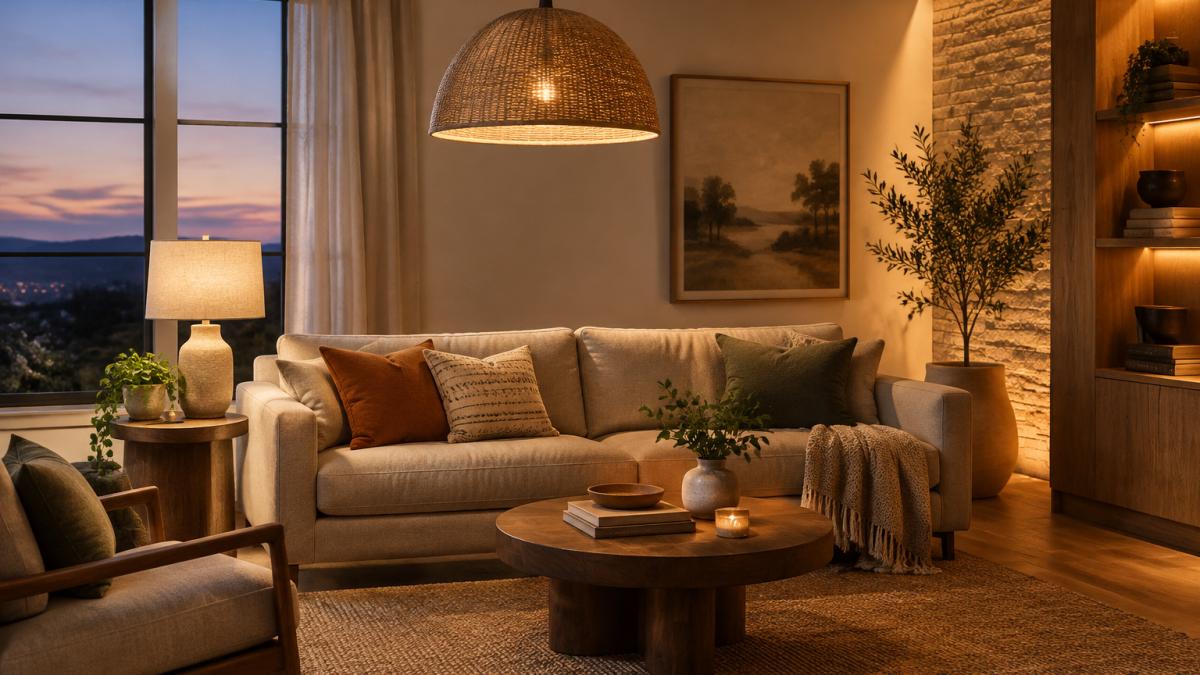
A warm, modern living room at dusk makes a good model. A pendant sits over the sofa area, a table lamp glows on a side table, and a soft accent light grazes a wall.
For table lamps, the Slot Table Lamp at $850.00 is a handcrafted option. It throws three bands of layered light across the wall and includes a GU10 LED bulb rated at 75W equivalent and 2700K warm white. Its 10-foot fabric cord and inline dimmer give you control over placement and mood. Lead time is 5 to 7 weeks because each lamp is made to order.
The Cloud Lamp, at $85.00, offers a lighter option for a bedroom or nursery corner. Its soft glow table lamp with a wooden base suits a quiet corner well. It gives a soft, diffused glow.

Set Color Temperature to Match the Mood of Each Room
Color temperature is measured in Kelvin (K). Lower numbers look warmer and more amber. Higher numbers look cooler and bluer.
For living rooms and bedrooms, 2700K to 3000K feels cozy and relaxed. For kitchens and home offices, 3500K to 4000K gives crisper task light. Most luxury homes do best with warm white in the main living areas and neutral white where you work.
Mixing temperatures across one room can look messy. Try to keep a single room within one temperature range. Use the same bulb color across the fixtures you can see at once.
Test a bulb in place before you commit to a full room.
Add Smart Dimmable LED Lighting and Controls
Dimmers are one of the easiest ways to save energy. Running a light at a lower level uses less power than running it at full brightness, and it sets a softer mood at night.
Make sure your LEDs are rated dimmable. Many LEDs will flicker or buzz on an old dimmer that was built for incandescent bulbs. Pair dimmable bulbs with an LED-rated dimmer switch.
Smart controls take this further. You can schedule lights, set scenes for dinner or movie nights, and check whether a lamp is still on when you leave the house. Some systems also respond to daylight, dimming electric light when the sun is bright through the windows.
Start simple. A few dimmers in the main rooms often give you most of the benefit without a full smart-home system.
Check Installation Pitfalls and Lifecycle Costs Before You Buy
The sticker price is only part of the cost. Think about the full lifecycle. Most people stop at the purchase price, but the real cost includes installation, energy use, replacement bulbs, and the labor to swap fixtures later.
Start with installation. Hardwired fixtures need a qualified electrician, and the bill can climb quickly in an older home with limited ceiling access. Plug-in versions cost less to install but use visible cords. The Lag Lamp Pendant Light, for example, comes in both options. If you are replacing a recessed can with a pendant, you may need a canopy kit and a new junction box. That adds time and cost.
Next, check compatibility. Confirm the fixture accepts LED bulbs, and check the maximum wattage on the label. Using a bulb above the rated wattage can create heat and a safety risk. Also check the dimmer. Many LEDs flicker or buzz on an old dimmer built for incandescent bulbs. Pair dimmable bulbs with an LED-rated dimmer switch. If you have a smart-home system, confirm the dimmer works with your hub before you buy.
Then estimate payback. Take the price difference between a standard fixture and an efficient one, divide it by your yearly savings on electricity, and you have a rough payback period. Use your own utility rate, since prices vary a lot by region. The payback period depends on hours of use and local electricity rates.
Finally, factor in lifespan. A good LED can last many years, so the bulb may outlast the room's paint color. Buy quality bulbs once rather than replacing cheap ones every year. Cheap LEDs often lose brightness faster and can shift color over time. Check the rated life and warranty on the packaging before you buy.
Check the location rating before you install a fixture in a bathroom or covered porch.
One more thing. Think about the whole room, not just the fixture. A dimmer that is not compatible with your bulbs can cost more to replace than the bulbs themselves. Test one bulb and one dimmer together before you commit to a full room. That small step saves a lot of frustration.
Your Next Step: Mapping Out Lighting for Your Home
Start with the room you use most. Write down its job, measure the ceiling, and list where you need task, ambient and accent light. Then choose one fixture from each layer and check the bulb, wattage and dimming setup.
Work through the rest of the house the same way. You will end up with a lighting plan that saves energy and feels like your home.
When you are ready to choose fixtures, browse the Fluent Trends lamp collection for handcrafted options in the sizes and finishes covered above. Build the plan first, then buy with confidence.
Frequently Asked Questions
What type of lighting is the most energy-efficient?
LED lighting is the most energy-efficient option for most homes today. An LED bulb uses far less electricity than an incandescent bulb to produce the same brightness, measured in lumens rather than watts. When you shop, compare the lumen output on the box and aim for the brightness you want at the lowest wattage. LED fixtures also last much longer, which means fewer replacements and less waste over time. Pairing LEDs with dimmers and occupancy controls cuts energy use even further.
How can I make luxury home lighting more energy-efficient?
Start by swapping older bulbs for LEDs throughout the house, beginning with the rooms you use most. Choose fixtures that accept LED modules so you do not have to replace the whole piece later. Add dimmers so you only use the light level you need for each activity. Motion or occupancy sensors in hallways and closets prevent lights from staying on unused. A layered plan lets you light only the zones in use, instead of blasting one bright overhead fixture all evening.
How do I choose the right color temperature for each room?
Color temperature is measured in Kelvin, and it shapes how a room feels. Warm white around 2700K suits bedrooms, living rooms and dining areas, where a relaxed glow works best. Neutral white near 3000K to 4000K fits kitchens, bathrooms and home offices, where you need clearer task light. Stick with one color temperature per room so the space feels cohesive. Check the bulb packaging for the Kelvin rating before you buy, because bulbs of the same wattage can look very different.
Are LED lights suitable for modern luxury interiors?
Yes, LED lights work well in modern luxury interiors when you choose quality products. Look for a high color rendering index, often listed as CRI 90 or higher, so that fabrics, wood and artwork look true to color. Confirm that the fixture is dimmable and that the dimmer is compatible with LEDs, since mismatched dimmers can cause flicker. Well-made LED fixtures offer clean lines, slim profiles and consistent light output, which suits the refined look many luxury homeowners want.
