

How to Set a Casual Table That Feels Effortlessly Chic
Donna MaloneSetting a casual table isn't about memorizing stuffy, old-fashioned rules. It’s all about creating a vibe—a warm, inviting space that tells your guests to relax and stay a while.
The basic setup is second nature once you do it a few times. Think of it like this: your dinner plate is the star of the show, right in the center. The fork hangs out on the left, and the knife and spoon are on the right. Your water glass? It sits just above the knife. That's it. That's the foundation for a table that feels put-together without trying too hard.
The Art of Keeping It Casual
Forget everything you’ve seen in period dramas with intimidating diagrams and a dozen different forks. Modern hosting is all about connection. It's about turning a simple weeknight meal into something special and making your dining table the true heart of your home.
The goal here isn't perfection; it’s presence. When you take a few minutes to thoughtfully arrange the space, you're sending a clear message: you care, and you want your guests to feel comfortable. This simple act elevates a meal into an occasion, making everyone feel welcome without a hint of formality.
Why Everyone Loves a Relaxed Table
The shift toward casual dining isn't just a fleeting trend. As our homes have become more open and our lives more blended, the formal dining room has given way to versatile spaces that do it all. This is perfectly captured by the global dining table market, which is expected to jump from $8.68 billion in 2025 to a massive $13.71 billion by 2032.
This isn't just about selling more tables. It's about a fundamental shift in how we live and gather. People are craving:
-
Connection Over Formality: We'd rather have good conversation and shared laughs than worry about which spoon to use.
-
Everyday Style: We want dinnerware and linens that look just as good for a Tuesday taco night as they do for a Saturday brunch with friends.
-
A Personal Touch: It's about showing off your personality with unique pieces, whether it’s some cool handcrafted ceramic plates or a set of colorful, mismatched napkins.
The tables we remember most aren't the fanciest ones. They're the ones that feel like the host—warm, genuine, and inviting. The kind of table that makes you want to linger long after the plates are cleared.
Of course, a great table setting starts with a great table. If you're still figuring out the centerpiece of your dining space, learning how to choose a dining room table is the perfect first step. Once you have that foundation, setting it beautifully becomes one of the most enjoyable parts of hosting.
Ready to master the basics in a flash? This quick guide breaks it down.
The 30-Second Casual Place Setting
A quick reference guide to the essential components of a casual table setting. Master the basics in less than a minute.
| Item | Placement | Pro Tip |
|---|---|---|
| Dinner Plate | Center of the placemat or setting. | This is your anchor. Everything else is placed in relation to it. |
| Fork | To the immediate left of the plate. | For a salad course, place the smaller salad fork to the left of the dinner fork. |
| Knife | To the immediate right of the plate. | Make sure the blade faces in toward the plate. |
| Spoon | To the right of the knife. | Only set a spoon if you're serving soup, chili, or a dessert that needs one. |
| Water Glass | Above the knife, at about the 1 o'clock position. | If you're serving wine, the wine glass goes just to the right of the water glass. |
| Napkin | To the left of the fork, under the fork, or on the plate. | This is a great place to add a pop of color or texture. |
See? It's really that simple. With this layout in your back pocket, you're ready to build a beautiful, relaxed tablescape for any occasion.
Building the Perfect Casual Place Setting
Knowing the basics of how to set a table is one thing, but putting it all together with confidence is where the real artistry comes in. The logic behind a well-set table is all about function and flow—making sure your guests feel comfortable and the meal progresses without a hitch. It’s about creating a setting that feels both intentional and completely effortless.
Starting with a great casual dining set can give you a cohesive foundation to build upon. When you have a solid set of dishes, like the durable stoneware we offer at Fluent Trends, the whole process just feels more intuitive. The quality and weight of the pieces practically guide your hands, turning a simple task into a moment of creative expression.
Mastering Plate Layering
One of the easiest ways to add a bit of visual depth is by layering your plates. Don’t be afraid to stack them! Simply placing a smaller salad plate or a shallow soup bowl on top of the main dinner plate instantly elevates the entire look. It’s a trick that’s not just stylish but also incredibly practical for organizing a multi-part meal.
Let's say you're serving a starter salad followed by a main course. This setup is perfect. Your guests use the top plate first, which can then be cleared away to reveal a clean dinner plate underneath. It's a subtle host move that really streamlines the whole dining experience.
This visual breaks down the essential flow of a casual place setting from left to right.

This simple arrangement ensures everything is exactly where a guest would naturally reach for it, making the meal feel totally seamless.
The Logic of Utensils and Glassware
That old "outside-in" rule for utensils isn't just stuffy formal tradition; it’s just plain common sense. You place the flatware in the order it’s going to be used, starting with the first course on the outermost edge. If you’re starting with soup, the soup spoon goes to the far right of the knife. If a salad is coming first, the salad fork sits to the far left of the dinner fork.
This simple guideline takes all the guesswork out of it for your guests. If you want some more ideas on picking the right pieces, check out our guide on the best flatware sets for everyday use. It's a huge help for finding a set that balances good looks with durability.
A well-set table anticipates the needs of your guests. By placing everything logically, you're not just following rules—you're being a thoughtful and intuitive host.
Glassware placement is just as simple and functional. Here’s where your glasses should go so they feel natural and accessible:
-
The Water Glass: This is the main event. It goes directly above the tip of the dinner knife.
-
The Wine Glass: If you’re pouring wine, it sits just to the right of the water glass, angled slightly toward the diner.
This setup keeps the glasses out of the way of the food but still within easy reach, so there's no awkward arm-crossing. By focusing on these little functional details, you create a place setting that’s not only beautiful but a true pleasure to use—the perfect framework for any relaxed meal you decide to host.
Let's Add Some Personality: Linens and Centerpieces
Okay, with the plates, glasses, and flatware sorted, we get to the fun part. This is where a simple table setting transforms into a memorable one—it’s your chance to inject some real personality into the space. Think of linens and centerpieces as your go-to tools for setting the mood and making your guests feel truly special.
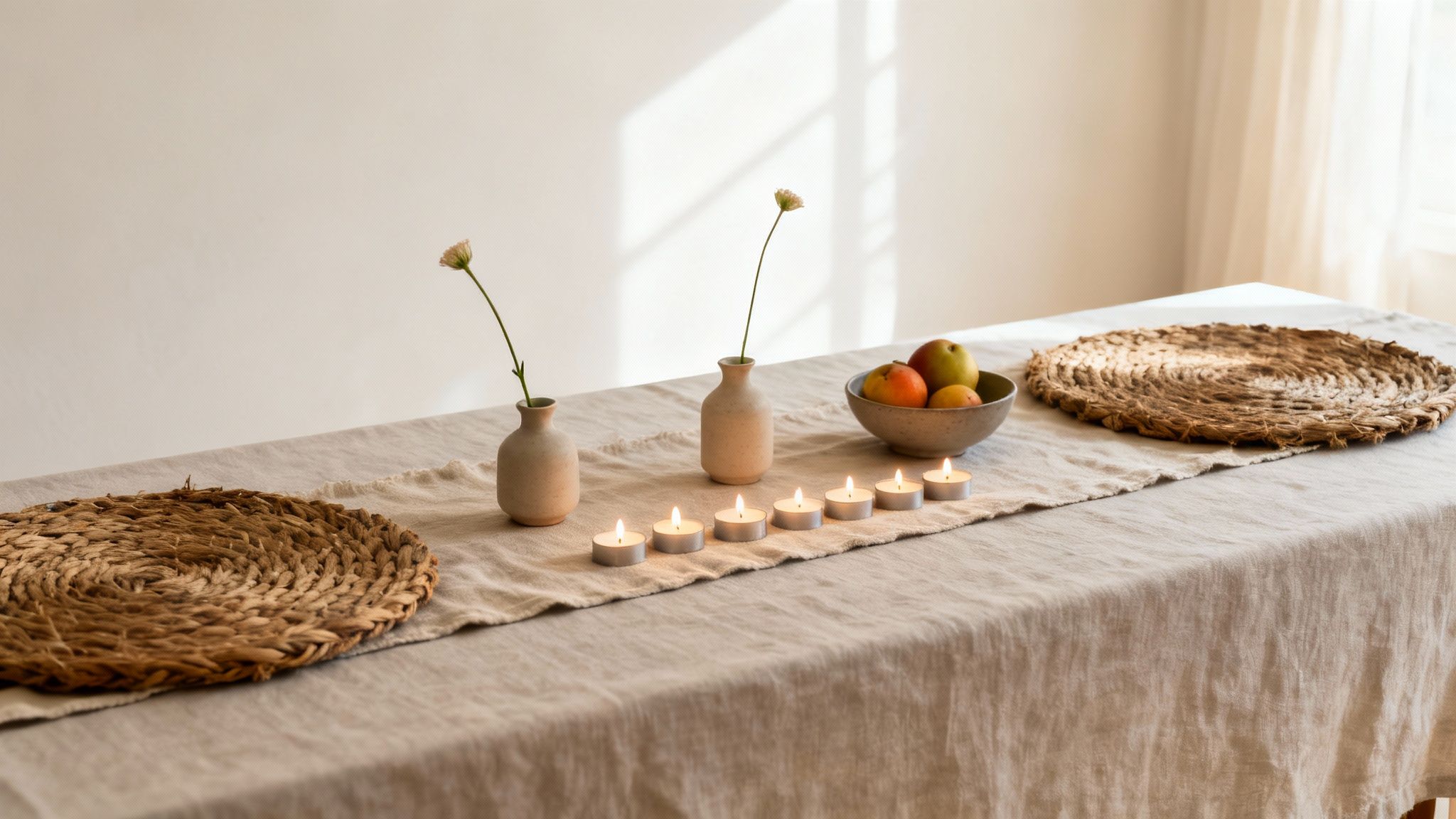
Treat your table like a blank canvas. Swapping out a stiff, formal tablecloth for a set of rustic woven placemats or a relaxed linen runner from our Fluent Trends collection can instantly shift the entire vibe from stuffy to serene. Linens do more than just protect your table; they bring in color, texture, and a sense of warmth that makes everything feel more inviting.
Choosing Your Linens
Your choice of table linen really sets the foundation for the whole look. There’s no right or wrong answer here, just different options that create a totally different feel.
-
Placemats: I love using placemats because they neatly define each person's space while still letting a beautiful wood or stone tabletop shine through. They’re a breeze to clean up and come in so many materials, from casual jute to sophisticated linen.
-
Table Runners: A runner is the perfect middle ground. It lays down a strip of color and texture right down the center, anchoring the whole setting without completely covering your table. It’s a great look if you’re going for something a bit more minimalist.
-
Bare Table: Don't ever underestimate the beauty of a bare table, especially if it has a gorgeous natural grain. When you go this route, the focus shifts entirely to your dinnerware, napkins, and centerpiece to bring the personality.
A beautifully set table is simply the backdrop for what truly matters—connecting with the people you care about and making great memories together. It’s the small, thoughtful details that make them feel welcomed.
Creating a Low-Profile Centerpiece
For a casual get-together, the best centerpieces are the ones that spark conversation, not block it. Your goal is to create a little visual interest without building a wall down the middle of the table. My personal rule of thumb is to think low, scattered, and simple.
You really don't need a huge, over-the-top floral arrangement to make an impact. For more inspiration, we’ve put together a list of creative dining table centerpiece ideas that can work for any season or occasion. The trick is to keep it accessible and personal.
Here are a few of my go-to ideas that never fail:
-
A Line of Tea Lights: Just scatter a few votive candles in simple glass holders down the length of your runner. The warm, flickering glow feels absolutely magical as the evening goes on.
-
Single Stem Bud Vases: Grab a few small, mismatched bud vases and place a single flower or a sprig of greenery in each one. It adds a touch of life without overwhelming the space.
-
A Bowl of Seasonal Fruit: A beautiful wooden or ceramic bowl filled with something like lemons, artichokes, or pomegranates offers a fantastic pop of natural color and feels effortlessly chic.
Ultimately, your centerpiece should be a supporting actor, complementing the meal, not competing with it. By keeping things simple and low to the table, you ensure the focus stays right where it should be: on good food and even better company.
Adapting Your Table for Any Occasion
The real secret to being a great host isn't about memorizing rigid etiquette rules—it's about being flexible. Once you've mastered the basics of a casual table, you can start playing with it, tailoring the setup for different meals and guest counts. After all, a weekend brunch has a completely different vibe and set of needs than a family-style pasta night. Your table should reflect that.
Think about it this way: a laid-back brunch often requires a little extra real estate at each place setting. You'll need room for coffee mugs next to water glasses and maybe even a small side plate for pastries. But for a cozy, everyone-dig-in pasta dinner, the center of the table becomes prime territory for big serving bowls and a warm basket of bread. In that case, you’d want to keep the individual place settings a bit more minimal to make way for the main event.
From Pizza Night to Holiday Brunch
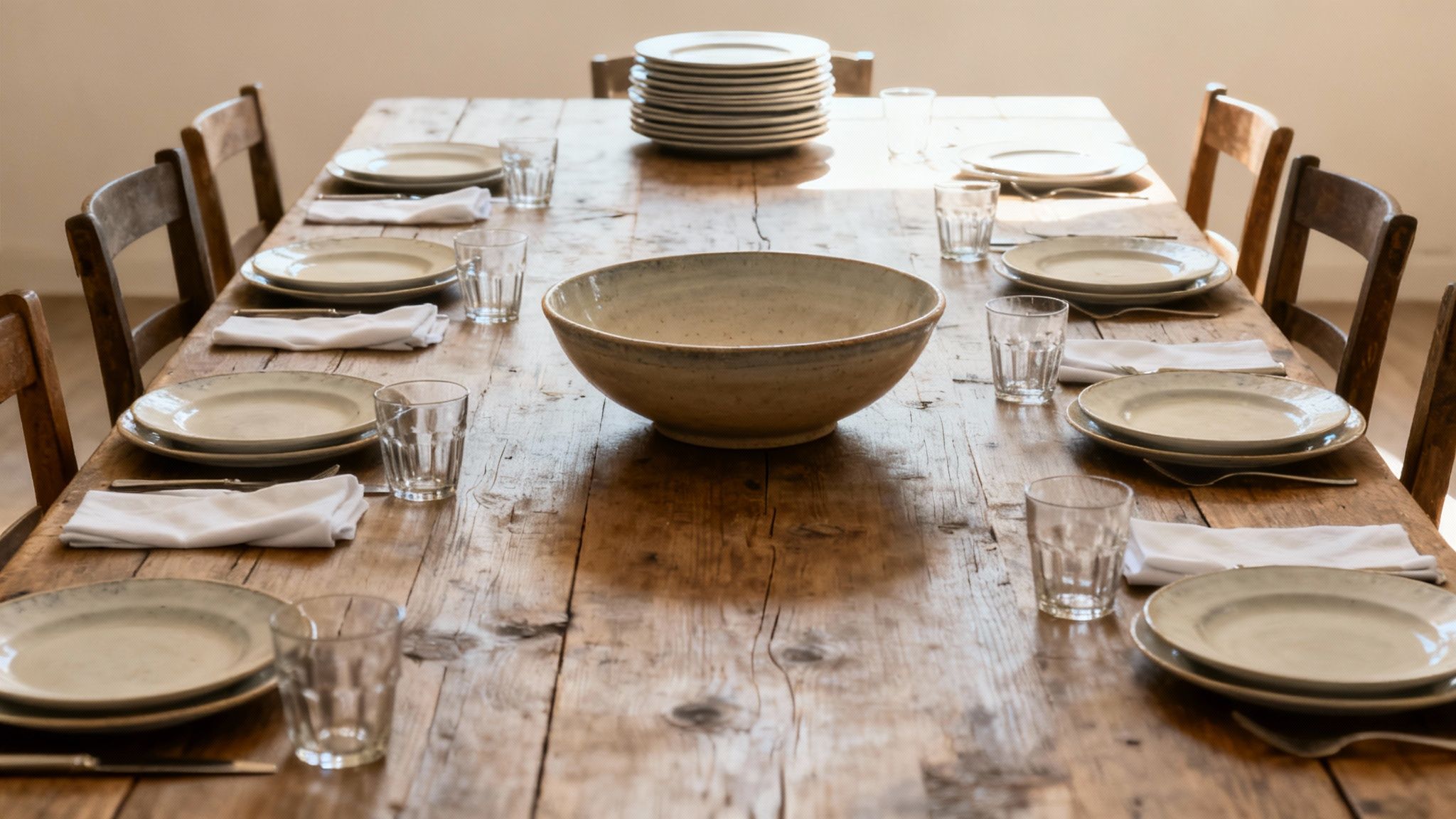
Let’s get into some real-world examples. For an ultra-relaxed pizza night with friends, you can pretty much ditch formal place settings altogether. A buffet-style approach works like a charm here. Just stack your dinnerware, like our durable Fluent Trends Stoneware Plates, at the end of the table or on a nearby kitchen island. This move instantly frees up the entire table for pizza boxes, drinks, and good conversation.
Now, contrast that with a special-but-still-casual holiday brunch. You can easily elevate the setting without making it feel stuffy. Simply use both a dinner fork and a smaller dessert fork, and set out both a water glass and a juice or mimosa glass. It’s a tiny tweak that signals a more festive occasion.
This kind of flexibility perfectly mirrors modern dining trends. We're all craving casual get-togethers. While people order takeout an average of 9.1 times a month, restaurant spending also jumped 13% in March 2023. It’s no wonder that versatile furniture like extendable tables, with a market growth of 2.4% annually, are so popular. They're built for the way we live and entertain now. You can dive deeper into the dining table market on mordorintelligence.com.
The best hosts know that a table setting isn't a static formula. It's a dynamic response to the food you're serving and the people you're serving it to.
How to Adjust Your Setting for Different Meals
To make things even easier, here’s a quick cheat sheet for adapting your basic casual setup for a few popular meal types.
| Meal Type | Key Adjustments | Glassware & Utensil Notes |
|---|---|---|
| Weekend Brunch | Add a small bread/pastry plate to the left. Make room for coffee mugs to the right of the water glass. | Include a smaller spoon for coffee and a juice or mimosa glass alongside the water tumbler. |
| Pasta Night | Keep place settings simple to maximize central space for large serving bowls and bread baskets. | A large soup spoon for twirling pasta is a nice touch. A single, sturdy tumbler for wine or water works well. |
| Taco Tuesday | Use larger dinner plates to handle all the toppings. Place small bowls for salsa and guac within easy reach of guests. | A margarita glass is a must! Keep flatware minimal—a fork is often all that’s needed. |
This table is just a starting point, of course. The key is to think through the meal from your guests' perspective and remove any potential friction before they even sit down.
Small Spaces and Large Crowds
What happens when your main challenge isn't the menu, but the space itself? Setting a table in a small apartment just requires a bit of strategic thinking.
-
Go vertical. A tiered server can hold appetizers or condiments without hogging precious table surface.
-
Choose wisely. Opt for stemless glassware to reduce the risk of spills in tight quarters. Our Fluent Trends Tumblers are perfect for this.
And for a large crowd? Consistency is your friend, but don't obsess over perfect uniformity. If you don't have enough matching plates for twelve guests, embrace a "collected" aesthetic by mixing two complementary sets of dinnerware. The most important thing is ensuring every guest has enough elbow room and can easily reach the food and drinks. That’s what creates a comfortable, welcoming experience, no matter the occasion.
Your Go-To Checklist for Setting the Table
Alright, we’ve covered the theory and looked at some inspiration. Now it’s time to bring it all together. Think of this as your pre-party cheat sheet—a quick, scannable guide to pull up on your phone right before everyone starts to arrive.
This is my go-to process for moving from a blank table to a warm, inviting space without any of the last-minute stress. Let’s walk through it one more time.
The Foundation Phase
Before you even think about plates or forks, you need to create the right canvas. Getting this stage right sets the tone for everything else and makes the whole process feel much smoother.
-
Clear and Clean the Space: Start with a totally blank slate. Give your dining table a good wipe-down so it’s fresh, clean, and ready for its close-up.
-
Lay Your Linens: Now, decide on your base. Are you going for a rustic linen runner, individual placemats for each guest, or are you letting that beautiful wood grain be the star of the show? Whatever you choose, get it in place now.
The Place Setting Phase
With the foundation set, it's time to build out each spot. I find it easiest to work my way around the table, completing one full setting before moving on to the next. It helps keep everything looking consistent and intentional.
-
Plates: Center the dinner plate on the placemat. If you’re using a salad plate, go ahead and layer it right on top.
-
Flatware: The dinner fork always goes to the left of the plate. To the right, place the knife (make sure the blade faces in!), followed by the spoon if you’re using one. Our Arezzo Flatware Set is perfect for this.
-
Glassware: Your water glass, like our popular Lustre Glassware, sits just above the tip of the knife. If you’re serving wine, that glass goes to the right of the water glass.
-
Napkins: Finally, the napkin. You've got options here: place it neatly to the left of the forks, tuck it underneath them, or get creative and arrange it on top of the plates.
Remember, a beautifully set table is simply the backdrop for what truly matters—connecting with the people you care about and making great memories together. It’s the small, thoughtful details that make them feel welcomed.
The Finishing Touches
The heavy lifting is done. Now for the fun part: adding layers of personality and warmth that turn a simple meal into something special. These are the details that really elevate the experience.
-
Add the Centerpiece: Place your low-profile centerpiece right in the middle. Whether it’s a few simple bud vases or a scattering of votive candles, now’s the time to get it arranged.
-
Adjust the Lighting: This is huge. Dim any harsh overhead lights to a comfortable, flattering level. If you're using candles, go ahead and light them to create that warm, inviting glow.
-
Cue the Music: Put on a good playlist at a low volume. The right music is brilliant at filling any lulls in conversation and helps guests relax the moment they walk in.
With this simple checklist, you're not just setting a table; you're crafting an atmosphere. You're ready.
Got Questions? We’ve Got Answers
Even with the most laid-back approach, a few questions always pop up. Getting these details straight is the final step to becoming a truly confident host. It’s like the final polish that makes everything feel just right. Let's clear up some of the common sticking points.
So, Where Does the Dessert Fork Go?
Honestly, for a truly casual get-together, the easiest and best answer is to bring out the dessert utensils with the dessert. This keeps the table feeling open and uncluttered from the start. Just place the dessert plate down, then the fork to its left and a spoon to its right. Simple.
If you’re feeling a bit more formal and want everything on the table at once, the dessert set goes right above the dinner plate. Just remember: the fork handle points left, and the spoon handle points right.
Is There a Difference Between "Casual" and "Informal"?
People throw these terms around all the time, but there's a slight difference that's actually pretty useful.
-
Casual Setting: This is your everyday, super-relaxed setup. Think of what you absolutely need for the meal: one fork, one knife, maybe a spoon, a napkin, and a water glass. It's perfect for a weeknight family dinner.
-
Informal Setting: This is just one small step up. You might add a salad fork if you’re doing a first course, or a separate wine glass next to the water glass. It’s ideal for that Saturday night dinner with friends—still relaxed, but with a little something extra.
At the end of the day, neither is stuffy. The real difference is just how many courses you're serving, which naturally means you'll need a few more pieces of flatware or glassware.
Are Placemats a Must?
Nope, not at all. Think of placemats and tablecloths as style choices, not rules. A great placemat does wonders for defining each person's space and makes cleanup a breeze—plus, it's a perfect way to show off a beautiful wood or stone tabletop.
On the other hand, a tablecloth can pull everything together, hide a less-than-perfect table, or just splash some fun color into the room. But if you have a stunning table, letting it be the star of the show is a chic, minimalist look that’s totally on-trend. It all comes down to the vibe you’re going for.
How Do I Set the Table for a Family-Style Feast?
Family-style dining is the soul of casual entertaining. The big challenge is keeping that precious real estate in the middle of the table free for all those gorgeous platters and bowls.
The trick is to keep the individual place settings lean. A dinner plate, a single set of utensils, a napkin, and a glass are all you need. Scoot them a little closer to the edge of the table than you normally would to free up that central zone. Always remember to put down trivets for hot dishes and pop serving spoons right into the bowls before they hit the table. This makes it easy for everyone to pass things around without a hitch.
Ready to set a table that feels perfectly you? At Fluent Trends, we've hand-picked a collection of beautiful, livable dinnerware, flatware, and linens made for modern life. Shop our tabletop essentials and find the pieces that will make your next gathering one to remember.