

How to Store Fine China and Preserve It for Generations
Donna MaloneProperly storing your fine china really comes down to a few key things: using acid-free materials, making sure there’s plenty of cushioning between each piece, and keeping everything in a climate-controlled environment. Get these right, and you'll prevent chips, fading, and cracks, keeping those treasured heirlooms looking perfect for generations.
The Fundamentals of Protecting Your Fine China
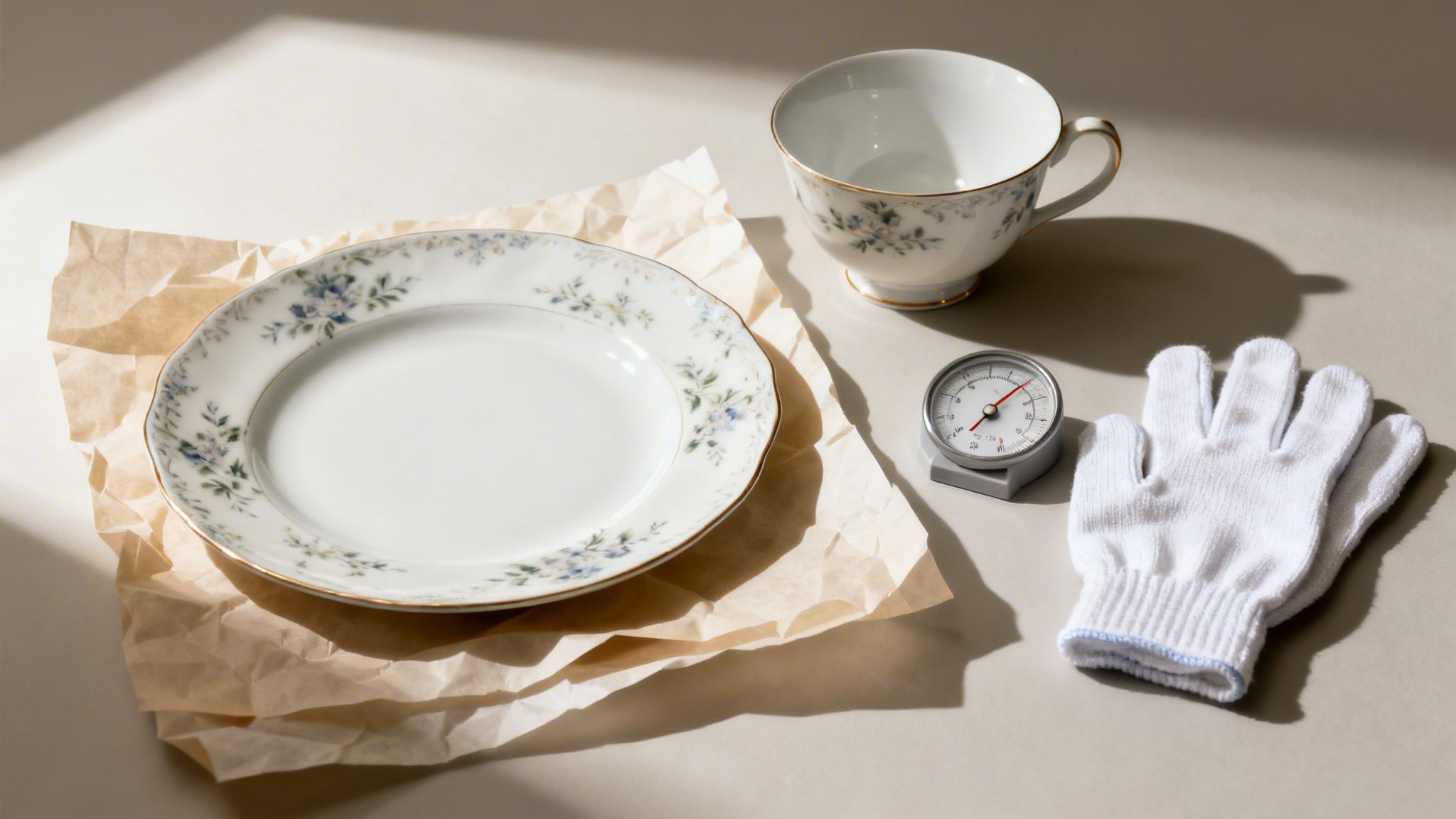
Your fine china isn’t just a set of dishes. It’s a collection of memories, family traditions, and often, a significant investment. Learning how to store it correctly is the first step toward preserving its beauty and value. The rules of thumb are simple but absolute: protect from impact, avoid extreme environments, and always use the right materials.
Ignoring these basics can lead to some truly heartbreaking damage. The global bone china dinnerware market was valued at an astounding USD 5.5 billion in 2023, and yet so much of it is at risk in our own homes. In fact, industry data suggests a shocking 30% of fine china breakage is a direct result of poor storage—think plates stacked without any padding.
Key Principles for Safe China Storage
To get started, let’s focus on three critical areas. These foundational rules will guide every decision you make, from how you pack to where you store.
- Environmental Stability: Keep your china out of attics, basements, and garages. The wild temperature swings and humidity in these spots cause crazing, which are those tiny, irreversible cracks in the glaze.
- Proper Cushioning: Never, ever let two pieces touch directly. Even the smallest vibration over time can cause scratches or chips. Always use a divider.
- Correct Materials: Steer clear of materials that can cause chemical damage. Newspaper ink can bleed and stain, while plastic wrap traps moisture and invites mold.
These aren't just light suggestions; they're essential practices for long-term preservation. A little effort now prevents a lot of heartache later. If you're not sure what your dinnerware is made of, understanding the difference between bone china and porcelain can be a huge help.
The most common mistake I see is people assuming a sturdy-looking box is enough. The real danger to fine china isn't usually a single big accident, but the cumulative effect of thousands of micro-vibrations and subtle temperature changes over months or years.
Quick Guide to Fine China Storage Do's and Don'ts
Navigating how to store fine china can feel a bit overwhelming, but it really boils down to a few key actions. This quick-reference guide will help keep you on the right track.
For a deeper dive into the strategies for maintaining your collection, be sure to explore these expert tips for preservation.
| Action | The Right Way (Do) | The Wrong Way (Don't) |
|---|---|---|
| Cleaning | Hand-wash with mild soap and dry completely before storing. | Store with leftover food particles or oils, which can cause stains. |
| Wrapping | Use acid-free tissue paper, foam pouches, or felt dividers. | Use newspaper (acidic ink) or plastic wrap (traps moisture). |
| Stacking | Keep stacks short (4-6 plates) with dividers between each piece. | Stack plates directly on top of each other without any cushioning. |
| Location | Choose an indoor, climate-controlled space like a closet or cabinet. | Store in an attic, garage, or basement with fluctuating temperatures. |
Following these simple do's and avoiding the common don'ts is the most effective way to ensure your china stays safe, whether it’s stored for a few months or for many years to come.
Gathering the Right Supplies for Preservation
When you're figuring out how to store fine china, the materials you use are just as critical as where you put them. It's easy to grab the wrong supplies, and while it might seem fine at first, they can cause slow, irreversible damage over the years. Think of this as your definitive shopping list—a guide to wrapping every piece in complete safety.
The single most important item on that list is acid-free tissue paper. This isn't your average gift wrap. Unlike regular paper, it’s chemically stable, so it won’t break down, leach chemicals, or yellow your heirlooms over time. There's a reason professional archivists swear by it.
Choosing Your Primary Padding
Once your china is wrapped in that essential acid-free paper, it's time for the next layer of defense: padding. This is what stands between your pieces and the dreaded chips that happen when things shift and knock together. You have a few great options, and each one shines in different situations.
- Felt Plate Dividers: These are perfect for short-term storage, like stacking plates in a dining room hutch. The soft, round felt pads are simple, reusable, and provide a reliable cushion.
- Foam Pouches: Think of these as soft little envelopes for your dishes. They are fantastic for sliding individual plates, saucers, or small platters into, giving them 360-degree protection.
- Bubble Wrap: A classic for a reason, but use it carefully. Never let bubble wrap touch the surface of your china directly, as the plastic can trap moisture. Always wrap the piece in acid-free tissue first, then add bubble wrap for a move or long-term storage.
Whatever you do, don't use newspaper. It seems like an easy, cheap solution, but its high acidity is the enemy of delicate glazes and patterns. In fact, research shows this acidity can negatively impact as many as 22% of pieces stored long-term. This concern for material integrity is a big deal in the wider ceramic tableware market, which is always innovating for better durability—a quality you're trying to protect. You can discover more insights about these market trends on MordorIntelligence.com.
Selecting the Right Containers
The final piece of the puzzle is the container. This is what will shield your carefully wrapped china from dust, pests, and bumps. Your two main contenders are sturdy boxes and specialty cases.
Sturdy cardboard boxes are an excellent choice, but not just any box will do. You need dish pack boxes, often called "dish barrels." These are built with double-thick corrugated walls specifically designed to handle the weight and fragility of dishes. Plus, they're breathable, which helps prevent moisture from getting trapped inside.
When you're picking out boxes, strength is everything. A standard moving box can easily buckle under the weight of a full set of dinner plates. Always go for boxes rated specifically for dishes or glassware to avoid a complete disaster.
For an even higher level of protection, you might want to invest in quilted storage cases. These are fabric-covered containers that come with padded interiors and dividers already built-in.
| Container Type | Best For | Pros | Cons |
|---|---|---|---|
| Dish Pack Box | Long-term storage, moving | Affordable, breathable, sturdy walls | Requires careful packing and padding |
| Quilted Storage Case | Easy access, in-home storage | Pre-padded, built-in dividers, stylish | More expensive, less stackable |
| Plastic Bins | Protection from water/pests | Waterproof, durable, easily stackable | Can trap moisture, risk of warping |
If you decide on plastic bins, it's crucial to pick archival-quality, acid-free plastic. Cheaper bins can emit chemicals over time that could harm your china's finish. They also create an airtight seal, which is a major risk for trapping humidity and inviting mold. To be safe, toss in a few silica gel packets to absorb any excess moisture. For organizing smaller sets you keep in the house, high-quality containers like these lidded storage boxes offer a great balance of style and protection.
Ultimately, the best container really depends on your situation. If you're moving cross-country or putting things away for decades, a professionally packed dish barrel is your best bet. But for the wedding china you use a couple of times a year, padded cases stored in a buffet offer the perfect mix of protection and easy access. By choosing each supply with care, you’re building a complete system to keep your cherished china safe for generations.
Mastering the Art of Packing Each Piece
Packing your fine china isn't a race to the finish line; it’s a careful, deliberate process. Every single piece needs its own specific technique to sidestep the chips, cracks, and pressure fractures that can happen during a move or even just from temperature shifts in your home. Think of it as a craft, one that keeps your collection looking absolutely pristine.
The whole strategy boils down to a simple mantra: cushion, wrap, and buffer. This little phrase is your key to making sure no two pieces ever touch directly and that any external bumps are absorbed long before they reach a delicate rim or handle.
The Foundational Wrapping Technique for Plates and Bowls
Plates and bowls make up the bulk of most china sets, and thankfully, they share a similar packing method. Start by laying a single plate right in the middle of a stack of acid-free tissue paper. Pull one corner of the paper over the plate, tucking it in snugly.
Now, place a second plate on top. Grab the next corner of tissue paper and pull it over this new plate, covering it completely. See what you're doing? You’re creating a perfect, built-in cushion between each layer. Keep this up, alternating plates and tissue, until you have a manageable stack of three to four plates. To finish, just fold the remaining paper over the top of the whole bundle and secure it with a small piece of painter's tape.
If you’re working with exceptionally valuable or thin pieces, slide a foam pouch or a felt divider between each wrapped plate for that extra bit of confidence. The goal is just to create soft, shock-absorbing layers that prevent any hard surfaces from knocking against each other.
This visual guide breaks down the essential supplies and flow for a successful packing job.
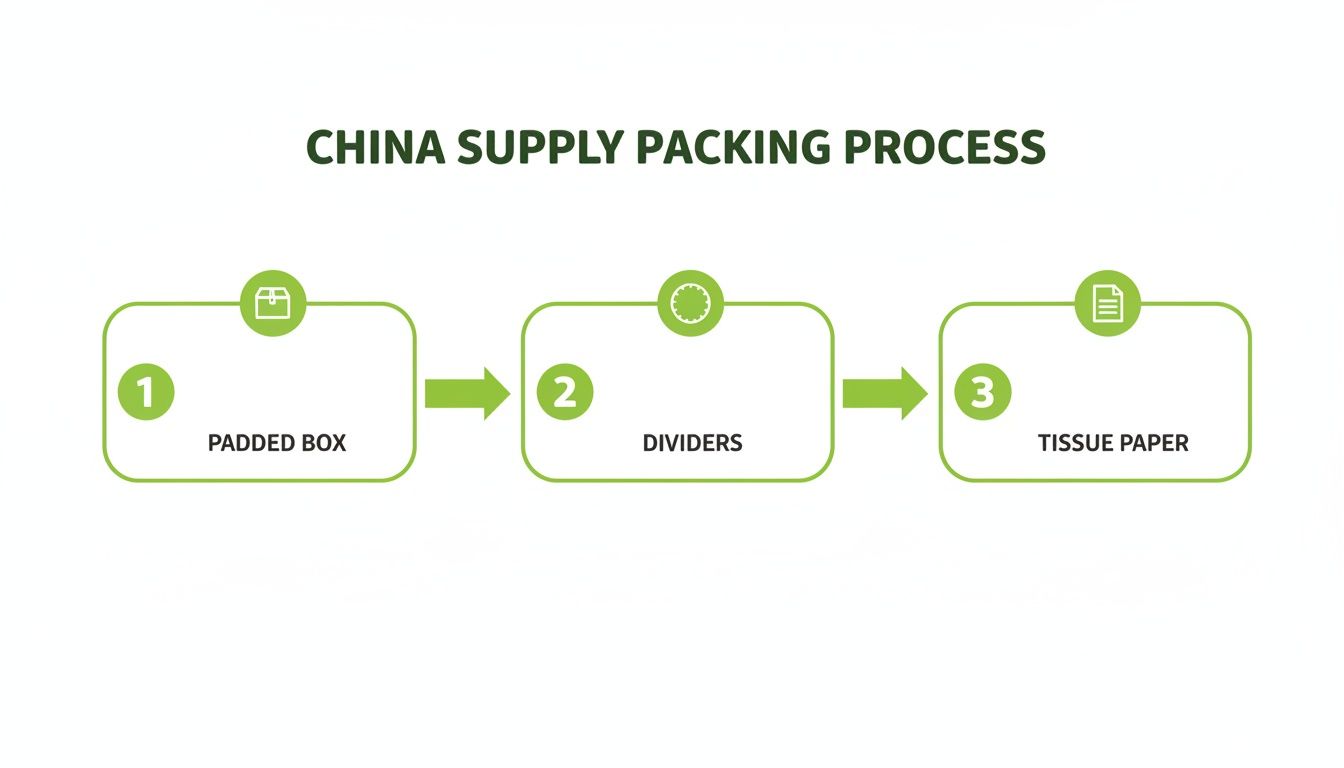
From the padded box to the soft dividers and gentle tissue, it's a system where each component builds on the last to give you maximum protection.
Protecting Teacups and Delicate Handles
Teacups, mugs, and anything with a fragile handle requires a bit more finesse. Those handles are easily the most vulnerable points, so they need some special attention.
First, gently stuff the inside of the cup with crumpled acid-free tissue paper. This gives it some internal support and keeps the walls from flexing under pressure.
Next, take a separate piece of tissue and wrap it carefully around the handle itself, creating a soft little bumper. Once the handle is safe, place the cup on a larger sheet of tissue or slip it into a foam pouch and wrap the whole thing. If you're prepping for a big move, adding a layer of bubble wrap (over the tissue, never directly on the china) is a really smart move.
Pro Tip: Whatever you do, never interlock the handles of teacups when you put them in a box. It seems like a clever way to save space, but it creates a massive stress point where two of the most fragile parts can easily snap against each other.
Tackling Awkwardly Shaped Pieces
Serving platters, teapots, and gravy boats are the oddballs of the china cabinet, and their unique shapes present a fun challenge. For those big, heavy platters, wrap them individually just like you would a plate, but be more generous with the paper or add bubble wrap.
Teapots are notoriously tricky. Their spouts and handles are incredibly fragile.
- Support the Interior: Start by gently filling the inside of the teapot with crumpled tissue paper.
- Cushion Protrusions: Wrap the spout and the handle separately with small pieces of tissue or bubble wrap, securing them with tape.
- Wrap the Body: After the delicate bits are buffered, wrap the entire teapot in several layers of tissue or a large foam pouch.
Always remember to place these larger, heavier pieces in the box first. They create a stable base for the lighter, more delicate items. To really get the hang of it, it helps to learn how to pack dishes like a pro, since many of the same core principles apply here.
Because each piece is so different, here’s a quick-reference table to guide your wrapping strategy.
Packing Technique by China Type
| China Piece | Primary Wrapping Material | Padding Method | Placement in Box |
|---|---|---|---|
| Plates & Saucers | Acid-Free Tissue Paper | Stack 3-4 with paper between each, then bundle-wrap. | Place vertically (on edge) and packed snugly. |
| Bowls | Acid-Free Tissue Paper | Wrap individually or stack 2-3 with paper dividers. | Nest smaller bowls inside larger ones; place upright. |
| Teacups & Mugs | Tissue Paper, Bubble Wrap | Stuff interior, wrap handle, then wrap entire cup. | Place upright near the top of the box. Do not stack. |
| Teapots & Pitchers | Tissue Paper, Bubble Wrap | Stuff interior; individually wrap spout & handle first. | Place upright on the bottom of the box as a base. |
| Platters & Trays | Packing Paper, Bubble Wrap | Wrap individually with extra layers for cushioning. | Place vertically on its side along box wall. |
This table should help you visualize the specific needs of each item, ensuring nothing gets overlooked.
The Vertical Storage Advantage
When it comes time to actually place items in the box, especially for a move or long-term storage, placing plates vertically is an absolute game-changer. Imagine storing vinyl records in a crate—it's the same idea.
When you stack plates flat, all the weight is concentrated on the poor plate at the bottom. Over time, or with one good jolt, that pressure can easily cause a stress fracture. But when you store them on their edges, that vertical pressure completely disappears.
To pull this off, you’ll need a "dish pack" box, which has thicker, reinforced walls. Line the bottom with a generous layer of crumpled packing paper or even a soft blanket. Place your wrapped plates or bundles into the box on their edges, packing them in snugly side-by-side. Fill any and all gaps with more crumpled paper to stop them from shifting. This one small change in orientation dramatically cuts down the risk of breakage, making it the go-to method for anyone serious about storing fine china securely.
Finding the Ideal Storage Environment
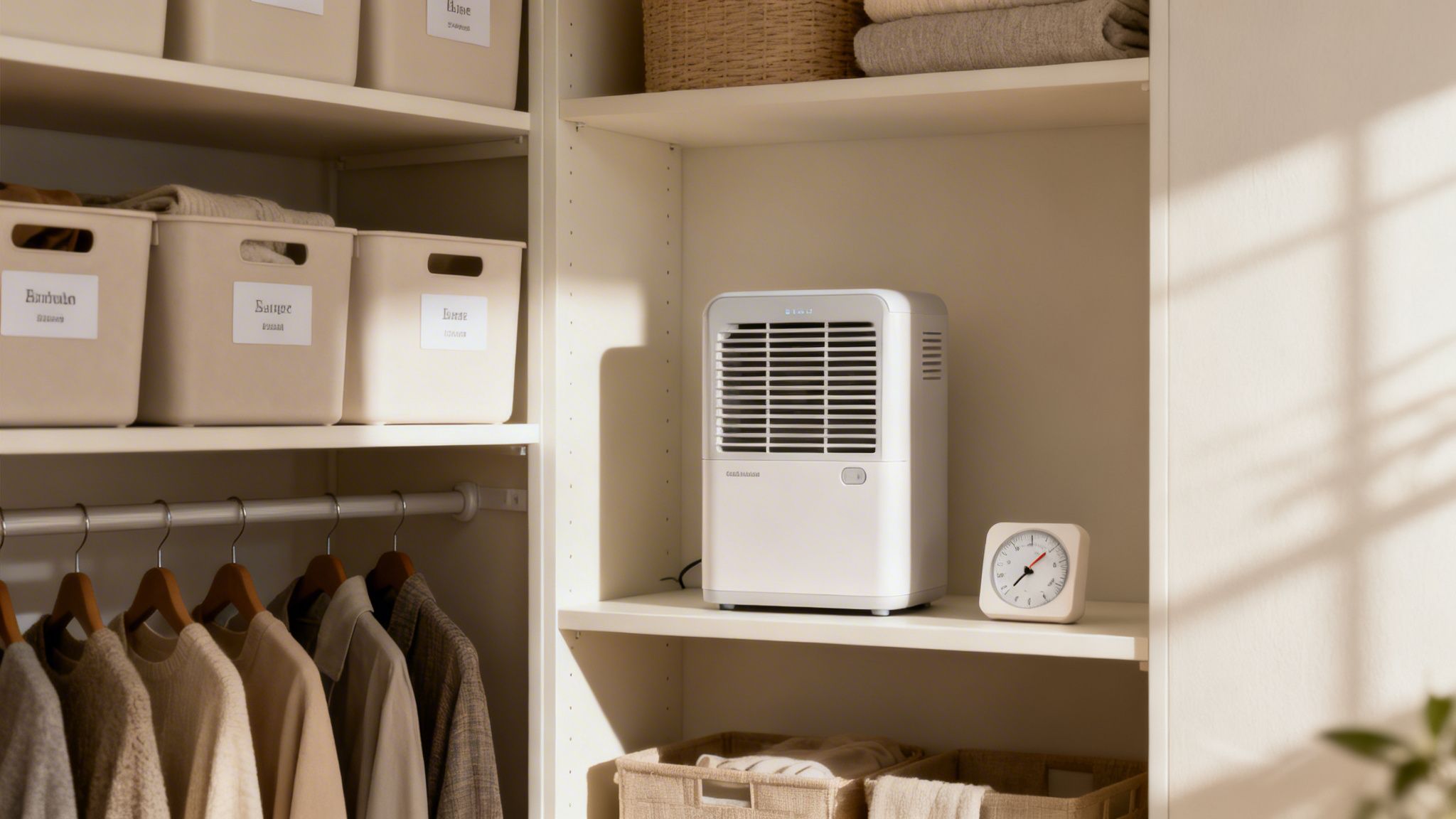
Where you store your fine china is every bit as important as how you wrap it. It’s tempting to stick those boxes in an out-of-the-way attic or basement, but those spots are often the absolute worst places for delicate heirlooms. Extreme temperature shifts and high humidity can cause serious, irreversible damage over the years.
The secret isn’t finding the coldest or warmest spot in your house—it’s finding the most stable one. Consistency is king.
Why Climate Stability Is Non-Negotiable
Believe it or not, fine china is porous on a microscopic level. When the temperature plummets and then spikes, the material itself actually expands and contracts. Repeat that cycle enough times, and you’ll start to see tiny, web-like cracks in the glaze. This is a type of damage known as crazing.
Humidity is just as bad. Damp air allows moisture to seep into the china, which can lead to discoloration, a weakened glaze, and even mold or mildew growth—especially if the pieces weren't bone dry when you packed them. You're looking for that "Goldilocks zone": not too hot, not too cold, and definitely not too damp.
Think of your china like a delicate antique book. You wouldn't store it in a damp basement or a sweltering attic where the pages would warp and yellow. Your dinnerware deserves that same level of environmental care.
Evaluating In-Home Storage Locations
The best place for your fine china is almost always inside the main living area of your home, where you’re already controlling the climate for your own comfort. But even there, some spots are better than others.
Let's break down some common household locations.
| Location | Pros | Cons | Verdict |
|---|---|---|---|
| Dining Room Hutch | Easy access, climate-stable, stylish display. | Can be exposed to sunlight, potential for vibration. | Excellent for frequently used sets, but keep it away from direct sun. |
| Interior Closet | Dark, stable temperature, protected from bumps. | Can have poor air circulation if overstuffed. | Excellent for long-term storage, especially guest room closets. |
| Under a Bed | Out of the way, generally stable climate. | Prone to dust, risk of being kicked or jostled. | Good option if using sturdy, well-sealed containers. |
| Attic or Garage | Offers a lot of space. | Extreme temperature and humidity fluctuations. | Avoid at all costs. The risk of damage is far too high. |
Your best bet is usually an interior closet in a spare bedroom or hallway. These spots are naturally dark, buffered from exterior walls, and get the benefit of your home's HVAC system without being blasted by a vent.
Considering a Climate-Controlled Storage Unit
If you’re downsizing or just don't have the space, a climate-controlled storage unit can be a great solution. But be careful—not all storage facilities are created equal. The term "climate-controlled" can be used loosely, so you need to ask some specific questions before you sign a lease.
When you're checking out a facility, make sure you ask:
- What is the exact temperature range you maintain? You’re looking for a place that keeps the temperature consistently between 55°F and 75°F all year.
- Do you control humidity, too? This is a big one. A unit that just has AC and heat isn't truly climate-controlled.
- Can I see the unit before I rent? Always do a walkthrough. Look for any signs of pests, water stains, or general uncleanliness.
Maintaining a steady temperature is crucial. Daily swings of more than 10°F can cause thermal shock, which research has shown can crack up to 15% of pieces in vulnerable collections. Humidity is just as critical; levels above 60% are linked to 20% more mold issues. You can even toss a few silica gel packets into your boxes for an extra layer of moisture protection.
You can read the full research on luxury tableware preservation here for more details. By choosing your location wisely, you’re not just stashing your china away—you’re actively preserving it for generations to come.
Getting Your China Organized and Labeled
Now that you’ve carefully packed everything, it's time for the final, crucial touch: a smart labeling and organization system. This might seem like just a finishing step, but trust me, it’s what separates a manageable collection from a frustrating pile of mystery boxes.
A good system means you can grab that one specific serving platter for Thanksgiving without having to unpack everything you own. It also creates an invaluable record for insurance, which is a lifesaver if anything ever gets damaged. Think of it as creating a personal library for your heirlooms—everything cataloged, safe, and easy to find.
Create a Detailed Inventory
Before taping that last box shut, get your inventory started. The easiest way is with a simple digital spreadsheet or even a note on your phone. This list is going to be your master key to everything in storage.
First, give every box a unique number. Just grab a marker and write Box #1, Box #2, and so on.
Then, in your spreadsheet, log that box number and list every single piece inside. Don't be vague here; the details are what make this system work.
- Vague entry: "Plates and cups"
- Specific entry: "Box #4 - 8x Royal Albert 'Old Country Roses' Dinner Plates, 8x Matching Teacups, 8x Saucers"
See the difference? If a single teacup breaks, you'll know exactly which one it was. For an extra layer of protection, snap a quick photo of the contents of each box before you seal it up. Name the file to match the box number, like "Box_4_Contents.jpg", and you've got a perfect visual record.
A photo inventory might feel like overkill, but it's the single best piece of evidence you can provide for an insurance claim. It’s hard to argue with a time-stamped picture showing exactly what you owned and the condition it was in.
A Labeling System That Lasts
That beautiful inventory list is only as good as the labels on your boxes. You need something clear, durable, and easy to spot from a distance. A cheap label can peel off and ink can fade, leaving you guessing years from now.
I recommend using high-quality packing labels or just writing directly on the box with a thick, permanent marker. Every label needs three key things:
- Box Number: Make it big and bold so it matches your inventory (BOX #4).
- Contents Summary: A quick overview of what’s inside ("Dinner Plates & Teacups").
- Fragility Warning: This is non-negotiable. A clear "FRAGILE - FINE CHINA" is a must.
Make sure to put labels on at least two sides of the box—the top and one of the sides is ideal. This way, you can identify what’s inside without having to unstack a tower of boxes just to see the top. It's a small thing that saves a massive headache.
Long-Term Care and Check-Ins
Storing china, especially for more than a year or two, isn't a "set it and forget it" deal. A little preventative maintenance can stop environmental damage before it even starts.
I always tell people to set a calendar reminder for an annual check-in. Once a year, just pop in and take a look. You don’t need to unpack anything. You’re simply looking for red flags—any signs of moisture, pests, or damage to the boxes themselves.
If you’re planning on storing your china for five years or more, consider giving it a chance to breathe. Pick a dry, low-humidity day and carefully unpack a few items. Letting the air circulate helps prevent musty smells and releases any tiny bits of trapped moisture. It’s a simple step that ensures your treasured pieces stay pristine for the next generation.
Common Questions About Storing Fine China
Even with the best plan, you're bound to run into a few specific questions once you start packing. Every china collection is a little different, and sometimes you hit a snag that doesn’t quite fit the textbook advice. We’ve pulled together some of the most common questions we hear to give you clear, direct answers so you can handle those final decisions with confidence.
Can I Store Fine China in a Plastic Container?
It's tempting, I know. A sturdy plastic container feels like the ultimate shield against water and pests. But for long-term storage, it can be a surprisingly risky move.
The biggest problem is airflow—or the lack of it. An airtight plastic bin is a perfect moisture trap. Over months and years, that trapped humidity can be disastrous for your china, potentially leading to mold or causing damage to delicate glazes and metallic trim.
If you find yourself in a situation where plastic is your only option, you have to be incredibly careful. Only use archival-quality, acid-free plastic bins; cheaper versions can off-gas chemicals that might harm your dinnerware. Make absolutely certain every piece is bone-dry before it goes in, and toss in a few silica gel packets to soak up any ambient moisture.
Honestly, though? For most situations, sturdy, double-walled cardboard boxes or specialty padded china cases are still the gold standard. They let your china breathe, which is exactly what it needs.
What Is the Correct Way to Stack Plates for Storage?
This is where I see the most cringe-worthy mistakes. Stacking plates directly on top of each other is a recipe for disaster. Even when you're careful, the focused weight puts a ton of pressure on the pieces at the bottom. The slightest shift can cause scratches, scuffs, or those heartbreaking little chips along the rim.
The right way always, always involves a soft buffer between each plate.
- Felt Plate Dividers: These are your best friends for everyday storage in a cabinet. They're soft, reusable, and provide the perfect amount of cushion.
- Foam Pouches: For maximum protection, sliding each plate into its own foam pouch is the way to go. It offers complete, 360-degree safety.
- High-Quality Paper Plates: If you're in a pinch, a sturdy, uncoated paper plate can serve as a decent divider. Just steer clear of any with waxy coatings or printed designs that could transfer.
No matter what you use, keep your stacks short. A good rule of law is no more than four to six items high. It’s a simple change that dramatically reduces the stress on the bottom plate.
For moving or very long-term storage, the safest method is to pack plates vertically in a "dish pack" box—just like vinyl records. This technique completely eliminates the vertical pressure that leads to stress fractures.
As organization expert Bonnie Joy Dewkett wisely advises, "tuck a piece of acid-free tissue paper in between each plate to avoid scratching and absorb moisture." This simple step is a cornerstone of proper china care.
Is It Safe to Store China in a Garage or Attic?
Let me make this simple: No. Emphatically, no.
Garages, attics, basements, and sheds are the absolute worst places you could choose to store fine china. The reason is simple: these spaces experience wild and rapid swings in temperature and humidity.
Think about the blistering heat of an attic in August or the damp chill of a basement in February. These environmental shifts force the delicate ceramic to expand and contract over and over. This process, known as thermal shock, eventually causes a web of fine cracks to form in the glaze—a type of permanent damage called crazing.
High humidity also invites mold and can eat away at hand-painted details and gold leaf. To keep your heirlooms safe, you have to choose a climate-stable spot inside your main living space. An interior closet, a cabinet in a guest room, or a proper china hutch are all great choices because they're buffered from the harsh conditions outdoors.
Should I Clean My China Before I Store It?
Yes, absolutely. This isn't just a suggestion; it's a non-negotiable step. Any lingering food residue, grease, or even the natural oils from your hands can set into permanent stains over time. Worse, they can attract pests.
But the cleaning process has to be gentle.
- Hand-Wash Only: Please, never put fine china in the dishwasher. The intense heat, harsh detergents, and powerful water jets will strip away delicate patterns, gold trim, and even the glaze itself.
- Use Mild Soap: All you need is a soft cloth or sponge and a gentle, non-abrasive dish soap. Avoid anything that could scratch the surface, like a scouring pad.
- Dry Completely: This is the most crucial part. After washing, hand-dry every piece with a soft, lint-free towel. Then, give them even more time—a few hours at least—to air-dry completely. You want to be sure every last drop of moisture has evaporated before you start wrapping.
Trapping even a tiny bit of moisture inside a storage box is a surefire way to end up with mold, mildew, and other water damage. Taking the time to wash and thoroughly dry each piece is your best insurance policy against long-term decay.
At Fluent Trends, we believe that beautiful dinnerware should be cherished and preserved. Explore our curated collection of fine dinnerware and serveware to find timeless pieces that will become your family's next heirlooms.