

Linen Feel Bedding Set: What to Buy and What to Skip
Yuatinia LeakLast Updated: November 10, 2026
Quick Summary
A linen feel bedding set gives you the relaxed look and drape of linen at a lower price, though the fiber behind it varies. Most sets use washed cotton, a cotton blend, or bamboo viscose rather than flax. Check the fiber content label before you buy.
- Real flax linen costs more, while linen-feel blends copy the surface for less.
- Check the fiber content on the label to know how the set will breathe.
- Measure your bed and confirm listing dimensions before ordering, since sizing varies by brand.
- Look for a tighter weave, since thin fabrics show wear sooner.
- Wash on a gentle cycle in cold or warm water and tumble dry on low.
Table of Contents
- What a Linen Feel Bedding Set Actually Gives You
- Linen-Feel vs. Linen Bedding: The Real Difference
- Feel, Weight and Texture: A Sensory Guide to Choosing
- Finding the Right Linen Feel Bedding Set Queen Size
- Choosing a Linen Feel Bedding Set King Size
- How Our Milk Fibre Sets Compare to Other Options
- Long-Term Wear: What Holds Up After Months of Use
- Linen Bedding Care That Keeps the Feel Intact
- Pick Your Set and Start Sleeping Better Tonight
- Frequently Asked Questions
What a Linen Feel Bedding Set Actually Gives You
A linen feel bedding set gives you the look and drape of linen without the linen price tag. Most of the appeal is texture: a relaxed, lived-in softness that wrinkles a little and gets better with every wash. At Fluent Trends, we look at this category from the buyer's side, because the label "linen feel" can mean very different things depending on what the fabric is actually made of.
Here is the honest starting point. Some sets are real flax linen, some are cotton, and many are blends designed to imitate the surface. Each one behaves differently after a few months in your bedroom. Knowing which one you are buying saves money and disappointment.
We recommend thinking about three things before you shop: how the fabric feels against your skin, how it handles heat, and how it holds up after repeated washing. Those three factors decide whether a set feels like a splurge or a regret.
Linen-Feel vs. Linen Bedding: The Real Difference
Here is the question most people are really asking. Do you need actual flax linen, or will a linen-feel set get you the same result? The honest answer depends on what you value most.
Real linen comes from the flax plant. Its fibers are long and uneven, which gives the cloth that slightly nubby, relaxed look. Those same fibers are stiff when new. They soften only after many washes, and that softening is the reason people love linen over time.
Linen-feel bedding copies that look with a different fiber base. Most sets use washed cotton, a cotton-polyester blend, or a plant-based fiber such as bamboo viscose. Each one imitates the surface in a different way. Washed cotton gets its softness from a chemical and mechanical wash that loosens the fibers. Bamboo viscose drapes smoothly but can feel cool and slick. Polyester blends hold shape well but trap more heat.
So how do you choose? Start with three questions. Do you sleep hot? Do you want the rough, lived-in texture or a smoother finish? Are you willing to wash by hand or on gentle cycles for years?
If you sleep hot and want authentic texture, real linen is worth the cost. If you want the look with less upkeep, a well-made washed cotton set gives you most of the feel. If you want smooth drape and a cooler surface, a bamboo-viscose or milk-fibre blend sits in the middle.
Watch out: a low-cost set labeled linen-feel may be a heavy polyester blend. Check the fiber content on the label before you assume it will breathe.
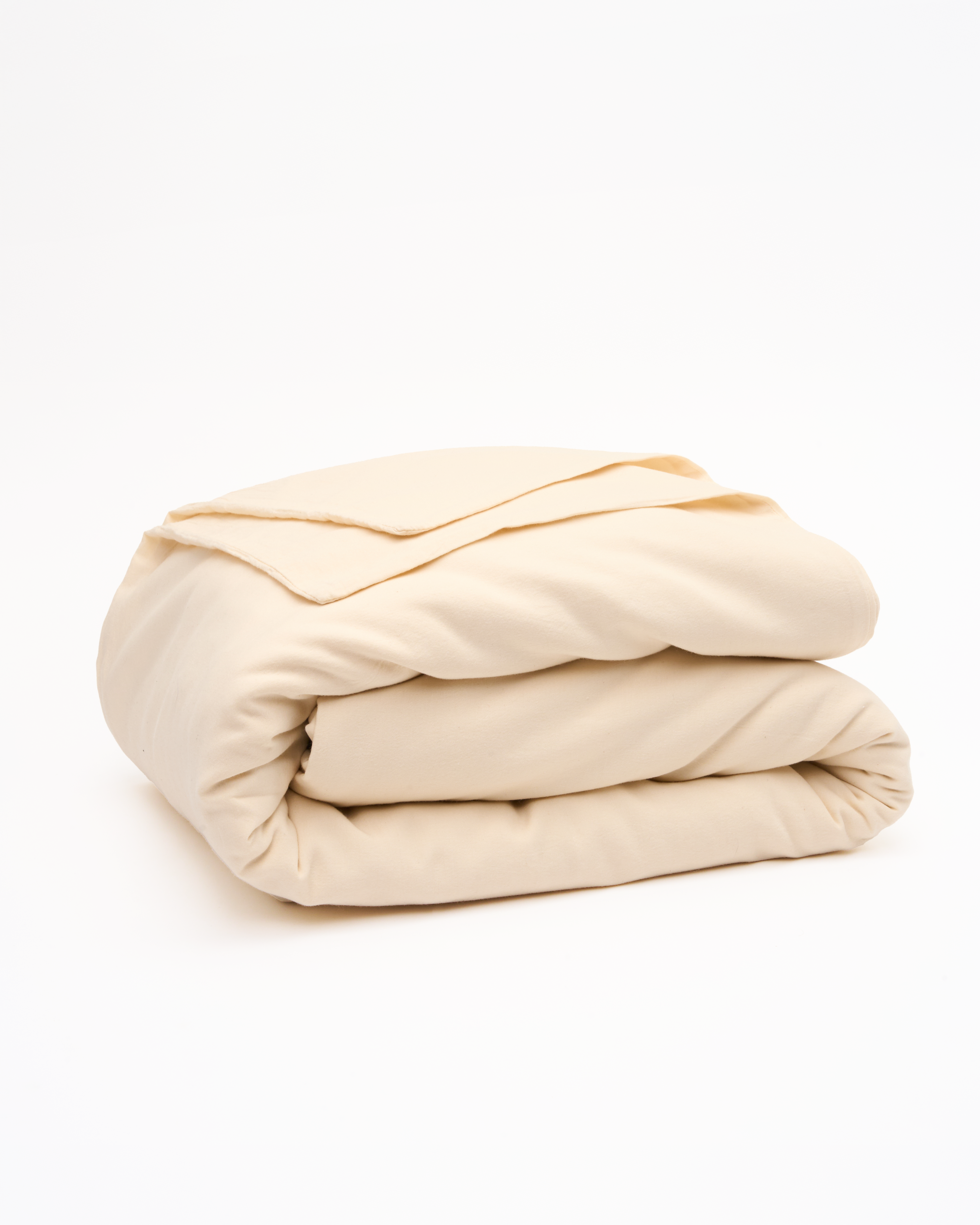
Our Signature Milk Fibre Duvet Cover is woven in Portugal and features a hypoallergenic, Portugal-woven construction built for sensitive skin. Shop the milk fibre duvet cover and see the full specs for yourself. It offers a smooth, breathable hand that sits between linen and premium cotton.
Feel, Weight and Texture: A Sensory Guide to Choosing
Touch tells you more than any label. Run your palm across the fabric and notice whether it feels crisp, silky or slightly rough. Crisp usually means a tighter weave with more body. Silky usually means a smoother finish that drapes more easily.

Weight matters just as much. Heavier sheets feel substantial but can trap heat. Lighter sheets breathe better and suit warm sleepers. Look at the weight of the duvet cover too, since a heavy cover on a light insert can feel stiff. A lighter cover can still feel substantial when its fabric is well made, so consider how construction affects longevity alongside weight, as explored by Embroidery Studio Plus.
Texture also changes how the set looks on the bed. A slightly nubby surface catches light and reads as relaxed. A flatter sateen reads as polished. Neither is better, so choose the one that matches the room. If you can, order a swatch or touch the fabric in person before committing.
Watch out: a set that feels very slick in the package can feel different after washing. Judge the hand after at least one wash if you can.
Finding the Right Linen Feel Bedding Set Queen Size
Queen beds are the most common size in American homes, so this is where most shoppers start. A queen duvet cover should be about 90 by 92 inches to fit a standard queen insert with room to spare. Check the dimensions on the listing rather than relying on the size name alone, because sizing varies between brands.
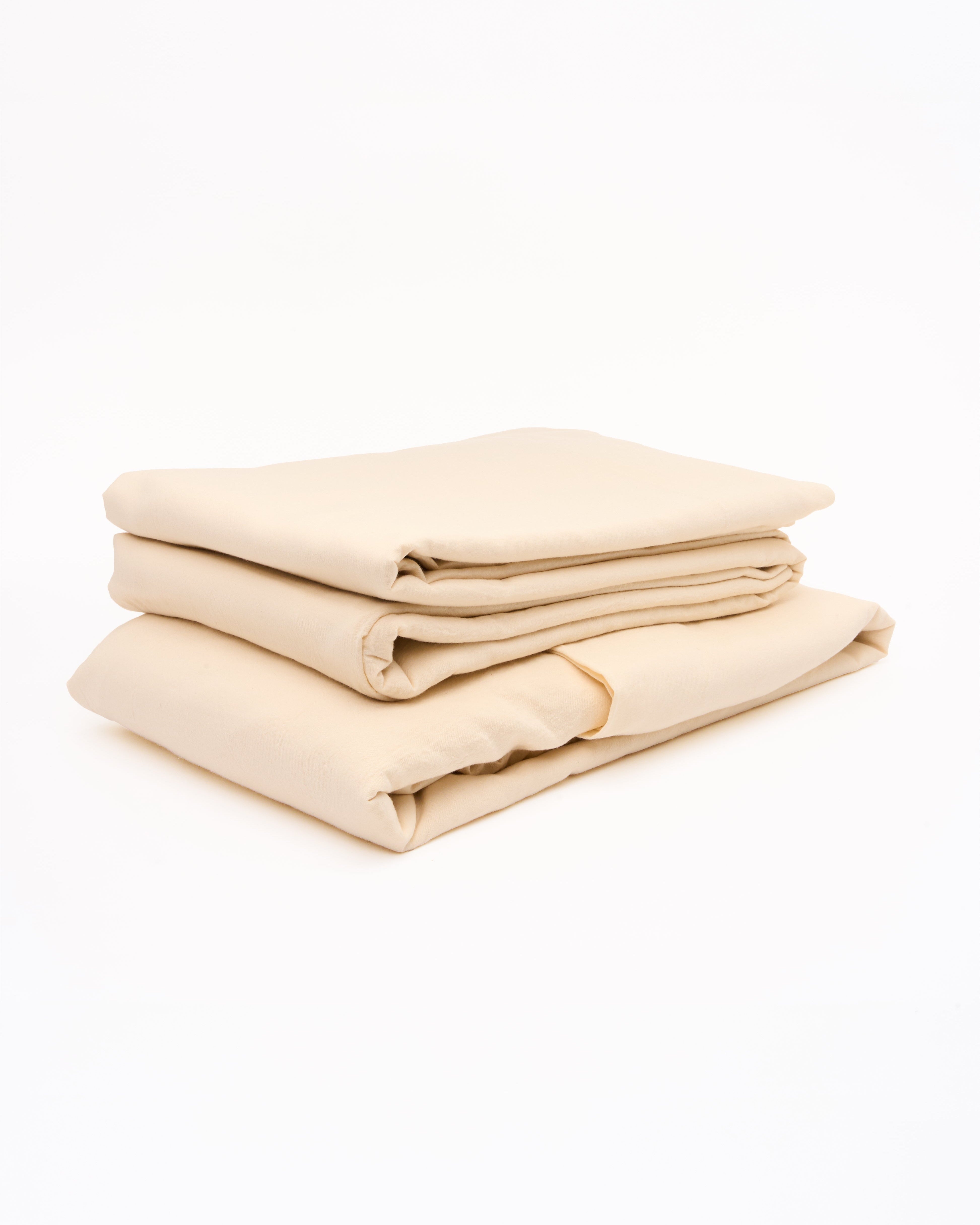
For queen sets, the Signature Milk Fibre Sheet Set comes in a queen fit with a flat sheet measuring 96 by 105 inches and a fitted sheet with 16 inches of depth. Check the queen sheet set fit against your mattress height before you order. That depth matters for thicker mattresses, so measure your mattress height before ordering.
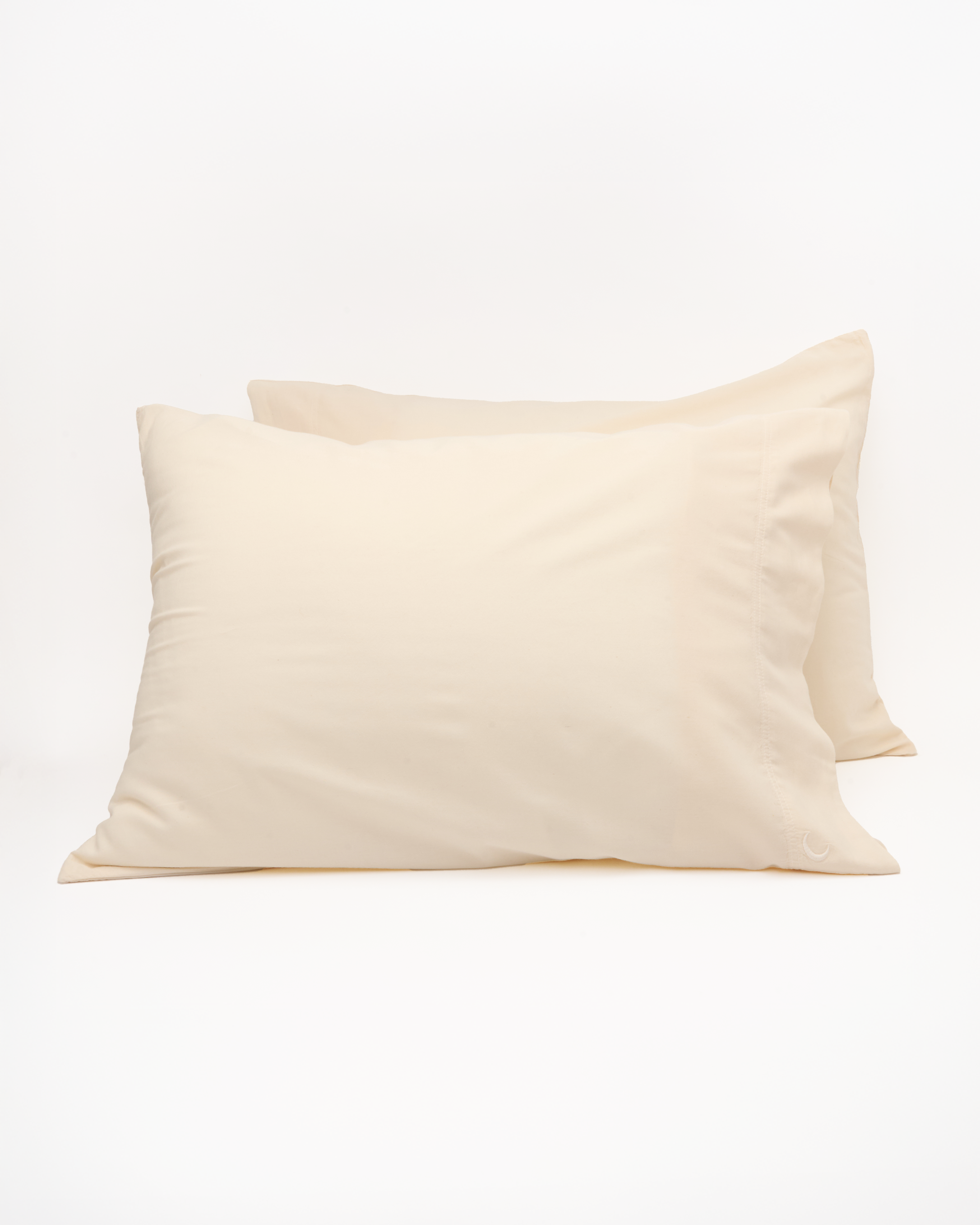
Pillowcases are easy to overlook but affect the whole look. Matching the pillowcase set to the sheets gives the bed a unified finish.
Choosing a Linen Feel Bedding Set King Size
King beds need more fabric, so check the dimensions carefully. A king duvet cover is typically wider and longer than a queen, and a king flat sheet should tuck in on all sides without pulling tight. Browse luxury comforter sets in king sizes to find a match.
Check the listing dimensions for king sizing before you order, since sizing varies between brands.
For a king bed, matching pillowcases keep the look balanced.
How Our Milk Fibre Sets Compare to Other Options
We think comparisons are most useful when they focus on the things you will notice day to day. Our Signature Milk Fibre range is built around casein, a milk protein fiber, blended with cotton and micromodal. The fabric is woven in Portugal and designed to feel smooth against sensitive skin.
Compared with a basic polyester-cotton set, the milk fibre sets feel softer against sensitive skin. Our Clean Design Home Sateen Duvet Cover Set in Aspen offers a printed look with a smooth sateen finish. It is made of 100% cotton with a 400 thread count and is OEKO-TEX Standard 100 certified.
For a more luxurious cotton feel, the Vintage European Elegant Printed Cotton Sateen Bedding Set uses Egyptian cotton at 600 thread count and includes a duvet cover, a flat sheet and two pillowcases.
Each option suits a different buyer. Pick the one that matches your sleep temperature, skin sensitivity and budget. Compare the matching milk fibre pillowcase set next to the other options before you decide.
Long-Term Wear: What Holds Up After Months of Use
Most product pages describe how a set feels out of the box. Far fewer tell you what happens after fifty washes. That is the stage where cheap sets reveal themselves.
Many linen-feel sets soften with use over time.
Over repeated washing, thinner fabrics can show wear more readily than stronger weaves.
Over time, a well-made weave tends to keep its body better than a thin one.
What should you check at the start? Look at the seam finish and the closure on the duvet cover before you buy.
Fiber content matters too, so check the blend before you buy.
Before you buy, look for reviews from people who have owned a set for several months.
Most product pages show how a set feels out of the box, but the real test comes after months of washing.
| Check | What to look for | Why it matters |
|---|---|---|
| Fiber content | Real linen, cotton, or blend listed on the label | Shows how the set will breathe and wear |
| Weave | Tighter weave with more body | Thin fabrics show wear sooner |
| Seam finish | Secure, well-finished seams | Weak seams fail first |
| Closure | Sturdy closure on the duvet cover | Keeps the insert in place |
| Reviews | Owners who kept the set for months | Shows real durability over time |
Linen Bedding Care That Keeps the Feel Intact
Care decides how long your bedding keeps its texture. Most linen-feel sets, including ours, do best with gentle cycles.
Wash in cold or warm water on a gentle cycle. Use a mild detergent and tumble dry on low heat. Read the pillowcase fabrics, sizes and washing details for more care tips.
For the Signature Milk Fibre range, machine wash cold and tumble dry low.
Pick Your Set and Start Sleeping Better Tonight
Choosing a linen feel bedding set comes down to honest trade-offs. Real linen costs more, while linen-feel blends offer the look for less. Measure your bed, check the fiber content and read the care instructions before you buy.
If you want a set that balances softness, breathability and durability, start with our Signature Milk Fibre Duvet Cover and pair it with the matching sheet set and pillowcases. The whole range is built for everyday comfort and sensitive skin.
Frequently Asked Questions
What are the downsides of linen bedding?
Pure linen wrinkles easily, softens slowly and can feel stiff before it is washed several times. It also costs more than many cotton options. Some people find it too cool in winter. A linen-feel blend trades some of that crispness for a softer hand and easier care, which suits many everyday sleepers.
How does linen-feel bedding compare with 100% linen?
Linen-feel bedding copies the look and texture of linen using blends of fibres such as cotton and micromodal. Our Milk Fibre sets are built around milk fibre blended with cotton and micromodal, and are designed to feel smooth against sensitive skin.
How do I choose the right linen-feel bedding set size?
Measure your mattress depth first, since deep mattresses need deeper fitted sheets. Check the dimensions on each listing before you order, since sizing varies between brands.
How should I wash and care for linen-feel bedding?
Wash in cold water on a gentle cycle, then tumble dry on low. Our Milk Fibre pieces are designed for machine washing cold and drying low.
