

10 Smart Living Room Layout Ideas to Try in 2025
Donna MaloneYour living room is the heart of your home, a dynamic space for relaxation, entertainment, and connection. Yet, arranging its layout often feels like a complex puzzle. It is about more than just placing a sofa against a wall; it is about creating intentional flow, defining distinct zones, and ultimately, reflecting your personal style. The right arrangement can make a compact room feel surprisingly spacious or a large, open area feel cozy and inviting. This guide moves beyond generic advice to provide a blueprint for a more functional and beautiful space.
We have compiled 10 distinct living room layout ideas designed to inspire and empower you. From mastering open-concept flow and creating conversation-focused nooks to designing a media-centric entertainment hub, we provide actionable tips to help you transform your space. Each concept is broken down with practical implementation details to guide your process. Get ready to rethink your room’s potential and discover a layout that perfectly suits the demands of your lifestyle. This is your first step toward creating a living room you will truly love to live in.
1. Open Concept Living Room
An open concept layout is one of the most popular living room layout ideas for modern homes, dissolving the walls between the living, dining, and kitchen areas. This approach creates a single, expansive space that promotes social interaction, enhances the flow of natural light, and makes the entire floor feel significantly larger. It’s a design cornerstone in contemporary suburban homes and urban loft conversions, celebrated for its airy, connected atmosphere.
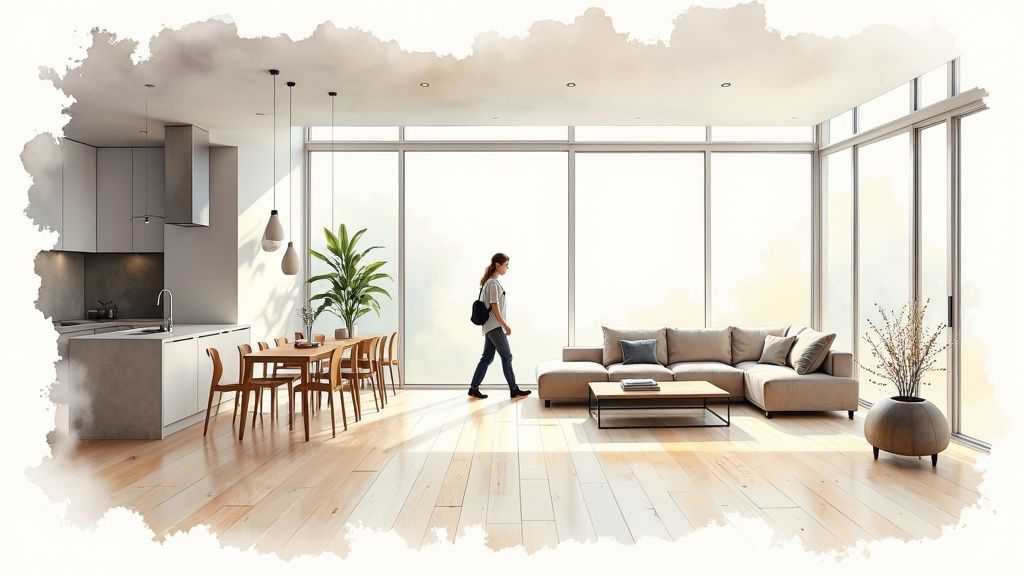
This layout is ideal for those who love to entertain or have families, as it allows for seamless conversation and movement between zones. However, the lack of walls requires strategic planning to prevent the area from feeling chaotic and undefined.
How to Implement an Open Concept Layout
Successfully designing an open-plan space involves creating distinct functional zones without physical barriers. This technique ensures each area has a clear purpose while maintaining a cohesive look.
- Define Zones with Rugs: Use large area rugs to anchor furniture groupings and visually separate the living area from the dining space or kitchen. A well-placed rug acts as a "soft wall," signaling a change in function.
- Establish a Visual Anchor: A kitchen island is a perfect transitional element, serving as both a workspace and a natural boundary. It provides a visual stop between the cooking and relaxation zones without closing off the space.
- Unify with Color: Maintain a consistent color palette across all zones to create a harmonious flow. Use pops of accent colors in decor items like pillows, art, and accessories to add personality while tying everything together.
- Strategic Storage: With everything on display, smart storage is crucial. Incorporate stylish cabinets, credenzas, or built-ins to conceal clutter and keep the space feeling clean and organized.
2. Sectional-Centered Layout
A sectional-centered layout is one of the most practical living room layout ideas, using a large sectional sofa as the undisputed focal point. The design anchors the entire room around this one substantial piece of furniture, which typically faces a television, fireplace, or large window. All other elements, like coffee tables and accent chairs, are arranged to complement the sectional, creating an inviting and cohesive conversational zone.
This layout is perfect for family movie nights, casual entertaining, and maximizing seating in both large and small spaces. It excels at creating a comfortable, lounge-like atmosphere, making it a favorite for family rooms and media-focused living areas.
How to Implement a Sectional-Centered Layout
A successful sectional-focused design hinges on balance and proper spacing to avoid overwhelming the room. The goal is to make the sectional feel like an intentional anchor, not a bulky obstacle.
- Anchor with a Rug: Place a large area rug underneath the sectional, extending at least a foot beyond its sides. This visually grounds the massive piece and clearly defines the primary seating zone.
- Prioritize Proportions: Before buying, measure your space and your doorways. Ensure there are at least three feet of clear walkway around the sectional to maintain good traffic flow. A common mistake is choosing a sectional that is too large for the room.
- Consider Modularity: Opt for a modular sectional for ultimate flexibility. These pieces can be reconfigured to suit different occasions, split into smaller seating arrangements, or adapted if you move to a new home.
- Balance with Lighter Pieces: Offset the visual weight of the sectional with lighter, more streamlined accent furniture. Think chairs with exposed legs, glass coffee tables, or slender C-shaped side tables that can tuck over the sofa’s edge.
3. Symmetrical Formal Layout
A symmetrical formal layout is a classic and timeless choice among living room layout ideas, centered on creating a mirror image on either side of a central axis. This design principle uses balance and repetition to achieve a sense of order, elegance, and tranquility. Typically anchored by a prominent feature like a fireplace, a large window, or a significant piece of art, this layout exudes a sophisticated and intentional atmosphere.
This arrangement is perfect for those who appreciate traditional aesthetics and a feeling of calm control. It works exceptionally well in rooms with strong architectural elements, such as those found in historic homes or high-end interiors, transforming them into refined spaces for conversation and quiet relaxation.
How to Implement a Symmetrical Formal Layout
Achieving perfect symmetry requires precision and a disciplined approach to furniture selection and placement. The goal is to create a space that feels balanced and harmonious without appearing rigid or uninviting.
- Establish a Focal Point: Identify the room's natural centerpiece, like a fireplace or a large bay window. Arrange all your primary furniture in relation to this anchor, creating a visual centerline.
- Create Mirror Images: Place matching sofas or loveseats facing each other on either side of the focal point. If using chairs, ensure you have identical pairs. Everything from end tables to lamps should be mirrored.
- Balance with Accessories: Extend the symmetry to your decor. Place matching table lamps on identical end tables, hang artwork in pairs, and arrange throw pillows in a balanced fashion to reinforce the design.
- Measure for Precision: To ensure true symmetry, use a measuring tape. The distance between each piece of furniture and the central axis, as well as the opposing piece, should be exact for the effect to be successful.
4. Conversation Pit or Sunken Layout
A conversation pit, or sunken layout, is a distinctive design featuring a recessed living area, typically one to three feet below the main floor level. This iconic feature, popularized in mid-century modern architecture, creates an intimate, self-contained social hub defined by built-in seating. It physically separates the lounge space from surrounding traffic, fostering a cozy, insular atmosphere that encourages face-to-face connection and shared moments.
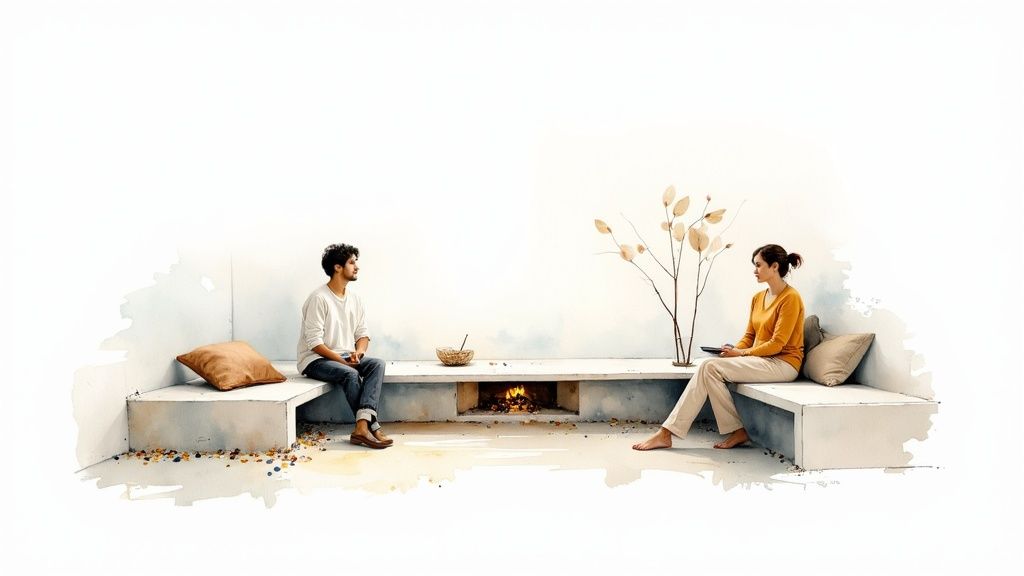
This layout is perfect for homeowners who prioritize socializing and want a dedicated zone for relaxation and entertainment. It makes a bold architectural statement, turning the living room into a destination rather than just a pass-through space. While it requires significant structural planning, the result is a unique and engaging environment.
How to Implement a Conversation Pit Layout
Creating a successful sunken layout involves careful consideration of comfort, safety, and ambiance to maximize its unique benefits.
- Center a Focal Point: Use a central coffee table, ottoman, or a built-in fireplace as the anchor for the space. This draws people in and provides a functional and visual core for conversation.
- Ensure Safety and Accessibility: Design steps that are clearly visible, well-lit, and easy to navigate. Adding handrails or using contrasting materials for the steps can enhance safety without compromising style.
- Prioritize Comfortable Seating: Equip the built-in benches with deep, plush cushions and plenty of pillows. The goal is to create an inviting space where guests feel comfortable lingering for hours.
- Integrate Smart Lighting: Since the area is recessed, layered lighting is essential. Combine overhead ambient light with task lighting like floor lamps or sconces to ensure the pit is well-lit and feels welcoming, not cavernous.
5. Floating Furniture Arrangement
A floating furniture arrangement is one of the most sophisticated living room layout ideas, where furniture is pulled away from the walls and positioned in the center of the room. This modern technique creates a sense of intimacy and improves traffic flow, making a large or open-plan space feel more curated and inviting. Instead of relying on walls as anchors, the furniture itself defines the living area.
This layout is perfect for contemporary homes, lofts, or any room where you want to create distinct zones for conversation or relaxation. By "floating" the arrangement, you establish clear pathways and prevent the space from feeling like a waiting room with furniture lining the perimeter.
How to Implement a Floating Furniture Arrangement
Executing a floating layout requires careful planning to ensure the space feels balanced and intentional rather than disorganized. The goal is to create a self-contained island of comfort and style.
- Anchor with a Rug: A large area rug is essential for this layout. It acts as a visual foundation, grounding the floating pieces and clearly defining the boundary of the living zone.
- Create Clear Pathways: Ensure there is ample "negative space" or walking room around the entire furniture grouping. Aim for at least 30-36 inches for major walkways to allow for comfortable circulation.
- Use Console Tables: Place a slim console table behind a sofa to create a graceful transition. This provides a surface for lighting or decor and helps the back of the sofa feel like a finished element rather than an abrupt stop.
- Establish a Focal Point: Even without a wall-mounted TV or fireplace, a floating arrangement needs a focal point. This could be a statement coffee table, a dramatic light fixture, or a pair of accent chairs. For more detailed tips, you can learn more about how to arrange living room furniture on fluenttrends.com.
6. TV-First or Media-Centric Layout
In many contemporary homes, the living room doubles as the primary entertainment hub, making a TV-first or media-centric layout one of the most practical living room layout ideas. This design organizes all furniture around the television or media system, establishing it as the room’s undisputed focal point. Seating is strategically arranged to provide optimal viewing angles and comfort for everyone.
This layout is perfect for family movie nights, sports enthusiasts, or anyone who enjoys streaming their favorite shows. The key is to integrate the media setup into the room's design seamlessly, so it enhances the space rather than overwhelming it.
How to Implement a TV-First or Media-Centric Layout
Creating a functional and stylish media-centric room involves more than just pointing a sofa at a screen. It requires a thoughtful arrangement that balances comfort, aesthetics, and technology.
- Optimize Viewing Distance: Position your main seating at a distance of 1.5 to 2.5 times the diagonal width of your TV screen. This ensures an immersive experience without causing eye strain.
- Mount at Eye Level: The center of the television screen should be at eye level when you are seated. This is typically around 42 inches from the floor and prevents neck craning.
- Conceal Wires: Use a media console, built-in cabinetry, or wall-mounted cord concealers to hide cables and wires. A tidy setup makes the entire media wall look more intentional and less cluttered.
- Anchor with a Console: Place a console or media unit beneath the TV. This grounds the television visually and provides essential storage for devices, games, and other media accessories.
- Integrate Stylish Storage: Add floating shelves around the TV to display decor, books, or speakers. This helps the media wall become a designed feature instead of just a functional eyesore.
7. Fireplace-Focused Layout
A fireplace-focused layout honors the hearth as the room's natural centerpiece, arranging furniture to create a warm and inviting gathering spot. This traditional approach leverages a prominent architectural feature to anchor the space, influencing everything from seating placement to traffic flow. It is a classic choice for Craftsman, farmhouse, and historic homes, evoking a sense of comfort, heritage, and connection.
This layout is perfect for fostering conversation and relaxation, making it ideal for families and anyone who enjoys a cozy ambiance. The key is to arrange furniture in a way that encourages interaction while maintaining a clear and comfortable view of the fire.
How to Implement a Fireplace-Focused Layout
Creating a functional and beautiful fireplace-focused arrangement requires thoughtful furniture placement to maximize both comfort and the visual impact of the hearth.
- Prioritize Seating: Arrange your primary seating, such as a sofa, to directly face the fireplace. This establishes a clear focal point and creates an inviting zone. For larger spaces, place two matching sofas opposite each other, perpendicular to the fireplace, to form an intimate conversation area.
- Balance with Secondary Seating: Add armchairs or accent chairs on either side of the fireplace, angled inward. This completes the conversational grouping and ensures everyone can enjoy the warmth and view.
- Keep the Hearth Clear: Avoid placing large furniture or clutter directly in front of the fireplace. Maintain a clear path and allow the hearth to be the visual star. This also ensures safety, especially with a wood-burning unit.
- Decorate the Mantel: Use the mantel as a curated display area for art, mirrors, or seasonal decor. This draws the eye upward and reinforces the fireplace as the room's central feature without overwhelming the space.
8. Window-View-Focused Layout
A window-view-focused layout treats a scenic outdoor view as the room's primary focal point. Instead of orienting furniture around a television or fireplace, this approach arranges seating to maximize sightlines to the outside, celebrating everything from a mountain vista to a sparkling city skyline. This design ethos is central to Scandinavian and modern architecture, where connecting the interior with the natural world is a core principle.
This layout is perfect for homes blessed with beautiful surroundings, such as waterfront properties, mountain cabins, or urban penthouses. It transforms the living room into a serene space for contemplation and appreciation, enhancing the home's value and the daily living experience by bringing the outdoors in.
How to Implement a Window-View-Focused Layout
The key to this layout is minimizing obstructions while maximizing comfort and light. Every element should support the view, not compete with it.
- Choose Low-Profile Furniture: Select sofas, chairs, and tables with low backs and clean lines. This prevents bulky furniture from blocking the lower portion of the windows and disrupting the sightline from anywhere in the room.
- Use Mirrors Strategically: Place a large mirror on the wall opposite the window. This clever trick not only makes the room feel larger but also reflects the view and the natural light, amplifying both throughout the space.
- Frame the View with Accent Seating: Position a pair of stylish armchairs or a chaise lounge directly facing the window. This creates an inviting, dedicated spot for reading or enjoying the scenery, further emphasizing the window as the main attraction.
- Opt for Light-Filtering Treatments: Avoid heavy, opaque curtains. Instead, choose sheer drapes, solar shades, or motorized blinds that offer privacy and sun control without completely obscuring the view. This ensures the room remains bright and connected to the outdoors.
9. Multi-Functional Zone Layout
A multi-functional zone layout is a modern and highly practical approach that divides a single living room into distinct areas for different activities. This strategy maximizes the room’s utility by creating dedicated spaces for work, relaxation, entertainment, or socializing within one cohesive environment. It’s an essential design for studio apartments, multi-generational households, or anyone needing their living space to serve multiple purposes simultaneously.
This layout is perfect for accommodating diverse household needs, such as a remote work setup coexisting with a children's play area. The key is to establish clear visual boundaries that keep the space organized and prevent it from feeling cluttered or chaotic, making it one of the most versatile living room layout ideas.
How to Implement a Multi-Functional Zone Layout
Creating effective zones requires a blend of visual separation and stylistic unity. This ensures each area feels intentional and connected to the overall room design.
- Create Visual Dividers: Use furniture like an open-backed bookshelf, a decorative screen, or even a strategically placed sofa to create soft partitions. These elements define zones without completely blocking sightlines, maintaining an open feel.
- Layer Lighting: Assign different types of lighting to each zone. For instance, use a focused task lamp for a desk area, soft ambient lighting for a reading nook, and brighter overhead lights for the main social space.
- Define with Rugs: Place a distinct area rug in each zone. This is a simple yet powerful way to visually anchor the furniture and signal a shift in function from one space to the next.
- Invest in Flexible Furniture: Choose pieces that can serve multiple roles, like an ottoman with hidden storage or a console table that doubles as a desk. This enhances functionality without overcrowding the room.
10. Eclectic or Personal-Collected Layout
An eclectic or personal-collected layout moves beyond a single design philosophy, curating furniture and decor from various sources, styles, and eras. This artistic approach creates a deeply unique and individualized space where every item tells a personal story. It’s perfect for those who love vintage finds, bohemian textures, and maximalist expressions, resulting in a living room that feels like a curated gallery of personal history and taste.
This layout is ideal for creatives, collectors, and anyone wanting a home that truly reflects their personality. The key is to arrange pieces with intention rather than randomness, creating a space that feels cohesive and thoughtfully assembled, not cluttered.
How to Implement an Eclectic or Personal-Collected Layout
Successfully designing an eclectic space involves finding harmony among diverse elements. It's a balancing act that turns a collection of disparate items into a unified, stylish interior.
- Create a Cohesive Color Anchor: Use a consistent color palette to tie different pieces together. A neutral wall color or a recurring accent hue in textiles and art can provide a visual thread that unifies the room.
- Balance Patterns and Solids: Mix bold patterns with solid-colored pieces to avoid overwhelming the eye. For example, pair a vibrant, patterned antique rug with a simple, modern sofa to create a focal point without creating chaos.
- Arrange with Intentionality: Group items thoughtfully to create vignettes that tell a story. Instead of scattering pieces, create deliberate arrangements on shelves, coffee tables, and walls to showcase your collections.
- Embrace Negative Space: Even in a maximalist design, empty space is crucial. Allow for "breathing room" around furniture and decor to prevent the layout from feeling cramped and to let each unique piece stand out. If you're wondering how to begin, you can learn more about how to mix furniture styles on fluenttrends.com to master this collected aesthetic.
10 Living Room Layout Ideas: Quick Comparison
| Layout | Implementation Complexity 🔄 | Resources & Cost ⚡ | Expected Outcomes ⭐📊 | Ideal Use Cases 📊 | Key Advantages & Tips 💡 |
|---|---|---|---|---|---|
| Open Concept Living Room | 🔄 Moderate–High — possible structural work to remove walls | ⚡ Medium–High — renovation, HVAC and finishes | ⭐ High — more light, perceived space, social flow | Urban apartments, modern family homes, entertaining spaces | 💡 Use rugs to define zones; add island, consistent palette; plan storage |
| Sectional-Centered Layout | 🔄 Low — furniture placement-focused | ⚡ Medium — sectional is a single large purchase (can be costly) | ⭐ High for seating capacity and comfort; clear focal point | Family rooms, entertainment-focused spaces, apartments | 💡 Measure access paths, choose modular options, leave 18" to TV |
| Symmetrical Formal Layout | 🔄 Medium — precise measurements and matching pieces required | ⚡ Medium–High — coordinated quality furniture recommended | ⭐ High for elegance and balance; formal aesthetic | Formal living rooms, traditional homes, hotel lobbies | 💡 Invest in coordinating pieces; add personal art to avoid stiffness |
| Conversation Pit or Sunken Layout | 🔄 High — structural excavation and safety considerations | ⚡ High — construction, drainage, finish costs | ⭐ High for intimacy and architectural impact; strong social focus | Mid-century, luxury homes, resort lounges | 💡 Ensure safe step access, drainage and lighting; consider accessibility |
| Floating Furniture Arrangement | 🔄 Medium — requires planning for traffic and sightlines | ⚡ Medium — rugs, furniture, possible room-size needs | ⭐ High for flexibility and circulation; modern aesthetic | Lofts, open-plan homes, showrooms | 💡 Anchor zones with rugs, keep pathways clear, use console tables |
| TV-First / Media-Centric Layout | 🔄 Low — straightforward orientation around screen | ⚡ Low–Medium — depends on AV equipment investment | ⭐ Moderate — optimizes viewing experience but limits social flow | Family/media rooms, apartments, dedicated TV spaces | 💡 Mount TV at eye level; keep 1.5–2.5× TV width viewing distance; hide cables |
| Fireplace-Focused Layout | 🔄 Low–Medium — depends on existing hearth or new installation | ⚡ Medium — fireplace installation/maintenance costs possible | ⭐ High for warmth and coziness; strong gathering focal point | Traditional homes, cabins, farmhouse and rustic interiors | 💡 Face primary seating to fireplace, maintain ventilation, use mantel decor |
| Window-View-Focused Layout | 🔄 Low — furniture oriented to preserve sightlines | ⚡ Low–Medium — treatments, films, UV protection | ⭐ High for natural light and view emphasis; mood and daylight benefits | Waterfront, mountain, skyline residences, glass-heavy homes | 💡 Use low-profile furniture, light-filtering shades, motorized blinds for control |
| Multi-Functional Zone Layout | 🔄 Medium–High — careful planning for multiple zones and lighting | ⚡ Medium–High — more furniture, storage, layered lighting | ⭐ High for versatility and utility; supports diverse activities | Remote-work homes, studios, multi-use family rooms | 💡 Define zones with rugs/lighting, use cohesive palette and multi-purpose furniture |
| Eclectic / Personal-Collected Layout | 🔄 Medium — curatorial skill required to balance pieces | ⚡ Variable — low (thrifting) to high (collectibles) | ⭐ High for uniqueness and personality; variable impact on cohesion | Creative households, collectors, design-forward interiors | 💡 Anchor with a cohesive color palette, balance patterns, curate regularly |
Crafting Your Perfect Living Space
Embarking on the journey to design your living room is a deeply personal and rewarding process. We've explored a diverse range of living room layout ideas, from the expansive, communal feel of the Open Concept to the intimate, cozy circle of a Conversation Pit. Each approach offers a unique blueprint for how a room can function, feel, and reflect your lifestyle. The key takeaway is that there is no single "correct" layout; the perfect arrangement is the one that aligns seamlessly with your daily routines, your entertaining style, and your personal aesthetic.
Blending Inspiration with Practicality
Remember the foundational principles we've discussed. The formal elegance of a Symmetrical Layout can bring a sense of order and calm, while a Floating Furniture Arrangement can make a small room feel surprisingly spacious and airy. For modern households, a TV-First or Fireplace-Focused design provides a clear, functional anchor point that dictates the flow of the entire room. Conversely, a layout that prioritizes a stunning window view connects your indoor living space with the natural world outside, creating a serene and ever-changing backdrop.
The true magic happens when you begin to combine these concepts. You might implement a Multi-Functional Zone Layout within a larger open-concept space, or use the principles of a floating arrangement to enhance your media-centric setup. Your layout should be as dynamic as you are.
Key Insight: The most successful living room layouts are not rigid copies of a single style. They are thoughtful hybrids, borrowing the best elements from various concepts to create a space that is both beautiful and highly functional for its inhabitants.
Your Action Plan for Layout Success
Before you start moving furniture, take a moment to strategize. The most impactful changes come from intentional planning, not guesswork. Here are your actionable next steps to transform your space using these living room layout ideas:
- Define Your Primary Function: What is the number one thing you do in your living room? Is it hosting movie nights, entertaining guests, relaxing with a book, or providing a play space for children? Your primary function should dictate your primary layout choice.
- Measure and Map: Don't skip this step. Create a simple floor plan of your room, including doors, windows, and electrical outlets. Use painter's tape on the floor to outline where large pieces like sofas and media consoles will go. This allows you to visualize traffic flow and scale before committing.
- Experiment and Iterate: Your first attempt doesn't have to be your last. Live with a new arrangement for a few days. Notice how it feels at different times of the day. Don't be afraid to tweak placements, swap out accent chairs, or completely rethink an area that isn't working. The perfect layout is an evolution, not an instant creation.
Ultimately, mastering these concepts is about empowering you to create a home that truly serves you and your family. It's about transforming a simple room into the heart of your home, a backdrop for memories, and a sanctuary that welcomes you at the end of each day.
Ready to bring your perfect layout to life with pieces that reflect your unique style? The curated collections at Fluent Trends offer high-quality, designer-approved furniture and decor to anchor any living room design. Explore our selection to find the statement sofa, elegant storage, or unique accent pieces that will complete your vision.