

10 Modern Dining Room Inspiration Ideas for 2025
Donna MaloneThe dining room is more than just a place to eat; it's a central hub for connection, conversation, and creating memories. In today's home, this space demands a blend of function and style that reflects a contemporary lifestyle. Yet, 'modern' is not a single look but a design philosophy. It encompasses everything from the clean-lined simplicity of minimalism to the nature-infused calm of biophilic design and the bold character of industrial aesthetics.
This guide delivers actionable modern dining room inspiration, breaking down distinct styles to help you craft the perfect aesthetic for your home. We move beyond vague ideas to provide concrete guidance on translating these concepts into reality. You will find specific furniture choices, strategic lighting plans, and detailed decor tips, offering practical solutions to transform your dining area into a sophisticated and inviting sanctuary.
Whether you're working with a large, open-concept space or a compact dining nook, this curated collection provides a blueprint for creating a room that is both beautiful and functional. We will explore how to integrate smart technology for convenience, embrace sustainable materials for an eco-conscious home, and master the art of Japandi fusion. Our goal is to equip you with the insights needed to design a dining space that not only looks stunning but also enhances your daily life, making every meal an occasion.
1. Open Concept Dining Integration
The quintessential modern dining room often isn't a "room" at all. Open concept dining integration removes traditional walls, merging the dining area with the kitchen and living spaces to create a single, cohesive environment. This architectural approach, heavily featured in contemporary design and popularized by home renovation shows, transforms dining from a formal, isolated activity into a fluid part of daily life. The result is a home that feels larger, brighter, and more connected, making it perfect for entertaining and family gatherings.
This design philosophy is a cornerstone of modern living, providing a wealth of modern dining room inspiration by focusing on flow and functionality. Instead of being confined, the dining area becomes a central hub where cooking, conversation, and dining seamlessly overlap.
How to Define Your Dining Space Without Walls
Successfully integrating your dining area requires creating visual cues that define its boundaries. Without clear delineation, the space can feel disjointed or chaotic.
-
Anchor with a Rug: A large area rug placed under the dining table and chairs is the simplest and most effective way to establish a distinct zone. Choose a rug that is large enough for chairs to remain on it even when pulled out.
-
Utilize a Statement Light Fixture: Hang a striking pendant light or a linear chandelier directly over the dining table. This not only provides targeted illumination but also acts as a visual centerpiece, drawing the eye and defining the dining zone from above.
-
Create a Furniture Barrier: A kitchen island or a low-profile credenza positioned between the kitchen and dining area can act as a subtle, functional divider. This maintains an open feel while creating a natural separation.
Pro Tip: Ensure your ventilation is up to the task. A high-powered, low-noise range hood in the kitchen is essential to prevent cooking odors from permeating the entire open-plan living area. This small detail makes a significant difference in comfort and usability.
2. Minimalist Aesthetic Design
The minimalist aesthetic strips the dining room down to its essential components, championing the idea that less is truly more. This design philosophy focuses on clean lines, uncluttered surfaces, and a deliberate use of space to create a serene and highly functional environment. Instead of filling the room with decor, minimalism elevates the core elements: the table, chairs, and lighting, turning them into sculptural statements of their own. The result is a dining space that feels calm, intentional, and effortlessly sophisticated.
This "less but better" approach, heavily influenced by Japanese and Scandinavian design principles, provides a powerful source of modern dining room inspiration by prioritizing quality over quantity. It transforms the dining experience into a mindful practice, free from visual noise and distractions.

How to Achieve a Minimalist Dining Space
Creating a successful minimalist dining room is about careful curation and intentionality, not just emptying the space. Every piece must serve a purpose and contribute to the overall harmony.
-
Invest in a Statement Piece: Select one high-quality, beautifully designed item to be the focal point. A sculptural dining table made from natural wood or a striking, architecturally interesting chandelier can anchor the room without needing additional adornment.
-
Embrace a Neutral Palette: Stick to a restrained color scheme of whites, grays, beiges, and blacks. This creates a cohesive and tranquil backdrop, allowing the form and texture of your furniture to stand out.
-
Introduce Texture for Warmth: A purely minimal space can feel cold. Counter this by layering natural textures. Think a raw-finish oak table, linen chair upholstery, a simple wool rug, or a ceramic vase. These subtle variations add depth and sensory appeal.
Pro Tip: In a minimalist design, lighting is paramount. Use layered lighting: a primary overhead fixture for function, supplemented by subtle, concealed LED strips or a single floor lamp to create a warm, inviting glow in the evenings. This adds dimension without adding clutter.
3. Industrial Modern Dining
Industrial modern dining borrows its aesthetic from warehouses, factories, and urban lofts, blending raw, utilitarian elements with the clean lines of contemporary design. This style celebrates materials in their most authentic state: exposed brick walls, visible metal ductwork, polished concrete floors, and reclaimed wood. The result is a space that feels both edgy and sophisticated, perfect for those who appreciate a narrative of history and function in their decor.
This design approach offers a unique source of modern dining room inspiration, transforming the dining area into a statement of textural and material honesty. It moves beyond purely decorative choices, creating an environment that feels grounded, authentic, and effortlessly cool, as seen in the work of design firms like Roman and Williams or brands such as Restoration Hardware.
How to Balance Raw Elements with Modern Comfort
The key to a successful industrial modern dining room is balancing the harshness of industrial materials with softness and warmth to create an inviting atmosphere. Without this equilibrium, the space can feel cold or unfinished.
-
Introduce Soft Textiles: Counteract hard surfaces with soft textures. An oversized, plush area rug under the dining table, upholstered dining chairs in a rich fabric like velvet or linen, or even simple linen napkins can instantly add warmth and comfort.
-
Layer with Warm Lighting: Industrial-style fixtures like cage pendants or track lighting can feel stark. Offset this by using warm-toned Edison bulbs and adding supplementary light sources like a floor lamp with a fabric shade in a corner to create a soft, ambient glow.
-
Incorporate Natural Greenery: Large potted plants, such as a Fiddle Leaf Fig or a snake plant, introduce life and organic softness. The vibrant green contrasts beautifully with brick, concrete, and metal, preventing the aesthetic from feeling too sterile.
-
Mix Your Metals: Don't stick to just one metal finish. Combine matte black steel with warm brass or polished copper accents through light fixtures, chair legs, or decorative objects. This creates visual interest and a more curated, layered look.
Pro Tip: Select a refined industrial dining table as the anchor. A piece combining a solid, reclaimed wood top with sleek, cast-iron legs provides the perfect centerpiece. It embodies the industrial spirit while offering a polished finish that elevates the entire room.
4. Sustainable and Eco-Conscious Design
A truly modern approach to design extends beyond aesthetics to include environmental responsibility. Sustainable and eco-conscious dining rooms are crafted with longevity, ethical sourcing, and minimal environmental impact at their core. This philosophy favors natural, renewable materials, energy-efficient features, and pieces built to last, moving away from disposable, trend-driven consumption. The result is a dining space that is not only beautiful but also thoughtful and intentional.
This design ethos offers a deep well of modern dining room inspiration, proving that style and sustainability are not mutually exclusive. By choosing well-crafted pieces from ethical sources, you create a space that feels grounded, authentic, and aligned with contemporary values.
How to Cultivate an Eco-Conscious Dining Space
Integrating sustainability is about making deliberate choices that prioritize quality, origin, and material health. This approach builds a dining room that will look beautiful for decades.
-
Prioritize Certified Materials: Look for furniture made from FSC-certified wood, which ensures it comes from responsibly managed forests. Also, seek out GREENGUARD certification for low-VOC (volatile organic compound) finishes, which improves indoor air quality.
-
Invest in "Forever Furniture": Instead of fast-furniture, invest in high-quality, durable pieces that can withstand years of use. A solid wood table or well-constructed chairs from reputable brands like Blu Dot or HAY are designed to last a lifetime.
-
Embrace Vintage and Secondhand: The most sustainable item is one that already exists. Sourcing a vintage credenza or a set of antique dining chairs prevents waste and adds a unique layer of history and character to your modern dining room.
-
Support Local Artisans: Buying from local craftspeople reduces the carbon footprint associated with shipping and supports your community's economy. These pieces are often handmade with exceptional care and sustainable practices. For a curated list of brands that align with these values, you can find more information about sustainable furniture brands here.
Pro Tip: When choosing textiles like table linens, napkins, or rug, opt for natural, renewable fibers such as organic cotton, linen, or jute. These materials are biodegradable and often require fewer pesticides and less water to produce than synthetic alternatives.
5. Mid-Century Modern Revival
The Mid-Century Modern Revival brings the timeless elegance of the 1940s to the 1960s into the contemporary home. This style is defined by its clean lines, organic curves, and a deep appreciation for natural materials like warm woods. Far from a museum-like recreation, this revival blends iconic forms, such as those from designers like Charles and Ray Eames, with modern comforts and a fresh, updated color palette. The result is a dining space that feels both nostalgic and forward-thinking.
This enduring aesthetic provides a rich source of modern dining room inspiration by celebrating functional design and understated sophistication. It creates a dining environment that is warm, inviting, and effortlessly stylish, proving that great design never goes out of fashion.
How to Achieve the Mid-Century Look
Creating a balanced mid-century modern dining room involves a careful mix of vintage charm and contemporary freshness. The key is to curate, not just replicate.
-
Mix Vintage and New: Blend authentic vintage finds with high-quality reproductions from brands like Herman Miller or Design Within Reach. Pairing a vintage teak credenza with new Eames-style chairs creates a layered, authentic feel.
-
Embrace Iconic Silhouettes: Center your design around a dining table with tapered legs and chairs with sculptural, molded forms. Walnut and teak are hallmark wood tones that instantly establish the mid-century aesthetic.
-
Use a Controlled Color Palette: Keep walls neutral (think warm white or soft gray) to allow the furniture to stand out. Introduce pops of color through accent pieces like artwork or textiles, sticking to classic mid-century hues like burnt orange, olive green, or teal.
-
Select Statement Lighting: A Sputnik chandelier or a sculptural arc lamp suspended over the table serves as a functional focal point. This single element can define the entire space and solidify the retro-modern vibe.
Pro Tip: Avoid clutter at all costs. Mid-century modern design champions simplicity and functionality. Keep tabletops and surfaces clear, letting the inherent beauty of the furniture and its clean lines take center stage.
6. Luxury Modern Dining with Statement Lighting
In the realm of high-end design, luxury modern dining is defined by its ability to create a dramatic, curated experience. This approach moves beyond mere functionality, treating the dining area as a gallery-like space where a single, spectacular lighting fixture acts as the primary focal point. Much like a piece of sculpture, this statement light dictates the room's mood, scale, and aesthetic, transforming the act of dining into an event. Designers like Kelly Wearstler and brands such as Apparatus Studio champion this philosophy, using lighting to anchor sophisticated environments.
This design strategy is the pinnacle of aspirational modern dining room inspiration, combining opulent materials like marble and brass with refined furnishings. The result is a space that feels both impressively grand and intimately inviting, perfect for hosting memorable dinner parties or enjoying a quiet, elegant meal.
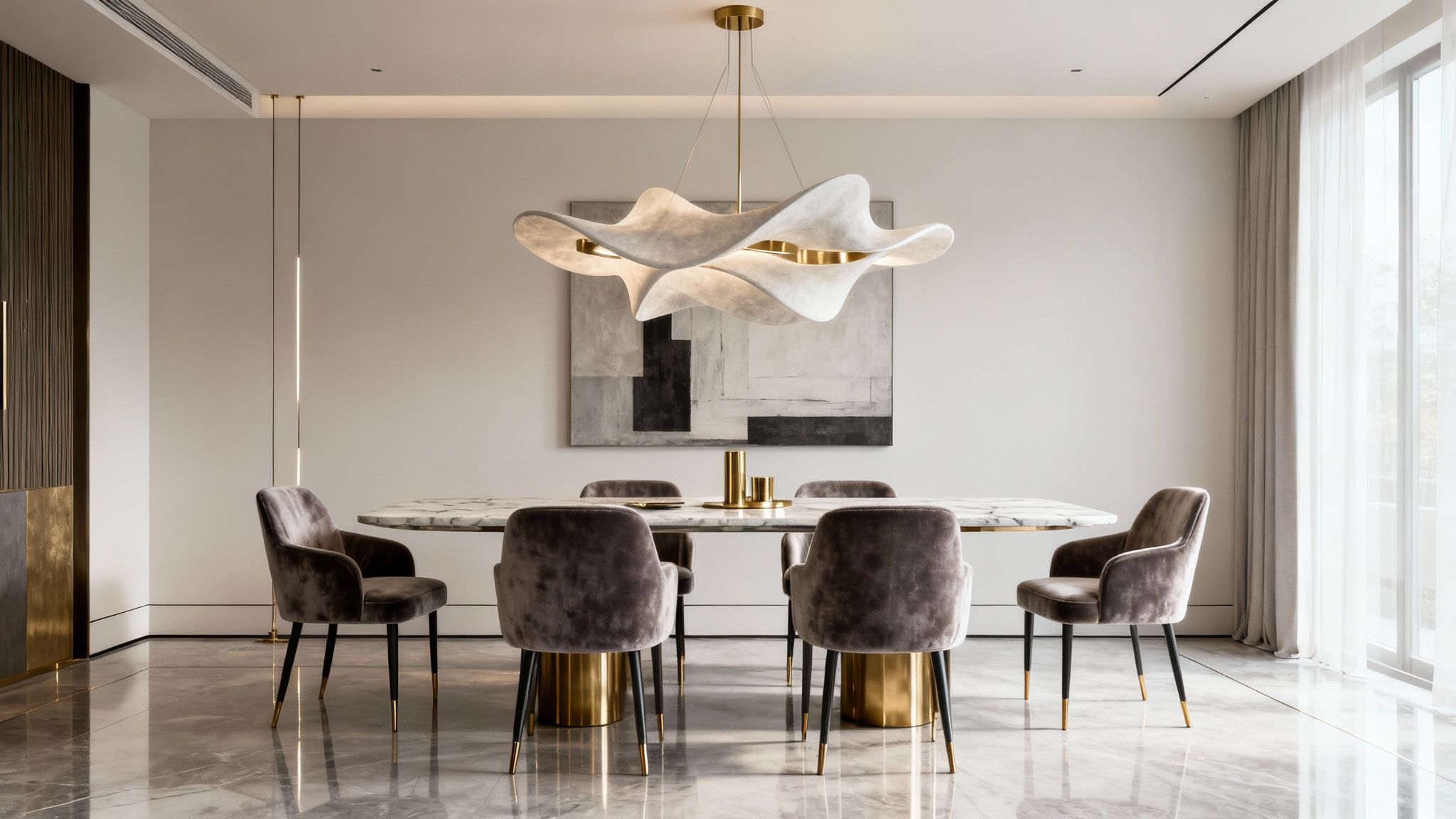
How to Master the Art of Statement Lighting
Choosing and implementing a statement fixture requires careful consideration of scale, style, and atmosphere to ensure it enhances, rather than overwhelms, the space.
-
Ensure Proportional Harmony: The fixture's scale is critical. A general rule is that the chandelier's diameter should be about one-half to two-thirds the width of your dining table. This ensures it makes a statement without overpowering the setting.
-
Install Dimmer Switches: Ambiance is everything in a luxury setting. Installing a dimmer switch is a non-negotiable step, allowing you to transition from bright, functional light to a soft, atmospheric glow that elevates the dining experience.
-
Hang at the Correct Height: The bottom of the fixture should hang approximately 30-36 inches above the tabletop. This provides adequate clearance, illuminates the table effectively, and maintains a clear line of sight for guests seated across from one another.
-
Complement Your Table Style: The fixture should speak the same design language as your table. A linear, minimalist light pairs well with a sleek rectangular table, while a cascading, sculptural chandelier can create a stunning contrast above a round pedestal table.
Pro Tip: For a truly unique and personalized space, consider commissioning a custom lighting fixture from an artisan or a boutique lighting studio. This allows you to create a one-of-a-kind centerpiece that is perfectly tailored to your room's dimensions and your personal aesthetic.
For additional ideas on crafting a high-end look, explore a curated collection of modern dining room decor ideas that can elevate your space.
7. Japandi (Japanese-Scandinavian Fusion) Design
Japandi design represents the harmonious marriage of Japanese minimalism and Scandinavian warmth. This hybrid aesthetic blends the sleek, functional principles of Scandinavian design with the rustic, nature-focused elegance of Japanese tradition. The result is a dining space that feels both modern and timeless, centered around clean lines, natural materials, and an atmosphere of calm intentionality. It is a philosophy of "less is more," where every object has a purpose and contributes to a serene, uncluttered environment.
This thoughtful approach provides a wealth of modern dining room inspiration by prioritizing quality craftsmanship, organic textures, and a connection to the natural world. Instead of chasing trends, a Japandi dining room creates a tranquil sanctuary for mindful eating and quiet connection.
How to Cultivate a Japandi Aesthetic
Achieving the Japandi look is about balance and intentionality. It requires a curated approach to furniture, materials, and décor to create a space that feels both simple and sophisticated.
-
Embrace Natural Materials: Center your design around light-toned woods like oak or ash, common in Scandinavian furniture, and complement them with darker woods like walnut or bamboo, often seen in Japanese design. Incorporate other organic elements such as rattan, paper, and stone.
-
Focus on a Neutral Palette: Build your color scheme on a foundation of warm, neutral tones like beige, cream, and soft grey. Introduce contrast with muted accents of charcoal, indigo, or earthy greens. The goal is a low-contrast palette that soothes the senses.
-
Prioritize Function and Craftsmanship: Select furniture with clean lines and simple, elegant forms. Look for pieces that showcase expert craftsmanship and are made from high-quality, sustainable materials. A simple wooden table paired with thoughtfully designed chairs is a quintessential Japandi combination.
Pro Tip: Master the art of "wabi-sabi," the Japanese appreciation for imperfection. Introduce handmade ceramics, a live-edge wooden bench, or a textured linen tablecloth. These elements add character and warmth, preventing the minimalist space from feeling cold or sterile.
8. Maximalist and Eclectic Modern Dining
Moving beyond the clean lines of minimalism, maximalist and eclectic modern design celebrates personality, color, and curated chaos. This approach is not about clutter; it is a deliberate and artful layering of pattern, texture, and objects that tell a story. It blends contemporary forms with bold, artistic expressions, creating a dining space that is both visually rich and deeply personal. The result is an environment that feels collected, vibrant, and full of life, turning every meal into an experience.
This style provides a wealth of modern dining room inspiration for those who find joy in abundance and self-expression. It proves that modern design can be warm, inviting, and wonderfully complex, combining sleek furniture with rich textiles, dramatic art, and a fearless use of color.
How to Curate a Cohesive Maximalist Space
Achieving a harmonious maximalist look requires a thoughtful strategy to prevent the design from feeling random or overwhelming. The key is to create curated cohesion.
-
Establish a Foundational Palette: Start by choosing a core color palette of three to five complementary or contrasting hues. Use these colors as a thread to tie together disparate elements, from a bold wallpaper or paint choice to textiles and artwork.
-
Layer Patterns with Intention: Mix patterns of different scales to create visual interest without clashing. Combine a large-scale floral wallpaper with a small-scale geometric rug and solid-colored upholstery. This variation creates rhythm and depth.
-
Invest in Anchor Pieces: Ground your eclectic collection with high-quality, foundational furniture like a solid dining table or distinctive chairs. These anchor pieces provide a modern, sophisticated base that allows more decorative elements to shine.
Pro Tip: Balance is essential. For every area of high visual activity, such as a gallery wall or heavily patterned chairs, create a "moment of calm" with a solid-colored surface or a simple, unadorned element. This visual pause allows the eye to rest and appreciate the curated details.
9. Biophilic and Nature-Connected Design
Biophilic design is a modern philosophy centered on bringing the outdoors in, creating a tangible connection between a home's interior and the natural world. This approach moves beyond simply adding a potted plant to a corner; it strategically incorporates natural light, living greenery, organic forms, and earth-inspired materials. Popularized by forward-thinking firms like Terrapin Bright Green and echoed in publications such as Dwell and Kinfolk, this style transforms the dining room into a restorative, calming sanctuary.
The goal is to foster wellbeing and harmony, making the dining experience feel grounded and serene. This philosophy offers a wealth of modern dining room inspiration by proving that contemporary design can be both sleek and deeply connected to nature, creating spaces that feel alive and refreshing.

How to Cultivate a Natural Dining Environment
Integrating biophilic principles requires a multi-layered approach that engages multiple senses. The aim is to build an ecosystem, not just decorate a room.
-
Layer Living Greenery: Start with low-maintenance plants like snake plants or pothos, then layer in different heights and textures. Use a mix of hanging planters, floor pots, and small table arrangements to create a lush, dynamic feel.
-
Embrace Natural Materials: Anchor the space with a solid wood dining table. Complement it with stone accents, linen textiles, woven rattan chairs, or a jute rug. These textures add warmth and a direct connection to the earth.
-
Maximize Natural Light: Keep window treatments minimal or opt for sheer curtains to allow maximum sunlight to flood the space. Positioning the dining table near a large window or glass door enhances the connection to the outdoors.
Pro Tip: Don't overlook the sensory details. Introduce a small, quiet water feature or an aquarium for gentle, calming background noise. The subtle sound of moving water can significantly enhance the room's tranquil and restorative atmosphere.
10. Smart Modern Dining Technology Integration
The truly modern dining room extends beyond visual aesthetics to incorporate technology that enhances comfort, ambiance, and convenience. Smart dining technology integration focuses on embedding automated systems into the room’s design, creating an environment that is responsive, intuitive, and seamlessly functional. This approach prioritizes "invisible tech" that operates behind the scenes, such as automated lighting, climate control, and integrated audio, without cluttering the space with gadgets.
This forward-thinking concept delivers the ultimate in sophisticated living, offering powerful modern dining room inspiration by blending high-tech functionality with high-end design. The goal is a dining experience that feels effortless, whether you're hosting an intimate dinner or a large celebration, with every environmental element controllable at the touch of a button or a simple voice command.
How to Seamlessly Blend Tech and Design
A successful smart dining room feels magical, not technical. The key is careful planning and choosing integrated systems that disappear into the decor.
-
Implement Smart Mood Lighting: Use smart LED strips, recessed lighting, and dimmable fixtures from systems like Lutron or Philips Hue to create dynamic lighting scenes. Program settings for "dinner party," "casual meal," or "romantic evening" that adjust color temperature and brightness instantly.
-
Conceal Audio and Visuals: Install in-ceiling or in-wall speakers for an immersive, high-quality audio experience without visible hardware. For those who want a screen, consider a projection system or a smart TV that mimics artwork, like Samsung's The Frame, to maintain a clean aesthetic when not in use.
-
Integrate Climate and Window Treatments: Connect your thermostat and motorized blinds or shades to your smart home system. You can schedule the blinds to close as the sun sets or adjust the room temperature with a voice command for perfect comfort. For those interested in the cutting edge of home automation, explore insights on how to incorporate smart technology into your kitchen design for more ideas that can be adapted to the dining area.
Pro Tip: Plan your wiring and connectivity from the start. During a renovation or build, work with an electrician and an integrator to hardwire as much of the technology as possible. This ensures a more reliable and robust connection than relying solely on WiFi and keeps your walls and floors free of unsightly cables.
10 Modern Dining Styles — Side-by-Side Comparison
| Design Option | Implementation Complexity 🔄 | Resource Requirements ⚡ | Expected Outcomes ⭐📊 | Ideal Use Cases 💡 | Key Advantages ⭐ |
|---|---|---|---|---|---|
| Open Concept Dining Integration | Moderate–High (structural changes, ventilation) | Moderate (contractor, HVAC, island) | Greater light, perceived space, social flow; stronger resale | Families, entertaining, small/urban homes | Seamless flow, increased openness |
| Minimalist Aesthetic Design | Low–Moderate (curation & quality pieces) | Low–Moderate (few high‑quality items) | Calm, timeless, low maintenance | Small spaces, staged homes, those seeking simplicity | Clean look, easy upkeep, timeless appeal |
| Industrial Modern Dining | Moderate (exposing/finishing structural elements) | Low–Moderate (reclaimed materials, lighting) | Distinctive, durable, edgy aesthetic | Lofts, converted warehouses, creative spaces | Bold character, cost-effective materials |
| Sustainable and Eco‑Conscious Design | Moderate (sourcing certified materials) | Moderate–High (sustainable/upfront costs) | Lower environmental footprint; healthier indoor air | Eco‑minded homeowners, long‑term investments | Durability, health benefits, ethical sourcing |
| Mid‑Century Modern Revival | Low–Moderate (sourcing/reproductions, styling) | Moderate (range of price points) | Warm, timeless, functional aesthetic | Those seeking classic modernism, versatile interiors | Timeless style, strong form–function balance |
| Luxury Modern Dining with Statement Lighting | High (custom fixtures, electrical work) | High (designer pieces, pro installation) | Dramatic focal point; elevated perceived value | Luxury residences, formal entertaining spaces | High impact, bespoke elegance |
| Japandi (Japanese‑Scandinavian Fusion) | Moderate (careful curation, material choice) | Moderate (quality natural materials) | Serene, warm minimalism; timeless restraint | Minimalists wanting warmth, calm dining rooms | Balanced warmth + minimalism, subtle sophistication |
| Maximalist & Eclectic Modern Dining | Moderate–High (curation, layering) | Moderate–High (many unique pieces) | Highly personal, visually rich, dynamic spaces | Collectors, creatives, boutique hospitality | Expressive, ever‑evolving, highly photogenic |
| Biophilic & Nature‑Connected Design | Moderate–High (living elements, light planning) | Moderate (plants, natural materials, upkeep) | Improved wellbeing, air quality, natural ambience | Wellness‑focused homes, light‑filled rooms | Health benefits, strong nature connection |
| Smart Modern Dining Technology Integration | High (systems integration, wiring) | High (hardware, reliable network, pro setup) | Customizable ambiance, convenience, energy savings | Tech‑savvy homeowners, smart luxury homes | Automation, convenience, adaptable environments |
Bringing Your Vision to the Table
The journey through modern dining room inspiration reveals a vibrant and diverse landscape of design possibilities. From the clean, uncluttered lines of minimalist aesthetics and the serene harmony of Japandi fusion to the bold, raw textures of industrial-modern spaces, the common thread is intentionality. Your dining room is far more than just a place to eat; it's a central hub for connection, celebration, and daily life. The ideas we've explored, whether it's integrating biophilic elements to foster a connection with nature or embracing the timeless elegance of the mid-century modern revival, serve as a launchpad for your own creativity.
The most successful dining room transformations begin not with a piece of furniture, but with a clear understanding of your lifestyle. Ask yourself how you want to feel in the space. Do you crave a calm retreat for intimate family meals, or an energetic, dynamic area for hosting lively dinner parties? Your answer will guide every decision, from the overarching style to the smallest details. This is where the true power of design lies: in its ability to shape experiences and reflect your unique personality.
Key Takeaways and Actionable Next Steps
To move from inspiration to implementation, focus on a structured approach. Start by crystallizing your vision and then build upon it with carefully selected elements that align with your chosen aesthetic.
-
Define Your Core Style: Revisit the styles we've covered, from warm contemporary to maximalist modern. Select one or a thoughtful fusion of two that truly resonates with you. This choice will act as your design compass, ensuring a cohesive and unified result.
-
Prioritize a Focal Point: Every compelling room needs a hero piece. This could be a dramatic statement light fixture that anchors an open-concept space, a striking piece of art that sets the color palette, or a beautifully crafted dining table that invites gathering.
-
Layer with Texture and Material: A truly modern dining room engages the senses. Combine contrasting materials like a sleek marble tabletop with warm walnut chairs, or a polished concrete floor with a soft, high-pile area rug. These layers add depth, warmth, and visual interest, preventing the space from feeling flat or one-dimensional.
-
Perfect the Finishing Touches: The final 10% of the design process often makes 90% of the impact. This is where details like table settings and decor come into play. To truly bring your vision to the table and complete the dining experience, consider incorporating inspiring modern centerpiece ideas for dining tables that can elevate everyday meals and special occasions alike.
Creating a Space That Endures
Ultimately, the best modern dining room inspiration empowers you to create a space that is not just on-trend, but timelessly you. It's about crafting an environment that supports your life, fosters connection, and brings you joy every time you enter. It's a testament to the idea that thoughtful design can elevate the everyday, turning simple meals into cherished memories.
Don't be afraid to experiment, to mix high-end investment pieces with budget-friendly finds, or to let your space evolve over time. The most beautiful homes are those that tell a story. Let your dining room be a chapter that speaks of shared laughter, delicious food, and the comfort of being exactly where you're meant to be.
Ready to find those perfect finishing touches that will elevate your dining space from concept to reality? Explore the curated collections at Fluent Trends, where you'll discover designer-approved tabletop essentials, from elegant dinnerware to unique decor. Visit Fluent Trends to find the key pieces that will complete your modern dining room vision.