

Inspiring Modern Table Setting Ideas for Any Occasion
Donna MaloneForget everything you think you know about setting a table. Gone are the days of stuffy, perfectly matched sets and rigid rules. Modern table setting is all about creating a vibe—a personal, inviting atmosphere that turns any meal into a memorable experience.
The core idea is simple: blend functionality with beauty. It's about mixing textures, playing with color, and layering pieces you genuinely love.
Redefining The Modern Tablescape
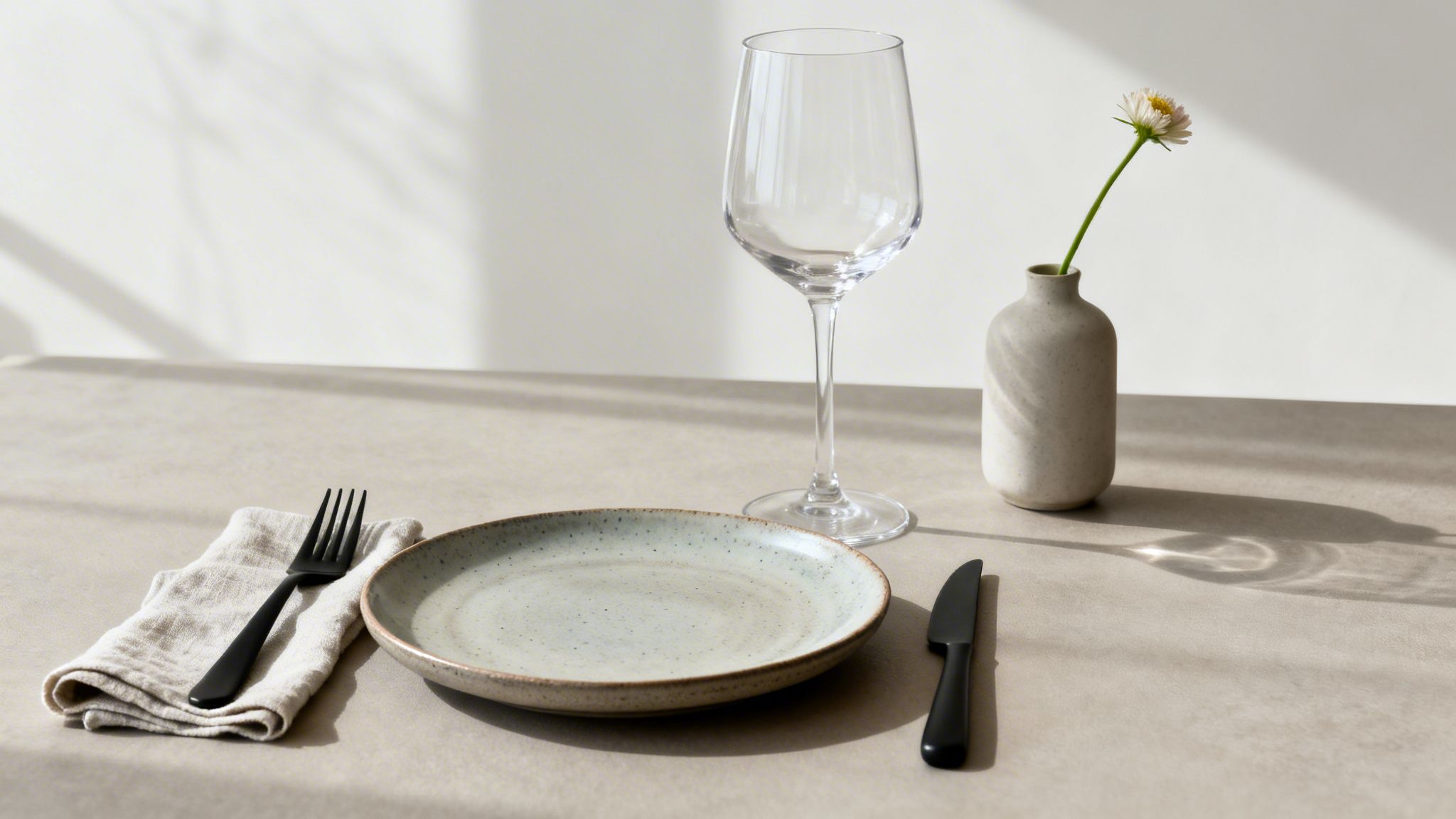
Think of your dining table less as a formal stage and more as a canvas for your creativity. Every single element, from the plates to the napkins, contributes to the mood you want to set. The goal isn't perfection; it's to design a space that feels intentional yet completely effortless, encouraging everyone to relax and connect.
The "mixed, not matchy" aesthetic is at the heart of this. It gives you the freedom to pair those artisanal ceramic plates you found at a local market with sleek, minimalist glassware. Or you can combine rustic linen placemats with polished, modern flatware. This beautiful interplay of materials creates a rich, tactile experience that’s so much more interesting and personal.
This shift isn't happening in a vacuum. It's part of a larger trend in home design where we're prioritizing style and function in our most-used spaces. In fact, the global kitchen and dining furniture market hit a staggering USD 61 billion in 2024 and is expected to climb to nearly USD 99.3 billion by 2033. This boom shows just how much we're investing in creating beautiful, functional dining areas over the stuffy, traditional rooms of the past.
At its core, a modern table setting is a collection of thoughtfully chosen pieces that tell a story. Here’s a quick breakdown of the main principles to keep in mind.
Core Principles Of Modern Table Settings
| Principle | Key Idea | Fluent Trends Product Example |
|---|---|---|
| Minimalism | Less is more. Focus on clean lines and uncluttered surfaces. | Sleek Matte Flatware Set |
| Mixed Materials | Combine textures like wood, ceramic, linen, and metal for depth. | Acacia Wood Serving Boards with Stoneware Plates |
| Personalization | Curate pieces that reflect your style, not a store display. | Unique, handcrafted serveware |
| Functionality | Every item should be beautiful and practical for the meal. | Versatile Nesting Bowls |
Embracing these concepts allows you to build a tablescape that feels authentic and truly special every time you sit down to eat.
Embracing A Curated Aesthetic
Getting that modern look doesn't mean you need a complete overhaul. It's really about making small, thoughtful choices that reflect your personal style.
Here’s where to start:
- Focus on the Vibe: First, decide on the atmosphere you want. Are you going for cozy and intimate, or airy and minimalist? Your answer will guide every choice you make, from colors to lighting.
- Mix Your Materials: Don't be afraid to combine different textures. Think smooth ceramic next to rough linen, or warm wood against cool metal. This contrast is what adds character and depth.
- Tell a Story: Let your table tell a story about you. Use pieces you absolutely love, whether they're family heirlooms or brand-new finds, to create a setting that feels uniquely yours.
The real beauty of the modern table setting lies in its flexibility. It’s about curating an environment that feels authentic to you, turning a simple meal into an occasion worth savoring.
To really lean into this contemporary aesthetic, it helps to explore modern tableware essentials for mindful living that masterfully combine form and function.
Building Your Foundation with Layers and Texture
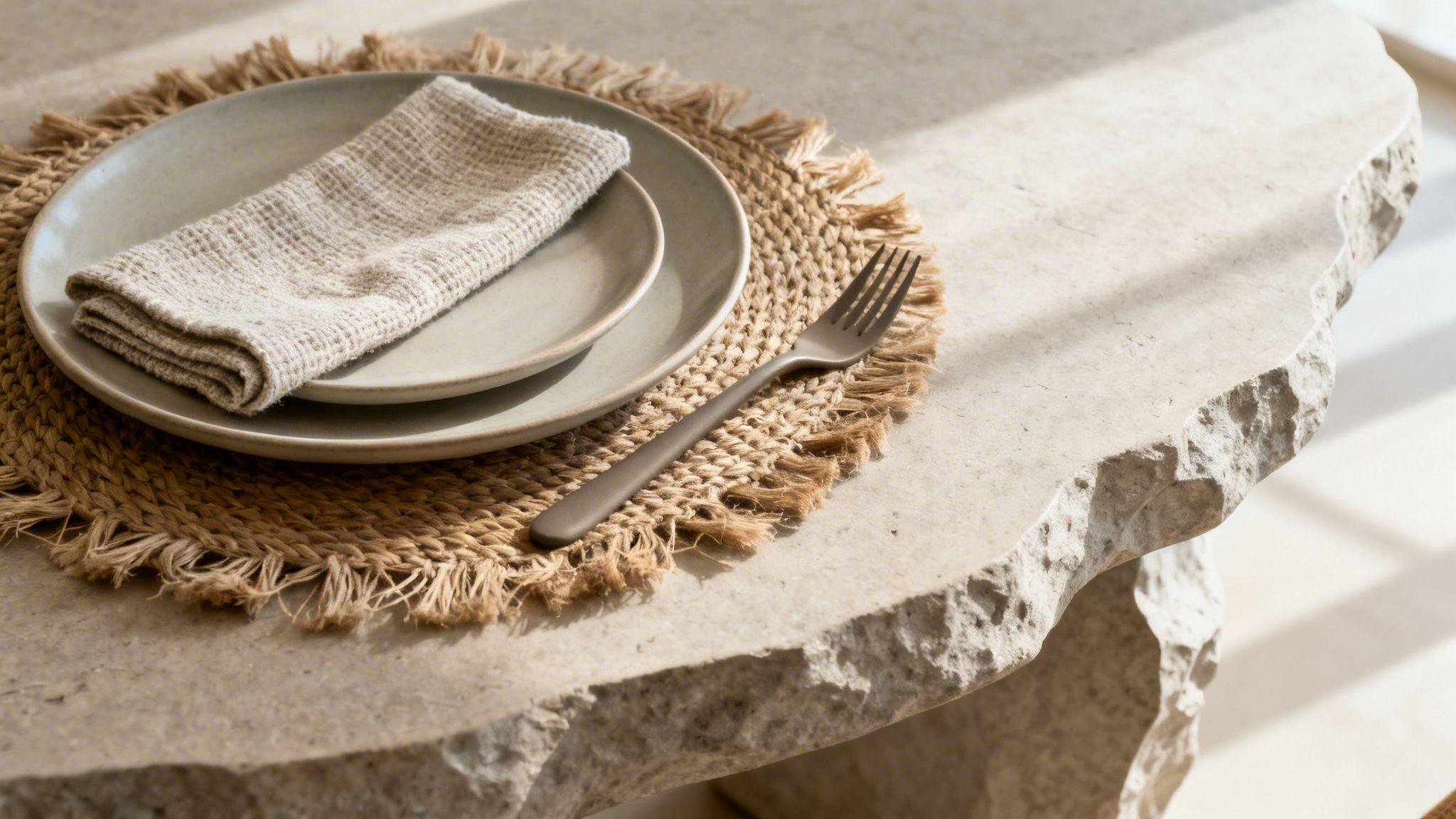
The secret to a truly stunning modern table isn't just about what you see—it's about what you feel. A memorable tablescape starts from the ground up, built on a foundation of layers and textures that invite guests to touch and engage. Ditching the bare table is the first step.
Your first layer sets the entire mood. A crisp linen runner can telegraph a clean, minimalist vibe, while individual woven placemats immediately bring in a rustic, organic warmth. These pieces do more than just protect your furniture; they define each guest's space and introduce that crucial first touch of texture. For a bit of variety without the commitment, exploring table cloths hire can be a game-changer, letting you play with different materials and colors.
Combining Contrasting Materials
With your base in place, it’s time to create some intrigue. This is where the real fun begins and where you can get creative with your modern table setting ideas. The magic lies in pairing contrasting materials—think hard against soft, rough against smooth. This dynamic interplay is what makes a setting feel intentionally designed and thoughtfully curated.
Picture this: a rough, raw-edged slate placemat topped with a smooth, glazed ceramic dinner plate. The juxtaposition is instantly captivating. Add a set of matte black flatware, and you’ve created a trio of textures that just works.
Another powerful combination is a sculptural stone or concrete table paired with soft, loosely woven linen napkins. The cool rigidity of the stone is beautifully balanced by the warmth and give of the fabric, creating a rich sensory experience before the first course is even served.
The Power of Tactile Details
This focus on the sensory is a huge shift in how we approach dining design. We're seeing a major move towards tactile, artisanal elements that feel as good as they look. In fact, 76% of design professionals are already eyeing travertine for sculptural stone tables. This is happening alongside a pivot away from purely visual flair and towards textures like ruffles, frills, and woven materials. It’s all part of a larger trend, with 48% of consumers craving cozy charm and unique experiences at home.
You can easily bring this trend to your own table with a few small, impactful details:
- Glassware: Look for glasses with subtle ribbing or a classic hobnail texture. They catch the light beautifully and feel great in your hand.
- Napkins: Don’t underestimate the power of a great napkin. High-quality fabrics like Belgian linen or thick, absorbent cotton make a world of difference.
- Flatware: Move beyond standard silver. Utensils with unique finishes like brushed gold, matte black, or even resin handles can add another layer of texture.
A well-layered table engages more than just the eyes. By thoughtfully combining different textures, you transform a simple surface into a tactile landscape that makes guests feel truly welcomed and cared for.
This layering principle applies directly to your dinnerware, too. As you choose your pieces, think about how they will stack together. For more inspiration, check out our guide to the best modern dinnerware sets, which dives into how different materials and finishes can create that stunning, layered look. When you build your setting from the foundation up, it will always feel elevated and complete.
Mastering Color Palettes and Pattern Play
Think of color and pattern as your secret weapons for setting the mood. They’re what tell the story of the gathering before anyone even takes a bite, transforming your table from just a table into a truly intentional experience. Stepping away from the safety of all-white or beige is how you create those really memorable, modern table settings.
It’s less about picking individual shades and more about creating a cohesive color story. A modern palette could be grounded in earthy terracottas and soft sage greens, giving off a warm, organic vibe. Or, you could go moody and dramatic with deep charcoals, inky blues, and a splash of rich emerald.
The real key is deciding where you want to make your statement—because you definitely don’t need color everywhere. A set of bold, rust-colored dinner plates can easily be the star of the show, letting neutral linen napkins and simple clear glassware play a supporting role. You can also flip that script: keep the plates and linens neutral and let vibrant glassware or patterned napkins bring the energy.
Choosing Your Palette
Picking a palette shouldn’t feel like you're being locked into a rigid set of rules. Think of it as a framework that actually makes all the other decisions easier. I always recommend starting with two to three main colors and building out from there, focusing on shades that create the specific feeling you want for your event.
Here are a few modern combinations I love:
- Earthy & Organic: Terracotta, sage green, and cream. This one feels so grounded and warm, perfect for a relaxed dinner party. It looks incredible with natural materials like wood, stone, and linen.
- Moody & Sophisticated: Charcoal grey, deep navy, and brass accents. This combination instantly creates a sense of drama and intimacy. It’s my go-to for an evening affair or a more formal occasion.
- Minimalist & Crisp: A clean black-and-white base with a single, impactful accent color like ochre or deep teal. This approach keeps the look sharp and uncluttered while injecting a serious dose of personality.
The Art of Mixing Patterns
I know introducing patterns can feel a little intimidating, but a few simple guidelines make it completely foolproof. The whole point is to add visual texture and interest without creating chaos. The secret? Vary the scale of your patterns and give them room to breathe by balancing them with solid colors.
If you’ve got a bold, geometric-patterned salad plate you’re dying to use, place it on top of a solid-colored dinner plate and charger. This beautifully frames the pattern and stops it from overpowering the whole setting. In the same way, a subtly striped table runner can anchor the entire tablescape, offering a gentle pattern that doesn’t fight for attention.
A fantastic rule of thumb for mixing patterns is the 60-30-10 principle, which I’ve adapted for tablescaping. Let your main, dominant pattern take up about 60% of the patterned space. A secondary, less busy pattern gets 30%, and a tiny accent pattern gets just 10%. All of this should be balanced by plenty of solid-colored "negative space" to rest the eyes.
For example, a floral napkin (60%) could be paired with a subtly dotted water glass (30%) and grounded by a simple striped runner (10%). By using simple strategies like this for color and pattern, you can easily move beyond the basics and start creating dynamic, engaging tablescapes that are a perfect reflection of your own personal style.
Curating Centerpieces and Ambient Lighting
Think of your centerpiece and lighting as the final, critical brushstrokes on your tablescape masterpiece. Once the plates, linens, and colors are set, these are the elements that create a truly unforgettable atmosphere. They work in tandem to cast an inviting glow that encourages everyone to settle in, connect, and let the conversation flow long after dessert is finished.
A modern centerpiece is so much more than a single vase of flowers plopped in the middle of the table. Today’s approach is far more personal and sculptural, all about creating a focal point that adds to the vibe without getting in the way.
Rethinking The Modern Centerpiece
The days of the bulky bouquet that forces guests to play peek-a-boo are over. Instead, it’s about embracing a more deconstructed, artistic approach that feels both intentional and effortlessly cool.
Here are a few ideas to get you started:
- Single-Stem Clusters: Grab several small, single-stem vases—the more varied in height and shape, the better. Pop one or two interesting blooms in each. Think a dramatic thistle, a delicate ranunculus, or even just a simple eucalyptus branch. The result is minimalist but incredibly impactful.
- Sculptural Candles: Forget scented candles at the dinner table (they compete with the food!). Instead, arrange a collection of unscented pillar or taper candles in different heights and widths. Sticking to a cohesive color family, like earthy neutrals or moody jewel tones, lets their architectural forms become a simple, elegant focal point.
- Functional Beauty: Why can't the centerpiece also be useful? A stunning handcrafted wooden bowl filled with seasonal fruit like pomegranates or artichokes adds organic color and texture, all while serving a practical purpose.
This shift towards more thoughtful table settings makes sense. We're seeing a huge trend of people investing more in their at-home dining experiences. In fact, there's been a 14% growth in dinner party bookings from 2024 to 2025, and a recent survey found that 72% of Americans now prefer a cozy night in with friends over going out. People are turning their dining rooms into special, experience-driven spaces.
A modern centerpiece shouldn't just take up space; it should create a sense of place. Whether it's a simple line of bud vases or a collection of candles, the best focal points draw the eye without blocking the view.
Looking for more inspiration? You should definitely check out our guide on 10 stunning dining table centerpiece ideas for 2025 for even more creative concepts.
Layering Light for Ambiance
Lighting is the secret weapon of any great dinner party. Nothing kills the mood faster than harsh, overhead lights. The key to creating real ambiance is layering different light sources to get a warm, flattering glow.
First things first: dim your main overhead fixture. Get it as low as you can without plunging everyone into darkness.
Next, bring in secondary, lower sources of light. A small table lamp on a nearby sideboard or a floor lamp tucked into a corner adds pools of warmth that instantly soften the entire room.
And finally, the magic ingredient: candlelight. Use it generously right on the table. The intimate flicker is unbeatable. This combination of different light levels creates depth and a cozy, cocoon-like feeling that puts everyone at ease.
Table Setting Blueprints for Every Occasion
Alright, let's move from theory to practice. Seeing it all come together is the fun part, and having a few go-to plans makes it so much easier. Think of these as your starting points—four distinct blueprints for real-life situations that you can follow directly or tweak to make completely your own.
The magic really happens when you nail the ambiance. It’s a simple, three-part flow: get your centerpiece right, perfect the lighting, and you’ve set the mood.

Each step builds on the last, turning a simple table into an inviting experience.
The Effortless Weekday Dinner
Who says Tuesday night can't have a little style? This is all about making the everyday feel a bit more special without adding a single ounce of stress. We’re aiming for practical elegance that elevates a simple meal.
Skip the tablecloth and let a beautiful wooden table show through, or use simple, wipeable placemats. Grab some durable stoneware plates in a quiet neutral like off-white or a soft gray. What really pulls it together is the flatware—a set of matte black utensils provides a cool, modern contrast that feels instantly intentional.
Ditch the formal glasses for some chic tumblers. For a finishing touch, place a single sprig of eucalyptus or one striking bloom in a small vase and tuck it off to the side. It's a tiny detail that brings life to the table without getting in the way. The whole setup takes just a few minutes but makes a routine dinner feel like a mindful moment.
The Sophisticated Formal Gathering
When you’re planning a holiday dinner or an intimate get-together that needs a bit of drama, it's time to layer. This approach uses rich textures and deep tones to create an immersive, memorable experience for your guests.
Start with a moody foundation, like a dark linen tablecloth or a runner in a deep charcoal or navy. Now, build your place settings. Start with a metallic charger—brushed gold or copper is stunning—then add a simple ceramic dinner plate, and top it with a salad plate that has a subtle pattern for a bit of visual punch.
Glassware should feel refined. I love using delicate, long-stemmed wine glasses here. Instead of one big centerpiece, try arranging a collection of taper candles in different heights down the middle of the table. Their soft, flickering glow is incredible for creating an intimate vibe that makes everyone want to linger and talk for hours.
The real secret to a stunning formal table is thoughtful layering. Each piece, from the charger to the napkin, works together to build a cohesive look that makes your guests feel truly special.
The Vibrant Alfresco Lunch
Dining outside is all about embracing natural textures and fresh, airy colors that feel right at home in the sunshine. The key is choosing materials that are as durable as they are beautiful.
Set the stage with woven placemats made from seagrass or jute for instant organic texture. This is the perfect time to use modern melamine plates; they come in amazing graphic patterns and you won't have to worry about anything breaking.
Bring in a pop of color with vibrant linen napkins in shades like coral, teal, or a cheerful yellow. For a centerpiece, skip the fussy flowers and fill a large bowl from your Fluent Trends serveware collection with fresh lemons, limes, or other seasonal fruit. It’s gorgeous, functional, and feels effortlessly chic. Finish the look with acrylic glassware that has the clarity of real glass but is totally outdoor-proof.
To make it even easier to see how these elements shift based on the event, here’s a quick checklist.
Occasion-Based Table Setting Checklist
| Element | Weekday Casual | Formal Dinner | Outdoor Lunch |
|---|---|---|---|
| Foundation | Bare table or simple placemat | Linen tablecloth or runner | Woven placemats (jute/seagrass) |
| Dinnerware | Stoneware (neutrals) | Ceramic layers with a charger | Melamine (graphic patterns) |
| Flatware | Matte black or minimalist | Polished silver or gold | Stainless steel |
| Glassware | Tumblers | Stemmed wine glasses | Acrylic tumblers or goblets |
| Linens | Simple cotton napkins | High-quality linen napkins | Colorful linen napkins |
| Centerpiece | Single stem or small plant | Taper candles or low floral | Bowl of fresh fruit |
| Lighting | Existing room light | Dimmed lights and candlelight | Natural sunlight |
This little guide helps you quickly identify the core components you'll want to have on hand, ensuring you're ready for any gathering that comes your way.
Your Modern Table Setting Questions, Answered
Diving into modern tablescapes is exciting, but it's natural for a few questions to pop up. When you're moving away from old-school rules, a little guidance can go a long way. We've tackled the most common sticking points to help you set your table with confidence.
Think of this as your personal cheat sheet for any modern table setting you want to try.
How Can I Create A Modern Look Without Buying A Whole New Dinnerware Set?
It’s all about smart, high-impact swaps. Start with what you already have. Keep your classic white plates, but bring in a set of striking matte black flatware or some uniquely shaped acrylic glasses. Just one or two new elements can completely shift the vibe of your entire table.
Another game-changer is textiles. A minimalist linen runner or a set of napkins with a bold, geometric print can feel instantly fresh. The trick is to focus on strategic additions, not a complete overhaul. Add a new texture or a single accent color to pull it all together.
What Are The Biggest Mistakes To Avoid In Modern Table Settings?
By far, the most common mistake is clutter. Modern design is all about giving your pieces room to breathe. Avoid crowding the table with too many decorative objects that don't have a real purpose. A clean, edited surface always feels more intentional and sophisticated.
Another classic pitfall is ignoring scale. A tiny centerpiece on a massive table looks lost, while an oversized one feels overwhelming. And finally, don't get hung up on old-fashioned rules! The "mixed, not matchy" philosophy is key to modern style. It's about creating a cohesive mood, not making sure every single item matches perfectly.
The goal is a balanced look that feels curated, not chaotic. When in doubt, take one element away. In modern design, less is almost always more.
Are Placemats Or A Tablecloth Better For A Modern Table?
Honestly, both can work beautifully—it just depends on the look you're going for. If you're aiming for a minimalist or rustic-modern feel, high-quality placemats made of linen, slate, or woven fibers are fantastic. They add texture while showing off the natural beauty of your table.
A tablecloth, on the other hand, can create a more dramatic or formal foundation, especially in a solid, rich color or a subtle pattern. For a perfectly contemporary compromise, try a simple table runner down the center. It adds a splash of color and texture without completely covering up your table.
How Do I Choose The Right Centerpiece For My Table Shape?
For a long, rectangular table, you’ll want to spread the love. A series of smaller arrangements or a linear centerpiece, like a garland of eucalyptus or a row of single-stem bud vases, works perfectly to distribute visual interest. This way, no one at the end of the table feels left out.
For a round or square table, a single, central arrangement is your best bet. Think of a low, lush floral display, a cluster of candles in varying heights, or a beautiful statement piece from a serveware collection. The most important rule for any shape is to keep the centerpiece low enough for guests to see and talk to each other across the table. No one likes talking to a wall of flowers!
Ready to bring these modern table setting ideas to life? Explore the curated dinnerware, serveware, and decor at Fluent Trends to find the perfect pieces that reflect your unique style. Shop our collections today at https://www.fluenttrends.com.