

Small Space Dining Room Ideas: Clever Layouts & Styles
Donna MaloneEver stared at a tight corner in your home and thought, "How could I possibly host a dinner party here?" If so, you're in good company. The secret to a great small dining space isn't about having more room; it's about making the room you have work smarter. It all comes down to clever furniture and thoughtful layouts that turn a tiny spot into a stylish, functional nook that feels like it was always meant to be there.
Why We're All Thinking About Dining Nooks Again
For a while, the formal dining room seemed like a thing of the past. But in a world of open-plan living and ever-shrinking city apartments, the craving for a dedicated place to eat and connect has returned with a vengeance. The challenge now isn't finding a separate room—it's about carving out a distinct dining zone from an unused corner or a sliver of wall space.
This isn't just a feeling; it's a major shift. As more of us live in smaller, urban homes, the demand for compact, clever furniture is exploding. In fact, the market for small-space furniture is projected to hit around USD 12.15 billion by 2035, with much of that growth happening in places like the United States, China, and Germany. You can dig into more of the data on this trend over at Future Market Insights. It’s clear that we’re all looking for innovative designs that fit our lives.
Turning a Cramped Corner Into a Functional Hub
The real trick is to stop seeing your limited square footage as a problem. It’s easy to feel like you have to sacrifice style for practicality, but that’s a myth. The best small dining areas are the ones that blend both beautifully. This guide is here to show you exactly how to do that, with real strategies for getting it right.
We'll walk through how to:
-
Carve out a dedicated dining zone that feels intentional, even in a studio.
-
Find smart furniture that works for a solo breakfast but can expand for guests.
-
Use simple design tricks to make your dining spot feel bigger and more inviting.
Instead of seeing your small dining area as a limitation, think of it as a creative puzzle. With the right pieces, even the most awkward nook can become the heart of your home. It can be a spot for morning coffee, a productive work-from-home desk, and, yes, even a place for those memorable dinners with friends. It’s all about making every inch count.
Plan Your Layout Before You Buy Anything
It’s easy to fall in love with a gorgeous dining table online. The lighting is perfect, the styling is impeccable... but hitting that "buy" button before you've measured your space is the single biggest mistake you can make. Trust me on this.
A truly great small dining area isn't just about the furniture you choose. It's about the space around the furniture. Think of it like choreography—every piece needs enough room to move and function without crashing into everything else.
This whole process is about moving from the initial frustration of a cramped space to creating a clear, actionable plan, and finally, enjoying a beautifully styled room.

As you can see, that planning phase is the essential bridge between a problem and a solution. If you skip it, you're just guessing, and that rarely ends well.
The Golden Rule of Clearance Space
The most important measurement in any dining room isn't the table itself, but the clearance space. This is the negative space, the open area around your table that lets people actually sit down, get up, and walk by without having to turn sideways and squeeze past.
Here's the non-negotiable rule of thumb: leave at least 36 inches (or 3 feet) of clearance space between your table and the walls or other furniture on any side that people need to walk past. This is the magic number that keeps a room from feeling suffocating.
And for the chairs? You need enough room to pull them out and sit down without a struggle. Aim for a minimum of 24 inches from the edge of the table to the nearest wall behind a chair. This gives someone enough wiggle room to get in and out comfortably.
Measure Twice, Buy Once
Before you even open a new browser tab to start shopping, grab a tape measure. This one simple step will guide every single decision you make from here on out.
-
Define Your Zone: Figure out the maximum length and width you can realistically dedicate to your dining setup. A great trick is to use painter's tape to mark this rectangle or square directly on your floor.
-
Subtract for Clearance: Now, look at your taped-off area. From any side that needs to be a walkway, subtract 36 inches.
-
Find Your Perfect Table Size: What's left inside that smaller boundary? That’s the absolute maximum size your dining table can be. So, if your zone is 10 feet by 8 feet, your table shouldn't be any larger than 7 feet by 5 feet.
Knowing these foundational numbers is liberating, not limiting. It takes all the guesswork out of the equation and lets you shop with confidence, knowing exactly what will fit and what won't.
Thinking about how every inch is used in a dining nook can also give you a new appreciation for how whole residences are designed. Looking at professional small home plans can offer some incredible insights into creating smart, efficient layouts, reinforcing just how critical this kind of planning is.
Choosing The Right Space-Saving Furniture
When you're working with a small dining area, your furniture isn't just about style—it's about strategy. Every piece is a key player in a game of inches. The right furniture can turn a tight corner into a welcoming, functional spot for meals, proving you don't need a huge room to have a proper dining space. Think of these pieces as the heroes of your home, designed to work harder and smarter.

The furniture you pick has to be a master of both illusion and function. It needs to create a sense of openness while still being incredibly practical. Let's walk through the best options for your small dining area.
The Great Table Debate
As the centerpiece of your dining area, the table's shape and style will make the biggest difference. You need to pick the right one for your specific layout.
For square rooms or cozy nooks, a round pedestal table is almost always the winner. Without any sharp corners to navigate around, it instantly improves the flow of traffic. Plus, the single leg in the center frees up a surprising amount of legroom, making the whole area feel more open and sociable.
If your dining space is more of a long, narrow strip along a wall, a slim rectangular table is your go-to. Its linear profile lets it sit flush against the wall, so it won’t jut out and disrupt the flow of your home.
But what if you need flexibility? This is where multi-functional designs truly come alive.
-
Drop-Leaf Tables: These are the ultimate shape-shifters. Keep the leaves down for a solo breakfast or a meal for two, then pop one or both up when you have company.
-
Extendable Tables: A slightly more formal option, these tables have a hidden leaf that you can add in the middle, giving you a larger surface just when you need it.
In small space design, adaptability is everything. Your dining table shouldn't just be a static object; it should be a dynamic tool that expands and contracts to fit the rhythm of your life, from a quiet morning coffee to a lively dinner party.
With so many options, it can be tough to decide which table is right for you. Here’s a quick comparison to help you choose the best fit for your home.
Comparing Small Space Dining Table Styles
| Table Type | Best For | Pros | Cons |
|---|---|---|---|
| Round Pedestal | Square rooms, nooks, and promoting conversation. | No corners to bump; maximizes legroom; feels social. | Less surface area than a square table of the same width. |
| Slim Rectangular | Long, narrow spaces and placement against a wall. | Fits snugly in tight spots; good surface area. | Can feel restrictive if it blocks a walkway. |
| Drop-Leaf | Very small spaces needing maximum flexibility. | Folds down to a very small console; highly adaptable. | Can be less stable; mechanism can be visible. |
| Extendable | Homes that entertain guests occasionally. | Looks like a standard table; extension is seamless. | Often more expensive; requires space to store the leaf. |
Ultimately, the best table is one that works for your daily life and can adapt when you need it to.
Seating Solutions That Save The Day
Once you've landed on a table, it's time to think about seating. Bulky, heavy chairs will make any small room feel claustrophobic, so the key is to find options with a minimal footprint and a light, airy look.
Banquette seating is a total game-changer, especially for corners. By tucking an L-shaped bench against two walls, you get a ton of seating while using way less floor space than you would with individual chairs. And the cherry on top? Many banquettes come with built-in storage underneath—a double win for small spaces.
Here are a few other smart seating choices:
-
Benches: A simple bench can easily seat two or three people and can be pushed completely under the table when you’re done eating, instantly clearing up floor space.
-
Armless Chairs: Ditching the arms reduces both the physical and visual weight of a chair, letting you squeeze in an extra seat or two when needed.
-
Stackable Stools: These are perfect for pulling out when you have extra guests. When the party's over, just stack them up and tuck them away in a closet.
The growing demand for furniture like this points to a major shift in home design. The residential dining furniture industry is now laser-focused on creating multifunctional, space-saving pieces for smaller homes. This is especially true in North America and Europe, where people are looking for compact, extendable, or foldable tables that can even double as a workspace.
To complement your dining set, think about storage that works just as hard. You can find some fantastic stylish and space-saving cabinets for small spaces that will keep you organized without taking over the room. For an even deeper dive into picking the perfect pieces, be sure to check out our comprehensive guide on the https://fluenttrends.com/blogs/news/best-furniture-for-small-spaces.
Layout Ideas for Awkward and Tiny Spaces
Every home seems to have that spot—the long, skinny hallway, that forgotten corner, or an open-plan living room that just feels like one big, undefined box. Instead of seeing these as design problems, I want you to start thinking of them as opportunities. With the right layout, you can transform these awkward areas into some of the most charming and functional nooks in your home.

It really just takes a few strategic choices to create a dedicated dining zone that feels completely intentional. Let’s walk through a few practical blueprints that will unlock the hidden potential in even the most challenging spaces.
Turn a Narrow Wall into a Dining Bar
Got a blank stretch of wall in a hallway or between two rooms? That’s prime real estate for a sleek dining bar. This layout is one of my favorites because its footprint is incredibly shallow, so it doesn't interrupt the flow of traffic.
Here’s the simple formula for making it work:
-
The "Table": Look for a narrow console table or, even better, install a floating shelf directly onto the wall. You’re aiming for a depth of around 12-16 inches—just enough space for a plate and a drink.
-
The Seating: Backless stools are your best bet here. They can be tucked completely out of the way when you're done, keeping the walkway clear and maintaining a really clean, uncluttered look.
-
The Anchor: Finish the look by hanging a piece of art or a long, vertical mirror above the bar. This small touch visually anchors the setup, making it feel like a distinct and purposeful zone.
This "hallway café" approach is perfect for grabbing your morning coffee, a quick lunch, or it can even double as a standing bar when you have friends over. It’s definitive proof that you don't need a perfectly square room to create a functional dining experience.
Create a Dining Zone in an Open-Concept Room
In open-plan homes, the real trick is creating a sense of separation without actually putting up walls. The goal is to carve out a dining area that feels distinct from the living room or kitchen, even when it’s only a few feet away. This is where visual cues become your best friend.
The key to defining a dining area in an open space is to create a visual "island." You are using decor elements like rugs and lighting to draw an imaginary boundary, making the dining set feel like its own dedicated room within a room.
Here are the two most powerful tools for pulling this off:
-
Use a Rug to Anchor the Space: Placing a rug under your table and chairs is the single fastest way to define a dining zone. Just make sure the rug is large enough for all the chair legs to stay on it, even when people pull them out to sit down.
-
Hang a Statement Pendant Light: A pendant light hung low over the center of your table does so much more than just provide light. It acts as a focal point, drawing the eye downward and cementing the area’s purpose.
When you combine these two elements, you create a powerful visual frame. This simple strategy makes your dining setup feel grounded and purposeful, rather than like an afterthought floating in the middle of a large room.
Design Tricks to Make Your Dining Area Feel Bigger
So, you've picked out the perfect furniture. Now for the fun part: using a bit of design magic to make your dining spot feel open and airy. We're not talking about knocking down walls. This is all about clever illusions that trick the eye and turn a small space into something that feels expansive and inviting.
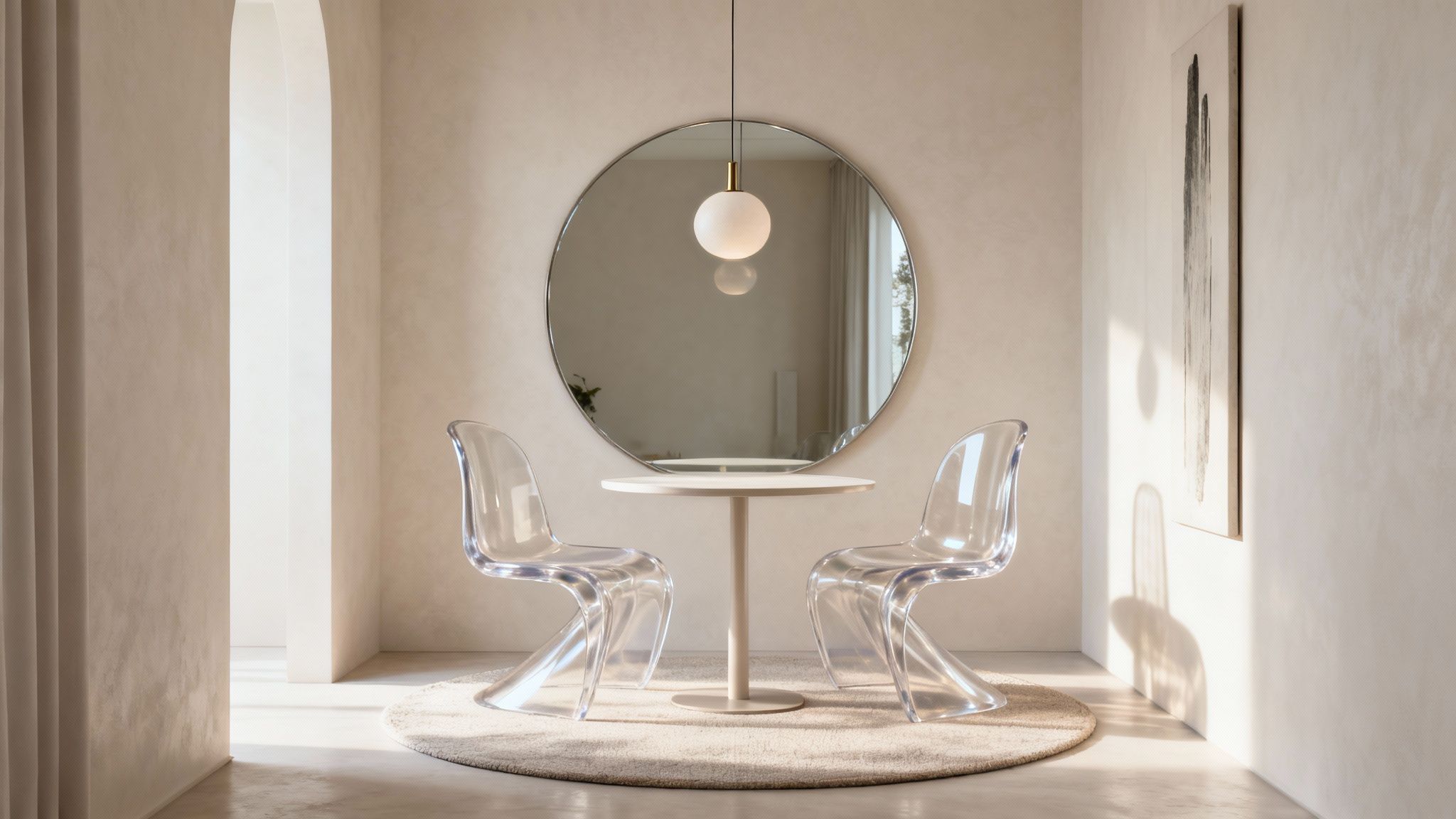
If you do only one thing, make it this: hang a large mirror. When you place one on a wall next to your dining set, it instantly doubles the sense of space and bounces light all around the room. It’s like installing a window where one doesn’t exist—a game-changer for making a room feel bigger and brighter.
Lighten Up Your Decor
The colors and materials you choose have a massive impact on how large a room feels. Dark, heavy furniture tends to swallow light, making a space feel smaller than it is. The key is to lean into elements that feel light and breezy.
-
Light Color Palette: Stick with whites, creams, soft grays, and pastels for your walls and main furniture pieces. A lighter palette is your best friend for reflecting light and creating that open, airy vibe.
-
Visually Lightweight Chairs: Go for chairs that don't look or feel bulky. Clear acrylic "ghost" chairs are a designer's secret weapon because they take up almost zero visual space. Chairs with thin legs, an open back, or a light wood finish also work beautifully to keep the area from feeling weighed down.
Think of your dining area as a canvas. By using lighter colors and see-through materials, you create "negative space," which lets your eyes move through and around objects. This simple switch in perspective makes all the difference in preventing visual clutter.
This move toward smarter, lighter furniture isn't just a trend; it's a global shift. The dining table market is projected to reach USD 12.5 billion by 2025. The household segment alone—where these space-saving solutions are most needed—was valued at USD 7.5 billion in 2024. This isn't surprising, given that more people are moving to cities and looking for ways to get the most out of smaller living spaces.
Draw the Eye Upward
Here's another great strategy: create vertical lines. This pulls the eye upward, making your ceilings feel much higher than they actually are. A single, beautiful pendant light hanging over the table is a fantastic way to do this. It clearly defines your dining zone without taking up a single inch of floor space.
You could also add a couple of slim, floating shelves above the dining area to show off some glassware or plants. Even a tall, narrow piece of art can work wonders. These vertical touches naturally guide the gaze up, adding a touch of height and elegance to your little dining nook. For more great ideas on elevating your space, take a look at our guide to modern dining room decor.
Essential Storage Solutions for a Clutter-Free Dining Area
In a small dining space, clutter is the ultimate enemy. It instantly makes a room feel cramped and chaotic, undoing all your hard work on the layout. The secret isn't necessarily about owning less—it’s about storing what you have much more cleverly.
Think of it like this: every single item needs a dedicated home. This is where hardworking, multifunctional furniture truly shines. A dining bench, for instance, is more than just a place to sit; a model with a lift-up top becomes a secret storage chest for table linens, placemats, or even the kids' art supplies. It’s this kind of double-duty thinking that keeps surfaces clear and your essentials close by.
Maximize Your Vertical Real Estate
When you can't build out, you have to build up. Using your walls is one of the smartest things you can do to keep your tabletop clear and your space feeling open. It also has the added benefit of drawing the eye upward, which creates a wonderful illusion of height.
-
Floating Shelves: A couple of slim floating shelves are perfect for showing off your favorite glassware or a few small serving bowls. They give you that extra surface area without the visual weight of a big cabinet.
-
Wall-Mounted Racks: Don't hide your beautiful plates away! A stylish plate rack turns your everyday dinnerware into a piece of wall art, freeing up an entire cabinet in the process.
When you take your storage vertical, you're not just organizing—you're decorating. Well-placed shelves and racks add so much character and depth, turning functional items into a curated, intentional part of your room's design.
Embrace Mobile and Slim-Profile Solutions
Beyond what you can mount on the wall, look for furniture that is either impressively slim or can be moved around. A narrow sideboard or console table can offer a surprising amount of storage without eating into your precious walkway. I always recommend looking for pieces that are under 16 inches deep; you can still find plenty with drawers for cutlery and cabinets for larger serving dishes.
A bar cart is another one of my favorite tricks for small spaces. It’s a mobile station for drinks, dessert, or a coffee setup, but it also provides handy storage for bottles and glasses. And the best part? When you're not using it, you can just wheel it into a corner or even another room. These clever pieces are what keep your dining area feeling serene and always ready for its main purpose: enjoying a good meal.
Your Top Questions About Small Dining Spaces, Answered
When you're working with a tight space, a few common questions always seem to pop up. Let's walk through them, so you can feel confident in every choice you make for your dining area.
What’s the Best Table Shape for a Small Space?
This really comes down to the specific layout you're working with. For a squarish room or an awkward corner nook, round or oval tables are fantastic. They have no sharp corners, which makes navigating around them much easier—no more bruised hips when you're squeezing by.
But if you have a long, narrow room, a slim rectangular table is often a better bet. You can push it right up against a wall to save precious floor space. A drop-leaf table is another brilliant solution here, giving you the flexibility to expand it when guests are over and fold it down for everyday use.
How Can I Create a Dining Nook in an Open-Concept Room?
The trick is to create a distinct "zone" for dining without actually putting up walls. My two favorite ways to do this are with a rug and a statement light fixture.
Think of a rug as the visual foundation for your dining spot. It anchors the table and chairs, drawing a clear line between the dining area and your living room or kitchen. Hanging a great pendant light directly over the table cements that zone, making it feel deliberate and special.
What Chairs Are Best for a Compact Dining Area?
You want chairs that have a small footprint, both physically and visually. Armless chairs are always a smart choice because you can tuck them in tighter to the table, which opens up your walkway. A bench is another excellent space-saver; it can slide completely under the table when you're not using it.
If you really want to create an illusion of spaciousness, look into clear acrylic "ghost" chairs. They have virtually no visual weight, making the whole room feel bigger and less cluttered.
At Fluent Trends, we believe that beautiful design and smart function should go hand-in-hand, no matter the size of your home. Explore our curated collection of dining furniture and decor to find the perfect pieces for your space.