

A Guide to Top Quality Sofa Brands That Actually Last
Donna MaloneWhen you’re trying to spot a top-quality sofa, it’s about looking past the shiny price tag or a trendy silhouette. The real markers of quality are hidden from view—the stuff that delivers lasting comfort and holds up to real life. We're talking about a kiln-dried hardwood frame, a supportive suspension system (like 8-way hand-tied or sinuous springs), and high-resiliency foam cushions that refuse to sag.
What Separates Good Sofas from Great Ones
It's so easy to get caught up in the fun stuff—the perfect shade of blue, the cool mid-century leg style. But if you want to shop like an expert, you have to think about what's going on underneath the fabric.
Think of it like buying a car. You wouldn't just kick the tires and admire the paint job, right? You’d want to know what’s under the hood—the engine, the suspension—the parts that actually make it a reliable ride. Sofas are no different.
A great sofa is built on a foundation of exceptional materials and craftsmanship. That's where the real value lies. You're not just buying a piece of furniture; you're making an investment in your home's comfort for years to come. Once you understand these core components, you can easily spot the pieces built to last versus those designed to just get by.
This diagram breaks down a sofa's core components, showing how the visible upholstery sits on top of the critical inner structure.
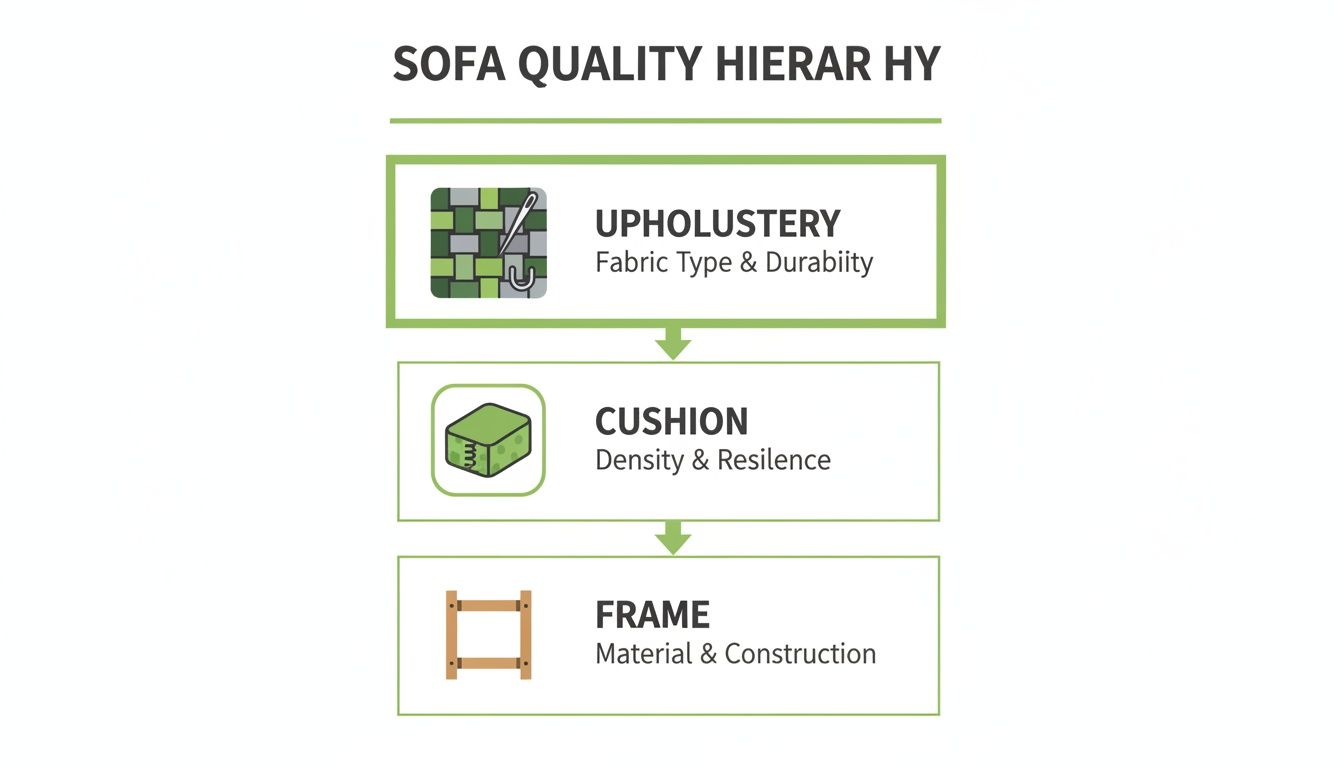
As you can see, while the fabric is what you notice first, the cushion and frame are the workhorses that truly determine how a sofa feels and how long it will hold its shape.
To give you a head start, here’s a quick-reference table outlining the key differences between a sofa that's built to last and one that's destined for the curb.
Sofa Quality At a Glance
| Component | Hallmark of Quality | Red Flag to Avoid |
|---|---|---|
| Frame | Kiln-dried hardwood (oak, maple, ash) | Particleboard, MDF, plastic, or softwoods (pine) |
| Suspension | 8-way hand-tied or sinuous springs | Webbing only (especially with wide gaps) |
| Cushions | High-resiliency (HR) foam, down/feather blend | Low-density foam (feels too light, squishes easily) |
| Joinery | Dowels, corner blocks, screws, and glue | Staples or nails as the primary fastener |
| Upholstery | High rub count, performance fabrics | Thin, loosely woven fabrics that snag easily |
This table is your cheat sheet. Keep these points in mind, and you'll be well-equipped to assess any sofa you come across.
The Non-Negotiables of a Quality Sofa
Before diving into the finer details, let's focus on the big three—the absolute non-negotiables that separate a temporary fix from a true forever piece. Nail these basics, and you're already halfway to a smart purchase.
-
A Solid Frame: This is the skeleton of your sofa, and it needs to be rock-solid. Kiln-dried hardwood (think oak or maple) is the gold standard. The kiln-drying process removes moisture, which is crucial for preventing the frame from warping or cracking over time. If you see particleboard or a plastic frame, walk away. Those are surefire signs of a sofa that won't last.
-
Supportive Suspension: This is what keeps you from sinking straight to the floor. It's the network of springs and webbing that holds up the cushions. The most premium option is 8-way hand-tied springs, which offers incredible, customized support. A more common but still excellent choice found in many top-tier brands is sinuous springs—S-shaped wires that create a durable, bouncy foundation.
-
High-Resiliency Cushions: Nobody wants a sofa with permanent butt-dents. Your cushions should be plush but bounce right back. High-resiliency (HR) foam is the key here; it’s dense, supportive, and holds its shape for years. Low-density foam, on the other hand, will flatten out in no time, leaving your brand-new sofa looking tired and feeling uncomfortable.
Decoding What's Inside: The Frame and Suspension
A sofa's real value isn't something you can see. It's hidden deep inside, beneath the beautiful fabric and plush cushions. Just like a house needs a solid foundation to last for generations, a sofa depends on its internal structure to handle everything from movie marathons to lazy Sunday naps. This hidden core—the frame and suspension system—is what truly separates a piece that lasts a few years from an investment that lasts a decade or more.
When you're trying to spot a quality sofa, the conversation has to start with the frame. It’s the skeleton, the very bedrock of its durability.
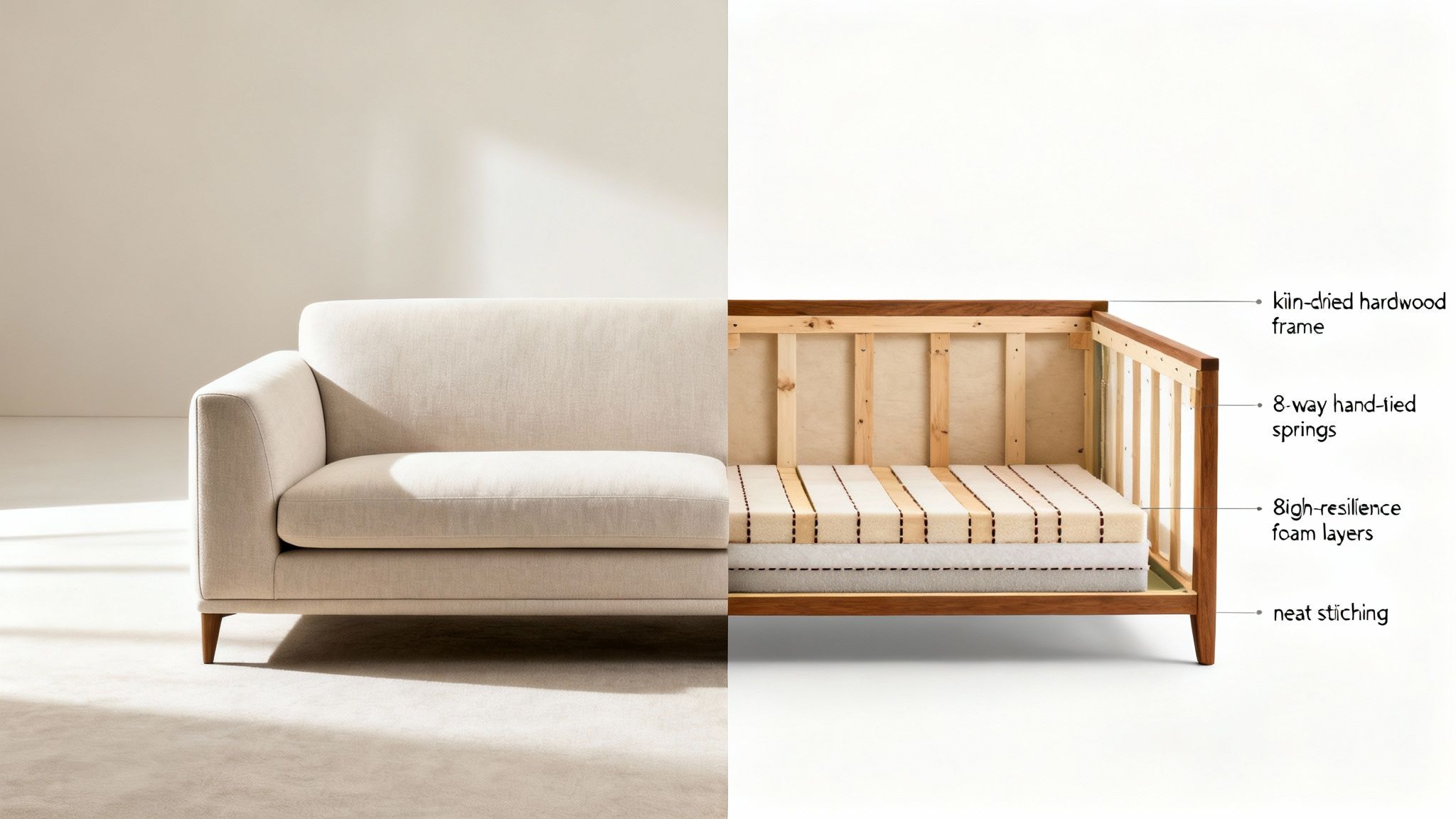
The Gold Standard: A Sofa's Frame
The absolute best material for a sofa frame is kiln-dried hardwood. The kiln-drying process is a game-changer; it removes up to 93% of the wood's moisture. Why does that matter? It prevents the frame from warping, cracking, or bowing as the humidity in your home changes with the seasons. It’s a sure sign the manufacturer didn’t cut corners.
On the flip side, frames made from particleboard, plastic, or even softwoods like pine are major red flags. These materials just can't handle the stress of daily life and are often held together with flimsy staples. The result is a wobbly, unreliable sofa that’s destined for an early exit. A well-built hardwood frame will be properly joined with dowels, corner blocks, and glue for unshakable strength.
Expert Tip: Try the "lift test" when you're in a showroom. Grab one front corner of the sofa and lift it about six inches off the floor. If the other front leg comes up almost instantly, you're looking at a rigid, well-made frame. If the whole thing twists or flexes, you know the frame is weak.
Understanding the Suspension System
If the frame is the skeleton, the suspension is the muscle. This network of springs or webbing is what holds up the cushions and gives you that supportive, comfortable "sit." It’s responsible for distributing your weight evenly and, most importantly, preventing that dreaded sag over time.
There are two main systems you'll find in high-quality sofas, each with its own perks.
Suspension Types to Look For:
- 8-Way Hand-Tied Springs: This is the Rolls-Royce of sofa suspension. It's a time-consuming, artisanal process where each spring is tied by hand from eight different points. This creates an interconnected web that moves with you, offering incredible comfort and durability by conforming to your shape.
- Sinuous Springs: You might hear these called "S-springs." They're heavy-gauge steel wires bent into a continuous "S" shape and run from the front of the frame to the back. While less complex than the hand-tied method, a well-made sinuous spring system provides fantastic, firm support and is a hallmark of many excellent sofa brands. It’s a great balance of longevity and value.
Knowing about these internal components empowers you to see past the pretty upholstery. When you ask a salesperson about the frame material and the type of suspension, you’re not just buying a sofa anymore. You’re investing in a piece of furniture engineered to deliver comfort for years to come.
How to Judge Cushion Comfort and Fabric Durability
If the frame and suspension are a sofa’s hidden skeleton, the cushions and fabric are its personality and handshake. These are the parts you see, touch, and live with every day, so they have to feel good and hold up well. Judging them is about more than just picking a pretty color; it's about knowing what makes a great "sit" and what will last.
Think of it like buying a mattress. A cheap, basic foam one feels fine for a week, but pretty soon you’ll notice a permanent body-shaped dent. A high-quality mattress, on the other hand, springs right back, giving you consistent support for years. Sofa cushions are exactly the same.

Decoding Cushion Fillings
The single biggest factor in how long a cushion will last is its foam density. We measure this in pounds per cubic foot, and a higher number means a more durable cushion that won't flatten out. That soft, squishy cushion in the showroom might feel great, but if it's made from low-density foam, it’ll be a sad, pancake-like version of itself in no time.
- Standard Foam (Below 1.8 lbs): You’ll find this in most budget sofas. It’s pretty much guaranteed to start sagging within a year or two of daily use.
- High-Resiliency (HR) Foam (1.8 lbs and up): This is the gold standard for quality. HR foam has a springiness and structure that cheap foam just can't match. Look for a density of 2.0 to 2.5 lbs—that’s a sweet spot for top-tier brands.
- Down and Feather Blends: For that super-plush, sink-right-in feeling, many high-end sofas wrap an HR foam core in a down or feather blend. You get the solid support of foam with a luxurious, cloud-like top layer. Just know they need a good fluffing now and then to stay lofty.
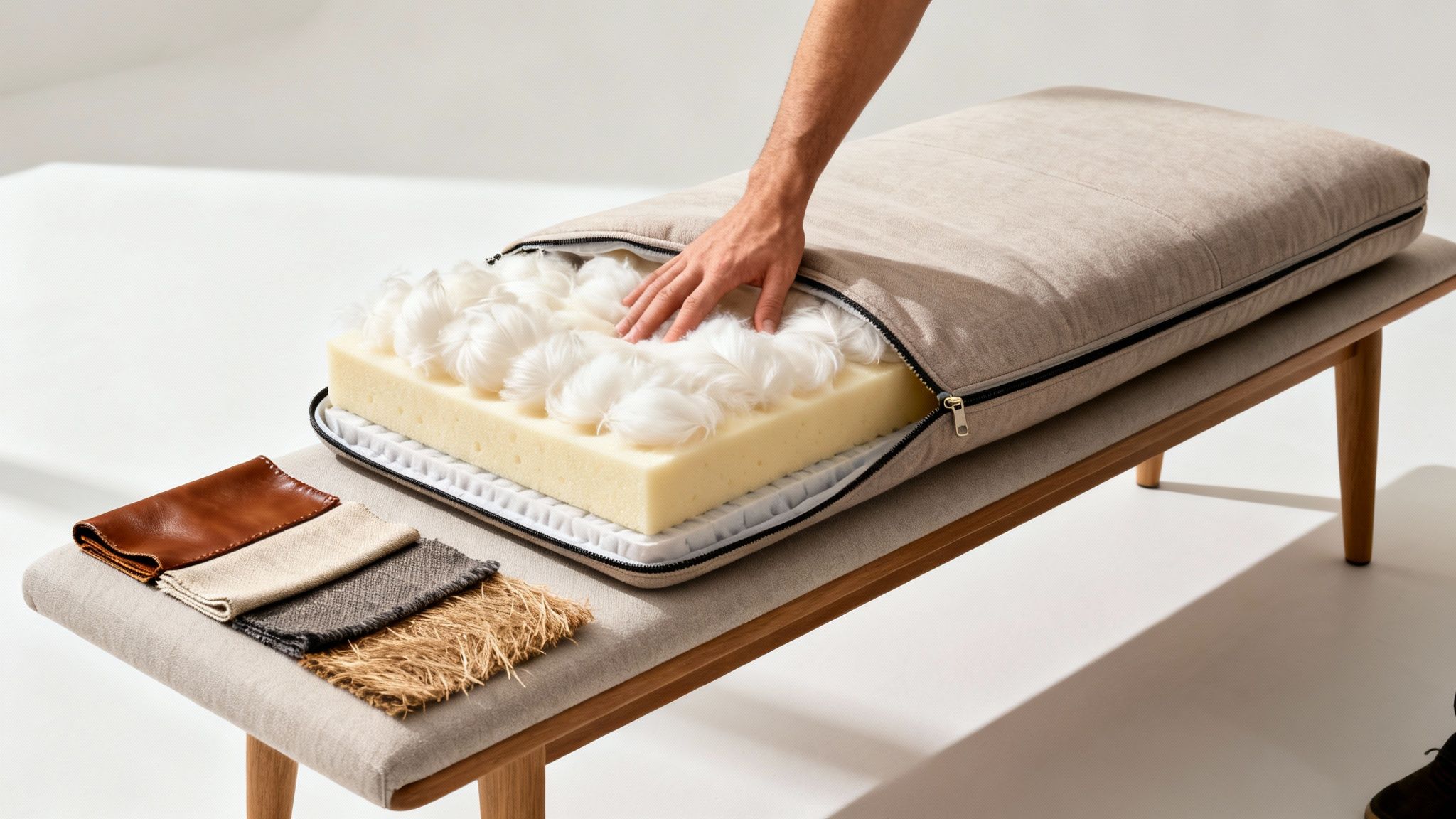
Here’s a pro tip: if you can, unzip a cushion cover in the showroom. A quality foam insert will feel heavy and substantial. It should also be wrapped in a protective layer, like Dacron or down-proof ticking.
Understanding Upholstery Durability
The right fabric doesn't just look good—it survives real life. A fabric's toughness is scientifically measured with something called the Martindale test. It basically rubs a piece of wool cloth against the fabric until it shows wear, and the number of rubs it withstands is its "rub count."
A higher number means a more durable fabric. For your main living room sofa, you want something with a rub count of at least 20,000. If you have kids, pets, or just a lot of traffic, do yourself a favor and aim for 30,000 or more.
Choosing the Right Fabric for Your Lifestyle
Different materials have different strengths. Performance fabrics are hugely popular right now because they're engineered to resist stains and moisture, making them a lifesaver for busy families. Leather is another classic durable choice that gets even better with age, developing a beautiful, rich patina over time.
No matter what you choose, knowing how to care for it is key. Following a practical guide on how to clean sofa upholstery will keep your investment looking its best for years to come.
Why Craftsmanship and Brand Integrity Matter
Having top-tier materials is a fantastic start, but how those materials are put together is what truly separates a good sofa from a great one.
It’s a bit like cooking. You can have the best ingredients money can buy, but without a skilled chef, you’re not getting a gourmet meal. The same goes for the best sofa brands—their commitment to craftsmanship ensures every single component, from the frame to the last stitch, works in perfect harmony.
This is the kind of detail you can actually see and feel in a showroom. On a high-quality sofa, the upholstery patterns will line up perfectly, especially on tricky designs like stripes or florals. The stitching will be straight, tight, and even, with no loose threads or puckered seams. These are the tell-tale signs of a maker who takes real pride in their work.
What a Warranty Reveals About a Brand
A brand's warranty and return policy are more than just fine print; they're a direct reflection of how much confidence the company has in its own product. A solid warranty, especially one covering the frame and suspension for ten years or more, is a huge green flag. It tells you the brand is willing to stand behind its construction.
A great warranty isn't just a safety net for you as a buyer. It’s a reflection of the brand’s integrity and its belief that the product is built to last, making it a powerful indicator when comparing top quality sofa brands.
When you're digging into a brand, look for policies that are clear and straightforward. Vague terms or warranties that only cover "manufacturer defects" without getting into specifics can be a red flag. The best brands are transparent about what's covered and for how long, because they know their furniture is built to handle real life.
How Top Brands Balance Quality and Value
Some brands have absolutely mastered the art of delivering durable, well-made furniture at a price that doesn't make you wince. This is how they become household names.
Take Ashley Furniture Industries, for example. As one of the top quality sofa brands globally, it holds an impressive 23.4% share of the US furniture market. They specialize in family-focused sofas that are built to last, often using solid wood frames and eco-friendly foam. It's proof that you don't always have to choose between durability and affordability. You can learn more about the sofa market from this detailed report.
This balance is a game-changer for many families who need furniture that looks good but is also engineered for the chaos of daily life. These brands show that quality isn't just for luxury price tags. And if you're looking for pieces that blend great construction with environmental responsibility, check out our guide to some incredible sustainable furniture brands.
How Modern Innovation is Redefining Sofa Quality
While a solid hardwood frame and durable suspension are timeless signs of a well-made sofa, the very definition of "quality" is getting an upgrade. Today, the best pieces often do more than just provide a comfortable place to land. They weave in smart design and clever features that fit a modern lifestyle, proving that quality can also mean convenience and personalized comfort.
This evolution goes way beyond basic construction. Top-tier brands are now engineering features like whisper-quiet reclining mechanisms, headrests that adjust to your exact liking, and charging ports so discreetly hidden you'd never know they were there. The real trick is adding these bells and whistles without compromising the sofa’s core strength, and the brands that nail this balance are setting a whole new standard.
The Case for Functional Excellence
La-Z-Boy is a perfect example of this functional approach. The brand literally built its reputation not just on materials, but on ergonomic engineering and tech. For decades, they've been obsessed with creating a personalized comfort experience that goes far beyond a static piece of furniture.
This dedication to functional quality has made them a giant in the industry. La-Z-Boy Incorporated now commands an impressive 22% of the North American market share and pulls in $2.05 billion in revenue, largely by perfecting the art of the recliner. Their high-end models often include pressure-sensing motors and built-in USB ports, completely rethinking what a sofa can do. You can see more on their market performance in this recliner sofas industry analysis.
What this really shows is that for a lot of buyers, "top quality" isn't just about how a sofa is built, but how it performs. A piece that actively adapts to your needs—whether for work, relaxation, or movie night—offers a different, but equally valid, kind of value.
What to Look for in an Innovative Sofa
When you're checking out a sofa with advanced features, the old-school rules of quality still apply, but you need to add a few things to your checklist. You’re looking for a seamless marriage of technology and traditional craftsmanship.
Here’s what signals a well-executed modern design:
- Smooth and Silent Mechanisms: Any reclining or adjustable parts should operate without jarring sounds or jerky movements. That's a sign of high-quality motors and well-engineered joints.
- Integrated, Not Tacked-On: Charging ports and controls should be built cleanly into the frame, not look like an afterthought. All the wiring should be completely out of sight and properly secured.
- Rock-Solid Stability: Even when fully reclined or adjusted, the sofa should feel just as solid as it does when it's upright. Give it a good shake—there should be no wobbling or flexing.
Ultimately, modern innovation gives you another layer to consider in your search. If your lifestyle calls for more than just a place to sit, exploring brands that masterfully blend technology with solid construction can lead you to a sofa that delivers next-level comfort and functionality for years to come.
Your Smart Sofa Shopping Checklist
Alright, you’ve done the research and you know what separates the truly great sofas from the merely good-looking ones. Now it's time to take that knowledge into the real world. Walking into a furniture showroom can feel a little overwhelming, but with a solid game plan, you can evaluate any sofa like a seasoned pro.
Think of this as your pre-flight inspection before making a big investment. You wouldn't buy a car without popping the hood and taking it for a spin, right? This is the furniture equivalent, designed to make sure your choice is as solid on the inside as it is on the outside.
The In-Person Sofa Test
When you're face-to-face with a potential new sofa, use this simple, hands-on process to quickly get a feel for its real quality.
- The Lift Test: This one is a classic for a reason. Grab a front corner of the sofa and lift it about six inches off the floor. If the other front leg comes up almost instantly, you're dealing with a rigid, well-built frame. But if the frame twists or flexes, that's a huge red flag for weak construction.
- The Cushion Check: Don't just sit on it—dig a little deeper. If you can, unzip a seat cushion cover and take a peek at the insert. A quality cushion will have a dense, heavy foam core. Often, it'll be wrapped in a layer of Dacron or tucked into a down-proof ticking, which helps protect the core and adds a touch of softness.
- The Upholstery Inspection: Get up close and examine the tailoring. Are the seams straight and the stitches tight and even? Do the patterns—stripes, florals, whatever—line up perfectly, especially where cushions meet or at the corners? This is where true craftsmanship really shows.
- The Comfort Audit: Now, sit down. But don't just perch on the edge. Sit in the middle, then on the ends. The support should feel consistent across the entire sofa, with no weird dips or hard spots where you can feel the frame underneath. Our complete guide on how to choose a sofa has even more tips for matching a sofa to your personal comfort style.
A great sofa should feel solid and substantial. Don't be shy about sitting, wiggling, and even lying down on it in the store—that's the only way to truly gauge its comfort and stability for your everyday life.
It can be tough to imagine how a piece will look back in your own house. Thankfully, new tools can help you see furniture in your room with AI previews, which really helps bridge that gap between the showroom floor and your living space.
Frequently Asked Questions About Sofa Quality
Even when you know what to look for, a few specific questions always seem to pop up when you're finally ready to buy a sofa. Think of this as your quick-reference guide for those last-minute head-scratchers.
We've gathered the most common questions we hear from shoppers to help you clear up any final doubts and make your decision with total confidence.
How Long Should a Quality Sofa Last?
A genuinely well-made sofa is a long-term investment. You should expect it to last between 10 and 20 years, sometimes even longer if you take good care of it. What makes that kind of lifespan possible? It all comes down to what's inside.
The real heroes are a kiln-dried hardwood frame that won't warp over time and high-density foam cushions that refuse to sag. These core components are built to handle years of movie nights and afternoon naps, unlike the cheaper materials you'll find in most mass-market furniture.
Is an Expensive Sofa Always Better Quality?
Not always. While a high price tag can certainly point to better materials and expert craftsmanship, it can also just reflect a designer name, import fees, or a hefty marketing budget. Price alone isn't a reliable guarantee of quality.
Your best bet is to ignore the price tag at first and focus on the sofa’s bones. Judge it by its frame, suspension, and cushions using the tips in this guide. Let the physical proof of quality guide you, not just the cost.
This way, you can spot true value and find an exceptional sofa from any number of top quality brands, whether they're household names or hidden gems.
What Is the Best Fabric for Pets and Kids?
If your home is a hub of activity with kids and pets, performance fabrics are your best friend. Look for names like Crypton or Sunbrella; they create textiles specifically engineered to stand up to real life.
These fabrics are treated to repel stains, moisture, and even odors, making cleanup a breeze. Other smart choices include tightly woven materials that won't easily snag on claws, and of course, genuine leather—it's incredibly durable and can often just be wiped clean.
At Fluent Trends, we believe designer-approved quality shouldn't be out of reach. We've done the hard work of finding pieces that offer lasting style and comfort. Find your perfect piece at Fluent Trends today.