

What Is the Difference Between Porcelain and Ceramic
Donna MaloneLet's get right to it. While porcelain and ceramic are technically in the same family, the real difference between porcelain and ceramic boils down to just three things: the clay, the heat, and the resulting density.
I like to think of it this way: ceramic is like a hearty, rustic loaf of artisan bread, while porcelain is more like a delicate, dense slice of cheesecake. Both start with similar ingredients, but the refinement process creates two completely different experiences.
Unpacking the Key Differences
At its core, the story of porcelain versus ceramic is all about refinement. Both begin as humble clay, but it's their journey through the kiln that forges their unique personalities.
Porcelain is crafted from a purer, more refined clay—typically containing a higher percentage of kaolin. It’s then fired at scorching temperatures, often well above 2,200°F (1,200°C). This intense heat causes the material to vitrify, meaning it essentially melts into a dense, glass-like structure. This is what gives porcelain its signature strength and an incredibly low water absorption rate of less than 0.5%.
Ceramic, on the other hand, is made from a coarser clay and fired at lower temperatures. This leaves it a bit more porous and less dense. While this makes it slightly more prone to chipping or absorbing liquids, it also contributes to its earthy charm and more accessible price tag.
It’s not about one being "better" than the other. It's about which one is the right fit for the job you have in mind.
This simple infographic breaks down those core distinctions beautifully.
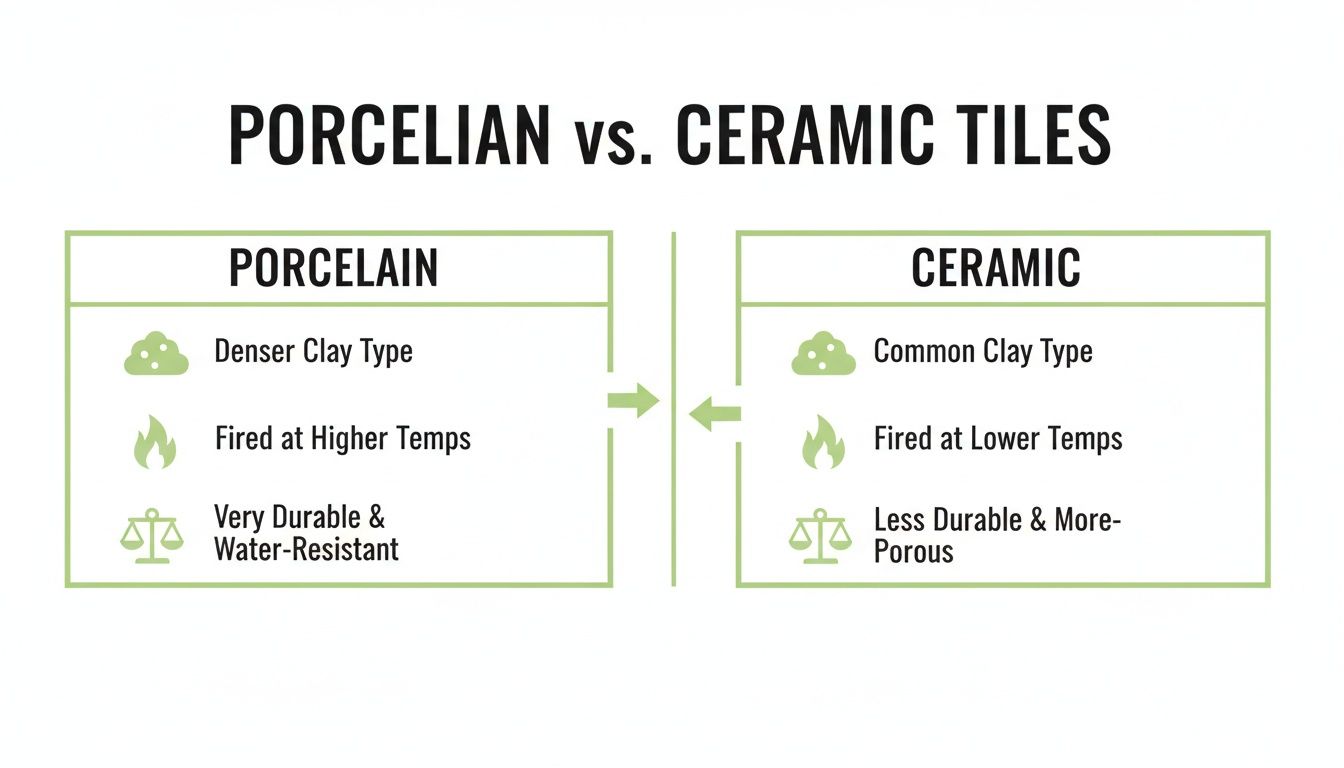
As you can see, porcelain's journey involves purer ingredients and more extreme conditions, leading to a fundamentally tougher final product. If you want to dive deeper, especially when it comes to the kitchen, understanding the nuances between materials like pure ceramic cookware and ceramic-coated items can make a huge difference in performance and longevity.
Ultimately, these behind-the-scenes details are what shape the experience you have with these items in your home every single day.
Porcelain vs. Ceramic at a Glance
To make it even simpler, here's a quick side-by-side comparison. This table cuts through the noise and highlights the main distinctions between porcelain and ceramic to help you see the core differences in an instant.
| Feature | Porcelain | Ceramic |
|---|---|---|
| Clay Type | Fine, dense kaolin clay | Coarser, less-pure earthenware or stoneware clays |
| Firing Temperature | Very high: 2,200–2,650°F (1,200–1,450°C) | Lower: 1,800–2,100°F (1,000–1,150°C) |
| Density & Porosity | Highly dense, almost non-porous | Less dense and more porous |
| Water Absorption | Less than 0.5% (impervious to water) | 3% or higher (can absorb moisture) |
| Durability | Extremely hard, chip-resistant, and durable | Softer, more prone to chipping and scratches |
| Common Uses | Fine china, floor tiles, bathroom fixtures, dental crowns | Wall tiles, pottery, decorative items, mugs |
| Price Point | Generally more expensive | More affordable and budget-friendly |
Think of this table as your cheat sheet. Whether you're standing in a store aisle or browsing online, a quick mental check of these features will help you confidently choose the right material for your needs.
The Journey from Clay to Kitchen
To really get what separates porcelain and ceramic, you have to look at how they’re made—from a humble lump of clay to the finished piece on your table. It all starts with the clay itself, which is really the foundation of each material’s distinct personality. This journey is what locks in their strength, appearance, and even how they feel in your hands.
Think of it like a baker choosing flour. For a hearty, rustic loaf of bread, a good all-purpose flour does the trick. That’s your ceramic. It's made from more common, slightly coarser clays that give it that familiar, earthy character.

But for a delicate, light-as-air cake, that same baker would grab a premium, super-fine cake flour. This is porcelain. It begins its life as kaolin, a very pure, fine white clay. This refined base is then mixed with other minerals like feldspar and quartz, creating a mixture that's incredibly smooth and dense from the start.
Forged in Fire: The Kiln Process
The real magic—and the biggest difference—happens inside the kiln. The intense heat isn't just drying the clay; it's fundamentally changing its molecular structure. This is where raw potential gets forged into lasting strength.
Ceramic pieces are fired at lower temperatures, usually between 1,800°F and 2,100°F. That’s plenty hot to harden the clay and set the glaze, but it leaves the final product just a little bit porous. This is exactly why a chipped ceramic mug can start to show a coffee stain over time. To see how this compares to similar materials, check out our guide on the difference between ceramic and stoneware.
Porcelain, on the other hand, goes through a much tougher trial by fire. It gets blasted with extreme temperatures, often soaring above 2,200°F (1,200°C). This incredible heat triggers a process called vitrification.
Vitrification is when the clay and minerals literally melt and fuse together, forming a dense, non-porous, almost glass-like structure. This is the secret behind porcelain’s legendary strength, its resistance to stains, and why it absorbs virtually no water.
This split can be traced back to 18th-century Europe, where porcelain—fired at over 1,200°C to achieve this very vitrification and its resulting translucence—became known as 'white gold,' completely changing the game for luxury tableware. By 1710, Germany's Meissen factory had finally cracked the kaolin-based secret that China had guarded for centuries, kicking off a boom in high-end dinnerware production. You can find more fascinating details about the history of the ceramic and porcelain market online.
So, when you hold a piece of porcelain, you’re not just holding a plate. You’re holding a product of intense heat and pressure, engineered from the ground up for elegance and endurance.
Which Material Truly Stands the Test of Time?
The real measure of a material isn’t some abstract number from a lab—it’s how well it holds up in the beautiful chaos of a busy home. So, how do all those technical differences between porcelain and ceramic actually play out in daily life? It really all boils down to performance: durability, hardness, and an impressive resistance to water.
This is where porcelain starts to pull away from the pack.
Because it’s fired at such intense temperatures, porcelain becomes incredibly dense and non-porous. Imagine it as a tightly woven shield. That dense structure is exactly what gives porcelain its legendary toughness against the daily grind. It’s a true champion at resisting stains, scratches, and the dreaded chip from an accidental knock in the sink.
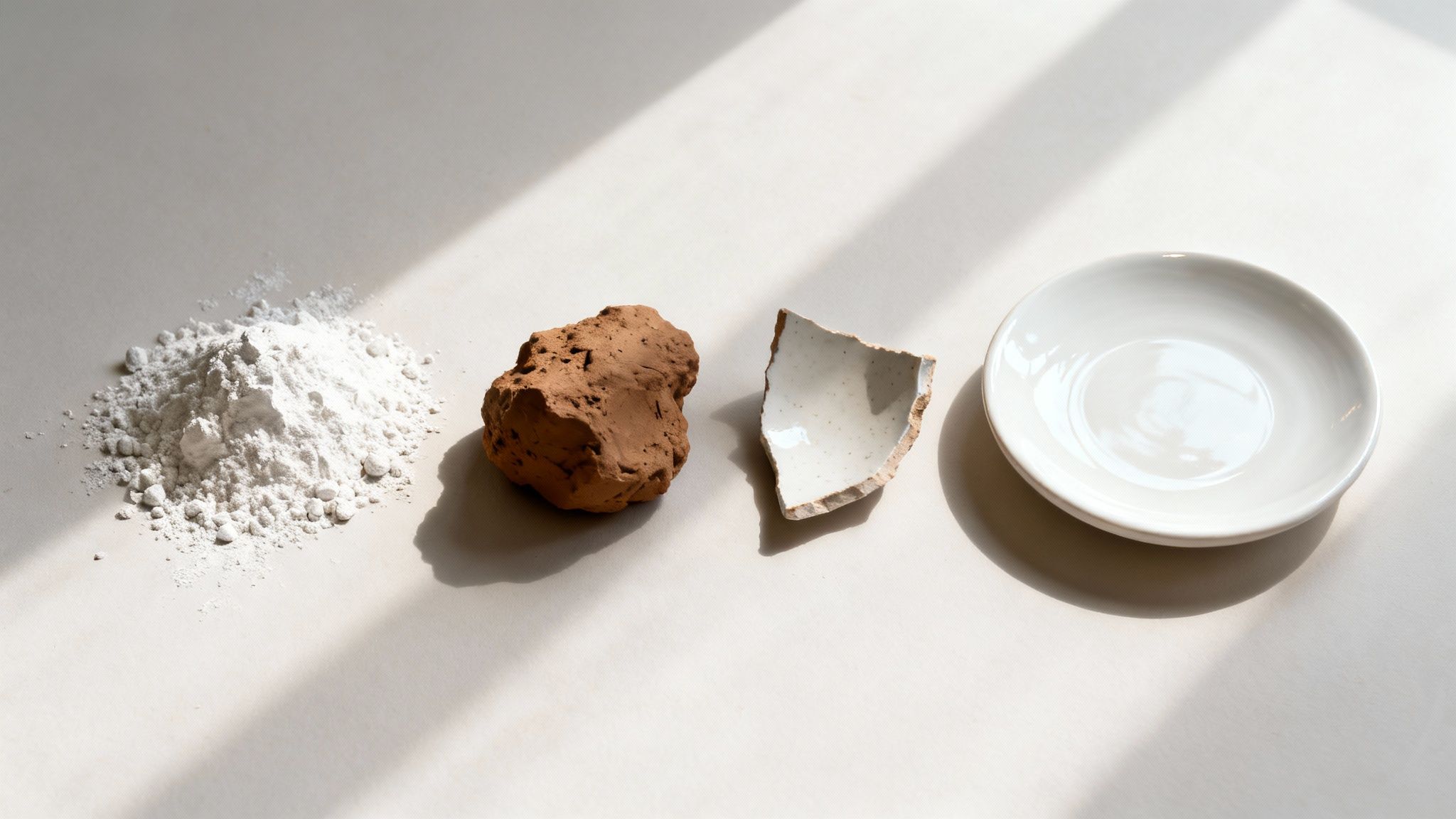
This isn't just a minor detail; it’s a core feature. It’s what defines its longevity and makes it such a smart investment for the items you reach for every single day.
A Closer Look at Durability
When we talk about "durability," what we’re really asking is, "Can this thing handle my life?" For porcelain, the answer is a confident yes. Let's get practical and see how its strengths stack up in real-world situations.
-
Chip and Scratch Resistance: That hard, glassy surface isn’t just for looks. It’s far less likely to scratch from cutlery or chip if it gets knocked against the faucet, which is a huge reason it’s the go-to for high-use dinnerware.
-
Stain-Proof Performance: You know that dark coffee ring or splash of red wine that spells doom for more porous materials? Porcelain pretty much shrugs it off. Because its surface is so sealed, liquids can’t seep in and leave a permanent mark.
-
Dishwasher Resilience: The high heat and harsh detergents inside a dishwasher can be brutal on dishes over time. Porcelain’s non-porous body and tough glaze can handle countless cycles without fading, cracking, or degrading.
This combination of strengths means you get something that doesn't just look beautiful on day one, but stays that way for years. While porcelain is a top-tier performer, it's helpful to see where it fits in the bigger picture. To get a better feel for it, check out our detailed comparison of stoneware vs. porcelain dinnerware.
The Power of Low Water Absorption
One of the most telling performance stats is water absorption. It sounds technical, but it has some very real, very practical consequences.
Porcelain is defined by its incredibly low water absorption rate of less than 0.5%. This makes it virtually waterproof. By contrast, a standard ceramic piece can have an absorption rate of 3% or higher, leaving it much more vulnerable to moisture.
That’s way more than just a number—it’s the secret behind why porcelain excels in demanding environments. This superior density is a huge reason porcelain commands a major share of the global market for premium applications. While standard ceramic tiles, with their 3-7% water absorption, are fine for less demanding areas, porcelain’s low-porosity formula makes it the top choice for resisting stains and cracks in any setting.
Ultimately, when you choose porcelain, you’re choosing a material engineered for endurance. It’s an investment in quality that can handle the realities of a busy, modern home without ever sacrificing a bit of its elegance.
Balancing Aesthetics and Affordability
Beyond the hard facts of durability and how they’re made, your choice between porcelain and ceramic really comes down to the look, feel, and cost you’re going for. These materials don't just act differently; they tell completely different stories in your home. It’s the classic trade-off: refined elegance versus rustic charm, a premium investment versus everyday approachability.
Porcelain just screams delicate precision. Because it’s made from that super-fine kaolin clay, it can be shaped into much thinner, more graceful forms than ceramic ever could. This gives it an instant feel of sophistication, whether it’s a sleek dinner plate or a minimalist vase.
One of porcelain’s most magical qualities is its potential for translucency. Hold a thin piece of high-quality porcelain up to a window, and you'll often see a soft, ethereal glow shine right through it. That subtle detail gives it an air of luxury that opaque materials just can't touch, making it the go-to for fine china and elegant serveware designed to make a statement.
The Charm of Rustic and the Reality of Price
Where porcelain is all sharp lines and refinement, ceramic brings a warmer, more grounded feeling to the table. Its coarser clay and thicker build give it a substantial, earthy presence. It’s a perfect match for cozy, comfortable, or handcrafted decor styles—think of a chunky, hand-painted coffee mug or a decorative bowl with a rich, rustic glaze.
Ceramic's total opacity and slightly less precise shape are exactly what give it that approachable, handmade vibe. This visual distinction is a huge part of understanding what is the difference between porcelain and ceramic from a design standpoint. It’s not just about which one is tougher; it’s about the mood you want to create.
Of course, looks are only half the story. Your budget plays a huge role, and the price gap between the two is a direct result of how they’re created.
- Refined Materials: Porcelain demands purer, higher-quality clays and minerals, which are simply more expensive to source.
- Intense Firing: Firing porcelain at those ridiculously high temperatures uses a ton more energy, which drives up production costs.
- Lower Yield: The manufacturing process is so demanding that a higher number of pieces get tossed for even minor flaws.
This is why porcelain is considered a premium material—you're investing in superior performance and a more sophisticated design. While ceramic offers fantastic value and style for daily use, porcelain’s higher price tag is earned through the complex journey it takes from raw clay to a beautiful, durable finished product.
Ultimately, picking between them is about setting your priorities. If you’re after a sophisticated, long-lasting piece that feels both delicate and incredibly strong, porcelain is an investment that pays off. But if you’re looking for a charming, budget-friendly item with a cozy aesthetic, ceramic is an excellent and beautiful choice for your home.
Making the Right Choice for Your Home
Okay, we've gone through the nitty-gritty of how porcelain and ceramic come to be. Now for the fun part: putting that knowledge to work in your own home. Moving from the "how" to the "what for" is how you start choosing pieces with real confidence.
Think of it this way: knowing the difference isn't just about trivia. It’s about predicting how a plate will hold up to the morning breakfast rush or how a vase will look on your mantelpiece a year from now. Let’s find the perfect material for your life.
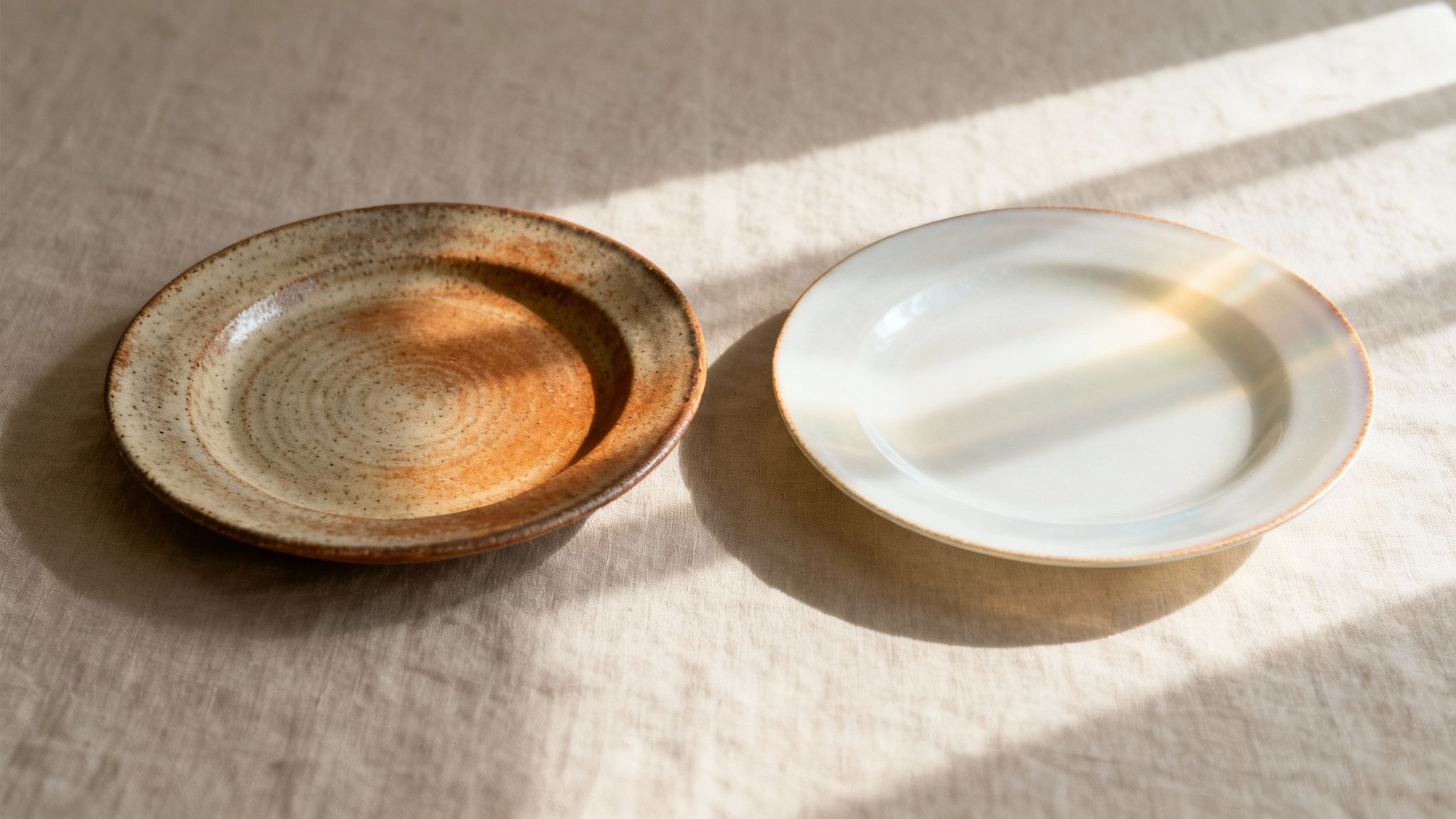
For Everyday Dining and Family Meals
When you’re stocking your cabinets for daily use, durability is the name of the game. You need workhorse dishes that can handle everything from dishwasher cycles to hurried stacking and the occasional bump.
For this job, a high-quality stoneware ceramic is a fantastic go-to. It feels substantial and sturdy, brings a warm, cozy vibe to the table, and is usually easier on the wallet than porcelain. That slightly thicker build gives it a reassuring resilience perfect for the beautiful chaos of family meals.
But if you find yourself wincing at every little chip or your household is just a bit more... spirited, upgrading to porcelain for daily use is a seriously smart move. It's tougher and less prone to chipping, meaning it will keep that brand-new look for far longer, even with constant use.
For Elegant Entertaining and Special Occasions
When you’re setting the table to impress, porcelain is in a class of its own. It just has an elegance and refinement that instantly elevates a dinner party.
- Delicate yet Strong: Porcelain can be shaped into thinner, more graceful forms without becoming fragile, giving your table an immediate touch of class.
- A Pure Canvas: Its non-porous surface means it won't absorb flavors, odors, or colors from food. That rich curry will taste exactly as it should, without any "ghosts" of meals past.
- A Touch of Luxury: The smooth, almost luminous finish is what makes fine china so special. It creates a polished, sophisticated backdrop for your best recipes.
Choosing porcelain for special occasions isn’t just about buying plates; it’s about investing in the experience itself. It tells your guests you’ve paid attention to every detail.
For Decorative Accents and Cookware
This choice isn't just for the dining room. When it comes to vases, planters, and other decor, porcelain’s nearly zero water absorption makes it a clear winner for anything meant to hold water. No sweating, no leaking, no ruined wood surfaces.
In the kitchen, things get interesting. Classic ceramic bakeware is loved for its ability to heat evenly and gently. At the same time, modern porcelain enamel cookware (think Le Creuset) offers a rock-solid, non-stick surface that’s a breeze to clean and stands up to acidic ingredients like tomatoes. The best choice here really comes down to your cooking style.
Knowing what is the difference between porcelain and ceramic is what empowers you to pick the right tool—or dish—for the job.
Your Guide to Choosing Porcelain vs Ceramic
To make it even simpler, we've put together a quick-reference table. Think of it as your cheat sheet for matching the right material to your needs.
| Item or Use Case | Recommended Material | Why It's the Best Fit |
|---|---|---|
| Everyday Plates & Bowls | High-Quality Ceramic | Durable, affordable, and has a warm, inviting feel perfect for daily meals. |
| Fine China & Formal Dining | Porcelain | Its elegance, strength, and non-absorbent surface are ideal for special occasions. |
| Coffee Mugs | Ceramic or Porcelain | Ceramic holds heat well for a cozy feel; porcelain offers a more refined, chip-resistant option. |
| Flower Vases | Porcelain | It's waterproof and won't leak or "sweat," protecting your furniture. |
| Bakeware (Casseroles, Pies) | Ceramic | Provides excellent, even heat distribution for consistent baking results. |
| Cookware (Dutch Ovens) | Porcelain Enamel | Offers a tough, non-reactive, and easy-to-clean cooking surface. |
| Decorative Objects | Either | Choose based on the desired look: ceramic for rustic charm, porcelain for fine detail. |
This isn't about one material being "better" overall, but about which one is better for a specific task. By thinking about how you'll use an item, you can make a choice you’ll be happy with for years to come.
Still Have Questions? Let's Clear Them Up
Even after breaking down the science, a few practical questions always seem to pop up right when you’re about to make a decision. To help you feel completely confident in your choice, we’ve put together the most common things shoppers ask when they’re weighing porcelain against ceramic.
Here are the straightforward answers you’re looking for.
Is Porcelain Really Better Than Ceramic?
Not always. It’s less about which one is "better" and more about which one is better for the job.
If you need something that can stand up to daily abuse—think dinner plates for a busy family—then porcelain is the hands-down winner. Its superior durability, non-porous surface, and resistance to stains make it an investment in performance and longevity.
But sometimes, what you really want is a cozy, handcrafted feel. That’s where ceramic shines. It’s perfect for a favorite coffee mug, a decorative vase, or a casual dinnerware set that feels warm and inviting. Ceramic often brings a more accessible price point and a beautiful, rustic charm that porcelain just can’t replicate. The right choice is simply the one that fits your life, your style, and your budget.
Are They Both Dishwasher and Microwave Safe?
For the most part, yes, but here’s the golden rule: always check the bottom of the piece for care instructions.
High-quality porcelain is almost always a safe bet for both the dishwasher and microwave. Its dense, non-porous body handles temperature shocks and water like a champ.
Most modern, glazed ceramics are designed for convenience, too. The main things to look out for are pieces with metallic details—like gold leaf or a silver rim—which should never go in the microwave. Unglazed ceramic can also be a bit more vulnerable to absorbing water, so it pays to be careful. When in doubt, the care symbols are your best friend.
A quick tip: Can’t find a care symbol? The safest move is to hand-wash it. A little extra care goes a long way in preserving the finish and making sure it lasts.
How Can I Tell the Difference When I’m Shopping?
You don’t need to be a ceramics expert to spot the difference in a store. Once you know what to look for, it’s actually pretty easy.
Here are a few simple tricks to try:
- Feel the Weight: Porcelain is denser, so it often feels heavier and smoother than a ceramic piece of a similar size.
- Flip It Over: The unglazed "foot" on the bottom tells a story. Porcelain will be a bright, pure white with a fine, almost sugary texture. Ceramic clay is typically off-white, tan, or even reddish and will feel a bit grittier.
- Hold It to the Light: This is the classic test. If you hold a thin piece up to a light and you can see a faint glow through it, you’re looking at porcelain. That beautiful translucency is one of its defining features.
- Give It a Tap: Gently flick the edge with your fingernail. Porcelain makes a clear, high-pitched "ping," while ceramic produces a duller, earthier "thud."
Is Bone China a Type of Porcelain?
Yes, it is! Think of bone china as porcelain’s more elegant, sophisticated cousin. It’s a premium variety prized for its brilliant whiteness, stunning translucency, and surprising strength.
What makes it unique is the addition of bone ash (usually from cattle) to the classic porcelain clay mix. This special ingredient creates a material that is incredibly chip-resistant and durable, all while looking impossibly delicate and lightweight. It’s that blend of toughness and elegance that makes bone china the top choice for truly luxurious fine dining.
At Fluent Trends, we believe that understanding the materials in your home is the first step toward creating a space you truly love. Explore our curated collections of designer-approved dinnerware and decor to find the perfect pieces that blend timeless style with lasting quality.