

What Size Area Rug for Dining Room — what size area rug for dining room guide
Donna MaloneIf there's one secret to getting your dining room rug size right, it's this: make sure all four chair legs stay on the rug, even when people have pulled out their chairs to sit down. Anything smaller creates a wobbly, frustrating experience for your guests and throws the whole room's visual balance out of whack.
Finding the Perfect Rug for Your Dining Room
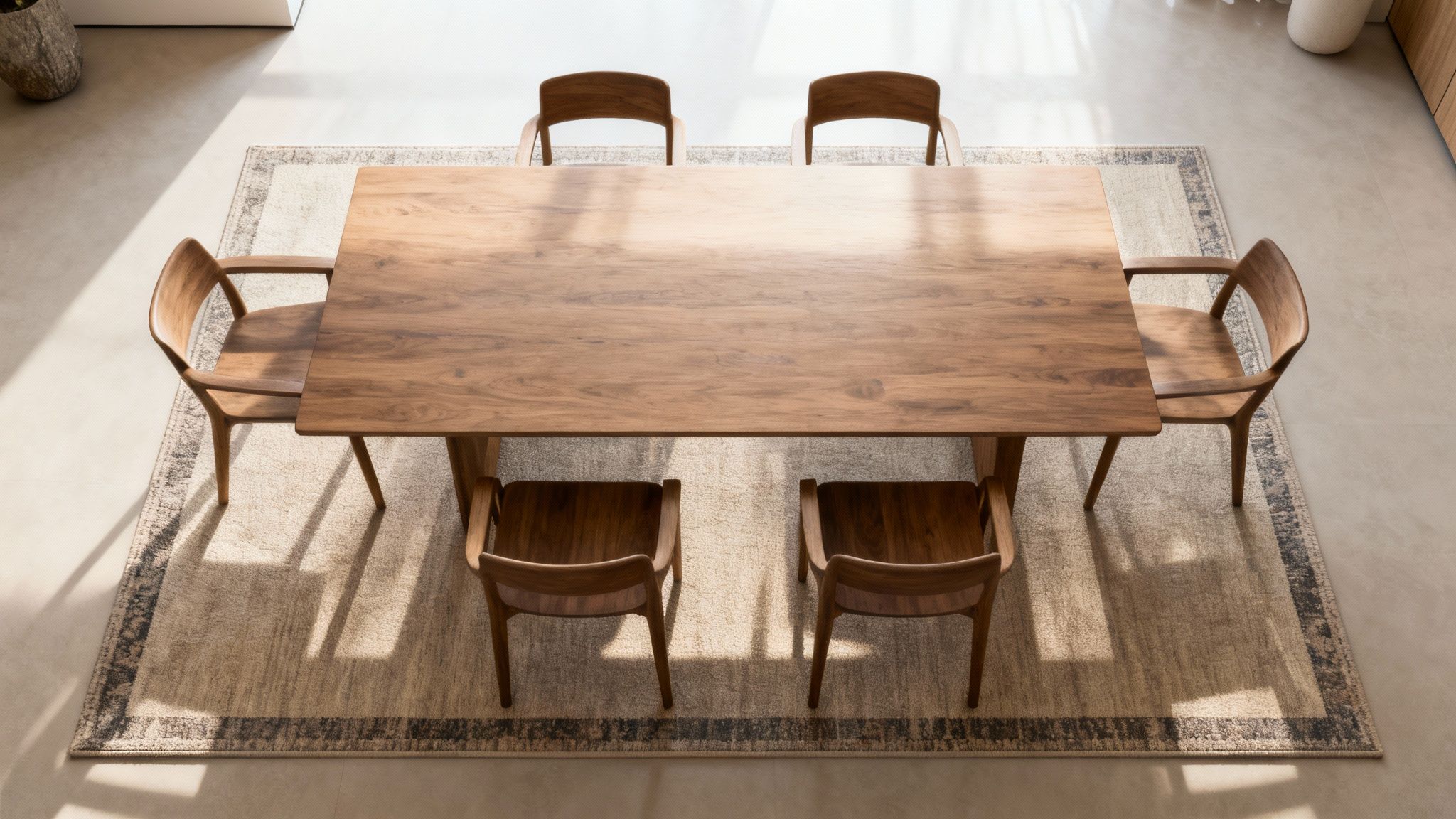
Choosing the right rug is easily one of the most important design decisions you'll make for this space. Think of it as the foundation that anchors your entire dining set. A rug that’s too small is like putting a beautiful painting in a tiny, ill-fitting frame—it just looks off and distracts from the main event.
On the other hand, a perfectly scaled rug defines the dining zone, adds a much-needed layer of comfort, and makes the whole room feel polished and complete. It's a design choice that homeowners are increasingly investing in; the global area rugs market hit a staggering $12.5 billion in 2023 and is only expected to climb. If you're curious, you can find more on carpet and rug market trends from the experts at GM Insights.
The Foundational 24-Inch Rule
To get that professionally designed look, there's a simple guideline designers swear by: the “24-Inch Rule.” This is the key to nailing your dining room rug size every single time, taking all the guesswork out of the equation.
The rule couldn't be simpler: Your rug should extend at least 24 inches beyond every side of your dining table. This creates a generous "landing zone" for the chairs, making sure they never catch on the edge when pulled out.
This extra space is both functional and aesthetic. It keeps chairs stable on a flat, even surface, so you can forget about annoying wobbles or snags. Visually, this buffer creates a beautiful, proportional frame for your dining set.
Why Sizing Matters So Much
Getting the size right is about so much more than just preventing wobbly chairs. It fundamentally changes how your space feels. A well-sized rug can:
- Define the Dining Area: In an open-concept home, a rug carves out a distinct visual zone for dining, separating it from the kitchen or living room.
- Enhance Comfort: It adds a layer of softness underfoot and helps absorb sound, creating a cozier, more intimate atmosphere for meals.
- Protect Your Floors: It’s a stylish barrier against scratches from sliding chairs and the inevitable spills.
- Elevate Your Style: The right rug is your chance to introduce color, pattern, and texture, tying all your decor elements together into one cohesive look.
This guide is built to give you the quick, actionable answers you need right now, before we dive into the detailed charts and pro tips that will help you choose with total confidence.
How to Measure for Your Dining Room Rug
Getting the measurements right for a dining room rug is a lot simpler than it sounds, but it’s hands-down the most important step. Let’s walk through it together. A few simple measurements will take all the guesswork out of the process, ensuring a perfect fit that makes your dining space feel intentional and inviting.
First things first, grab a tape measure and get the length and width of your dining table. Jot those numbers down. If your table has leaves you actually use, make sure to measure it at its maximum length. This is a classic mistake that leaves people with a rug that’s too small the moment guests arrive.
The All-Important Chair Test
Now for the secret weapon: the chair test. This is where you find out the real footprint you need to cover. Go ahead and pull the dining chairs out from the table on all sides, just as if you were sitting down to eat. This gives you a true-to-life picture of how much space your set takes up when it's in use.
With the chairs pulled back, measure the entire area—from the back of one chair all the way to the back of the chair on the opposite side. This measurement is the key to everything, and it’s what we’ll use for the famous "24-Inch Rule."
Pro Tip: Don't just eyeball how far the chairs pull out. Actually move them to a comfortable spot. This one small step prevents the most common dining room rug mistake—getting a rug that’s too small for people to actually use without a hassle.
This little test ensures nobody's chair legs get caught on the edge of the rug when they slide back. It’s a small detail that makes a huge difference in how comfortable your dining area feels for you and your guests.
Applying the 24-Inch Rule
Okay, you’ve got your table dimensions. Now it’s time to apply the designer's go-to guideline. The idea is to add a minimum of 24 inches of rug space on every side of your table. This creates a generous "landing strip" for the chairs so they can move in and out smoothly.
Let’s see it in action with a quick example:
- Your table is 72 inches long.
- Your table is 36 inches wide.
For the length, you’ll calculate: 72" + 24" + 24" = 120 inches (or 10 feet).
For the width, you’ll do the same: 36" + 24" + 24" = 84 inches (or 7 feet).
So, for this table, you'd be looking for a rug that’s at least 8' x 10'. This simple rule creates visual balance and, more importantly, a functional dining space. Of course, knowing how to place the rug is just as important as sizing it, so it's always helpful to review how to measure a room for furniture accurately for a complete picture.
Final Check: Measure Your Room
Once you know the ideal rug size for your table, there’s one last check. You need to make sure it fits the room. A good area rug should define the dining zone, not look like wall-to-wall carpet.
The goal is to leave a border of bare floor showing all around the rug. Aim for about 12 to 18 inches of exposed floor between the rug’s edge and the walls. This bit of breathing room makes the entire space feel larger and more polished. If your perfect rug size crowds the walls, just look for the next standard size down that still honors the 24-inch chair rule.
Getting the fundamentals right is everything, and our complete guide on how to choose the right rug size dives even deeper for every room in your home.
Rug Sizing Charts for Every Table Shape
Alright, you know the "how-to" of measuring, so let's cut to the chase. I've put together some simple charts that pair the most common dining table sizes with their perfect rug counterparts. Think of this as your go-to cheat sheet for getting it right without any of the guesswork.
The magic number behind all these recommendations is the 24-inch rule. Every single pairing gives you at least two feet of rug space on all sides of the table. This is what lets your chairs slide in and out without ever snagging on the rug's edge—a simple trick that guarantees a room that not only looks great but also functions beautifully.
These charts are a fantastic starting point. But remember, always trust your own tape measure. A quick double-check of your table and room dimensions before you buy is the best way to ensure a perfect fit.
Dining Table to Rug Size Pairing Guide
Here’s a quick-reference chart that breaks down the best rug pairings for the most common table shapes and sizes. Whether your table is rectangular, round, or square, this guide will point you to the right dimensions.
| Table Shape & Size | Seats | Recommended Rug Size (Rectangular) | Recommended Rug Size (Round/Square) |
|---|---|---|---|
| Rectangular 60" x 36" | 4-6 | 8' x 10' | N/A |
| Rectangular 72" x 40" | 6-8 | 8' x 10' or 9' x 12' | N/A |
| Rectangular 96" x 42" | 8-10 | 9' x 12' | N/A |
| Rectangular 108"+ x 48" | 10+ | 10' x 14' or larger | N/A |
| Round 36" - 42" Diameter | 4 | 7' x 10' | 7' Round or 7' x 7' Square |
| Round 48" Diameter | 4-6 | 8' x 10' | 8' Round or 8' x 8' Square |
| Round 60" Diameter | 6-8 | 9' x 12' | 9' Round or 9' x 9' Square |
| Round 72" Diameter | 8 | 10' x 14' | 10' Round or 10' x 10' Square |
| Square 36" x 36" | 4 | 7' x 10' | 7' x 7' Square or 7' Round |
| Square 48" x 48" | 4-6 | 8' x 10' | 8' x 8' Square or 8' Round |
| Square 60" x 60" | 8 | 9' x 12' | 9' x 9' Square or 9' Round |
These pairings are tried and true, designed to create a balanced and functional dining space. They ensure every guest has plenty of room to move their chair comfortably.
Tips for Rectangular Tables
Rectangular tables are the classic choice, and thankfully, sizing a rug for them is pretty straightforward. You want the rug to mirror the table's long proportions. Sticking a square rug under a long, rectangular table just looks... off. It creates a weird visual tension that disrupts the room's harmony.
You’ll notice a pattern here: an 8' x 10' rug is the sweet spot for most standard 6-person tables. It provides that essential buffer without totally taking over the room. Once your table expands to fit more guests, a 9' x 12' rug is usually the next logical step up to maintain that crucial chair space.
This is the whole process in a nutshell: measure the table, pull the chairs out, and add that 24-inch safety zone.
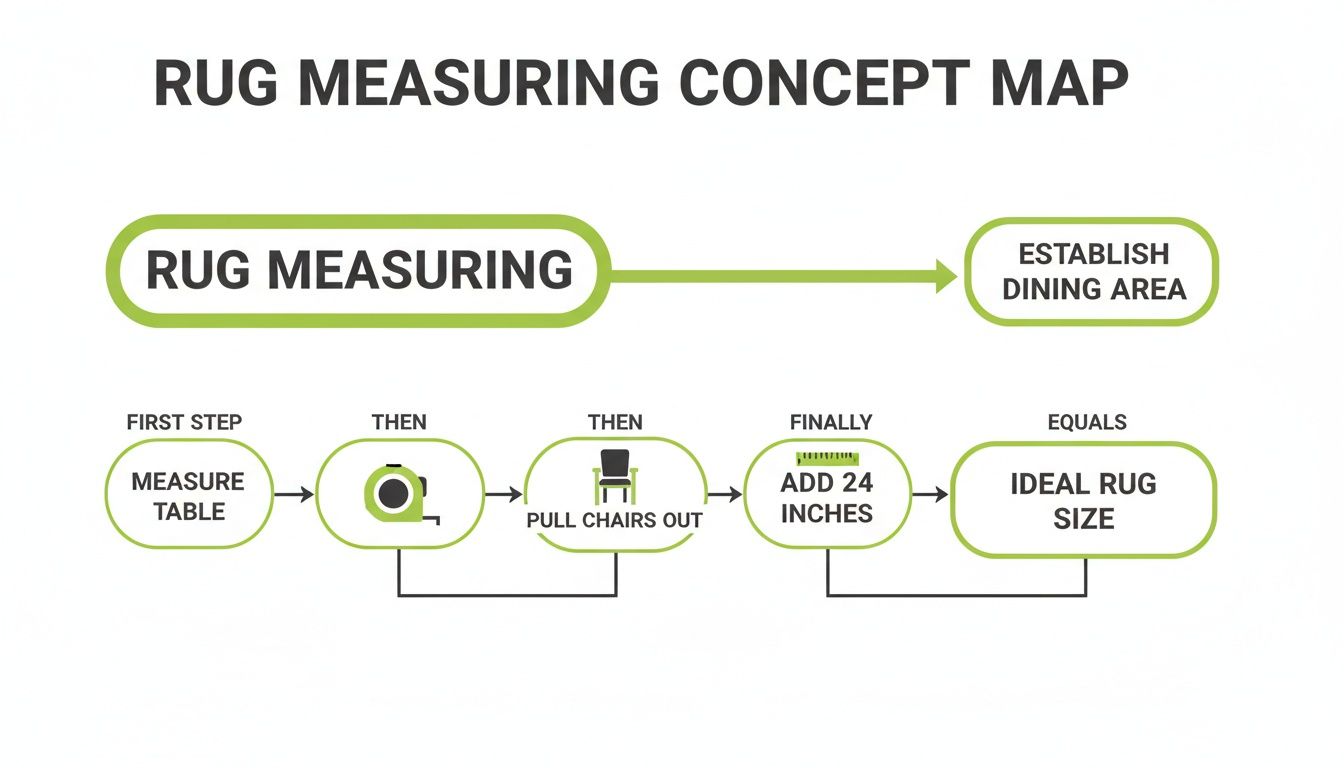
It’s all about mapping out the table’s functional footprint, not just its static dimensions.
Tips for Round Tables
With a round table, you get to play a bit more. Both round and square rugs can look fantastic. A round rug under a round table is a no-brainer—it echoes the shape and creates a really cohesive, soft look. But a square rug can be a brilliant move, too, especially in an open-concept space where you want to clearly define the dining "zone."
The math is the same. Just add 24 inches of clearance on all sides. Since a table's diameter is its widest point, you’ll add a total of 48 inches (4 feet) to it to find your minimum rug size.
It's really that simple. A 48-inch (4-foot) round table needs an 8-foot rug. The calculation is just 48" (table) + 24" (one side) + 24" (the other side) = 96 inches, or 8 feet.
Tips for Square Tables
Square tables are a lot like round ones when it comes to rug pairing. A square rug is the most obvious and symmetrical choice, and it always looks sharp.
But if you want to shake things up, a large round rug can be a stunning contrast. It helps soften all the hard angles of the table and chairs, adding a bit of unexpected flow and design flair to the room. The sizing rule doesn't change: just add at least 48 inches to your table's width to get the right rug dimension.
Visualizing the Perfect Rug Placement
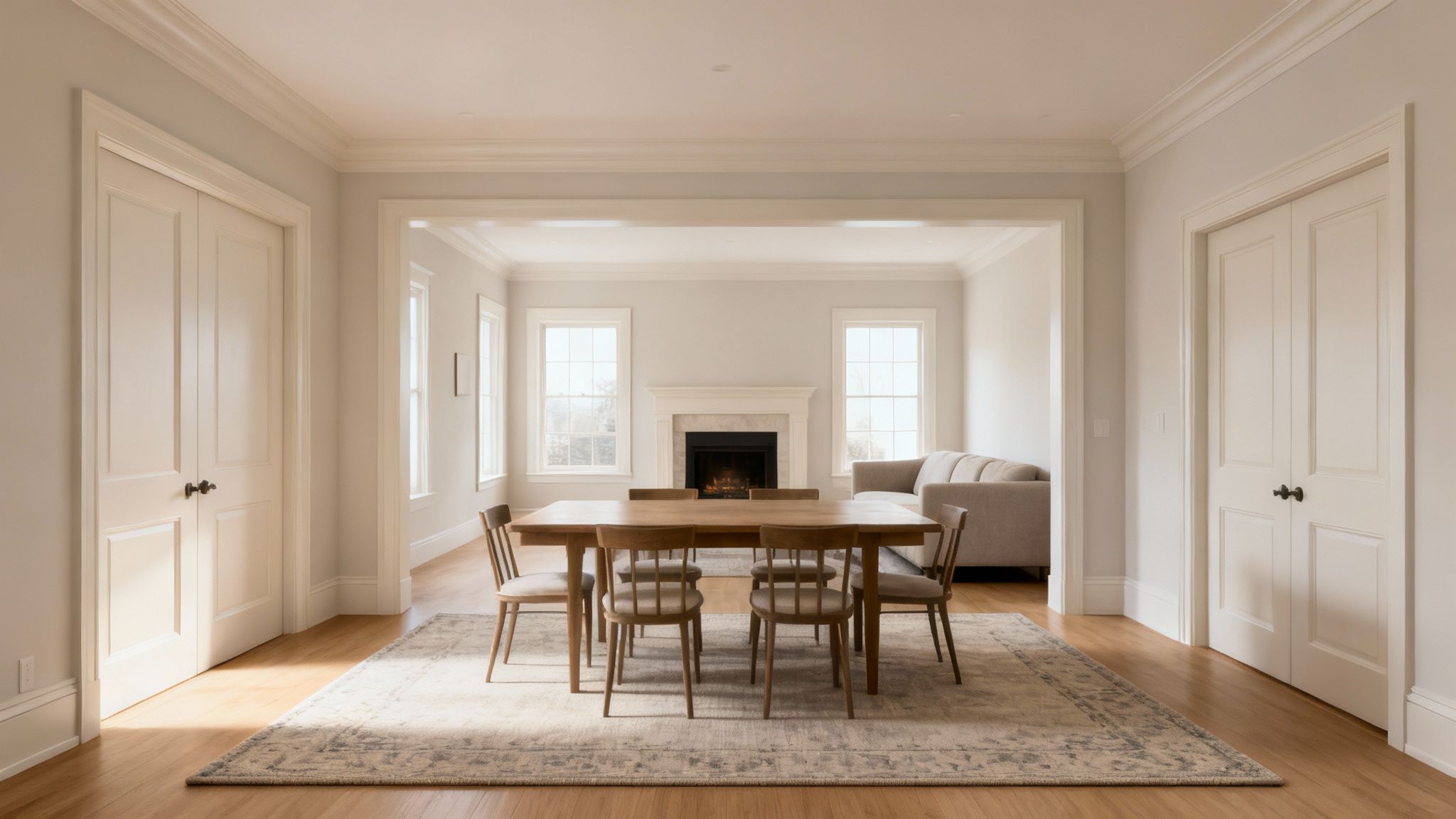
Alright, you've measured everything and picked out a rug that's just the right size. Now for the final touch: putting it all in place. This is where the magic happens, and it’s the step that separates a nice dining room from one that looks like it was professionally styled.
The first and most important rule is to center your dining table squarely on the rug. This one move grounds the entire setup, creating a sense of balance and intention. An off-center table just throws the whole room off, making it feel like something’s not quite right.
Once the table is centered, your chairs will naturally find their home around it. If you’ve chosen the right size rug, you’ll have that beautiful 24-inch buffer we talked about, giving every chair a solid place to land. It's this visual anchor that pulls the whole dining set together into a single, cohesive unit.
Centering the Rug in the Room
After you've got the table situated on the rug, step back and look at how the rug itself fits within the room. Ideally, you want the rug to be centered in the dining space, leaving an even border of bare floor on all sides. This creates that essential "breathing room" of 12 to 18 inches between the rug's edge and the walls.
Of course, not every room is a simple box. You might have other features you need to account for.
- Chandeliers and Lighting: Always try to align your rug and table directly under the main light fixture. This creates a strong vertical line that makes the space feel incredibly deliberate and grand.
- Dominant Windows: If your room is blessed with a big bay window or a set of French doors, centering the rug with that feature can create a jaw-dropping focal point.
- Fireplaces: In dining rooms with a fireplace, aligning the rug with its centerline brings a satisfying sense of order and symmetry to the space.
The goal is to find the most natural and visually pleasing anchor in your room. Whether it's the light fixture, a window, or the center of the room itself, a well-placed rug brings a sense of calm and makes everything feel complete.
This process makes your dining set feel like it truly belongs in the room, rather than looking like an afterthought dropped into the space.
Defining Your Zone in an Open Concept Space
In an open-concept home, a dining room rug has a much bigger job to do. It’s not just for comfort and style—it actually creates a "room" where no walls exist. The edges of the rug become invisible boundaries, clearly defining the dining area and separating it from the kitchen or living room next to it.
This is where smart placement really pays off. By centering your dining set on a large area rug, you create a distinct island dedicated to mealtimes. This visual separation is the secret to making sprawling, open spaces feel organized and cozy instead of vast and undefined. It tells your brain exactly where one area ends and another begins.
For instance, your rug can run parallel to your kitchen island or perpendicular to your sofa, creating a subtle grid that organizes the entire floor plan. Don't be shy about using painter's tape to mark out the rug's footprint on the floor first. This lets you see the "zone" in real life and how it plays with everything else before you commit. It's a simple trick that will help you confidently decide what size area rug for your dining room will best define the space.
Common Rug Sizing Mistakes to Avoid
Choosing the right size rug for your dining room can feel like a high-stakes decision, but trust me, avoiding a few common pitfalls makes all the difference. Knowing what not to do is just as important as knowing what to do, and it's the secret to finding a rug that you'll love for years to come.
The single biggest mistake I see? A rug that’s just too small. This creates what designers call the "floating island" effect, where your beautiful dining set looks totally lost and disconnected from the rest of the room. It’s also a functional nightmare—chair legs constantly catch on the edge when people pull out, leading to wobbly seats and a genuinely frustrating experience for your guests.
So, if you're ever on the fence between two sizes, always go for the bigger one. A larger rug will look more intentional, more luxurious, and will simply work better.
The Dreaded "Floating Island" Rug
Picture this: your dining table and chairs are marooned on a tiny patch of rug in the middle of a vast sea of flooring. That's the floating island. It’s what happens when the rug is only big enough for the table itself, with no thought given to where the chairs go when people are actually sitting down.
Not only does this look awkward and out of proportion, but it also makes dining really uncomfortable. Every time someone scoots their chair back, the rear legs hook the rug's edge, creating an annoying wobble. This one simple mistake completely undermines the whole point of a dining rug, which is to pull the furniture together into a cozy, unified zone.
Forgetting About the Extension Leaves
Here’s another one I see all the time: measuring your table at its smallest, everyday size. It’s so easy to forget about those extension leaves you use for holidays, dinner parties, and big family get-togethers. You end up with a rug that seems perfect for daily life, but the moment you extend the table, you’re right back to a floating island.
The golden rule is to always measure your table at its maximum extended length. This guarantees your rug is sized for how you actually use the space when it matters most, ensuring everyone's chair stays firmly and safely on the rug, no matter the occasion.
The Wall-to-Wall Impostor
On the flip side, you have the rug that’s way too big for the room. While being generous with size is usually a good thing, a rug that practically touches the walls can completely overwhelm a space. Instead of defining the dining area, it ends up looking like a strange attempt at wall-to-wall carpeting, which can make the room feel cramped and much smaller than it is.
A great area rug needs a little breathing room. You should always aim to leave a border of 12 to 18 inches of visible floor between the edge of the rug and the walls. This visual frame creates balance and makes the entire room feel more open and thoughtfully designed. The data backs this up, too; experts universally recommend choosing a rug that's 24-48 inches larger than your table on all sides. Following this guideline helps avoid the staggering 51% dissatisfaction rate reported in consumer studies due to poorly fitting rugs—a key insight as North America's rug market continues to expand. You can dive deeper into the thriving rugs market with this report from Custom Market Insights.
By sidestepping these common blunders, you can confidently choose a rug that will anchor your dining room beautifully and work perfectly for the way you live.
Choosing a Rug Material That Lasts
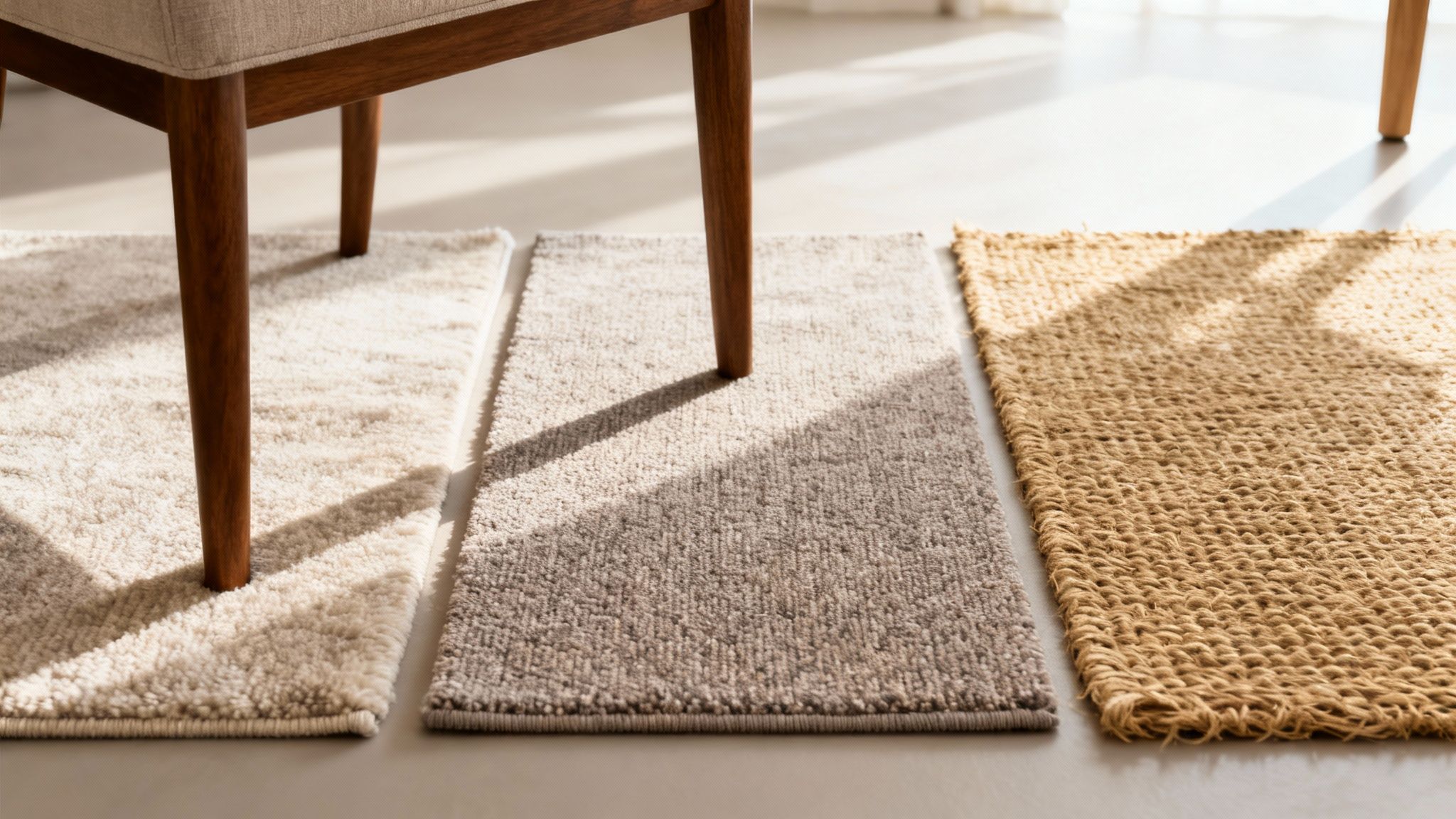
Alright, you’ve got the perfect size mapped out. Now for the fun part: picking a material that can actually survive life in a dining room. This is a space that sees a lot of action—spills, crumbs, and the constant back-and-forth of chair legs. Your rug needs to be a workhorse, not just a pretty face.
Think of it this way: the right material saves you from future headaches. When that inevitable glass of red wine tips over, you want a rug that gives you a fighting chance. It’s all about striking that perfect balance between a look you love and the resilience you need.
Top Materials for Dining Room Durability
When you’re browsing materials, your two biggest priorities should be easy cleaning and a low pile. A low-pile rug is non-negotiable here. It lets chairs slide out smoothly without catching and makes vacuuming up cracker crumbs a breeze. High-pile or shag rugs may feel plush underfoot, but they’re a nightmare in a dining room, trapping every little thing that falls.
Here are the most reliable and popular choices:
- Wool: You can't go wrong with this natural fiber. Wool is incredibly durable and naturally repels stains and even flames. Its dense fibers buy you precious time to clean up spills before they soak in. A classic low-pile wool rug is an investment that can look great for decades.
- Synthetic Fibers (Polypropylene & Nylon): These are the true champions of a busy home. Synthetic rugs are practically bulletproof when it comes to stains, they’re affordable, and cleaning is incredibly simple. If you have kids or pets, this is your stress-free solution.
- Natural Fibers (Jute & Sisal): For a beautiful, earthy texture, jute and sisal are fantastic. They’re tough, durable, and generally easy on the wallet. The one downside is that they can be absorbent and tricky to spot-clean, so they’re better suited for homes where spills are a rare event.
When considering materials, it's essential to select something that can withstand daily use. You can learn more about the rationale behind choosing the best rugs for high-traffic areas from industry experts.
Making the Smartest Choice for Your Home
Ultimately, your lifestyle is the deciding factor. A family with young kids will absolutely love the easy-care nature of a polypropylene rug. If you’re looking for a timeless piece to anchor your room for years, wool offers unmatched quality. For a deeper dive, our guide on the best rugs for high traffic areas can help you match a material to your home's specific demands.
The best rug is one that fits your life just as perfectly as it fits under your table. By choosing a durable, low-pile material, you’re setting your dining space up to be both beautiful and functional for many meals to come.
A Few Final Questions, Answered
Even with all the rules and charts, a few lingering questions always seem to pop up. Let’s tackle some of the most common ones to clear up any last-minute doubts you might have.
Should My Rug Shape Match My Table Shape?
In most cases, yes. It's the simplest way to create a look that feels balanced and intentional. A round rug under a round table, for instance, echoes the geometry beautifully and makes the whole setting feel unified.
But this isn't a hard-and-fast rule. A large square rug can also look fantastic under a round table, especially if your goal is to anchor the dining zone within a larger, open-plan room. Think of it as creating a "room within a room."
Can I Put a Rug on Top of Carpet?
You absolutely can. Layering a rug over wall-to-wall carpet is a classic designer move. It’s a brilliant way to add a splash of color, introduce a new texture, and clearly define the dining space without having to call a contractor.
The trick is to get it right. Opt for a low-pile rug and use a special rug pad made for layering. This will stop the rug from bunching up or shifting around, keeping it smooth and securely in place.
How Much Bare Floor Should I Leave Around the Rug?
Think of your bare floor as a picture frame for your dining setup. Leaving a border of visible flooring makes the room feel more open and thoughtfully designed. The sweet spot is a gap of 12 to 18 inches between the rug’s edge and the walls.
If you’re working with a smaller room, you can cheat this a bit and go down to about 8 inches. The main thing is to avoid letting the rug touch the walls, which instantly makes a space feel cramped.
Ready to pull your dining room together? Explore the curated collections at Fluent Trends, where you'll find designer-approved rugs and home essentials to elevate any room. https://www.fluenttrends.com