

Why Handcrafted Furniture Costs More: Real Value
Yuatinia LeakTable of Contents
- The Real Reasons Handcrafted Furniture Costs More Than You Think
- It Starts With the Wood, Not the Marketing
- Handcrafted Furniture vs Mass-Produced Furniture: A Fair Comparison
- Custom Furniture Cost Factors: Where Your Money Actually Goes
- How to Tell If Furniture Is Well Made Before You Buy
- How to Choose Durable Furniture That Lasts Decades
- The Lifecycle Cost of Handcrafted Furniture: Why Cheap Costs More
- When Handcrafted Furniture Is Not Worth the Premium
- Sustainability and Sourcing: What Ethical Craftsmanship Looks Like
- Frequently Asked Questions
Last Updated: October 12, 2026
The Real Reasons Handcrafted Furniture Costs More Than You Think
Here's the short answer: handcrafted furniture costs more because a person builds it, not a machine. A single maker spends days on joinery, sanding, and finishing. A factory pushes out hundreds of identical units in that same time. You are paying for hours, skill, and materials that hold up.
This guide from Fluent Trends breaks down where every dollar goes. We walk through wood grades, labor, and the hidden costs of cheap furniture. By the end, you will know exactly what you are buying.
The gap is bigger than most shoppers expect. A mass-produced dining table might take minutes of machine time. A hand-built table can take a week or more.
That difference shows up in the price tag. It also shows up twenty years later.
Below, we show you how to read a price tag like a furniture maker.
It Starts With the Wood, Not the Marketing
Wood is the first place costs split. Solid hardwood comes from mature trees. It gets dried slowly, then cut and matched by hand.
Factory furniture often hides particleboard under a thin veneer. That veneer looks fine on day one. It bubbles and peels within a few years.
Solid wood is lumber cut from a single tree, not glued chips or sawdust. It can be sanded and refinished for decades.
Species matter too. Acacia wood brings dense grain and rich color. Sheesham wood scores around 1,410 lbf on the Janka hardness scale. Teak sits near 1,000 lbf by comparison. That means sheesham resists dents and scratches better in daily use.

Dense woods also resist warping once properly seasoned. Joints stay tight. Termites and fungi struggle to attack the natural heartwood.
Handcrafted Furniture vs Mass-Produced Furniture: A Fair Comparison
Handcrafted furniture is built one piece at a time by a skilled maker. Mass-produced furniture is assembled on a factory line from standardized parts. The two serve different buyers and different budgets.
The fair comparison is not price alone. It is price per year of use.
| Factor | Handcrafted Furniture | Mass-Produced Furniture |
|---|---|---|
| Wood | Solid hardwood | Particleboard, veneer, MDF |
| Joinery | Mortise, tenon, dovetail | Staples, glue, cam locks |
| Labor | Days per piece | Minutes per piece |
| Lifespan | Decades | 3-7 years |
| Repairable | Yes, refinish and re-glue | Rarely |
| Uniqueness | One of a kind | Thousands identical |
A cheaper table is not a bad table. It is a shorter commitment.
What Factory Production Actually Saves (And What It Costs You)
Factories save on three things: time, labor, and material. They buy wood in bulk and cut every piece to the same size. That speed is real, and it lowers the sticker price.
The trade-off hides in the joints. Staples and cam locks loosen with humidity changes. Veneer lifts at the edges. When a leg wobbles, there is no easy fix.
Handcrafted pieces use joinery that locks wood together mechanically. A dovetail drawer holds for generations. A glued and stapled drawer does not.
That is the quiet cost of cheap furniture. You replace it, again and again.
Custom Furniture Cost Factors: Where Your Money Actually Goes
Most guides list the same four buckets. Materials, labor, design, finishing. Then they stop. That leaves you staring at a quote with no way to judge it.
So let us open the hood. Here is how a maker actually builds a number, and how you can sanity-check one.
Materials usually land between a third and half of the total. Solid hardwood, quality hardware, and natural finishes cost more than veneer and plastic. A maker buys boards by the board foot, then cuts around defects. That waste is built into the price.
Labor is the biggest swing factor. A skilled maker might spend 40 to 80 hours on one dining table. Hand-cut joinery, grain matching, and sanding between coats all eat hours. At a fair shop rate, that time stacks up fast.
Design time covers drawings, measurements, and revisions. A one-off piece needs a plan built from scratch. A repeat design spreads that cost across many units.
Finishing includes sanding, staining, waxing, and curing. Rushing this step ruins everything underneath. Curing alone can take days.
Overhead and delivery round out the quote. Rent, tools, insurance, and freight are real line items. They are also the ones buyers forget to ask about.
A Worked Example You Can Actually Follow
Picture a solid sheesham dining table. The maker starts with rough lumber, then mills it flat and square. Sheesham scores around 1,410 lbf on the Janka hardness scale, so it dulls blades faster than softer woods. That means more sharpening time and slower cuts.
Next comes joinery. Mortise-and-tenon legs, a breadboard top, and a frame that lets the wood move with the seasons. Each joint is fitted by hand, not clamped and stapled.
Then sanding, staining, and a natural wax finish. Add curing time, crating, and freight. Every step adds hours, and hours are the price.
A factory skips most of this. It buys dried, dimensioned stock, cuts every part to the same size, and fires staples into a frame. That speed is real. It also explains the sticker gap.
How to Read a Quote Without Getting Played
Start with the wood species. Acacia wood and sheesham both bring density and grain character. Ask whether the quote covers solid stock or a veneered core.
Then ask about hours. A vague answer like "a few weeks" tells you little. A real shop knows roughly how long each stage takes.
Finally, ask what is not included. Delivery, white-glove setup, and finish touch-ups often sit outside the base number. Knowing that up front prevents surprises.
How to Tell If Furniture Is Well Made Before You Buy
You can judge quality in about five minutes with your hands and eyes. Here is what to check.
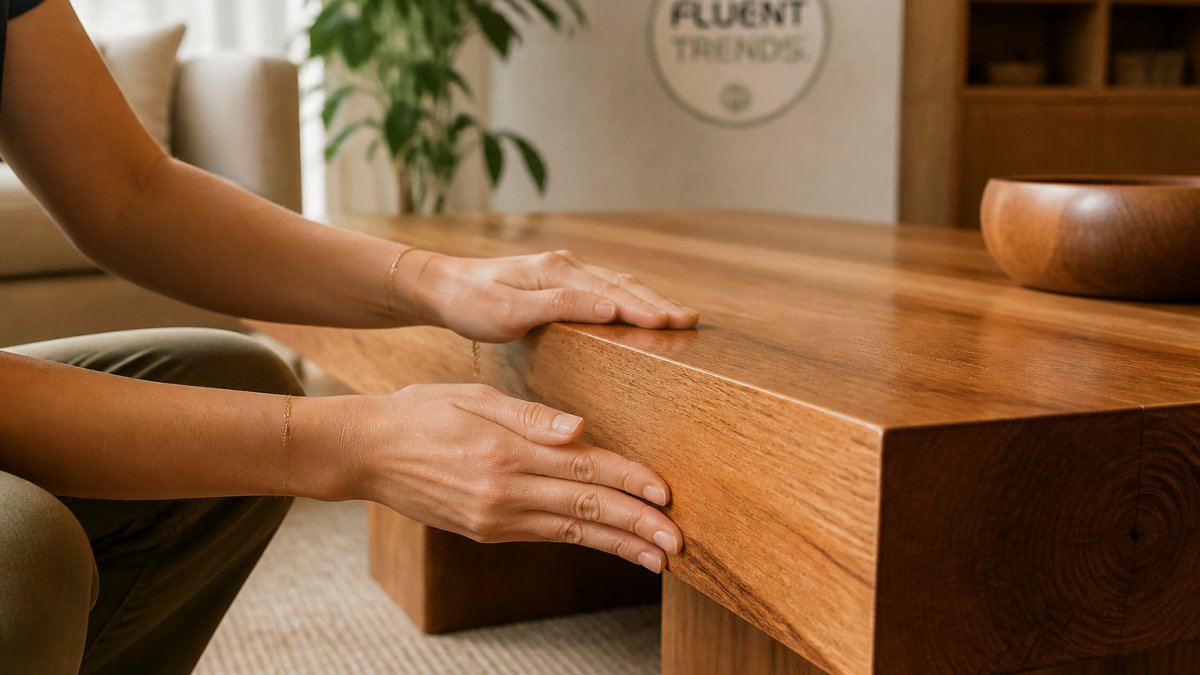
- Lift a corner. Heavy usually means solid wood, not hollow board.
- Look under the top. Solid planks beat particleboard every time.
- Open a drawer. Dovetail joints signal real craftsmanship.
- Check the joints. Tight seams mean the piece was built to stay square.
- Run your hand across the surface. Smooth, even finish means careful sanding.
- Look for grain continuity. Matching grain across panels shows care.
- Ask about the finish. Natural wax and oil age better than thick lacquer.
A common mistake is judging by the showroom shine. Lacquer can hide cheap wood underneath.
What most guides miss is the underside test. Makers who care about the top usually care about the bottom.
How to Choose Durable Furniture That Lasts Decades
Durability comes down to three things. Wood species, joinery, and finish. Get all three right and the piece outlives the mortgage.
Start with density. Sheesham wood scores around 1,410 lbf on the Janka hardness scale. That measures resistance to denting. Teak sits near 1,000 lbf by comparison. So sheesham is physically harder and more scratch-resistant in daily use.
Stanford Genuine Leather Quilted Bed Frame →
Density also brings dimensional stability. Once sheesham is properly seasoned by the manufacturer, it strongly resists warping, twisting, and splitting. The joints in a sheesham bed or dining table stay tight for decades.
There is a bonus too. The heartwood produces natural compounds that are highly toxic to dry-wood termites and fungi. It protects itself from the inside out without harsh chemical treatments.
Acacia wood follows a similar story. Dense grain, rich color, and good resistance to everyday knocks.

Then look at construction. Mortise-and-tenon and dovetail joints hold under load. Screws and staples do not. A dovetail drawer holds for generations. A glued and stapled drawer does not.
Finally, think about maintenance. A natural wax finish can be refreshed at home with a soft cloth. A plastic laminate cannot be repaired at all.
The Repairability Test Most Buyers Skip
Here is the question almost no guide asks. Can this piece be fixed?
Solid wood can be sanded, re-glued, and re-waxed. A wobbly leg can be re-tightened. A scratched top can be refinished. Veneer and particleboard usually cannot. Once the surface lifts, the piece is done.
That single question changes the math. A repairable piece spreads its cost across decades. A disposable one gets replaced again and again.
Lifecycle Cost: Why Cheap Often Costs More
Lifecycle cost is the total you spend from purchase to replacement. It includes the price, repairs, and how often you rebuy.
A cheap sofa might last five years. Replace it three times over fifteen years and the math shifts fast. Each replacement also costs delivery, assembly, and disposal.
A handcrafted piece spreads its cost across decades. Refinishing a solid wood table costs far less than replacing it. That is where the premium stops looking like a premium.
What to Check Before You Commit
- Lift a corner. Heavy usually means solid wood, not hollow board.
- Look under the top. Solid planks beat particleboard every time.
- Open a drawer. Dovetail joints signal real craftsmanship.
- Check the joints. Tight seams mean the piece was built to stay square.
- Ask about the finish. Natural wax and oil age better than thick lacquer.
- Ask if it can be repaired. If the answer is no, walk away.
Boucle and bone inlay pieces follow the same logic. The base construction decides whether the beauty lasts. A gorgeous boucle cover over a softwood frame will sag within two years.
For a deeper look at pieces built for daily use, browse our durable furniture collection.
The Lifecycle Cost of Handcrafted Furniture: Why Cheap Costs More
Lifecycle cost is the total you spend on a piece from purchase to replacement. It includes the price, repairs, and how often you rebuy.
A cheap sofa at a big-box store might last five years. Replace it three times over fifteen years and the math changes fast. Each replacement also costs delivery, assembly, and disposal.
A handcrafted piece spreads its cost across decades. Refinishing a solid wood table costs far less than replacing it.
Repairability is the hidden advantage. Solid wood can be sanded, re-glued, and re-waxed. Veneer and particleboard usually cannot.
This is where handcrafted furniture cost stops looking like a premium. It starts looking like a discount spread over time.
When Handcrafted Furniture Is Not Worth the Premium
Handcrafted is not always the right call. Being honest about that saves you money.
Skip the premium if you are furnishing a rental you will leave in two years. Skip it for a child's first bedroom set that will be outgrown.
Skip it if your space changes often and you like to redecorate. Skip it for outdoor pieces that face brutal weather year-round.
Also skip it if you cannot verify the maker. A high price without proof of craft is just a high price.
Where handcrafted wins is permanence. A home you plan to keep. A statement piece you will pass down. A room where you want one thing done right.
Sustainability and Sourcing: What Ethical Craftsmanship Looks Like
Sustainable furniture starts with traceable wood. You should be able to learn where the timber came from and how it was harvested.
Look for reclaimed and responsibly sourced materials. Reclaimed acacia gives old wood a second life. Sustainably sourced hardwood protects forests for the next generation.
Natural finishes matter too. Wax and oil release fewer fumes than heavy chemical coatings. Organic cotton and wool covers avoid synthetic blends.
Certifications help you verify claims. OEKO-Tex certified textiles are tested for harmful substances. Hypoallergenic fills like milk and casein fiber suit sensitive sleepers.
Portugal-woven bedding is another marker of quality textiles. The weaving tradition there is centuries old.
Ethical sourcing also means fair pay for makers. Many artisan workshops are women-owned. Buying from them keeps craft heritage alive.
According to the U.S. Environmental Protection Agency's guidance on sustainable materials, choosing durable goods over disposable ones cuts waste significantly.
For buyers who want proof rather than promises, the Federal Trade Commission's Green Guides explain how environmental marketing claims should be substantiated.
Frequently Asked Questions
Is handcrafted furniture worth the higher price?
It depends on how long you plan to keep it. A well-made sheesham or acacia piece can last decades, while mass-produced furniture often needs replacing within five to seven years. When you divide the cost over that lifespan, handcrafted furniture often costs less per year. The upfront price is higher, but the long-term value and repairability make it worthwhile for pieces you use daily.
What makes handcrafted furniture more expensive than mass-produced furniture?
Three things drive the cost: materials, labor, and time. Solid wood like sheesham or acacia costs more than particle board or veneer. Skilled artisans spend hours on joinery, carving, and finishing that factories automate. A single hand-carved sideboard might take days to complete, while a factory can stamp out hundreds in the same period. You are paying for craftsmanship, not just a product.
How can I tell if handcrafted furniture is well made?
Check the joints first. Dovetail or mortise-and-tenon joinery signals quality. Look at the wood grain, it should run continuously across seams, not stop at veneer edges. Feel the finish, it should be smooth without drips or rough patches. Ask about the wood species and where it was sourced. A maker who can answer those questions clearly is proud of their work.
Does custom furniture last longer than factory-made furniture?
Generally, yes. Custom pieces use solid hardwood and traditional joinery that resist warping and splitting. Sheesham wood, for example, scores around 1,410 lbf on the Janka hardness scale, making it more scratch-resistant than teak. Factory furniture often relies on engineered wood and glue, which break down faster. With basic care, a custom piece can outlast three or four mass-produced alternatives.
A handcrafted piece is a decision you live with for decades. We built Fluent Trends for people who want that decision made well. Our Artisan Collection features ethically made pieces from women-owned workshops and global makers. Every item is sustainably sourced and built to last, from reclaimed acacia sideboards to solid sheesham coffee tables and hand-finished leather bed frames. Shop now and bring home something with a story worth keeping.