

Elevate a Women's Fashion Brand: Story, Connection, and Market Impact
Donna MaloneA women's fashion brand is so much more than a company that just sells clothes. It’s a complete identity, a story, and a promise all rolled into one. Think of it as a personality—some are timeless and classic, others are rebellious and edgy—all designed to connect with a specific tribe of people.
Beyond the Label: What Makes a Brand

At its heart, a women's fashion brand is the total experience it delivers. This covers everything from the logo and color scheme to the feeling a customer gets when they slip on one of its designs. It’s the difference between buying any old white t-shirt and buying the perfect white t-shirt that just gets your lifestyle.
This distinction is what makes or breaks a company in such a crowded market. The women's apparel industry is an absolute giant, making up over 50% of total apparel revenue worldwide. With the market valued at roughly $930 billion and on track to blow past $1 trillion by 2027, a killer brand identity is the only way to get noticed. You can dig deeper into the numbers with these fashion industry statistics from Bizplanr.
The Foundation of Brand Identity
To carve out their space, every successful fashion brand has to answer two simple but profound questions: "Who are we?" and "Who do we serve?" The answers to these questions become the building blocks of a memorable and cohesive identity.
All these components need to work in harmony to create a personality that customers can connect with and trust.
-
Brand Mission: This is the 'why' behind it all. It’s the brand's reason for being, beyond just making money. Is it to champion sustainability, empower working women, or celebrate artistic expression?
-
Brand Voice: This is how the brand talks. Is it fun and witty on social media? Or is it more sophisticated and polished in its product descriptions?
-
Visual Identity: This is the whole aesthetic—the logo, fonts, color palette, and photography. These are the visual shortcuts that make a brand instantly recognizable.
-
Customer Perception: In the end, a brand is what its customers say it is. Their perception is shaped by every interaction, from the quality of the clothes to the checkout experience and customer service.
A brand is the set of expectations, memories, stories, and relationships that, taken together, account for a consumer’s decision to choose one product or service over another.
Building a strong brand is about creating a consistent and meaningful connection with your audience. The table below breaks down these core elements with some real-world context.
The Core Elements of a Fashion Brand Identity
| Brand Element | What It Represents | Real-World Example |
|---|---|---|
| Brand Mission | The brand's core purpose and values. | Patagonia: "We’re in business to save our home planet." |
| Brand Voice | The tone and personality of its communication. | Glossier: Friendly, conversational, and community-focused. |
| Visual Identity | The logo, colors, and overall aesthetic. | Chanel: The iconic interlocking C's and monochrome palette. |
| Customer Perception | How the public feels about and sees the brand. | Nike: Perceived as empowering, innovative, and for athletes. |
These elements aren't just for show—they are the strategic foundation that guides every decision a brand makes.
Why This Matters for You
Understanding the DNA of a women's fashion brand is a game-changer, whether you're a shopper looking for your next favorite piece or an aspiring designer. As a consumer, it helps you find brands that truly match your personal style and values, so you can build a wardrobe that feels like you.
And if you're dreaming of launching your own label, getting these concepts right is step one. It's not just about designing beautiful clothes; it's about building a world that people are excited to be a part of.
Exploring the Diverse World of Fashion Brands
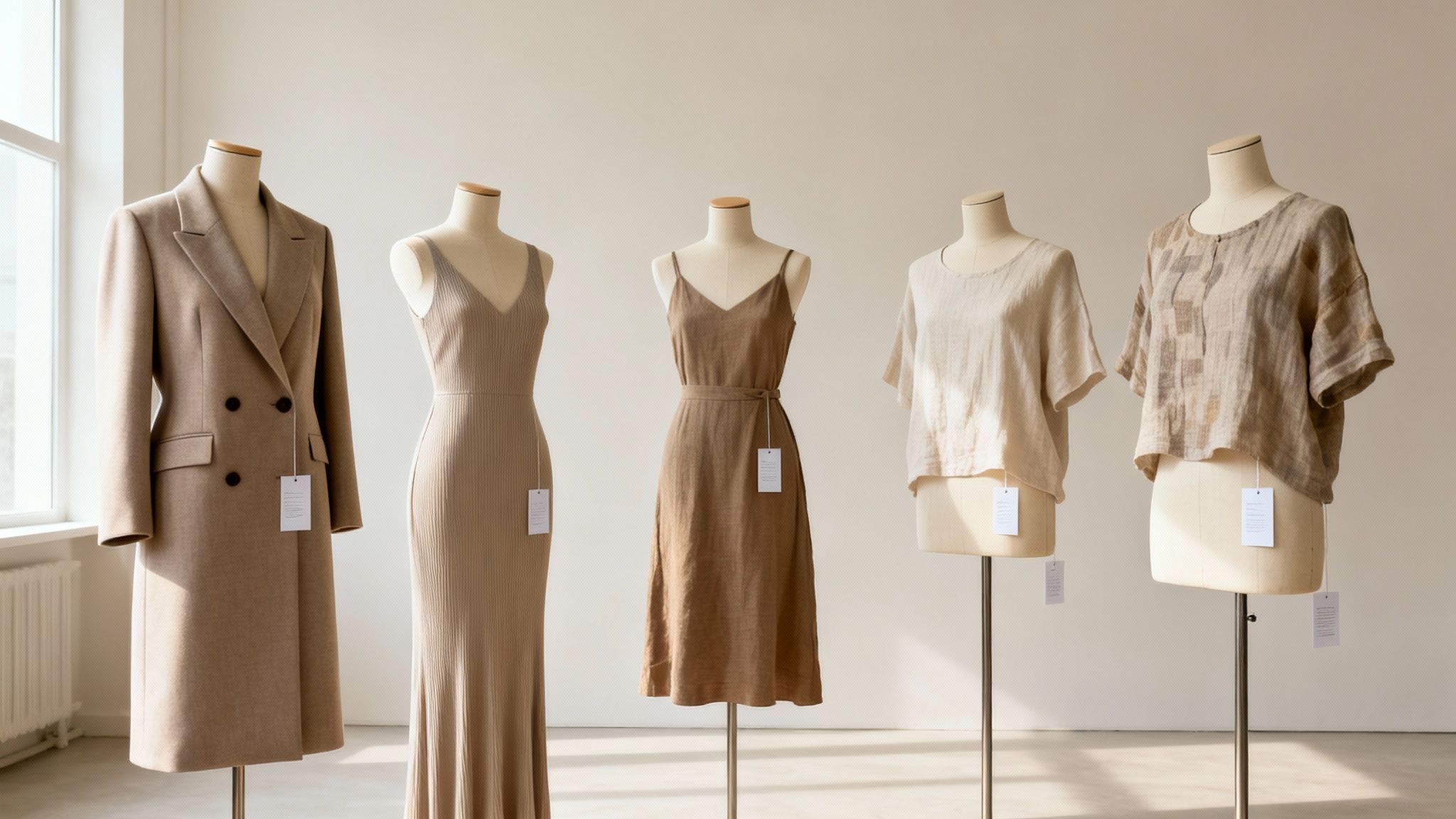
The fashion world isn't one giant, uniform industry. It's more like a bustling city with different neighborhoods, each with its own vibe, culture, and residents. Understanding these distinct brand categories is key, whether you're trying to build a killer wardrobe or launch a brand of your own.
Think of it like music genres. You wouldn't confuse a classical symphony with a punk rock anthem—they have different sounds, different messages, and different audiences. In the same way, every women's fashion brand carves out its own unique space by focusing on something specific, whether that's timeless heritage, lightning-fast trends, or a deeply held mission.
The Pillars of Luxury and Heritage
At the very top of the fashion food chain, you'll find the luxury brands. These are the legendary houses like Chanel or Hermès that don’t just sell clothes; they sell a story, an unmatched level of craftsmanship, and a feeling of pure exclusivity. Their whole business is built on creating desire and scarcity, making products that are meant to be treasured investments, not just fleeting trends.
Someone buying from a luxury brand isn't just getting a handbag. They're buying a piece of history and a powerful status symbol. That sky-high price tag reflects an obsessive attention to detail, the absolute finest materials, and a legacy that's been carefully built over a century.
Contemporary and Accessible Premium
Sitting comfortably between high-end luxury and the high street are contemporary brands. Think of labels like Ganni or Reformation, which offer stylish, high-quality fashion at a price point that feels premium but won't completely break the bank. They have a real knack for capturing the current fashion mood without the eye-watering cost of traditional luxury.
Their customers are typically style-savvy professionals who want quality and modern design. They're looking for that perfect balance between what's trendy right now and what will last beyond a single season. These brands are nimble, staying on top of trends while sticking to a core identity their followers adore.
A brand's category is really its core promise. Luxury promises timelessness. Fast fashion promises immediacy. And sustainable brands promise a better future. When you choose a brand, you're choosing a value system.
The Fast Fashion Powerhouses
Then you have the fast fashion titans, the Zaras and H&Ms of the world. Their entire operation is built on three things: speed, volume, and accessibility. They are masters at spotting a runway trend and getting an affordable version into stores in the blink of an eye, feeding our desire for constant newness. Their supply chains are finely tuned machines designed for a super-quick turnaround, giving customers that instant gratification of a fresh look for less.
This model has made them absolute commercial juggernauts. While a heritage luxury brand like Chanel can pull in revenues of $13.2 billion, top fast-fashion players aren't far behind, with Zara and H&M reporting massive revenues of $13.1 billion and $12.3 billion respectively in recent years. These numbers just go to show the incredible market power at both ends of the fashion spectrum. You can learn more about the women's apparel market trends here.
Brands Driven by Purpose and Passion
A category that's gaining serious momentum is the sustainable or ethical brand. Companies like Patagonia and Eileen Fisher lead with their values, putting environmental and social responsibility at the very heart of everything they do. Their business is all about transparency, fair labor, and using eco-friendly materials.
Finally, we have niche brands, which succeed by going deep, not wide. They serve a very specific community with a very particular taste—from a boutique that only sells vintage-inspired dresses to a label focused on high-performance technical outerwear. They build incredibly loyal, passionate followings by being the absolute best at one thing, creating a powerful sense of community and belonging for their customers.
Finding Your Tribe with Buyer Personas
If you try to be everything to everyone, you’ll end up being nothing to anyone. That’s a hard truth in fashion. A great women's fashion brand isn’t just selling clothes—it's selling a feeling, a point of view that a specific group of people really connects with. The secret to making that connection? Ditching vague assumptions and creating detailed buyer personas.
Think of a buyer persona less like a data sheet and more like a character profile for your dream customer. It’s about crafting a story around a real person. This simple exercise can transform a generic target audience, like "women aged 25-40," into a living, breathing individual with a name, a job, and real-world problems you can solve.
Going Beyond Demographics
Sure, basic info like age, income, and location is a decent place to start, but it's just scratching the surface. The real insights come when you dig into psychographics—the why behind what your customer buys. This is where you uncover her values, her dreams, and what truly motivates her.
Instead of just knowing your customer is 32 and lives in a city, you learn that she’s passionate about sustainability, spends her weekends at art galleries, and needs clothes that can take her from a creative client meeting to after-work drinks. All of a sudden, the picture of who you're designing for becomes crystal clear.
Creating a buyer persona is like method acting for your brand. You're not just reading a script; you're getting inside your customer's head to understand her world, her desires, and what makes her feel seen.
Bringing Personas to Life with Examples
Let’s sketch out a couple of personas for different kinds of fashion brands. These fictional profiles become the north star for every decision, from the fabrics you choose to the tone of voice in your next email. Once you know who you’re talking to, building a community becomes second nature. And to see how these personas fit into the bigger picture, you can check out our overview of the latest in women's fashion to see how these personas align.
-
Persona 1: "The Conscious Minimalist" (Amelia, 34)
-
Her Story: Amelia is an architect who lives by a "less is more" philosophy. She invests in timeless, high-quality pieces and steers clear of fast-fashion fads. For her, it’s all about clean lines and ethical production.
-
Her Needs: She’s looking for brands with transparent supply chains and versatile clothes that simplify her life, not complicate it.
-
How a Brand Connects: A brand targeting Amelia would lean into sustainable materials, classic designs, and create content around building the perfect capsule wardrobe.
-
-
Persona 2: "The Bold Creative" (Chloe, 26)
-
Her Story: Chloe is a freelance graphic designer whose wardrobe is her canvas. She sees fashion as a form of self-expression and is always on the hunt for vibrant colors, interesting silhouettes, and pieces that tell a story.
-
Her Needs: She gravitates toward independent designers and statement items that make her stand out. Her inspiration comes from niche fashion influencers on Instagram.
-
How a Brand Connects: The brand for Chloe would use dynamic, artistic imagery, collaborate with micro-influencers, and drop limited-edition collections that feel fresh and exciting.
-
When you create these detailed stories, you stop shouting into a void and start having real conversations with the people who matter most. This deep understanding is how you build a brand that feels less like a corporation and more like a community.
Building a Cohesive Brand and Product Strategy
Okay, so you’ve figured out who you're talking to. Now it’s time to build a world they actually want to live in. That's where a cohesive brand and product strategy comes in—it’s the bridge between knowing your audience and bringing your creative vision to life.
Think of your brand identity as your brand's personality. It's so much more than just a slick logo or a pretty color palette. It’s the tone of voice you use in your captions, the style of your photography, and even the feel of the tissue paper in your packaging. Every single element needs to work together to tell one clear, compelling story.
When you get this right, it doesn't matter if a customer sees an ad on Instagram, opens an email, or unboxes their first purchase—the feeling is consistent. That consistency is what builds trust, and trust is what turns casual shoppers into a loyal community.
This diagram shows how you can build a powerful buyer persona by starting with the big picture (psychographics) and then zeroing in on the finer details of their life.

As you can see, understanding a customer's core values—the why behind their choices—is the foundation. Only then do demographics and lifestyle habits start to really matter.
Translating Brand Identity into Products
A beautiful brand story falls flat if the products don't deliver on the promise. Your product strategy has to be a direct reflection of your brand identity. For any new women's fashion brand, this means putting together a collection that feels curated and intentional, not like a random assortment of clothes.
Picture the collection like a perfectly organized closet. You need those foundational core pieces—the timeless, reliable staples your customer will reach for again and again. These items are the very essence of your brand's style.
But you also need to keep things interesting. That’s where seasonal or trend-led pieces come in. They add a bit of spice and newness, giving your audience a reason to come back and see what’s new. It’s all about finding that perfect balance between reliability and relevance.
The Pillars of Product Strategy
A solid product strategy is about more than just the cut and color of a garment. It’s built on several key pillars that reinforce where your brand sits in the market. Every choice sends a signal to your customer.
-
Quality and Sourcing: The fabrics you choose and where they come from say a lot about you. A luxury brand will lean on premium materials, while a conscious brand will make ethical production its North Star. More and more shoppers are looking for ways to build a more https://fluenttrends.com/blogs/news/sustainable-fashion-for-women, so being transparent is a huge plus.
-
Pricing Strategy: Your price tag has to match your brand's perceived value. A contemporary label will be priced above fast fashion to signal better design and quality, but it'll still be more attainable than a high-end luxury house. Nailing this positioning is key to attracting the right person.
-
Visual Merchandising: How your products look online or in-store is just as important as the items themselves. A great brand strategy relies on stunning visuals, which is why professional fashion product photos are non-negotiable for showing off quality and making an impact.
A product is more than an object; it's a piece of the brand's story. From the fabric's feel to the final stitch, every detail should echo the brand's core identity and promise to the customer.
When you align your brand identity with a smart product strategy, you create an experience that just works. Every piece of clothing starts telling your story for you, deepening that connection with your audience. This is how you turn first-time buyers into fans for life.
Choosing Your Marketing and Sales Channels
You can have the most stunning collection and a killer brand story, but if no one sees it, does it even exist? Getting your designs in front of the right people is the next make-or-break step. This means building a smart, layered approach to marketing and sales that actually connects with your audience.
Think of it like putting together a killer outfit. You need different pieces that work in harmony—your own platforms, word-of-mouth buzz, and paid ads. Each one has a specific job to do, guiding shoppers from "who's that?" to "I have to have it."
Mastering Your Owned Media
Let’s start with your home turf: owned media. These are the digital spaces you completely control, where your brand’s voice is unfiltered and the customer experience is entirely up to you. Nailing this foundation is absolutely non-negotiable.
Your e-commerce website is the crown jewel, likely built on a platform like Shopify. It’s so much more than a catalog; it's the digital version of your flagship store, an entire world for your customer to explore. Alongside your site, your email list is pure gold. It’s a direct line to your most engaged followers, and email marketing continues to be one of the most effective tools for fashion brands. For a deep dive into getting it right, check out this Ultimate Guide to Shopify Email Marketing.
Expanding Your Reach with Paid and Earned Channels
While your owned channels are your foundation, paid and earned media are how you get discovered.
Paid channels, especially social media ads on super-visual platforms like Instagram and TikTok, are basically essential for fashion. They let you zero in on your ideal buyer personas with scary-good precision, placing your designs right where they’ll be appreciated most. Influencer marketing is another game-changer here, offering authentic endorsements that feel more like a friend’s recommendation than a stuffy old ad.
Then there's earned media—the holy grail of organic buzz. This is the stuff you can't buy:
-
Press features in cool online magazines or fashion blogs.
-
User-generated content (UGC) from customers proudly showing off their new favorite dress.
-
Organic mentions and shares from fans who genuinely love what you do.
A truly effective multi-channel strategy doesn't just blast the same message everywhere. It creates a seamless conversation that meets the customer where they are, building familiarity and trust with every single interaction.
Selecting Your Sales Model
Finally, you have to decide how you’re going to sell.
The Direct-to-Consumer (D2C) model is hugely popular, where you sell only through your own website. This gives you total control over your brand image and a direct relationship with your customers. You own the data, you own the conversation.
Another route is wholesale, selling your collections to other retailers and boutiques. Or you could list your products on massive online marketplaces like Amazon or Farfetch. These options can get you in front of huge audiences fast, but it often comes at the cost of smaller profit margins and less control over how your brand is presented.
Many of the most successful brands today are using a hybrid approach. They build a strong D2C business to cultivate a loyal community while using select wholesale partners to scale. This lets them get the best of both worlds in a market that's only getting bigger. The global women’s wear market was valued at about USD 697.41 billion and is expected to hit USD 812.75 billion by 2030. That’s a massive opportunity for brands who pick their channels wisely.
How to Launch or Choose a Fashion Brand
Alright, theory is one thing, but putting it all into practice is where the real fun begins. Whether you're a shopper looking to build a more meaningful wardrobe or an entrepreneur ready to bring your own brand to life, this is your roadmap. The goal here is to help you make smarter, more confident decisions.
For the Thoughtful Consumer
Choosing a new brand isn't just about liking a cute top. It's about finding a company that gets you—your values, your style, and your standards for quality. Think of it as an investment in yourself and the story your closet tells.
So, before you click "add to cart," take a moment to be a bit more intentional. This simple shift can help you ditch the impulse buys and start curating a wardrobe you'll genuinely love for years to come.
-
Define Your Values: First things first, what do you actually care about? Is it wearing sustainable fabrics, knowing workers were treated fairly, or championing small, local designers? Figure out your non-negotiables—it's the best filter you can have.
-
Assess the Quality: Don't let the price tag be your only guide. Dig a little deeper. Check the fabric content on the label, look at the stitching, and skim reviews to see how the clothes actually hold up. A $200 dress that lasts a decade is a much better deal than a $40 one that unravels after a few washes.
-
Investigate the Brand Mission: Pop over to the brand’s “About Us” page for five minutes. Does their story connect with you? Supporting a brand whose mission aligns with your own just feels better.
For the Aspiring Entrepreneur
Starting a fashion brand is one part creative dream, one part strategic hustle. The vision might be exciting, but a solid foundation is what will keep you in the game. Nailing the first few steps can make all the difference in a crowded market.
A successful brand doesn’t just appear overnight. It’s built from a deep understanding of the market, a strong point of view, and a relentless drive to serve a specific community.
Here's where to start:
-
Conduct Meaningful Market Research: This is more than just scrolling through trend reports. You need to find a real gap. Is there a community that's being ignored? Maybe it's stylish and professional maternity wear, or maybe it's adaptive clothing for people with disabilities. Your big opportunity is often hiding in a problem nobody else is solving.
-
Define Your Unique Value Proposition (UVP): Your UVP is your promise. It's what makes you stand out in a sea of sameness. Is it your radical commitment to size inclusivity? Your use of cool, innovative recycled materials? Or a design aesthetic that’s completely fresh? Whatever it is, own it and state it clearly.
-
Create a Lean Initial Collection: You do not need fifty different pieces for your launch. Start small and focused. A tight collection of five to ten core items that perfectly capture your brand’s DNA is much more powerful. This "capsule" approach lowers your risk, lets you test the waters, and gives you a strong base to build on.
Common Questions About Fashion Brands
Whether you're thinking about launching your own label or just want to be a smarter shopper, the world of fashion can feel a little confusing. Let's clear up some of the most common questions people have about women's fashion brands.
What Is the Most Profitable Type of Fashion Brand?
It's tempting to think luxury brands are the most profitable because of their sky-high prices, but the real money is often in volume. Fast fashion brands often achieve the highest overall profitability simply because they sell an incredible amount of clothing. Think about it: companies like Zara and H&M have mastered the art of turning runway trends into affordable pieces in weeks, selling millions of items at much lower price points.
That said, the rise of the Direct-to-Consumer (D2C) model is shaking things up. When a brand sells directly from its own website, it gets to keep the slice of profit that would normally go to a department store or other retailer. For many smaller and independent brands, this is a total game-changer.
How Much Does It Cost to Start a Clothing Brand?
This is a "how long is a piece of string?" kind of question. The answer really depends on your ambition and business model. You could technically get a print-on-demand brand off the ground with as little as a few hundred dollars to cover your first samples and a basic website.
But if you're planning to create a full cut-and-sew collection from scratch, you’re looking at a much bigger upfront investment.
-
Your First Collection: Getting from design sketches to finished products—including patterns, fabric sourcing, and the first manufacturing run—can easily cost $10,000 to $50,000+.
-
Branding and Marketing: Creating a professional logo, shooting beautiful product photos, and running your first digital ads can tack on another $5,000 to $15,000.
If you're just starting out, the best advice is to think small. Focus on perfecting just a handful of really great pieces. This lets you test the market and minimize your financial risk before you go all in.
What Makes a Fashion Brand Successful?
There's no single magic ingredient. A successful fashion brand is a perfect blend of a few key things firing on all cylinders. First, you absolutely need a unique point of view. What are you offering that people can't find everywhere else? This almost always comes from truly understanding a specific niche audience and what they want.
But a great product isn't enough. The best brands are masters of storytelling. They build a world around their clothes, creating a sense of community that customers are excited to join. And underpinning it all is solid execution—from a reliable supply chain to a seamless online shopping experience. That's the stuff that makes long-term growth possible.
At Fluent Trends, we believe that great style should be accessible and inspiring. Our curated collections of home furnishings, décor, and fashion accessories are chosen to help you create a space that tells your unique story. Discover pieces that elevate your everyday living at Fluent Trends.