

Affordable Home Design Ideas That Look Incredibly Expensive
Donna MaloneDesigning a home you love on a budget isn't about filling it with cheap things. It’s about being strategic. Think high-impact details, smart material swaps, and a little bit of DIY magic to get that luxurious, intentional feel without the high-end price tag.
The Secret to High-End Style on a Smart Budget
Let’s get one thing straight: you don't need a six-figure budget to have a beautiful, luxurious-looking home. That’s a myth. The real secret to getting an expensive look is all in the approach, not the price tags.
It’s less about how much each piece costs and more about how you put it all together. Think of yourself as a chef crafting a gourmet meal. You don't always need the rarest ingredients; sometimes, the magic is in how you combine simple, quality ones.
This guide will help you start seeing your home through a "designer's eye." It’s about learning to spot the hidden potential in everyday items, understanding the incredible power of texture, and creating what designers call perceived value. This is where thoughtful arrangement and scale can make a simple piece look far more expensive than it actually is.
Adopting a Designer Mindset
To really pull this off, you need to shift your perspective. Where you see limitations, start looking for creative opportunities.
- Focus on Impact: Put your money where you'll see the biggest visual return. One gallon of a rich, moody paint or a large area rug can transform a room way more than a dozen small, disconnected knick-knacks ever could.
- Embrace the High-Low Mix: This is a classic designer trick. Pair affordable basics from big-box stores with unique secondhand or vintage finds. This layered approach stops your home from looking like a catalog showroom and gives it a collected, personal feel that speaks volumes.
- Value Craftsmanship Over Brands: A well-made wooden dresser from a flea market often has more character—and will likely last longer—than a mass-produced particleboard piece with a trendy brand name on it.
The goal is to make your home look thoughtfully curated, not just expensively furnished. A home's warmth and style come from the personality you infuse into it, which is something money can't buy.
Ultimately, we're here to show you that an expensive look is within reach for anyone willing to think a bit more creatively. If you're looking for more decorating ideas on a budget, our detailed guide has even more inspiration waiting for you.
For more deep-dive strategies, check out this fantastic resource on how to decorate on a budget without punishing your wallet. Getting this foundational mindset right is the first and most important step toward transforming your space.
How to Plan Your Design Budget Like a Professional
Diving into a design project without a budget is a bit like going grocery shopping when you’re starving—you’ll grab a lot of things, but you probably won’t end up with a cohesive meal. A solid financial plan is the single most important tool for turning your vision into reality without the stress.
Think of your budget as a creative roadmap, not a set of rules. It helps you decide what's truly important, forcing you to make smart, intentional choices. This is the secret that separates rooms that feel thrown together from those that look thoughtfully, and expensively, styled.
Master the Anchor and Accent Principle
One of the smartest ways to divvy up your funds is something I call the ‘Anchor and Accent’ principle. It’s a designer’s take on the classic 80/20 rule. The gist is to put the lion's share of your budget—about 80%—into the big, foundational 'anchor' pieces that need to last.
These are the unsung heroes of your home, the items you’ll use every single day. They ground the room.
- Living Room Anchor: A seriously comfortable, well-built sofa in a classic, neutral fabric.
- Bedroom Anchor: A solid bed frame and a mattress that's actually good for your back.
- Dining Room Anchor: A sturdy dining table that can handle family dinners and game nights for years to come.
The other 20%? That’s for the fun stuff—the 'accents.' These are the items that inject personality and follow the trends: decorative pillows, a funky throw blanket, eye-catching art, or a cool vase. Since they cost less, you can swap them out whenever you get the itch for a change, completely guilt-free. This is really the heart of so many brilliant affordable home design ideas.
Here's a quick cheat sheet to help you decide where to splurge and where to save.
The Anchor vs Accent Budget Guide
| Item Category | Invest in This (Anchor) | Save on This (Accent) | Why It Works |
|---|---|---|---|
| Living Room | Sofa, Armchairs | Pillows, Throws, Side Tables, Art | A quality sofa is a long-term investment in comfort and durability, while affordable accents keep the room feeling fresh. |
| Bedroom | Mattress, Bed Frame | Bedding, Lamps, Nightstands | A great mattress is non-negotiable for good sleep. You can find stylish, budget-friendly nightstands and bedding almost anywhere. |
| Dining Room | Dining Table | Dining Chairs, Rug, Centerpiece | A solid table will last forever. You can mix, match, or upgrade chairs over time for an eclectic, collected look. |
| Lighting | Key Pendant Lights, Sconces | Table Lamps, Floor Lamps | Statement fixtures define a room's style, but you can find great, inexpensive lamps for ambient and task lighting. |
This strategy ensures you're building a home on a foundation of quality while still having the freedom to play with style and trends.
Prioritize Rooms for Maximum Impact
Let's be real: not all rooms carry the same weight. To get the most bang for your buck, you have to be strategic about where you spend first. Think of it as a tiered approach.
- High-Traffic Zones: The living room and kitchen almost always come first. They’re the social hubs where you and your guests spend the most time.
- Private Sanctuaries: Next up is the primary bedroom. Investing in a space that helps you recharge is one of the best things you can do for your well-being.
- Secondary Spaces: Guest rooms, home offices, and even hallways can wait. You can get really creative with smaller budgets in these areas down the line.
Following this order means your money immediately starts improving the parts of your home you experience the most.
A well-planned budget turns impulse buys into intentional investments. It empowers you to build a cohesive, expensive-looking home piece by piece, ensuring every item has a purpose and contributes to the overall vision.
Sidestep Common Budget Traps
Even the most perfect plan can go off the rails. Knowing the common pitfalls ahead of time is your best defense. Always be on the lookout for those sneaky extra costs—shipping fees, sales tax, and assembly charges can blow a hole in your budget if you don't account for them.
This diagram perfectly captures how a high-end look is really built from a smart strategy, an eye for detail, and a little bit of DIY spirit.
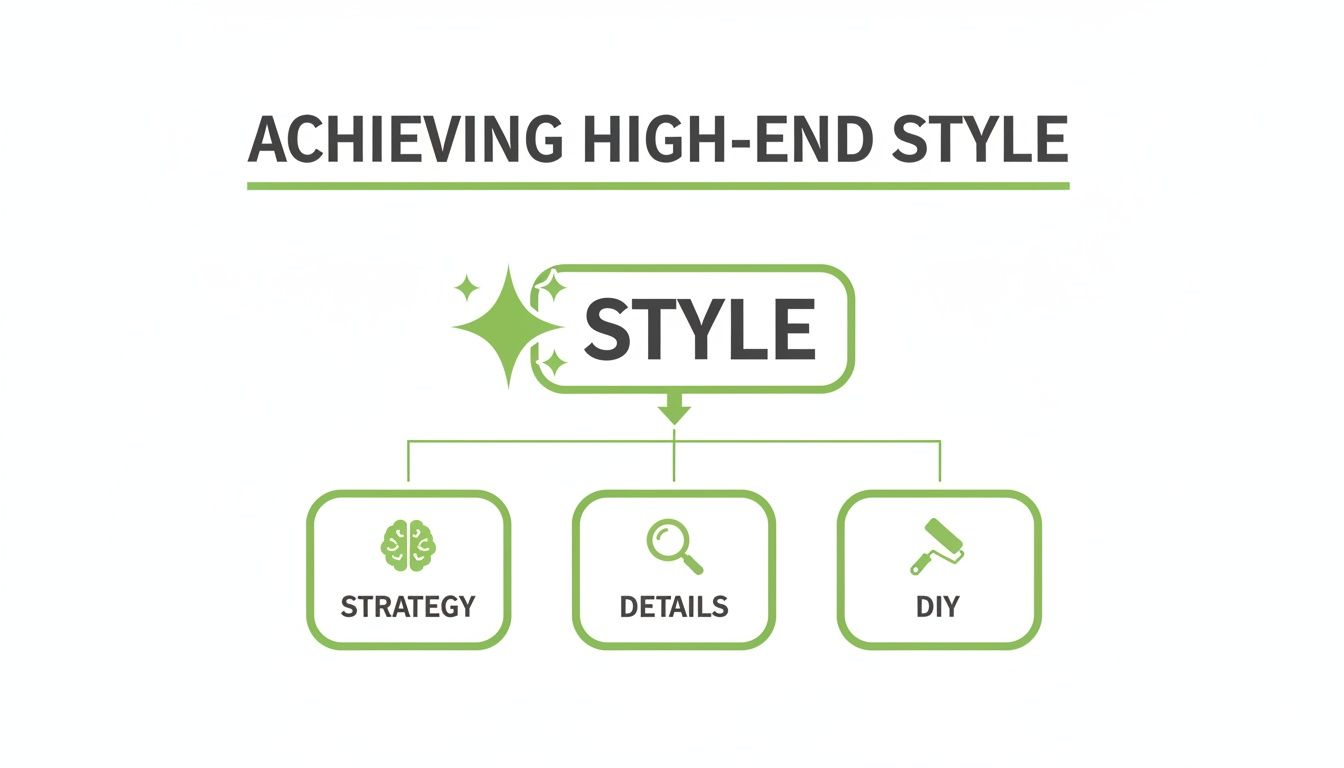
It’s a great reminder that style isn't about one massive purchase; it's the sum of a hundred small, thoughtful choices. The other big trap is the emotional buy. We’ve all been there—you see something gorgeous on sale, but it doesn't really fit your color scheme or, worse, the room itself. Stick to your plan. A shopping list is your best friend for avoiding these kinds of expensive mistakes.
Room-by-Room Strategies for an Expensive Look
With a solid budget plan in hand, we get to the really fun part: putting it all into practice to create spaces that look and feel incredibly high-end. The real genius of affordable design is knowing where to focus. You don’t need to rip everything out and start from scratch; a few smart, high-impact changes can completely shift the vibe of a room.
This is where we move from theory to reality. We’re going to walk through the most important spaces in your home—the living room, dining area, bedroom, and kitchen—and I’ll show you the exact strategies that deliver the most bang for your buck. Think of this as your designer’s playbook for targeted, budget-friendly upgrades.
The Living Room: Where Comfort Meets Curation
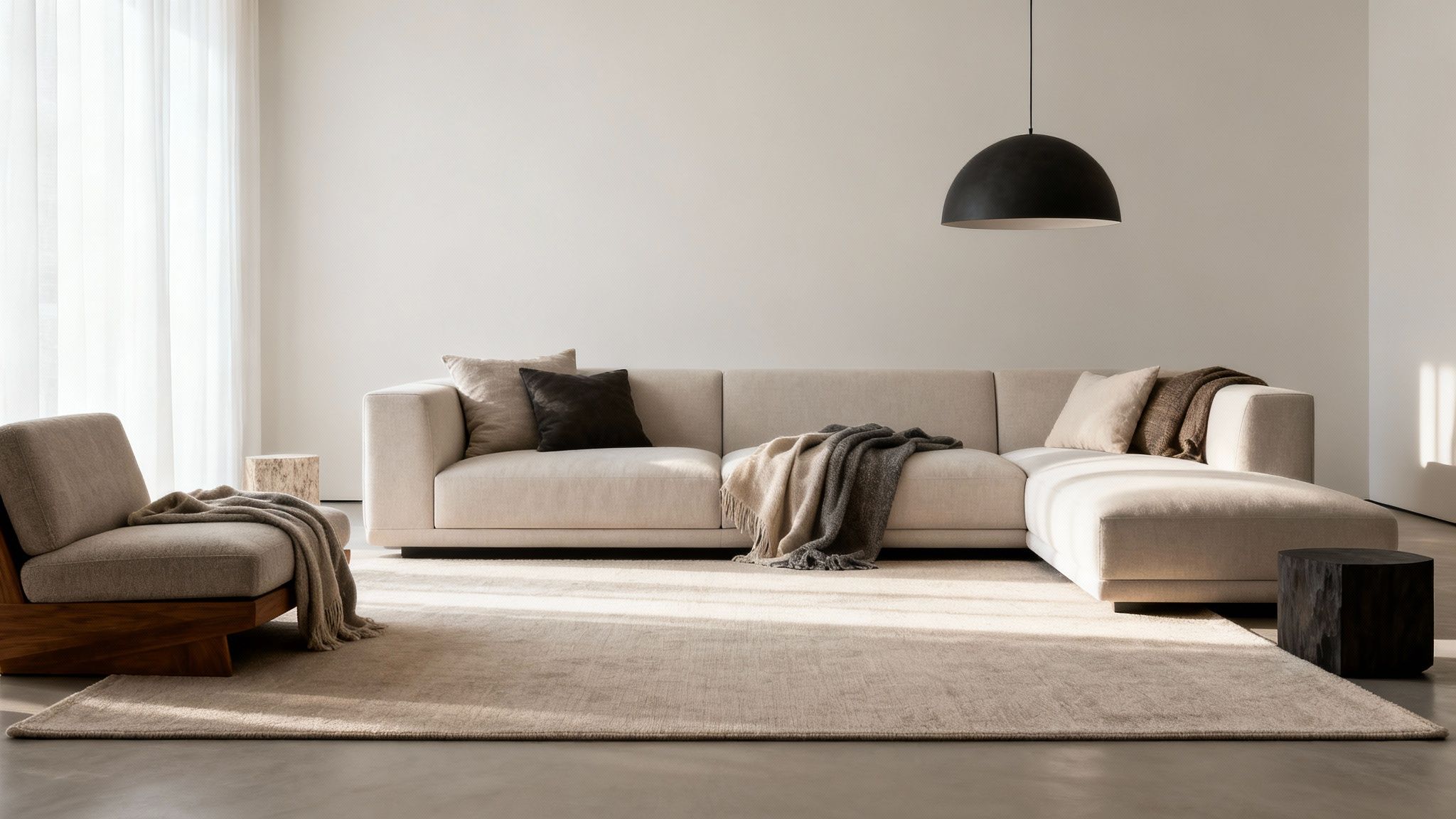
The living room is the heart of the home, isn't it? It’s where we unwind, but it’s also where we entertain. The goal is to make it feel inviting and cohesive, like every piece was chosen with intention. That’s the secret to a high-end look.
One of the single most effective things you can do is properly anchor the room. A large area rug is an absolute must. You want it to be big enough for at least the front legs of your sofa and chairs to rest on it. This one simple move pulls the whole space together, defines the conversational zone, and makes the room feel so much more expansive.
Next up is a free trick that designers use all the time: furniture placement. Pulling your sofa and chairs even just a few inches away from the walls instantly creates a more intimate and custom-looking layout. It stops the room from feeling like a doctor’s waiting room and makes it feel like a thoughtfully designed space.
The Dining Area: Focal Points and Personality
Whether you have a formal dining room or just a little breakfast nook, this space is a golden opportunity to make a huge statement on a small budget. This is where you can really play with lighting and seating to get that curated, designer feel.
A dramatic light fixture is a total game-changer. And you don’t have to spend a fortune—so many affordable retailers now offer large, sculptural pendants that look incredibly expensive. Swapping a basic builder-grade fixture for something with real presence instantly elevates the entire room. It acts as a stunning focal point, drawing the eye up and making a bigger impact than a whole new dining set ever could.
Don’t be afraid to mix and match your seating. A full set of matching chairs can feel a bit stiff and dated. Combining a bench on one side with a few different styles of chairs creates a collected-over-time, eclectic look that feels far more personal and chic.
The Bedroom: A Plush and Serene Retreat
The secret to a bedroom that feels like a luxury hotel has nothing to do with expensive furniture. It’s all about layering textiles. Think about it—the best hotel rooms are all about that plush, layered bedding and soft textures. You can easily get that same feeling at home.
Start by piling on the pillows. Use a mix of your regular sleeping pillows, then add some decorative shams in different sizes and textures. Toss a cozy throw blanket at the foot of the bed and, if you can, hang floor-to-ceiling curtains. Hanging them high and wide makes your windows look bigger and adds a real sense of grandeur.
A simple DIY that pays off big time is creating your own upholstered headboard. With some plywood, foam, batting, and your favorite fabric, you can get a completely custom look for a tiny fraction of the retail cost. It adds softness, creates a focal point, and makes the whole bed feel more substantial and inviting.
The Kitchen: Small Changes, Big Transformation
The kitchen has a reputation for being the most expensive room to renovate, but you don't need to call a demolition crew to make a massive impact. A few strategic, low-cost updates can completely transform your kitchen’s personality.
Think of cabinet hardware as jewelry for your kitchen. Swapping out dated knobs and pulls for something more modern and substantial is a quick, easy, and shockingly effective upgrade. It’s a tiny detail that makes the entire kitchen feel more current and thoughtfully put together.
Here are a few other high-impact, low-cost ideas:
- Peel-and-Stick Backsplash: Forget what you think you know. Modern peel-and-stick tiles are incredible and can convincingly mimic real ceramic or stone. It's a fantastic, renter-friendly way to add pattern and texture without the mess of grout.
- Style Your Open Shelves: If you have open shelving, don't just use it for storage—style it. Curate a mix of beautiful and functional items. Think stacks of white plates, neatly arranged glassware, and maybe a small plant or a piece of art. This creates a little "vignette" that feels intentional and chic.
- Upgrade Your Faucet: A new faucet can instantly modernize your sink area. Look for sleek designs in finishes like matte black or brushed gold to add a touch of sophisticated style for a relatively low cost.
By applying these targeted strategies room by room, you can systematically elevate your home's entire look and feel. Each small change builds on the last, creating a cohesive, expensive-looking result—proving that great design is really about making smart choices, not just spending a lot of money.
Transform Your Space with Paint and Clever Materials
When you're chasing a high-impact home transformation without a high-end budget, two things deliver more bang for your buck than anything else: paint and savvy material choices. It’s time to stop thinking of paint as just a color for your walls. In the right hands, it’s one of the most powerful tools a designer has. Likewise, choosing smart alternative materials can give you that luxe, high-end feel without the jaw-dropping price tag.
These affordable home design ideas are all about creating the illusion of luxury. It’s about making every dollar work overtime to build a space that feels curated, intentional, and way more expensive than it actually was.
The Unmatched Power of Paint
A fresh coat of paint is the undisputed champ of budget updates, but its real magic goes way beyond a simple color swap. With a little creativity, you can completely alter a room’s mood, its perceived architecture, and its overall vibe—all for the cost of a few cans and a free weekend.
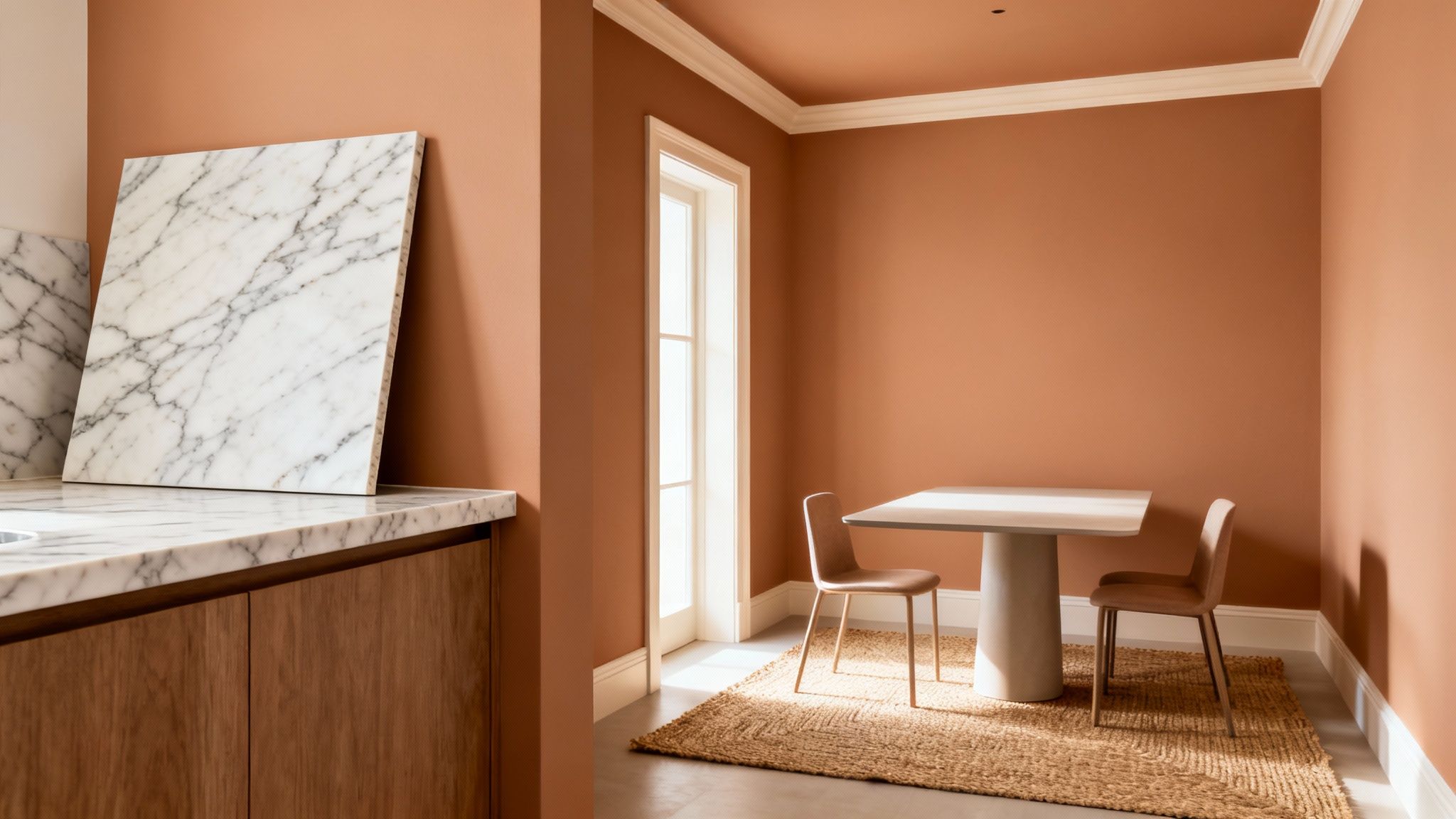
One of my favorite pro techniques right now is color drenching. This is where you paint the walls, trim, doors, and maybe even the ceiling all in the exact same shade. The result is this seamless, immersive space that feels incredibly chic and thoughtfully designed. It has the strange and wonderful effect of making small rooms feel bigger and grand rooms feel cozier.
Color drenching is a designer's secret weapon for creating a cohesive, high-end backdrop. It minimizes visual clutter from contrasting trim and allows your furniture and decor—like a beautifully crafted ceramic vase—to truly become the focal point.
And don't forget furniture. Paint is a miracle worker for breathing new life into tired pieces. That dated oak dresser or scuffed-up side table can become a stunning, modern statement with a coat of rich navy or a soft, chalky gray. Even in the kitchen, a little paint can do wonders. Learning how to reface kitchen cabinets can give you a dramatic makeover for a fraction of the cost of a full renovation.
Smart Material Swaps That Look Like the Real Deal
So much of what we perceive as "high-end" comes down to texture and finish. But here's the secret: you don't actually need to spring for genuine marble or solid hardwood to get that effect. The market for "look-for-less" materials has come a long way, offering durable, convincing alternatives that deliver serious style.
Take flooring, for instance. Luxury vinyl tile (LVT) and luxury vinyl plank (LVP) aren't the cheap-looking options they used to be. Modern versions have incredibly realistic wood grains and stone textures that can easily pass for materials costing three or four times as much. Plus, they’re tough as nails and water-resistant, making them a no-brainer for kitchens and bathrooms.
Here are a few other clever material swaps to keep in your back pocket:
- Contact Paper for Surfaces: High-quality, thick-gauge contact paper with marble or soapstone patterns can give a dated laminate countertop or a plain IKEA tabletop an instant, temporary upgrade. It's a perfect low-commitment, high-reward project for renters.
- Natural Fiber Rugs: A large rug is key to anchoring a room, but wool and silk can blow the budget. Rugs made from natural fibers like jute or sisal offer incredible texture and a sophisticated, organic feel for a fraction of the price, adding warmth and definition to any space.
- Peel-and-Stick Tiles: Modern peel-and-stick backsplashes can completely change the look of a kitchen or bathroom in just a few hours. With options ranging from classic subway tile to intricate mosaics, you get the look of real tile without the mess of grout or the cost of a contractor.
By pairing the transformative power of a great paint strategy with these smart material alternatives, you can create a home that truly radiates elegance and personality. It just goes to show that a sophisticated look isn't about having the biggest budget; it's about making the smartest choices. These are the foundational tricks that let you design a beautiful space you’ll be proud to call your own.
High-Impact DIY Projects That Look Custom-Made
There’s a special kind of magic in adding personal touches that make a house feel like your home. DIY projects are the perfect way to get that custom, bespoke look without the dizzying price tag. The secret is picking projects that look like they were crafted by a pro, not just slapped together on a Saturday.
What separates a Pinterest-fail from a professional-looking piece? It’s all in the details. Precise measurements, quality hardware, and proper sanding are what truly elevate your work. These small, thoughtful steps give your project a polished, high-end feel that makes your space look intentional and deeply personal.
Create Large-Scale Abstract Art
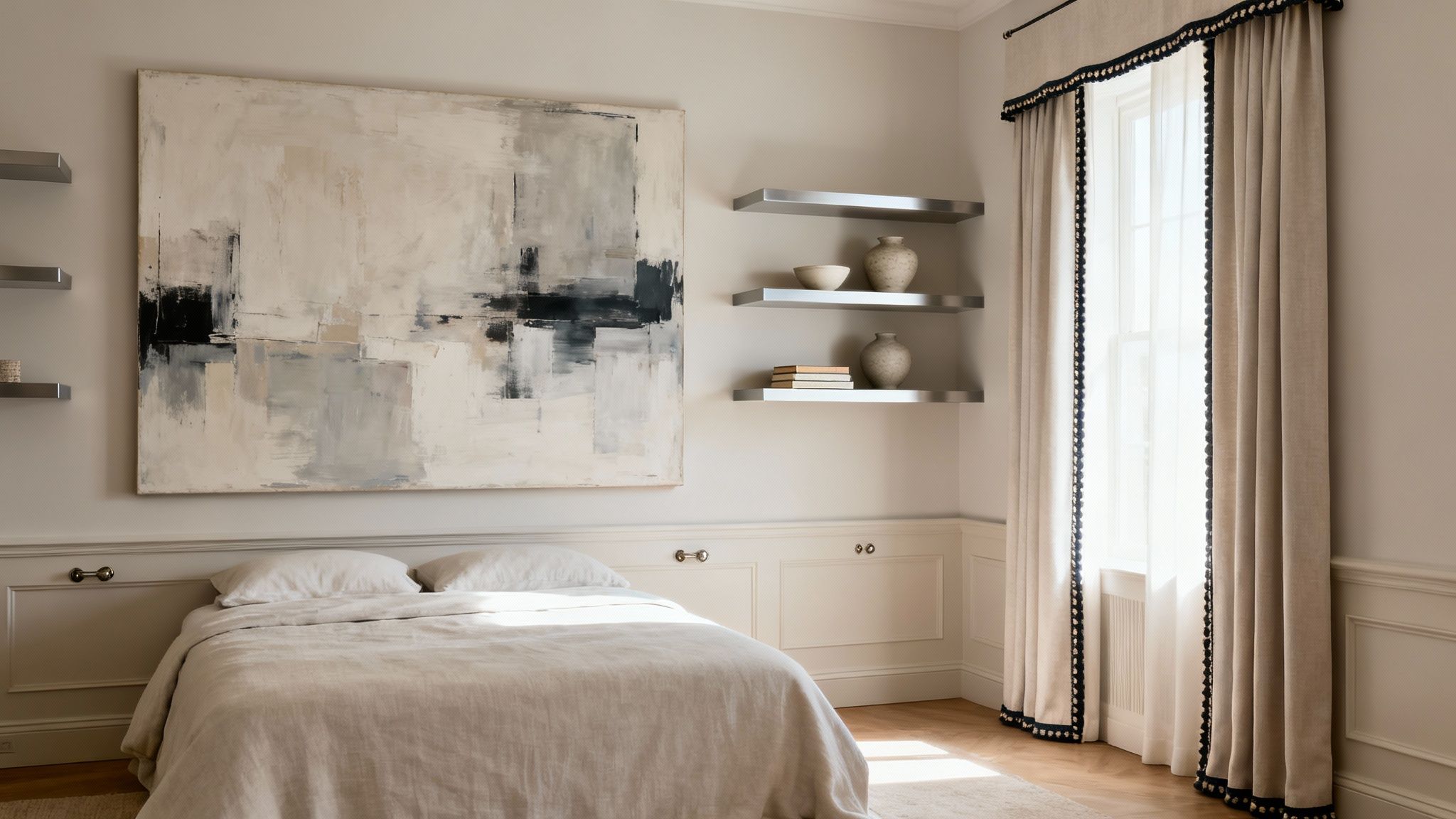
Nothing anchors a room quite like a massive piece of art, but gallery prices can run into the thousands. Here's a little secret: you can create that same jaw-dropping focal point yourself for a tiny fraction of the cost.
Grab a large, pre-stretched canvas from any art supply store. Then, pick out three to four acrylic paints in a simple, complementary palette. Instead of fussing with a paintbrush, use tools like a drywall trowel, a squeegee, or even an old gift card to scrape and blend the paint across the canvas. This technique creates gorgeous, organic textures that look incredibly sophisticated.
The key to making DIY art look expensive is confidence in its simplicity. A few bold, sweeping gestures with a limited color palette will almost always look more chic than a design that's trying too hard. You're creating a mood, not a masterpiece.
Build Sleek Floating Shelves
Floating shelves are a designer's favorite for a reason. They offer a clean, modern way to display curated objects—from your favorite books to that beautiful ceramic vase you picked up on vacation. Building them yourself means they'll fit your space perfectly, and you get to choose the exact wood and finish to match your decor.
For a simple and surprisingly sturdy design, start by creating a hidden bracket from 2x2 lumber that you can screw directly into your wall studs. Then, build a hollow box "sleeve" out of quality plywood or solid pine boards that slides right over the bracket.
The finish is everything here:
- Sand, Sand, Sand: Start with medium-grit sandpaper and work your way to a fine grit until the surface is silky smooth to the touch.
- Stain Evenly: Always use a pre-stain wood conditioner first. It prevents a blotchy finish and helps the stain absorb beautifully.
- Seal for Durability: Finish with at least two coats of a satin or matte polyurethane. This protects the wood and gives it a subtle, professional sheen.
When you take your time with high-quality materials and finishing, you'll end up with shelves that look like they were installed by a master carpenter.
Upgrade Basic Curtains for a Custom Feel
Custom drapery instantly adds a layer of luxury to any room, but the cost can be astronomical. The good news? You can easily fake that high-end look by upgrading simple, off-the-shelf curtain panels. This is one of the most effective ways to make a huge impact on a tiny budget.
Start with inexpensive, solid-colored curtain panels. The trick is to add a small, custom detail. You can use fabric glue or a simple sewing stitch to attach a decorative trim—like a classic Greek key pattern or a simple velvet ribbon—along the inside edges. This tiny addition immediately makes the curtains feel tailored and intentional.
Another pro tip is to add pleat tape to the top of the panels. This special tape lets you create elegant pinch pleats, giving the curtains a structured, expensive look that hangs beautifully. Pair them with a set of quality curtain rings, and you’ve just transformed basic drapes into a genuine design feature.
Shop Smart: How to Source Decor Like a Designer
So, what's the final piece of the puzzle for getting that high-end look without the matching price tag? It’s all in the hunt. Designers almost never furnish a room from a single big-box store. Their real secret is mastering the “high-low” mix—a beautiful dance of blending affordable basics with one-of-a-kind, character-rich finds.
This is what gives a home that layered, collected-over-time feeling, instead of looking like it came straight out of a catalog.
Think of yourself as a treasure hunter. Your map leads you through thrift stores, flea markets, and online marketplaces. The mission? To unearth gems with "good bones" that a little TLC can completely transform.
Train Your Eye to Spot Potential
When you're out there sourcing, you have to learn to see beyond a dated finish or some truly questionable fabric. That stuff can be changed. What you’re really looking for is a solid foundation—the underlying quality that tells you a piece is worth a second look.
Here's what to keep an eye out for:
- Solid Wood Construction: Peek inside drawers for dovetail joints. Feel the weight of the piece. Real wood has a heft to it that particleboard just can't fake. These are the items built to last, ready for a good sanding and a fresh coat of paint.
- Classic Silhouettes: A lamp with a graceful, timeless shape or a chair with elegant lines will never go out of style. The lampshade or upholstery might be a disaster, but the core design is what matters.
- Unique Accessories: Keep your eyes peeled for things like vintage brass candlesticks, interesting pottery, and ornate mirrors. These are the small details that inject a ton of personality that you just don't find in mass-produced decor.
The goal isn't to find perfection right off the bat. It's about spotting quality and potential. A quick coat of spray paint on a tired-looking frame or some new hardware on a thrifted dresser can take an item from forgotten to absolutely fabulous.
Master the Art of the High-Low Mix
Once you’ve snagged your secondhand treasures, the real magic begins. This is where you pair them with a few well-chosen new items to make the whole room feel cohesive, intentional, and way more expensive than it actually was. Your thrifted finds are the soulful foundation; new decorative pieces are the polished finishing touch.
Imagine that solid wood console table you found at a flea market. You give it a fresh coat of paint, and then style it with a striking, modern lamp and a beautiful ceramic vase. That contrast between old and new is what creates visual excitement and tells a story.
For those perfect finishing touches, browsing some of the best online home decor stores can spark amazing ideas for those final, elevating pieces. This thoughtful blend is the key to creating a space that feels deeply personal and effortlessly stylish.
Your Top Budget Design Questions, Answered
As we wrap things up, you probably have a few lingering questions. That's a good thing! It means you're already thinking like a designer. Let's tackle some of the most common ones I hear.
Think of this as your final checklist before you dive in, helping you sidestep those common pitfalls and feel truly confident in your design plan.
Where Should I Splurge Versus Save?
This is the million-dollar question, isn't it? The answer always comes back to the Anchor and Accent principle we talked about earlier. You want to splurge on the pieces that get the most daily use and abuse—your sofa, your bed, and that dining table where everything from homework to holidays happens.
Where do you save? On the fun stuff! Decorative pillows, cool vases, side tables, and art are all fair game for budget finds. They bring the personality, but they aren't foundational. This high-low mix is the secret sauce to a home that feels solid and stylish, letting you play with trends without breaking the bank.
A smart budget always bets on quality for the core pieces you live with every day. The rest is where you get to have fun, experiment, and let your creativity run wild without the financial guilt.
How Can I Make My Home Look Unique on a Budget?
A unique home has nothing to do with a big budget and everything to do with personality. The absolute best way to get a one-of-a-kind look is to sprinkle in secondhand and vintage finds. That weirdly shaped lamp from the thrift store or a unique ceramic bowl from a flea market adds a layer of history and character you just can't buy new.
Your other secret weapon is DIY. Don't be afraid to get your hands dirty! Painting your own oversized abstract canvas or building simple floating shelves guarantees you have something nobody else does. It's these personal touches that truly make a space feel like it’s yours.
At Fluent Trends, we're firm believers that great style shouldn't come with a gatekeeper. Our collections are hand-picked to give you that designer look without the shocking price tag. Find the missing piece to your design puzzle at https://www.fluenttrends.com.