

Alternatives to The Citizenry for Handcrafted Home Goods
Yuatinia LeakTable of Contents
- Why People Look for Alternatives to The Citizenry
- Ethical Home Decor Brands That Support Global Artisans
- Handcrafted Vases and Ceramics for Your Space
- Sustainable Home Decor That Actually Lasts
- Durable Furniture for Daily Use and Longevity
- Planters and Functional Home Goods
- Price and Value Comparison
- How to Spot Real Artisan Quality
- Making Your Choice
- Conclusion
- Frequently Asked Questions
Last Updated: October 19, 2026
Why People Look for Alternatives to The Citizenry
You're shopping for handcrafted home goods and you want alternatives to The Citizenry. Maybe you're searching for something with different aesthetics, better durability, or a stronger commitment to artisan compensation. The good news is that finding alternatives to The Citizenry isn't about settling for less. It's about discovering options that align with your specific values and needs.
At Fluent Trends, we source from reputable purveyors of ethically made home goods. We've noticed that shoppers often want more than what a single marketplace offers. Some seek deeper transparency about maker compensation. Others prioritize specific materials like sheesham wood or organic cotton. Still others want pieces that truly last.

The alternatives to The Citizenry span several categories. Some focus on handcrafted ceramics and vases. Others specialize in durable furniture built for real life. Many emphasize sustainable materials and fair trade practices. Understanding what matters most to you makes the choice clearer.
Ethical Home Decor Brands That Support Global Artisans
Ethical home decor should be verifiable, not just a label on a product page. You want to know how makers are paid and how materials are sourced. That means asking sharper questions before you buy.
Start with sourcing transparency. Reputable purveyors name the regions and workshops behind each piece. They explain whether items are made to order or held in stock. They also share how long a maker partnership has lasted. These details separate real programs from marketing language.
Next, look at compensation signals. Fair trade claims should point to a third-party standard or a published code of conduct. Ask whether wages are set locally and reviewed annually. A common pattern is that brands publishing wage policies also publish maker stories and production timelines.
Material choices tell you a lot too. Organic cotton reduces pesticide use and feels softer over time. OEKO-Tex certified textiles meet strict safety limits for harmful substances (OEKO-TEX® STANDARD 100). Portugal-woven bedding often reflects long-standing textile expertise and durable construction. Milk and casein fiber blends can be hypoallergenic and breathe well.
Durability is part of ethics. Built to last furniture keeps materials out of landfills. Sheesham wood scores around 1,410 lbf on the Janka hardness scale, which measures resistance to denting. That makes it harder and more scratch-resistant than teak at roughly 1,000 lbf. Properly seasoned sheesham resists warping, twisting, and splitting, so joints in a bed or dining table stay tight for decades. Its heartwood also produces natural compounds that repel dry-wood termites and fungi without harsh chemical treatments. Acacia wood offers similar everyday resilience at a different price point.
Construction details matter as much as wood species. Mortise and tenon joinery outlasts dowel-only assembly. Hand-applied finishes often penetrate deeper than sprayed coatings. Boucle furniture adds texture and hides wear well. Bone inlay furniture reinforces surfaces with decorative inlay that also strengthens joints.
Finally, check the practical policies. Made-to-order timelines, return windows, and damage claim processes reveal how a brand treats customers after checkout. A brand that explains these clearly is usually confident in its product and its partners.
Handcrafted Vases and Ceramics for Your Space
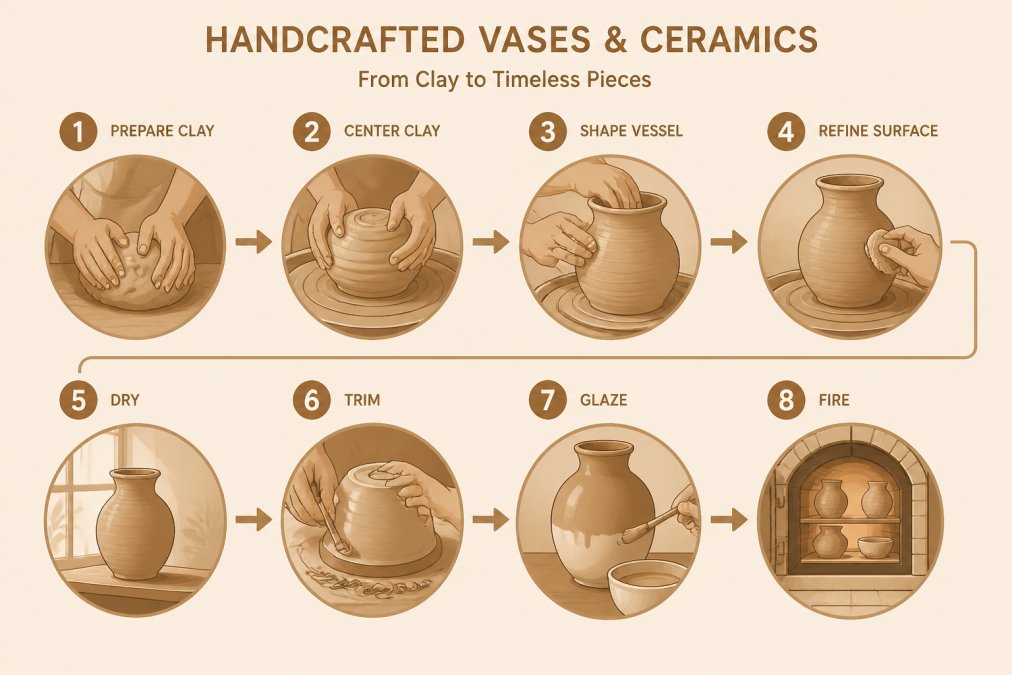
Handcrafted ceramics add character that mass-produced pieces simply cannot match. Each vase tells a story through slight variations in glaze, shape, and color. These variations aren't flaws. They're proof of human craftsmanship.
Artisan-Made Ceramic Options
When you choose handcrafted vases, you're investing in pieces designed to last. The Chubby Vase from Fluent Trends exemplifies this approach. Made by Al Centro Ceramica, it's wheelthrown from local clay and glazed only on the inside. The earth tones come from clay mixtures, not applied glaze. This means each piece varies slightly in color and tone, which is the entire point. Fire exposure influences the final appearance, creating unique results even within the same batch.

The Greece Short Vase represents another handcrafted approach. Ethically and sustainably handcrafted in Portugal, it features a ribbed silhouette and organic speckled finish. The glazed upper half contrasts with the raw, unglazed base. It's watertight and designed for fresh botanicals or standalone display. These details matter because they determine how you'll actually use the piece.
Artisan ceramics require different care than factory-produced vases. Hand-thrown pieces may have slight irregularities in thickness. This doesn't mean they're fragile. It means they're authentic. Clean handcrafted ceramics gently with soft, dry cloths. Use water only when needed. Avoid abrasive scrubbing.
The Off-White Big Polo Vase from Fluent Trends offers sculptural simplicity. Made by Osmos Studio, it's 100% ceramic and stands 12 inches tall. The versatile design works in modern or eclectic spaces. Its weight (5.63 lbs) means it's stable on shelves or tables.
Sustainable Home Decor That Actually Lasts
Sustainable home decor means pieces that endure. Durability is the ultimate sustainability measure. A vase that lasts beats a cheaper one replaced frequently.
Materials matter enormously for longevity. Organic cotton resists pilling and fading better than conventional cotton. Natural fibers like wool, jute, and linen age beautifully. OEKO-Tex certified textiles meet strict environmental and safety standards. These certifications mean fewer chemicals in production and safer finished products.
Portugal-woven bedding and textiles represent a specific quality standard. Portuguese textile production emphasizes traditional techniques and durable materials. Milk and casein fiber blends create hypoallergenic options that breathe well.
Sustainable materials require understanding their actual performance. Boucle furniture has texture and visual interest. It also resists staining better than smooth fabrics. Bone inlay furniture combines wood with decorative bone or shell work. It's more durable than solid wood alone because the inlay reinforces joints.
The real test of sustainability is whether you'll keep a piece. Pieces you love get used longer. Pieces you tolerate get replaced. This is why handcrafted items often prove more sustainable. They develop character and meaning over time.
Durable Furniture for Daily Use and Longevity
Durable furniture handles real life. Kids spill things. Pets scratch surfaces. People sit, lean, and move pieces. Furniture that survives this deserves respect.
Wood quality determines furniture longevity more than any other factor. Sheesham wood represents exceptional durability. On the Janka hardness scale, sheesham scores around 1,410 lbf. Teak, often considered premium, scores around 1,000 lbf. This means sheesham is physically harder and more scratch-resistant than teak. It absorbs daily impacts without chipping or splitting.
Dimensional stability matters as much as hardness. Properly seasoned sheesham resists warping, twisting, and splitting. The joints in a sheesham bed or dining table stay tight. This stability comes from the wood's density. When moisture content is properly managed during manufacturing, the wood stays dimensionally stable.
Natural pest resistance is another sheesham advantage. The heartwood produces compounds toxic to dry-wood termites and fungi. This protection comes from inside the wood itself. No harsh chemical treatments needed. The wood protects itself naturally.
Acacia wood offers similar benefits at different price points. It's naturally durable and resistant to warping. The grain patterns create visual interest. Acacia furniture works well in modern and traditional spaces.
Built-to-last furniture means understanding construction methods. Joinery quality matters more than wood type. Mortise and tenon joints outlast dowel joints. Hand-finished pieces often have better joinery than factory-produced alternatives.
Wood Quality and Durability Standards
When evaluating durable furniture, examine the joinery first. Look at how legs attach to the frame. Quality construction uses reinforced joints. Cheap construction relies on glue and nails alone.
Finish quality indicates durability too. Hand-applied finishes often penetrate wood better than spray finishes. Natural oil finishes age gracefully. Polyurethane finishes resist moisture better. The best choice depends on your use case.
Weight indicates density. Heavier furniture usually contains denser wood. Denser wood resists denting and scratching. This is why handcrafted pieces often weigh more than factory-produced alternatives.
Certifications help verify durability claims. Look for wood sourcing certifications. Sustainably sourced wood comes from responsibly managed forests. Reclaimed wood eliminates new harvesting entirely.
Planters and Functional Home Goods
Planters bridge the gap between decor and function. They hold plants but also shape your space's aesthetic. Handcrafted planters add character while serving a purpose.
Terracotta planters offer natural breathability. Roots need oxygen, and terracotta allows air movement through the pot walls. This prevents overwatering problems. Terracotta also develops a patina over time, adding visual depth.
The Wavy Planter from Fluent Trends is handcrafted in Honduras. Each piece varies slightly in size and color due to its handmade nature. Dimensions are 6" wide by 6" deep by 6" high. It's made to order, which means you're not getting warehouse stock. Purchasing supports sustainable income for artisans in Sabanagrande, Honduras. Clean gently with a damp cloth. No drainage hole means you'll need a plastic nursery pot inside.
The Jaro Small Terracotta Planter is also handcrafted in Honduras by Meso Goods. This one stands taller at 16 inches. Same 6" width and depth. Same artisan support model. Same care instructions. The height makes it ideal for trailing plants or statement pieces.

Functional home goods that last require proper care. Terracotta benefits from occasional sealing to prevent staining. Ceramic pieces need gentle handling. Bone inlay furniture needs regular dusting. These maintenance requirements are worth the longevity they provide.
Price and Value Comparison
Price is only half the story. Value comes from how long a piece lasts and how well it fits your daily life. Comparing alternatives works best when you group products by category.
Textiles and bedding set the tone for a room. Organic cotton sheets and Portugal-woven bedding typically sit in the mid to upper range. OEKO-Tex certification adds confidence about chemical safety. Milk and casein fiber blends can be hypoallergenic and breathable. A common pattern is that certified natural fiber bedding costs more upfront but resists pilling and fading longer.
Furniture is where durability changes the math. Sheesham wood scores around 1,410 lbf on the Janka hardness scale, which measures resistance to denting. That is harder and more scratch-resistant than teak at roughly 1,000 lbf. Properly seasoned sheesham resists warping, twisting, and splitting, so joints stay tight for decades. Its heartwood also produces natural compounds that repel dry-wood termites and fungi without harsh chemical treatments. Acacia wood offers similar resilience at a different price point. Built to last furniture with mortise and tenon joinery usually costs more than dowel-only assembly, but it avoids replacement cycles.
Decor and ceramics vary widely. Hand-thrown vases and planters often cost more than factory pieces because of labor and small-batch production. Boucle furniture and bone inlay furniture sit in the upper range due to material and handwork. The Large Porcelain Nesting Bowl, Nectar 18-piece Dinner Setting, and Lhasa Mug | Limoges Porcelain show how certified porcelain can justify a premium through chip resistance and glaze quality.
Accessories are the easiest place to test value. Peridot and Emerald Textured Coin Earrings, the Recycled Travel Backpack Dainik, the Avenida in Bosque 18" x 18" Pillow, and the Cloud Silque Throw each sit at different price points. Compare materials, care requirements, and expected lifespan rather than sticker price alone.
Shipping and returns matter too. Made-to-order pieces often take longer to arrive but reduce overproduction. Check return windows and damage claim policies before you commit. A brand that publishes these details clearly is usually easier to work with long term.
How to Spot Real Artisan Quality
Real artisan quality has specific markers. Learning to recognize them prevents disappointment and greenwashing.
Slight variations in color and shape indicate handcrafting. Machines produce identical pieces. Hands produce variations. These variations prove authenticity. They're not defects. They're signatures.
Weight tells you about material quality. Handcrafted ceramics weigh more than thin-walled factory pieces. Solid wood furniture weighs significantly more than veneered alternatives. If something feels light, question the construction.
Joinery details reveal craftsmanship. Look at how pieces connect. Hand-cut joints show saw marks and individual variation. Machine-cut joints are perfectly uniform. Hand-finished surfaces have subtle texture. Factory finishes are perfectly smooth.
Maker transparency is the biggest quality indicator. Real artisans stand behind their work. They provide names, photos, and stories. They explain their methods. They're proud of what they make.
Certifications provide verification. Fair Trade certification means verified fair wages. OEKO-Tex certification means safe, sustainable production. Sustainably sourced wood certifications verify responsible harvesting. These third-party verifications carry weight.
Making Your Choice
Choosing alternatives comes down to what matters most to you. Do you prioritize specific materials like sheesham wood or organic cotton? Do you value maker transparency above all else? Are you building a cohesive aesthetic or collecting individual statement pieces?
Start by identifying your non-negotiables. Maybe you need pieces that work in modern minimalist spaces. Maybe you want to support women-owned businesses specifically. Maybe durability is your top concern. These priorities narrow your options significantly.
Research reputable purveyors in your priority categories. Look for transparency about materials, makers, and production. Read reviews from people who've owned pieces long-term. Check whether pieces develop character or deteriorate over time.
Consider your actual use case. Will this piece sit on a shelf untouched? Will kids and pets interact with it? Will it hold plants or water? Use case determines which materials and construction methods matter most.
Test the shopping experience. How responsive are customer service teams? How transparent are they about shipping and returns? How do they handle damage claims? These practical details matter as much as product quality.
Conclusion
Finding alternatives means exploring brands that share similar values while offering different strengths. Whether you prioritize specific wood types like sheesham, sustainable materials like organic cotton, or direct artisan support, your options are richer than you might expect.
At Fluent Trends, we source from reputable purveyors of ethically made home goods. Our handcrafted vases and planters support artisans globally while delivering pieces built for longevity. The Chubby Vase, Off-White Big Polo Vase, Greece Short Vase, Wavy Planter, and Jaro Small Terracotta Planter each represent different approaches to artisan-made home goods. They're made to order. They're priced to reflect fair artisan compensation and sustainable production methods. Start with Fluent Trends' durable furniture collection to explore pieces that align with your values and aesthetic.
Frequently Asked Questions
What makes handcrafted home goods better than mass-produced alternatives?
Handcrafted pieces are made by artisans using traditional techniques. Each item has unique character and variations. They're built to last because makers care about quality. When you buy handcrafted, you're investing in pieces that absorb daily life. Plus, your purchase supports actual people and their livelihoods.
How can I verify that ethical home decor brands actually support artisans fairly?
Look for brands that name their makers and share their stories. Reputable purveyors source directly from artisans and publish information about production methods. Check if they mention fair wages, sustainable practices, or certifications like OEKO-Tex. Fluent Trends sources from reputable purveyors and highlights maker names on product pages. If a brand won't tell you who made something or how, that's a red flag.
What materials should I prioritize in sustainable home decor?
Organic cotton, natural fibers like linen and jute, and responsibly sourced wood are solid choices. Look for ceramics made with local clay and natural glazes. Portugal-woven bedding and OEKO-Tex certified textiles are reliable markers of quality. Avoid pieces with synthetic dyes or plastic components when possible. Materials matter because they determine how long your piece lasts and what happens when it eventually breaks down.
Is it worth paying more for durable furniture for daily use?
Yes. Durable pieces cost more upfront but last longer. Sheesham wood scores 1,410 on the Janka hardness scale, making it harder and more scratch-resistant than teak. Once properly seasoned, it resists warping and splitting for decades. Joints stay tight. Natural compounds in the wood protect against pests without chemicals. You're not replacing furniture every few years, which saves money long-term and reduces waste.
The real choice isn't between The Citizenry and alternatives. It's between mass-produced convenience and handcrafted authenticity. Between pieces that deteriorate and pieces that develop character. Between supporting faceless supply chains and supporting named artisans. When you're ready to invest in home goods that carry stories and last decades, Fluent Trends offers the curated selection and artisan support you're looking for.