

Benefits of Buying Artisan Furniture: Why Quality Matters
Yuatinia LeakTable of Contents
- Why Artisan Furniture Stands Apart from Mass Production
- Handcrafted Furniture Durability: Built to Last Generations
- Sustainable Home Decor Practices in Artisan Craftsmanship
- Unmatched Quality and Attention to Detail
- Investing in Heirloom Quality Furniture for Your Home
- Supporting Artisans and Preserving Cultural Heritage
- Customization and Personalization for Your Unique Space
- Frequently Asked Questions
Last Updated: September 2, 2026
Why Artisan Furniture Stands Apart from Mass Production
Mass-produced furniture floods the market with identical pieces manufactured in factories. Artisan furniture tells a different story entirely. Handcrafted pieces emerge from skilled artisans who understand joinery, wood grain, and construction methods that industrial processes cannot replicate.
At Fluent Trends, we curate artisan furniture collections that prioritize craftsmanship over volume. Our approach centers on supporting global makers and women-owned businesses who pour expertise into every detail.
Consider the Edessa Bone Inlay Coffee Table from our collection. It features ethically sourced bone inlay set into 100% solid mango wood with hand-carved Nordic-inspired patterns. The artisan applies each inlay detail by hand, ensuring no two pieces are identical. That variation is the signature of authentic handcrafted work.

Mass production eliminates variation to reduce costs. Artisan makers embrace it as proof of human involvement. When you buy artisan furniture, you're choosing pieces that celebrate their handmade origins rather than apologizing for them.
Handcrafted Furniture Durability: Built to Last Generations
Durability separates heirloom pieces from disposable furniture. Handcrafted items are engineered to endure decades of daily use without structural compromise. That longevity comes from construction methods and material integrity that mass production abandons.
Solid wood construction forms the foundation of durability. Artisans select premium hardwoods like mango wood and kiln-dry them properly to prevent warping. The Chestnut Solid Wood Nightstand uses kiln-dried solid mango wood with rabbet joint construction, a traditional technique that creates stronger connections.

Joint construction matters profoundly. Artisans use mortise and tenon joinery and dovetail joints that distribute stress across entire connections. These techniques have proven themselves across centuries of furniture making. A properly executed mortise and tenon joint strengthens with age as wood naturally settles.
Finish quality determines how well furniture resists daily wear. Handcrafted pieces receive multiple coats of quality finishes applied by hand, creating protective layers that industrial spray systems cannot match. The warm amber oak finish on our sideboards deepens beautifully over time.
Hardware selection reveals commitment to longevity. Artisans specify solid brass, stainless steel, or other durable metals rather than plated substitutes that corrode. The Solid Wood Ribbed Bedside table features brass handles and brass-capped feet that improve with age.
Repairability extends the lifespan indefinitely. A handcrafted piece with a damaged drawer can be repaired by a skilled craftsperson. Mass-produced furniture typically becomes landfill when components fail. The construction methods used in artisan work make replacement and restoration feasible.
Sustainable Home Decor Practices in Artisan Craftsmanship
Sustainability extends far beyond marketing claims in artisan furniture production. The traditional methods used by skilled craftspeople inherently reduce environmental impact compared to industrial manufacturing.
Artisan production uses minimal waste by design. A skilled woodworker cuts carefully to maximize usable material from each piece of timber. Offcuts become smaller projects or fuel for kilns. Industrial factories optimize for speed, not material efficiency.
Traditional finishing techniques avoid toxic chemicals. Artisans apply natural oils, waxes, and plant-based finishes that off-gas minimally and biodegrade naturally. Industrial facilities use volatile organic compounds that emit harmful fumes during application and throughout the product's lifespan.
Local production reduces transportation emissions significantly. When artisans work near raw material sources, the carbon footprint drops dramatically. Fluent Trends partners with makers who prioritize regional sourcing, supporting local economies while reducing environmental impact.
Material sourcing transparency matters enormously. Ethical artisans maintain relationships with their suppliers and can trace materials back to their origin. The bone inlay used in our coffee tables comes from naturally deceased animals, not hunted specifically for decoration.
Energy consumption differs fundamentally between production methods. Hand tools and traditional techniques require minimal electricity. Industrial machinery runs continuously, consuming substantial power even during idle periods.
Longevity itself becomes an environmental practice. Furniture built to last generations eliminates the waste cycle of replacement. A piece you keep for fifty years rather than five generates one-tenth the environmental impact.
EPA guidance on sustainable materials and waste reduction
Unmatched Quality and Attention to Detail
Quality reveals itself in details that mass production cannot achieve. Handcrafted furniture demonstrates a level of attention that transforms functional pieces into works of art.
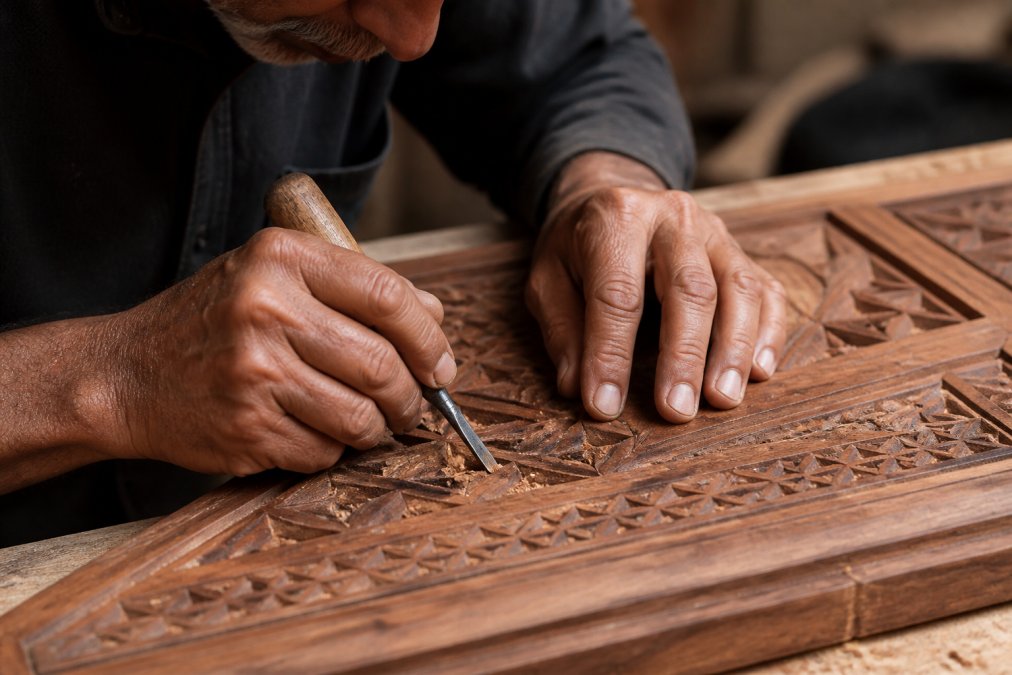
Surface preparation separates exceptional pieces from adequate ones. Artisans sand wood through multiple grit progressions, hand-finishing surfaces to silky smoothness. Industrial sanders use fixed speeds that leave microscopic inconsistencies. When you run your hand across a handcrafted piece, the difference becomes immediately apparent.
Design refinement emerges through iterative craftsmanship. Artisans adjust proportions, curves, and details based on how the piece actually feels during construction. A leg thickness might be refined mid-project to achieve perfect visual balance. These refinements happen only when a human maker controls every aspect.
The Amber Wavefront Artisan Solid Wood Sideboard exemplifies this attention. Hand-carved wavefront details create depth and texture impossible to achieve through industrial molding. The warm Amber Oak finish highlights natural grain variation rather than masking it.

Grain matching requires genuine skill and patience. Artisans select boards that work together visually, considering color variation and grain direction. Industrial production treats wood as interchangeable material, prioritizing speed over aesthetic coherence.
Edge treatment reveals commitment to quality. Handcrafted pieces feature carefully shaped edges that feel substantial and refined. Rounded or beveled edges protect against damage while enhancing visual elegance. artisan-made wooden decor.
Finish consistency matters profoundly. Multiple hand-applied coats build depth and richness impossible to achieve with spray application. The result is furniture that improves with age rather than deteriorating.
Hardware selection demonstrates quality commitment. Artisans specify solid brass or stainless steel and position handles with precision to ensure smooth operation and visual balance.
Investing in Heirloom Quality Furniture for Your Home
Heirloom quality furniture transcends trends and seasons. These pieces serve multiple generations, accumulating stories and patina that enhance rather than diminish their value.
Construction methods determine whether furniture can become an heirloom. Solid wood, traditional joinery, and quality hardware create the structural foundation necessary for longevity. Veneered surfaces and particleboard cores cannot withstand decades of use.
The long-term investment perspective changes purchasing decisions fundamentally. A handcrafted piece costs more initially but remains functional and beautiful for fifty years. A mass-produced alternative requires replacement within a decade.
Resale value reflects quality and craftsmanship. Genuine handcrafted furniture maintains or appreciates in value when cared for properly. Vintage artisan pieces command premium prices because they represent authentic craftsmanship and proven durability.
Customization enhances heirloom potential. Artisans can modify designs to suit your specific space and aesthetic preferences. A piece tailored to your home becomes more meaningful and functional than off-the-shelf alternatives.
Material integrity determines heirloom viability. Solid wood develops character through natural aging. Finishes improve with careful maintenance. Hardware becomes more beautiful as patina develops. These changes reflect the piece's history rather than indicating deterioration.
Emotional value compounds over time. Furniture you've lived with for decades carries memories and meaning that transcends functionality. A piece inherited from a parent gains significance beyond its material worth.
Documentation enhances heirloom status. Knowing the maker's name, the materials used, and the construction methods deepens appreciation and facilitates future restoration.
Smithsonian Magazine article on heirloom furniture and preservation
Supporting Artisans and Preserving Cultural Heritage
Purchasing artisan furniture directly supports skilled makers and preserves cultural crafting traditions. This impact extends beyond individual purchases to sustain communities and cultural practices.
Artisans maintain techniques developed over centuries. Bone inlay work, wood carving, and traditional joinery represent knowledge systems passed through generations. When these skills disappear, humanity loses irreplaceable cultural heritage.
Women-owned artisan businesses represent particular importance. Many traditional crafts are practiced by women in developing economies, yet these makers rarely receive fair compensation. Fluent Trends partners specifically with women-owned makers, ensuring fair wages and business sustainability.
Direct artisan relationships eliminate exploitative middlemen. Industrial supply chains create distance between consumers and makers, allowing profit extraction at multiple levels. Artisans receive minimal compensation despite the value consumers place on their work.
Economic impact ripples through maker communities. Artisans employ apprentices, teaching skills to younger generations. They purchase materials from local suppliers, supporting broader economic networks.
Cultural identity connects to craft traditions. Many artisan techniques reflect specific cultural aesthetics and values. Preserving these crafts maintains cultural distinctiveness in an increasingly homogenized global market.
Environmental stewardship often accompanies traditional craftsmanship. Artisans who have practiced their trades for generations understand sustainable resource management intuitively. They use materials responsibly because their livelihoods depend on long-term resource availability.
UNESCO documentation on intangible cultural heritage and traditional crafts
When you purchase from Fluent Trends, you're directly supporting this preservation work. Our Artisan Collection features pieces from women-owned businesses and ethical global makers.
Customization and Personalization for Your Unique Space
Mass production demands standardization to achieve efficiency and cost reduction. Artisans embrace customization as core to their practice. This flexibility allows you to create pieces that fit your specific space and functional needs perfectly.
Customization begins with material selection. Artisans can source specific wood species, finishes, and hardware to match your design vision. You might request a different wood tone, alternative inlay patterns, or modified dimensions.
Design modifications accommodate unusual spaces. A standard sideboard might not fit your entryway dimensions. An artisan can adjust width, depth, or height while maintaining proportional beauty. They can add or remove shelving or incorporate specific storage solutions.
Aesthetic personalization reflects your values and style. You can specify finishes ranging from matte to glossy, natural to stained. Hardware options expand from brass to stainless steel to custom materials.
Functional customization addresses real household needs. If you require additional drawer space, an artisan can modify internal configurations. Cable management solutions can be incorporated for media storage.
The personalization process deepens your connection to the finished piece. Collaborating with an artisan means your preferences shape the final result. That individuality increases satisfaction and emotional attachment.
Fluent Trends curates artisan partnerships that embrace customization requests. Our makers understand that true luxury means getting exactly what you envision.
The benefits of buying artisan furniture extend far beyond aesthetic appeal. You invest in durability, sustainability, cultural preservation, and pieces that improve with age. Fluent Trends specializes in connecting discerning homeowners with ethical makers who understand that genuine luxury means craftsmanship and quality that endures.
Explore our Artisan Collection to discover handcrafted pieces designed for homes that live beautifully. From the Edessa Bone Inlay Coffee Table to the Amber Wavefront Sideboard, each piece represents authentic craftsmanship and sustainable practices. Invest in furniture built to become part of your family's story.
Frequently Asked Questions
Is artisan furniture better quality than mass-produced options?
Yes. Artisan furniture is handcrafted with attention to joinery, material selection, and construction methods that mass production cannot replicate. Artisan pieces use solid hardwoods and traditional techniques, resulting in superior durability and longevity. Mass-produced furniture often relies on veneers, engineered materials, and rapid assembly, which compromises structural integrity over time. A handcrafted coffee table like the Edessa Bone Inlay will maintain its strength for decades with proper care.
What are the benefits of buying custom-made furniture?
Custom-made artisan furniture allows you to specify dimensions, finishes, and materials to match your exact space and aesthetic preferences. You gain pieces that reflect your personal style rather than generic designs. Custom options eliminate the need to compromise on size or color. This personalization transforms your home into a curated space that tells your story, supporting artisans who create exactly what you envision rather than settling for inventory-based alternatives.
How does sustainable home decor practices benefit the environment?
Artisan furniture makers often use traditional, low-waste techniques and sustainably sourced materials like reclaimed wood and natural fibers. These practices reduce carbon footprints compared to industrial manufacturing. Handcrafted pieces last decades, eliminating the cycle of replacing cheap furniture that ends up in landfills. By investing in durable artisan goods, you reduce consumption and support makers committed to eco-friendly production. This approach aligns with intentional living and environmental responsibility.
Why should I invest in heirloom quality furniture?
Heirloom quality furniture represents a long-term investment that appreciates in value and relevance over time. Unlike disposable furniture, artisan pieces strengthen structurally and aesthetically as they age. They can be refinished, repaired, and passed to future generations, making them economically sound and emotionally meaningful. Pieces crafted with solid mango wood and traditional joinery, like those in the Fluent Trends collection, are designed for multi-generational use and become more valuable as family heirlooms.
This article was written using GrandRanker