

Elevate Your Living Room with the Best Accent Chairs
Donna MaloneFinding the right accent chair isn't just about filling an empty corner—it's about finding that one piece that makes your entire living room click. Forget just "extra seating." Think of it as a functional work of art, a reflection of your personality that serves a real purpose, whether that's creating a cozy reading spot or dropping in a bold splash of color.
How to Choose the Perfect Accent Chair for Your Living Room
An accent chair does so much more than take up space. It has the power to pull a whole color scheme together, introduce a surprising new texture, or create a focal point where there wasn't one before. It's the final, perfect touch.
But finding "the one" means moving past generic advice. You need to figure out what your living room is actually missing. This guide will walk you through it, step-by-step, so you can choose a chair that looks like it was made just for your home.
Step 1: Define Your Chair’s Main Job
Before you get swept away by a beautiful design, stop and ask yourself one simple but crucial question: "What am I actually going to do in this chair?"
Your answer is the single most important factor. It instantly cuts through the noise and points you toward the right styles. After all, there’s a reason the global accent chair market hit a staggering $6.2 billion—these chairs are serious business in modern interior design. You can explore more market insights at dataintelo.com.
So, what's your chair's primary role? Most accent chairs fall into one of three main jobs:
-
The Reading Nook Anchor: This is your go-to comfort zone. You're looking for something you can sink into for hours with a good book, so think plush cushions, supportive arms, and a nice high back.
-
The Sculptural Statement: Sometimes, a chair's main job is just to look incredible. These are the showstoppers—pieces with unique shapes, wild patterns, or unexpected materials that double as functional art.
-
The Pop of Color: Is your living room feeling a little too safe? A brightly colored or boldly patterned chair is the easiest way to inject some serious personality without having to repaint a single wall.
This decision tree helps visualize how your main goal—whether it's for curling up, showing off, or brightening up—guides your entire selection process.
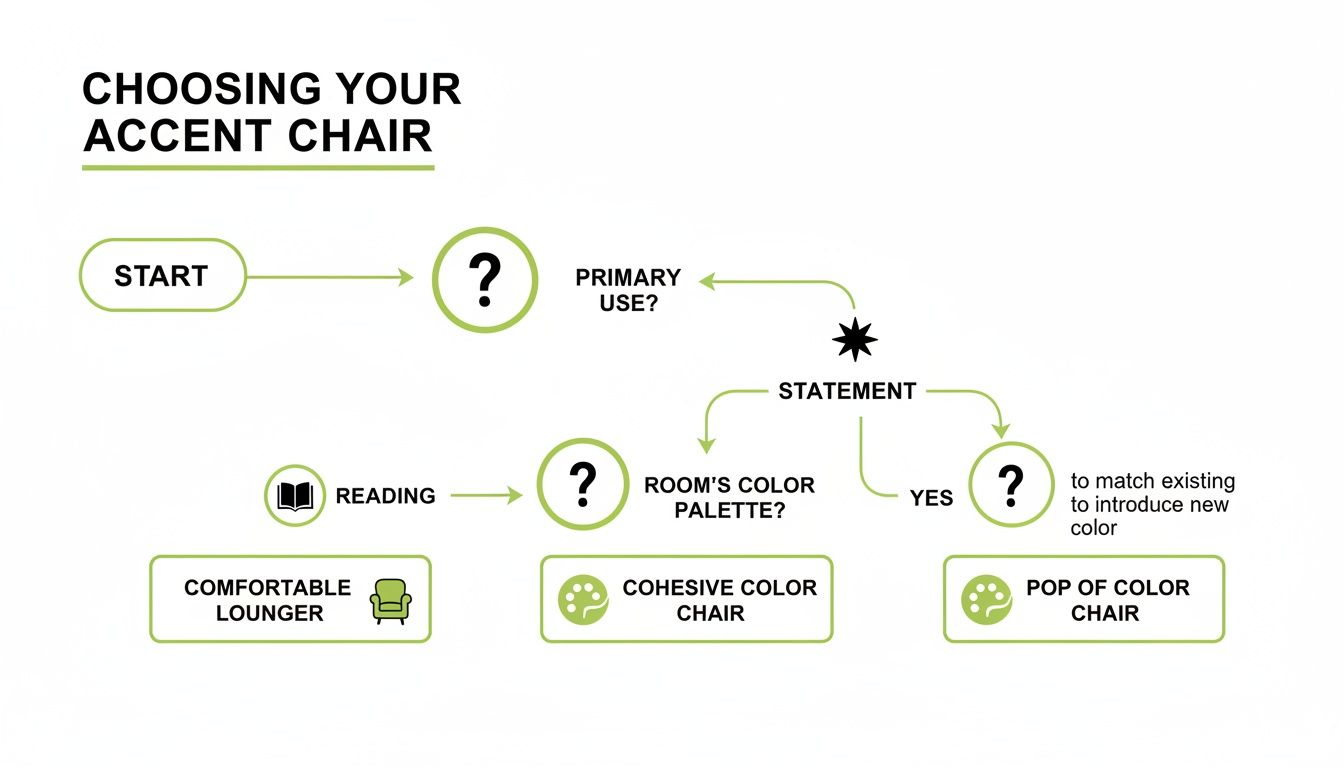
If you start with function first, you’re pretty much guaranteed to end up with a chair that’s not just beautiful, but genuinely useful in your day-to-day life.
Exploring Popular Accent Chair Styles and Personalities
Picking out an accent chair isn't just about the fabric or the color; it’s about finding a piece with the right personality. Think of each style less like a piece of furniture and more like a character you’re inviting into your home. Some are quiet and supportive, while others are born for the spotlight.
If you can nail down the personality you're looking for, you’ll find a chair that doesn't just fill an empty corner but actually completes the story of your room. Let's get to know some of the most iconic styles and see which one feels right for your home.
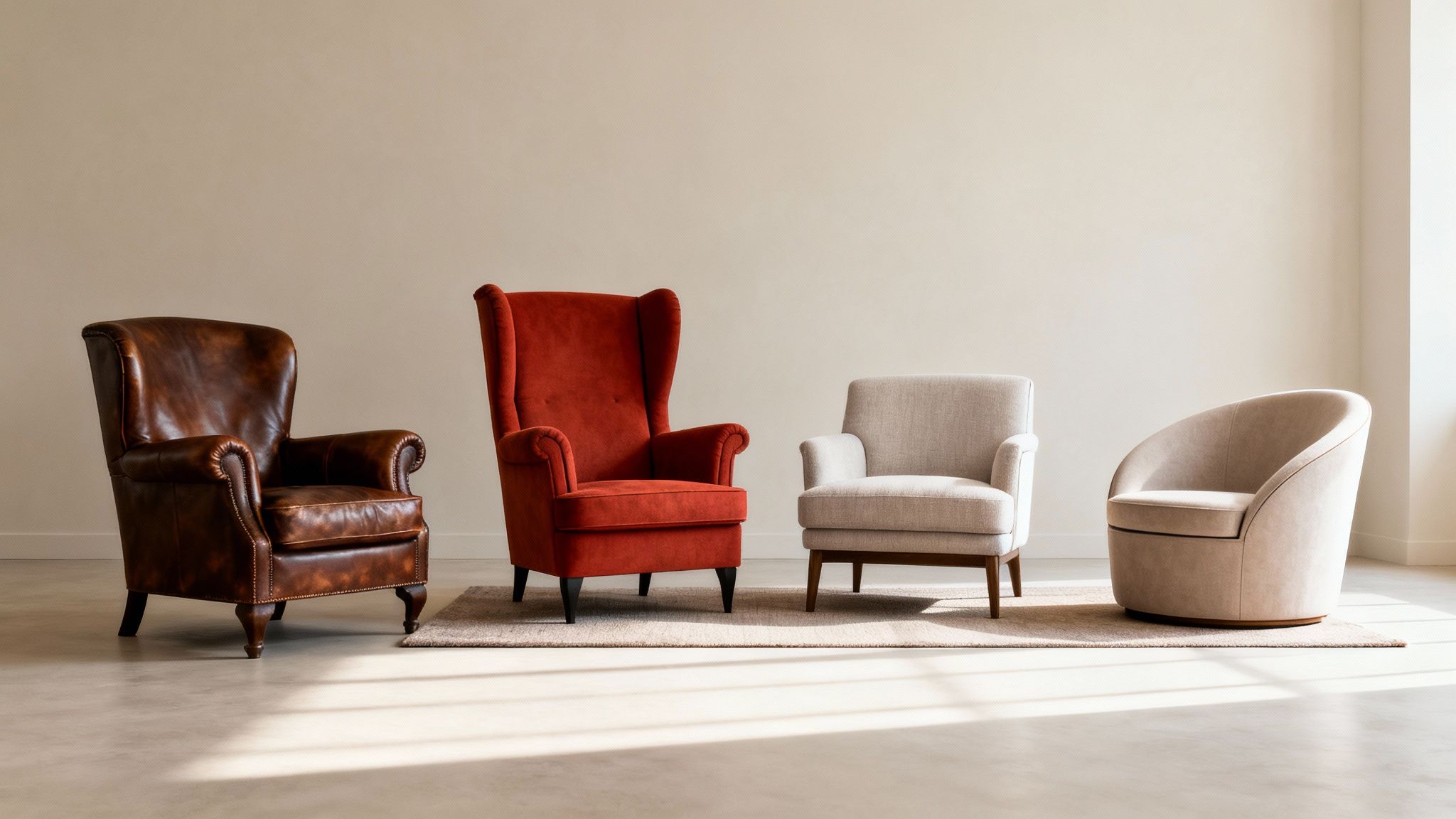
The Dependable Classic: The Armchair
The Armchair is the quintessential accent piece—the reliable, go-to friend of the living room. Its defining feature, the armrests, makes it instantly welcoming and perfect for settling in with a good book or getting lost in a long conversation. Its biggest strength is its incredible versatility, showing up in everything from traditional rolled-arm designs to crisp, modern silhouettes.
This style is a true chameleon. Upholster it in a neutral linen, and it feels casual and breezy. Wrap it in rich, dark leather, and it suddenly projects a stately, sophisticated vibe that can anchor a formal seating area or add a touch of classic library charm. If you're looking for maximum comfort, you'll find plenty of armchair with ottoman options that really let you kick back and relax.
The Dramatic Showstopper: The Wingback Chair
Originally designed back in the 1600s to shield people from drafts in cavernous, chilly rooms, the Wingback Chair has become a true symbol of drama and elegance. Those signature "wings" that flare out from the high back create a commanding silhouette that instantly draws your eye.
This is the chair you choose when you want to make a statement. Stick one at the head of a room or flank a fireplace with a pair, and you’ve created a powerful focal point. The wings also create a cozy, sheltered feeling, which is why it's such a brilliant choice for a private reading nook where you just want to tune out the world.
A Wingback chair doesn't just occupy space; it commands it. Its historical roots and dramatic form make it a timeless choice for anyone looking to add a touch of grandeur and architectural interest to their living room.
The Compact and Chic: The Slipper Chair
Meet the minimalist of the accent chair world. The Slipper Chair is low to the ground and has no arms, a design that dates back to Victorian bedrooms where it was used to help with putting on shoes (hence the name). Today, its clean lines and small footprint make it a lifesaver for smaller living rooms or spaces that need flexible seating.
Because it's armless, it has a light, airy look that won't visually overwhelm a room. This makes it perfect for tucking into a tight corner or using a pair to create a conversation spot without adding a lot of bulk. It's not the chair you'd curl up in for hours, but its upright posture is fantastic for guest seating.
-
Best for: Small apartments, formal sitting areas, or any room where you want to preserve a sense of openness.
-
Design Tip: Place two slipper chairs opposite a sofa to create a balanced conversation zone that doesn't feel closed off.
-
Personality: Understated, chic, and incredibly adaptable.
The Cozy Cocoon: The Barrel Chair
Just like the name suggests, the Barrel Chair has a rounded back that curves around to form the arms in one seamless, C-shaped line. This design creates a snug, cocoon-like seat that feels like a gentle hug, easily making it one of the most comfortable accent chairs you can find.
That curved shape is great for breaking up all the straight lines and sharp corners from sofas and tables, adding a softer, more organic feel to the room. It’s a fantastic choice for corners, too, since its rounded back fits neatly and softens the room's angles. Many modern versions come with a swivel base, adding a fun, functional twist that's perfect for open-plan homes where you might want to pivot between the living and dining areas.
Mastering Scale and Measurement for a Perfect Fit
Have you ever walked into a room and just felt like something was… off? Chances are, the scale of the furniture was out of whack. It’s the fastest way to make an otherwise lovely space feel awkward.
An accent chair that’s too big can swallow a living room whole, while one that’s too small gets lost, looking like an afterthought. We're looking for that 'Goldilocks' moment—not too big, not too small, but just right. And getting there isn't about guesswork; it’s about pulling out a tape measure.
Measure Your Available Footprint
Before you even think about fabrics or colors, figure out exactly where this chair is going to live. Grab a tape measure and get the real numbers for the maximum width and depth you can work with.
Here’s a pro tip: use painter's tape to outline the chair’s potential dimensions right on the floor. This simple trick gives you an immediate visual of its footprint and, crucially, how it impacts the flow of the room. You need clear pathways to move comfortably. Aim for at least 30 inches of walking space around major pieces to keep the room from feeling like an obstacle course. If you're tight on space, our guide to the best accent chairs for small spaces has some great ideas for making every inch count.
Consider Proportions and Visual Weight
Scale is more than just raw measurements. It's also about visual weight—how heavy an object looks. Two chairs can have the exact same footprint but feel completely different depending on their design.
A bulky, fully upholstered armchair with a skirt and thick, rolled arms has a high visual weight. It feels solid and grounded. On the other hand, a chair with a slim metal frame, an open back, and skinny legs has a low visual weight. It feels airy and lets you see the floor underneath, which creates a sense of openness. Understanding these core concepts is foundational to good design, and a general designer's guide to sizing, style, and placement principles in interior design can offer broader insights.
Think of it like this: A solid wooden cube and a wireframe cube take up the same space, but the wireframe feels much lighter and less imposing. Your chair's design works the same way.
The trick is to create balance with your existing furniture.
-
Got a heavy, substantial sofa? A lighter, leggy accent chair will provide a beautiful contrast.
-
Working with a sleeker, modern sofa on raised legs? You can afford to pair it with a more grounded, substantial accent chair to create a nice anchor.
Harmonize Heights for a Cohesive Look
Last but not least, think about height. The back height of an accent chair offers a lot of room for stylistic expression, but the seat and arm heights need to play nicely with your other furniture.
A good rule of thumb is to pick a chair with a seat height that’s within a few inches of your sofa's seat. This creates a much more comfortable and visually consistent line across your seating area. It makes conversation flow more naturally and helps the whole room feel unified. Similarly, keeping arm heights in the same ballpark prevents any one piece from awkwardly sticking out. It’s these little details that take a room from just "furnished" to thoughtfully designed.
Choosing Materials That Match Your Lifestyle
The soul of an accent chair isn't just its silhouette, but the very materials it's wrapped in. The fabric and frame define its look, its feel, and—most importantly—how it stands up to the reality of your life. This isn't just a design choice; it's a practical one that finds the sweet spot between aesthetics and the chaos of spills, pets, and everyday living.
Think of the frame as the chair's skeleton. It’s the hidden foundation that determines whether it will be a wobbly mess in a year or a sturdy companion for a decade. The upholstery, on the other hand, is its personality—what you see, touch, and live with every day. Getting both right is the secret to finding a chair you'll love for years, not just a season.
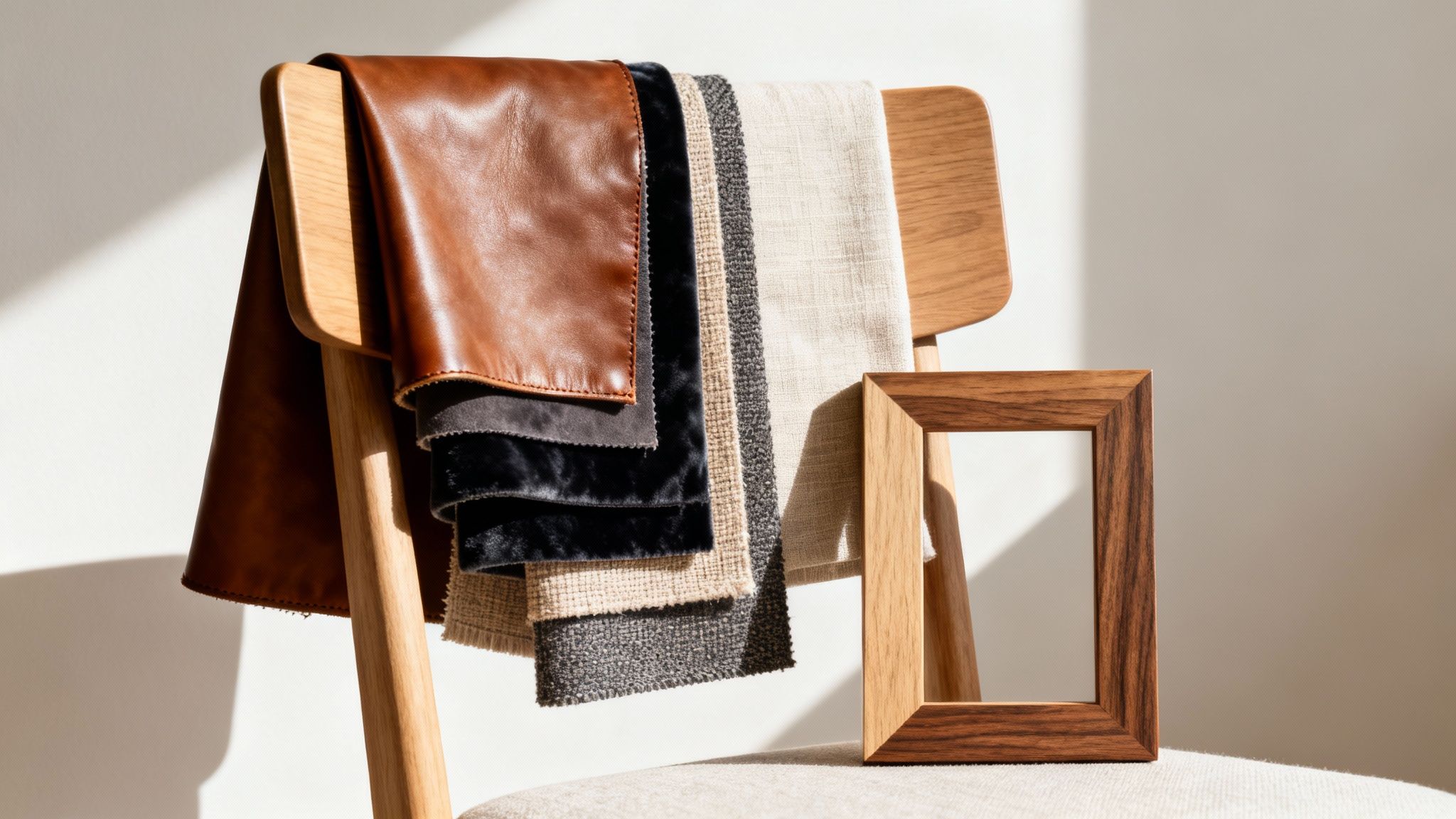
Unpacking Upholstery Options
The fabric you choose sets the entire mood for your accent chair. It dictates everything from how much upkeep it needs to how cozy it feels when you curl up in it. A delicate silk might look incredible in a showroom, but it won’t last five minutes against a toddler with jam-covered hands. Be honest about your lifestyle—it's your best guide.
Let's dive into some of the most popular choices out there.
Comparing Common Upholstery Fabrics
To make things easier, here’s a quick breakdown of common fabrics to help you find the perfect match for your home and habits.
| Fabric Type | Best For (Lifestyle) | Durability | Maintenance Level |
|---|---|---|---|
| Leather | Families, pet owners | Very High | Low (Wipe-clean) |
| Velvet | Formal or low-traffic areas | Moderate to High | Medium |
| Linen | Adult-only, casual spaces | Moderate | High (Wrinkles/Stains) |
| Performance Fabrics | High-traffic, messy homes | Highest | Very Low (Stain-resistant) |
Ultimately, the right upholstery gives you peace of mind without forcing you to sacrifice style. A well-chosen fabric means you won't be constantly worried about life happening on your furniture.
Pro Tip: Look for the Martindale rub count when shopping for fabrics. A score of 20,000 or higher is great for general home use, while heavy-duty fabrics can top 50,000 rubs, ensuring they can handle just about anything you throw at them.
The Foundation: The Chair Frame
While the upholstery gets all the glory, the frame is what ensures your chair won't start creaking and groaning after a few months. The quality of the construction hidden under the fabric is what really matters for longevity and support.
The two main players here are solid wood and engineered wood.
-
Solid Wood Frames (like kiln-dried hardwood): This is the gold standard for quality furniture. Kiln-drying sucks the moisture out of the wood, which stops it from warping or cracking over time. Hardwoods like oak, maple, or ash are incredibly strong and ensure your chair remains a rock-solid investment for decades.
-
Engineered Wood Frames (like plywood or MDF): This category includes materials made from wood fibers or veneers bonded together. High-quality, multi-layered plywood can be very strong and stable, offering a great, more affordable alternative to solid wood. But be wary of lower-quality options like particleboard, which is far less durable and hates moisture.
Choosing one of the best accent chairs for your living room often means investing in a solid frame. It might cost a bit more upfront, but a well-built chair is something you buy once, not every few years.
This focus on quality is more important than ever as people grow more confident buying furniture online. While some traditional stores have struggled, e-commerce has soared, reflecting a huge shift in how we shop. People trust online platforms to deliver quality pieces, a trend you can explore more about from industry leaders like Furniture Today.
So, when you're browsing, keep an eye out for phrases like "kiln-dried hardwood frame" and "corner-blocked joinery." These are tell-tale signs of excellent craftsmanship. By investing in a chair with a strong skeleton and the right "skin," you ensure it will be a beloved fixture in your living room for the long haul.
Placing Your Accent Chair for Maximum Impact
You’ve found the perfect accent chair—congratulations! That’s half the battle. But now comes the fun part: figuring out where to put it. The right placement can transform your chair from just another piece of furniture into a statement piece that pulls the whole room together.
Think of it like this: an accent chair is the punctuation mark in the sentence of your living room. Placed correctly, it adds emphasis and clarity. Put it in the wrong spot, and the entire composition feels a little off. This isn't just about filling an empty corner; it’s about creating an intentional moment in your design.
Let's walk through a few smart ways to position your accent chair so it truly shines.
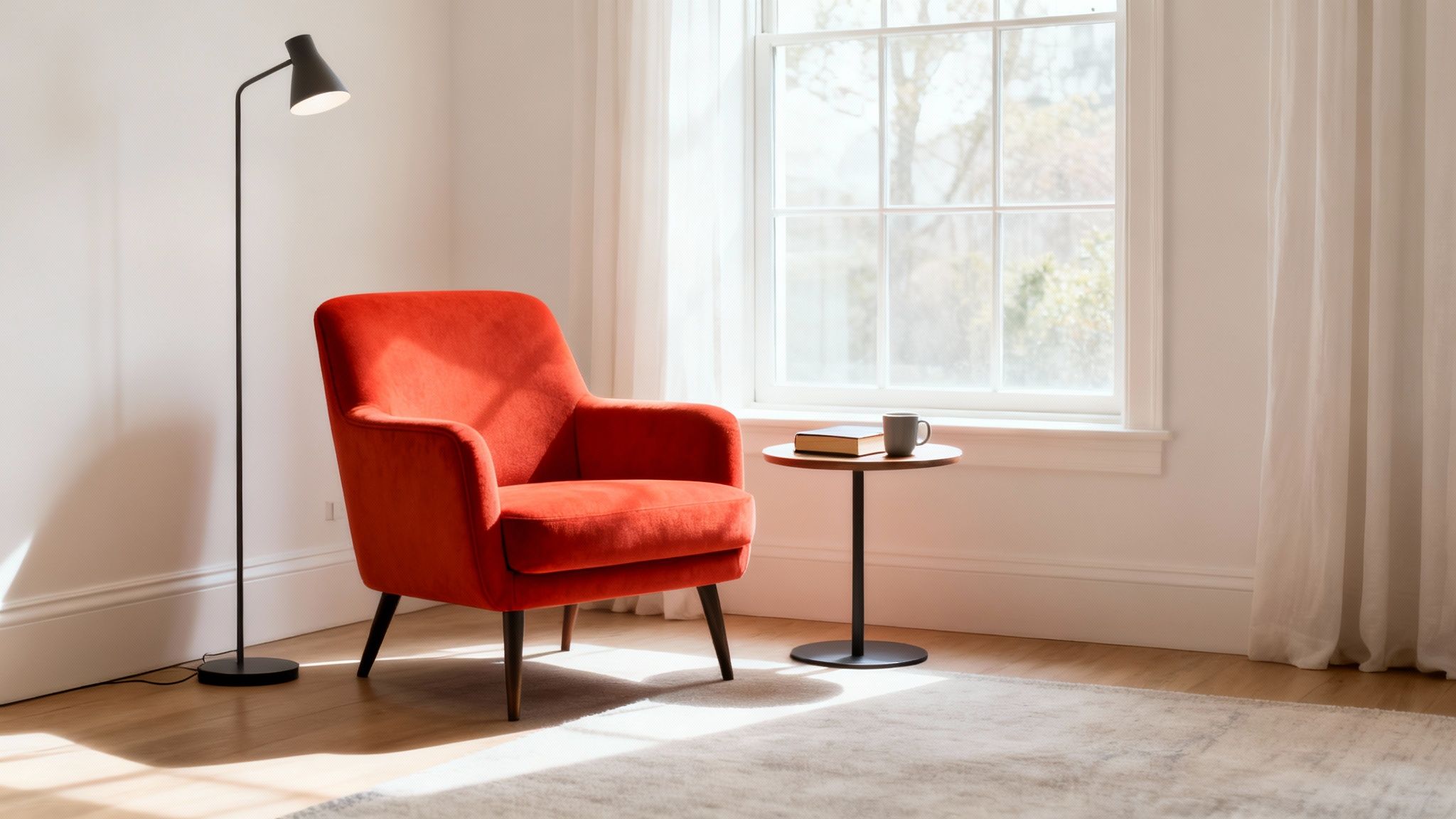
Create a Dedicated Reading Nook
One of the most classic—and beloved—uses for an accent chair is to build a cozy reading nook. It carves out a little sanctuary right in your living room, a spot just for quiet and relaxation. The trick is to make it feel like its own self-contained zone.
To really nail this, pair your chair with two essentials: a good light source and a small side table. A stylish floor lamp arching over the chair or a chic table lamp gives you that focused light you need to read comfortably. The side table is the perfect landing spot for a cup of tea, your current book, or a small plant.
A well-designed reading nook does more than just fill a corner; it adds a functional layer to your living room. It sends a clear signal that this is a space designed for comfort and personal time, making the entire room feel more inviting and thoughtfully planned.
Establish Symmetry and Balance
If you're aiming for a more formal, balanced, or traditional vibe, nothing beats a pair of matching accent chairs. This move instantly brings a sense of order and polish to a space, making it feel buttoned-up and intentional.
This strategy works especially well in a few key layouts:
-
Flanking a Fireplace: Placing a chair on either side of a fireplace creates a powerful, symmetrical focal point. It’s a grand look that really draws the eye.
-
Opposite a Sofa: Arranging two chairs across from your main sofa sets up a classic conversation area, perfect for entertaining guests.
-
Framing a Large Window: Using a pair of chairs to frame a beautiful view turns the window itself into a deliberate piece of art within the room.
Anchor a Conversation Zone
In open-concept homes, an accent chair can be your secret weapon for defining different areas. A single, vibrant chair—or a matched pair—can create a subtle boundary, separating the living area from a dining space or kitchen without closing it off with a wall.
Position your chair or chairs to face the sofa, angled slightly inward. This arrangement naturally encourages conversation and visually outlines a “zone” for socializing. For an even stronger definition, try placing a small area rug under the front legs of all the seating. Mastering these techniques is a core part of effective design; our comprehensive guide on how to arrange living room furniture offers even more layouts and pro tips.
By thinking strategically about where you place your chair, you unlock its full potential. You can shape traffic flow, define spaces, and add that final touch of personality that makes your living room feel complete.
Here is the rewritten section, designed to sound completely human-written and natural, following the provided style guide.
Common Mistakes to Avoid When Buying an Accent Chair
You’ve done the hard work, and now it’s time for the fun part: picking that perfect accent chair. But this is where it's easy to make a wrong turn. A few common slip-ups can take you from a stunning final touch to a piece that just feels… off.
Think of this as a quick chat before you hit "add to cart." We'll walk through the mistakes almost everyone makes so you can shop smarter and bring home a chair you'll absolutely love for years.
Ignoring Scale and Visual Weight
This is probably the biggest and most common design blunder. You find a chair you adore online, but when it arrives, it either swallows your living room whole or looks like doll furniture next to your hefty sectional. It’s all about proportion.
Before you fall in love, grab a measuring tape. Mark out the chair’s footprint on your floor with painter's tape to get a real feel for its size. And don’t forget about visual weight. A solid, skirted club chair feels much heavier than a sleek armchair with slim legs, even if they have the same dimensions. The goal here is balance—a chair that complements your other furniture, not one that shouts over it.
Prioritizing Beauty Over Comfort
I get it. You see a chair that looks like a sculpture, a true work of art, and you just have to have it. But if sitting in it feels like a punishment, it will quickly turn into the most expensive dust collector you own. An accent chair has to do more than just look good.
Ask yourself one simple, honest question: "Am I actually going to want to sit here?"
If you’re carving out a cozy reading nook, comfort is everything. If the chair is purely a decorative piece to fill an awkward corner, you can get away with prioritizing form. But for most of us, a beautiful chair that no one ever uses is just a missed opportunity.
Forgetting Your Existing Decor
An accent chair should feel like it was chosen for the room, not just dropped into it. A classic mistake is buying a piece in a vacuum, without thinking about how it will vibe with your sofa, rug, and coffee table.
Your new chair doesn't have to be a perfect match, but it does need to feel connected to the rest of the space. Look for a common thread to tie everything together.
-
Color Harmony: Pull a secondary color from your area rug or a piece of art.
-
Style Connection: You can absolutely pair a modern chair with a more traditional sofa, but they need to feel like they’re in a good conversation, not a shouting match.
-
Material Mix: Got a plush fabric sofa? A sleek leather or woven rattan chair can add incredible texture and depth.
Skipping this step is how a room ends up feeling chaotic instead of curated. Even as trends shift, people consistently gravitate toward pieces that feel timeless and integrated. Just look at the explosion in searches for mid-century modern designs—it proves we all crave furniture that just works. For more on what's resonating with buyers, check out the industry insights from Home Accents Today.
By steering clear of these simple missteps, you’re ready to find a chair that doesn’t just fill a space, but truly completes it.
Common Questions We Hear About Living Room Accent Chairs
You've done the research, you've measured your space, and you've narrowed down your favorites. But a few nagging questions might still be swirling around before you make that final decision. That's completely normal.
Let's walk through some of the most common queries we get. Clearing these up will give you the confidence to choose a chair that not only fits perfectly but feels right at home.
How Do I Mix an Accent Chair with My Sofa?
This is the big one, and the secret is simple: strive for coordination, not a perfect match. The most interesting, thoughtfully designed rooms are built on harmony, not uniformity. Resist the temptation to buy a pre-packaged "set."
Instead, think of it like putting together a great outfit. You want pieces that speak to each other.
-
Borrow a Color: Does your sofa have a subtle navy blue thread in its pattern? Pull that color out and make it the star of your accent chair. A throw pillow can also be the perfect bridge between the two pieces.
-
Play with Shapes: A big, plush sofa with soft, rounded arms looks fantastic next to a chair with clean, straight lines or a more angular frame. The contrast is what makes it work.
-
Mix Up Textures: If your sofa is a soft, cozy fabric, consider a sleek leather or a richly textured bouclé for the accent chair. This adds a layer of depth you can see and feel.
The goal is to create a dynamic conversation between the pieces, not have them repeat the same line.
How Many Accent Chairs Do I Actually Need?
This really boils down to two things: the size of your living room and how you live in it. For most spaces, one or two accent chairs is the sweet spot. You want to enhance the room, not create an obstacle course.
A single, show-stopping chair can act as a piece of sculpture—a focal point that draws the eye and adds a punch of personality.
On the other hand, a pair of matching chairs brings a wonderful sense of symmetry and calm. They’re perfect for flanking a fireplace or creating an intimate conversation nook across from your sofa.
The golden rule is to always prioritize flow. An accent chair should invite you in, not block your path. If you have to squeeze past it, the room is too crowded.
What Style of Accent Chair Will Never Go Out of Fashion?
Trends are fun, but nobody wants to invest in a piece that will look dated in a few years. Thankfully, some silhouettes have stood the test of time and look just as good today as they did fifty years ago.
You can't go wrong with classic, clean lines. Think of styles like the Club Chair—with its deep, comfortable seat and straightforward shape, it’s a forever favorite. Likewise, Mid-Century Modern chairs, famous for their minimalist frames and gentle curves, still feel incredibly current.
If you choose one of these timeless shapes in a versatile material like a good quality leather, a simple linen, or a neutral textured fabric, you're not just buying a chair. You're investing in a piece you'll love for years to come.
Ready to discover a piece that perfectly captures your style? Explore the handpicked collection of designer-approved accent chairs at Fluent Trends, where exceptional quality and timeless design are always in style. Find your next favorite chair with us.