

Best Places to Buy Home Decor: Top Picks for Every Style
Donna MaloneSo, where are the best places to actually buy home decor? It really depends on what you're looking for. You could go for a curated online boutique like Fluent Trends for unique, designer-approved finds, or hit up big-box stores like Target and Wayfair for those budget-friendly staples. If you're hunting for something truly one-of-a-kind, artisan platforms like Etsy are your best bet, while marketplaces such as Amazon deliver endless options and pure convenience.
Ultimately, the right shop for you is all about striking that perfect balance between your personal style, the quality you expect, and what your wallet will allow.
Your Guide to Finding the Perfect Home Decor
Trying to find those perfect pieces to finish a room can feel like a massive undertaking. With what seems like a million online stores and brick-and-mortar shops all vying for your attention, just knowing where to start is half the battle. This guide is here to cut through all that noise and give you a clear roadmap for navigating the world of home decor shopping.
We’re going to cover the entire landscape, from high-end, expertly curated boutiques all the way to the familiar big-box retailers you know and love. The goal is to help you figure out the best sources for your specific needs. Whether you’re on the hunt for a show-stopping sofa to anchor your living room or just the right little accent to pull a space together, we'll show you how to find items that truly reflect your style, meet your quality standards, and stay within your budget.
Navigating a Growing Market
The drive to create a beautiful, comfortable home is a strong one, and it’s fueling some serious industry growth. The global home decor market is absolutely booming—valued at an incredible USD 243.9 billion in 2025, it's expected to climb to a staggering USD 432.2 billion by 2035. The US alone holds a dominant 26.4% global share, with trends like smart home tech and stylish outdoor living pushing more and more people to shop online. You can dig into these market dynamics to see what’s shaping the shopping experience.
What does all this explosive growth mean for you? More choice than ever before. To help you sort through it all, we've put together a quick snapshot of the different kinds of retailers and what they do best.
Think of this guide as your personal shopping assistant. We’re here to help you move beyond endless scrolling and start making confident, informed decisions that bring your vision to life.
To get you started right away, here’s a quick breakdown of the main types of home decor stores.
Quick Guide to Home Decor Retailers
This table is your cheat sheet for home decor shopping. It categorizes the different kinds of stores out there and highlights their key strengths, so you can quickly pinpoint the best fit for whatever you're looking for.
| Retailer Type | Best For | Price Range | Key Advantage |
|---|---|---|---|
| Boutiques & D2C | Unique, curated, and high-quality statement pieces | $$-$$$$ | Exclusive designs and exceptional craftsmanship |
| Marketplaces | Huge selection, competitive pricing, and fast shipping | $-$$$ | Unbeatable convenience and variety |
| Big-Box Retailers | Everyday basics, budget-friendly finds, and trend items | $-$$ | Affordability and one-stop shopping |
| Handmade & Artisan | One-of-a-kind, custom, and personalized items | $-$$$$ | Supporting artists and getting a unique piece |
| Consignment & Outlet | Designer brands at a discount and vintage treasures | $-$$$ | High-end looks for less and sustainable finds |
By understanding what each type of retailer brings to the table, you can make your shopping way more efficient and a lot more fun. Now, let’s dive deeper into each one.
Decoding the Different Types of Decor Stores
Shopping for home decor isn't a one-size-fits-all experience. Where you shop completely shapes what you find, how much you spend, and the overall vibe of your home. Think of it like grocery shopping: sometimes you need the convenience and bulk pricing of a Costco, and other times you want the hand-picked, artisanal cheese from a local deli.
Knowing the difference between a curated boutique and a massive online marketplace is the first step to becoming a smarter shopper. Let's break down the main players in the decor world so you can match your needs to the right kind of store.
Boutiques and Direct-to-Consumer Brands
Ever walk into a small shop where it feels like every single item was chosen with a specific vision in mind? That's the magic of curated online boutiques and direct-to-consumer (D2C) brands. They cut out the middleman to offer exclusive collections you won’t see in thousands of other homes.
These stores are all about quality over quantity. Instead of burying you in options, they present a cohesive, edited selection of pieces that tell a story. This is your go-to when you're hunting for a real showstopper—that one unique lamp or perfect armchair that ties the whole room together. The price tag might be a bit higher, but you're paying for original design, better craftsmanship, and a much more personal touch.
Big-Box Retailers and Marketplaces
On the other end of the spectrum, you have the retail giants. Big-box stores like Target and HomeGoods, along with online marketplaces like Amazon and Wayfair, are built for variety, speed, and affordability. They're the ultimate one-stop-shops when you need to furnish a room (or a whole house) without breaking the bank.
Here you'll find everything from trendy accents to everyday basics. The trade-off? The sheer volume can be dizzying, and quality can be a real mixed bag.
My best advice for navigating these huge stores is to lean heavily on customer reviews and get very specific with search filters. They’re fantastic resources, but finding the hidden gems requires a little detective work.
Feeling a bit lost? Sometimes a simple flowchart can help you figure out where to even begin, depending on what matters most to you right now.
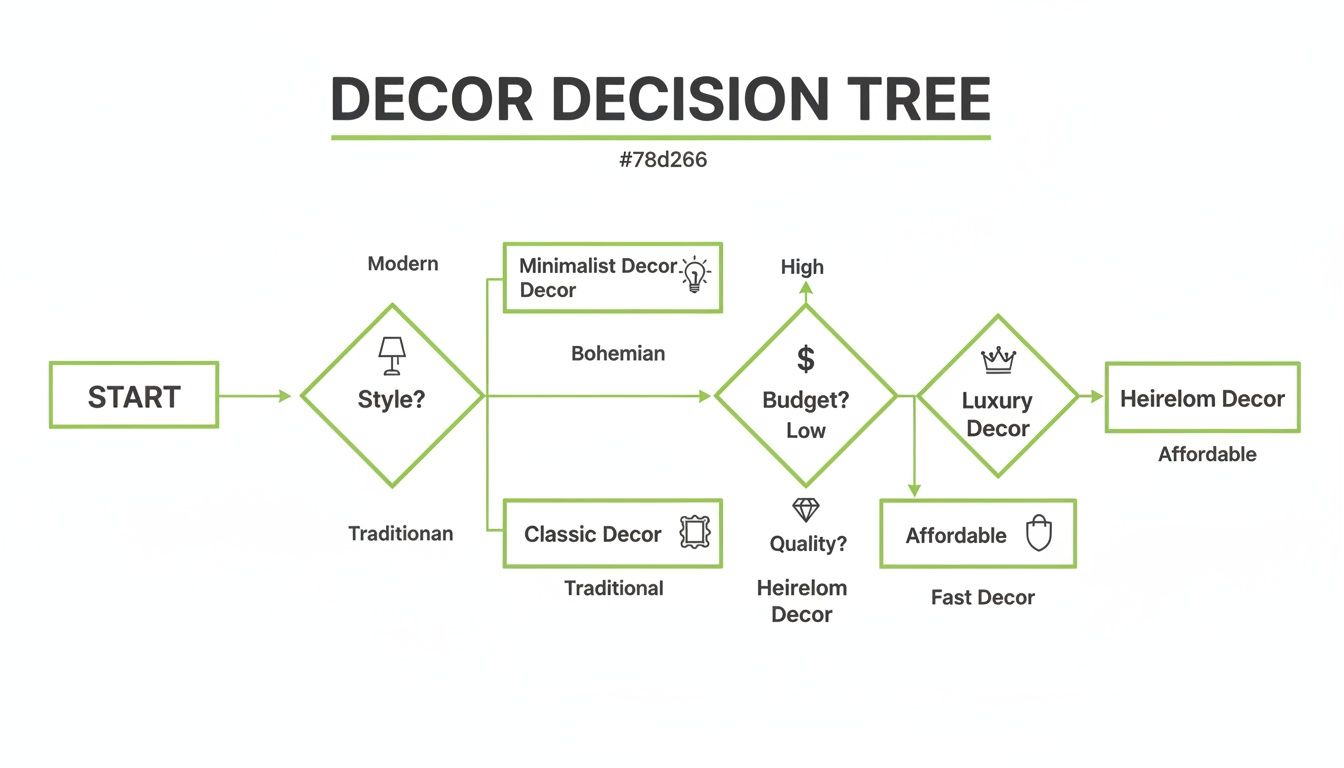
As you can see, if a truly unique style is your top priority, a boutique is a great starting point. But if you’re working with a tight budget, a big-box retailer is probably your best bet.
Handmade, Artisan, and Specialized Platforms
If you're looking for something with a soul, handmade and artisan platforms are where it's at. Sites like Etsy are a direct line to creators all over the world, offering everything from custom furniture to hand-thrown ceramics. When you shop here, you're not just buying another thing—you're supporting an independent artist and bringing a unique piece of their craft into your home.
Beyond the big artisan marketplaces, there's a whole world of niche retailers out there. A quick look at specialized online decor shops shows you just how specific you can get, with stores focusing on everything from natural minerals to vintage-style lighting. These shops are run by people who are deeply passionate about their specific niche, offering an expertise you just won't find anywhere else.
What to Look for When Shopping for Decor Online
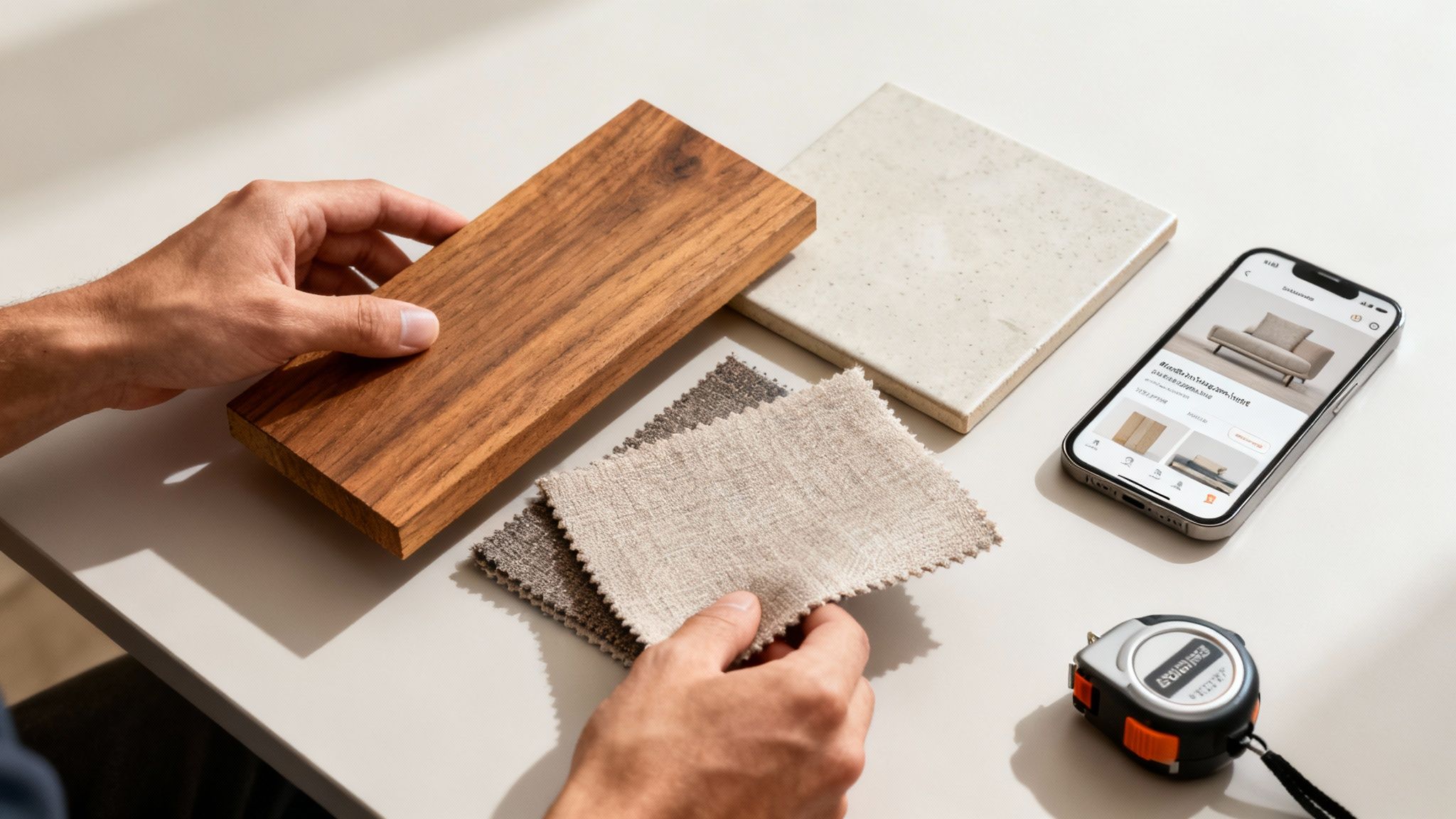
Shopping for home decor online can feel a bit like detective work. You see a beautiful photo, but what’s the real story? To find pieces you’ll truly love for years, you have to look past the styling and search for clues about quality and value. It’s about moving from just browsing to confidently buying.
Think of this as your framework for making smart choices. It’s the magnifying glass that helps you see the details that matter, from the materials used to the company’s policies. With this approach, you'll be able to spot the best places to buy home decor that fit your style and your standards. To get an even better feel for how a piece will work, you can even use digital tools like the best virtual staging software to picture it in your own room before you click "buy."
Dig Into Materials and Craftsmanship
Honestly, what a piece is made of is the single biggest clue to its longevity. You have to learn to read between the lines of a product description to really understand what you're getting.
- Solid Wood vs. Engineered Wood: Look for the term "solid wood"—that’s your sign of durability, as it’s made from whole cuts of lumber. If you see "MDF," "particleboard," or "veneer," you're looking at engineered wood. It's more budget-friendly, but it won't have the same staying power.
- Fabric Composition: When it comes to textiles like pillows or throws, natural fibers are your friend. Cotton, linen, and wool not only feel better but they also tend to wear better over time than most synthetics. Good descriptions will also mention the weave or thread count.
- Ceramics and Metals: For things like vases and bowls, words like "stoneware" or "porcelain" signal higher durability than basic earthenware. With metals, check for solid construction and quality finishes that are built to resist tarnishing.
A higher price tag should always come with a good explanation. If a brand can't tell you why something costs more by pointing to specific materials or construction details, that could be a red flag.
Evaluate Price Against Long-Term Value
It’s so easy to get drawn in by a low price, but the cheapest option is rarely the best value. Real value is where price, quality, and how long you’ll love the item all meet. A beautifully made ceramic vase that you’ll treasure for a decade is a much smarter buy than a cheap one you’ll want to replace next year.
Before you make a purchase, just ask yourself: does the craftsmanship justify the cost? This is especially critical for bigger pieces. A sofa built with a solid hardwood frame and high-resiliency foam cushions might cost more upfront, but it’s going to outlast a cheaper alternative by years, saving you money in the long run.
Check Shipping and Return Policies
This one is absolutely non-negotiable. A store’s shipping and return policies tell you everything you need to know about their confidence in their products and how much they care about their customers.
Before you even think about adding an item to your cart, find the answers to these questions:
- Clear Return Window: Do you have a reasonable amount of time, like 30 days, to send something back?
- Return Costs: Who’s on the hook for return shipping? Free returns are a huge green flag.
- Restocking Fees: Are there any sneaky fees for sending an item back?
- Damage Policy: What’s the plan if your item arrives in less-than-perfect condition? A good company makes this process painless.
Figuring this out beforehand can save you from a major headache later. A complicated return process can quickly turn a dream find into a nightmare. For a closer look at what separates the good from the bad, check out our guide to the best online home decor stores and how their policies stack up.
Discovering Global Decor Trends Without Leaving Home
The internet hasn't just made shopping easier; it has completely torn down the walls between us and the rest of the world. Your living room can now double as a global design showroom. It gives you incredible access to international styles, letting you hunt for and buy pieces that, not too long ago, were only available to globe-trotters or industry insiders.
This worldwide connection means you can find authentic Moroccan rugs, minimalist Japanese ceramics, or vibrant Scandinavian textiles with just a few clicks. Knowing where these trends come from gives you a huge advantage in finding the best places to buy home decor that feels truly special and worldly. Think of it as having a personal shopper who scours international markets just for you.
The Powerhouse of Global Decor
When you look at global influence, one region is an absolute titan. The Asia Pacific region is the undisputed powerhouse of the home decor world, commanding a massive 45.74% market share in 2024. Fueled by booming urbanization in countries like China, India, and Japan, a growing middle class is pouring money into modern furniture, flooring, and textiles. This is driving both production and design innovation in a huge way. You can discover more about this market surge and see its ripple effects.
But this dominance isn't just about manufacturing. It’s about cultural influence. Design aesthetics from this part of the world—from the serene principles of Wabi-Sabi to the intricate patterns in traditional textiles—are shaping the decor you see in stores everywhere. Many online boutiques are now dedicated to sourcing directly from these creative hubs.
When you seek out retailers that curate international collections, you’re not just buying an object. You're inviting a piece of another culture and a global design story into your home, adding layers of personality and sophistication.
How to Shop for International Styles
The key is to find stores that are actually good at curating these global styles. Look for retailers that tell you the story behind their products—the materials, the artisans, the cultural context. This focus saves you from scrolling through endless generic items and connects you with pieces that have real character.
A great retailer will:
- Provide Origin Details: They’ll be upfront about where an item was made or the design tradition it comes from.
- Showcase Unique Materials: Look for descriptions that mention things like mango wood, bone china, or hand-loomed fabrics.
- Offer a Cohesive Collection: Their inventory should feel thoughtfully chosen, reflecting a clear and stylish point of view.
This approach helps you step away from mass-produced trends and build a home that's a true reflection of a broad, stylish worldview. For a little more inspiration, check out our guide on the top current trends in home decor from around the globe.
Getting to Know the North American Decor Market
While it's fun to pull inspiration from all over the globe, knowing your local market is like having a home-field advantage. The North American decor scene has its own unique vibe, shaped by a deep-rooted culture of home improvement and a real desire for spaces that are both beautiful and built to last. This is what dictates the inventory you see online and helps explain why certain shops are considered the best places to buy home decor.
Shoppers in the U.S. and Canada tend to gravitate toward premium, stylish, and highly durable goods. We’re talking about solid wood furniture that can handle the chaos of family life, performance fabrics that shrug off spills, and timeless designs that won’t feel stale in a couple of years. It’s less about chasing fleeting trends and more about investing in the home as a long-term sanctuary.
The Home Improvement Boom
This hunger for quality is supercharged by a massive home improvement trend. North America is a powerhouse in home decor spending and is on track to claim 38% of global revenue by 2025. The US market alone is expected to jump from USD 37.79 billion in 2024 to USD 41.49 billion by 2026. This isn't happening in a vacuum—it's directly linked to our love for renovation, with 55% of households tackling a project in 2024, focusing on pieces that are both stylish and tough. You can dig into more home decor statistics to see the full picture.
So, what does all this market action mean for you?
- Smarter Retailers: Stores in this market know what you want. They often lead with quality craftsmanship and get specific about materials in their product descriptions.
- Better Selection: You'll find a much wider selection of investment-worthy pieces, from solid wood dining tables to well-constructed sofas and high-quality rugs and curtains.
- A Push for Sustainability: That desire for things that last naturally connects with sustainability. As a result, more brands are making a point to highlight eco-friendly materials and ethical manufacturing.
When you understand these market forces, you become a much sharper shopper. You can tell when a higher price tag means genuine quality versus just a clever markup, helping you find real value.
Knowing that longevity and style are top priorities for North American shoppers helps you quickly identify which retailers are on the same page. These are the stores that offer detailed specs, proudly show off their craftsmanship, and build collections designed for a lifetime, not just a single season. This inside knowledge helps you cut through the clutter and find the places that will genuinely help you build a home you'll love for years to come.
Why Curated Boutiques Offer a Better Shopping Experience
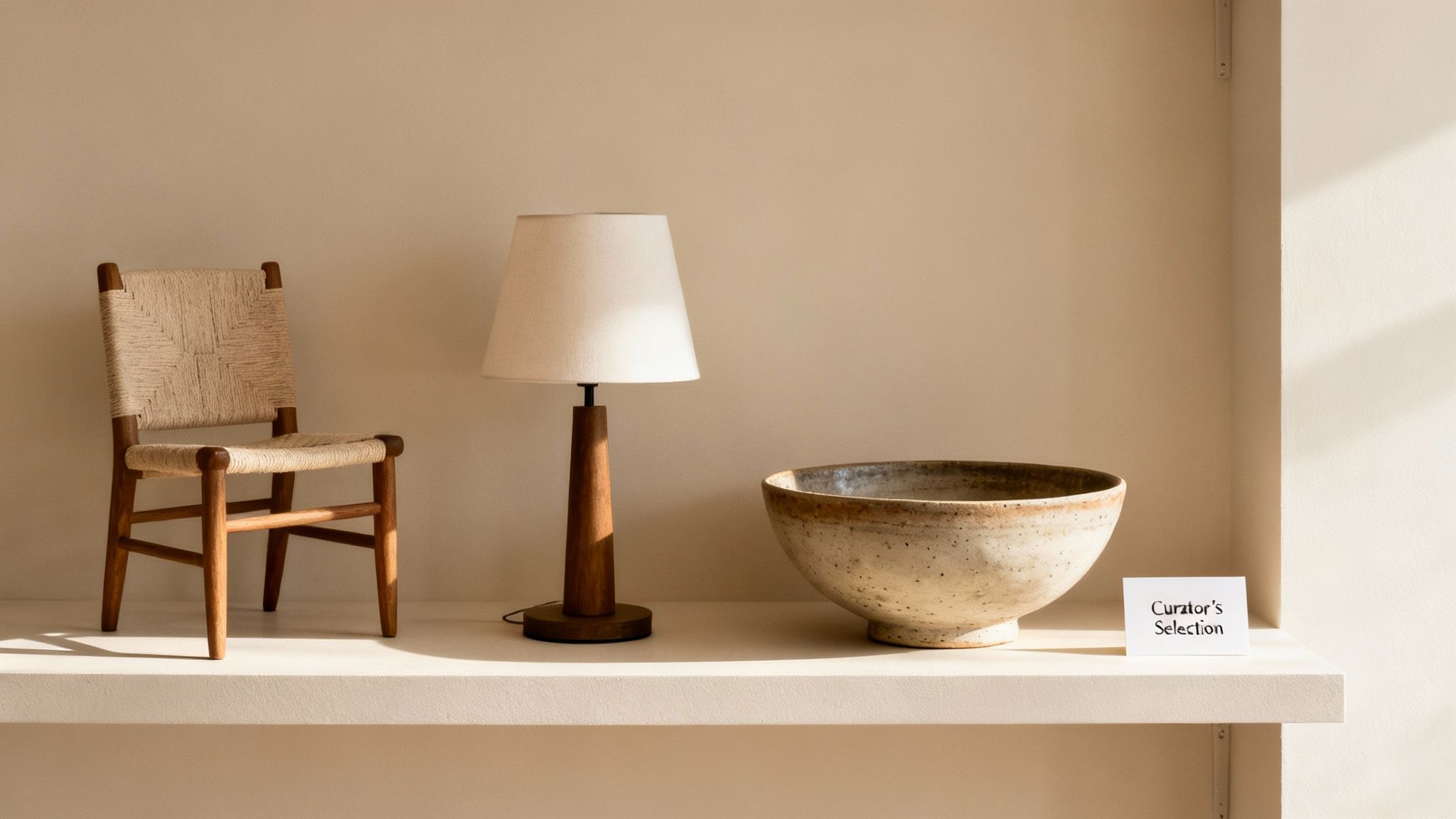
In a world filled with endless, algorithm-driven choices, the idea of curation feels like a breath of fresh air. Think of a giant online marketplace as a massive, chaotic library with millions of books but no librarian. Sure, you might stumble upon a gem, but you’ll probably spend hours digging through messy shelves to find it.
A curated boutique, however, is like walking into a specialty bookstore where the owner has already read everything and hand-picked only the most incredible titles for you. This expert-led approach is exactly what makes them one of the best places to buy home decor. It turns shopping from a chore into an act of discovery.
These shops essentially act as your personal design partners, making the whole process of creating a beautiful, cohesive home so much simpler. Instead of overwhelming you with choices, they present a thoughtfully edited collection where every single item meets a high bar for both quality and style.
The Real Meaning of Curation
So, what does “curated” actually mean when you’re shopping for your home? It’s all about a professional eye pre-vetting every item to make sure it delivers on aesthetics and craftsmanship. It’s the difference between a generic accent chair and a designer-approved piece with a truly unique shape and top-notch upholstery.
This translates into some pretty real benefits for you:
- You Save Time: No more scrolling through thousands of mediocre products just to find one good one.
- You Get Guaranteed Quality: The baseline for quality is just higher because items are specifically chosen for their materials and construction.
- You Find Unique Pieces: Boutiques introduce you to one-of-a-kind, often handcrafted items you’d never find in a big-box store.
When a store is curated, it has a distinct point of view. It’s a promise that someone with real expertise has already done the hard work of sourcing, so you can just focus on the joy of choosing pieces that truly speak to you.
For example, you might discover a set of handcrafted ceramic dinnerware with subtle, artistic imperfections that tell a story—something a mass-produced collection just can’t do. This is where curation really shines. It’s about choosing character over conformity and elevating your space with things that feel special and intentional.
Got Questions About Buying Home Decor Online? We've Got Answers.
Stepping into the world of online decor shopping can feel a little daunting. It's one thing to fall in love with a photo on your screen, but it’s another thing entirely to know for sure it'll look just as good in your own home. Let’s tackle some of the most common questions people have.
How Can I Be Sure New Decor Will Go With My Current Style?
The easiest first step? Create a quick mood board. Seriously, just pull some photos of your room and drop them next to the pieces you’re eyeing. It’s a surprisingly effective way to see if the colors and textures play nicely together.
Once you’re ready to hit "add to cart," get forensic with the details. Check the dimensions (measure twice!), read up on the materials, and hunt down customer photos. A brand's professional shots are great, but seeing a piece in a real person's home gives you the unfiltered truth. If they offer fabric swatches, grab them—it's the only way to be 100% certain the color is a perfect match.
What’s the Secret to Judging Furniture Quality Without Seeing It in Person?
Look for brands that aren't afraid to get specific. The product description should tell you everything. Is it made from solid wood or particleboard? What’s the fabric actually made of? Keep an eye out for construction details, too—things like dovetail joints are a massive green flag that you’re looking at something built to last.
And of course, customer reviews are your secret weapon. They offer a window into how a piece holds up over time, straight from people who have already put it to the test.
A generous, no-fuss return policy is probably the best sign of a retailer that stands by its products. If they make returns easy, it’s because they’re betting you won’t want to.
At Fluent Trends, we do the legwork for you by curating pieces that are not only beautiful but also built with quality craftsmanship. Discover our curated collection of designer-approved home furnishings today and take the guesswork out of shopping.