

Best Quality Sectional Couches: A Quick Guide to Frames & Cushions
Donna MaloneWhen you boil it down, the best quality sectional couches all share a few key ingredients: a kiln-dried hardwood frame, a support system of 8-way hand-tied or sinuous springs, and cushions made from high-density foam. Topped off with durable upholstery, these are the features that guarantee your sectional will deliver lasting comfort and hold its shape for years—something a low price tag simply can't promise.
Why Finding a High-Quality Sectional Matters
Let’s be honest, a sectional isn't just another piece of furniture. It’s the heart of the home. It’s where you pile on for movie nights, unwind after a long day, and make memories with the people you love. This guide is designed to help you look past fleeting trends and confusing price tags to see what really makes a sectional great.
We’re seeing a big shift away from "fast furniture"—the kind that sags, creaks, and falls apart after just a couple of years. People are wising up and looking for well-made, thoughtfully designed pieces that are a real investment. Think of this as your roadmap to making a smarter purchase you won’t regret.
The Four Pillars of a Superior Sectional
To find the best quality sectional couches, you have to look beyond the showroom shine. True quality is built from the inside out, resting on four key pillars that dictate how comfortable, durable, and valuable a sectional truly is. Get these down, and you'll be able to size up any sofa like a pro.
- The Frame: This is the skeleton of your sofa. A rock-solid frame, ideally made from kiln-dried hardwood, is what keeps the whole thing from warping, creaking, or breaking down over time. It’s non-negotiable.
- The Support System: Underneath the cushions, a network of springs or webbing is doing the heavy lifting to prevent that dreaded sag. A good suspension system distributes weight evenly, ensuring every seat is the best seat in the house.
- The Cushions: This is all about the immediate feel and long-term comfort. The filling—whether it’s high-density foam, a down blend, or something in between—determines how well your cushions hold their shape and support you day in and day out.
- The Upholstery: While it’s the first thing you see, the fabric or leather is more than just a pretty face. It has to stand up to daily life, resisting pills, fading, and tears.
This quick chart breaks down how these four core components work together.
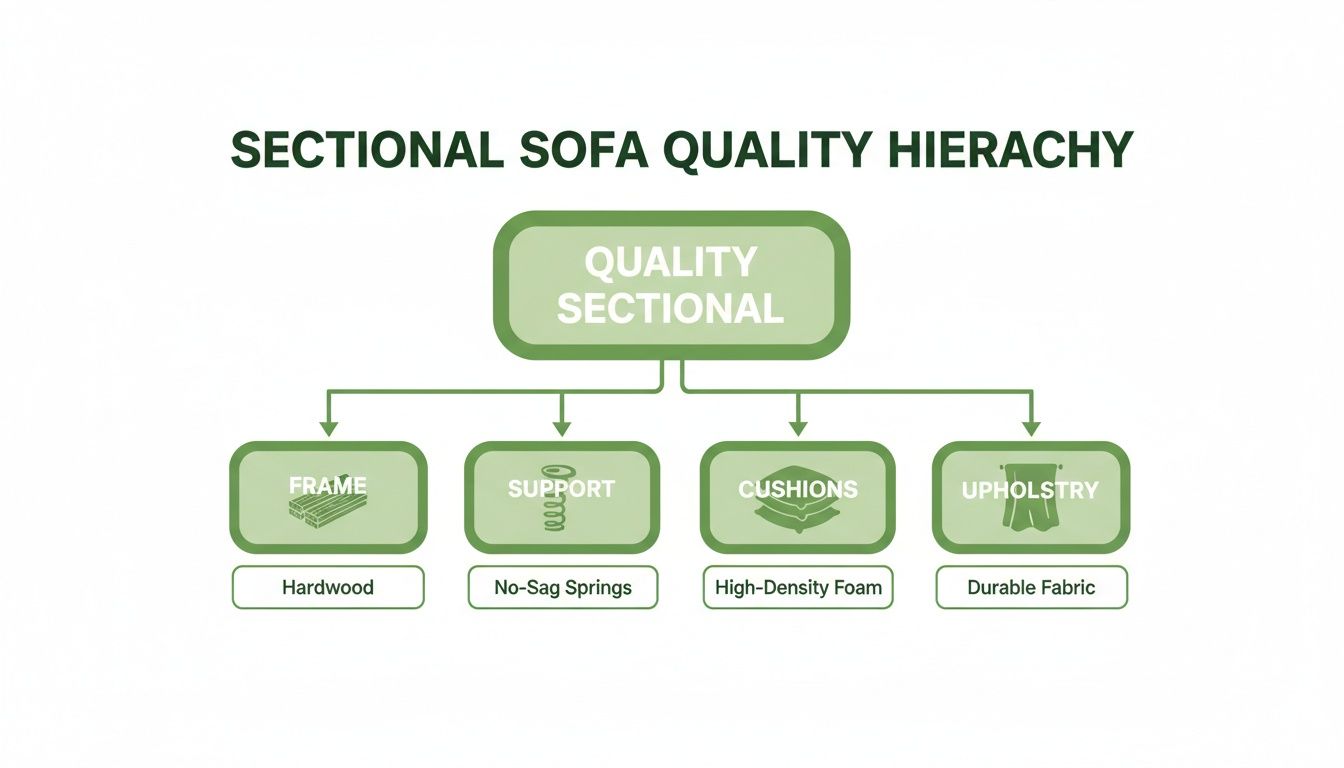
You can see how each element builds on the last to create a truly great piece of furniture. A strong frame is useless without good support, and the plushest cushions won't mean a thing if they're wrapped in flimsy fabric. When all four of these elements are top-notch, you get a sectional that delivers on its promise of comfort and longevity.
The Unseen Foundation of a Great Sectional
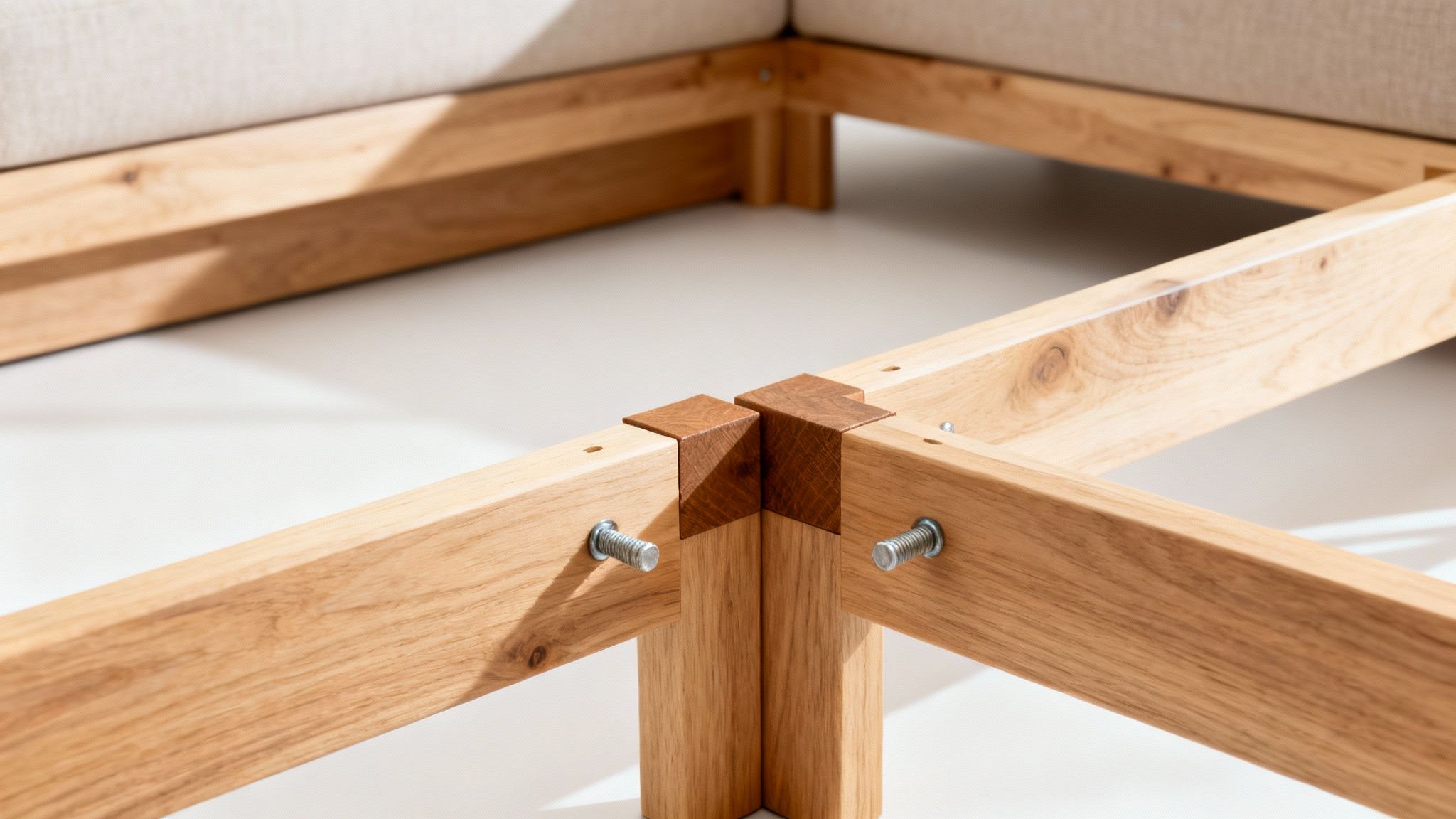
When you’re shopping for a great sectional, what you can't see is often what matters most. The frame is the invisible skeleton of your sofa—it’s the core structure that decides whether it’ll last for three years or thirty.
Think of it like the foundation of a house. If that’s weak, no amount of beautiful siding or fancy decor can stop it from eventually falling apart. A sturdy frame is the absolute non-negotiable for a sectional that will resist sagging, creaking, and wobbling for years to come.
Frame Materials That Signal Quality
The single most critical part of the frame is the wood itself. The best manufacturers build their frames from kiln-dried hardwood, and that detail is a game-changer. Kiln-drying is a process that removes about 93% of the moisture from the wood, which stops it from warping or cracking as the humidity in your home changes with the seasons.
When you’re reading product descriptions, keep an eye out for these hardwoods:
- Oak: Famous for its incredible strength and durability.
- Maple: A seriously dense wood that holds up against dents and dings.
- Ash: A great choice for its mix of flexibility and shock resistance.
These materials create a frame that can handle real life, from kids using it as a trampoline to just the daily wear and tear of family movie nights. Cheaper sectionals, on the other hand, often use softwoods like pine or flimsy materials like particleboard and plastic. Those are the ones that will break down under stress.
Sofa Frame Material Quality at a Glance
Not sure what to look for? This quick comparison breaks down the good, the bad, and the truly awful when it comes to sofa frames. It'll help you spot quality from a mile away.
| Material Type | Durability & Longevity | Commonly Found In | Key Identifier |
|---|---|---|---|
| Kiln-Dried Hardwood | Excellent (15+ years) | High-end, investment pieces | Resists warping and cracking, very heavy |
| Engineered Hardwood | Good (5-10 years) | Mid-range, quality furniture | Plywood layers offer good stability |
| Softwood (e.g., Pine) | Fair (3-5 years) | Budget-friendly options | Lighter weight, can dent or warp easily |
| Particleboard/MDF | Poor (1-3 years) | Low-cost, "fast furniture" | Prone to sagging and breaking |
Ultimately, a heavy sofa is usually a good sign. It points to a solid, dense hardwood frame that was built to last—not just to sell.
The Craftsmanship of Strong Joinery
The wood is only half the story. How those pieces of wood are put together—the joinery—is where real craftsmanship shines. The best frames aren’t just slapped together with staples and a bit of glue, which is a recipe for a wobbly, unstable mess down the road.
A well-constructed frame uses traditional woodworking techniques to create joints that are stronger than the wood itself. This attention to detail is a clear sign that a manufacturer is building furniture to last, not just to sell.
Top-tier construction reinforces every stress point, especially the corners. These are the techniques you want to see listed in a product description:
- Corner Blocks: These are small wooden blocks glued and screwed into each corner of the frame. This is a must-have feature for adding serious strength and preventing any twisting.
- Dowels: Small wooden pegs are fitted into holes to lock two pieces of wood together, creating an incredibly tight bond.
- Screws and Glue: These are used with corner blocks and dowels to make sure every joint is absolutely rock-solid.
If a brand doesn’t mention its joinery methods, that’s a red flag. The best makers are proud of their work and will tell you exactly how their frames are built. You'll notice this when researching the top quality sofa brands and digging into their product specs. They know that a solid foundation is the true mark of a piece of furniture built for life.
How to Judge Real Comfort and Lasting Support
A gorgeous frame is one thing, but what separates a decent sectional from a truly great one is the powerhouse duo working behind the scenes: the suspension and the cushions. These are the components that deliver that "just right" feeling, year after year, and keep your sofa from developing dreaded sags and dips.
Think of it like a high-performance car. The suspension is the shocks, absorbing the big impacts of daily life, while the cushions are the plush seats, providing that immediate, sink-in comfort. A sectional with a flimsy suspension will feel lumpy and uneven no matter how good the cushions are, just like a car with blown shocks gives you a bumpy ride.
This internal system, tucked away out of sight, is what distributes your weight evenly and gives the sofa its foundational resilience. Getting to know the difference between suspension types is your secret weapon for finding a sectional that’s built to last.
Decoding the Suspension System
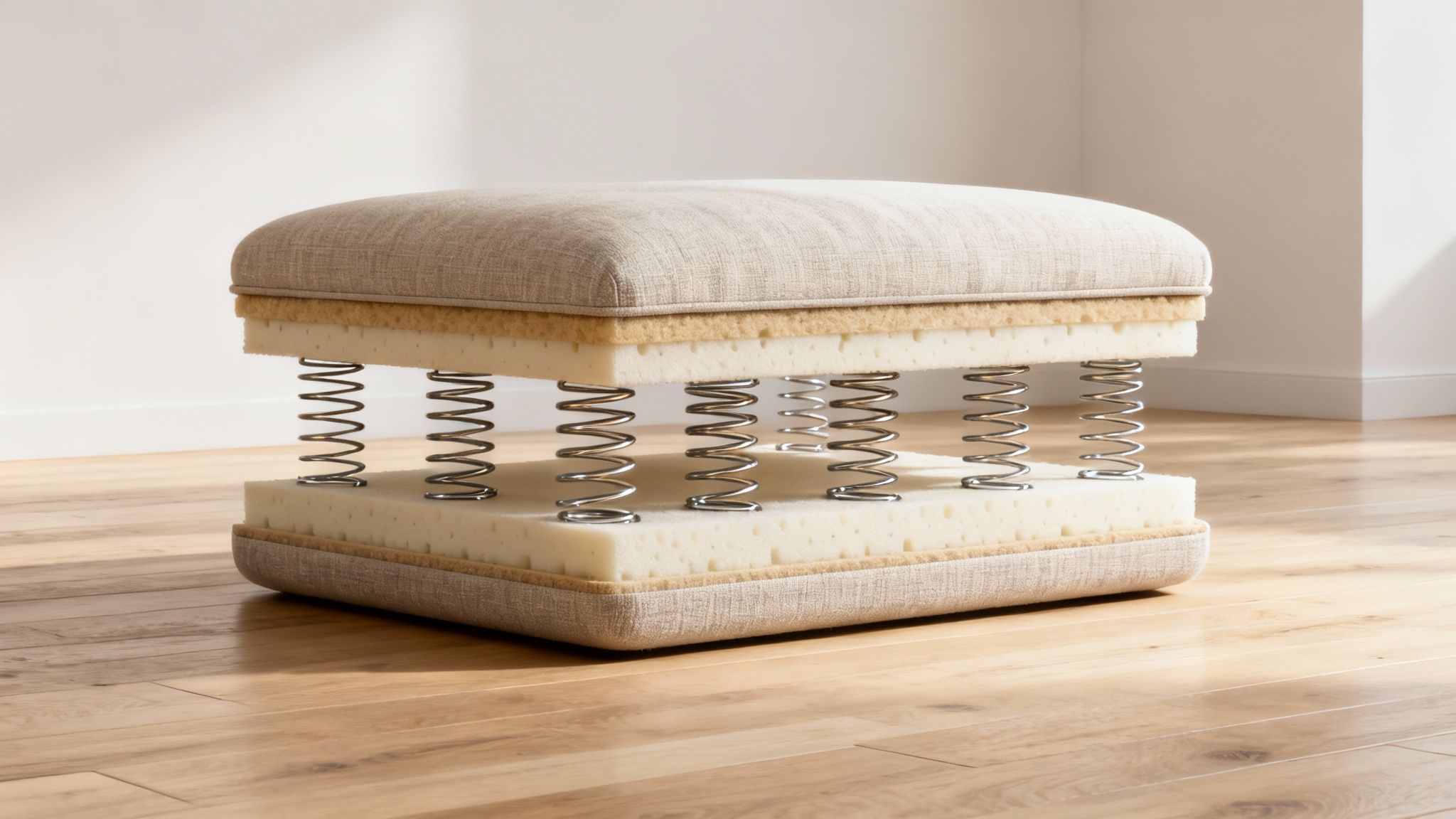
The suspension is simply the network of springs or webbing that holds up the cushions. It’s the first line of defense against gravity, and a quality system ensures every seat feels just as supportive as the next.
There are three main players in the suspension game, each with its own pros and cons.
-
8-Way Hand-Tied Springs: This is the undisputed gold standard in furniture making—a true sign of meticulous craftsmanship. Craftsmen tie each spring to the surrounding ones by hand in eight different directions. This creates an interconnected web that moves as a single unit, offering phenomenal comfort, support, and durability. It’s an investment, but it’s built to last a lifetime.
-
Sinuous Springs: You might see these called "S-springs" because they are, quite literally, S-shaped wires of heavy-gauge steel. They run in a continuous line from the front of the frame to the back, providing a firm and very durable base. While not as intricate as 8-way hand-tied, a well-made sinuous spring system is the mark of a high-quality sectional and offers fantastic longevity.
-
Web Suspension: This system uses stretchy bands of webbing pulled taut across the frame. It's the cheapest route, which is why you’ll almost always find it in budget-friendly furniture. The downside? That webbing inevitably stretches and sags over time, leaving you with a droopy, unsupportive seat.
Here's an insider tip: when you're shopping, pay close attention to the product details. Brands that invest in 8-way hand-tied or heavy-gauge sinuous springs are proud of it and will shout it from the rooftops. If the suspension type isn't mentioned at all? That silence is often a big red flag.
Understanding Cushion Fillings
Once you’ve got a solid suspension, it’s the cushions that dial in the exact feel. The filling is what determines whether you have a firm, sit-up-straight sofa or a soft, lounge-all-day one. More importantly, it dictates how well those cushions will keep their shape.
There's nothing worse than cushions that flatten into sad little pancakes after a few months. Quality fillings are engineered to bounce back, day after day. It's all about striking that perfect balance between cloud-like softness and resilient support.
Foam Density: The Unsung Hero of Durability
When it comes to foam cushions, the single most important number isn’t about softness—it’s density. Measured in pounds per cubic foot, density tells you how much foam is actually packed into the cushion. More material means more resilience and a much longer lifespan.
- High-Density (HD) Foam: You'll want to look for a density of 1.8 lbs per cubic foot or higher. This is really the baseline for good-quality furniture. Anything less than that is going to break down and flatten out fast.
- High-Resilience (HR) Foam: This is the premium stuff. HR foam usually boasts a density of 2.5 lbs or more and has a much springier, bouncier feel. It’s an excellent choice for a family sectional that’s going to see a lot of action.
Don't mix up density and firmness—they aren't the same thing. You can have soft high-density foam or firm low-density foam. Just remember: density is about longevity, while firmness is all about your personal comfort preference.
Exploring Other Cushion Options
Foam isn't the only game in town. Other fillings offer their own unique feel, letting you customize your sectional to your exact lounging style.
| Cushion Fill Type | Best For | Feel & Maintenance |
|---|---|---|
| Down & Feather | The ultimate in luxurious, cloud-like softness. | You'll get that classic sink-in feel. Be prepared for daily fluffing to keep them looking lofty. |
| Foam & Fiber Blend | A great all-around, budget-friendly choice. | Gives you a soft top layer with a supportive foam core inside. Needs less fluffing than pure down. |
| Foam & Down Blend | The absolute best of both worlds. | You get the long-lasting resilience of a foam core wrapped in a plush, comfy layer of down. |
Nailing the right combination of suspension and cushions is the real secret to finding a sectional that will feel just as amazing in five years as it does the day it arrives. One gives you the foundational support, and the other delivers that perfect, personalized comfort you'll sink into every single day.
Choosing Upholstery That Looks Good and Lasts
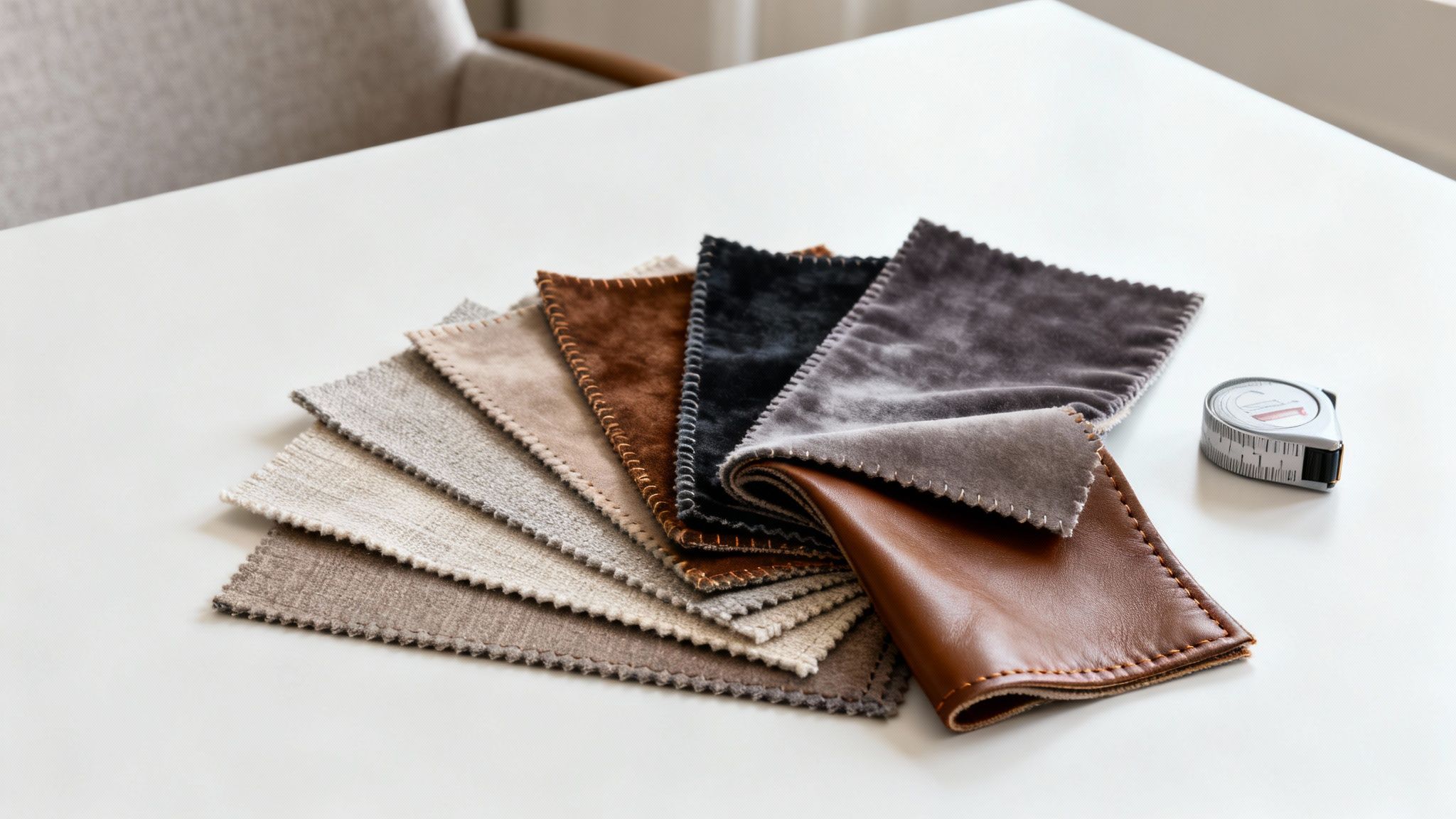
The upholstery is the first thing you see and the part of your sectional you touch every day. It's the color, the texture, and the vibe. But it's also a frontline defender against spills, pets, sunlight, and general wear and tear. Picking the right material means finding that perfect balance between the look you want and the durability you actually need.
Think of it like a good coat. It needs to look sharp, but it also has to stand up to the weather. The best upholstery for your sectional will do the same—it’ll fit your decor while handling whatever your life throws at it, from movie marathons to muddy paws.
Natural vs. Synthetic Fabrics
The first big choice you'll make is between natural and synthetic fibers. There's no right or wrong answer here; it's all about what matters most to you in terms of feel, maintenance, and overall look.
Natural Fibers like cotton, linen, and wool offer a soft, breathable touch that just feels premium. They have an organic texture that’s tough for synthetics to truly copy. The trade-off? They can be a bit more prone to staining and fading unless they're treated or blended with a synthetic fiber to boost their toughness.
Synthetic Fibers like polyester, microfiber, and acrylic are the workhorses of the upholstery world. These are engineered for durability, making them a fantastic choice for busy households. They stand up well to stains, fading, and abrasion. And while they used to have a reputation for feeling less luxurious, modern synthetics have come an incredible way, often mimicking the look and feel of naturals pretty convincingly.
If you want to go deeper, this guide covers everything you need to know about upholstery materials and can help you weigh the pros and cons.
Popular Upholstery Choices Explained
Let's break down some of the most common fabrics you'll see out there. Each one has its own personality and performs differently under pressure.
-
Leather: A classic for a reason. Leather is incredibly durable and actually gets better with age, developing a beautiful, rich patina. It's a breeze to wipe clean and a great choice for allergy sufferers since it doesn't trap dust. Look for full-grain or top-grain for the best quality.
-
Velvet: If you're after a touch of luxury, velvet delivers. Its softness and deep color are hard to beat. Surprisingly, velvet can be quite durable, especially when it’s made from polyester. The only real downside is that it can be a magnet for pet hair.
-
Microfiber: This is a superstar synthetic. It’s soft to the touch, highly stain-resistant, and super easy to clean. The tight weave also makes it a great choice for pet owners because claws have a hard time snagging the fabric.
-
Performance Fabrics: This is a catch-all term for specially engineered materials designed to be nearly bulletproof. Brands like Sunbrella and Crypton make fabrics that resist stains, moisture, and fading, making them the ultimate choice for families with kids or for sectionals that get a lot of direct sun.
This isn't just a cosmetic choice—it's a massive indicator of quality. In fact, industry analysis often separates revenue for modular sofas by fabric versus leather, showing just how much a manufacturer's material choice drives its value and quality perception.
Decoding the Double Rub Count
As you shop, you might see a spec called the double rub count. It sounds technical, but it’s actually a straightforward measure of a fabric's durability.
A machine literally rubs a piece of heavy cotton back and forth across the fabric. One back-and-forth pass is a "double rub." The test runs until the fabric shows noticeable wear. That final number tells you how much abuse the fabric can take before it starts to break down.
A higher double rub count is a direct predictor of a longer life for your upholstery. It’s one of the best data points you have for how well a fabric will stand up to the chaos of daily life.
For most of us, durability is a big deal. Here’s a quick cheat sheet to make sense of the numbers:
| Double Rub Count | Durability Level | Recommended Use |
|---|---|---|
| Under 10,000 | Delicate | Best for things you don't touch much, like decorative pillows. |
| 10,000 to 15,000 | Light Duty | Fine for furniture that's used only occasionally. |
| 15,000 to 30,000 | Medium Duty | This is the sweet spot for most homes. Perfect for the main couch. |
| Over 30,000 | Heavy Duty | This is commercial-grade stuff. It's built for very active kids and pets. |
By keeping an eye on both the type of material and its double rub count, you can choose an upholstery that not only looks great when it arrives but stays that way for years to come.
Finding the Perfect Fit for Your Living Space
Even the most beautiful, well-made sectional is a bad buy if it doesn't fit your room. We've all seen it: a stunning sofa that completely swallows a small room or creates an awkward traffic jam. Getting the scale and configuration right is just as important as the quality of the frame or fabric.
Think of your sectional as the anchor of your living room. It sets the tone for everything else. The shape you choose dictates how you, your family, and your guests will actually use the space—whether it’s for cozy movie nights or lively conversations.
Matching Shape to Your Lifestyle
Different sectional shapes are built for different purposes. Once you know the lingo, you can easily match the couch to how you really live.
- L-Shape Sectionals: The classic for a reason. This shape is perfect for tucking into a corner to define the living area and create a natural spot for conversation.
- Chaise Sectionals: If you love to kick your feet up but don't have a massive room, this is your answer. It gives you a dedicated lounging spot without the footprint of a full L-shape.
- U-Shape Sectionals: Got a big, open-plan space? The U-shape is the ultimate entertainer. It creates a comfy, semi-enclosed zone that encourages everyone to face each other and really connect.
The rise of modular sectionals has been a game-changer, offering incredible flexibility. You can rearrange the pieces to suit your needs—an L-shape for everyday life, then break it apart into separate seating for a party. It's a smart way to future-proof your investment.
If you're stuck on how a sectional might look in your home, it helps to browse some general living room ideas for inspiration. Seeing how others have made it work can spark some great ideas for your own space.
The Non-Negotiable Measuring Checklist
Okay, before you even think about clicking "buy," grab a tape measure. This one simple step can save you from a world of delivery-day pain. It's not just about fitting the sectional in the room; it's about getting it to the room in the first place.
Here’s exactly what you need to do to avoid any surprises:
- Map Your Room: Measure the length and width of your room, then use painter's tape to mark out the sectional's dimensions on the floor. This gives you a tangible feel for how much real estate it will take up.
- Check the Path: This is critical. Measure the width and height of every single doorway, hallway, and stairwell on the delivery route. Don't forget about annoying obstacles like handrails, tight corners, or low-hanging lights.
- Compare with Sofa Dimensions: Look up the sectional's key measurements online: overall width, depth, and height. The one everyone forgets is the diagonal depth—that’s the number that tells you if it can actually be angled and pivoted through a tight doorway.
A sofa's dimensions are just numbers on a screen until you prove they work in your home. Taking 15 minutes to measure properly is the best thing you can do to make sure your new sectional is a source of joy, not a logistical nightmare.
Your Smart Shopper's Checklist for Buying Online
Buying a high-quality sectional online can feel a little intimidating, but it doesn't have to be a shot in the dark. Armed with the right checklist, you can navigate the digital aisles like a seasoned pro and spot real value from the comfort of your couch.
Think of yourself as a detective on a case. Your first move is to read between the lines of the product description, cutting through the marketing fluff to find cold, hard facts. Don't just get distracted by the glossy photos; you're hunting for the specific quality clues we've been talking about.
Scrutinize the Specifications
A brand that's proud of its craftsmanship will be upfront about it. Vague descriptions? That's your first major red flag. If a company is shelling out for top-notch materials, you better believe they're going to tell you.
Here are the non-negotiables to look for:
- Frame Material: Does it say “kiln-dried hardwood” in plain English? If you see fuzzy terms like “solid wood” or “mixed hardwood,” proceed with caution.
- Joinery: You want to see the words “corner-blocked and reinforced joints.” This is the clearest sign you’ll get of a sturdy frame built to last.
- Suspension System: Premium brands will boast about their “8-way hand-tied” or “sinuous spring” suspension. If they don't mention the type of support at all, you're probably looking at a less durable web suspension.
- Cushion Density: Hunt for a foam density of at least 1.8 lbs per cubic foot. This little number is your best crystal ball for predicting how well the cushions will fight off sagging. Our guide on how to choose a sofa has even more tips on cushion construction.
Validate with Swatches and Reviews
Never, ever underestimate the power of seeing and feeling the fabric for yourself. Upholstery can look one way under studio lights on a screen and completely different in the morning sun of your living room.
Ordering fabric swatches is the single most important step to prevent color or texture disappointment. It lets you test the fabric's feel, see its true color in your home's unique lighting, and even see how it handles a coffee spill or a curious pet.
Once you’ve got your hands on the fabric, it’s time to dive into the reviews. Look for patterns. A couple of grumpy reviews are one thing, but if you see consistent complaints about sagging cushions or pilling fabric, consider it a serious warning.
Understand the Logistics and Fine Print
The final piece of the puzzle is all about the boring—but crucial—details of getting this giant piece of furniture into your home and knowing your options if things go wrong. A solid warranty and clear policies show that a manufacturer stands behind its product.
Here’s what you need to lock down before clicking "buy":
- Warranty: What does it actually cover? A great one will offer lifetime protection on the frame and several years on the suspension and cushions.
- Delivery Options: Know the difference between curbside drop-off (it's all on you) and white-glove service, where the delivery team brings it inside, puts it together, and hauls away all the packaging.
- Return Policy: Get familiar with the terms. Check the return window, look for any restocking fees, and figure out who pays for return shipping—which can be a hefty price for something so big.
As more people furnish their homes online, making a confident, well-informed choice is everything. By sticking to this checklist, you can cut through the noise, shop with precision, and find a sectional that truly delivers on quality and style for years to come.
Answering Your Top Sectional Questions
Even after you've sorted through frames and fabrics, a few last-minute questions always seem to surface. Let's tackle those nagging thoughts head-on so you can feel completely confident in your final choice.
The big one is always about cost: "Are expensive sectionals really worth it?" In my experience, the answer is almost always yes, and it boils down to longevity. A higher price tag usually means better guts—think kiln-dried hardwood frames instead of plywood, or 8-way hand-tied springs that refuse to sag. This is what turns a 3-year sofa into a 15-year investment.
Then comes the inevitable "How do I keep this thing looking new?" The secret is to match your upholstery to your real life, not your fantasy life. If you have kids or a dog, performance fabrics or top-grain leather are your best friends; a quick wipe-down is often all they need. For everything else, make a habit of vacuuming with the upholstery tool and tackling spills the moment they happen.
What Is a Modular Sectional?
Think of a modular sectional as a sofa made of building blocks. It’s built from individual, movable pieces—or modules—that you can click together or pull apart to create different shapes. You aren’t stuck with one fixed L-shape. You can rearrange the pieces into a U-shape, a long straight sofa, or even break them up into separate chairs.
This is the ultimate way to future-proof your furniture. A modular sectional can adapt as your life changes—growing for a bigger family, shrinking for a smaller apartment, or reconfiguring for a new room. That flexibility is a game-changer and a true sign of modern, high-quality design.
Finally, everyone asks, "How firm should the cushions be?" This is totally subjective, but here’s my pro-tip: look for high-density foam. It gives you that supportive, "sit on top" feeling rather than sinking into a marshmallow, and it's brilliant at holding its shape for years. You get comfort that lasts.
Ready to find a sectional that brings together lasting quality and incredible style? Explore the curated collections at Fluent Trends and discover the perfect centerpiece for your living space. Visit us at https://www.fluenttrends.com to see our designer-approved furniture.