

Best Quality Sectional Sofas: How to Choose Durable, Comfortable Pieces
Donna MaloneLet's be honest, finding the best quality sectional sofas means looking past the pretty showroom pictures and understanding what makes a couch last. It's about knowing the difference between a sofa that looks good for a year and one that becomes a beloved part of your home for a decade.
The secret lies in a few key things: a kiln-dried hardwood frame, high-resiliency foam cushions that don't flatten out, and upholstery that can actually handle your life.
How to Finally Find the Perfect Sectional
Staring at an ocean of beige and grey sofas online can make your eyes glaze over. Everything starts to look the same, and you're left wondering: how do I actually spot quality?
Think of this guide as your personal roadmap. We're going to cut through the marketing fluff and showroom sales pitches to show you what really matters when you're investing in the centerpiece of your living room.

Beyond the Price Tag: What Truly Defines Quality
We'll get into the hidden anatomy of a great sectional—from the sturdy bones of its internal frame to the cushions that support you and the fabrics that stand up to spills and sunlight. This is your crash course in becoming a confident sofa shopper, ready to find a piece that’s not just beautiful, but built for real life.
Our goal is to get you thinking beyond that first impression. A sofa’s true worth isn’t just in its silhouette, but in the craftsmanship that ensures it can handle movie marathons, kids, and pets without falling apart.
A truly great sectional is an investment in your home's comfort and style. It serves as the foundation for countless memories, from quiet movie nights to lively gatherings with friends and family. Choosing wisely means prioritizing substance over fleeting trends.
The Growing Demand for Furniture That Lasts
It’s not just you. Shoppers everywhere are tired of disposable furniture. Sectional sofas are leading the charge in living room upgrades, with global sofa revenue estimated at around USD 30.25 billion in 2024 and projected to hit nearly USD 41.17 billion by 2031.
This trend points to a bigger shift: people want furniture that's both flexible and built to endure. We’ll show you the critical differences that separate a throwaway couch from a forever piece, ensuring your choice genuinely elevates your home.
And once you've made that investment, you'll want to protect it. A detailed guide on choosing the right corner sofa cover can be a lifesaver for keeping your new sectional looking pristine.
What Lies Beneath the Upholstery
It's easy to fall in love with a sectional's looks—the gorgeous fabric, the perfect color, the inviting silhouette. But what truly determines if that love will last is what you can't see. The most beautiful sofa is worthless if its core is weak.
To find a sectional that's built to last, you have to play detective and look past the fabric. We need to focus on the two components doing all the heavy lifting: the frame and the suspension system.
Think of the frame as the sectional's skeleton. It provides the shape, strength, and stability for everything else. A weak frame will twist, creak, and sag, dooming the sofa from the start. The suspension is the muscle—the network of springs or webbing that supports the cushions and gives you a comfortable, resilient seat. Without it, you're just sitting on a lumpy board.
The Frame: A Sofa's Foundation
A great sectional starts with a great frame. And when it comes to materials, there's a clear winner you should always look for.
Kiln-Dried Hardwood is Non-Negotiable
The absolute gold standard for a sofa frame is kiln-dried hardwood. You’ll hear this term a lot, and for good reason. The kiln-drying process removes about 93% of the moisture from woods like oak, maple, or ash.
Why does that matter? It prevents the wood from warping, cracking, or bowing as it adjusts to the temperature and humidity in your home. It’s an incredibly important step that ensures the frame remains stable for years.
Frames made from green wood (which hasn't been dried), particleboard, or cheap plywood are major red flags. They’re susceptible to moisture damage and simply can't handle the stress of daily life. They’ll break down, and fast.
When you're shopping, don't be shy. Ask the salesperson, "What is the frame made of, and is the wood kiln-dried?" A brand that invests in quality will be proud to tell you. If they dodge the question, it's a good sign to walk away.
How It’s All Put Together: Joinery
Beyond the wood itself, you need to know how the frame is assembled. This is called joinery, and the best techniques are designed for maximum strength.
Look for frames built with:
-
Corner Blocks: These are extra wood blocks glued and screwed into every corner. They provide powerful reinforcement and stop the frame from twisting out of shape.
-
Dowels and Screws: High-quality joints often use wooden dowels fitted into holes, which are then secured with screws and glue. This creates a bond that’s often stronger than the wood itself.
A frame held together with just staples and a little glue is a sign of cutting corners. Those joints will loosen quickly, leading to a wobbly, unstable sofa that feels like it's about to fall apart.
The Suspension: Putting the Bounce in Your Seat
Once you’ve confirmed a solid frame, the next layer to investigate is the suspension. This is what keeps you from sinking right through to the floor and provides the support that defines a comfortable sit. You'll generally run into two main types.
The Best: 8-Way Hand-Tied Springs
The most traditional and durable method is the 8-way hand-tied spring system. It’s a true hallmark of fine craftsmanship. In this system, individual coil springs are secured to the frame and then tied to each other in eight different directions with strong twine.
This creates an interconnected web where each spring moves independently but also works with its neighbors. The result is incredibly even weight distribution and personalized support, no matter where you sit. It's a labor-intensive process, which is why you’ll find it in higher-end furniture, but the comfort and longevity are simply unmatched.
The Good: Sinuous Springs
A more common and perfectly reliable alternative is the sinuous spring system. These are heavy-gauge, S-shaped steel wires that run from the front of the frame to the back. They are often called "no-sag" springs for a reason.
While they don't offer the same nuanced support as an 8-way hand-tied system, a well-made sinuous spring suspension provides excellent, durable support that will last for years. The key is to make sure the springs are placed close together and are attached to the frame with insulated clips to prevent any squeaking down the road.
To help you quickly gauge what you're looking at, here’s a simple breakdown of how these components stack up.
Sectional Frame and Suspension Quality Tiers
This quick reference chart helps you compare construction methods at a glance, so you know exactly what to look for when you're shopping.
| Quality Tier | Frame Construction | Suspension System | Expected Durability |
|---|---|---|---|
| Good | Solid wood or furniture-grade plywood; screwed & glued joints. | Sinuous springs (closely spaced, heavy-gauge). | 5-10 years |
| Better | Kiln-dried hardwood; corner-blocked, doweled, screwed & glued. | High-quality sinuous springs; webbing support. | 10-15 years |
| Best | Kiln-dried hardwood (oak, maple); premium joinery. | 8-way hand-tied springs. | 15+ years |
By understanding these hidden quality markers, you'll be able to see beyond the showroom floor's pretty fabrics and make a truly informed choice. You're not just buying a sofa; you're investing in the heart of your home.
The Real Science Behind Lasting Comfort
That incredible, sink-in feeling you get in a showroom is wonderful, but it can be fleeting. The true test of a great sectional isn’t how it feels on day one—it’s how it holds up after thousands of hours of lounging, movie marathons, and just… life.
The secret to comfort that lasts is buried deep inside the cushions. It's easy to think of them as just big pillows, but there’s a real science to what’s inside. The fill material is your sofa’s first line of defense against the dreaded "butt divots" and permanent sagging that plague lesser-quality pieces. Forget softness for a second and let’s focus on two key ideas: density and resilience.
Think of density as a measure of substance. It tells you how much a cubic foot of foam weighs, which is a direct clue to its durability. Resilience, on the other hand, is all about bounce-back—the foam's ability to spring back into shape after you get up. A truly high-quality cushion has to nail both.
Decoding Cushion Fills
When you start digging into the specs, you’ll see a few terms pop up again and again. Knowing what they actually mean is the key to choosing a sectional that will feel just as good in five years as it does today.
-
High-Density (HD) Foam: This is your primary weapon against sagging. HD foam creates a firm, supportive base. A higher density number—look for 1.8 lbs per cubic foot or more—means there’s more material packed in, making it far more resistant to breaking down over time.
-
High-Resiliency (HR) Foam: A definite step up from standard HD foam, HR is a true hallmark of quality. It has a much springier, more responsive feel. It bounces back faster and contours to your body, offering a feel that’s both supportive and plush.
-
Down and Feathers: For that pure, luxurious, sink-into-a-cloud feeling, nothing beats down. It’s undeniably decadent. But that luxury comes with a major trade-off: maintenance. Down and feather cushions demand constant fluffing and plumping to keep their shape and prevent clumping.
This diagram shows how all the core components—from the frame to the suspension—work together to support these critical cushions.
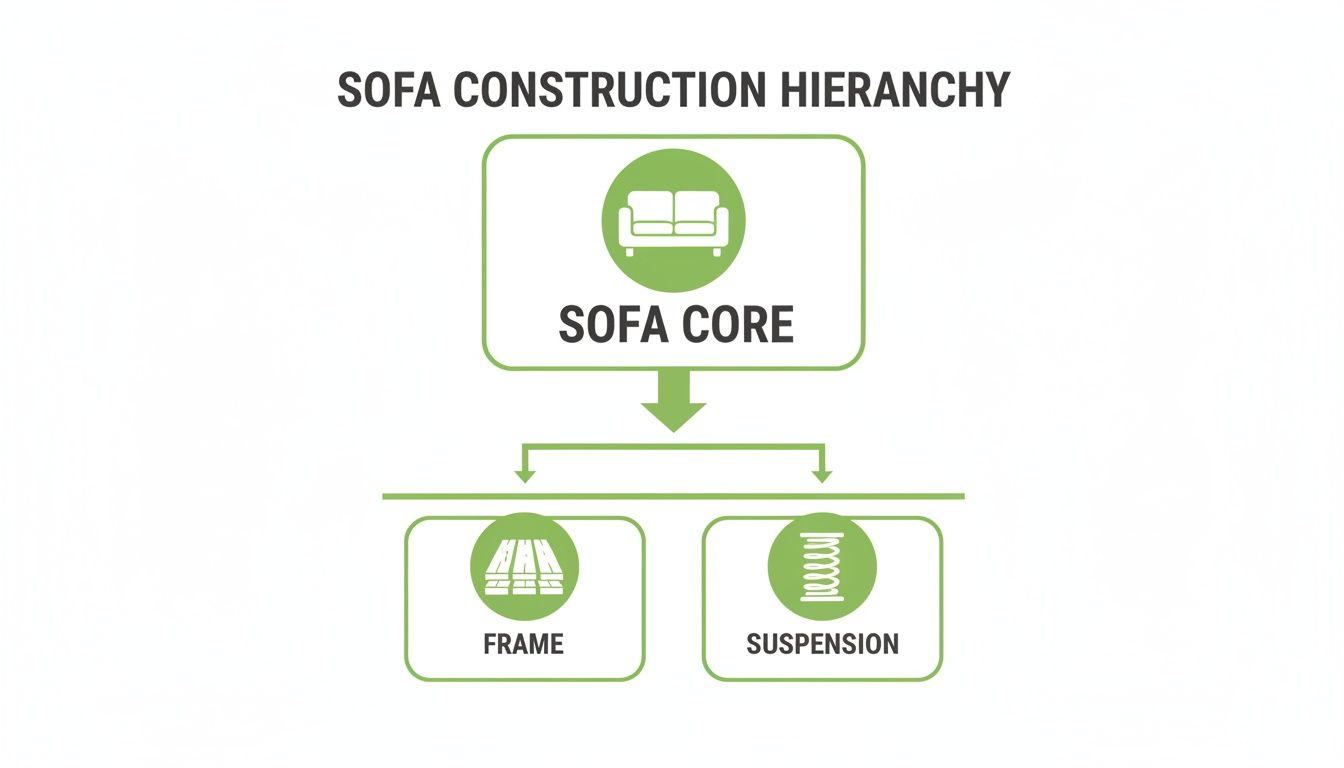
You can see how the frame and suspension create the foundational support system for the cushions, showing just how interconnected everything is when it comes to durability and comfort.
Finding the Best of Both Worlds
For many, the sweet spot is a hybrid approach that blends the best qualities of different materials. This is where you’ll find some of the most comfortable and innovative cushion designs on the market.
A hugely popular high-end choice is the down-wrapped foam core. This construction gives you a supportive core of HR foam wrapped in a blanket of down and feathers. You get the lasting support and resilience of the foam (no sagging!) combined with that plush, luxurious surface feel of real down. It’s the perfect compromise.
This push toward premium, comfort-focused materials is driving huge growth in the furniture world. Market data shows that shoppers looking for the best quality sectional sofas are primarily in residential, style-driven segments. As our living standards rise, so does the demand for comfort-centric interiors, making sofas a major focus. This shift from entry-level couches to more durable, designer-approved sectionals is a massive opportunity for specialists who prioritize craftsmanship. You can read more about this growing market trend at Fortune Business Insights.
A cushion's fill is the engine of its comfort. A high-resiliency foam core is like a well-tuned engine that provides consistent power and performance, while a down wrap is the luxury interior that makes the ride enjoyable.
Ultimately, the right choice comes down to your personal preference for feel and your tolerance for maintenance. If you love a firm, supportive seat that needs zero upkeep, a high-quality HR foam cushion is a fantastic choice. If you crave that ultra-plush, sink-in experience and don't mind a daily fluff, a down-blend cushion might be perfect. For most of us, though, a down-wrapped foam cushion strikes the perfect balance between pure indulgence and everyday durability.
Choosing Upholstery That Suits Your Lifestyle
If the frame and cushions are the soul of your sectional, the upholstery is its public face—the part that has to deal with your life, every single day. This is where the dog naps, the kids climb, and the occasional glass of wine gets spilled.
Choosing the right fabric isn't about what looks flawless in a showroom. It’s about finding a material that will still look beautiful after months and years of real-world use. Think of it like a sectional’s wardrobe. A delicate linen suit is stunning, but you wouldn’t wear it on a camping trip. The goal is to find a material that not only fits your style but is also dressed for the occasion of your daily life.
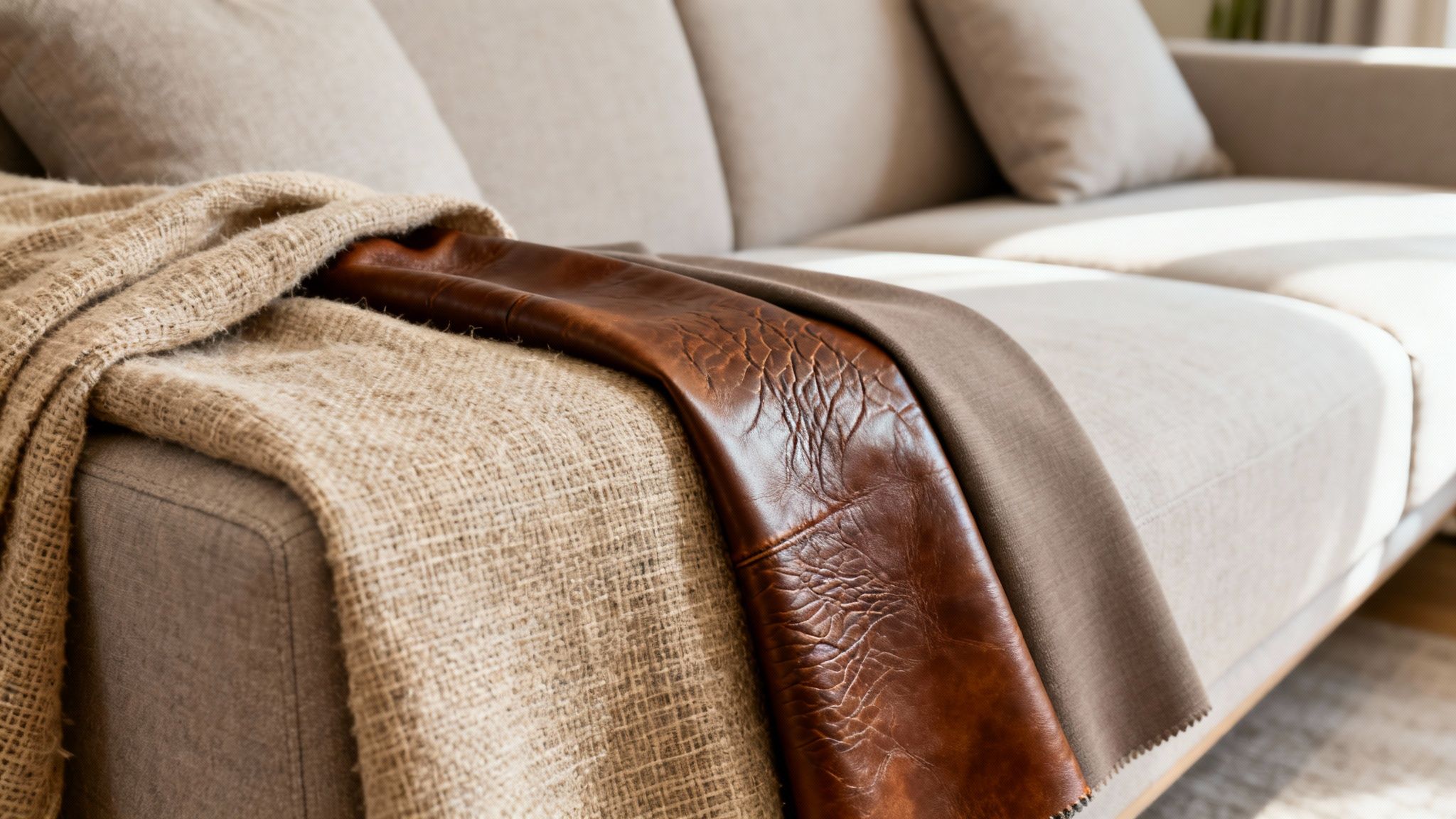
Natural Fabrics Versus Performance Synthetics
Your first big decision is choosing between natural fibers and modern performance fabrics. Each has its own personality, and the right one for you comes down to what your household demands.
Natural fabrics like cotton, linen, and wool bring an organic, breathable quality to a room. Linen, for example, has that effortlessly elegant look, but it wrinkles and can be a magnet for stains unless it’s blended with something more forgiving. Leather is another natural classic, known for its incredible durability and the gorgeous patina it develops over time, though it does need some conditioning now and then.
On the other side of the aisle are performance fabrics. These are synthetics—think polyester, acrylic, or olefin—engineered to resist stains, moisture, and fading. Years ago, these fabrics felt stiff and unwelcoming, but today's versions can beautifully mimic the look and feel of high-end natural textiles. They offer incredible peace of mind when life happens.
The Durability Test You Need to Know
So, how can you really tell if a fabric is tough enough? The secret is a number called the double rub count. It comes from a standardized test where a machine literally rubs a piece of fabric back and forth until it shows signs of wear.
One back-and-forth pass is one "double rub." This simple metric gives you a concrete way to judge a fabric's resilience.
-
Under 10,000 Double Rubs: This is delicate territory. Think decorative pillows, not the main sofa.
-
10,000 to 15,000 Double Rubs: Light-duty. Perfect for furniture that doesn't see a lot of action, like a sectional in a formal living room.
-
15,000 to 30,000 Double Rubs: The sweet spot for most homes. This is a solid, heavy-duty rating that can handle daily family life.
-
Over 30,000 Double Rubs: Commercial grade. This stuff is practically bulletproof, built for high-traffic businesses or homes with very active kids and pets.
When you're shopping, always ask for the double rub count. Any quality furniture brand will have this information on hand. A fabric rated at 25,000 double rubs or higher is an excellent benchmark for a family sectional that’s built to last.
Matching Fabric to Your Lifestyle
Now, let's put it all together. The best quality sectional sofas are the ones upholstered in a fabric that makes sense for the home it’s going into.
For a household with young kids or pets, a performance fabric with a high double rub count is almost always the smartest move. Look for materials treated for stain resistance or those with a tight weave that won’t snag on claws. You might be surprised to learn that many of today's plushest velvets are actually made from durable, easy-to-clean polyester.
If you’re outfitting a quieter, adults-only space, you have the freedom to play with more delicate options. A gorgeous wool bouclé or a crisp linen blend can introduce a sophisticated texture that doesn't need to brace for impact.
And for anyone who loves a timeless, classic look, nothing beats top-grain leather. It's hypoallergenic, a breeze to wipe down, and develops a rich, lived-in character that tells the story of your home. Ultimately, the key is to choose a sectional that fits not just your space, but your life.
How to Measure and Plan Your Sectional Layout
You can fall in love with the most beautiful, well-made sectional in the world, but if you can’t get it through the front door, it’s a total dud. This is, without a doubt, the single most common—and most heartbreaking—mistake people make when buying furniture. But a few minutes of planning can save you from the logistical nightmare of a sofa that’s too big for your space.
Before you even think about fabric swatches or cushion fills, grab a tape measure. It's time to map out a simple blueprint that guarantees a smooth, stress-free delivery day and a living room that feels perfectly proportioned.
This step has never been more important. Today’s shoppers are looking for quality and great design in one package. In fact, purchasing patterns show that sofas and sectionals make up about 40% of furniture category sales in the first half of the year. People are willing to invest in pieces that look great and last, so getting the fit right is crucial. You can see more on these furniture industry trends from Cylindo.
Your Step-by-Step Measurement Guide
First things first, let’s chart the delivery path. Measure the height and width of every single doorway, hallway, and staircase the sectional will have to navigate on its way into the room. Don't forget to account for any tight corners or low-hanging light fixtures that could get in the way.
Next, get the main dimensions of your room—the length and width. But don't stop there. Make a note of where all the windows, doors, radiators, and electrical outlets are. These are the fixed elements that will dictate where your sectional can (and can’t) live.
Now for the fun part. Once you have the dimensions of the sectional you're eyeing, use painter's tape to outline its exact footprint on your floor.
This little trick is a game-changer. It takes abstract numbers and makes them tangible, giving you a real-world preview. You can physically walk around the "sofa," see how it impacts traffic flow, and get a true feel for how much space it will occupy. You’ll know instantly if it feels right.
Choosing the Right Configuration
With your space all mapped out, you can finally choose a shape that works with your room's flow, not against it. Each configuration serves a different purpose, and our comprehensive guide on how to choose a sofa can offer even more detail on finding that perfect match for your lifestyle.
-
L-Shape Sectionals: A timeless classic. They’re perfect for tucking into a corner or floating in an open-concept space to create a distinct conversation zone.
-
U-Shape Sectionals: If you have a big family or love to host movie nights, this is for you. This shape creates an incredibly cozy and inclusive seating arrangement that just pulls people together.
-
Sectionals with a Chaise: This is probably the most popular option because it offers the best of both worlds—plenty of seating for guests, plus a dedicated spot for one lucky person to stretch out and relax completely.
By taking the time to plan your layout thoughtfully, you’re not just buying a piece of furniture. You're making a confident and lasting investment that will fit your home just as perfectly as it fits your style.
Making a Confident Investment in Your Home
You’ve made it. You're no longer just browsing; you're an informed buyer who can see straight through clever marketing to the core of true craftsmanship. This whole guide has been about pulling back the curtain and understanding what really makes a great sectional sofa.
Let’s boil it all down. A piece of furniture that lasts is a symphony of four key elements working together:
-
A kiln-dried hardwood frame that won’t warp, providing a rock-solid foundation.
-
A supportive suspension system, whether it’s 8-way hand-tied or well-made sinuous springs, to distribute weight perfectly.
-
High-resiliency (HR) foam cushions that bounce back and resist that dreaded sagging spot.
-
Lifestyle-appropriate upholstery with a solid double rub count to stand up to kids, pets, and movie nights.
With this mental checklist, you can walk into a showroom or browse online with a completely new set of eyes.
From Shopper to Savvy Investor
Try to think of this purchase less as an expense and more as a long-term investment in your home's comfort and style. You now have the power to read between the lines of product descriptions, size up options with a critical eye, and ask salespeople questions that cut right to the chase.
A high-quality sectional is more than just a piece of furniture—it becomes the heart of your home, the backdrop for countless memories. When you focus on craftsmanship, you’re choosing a piece that will serve your family for years, not just a season.
That shift in perspective is everything. It takes you from hoping you made a good choice to knowing you did. Digging into what the top quality sofa brands are doing can really cement this confidence, giving you real-world examples of what excellence looks like.
Ultimately, you’re ready to find a sectional that feels like it was always meant to be in your home. And to protect that investment, looking into the ways sofa covers contribute to furniture longevity is a smart final step. You've got this. Go find a sofa that is not only beautiful but truly built to last.
Frequently Asked Questions About Sectional Sofas
Let's tackle some of the most common questions that pop up when you're on the hunt for the perfect sectional.
How Long Should a Good Sectional Last?
Honestly, it all comes down to what's under the hood. A well-built sectional with a solid, kiln-dried hardwood frame and quality materials can easily last you 15-20 years, sometimes even longer. On the flip side, a budget piece might start showing its age and losing its shape in just 3-5 years of everyday life.
What Is the Best Cushion Filling for a Sectional?
For that sweet spot of lasting comfort and solid support, high-resiliency (HR) foam is the gold standard. It bounces back beautifully and holds its shape for years.
If you dream of a couch you can really sink into, look for a down-wrapped foam core. You get that incredible, cloud-like softness from the down without giving up the essential support from the foam that keeps everything from bottoming out.
Don't get too caught up in chasing massive 'double rub' counts. For most homes, a durable fabric rated between 15,000 to 30,000 double rubs is more than enough to handle daily life. The super-high numbers are really meant for commercial spaces or homes with very rambunctious kids and pets.
Are Modular Sectionals a Good Investment?
They absolutely are. The flexibility of a modular sectional is its superpower, making it a fantastic long-term investment.
Because you can rearrange the pieces, a modular sofa can adapt with you. It can fit into a new apartment, reconfigure for a bigger family room, or even split up to accommodate a new layout. That kind of adaptability is what makes it such a smart choice.
Ready to find the perfect centerpiece for your living space? Explore the curated collection of designer-approved furniture at Fluent Trends and discover a sectional that blends timeless style with lasting quality. Visit us today at https://www.fluenttrends.com.