

The Modern Monolith: A Guide to the Concrete Furniture Patio
Yuatinia LeakIn the world of luxury design, concrete is the ultimate paradox: it is at once industrial and organic, heavy yet visually seamless. While often relegated to the structural foundations beneath our feet, concrete in the patio landscape serves a higher purpose—as a 'Modern Monolith.' For Fluent Trends, a concrete centerpiece isn't just about withstanding the elements; it’s about establishing a permanent, sculptural anchor that grounds your outdoor sanctuary. It is an intentional investment in a silhouette that refuses to fade, offering a sophisticated permanence that 'fast-furniture' simply cannot replicate.
The New Stone: From Industrial Utility to Sculptural Sophistication
Scan the landscape of contemporary outdoor design, and you’ll notice a distinct shift toward materials that possess a soul. The concrete that was once hidden away in construction sites has stepped into the spotlight, reimagined as a symbol of outdoor sophistication.
This isn't just about durability; it’s about a visual evolution. Modern fabrication techniques have transformed this humble material into sleek, polished forms that feel more like functional art than mere furniture. We are seeing smooth-to-the-touch surfaces and minimalist silhouettes that honor the desire for authentic, organic textures. For the intentional homeowner, concrete offers the rare opportunity to bring architectural stillness into the garden—a piece that is as much a sculpture as it is a setting for life.
While we celebrate the 'Modern Monolith' for its strength, the secret to a high-end patio lies in the contrast. Softening these stone silhouettes with plush textiles creates the balance we strive for at Fluent Trends. To ensure your soft accents match the longevity of your concrete, see our guide on How to Wash Outdoor Cushion Covers.
In an era where outdoor decor often feels disposable, concrete offers a refreshing sense of gravity. Its appeal lies in its inherent resilience. Unlike plastic or cheap metals, concrete is wind-stable, UV-resistant, and develops a beautiful natural patina over time.
However, "low maintenance" doesn't mean "no maintenance." To ensure your patio anchors remain pristine through every season, it is vital to understand how to shield them from the elements. I recently shared a deep dive on How to Protect Outdoor Furniture for Year-Round Durability that explains the essential care rituals for an intentional outdoor space.
The Rise of Durable Outdoor Living
As our living rooms move past the glass doors and into the garden, the demand for "Forever Furniture" has reached an all-time high. This movement toward a durable, intentional backyard is more than just a trend—it’s a shift in how we value permanence.
-
An Investment in Quality: There is no luxury in replacement. Concrete is the antidote to "fast-furniture" culture; it won’t rot, rust, or surrender to a coastal gale.
-
A Minimalist’s Canvas: The neutral, stone-grey palette of concrete acts as a high-definition backdrop. It makes the deep greens of your foliage look more vibrant and allows your seasonal textiles to truly pop.
-
Tactile Contrast: Luxury is found in the mix. The raw, organic texture of stone creates a sophisticated "Soft Brutalism" when paired with warm teak wood and soft linens.
Design Perspective: "The love for concrete doesn't stop with furniture. We are seeing a holistic shift toward concrete decking to create a seamless, sophisticated foundation. It’s an architectural approach to building a sanctuary that is as enduring as it is beautiful."
The Sophisticated Silhouette When many hear "concrete," they still picture the heavy, industrial blocks of a sidewalk. But the modern evolution is more about Sculpture than construction. Think of the difference between a simple block of cheddar and an aged artisanal cheese—they share a base, but the complexity, texture, and elevated experience of the latter are worlds apart. Understanding these modern fabrication techniques is the key to finding a piece that fits your specific lifestyle.
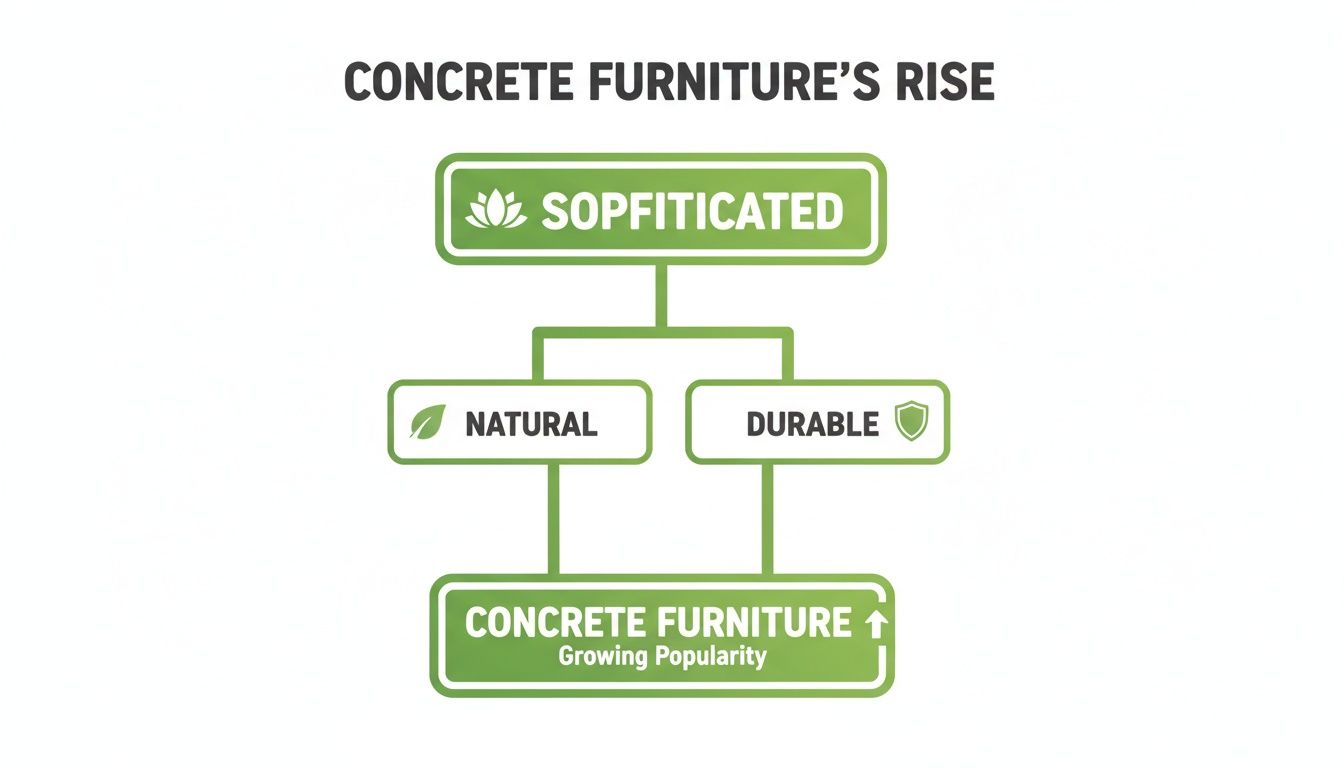
It’s that perfect blend of sleek design, earthy texture, and incredible resilience that makes it such a sought-after choice for creating a premium outdoor oasis.
Engineered for Performance: A Material Guide
Not all "concrete" furniture is born from the same mold. To find your 'Modern Monolith,' you must choose a blend that balances high-end aesthetics with the practicalities of your specific lifestyle. The materials used today are precision-engineered for performance and elegance, allowing us to move beyond the limitations of traditional stone.
| Material Type | The Fluent Perspective | Best For... | Average Weight |
|---|---|---|---|
| GFRC (Glass Fiber Reinforced) | Lightweight and incredibly strong; it allows for thinner, graceful curves without the bulk. | Dining tables, fire pits, and sculptural benches. | Lighter (30-50% less than traditional) |
| Fiberstone Composite | Often more porous with a rustic, aged character. Uses fiberglass and clay. | Decorative planters and small accent tables. | Very Light |
| Concrete & Resin Composite | Non-porous and silky-smooth; offers superior stain resistance for entertaining. | Tabletops and high-traffic surfaces. | Moderate |
| Traditional Poured Concrete | The ultimate industrial statement—massive, durable, and unyielding. | Permanent installations and bold statement items. | Very Heavy |
Ultimately, the right material balances the look you want with the practicalities of weight and durability. At Fluent Trends, we find that GFRC (Glass Fiber Reinforced Concrete) often hits that sweet spot for most residential patios. It offers a high-end, architectural look without requiring a forklift to move it—giving you the freedom to evolve your space as you see fit.
GFRC: The Lighter, Stronger Go-To
The true game-changer in modern outdoor curation is Glass Fiber Reinforced Concrete (GFRC). Moving beyond the limitations of traditional pours, GFRC is an advanced composite where the concrete mix is reinforced with high-strength glass fibers.
Think of these fibers as a microscopic rebar system. They create a material that possesses immense structural integrity while remaining surprisingly nimble. For your patio, this evolution translates into three distinct luxuries:
-
Refined Portability: While concrete will always have a sense of gravity, GFRC is significantly easier to handle. Shipping is streamlined, and installation doesn't require a construction crew—allowing you the flexibility to perfect your layout.
-
Architectural Artistry: Because of its inherent strength, GFRC offers unparalleled design freedom. It allows for thinner profiles, graceful curves, and intricate silhouettes that would be impossible with traditional concrete.
-
Enduring Resilience: This material is engineered to resist the hairline cracks and chipping that often affect older stone pieces. It is built to gracefully handle both the elements and the rhythm of daily life.
Finding Your Perfect Finish
Once you’ve selected a high-performance material like GFRC, the final step is the finish—the tactile element that defines the soul of the piece. At Fluent Trends, we see the finish as the bridge between the architecture of the stone and the comfort of your home.
-
The Raw Aesthetic: An unfinished look embraces concrete’s natural character, celebrating visible pores and subtle color variations. It is the hallmark of Wabi-Sabi design—finding beauty in the honest, organic imperfections of the earth.
-
The Polished Sophistication: Conversely, a polished and sealed finish feels silky to the touch, offering a refined satin or matte sheen. Beyond the aesthetics, a professional sealer acts as a vital barrier against stains, making it the premier choice for dining surfaces and high-traffic entertaining zones.
Design Perspective: "The bottom line is to match the piece to your life. A polished GFRC dining table is a fantastic, durable centerpiece for a family that loves to host; a raw concrete bench, however, acts as a stunning, sculptural focal point tucked away in a quiet garden corner."
If you’re still weighing your options for the rest of your patio, you can see how concrete compares to other luxury woods and metals in our deep dive on the Best Materials for Outdoor Furniture.
The Real-World Perks of Concrete: Durability and Upkeep
When you curate an outdoor space, you are essentially placing a bet against the elements. While wood may warp and plastics inevitably become brittle under UV stress, concrete doesn't just endure the environment—it commands it.
Think of your concrete furniture as the stoic guardian of your patio. It stands firm against blistering sun, torrential rain, and gale-force winds without a hint of fading or losing its structural integrity. As noted in this guide to premium outdoor materials, the mark of true luxury is "quiet reliability"—the absence of warping or degradation over decades. Concrete remains one of the few materials that consistently delivers this level of permanence in any climate.
A Simple Plan for Lifelong Care
The word "maintenance" often carries a sense of dread, but with concrete, the process is refreshingly straightforward. The primary objective is to preserve the surface’s integrity by managing moisture and preventing deep-set stains—a task easily accomplished with a high-quality sealer.
-
Annual Sealing: Think of a concrete sealer as a high-performance raincoat for your furniture. Applying it once a year prevents water from seeping into the pores, which is the ultimate secret to preventing surface stains and avoiding cracks during seasonal freeze-thaw cycles.
-
Gentle Upkeep: For daily life, a simple solution of mild soap and water is all that is required. Use a soft-bristled brush to lift away surface dust, rinse thoroughly, and allow it to air dry in the sun.
-
Surface Mindfulness: While concrete is tough, using coasters and placemats is a small habit that yields massive results. It prevents cosmetic "rings" and grease spots, keeping your architectural surfaces looking gallery-fresh.
This simple routine ensures your furniture remains a stunning, functional centerpiece for decades. For a deeper dive into preserving your entire outdoor sanctuary, explore our complete guide on How to Protect Outdoor Furniture for Year-Round Durability.
Resilience by Design: What About Cracking?
The concern regarding cracking is natural, but modern fabrication has largely engineered this issue out of the equation. Premium pieces, specifically those utilizing GFRC, are meticulously designed for flexural strength.
Design Perspective: "Modern concrete furniture isn’t your grandfather’s sidewalk mix. It's a high-tech composite engineered to handle expansion and contraction, making weather-related structural failure a thing of the past for any well-made piece."
The craftsmanship involved in these pieces mirrors the professional standards of major architectural construction. This commitment to durability is why we see concrete slashing replacement cycles by 40% compared to metal alternatives. With the global outdoor furniture market projected to reach $92.08 billion by 2034, it is clear that homeowners are no longer settling for disposable decor; they are investing in sustainable, permanent quality.
Artful Anchors: How to Style Your Concrete Sanctuary
Concrete provides a powerful, architectural starting point, but the "Fluent" magic happens during the styling process. Think of your concrete set as a blank canvas—its neutral tones and minimalist forms are the perfect foundation for injecting your personal narrative.
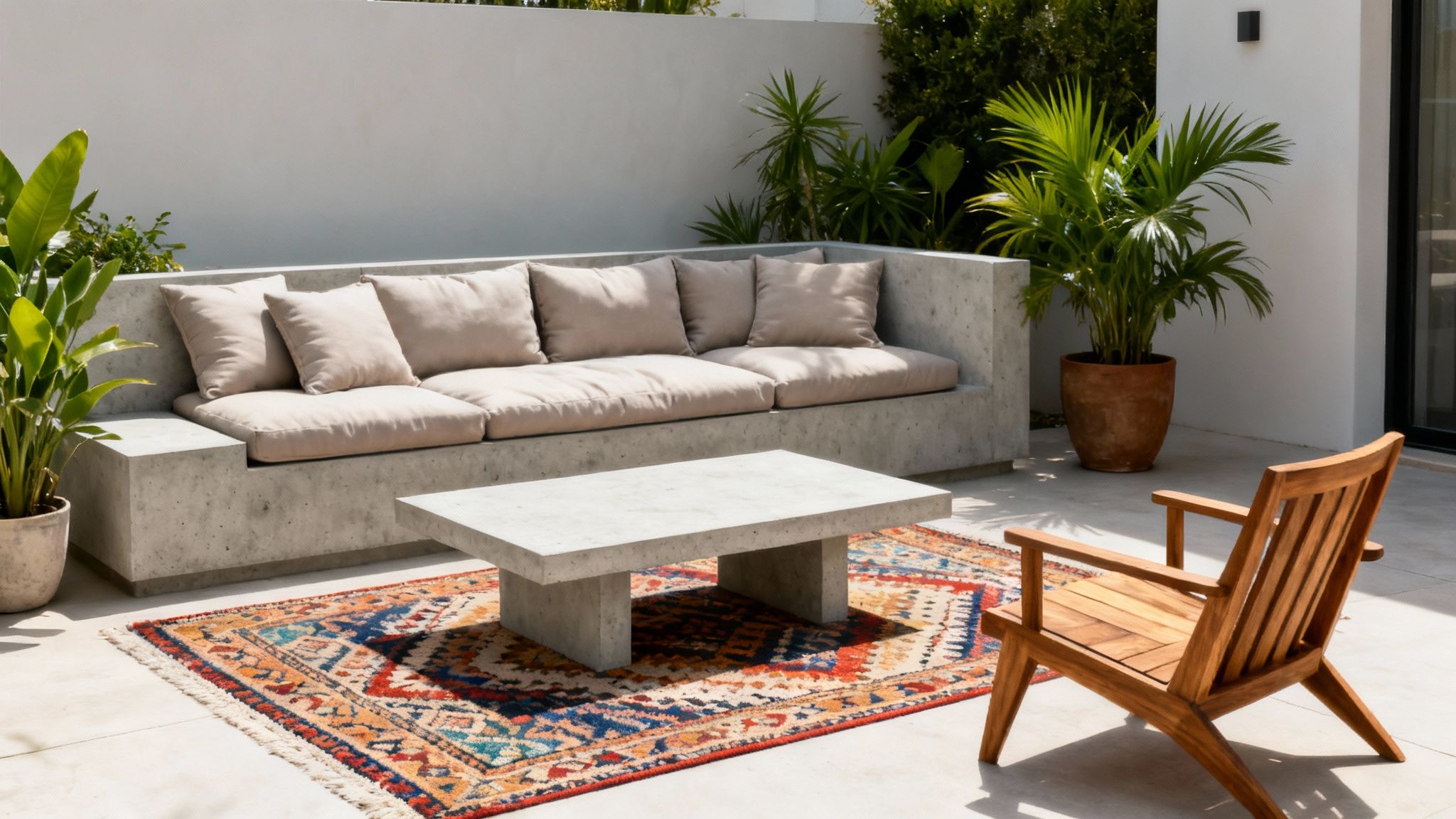
The secret to a high-end atmosphere is Contrast. We transform the "stark" into the "sophisticated" by layering in soft textiles, verdant life, and warm woods. It’s about finding that perfect equilibrium between the unyielding strength of stone and the inviting warmth of a home.
Soften the Silhouette with Performance Textiles
The most effective way to curate a welcoming concrete sanctuary is to introduce soft, weather-resistant textiles. This strategic layering immediately counters the cool, industrial nature of the stone with an inviting dose of warmth and comfort.
-
Plush Cushions and Pillows: High-density foam cushions wrapped in premium performance fabrics are essential for luxury lounging. Use pillows to introduce a curated pop of color—vibrant teal or ochre—or maintain a serene, high-end atmosphere with a monochromatic palette of alabaster, stone, and cream.
-
Architectural Rugs: An outdoor rug acts as the "anchor" for your furniture, defining the space as a dedicated outdoor room. A bold geometric pattern creates a stunning focal point, while a neutral jute-style rug adds an earthy, organic layer underfoot.
-
Chunky Knits: For cooler evenings, drape chunky knit throws over your concrete benches. These textures signal to your guests that this is a space meant for lingering long after the sun sets.
Organic Contrast: Breathing Life into Stone
Foliage is the essential partner to concrete. The organic, unpredictable shapes of plants provide a beautiful, natural contrast against the furniture’s clean, architectural lines.
Design Perspective: "To maximize visual depth, mix your plant heights and textures. Tall, slender silhouettes like bamboo or snake plants add necessary verticality to corners, while trailing ivy or 'string of pearls' can be used to soften the edges of sculptural planters and tables."
Try arranging potted plants in clusters of different sizes for a lush, layered look. You can even use large planters to strategically define different zones on your patio, like separating the dining spot from the lounging area.
Mixing Materials for Depth and Character
While the concrete is the "Modern Monolith" of your space, pairing it with diverse materials creates a sense of curated history. Mixing textures prevents a space from feeling "one-note" and adds layers of sophisticated interest. Picture a solid concrete dining table surrounded by the warm, honeyed tones of teak chairs—this contrast is both striking and incredibly harmonious.
The Final Measure: What to Know Before You Invest
Investing in a concrete patio set is an intentional choice for permanence. Unlike lighter furniture that can be easily shuffled, these pieces are designed to stay put. Planning for the logistics now ensures your experience is as seamless as the furniture itself.
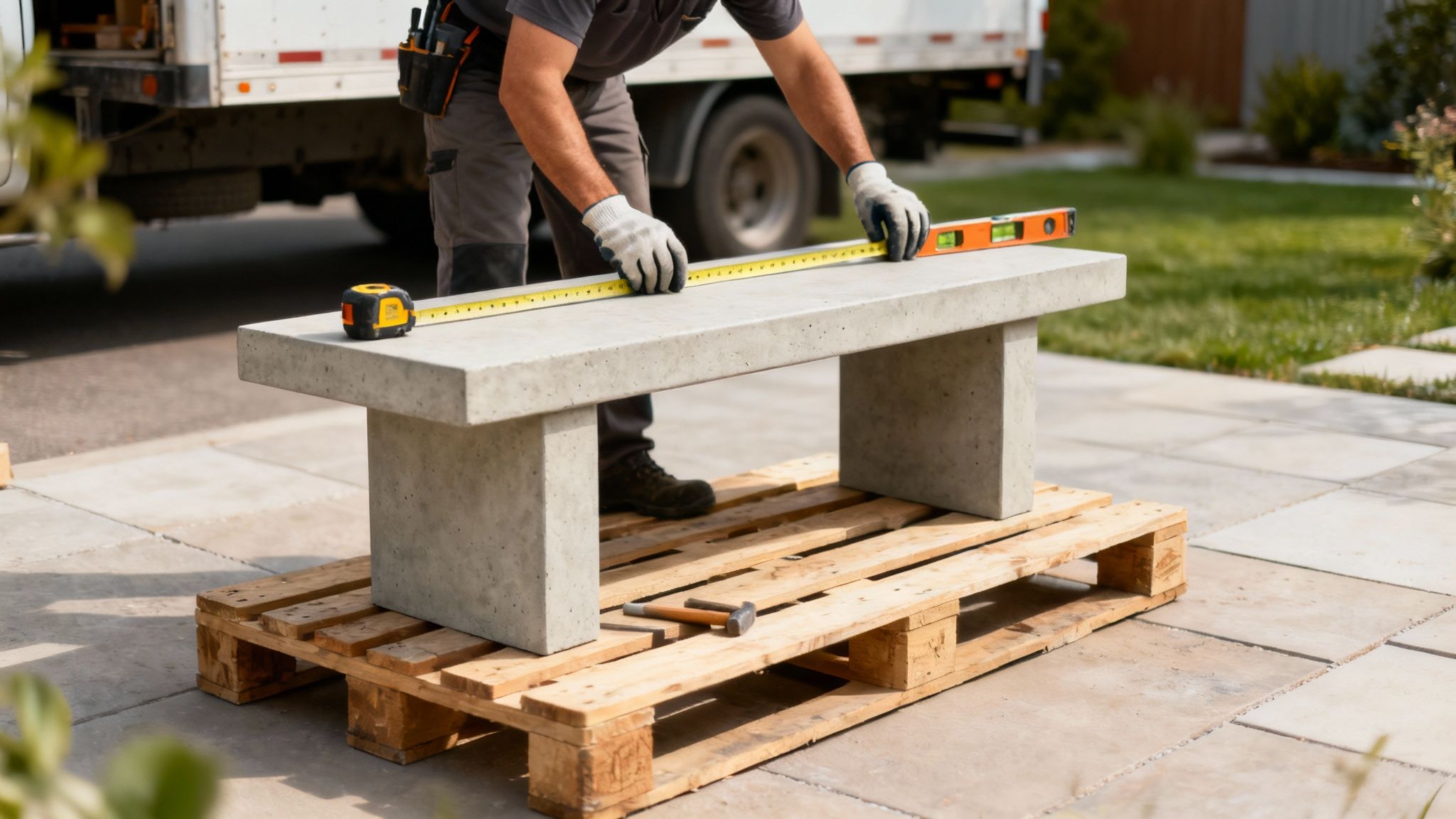
This is your essential checklist to move from "browsing" to "buying" with total confidence:
-
Verify the Foundation: Ensure your patio surface is level and capable of supporting the "Modern Monolith." Concrete is stable, but a flat foundation prevents unnecessary stress on the material.
-
Measure for Movement: Unlike flat-pack furniture, these pieces often arrive as solid units. Confirm that your delivery path—gates, doorways, and corners—can accommodate the dimensions.
-
Placement is Permanent: Because of their weight, you want to choose your "forever spot" before delivery. This allows you to create a cohesive layout that you won't need to move every season.
Assess Your Patio’s Weight Capacity
Concrete is heavy—but at Fluent Trends, we view that weight as a premium feature. It is what ensures your furniture remains grounded and unyielding through seasonal shifts. However, before the "Modern Monolith" arrives, you must verify that your foundation is prepared for the job.
-
Ground-Level Patios: A solid, poured concrete slab is the ideal canvas. It can almost always accommodate significant weight without compromise.
-
Wooden Decks: It is essential to verify your deck’s load-bearing capacity. Distributing weight across several joists and placing heavier silhouettes near main support posts is the strategic approach.
-
Balconies: This is a non-negotiable safety step. Always consult with a structural engineer or building management before placing heavy stone furniture on an elevated balcony.
Design Perspective: "Investing in structural details is part of a larger movement toward intentional living. The U.S. outdoor living market was valued at $892.9 million in 2024, as homeowners increasingly prioritize patios as primary residence extensions. Choosing concrete, which offers 30% lower maintenance costs than traditional materials, is a savvy investment in long-term value. You can explore more on these shifts at Grandview Research."
Strategic Placement and Seamless Delivery
The secret to a successful installation is deciding on your "forever spot" before the furniture arrives. Measure your space meticulously, ensuring a natural flow of movement around each piece. Placing your anchors on level ground is critical to avoid unnecessary stress on the material.
When it comes to the arrival of your pieces, we recommend understanding your delivery options:
-
Curbside Delivery: The basic standard. Your crated furniture is dropped at the curb, leaving the final transport to your patio in your hands.
-
White-Glove Service: The premier choice for the intentional homeowner. A professional team handles the heavy lifting, uncrates the furniture, manages the assembly, and hauls away the packaging—leaving you with a stress-free, ready-to-use sanctuary.
Concrete Conversations: Your Most Common Questions Answered
Choosing a concrete centerpiece is a significant step in your design journey. To move from a good decision to a great one, we’ve tackled the most frequent inquiries from our community.
Will Concrete Furniture Crack In Cold Weather?
Modern fabrication has transformed concrete into a frost-resistant powerhouse. High-quality GFRC (Glass Fiber Reinforced Concrete) is engineered to handle the thermal expansion and contraction of changing seasons. The true secret lies in the sealant; by preventing moisture from seeping into the pores, you eliminate the risk of water freezing and expanding within the stone. For absolute peace of mind during the harshest winter months, we recommend a high-quality furniture cover to keep your investment pristine.
Is Concrete Furniture Actually Comfortable?
On its own, concrete is an architectural foundation—not a plush lounge. However, it was never meant to be. Think of the solid, sculptural base as the perfect stage for creating a truly luxurious outdoor experience. By layering in high-density cushions and soft textiles, you achieve the "best of both worlds": unshakeable style and personalized comfort.
How Difficult is it to Move?
Let’s be direct: its weight is its greatest strength. While you might shift a small accent table with ease, larger dining or sectional pieces are semi-permanent anchors. This is why we emphasize the importance of layout planning and why White-Glove Service is such a worthwhile investment for a seamless start.
Ready to ground your sanctuary with a silhouette that lasts? Explore our curated collection of architectural anchors at Fluent Trends and discover the perfect pieces to establish your dream outdoor space.
About the Author: Yuatinia Leak As the Creative Director of Fluent Trends, Yuatinia Leak specializes in the art of "Intentional Living." With a keen eye for Soft Brutalism and high-end organic textures, she helps homeowners transform standard backyards into sophisticated, permanent sanctuaries.