

How to Protect Outdoor Furniture for Year-Round Durability
Donna MaloneWhen it comes to keeping your outdoor furniture looking great, I've learned it really comes down to a simple, three-part rhythm: clean, seal, and cover. Get this routine down, and you’re basically giving your patio set a fighting chance against whatever Mother Nature throws at it.
It's the secret to making that investment last for years, not just a season or two.
Why Proactive Furniture Protection Matters
We've all seen it: the sad, faded cushions, the chalky-looking plastic, or the splintering wood on a neighbor's deck. That's what happens when outdoor furniture is left to fend for itself. It’s not just about appearances; it’s about protecting a real investment from its biggest enemies.
The sun’s UV rays are relentless, moisture gets into every nook and cranny, and wild temperature swings cause materials to expand and contract. This triple threat is what leads to faded fabrics, rusted metal, and cracked wood. A little proactive care goes a long way in stopping that damage before it even starts.
Think of this guide as your game plan. We’ll cover how to shield different materials—from classic teak and sleek aluminum to those plush, comfy cushions—so you can avoid expensive replacements and keep your outdoor space ready for enjoyment.
The Foundation of Furniture Longevity
Great-looking outdoor furniture isn't the result of a single deep-clean each spring. It’s an ongoing effort built on a few core habits. Consistently applying these strategies is what really makes a difference in how your pieces weather the seasons.
-
Consistent Cleaning: You have to get the grime off. Regularly wiping away dirt, pollen, and bird droppings prevents deep-set stains and stops mold and mildew from taking hold.
-
Applying Sealants: Think of this as sunscreen for your furniture. Specialized oils, waxes, and sealants create a barrier against moisture and UV damage, which is a major cause of breakdown.
-
Using Quality Covers: A good cover is your furniture's best friend. Make sure it's breathable but waterproof to defend against rain, sun, and falling leaves, especially when you're not using the furniture for a while.
-
Smart Seasonal Storage: If you live somewhere with harsh winters, this is non-negotiable. Storing pieces in a shed or garage prevents the brutal damage caused by freeze-thaw cycles.
To make it even clearer, this simple visual breaks down the process.
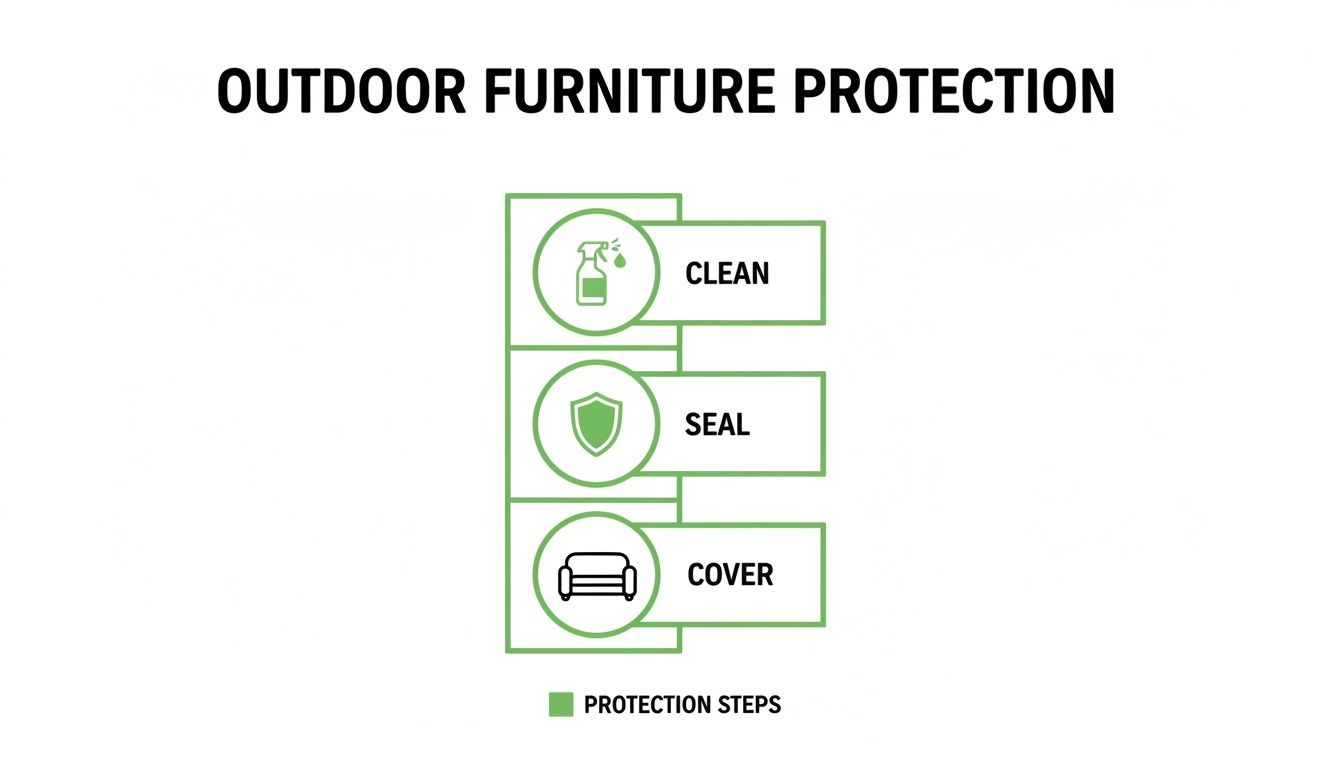
It really just reinforces that simple cycle: Clean, Seal, and Cover. This is the backbone of any good maintenance plan.
Beyond just physical barriers, you'll also want to look for coatings or treatments that offer serious UV protection to stop that inevitable fading and material decay. For a deeper dive on this, there are some great insights on protecting against sun damage that apply to more than just cars. Stick with these steps, and your outdoor oasis will be ready to go whenever you are.
Outdoor Furniture Protection At a Glance
Feeling a bit overwhelmed? Don't be. Most of it comes down to knowing what your furniture is made of and what its primary enemy is. This table gives you a quick snapshot.
| Material Type | Primary Threats | Key Protective Actions |
|---|---|---|
| Wood | Moisture, UV Fading, Rot, Insects | Regular cleaning, annual sealing/staining, breathable covers |
| Metal | Rust (iron), Oxidation (aluminum), Scratches | Clean and dry often, wax/sealant, touch-up paint |
| Wicker/Rattan | UV Damage, Moisture, Mildew, Cracking | Keep clean, apply protective spray, store in a dry place |
| Fabric/Cushions | Fading, Mildew, Stains | Use UV-protectant sprays, clean spills immediately, store dry |
Use this as a quick reference to make sure you're giving each piece the specific care it needs to thrive. A few targeted actions can make all the difference.
Mastering Care for Wood and Metal Furniture
When you're trying to figure out how to protect outdoor furniture, you quickly realize there's no magic bullet. A one-size-fits-all approach just won't cut it. Your beautiful acacia dining set and that sturdy wrought iron bench are the workhorses of the patio, but they're fighting completely different battles against the elements.
Wood's biggest enemy is moisture. Get that wrong, and you're looking at mildew, rot, and splitting. Metal, on the other hand, is in a constant war with oxygen and water, which spells rust and corrosion. Getting a handle on these unique weaknesses is the first real step toward keeping your furniture looking great for years.
Defending Your Wooden Outdoor Furniture
There's a natural warmth that wooden furniture brings to an outdoor space, but that organic nature is also its weak spot. If you neglect it, decay is inevitable. Woods like teak, cedar, and acacia are popular for a reason—they have a natural durability and resistance to insects—but they aren't invincible. The real secret is managing their exposure to water and sun.
A classic dilemma for teak owners is whether to keep that original honey-gold color or let it weather to a distinguished, silvery-gray patina. Honestly, there's no wrong answer here; it's all about the look you're going for. But the path you choose will absolutely dictate your maintenance routine.
-
Maintaining the Golden Hue: If you want to keep that "just bought it" look, you’ll need to apply a teak protector or sealer every year. This stuff blocks the UV rays that fade the color and acts as a barrier against moisture that leads to mildew.
-
Embracing the Silver Patina: Love that weathered, coastal vibe? Your job just got easier. You can mostly let the wood age on its own. Still, a yearly cleaning with mild soap and water is a must to get rid of dirt and stop mildew from settling into the grain.
No matter which look you choose, a deep clean is where you start. Grab a soft-bristle brush and a bucket of mild detergent and water to scrub away any built-up grime. If you've got stubborn mildew spots, a simple solution of one part vinegar to three parts water usually does the trick. Always rinse everything off thoroughly and let the furniture dry completely before you even think about applying any treatments.
Choosing the Right Wood Sealant
Once your wood furniture is clean and bone-dry, applying a protective finish is your most important move. This isn't just cosmetic—it's about creating a shield.
A quality sealant does more than just preserve color. It actually sinks into the wood grain to block moisture from seeping in, which is what causes cracking, warping, and rot in the first place. Think of it as a raincoat for your furniture.
You've got a few types of products to consider:
-
Penetrating Oils (like Teak Oil): These are great because they nourish the wood from the inside out, putting back the natural oils that the sun and rain have stripped away. They give a rich, natural finish but you’ll be reapplying them more often, usually once or twice a year.
-
Sealants and Varnishes: These create a hard, protective film on the surface of the wood. Marine varnish is a beast, offering incredible water and UV resistance. While they're more durable than oils, they can sometimes chip or peel over time, which means you'll have to sand before putting on a new coat.
Of course, choosing the right material from day one can save you a ton of work down the line. If you're curious about which options hold up best in different climates, you might find this overview of the best materials for outdoor furniture helpful.
Safeguarding Metal Furniture From Rust and Corrosion
Metal furniture, whether it's classic wrought iron or sleek aluminum, brings serious durability and style to a patio. Its arch-nemesis is oxidation—we call it rust on iron and pitting on aluminum. The key to prevention is simple: keep the protective finish intact.
Most quality metal pieces come with a powder-coated finish, which is worlds tougher than regular paint. This finish is literally baked on, creating a resilient barrier. But even the best coating can be compromised by a single scratch or chip.
Your first line of defense is just keeping an eye on it. Run your hands over the surfaces now and then, paying close attention to joints and welds. Feel for any rough spots or bubbling under the paint. Those are the early warning signs.
If you find a problem spot:
-
Lightly sand the area to knock off any loose rust or paint flakes.
-
Wipe it clean with a damp cloth and let it dry completely.
-
Dab on a matching touch-up paint made for outdoor metal. This tiny fix can stop a small issue from becoming a huge, rusty mess.
Want an extra layer of protection, especially for wrought iron? Here’s a little trick I swear by: apply a thin coat of automotive wax at the start of the season. Just like it does on your car, the wax makes water bead up and roll right off. That stops it from sitting on the surface and creeping into microscopic cracks in the finish.
Protecting Wicker, Rattan, and Fabric Furnishings
Woven textures and soft cushions are what make a patio feel less like a backyard and more like an outdoor living room. But let’s be honest—these are often the most delicate pieces, and they take a real beating from the weather. The secret to keeping them looking great is a smart defense against their two biggest enemies: moisture and sunlight.
Natural wicker and rattan have an organic charm that's hard to beat, but they are incredibly vulnerable to water. Once those natural fibers get soaked, they swell, weaken, and can even start to unravel. Worse yet, trapped moisture is an open invitation for mold and mildew, leading to ugly stains and that musty, damp smell.
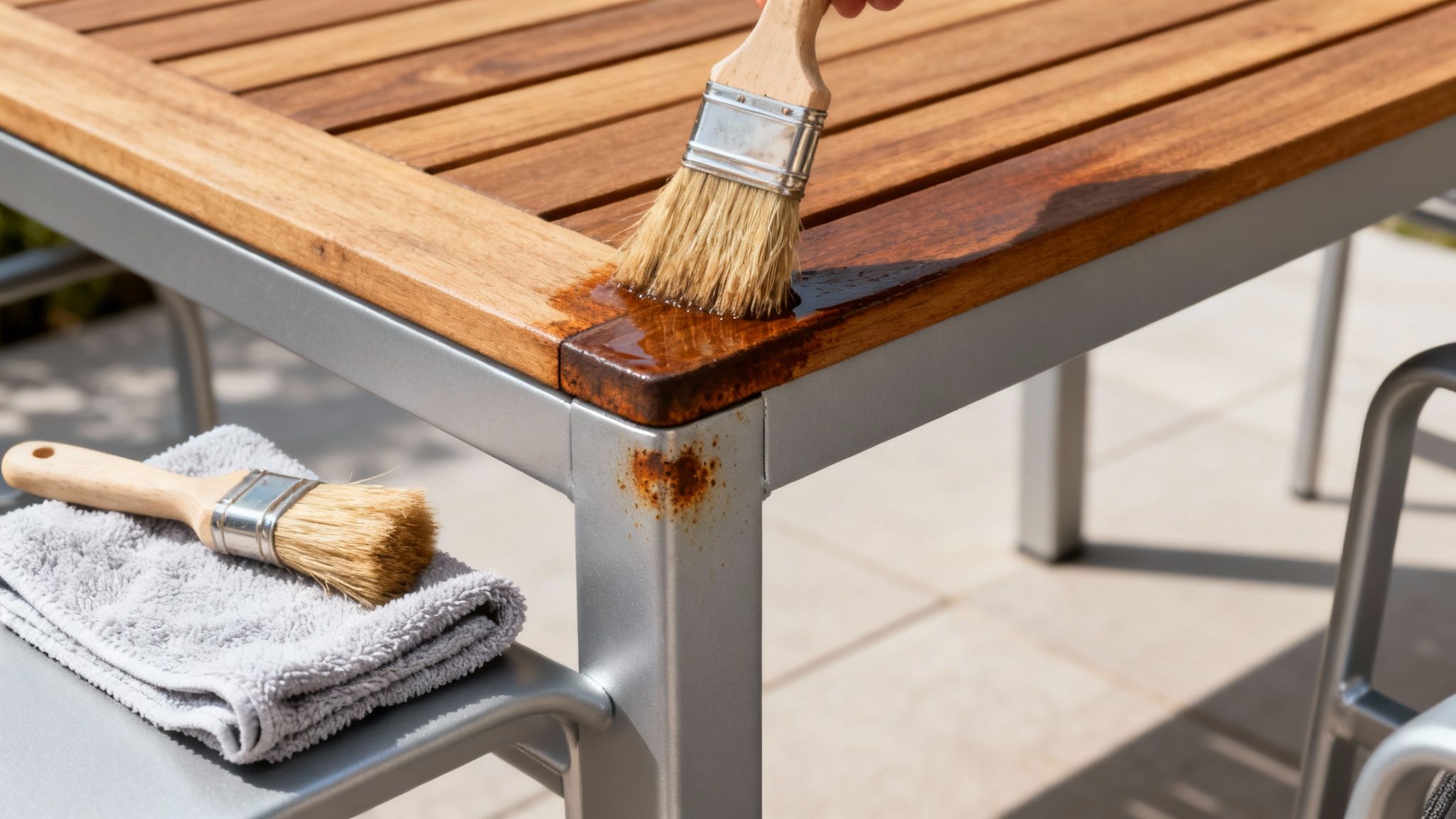
Caring for Woven Furniture
How you protect your woven furniture really comes down to one thing: is it natural or synthetic? They might look similar, but their care routines are completely different.
For natural wicker and rattan, the golden rule is to keep them dry. Never let them get caught in the rain. If they do get wet, act fast—blot them with a soft cloth and move them to a spot with good air circulation to dry out completely. For routine cleaning, a vacuum with a soft brush attachment is perfect for getting dust out of all those little crevices.
Synthetic wicker is a different story. It’s usually made from resin or polyethylene (PE), so it’s built to handle the elements without rotting or absorbing water. Its main weakness is the sun, which can make it brittle and faded over time. A simple wash with soap and water is all it takes to keep it looking sharp.
A little prevention goes a long way for both types. A fresh coat of marine varnish can work wonders for waterproofing natural rattan. For synthetic pieces, a quick spray with a UV-inhibitor designed for plastics can dramatically slow down fading and cracking.
Preserving Outdoor Fabrics and Cushions
Your outdoor cushions, pillows, and umbrellas are on the front lines, battling the elements every single day. The sun's UV rays are relentless, breaking down fibers and bleaching vibrant colors into pale, washed-out versions of their former selves. This is why the material you choose from the get-go is so important.
Performance fabrics, especially solution-dyed acrylics, are the gold standard here. With these, the color pigment is mixed into the polymer before it’s even spun into yarn. Think of it like a carrot—the color goes all the way through, which is why they are so much better at resisting fading compared to fabrics that are just printed on the surface.
Even the best fabrics need a helping hand. Combining shade with SPF 50+ fabrics can extend warranties by 3-5 years. It’s been shown that solution-dyed polymers resist fading 5 times better than standard weaves, and simply rotating your cushions and pillows seasonally can reduce your replacement needs by 45%. If you're into the data, you can dig deeper into these trends in this report on the outdoor furniture market.
A Practical Cleaning and Protection Routine
Keeping your outdoor fabrics looking fresh doesn't have to be a huge chore. A simple, consistent routine is all you need to stay ahead of stains and mildew.
-
Start with a Protective Spray: At the beginning of the season, give your clean, dry fabrics a good coat of a water-repellent and UV-protectant spray. It creates an invisible shield that makes water bead up and roll right off, basically acting like sunscreen for your furniture.
-
Clean Spills Right Away: Don't let spills sit. Blot them immediately with a clean, dry cloth to soak up as much as you can. Remember to blot, not rub! Then, tackle any leftover marks with a simple soap and water solution.
-
Deal with Mildew Fast: If you see any spots of mildew, jump on it. A mix of one part white vinegar to three parts water usually does the trick. For tougher stains or a full wash, our guide on how to wash outdoor cushion covers has all the step-by-step details you need.
-
Make Sure They Dry Completely: This is a big one. After a cleaning or a rain shower, prop your cushions up on their side so they can drain and dry faster. Tossing damp cushions into storage is the fastest way to start a massive mildew problem.
The Real Value of Covers and Smart Storage
All the sealants and treatments in the world are a great offense, but a high-quality cover is your furniture’s best line of defense. It’s easily the most effective tool you have for shielding your investment from the daily grind of sun, rain, and pollen.
This isn’t about just grabbing a cheap plastic tarp and hoping for the best. In fact, that’s one of the worst things you can do—it traps moisture underneath, creating a little greenhouse for mildew.
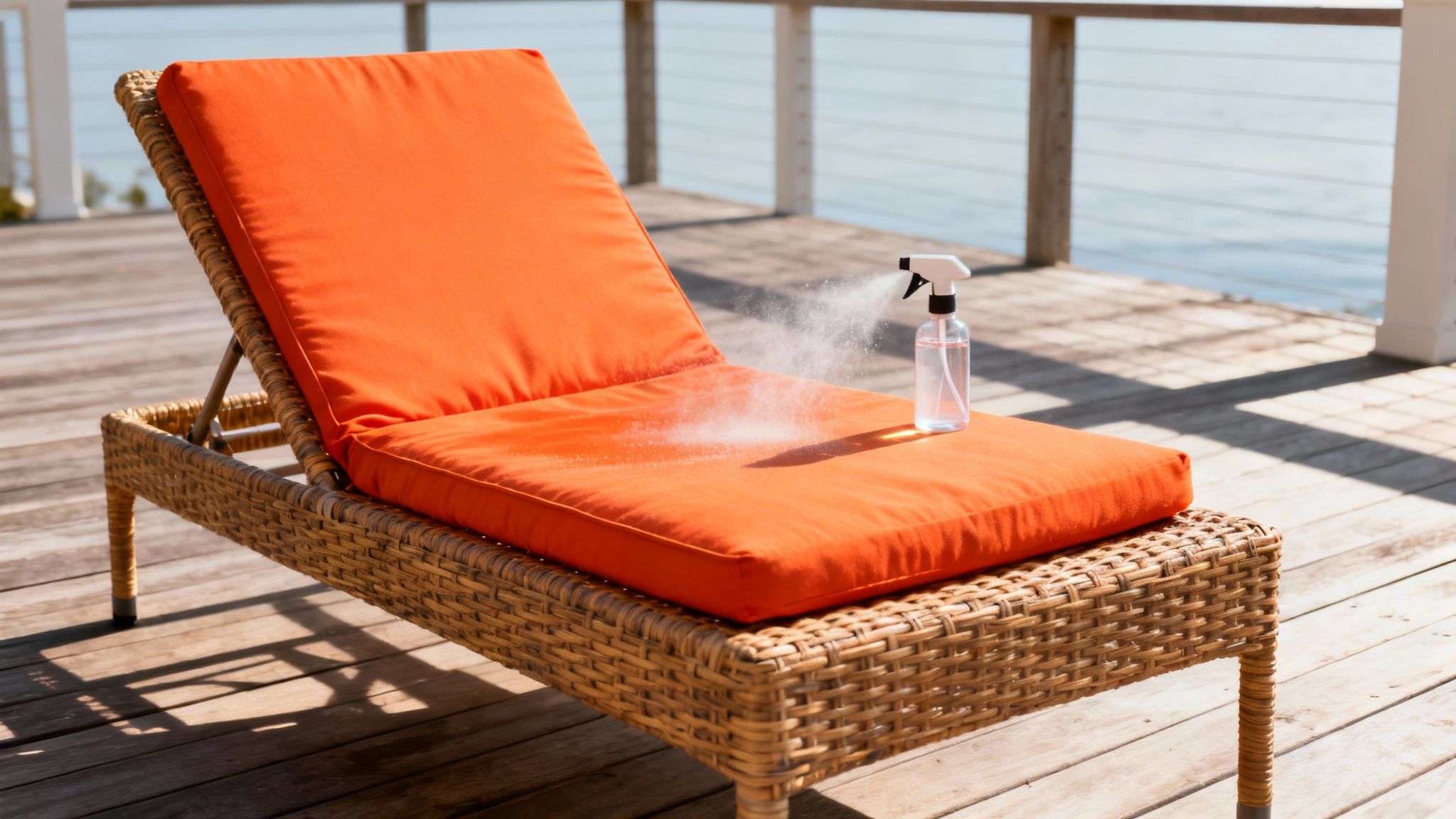
The real magic is in a cover made from a breathable yet waterproof material. Fabrics like solution-dyed polyester are the gold standard for a reason. They keep rain out while allowing condensation to evaporate, stopping that humid, stagnant environment where mold loves to grow.
Features That Define a Great Cover
You’ll quickly find that not all covers are created equal. When you're shopping around, there are a few key features to look for that separate a cover that lasts one season from one that protects your furniture for years.
-
Integrated Air Vents: These are non-negotiable. Small, mesh-covered vents allow air to circulate, which stops moisture buildup and prevents the cover from turning into a kite in high winds.
-
Secure Fastening Systems: Look for click-close straps that can wrap around the furniture legs. Paired with a drawcord or elastic hem, they create a snug fit that won’t get ripped off by the first serious gust of wind.
-
Padded Handles: This seems like a minor detail, but you’ll be thankful for it. Padded handles make taking the covers on and off so much easier, which means you’re more likely to actually use them consistently.
Investing in high-quality patio furniture covers can extend the life of your outdoor seating by up to 5-7 years. The global market for these covers is projected to hit USD 1.5 billion by 2033, reflecting how homeowners are prioritizing protection against UV rays, which can degrade fabrics by 50-70% within just two summers without shielding. Find out more about these trends in patio furniture protection.
Smart Off-Season Storage Strategies
When the season truly turns and harsh weather is here to stay, even the best cover has its limits. Bringing your furniture into a garage, shed, or basement is the ultimate protection against the brutal freeze-thaw cycles that crack wood and warp metal.
But just dragging everything inside isn't enough. The goal is to create a safe, stable spot for your furniture to hibernate. If you're thinking about a big move or just need to shuffle things into storage, getting the right technique is key. For a deeper dive, there's some excellent expert advice on furniture protection for moving.
Before you store anything, give it a thorough cleaning. Putting away dirty furniture is just asking for trouble. Any leftover dirt, pollen, or food bits will attract pests and can bake into permanent stains or mildew by springtime. Make sure every single piece is clean and, most importantly, bone dry.
Preparing Your Furniture for Hibernation
Once everything is sparkling clean and dry, a few final prep steps will make all the difference. How you store your furniture is just as important as where you store it.
-
Elevate Everything: Never let your furniture sit directly on a concrete floor. Concrete can "sweat" moisture, which will cause rust on metal feet and rot on wooden legs. A few simple 2x4s or a wooden pallet underneath creates an air gap and solves the problem.
-
Disassemble When Possible: If your table legs unscrew or the chairs stack, take them apart. It saves a massive amount of space and dramatically lowers the risk of pieces getting scuffed or dinged while in storage.
-
Cover Loosely: Even indoors, a breathable cover is a good idea. It'll keep the dust and cobwebs off without trapping any moisture. Just steer clear of airtight plastic wrap—that's a one-way ticket to mildew city.
Taking these steps ensures that when the warm weather finally returns, your outdoor oasis is ready to go, not in need of a weekend-long rescue mission.
A Practical Seasonal Maintenance Calendar
The real secret to keeping outdoor furniture looking great isn't a single, massive effort—it’s building a simple routine. When you think about maintenance in terms of seasons, the whole process becomes less of a chore and more of a manageable habit. This calendar breaks down what to do and when, so your patio is always ready when you are.
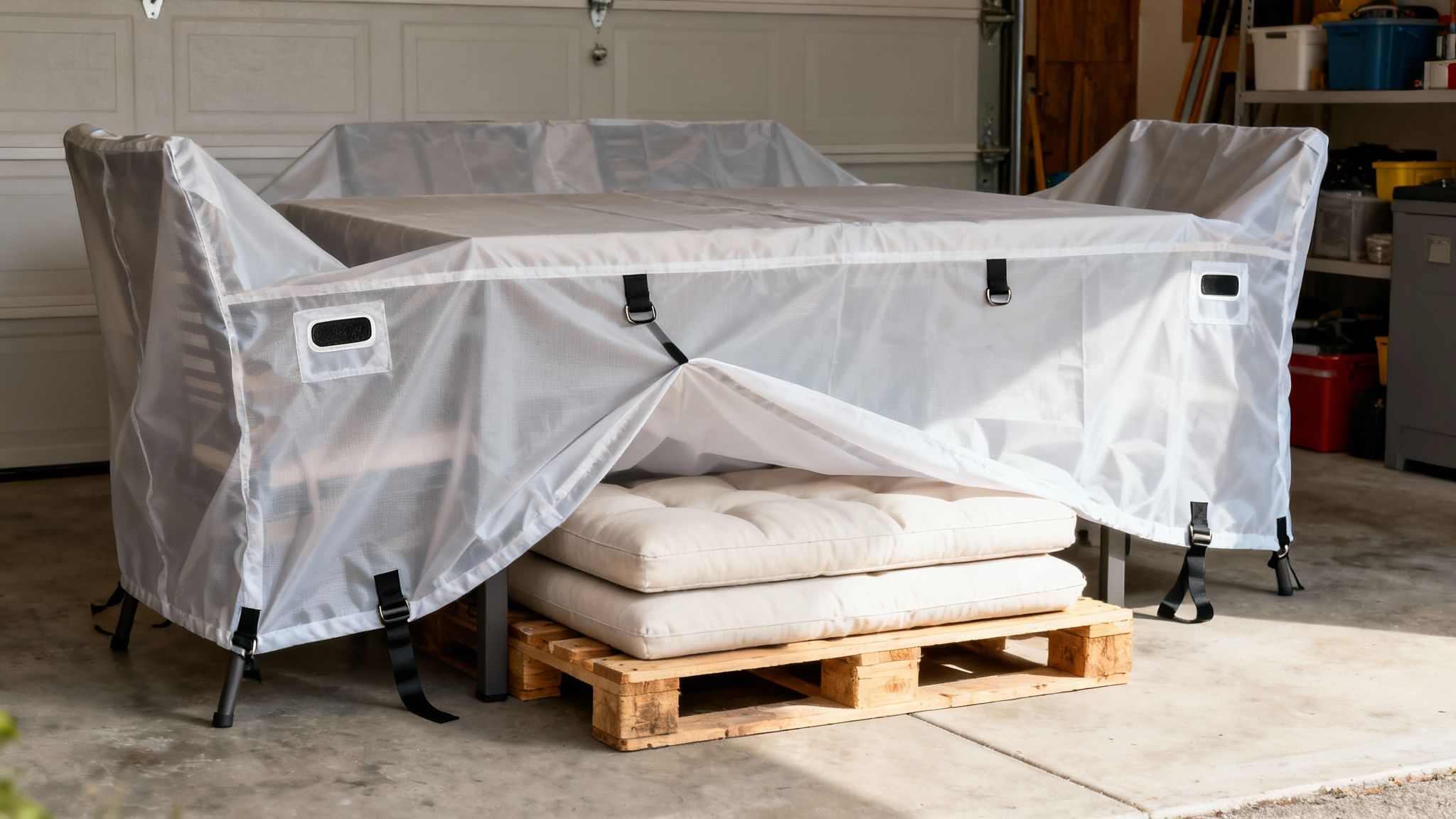
Following this cycle helps you stay ahead of whatever Mother Nature throws your way, from brutal summer sun to damp, cold winters.
Spring: The Great Unveiling
As soon as the weather starts to turn, it's time to bring your furniture out of hibernation. This is your most important maintenance window of the year, as it sets the stage for months of outdoor living.
Your mission is simple: inspect, clean, and protect. Before dragging everything into place, give each piece a thorough once-over. Look for any damage that might have happened in storage—wobbly legs, chipped paint on metal frames, or new cracks in the wood.
Your Spring Wake-Up Checklist:
-
Deep Clean Everything: Give every surface a good wash to get rid of dust, grime, and any mildew that might have cropped up. Now’s the time to tackle those cushion stains you swore you’d get to last fall.
-
Apply a Fresh Protective Coat: Once every piece is completely dry, re-apply the right sealant for the material. That means a new coat of teak oil for wood, a layer of automotive wax for metal, or a fresh application of UV-protectant spray for your fabrics.
-
Tighten All the Hardware: Temperature shifts can make screws and bolts work themselves loose. Do a quick check with a screwdriver or wrench to tighten everything up, making sure your furniture is sturdy and safe.
Summer: In-Season Upkeep
Summer is all about enjoyment, so maintenance should be quick and painless. The goal shifts from major overhauls to simple prevention, mostly dealing with the daily grind of sun, rain, and use.
I like to keep a small caddy nearby with a few soft cloths and a bottle of mild cleaner. After a pop-up rainstorm, a quick wipe-down of metal and wood frames prevents water spots and stops rust before it starts. The same goes for spills on cushions—addressing them right away keeps them from becoming permanent stains.
Think of summer care as small, consistent actions that prevent bigger problems. A five-minute wipe-down today can save you an hour of scrubbing later.
Fall: The Essential Preparation
When the days get shorter and the air gets crisp, it's time to prep your furniture for the tough weather ahead. Your number one priority is to clean and dry every single component before it goes into storage. Trust me, putting away damp or dirty furniture is a recipe for disaster.
This is probably the most critical step in learning how to protect outdoor furniture for the long haul.
-
Do another deep clean, focusing on removing pollen, dirt, and any stains from fallen leaves.
-
Make sure every cushion, frame, and cover is 100% dry. Trapped moisture is the single biggest cause of winter mildew and rot.
-
Do one last inspection for damage. It’s far better to spot a small crack or rust spot now than to find a huge problem next spring.
Winter: Smart Storage and Protection
If you live somewhere with cold, snowy winters, proper storage is non-negotiable. The freeze-thaw cycle is incredibly destructive; it can crack solid wood, warp metal, and make synthetic wicker brittle and weak.
Proper off-season storage, including elevating and covering your pieces, is crucial. Simply ensuring water can drain away properly can slash potential damage by 65%. I always tell people to get their furniture 2-4 inches off a concrete garage floor—this simple trick avoids the pooling that causes 75% of rust issues on metal frames. You can find more data on these market trends on outdoor furniture protection.
Even with high-quality covers, bringing furniture into a garage, shed, or basement offers the best protection. Just remember to keep things loosely covered with a breathable fabric sheet. This allows for air circulation and stops condensation from building up. This easy seasonal rhythm will keep your investment beautiful and ready for action, year after year.
Common Questions About Outdoor Furniture Care
Even with a solid maintenance routine, you’re bound to run into specific questions. We get it. Sometimes doubt creeps in, and inaction can turn a tiny issue into a major headache. Let’s tackle some of the most common questions we hear from homeowners so you can care for your furniture with confidence.
Is It Really Okay to Leave Outdoor Furniture Uncovered All Summer?
This is a big one. While it's tempting to leave everything out and ready to go, it's not the best move for your furniture’s lifespan. Think of the sun's UV rays as the number one enemy of vibrant color and material strength. It breaks down everything from wooden frames to fabric cushions.
Then you have those surprise rain showers, which create the perfect breeding ground for mildew and rust.
A simple fix? Use lightweight, breathable covers when you know you won't be using the set for a few days. It's a small step that makes a huge difference. Plus, it keeps annoying things like pollen, dust, and bird droppings off, so your space is always guest-ready.
What’s the Best Way to Get Mildew Off Outdoor Cushions?
The second you spot that tell-tale mildew, you need to act fast. Don't let it settle in. For most fabrics, a simple mix of one part white vinegar to three parts water does the trick beautifully.
If you’re dealing with a stubborn spot on a bleach-safe fabric, a very weak bleach solution—we’re talking about one tablespoon of bleach per gallon of water—can be a lifesaver. But always, always test any cleaning mix on a small, hidden spot first to make sure it won’t bleach the color out.
Just spray the area, let it sit for about 15 minutes (don’t let it dry!), and gently scrub with a soft-bristle brush. Rinse the cushion completely with clean water and let it air dry in the sun. The sunlight is a great natural disinfectant that helps kill off any leftover spores.
How Can I Stop My Wooden Furniture from Cracking?
Cracking and splitting in wood is almost always about moisture—or rather, rapid changes in it. The wood swells when it gets wet and shrinks as it dries out. To stop the cracking, you need to create a stable barrier.
Your best defense is applying a quality sealant or protective oil at least once a year. This finish either soaks into the wood or forms a protective film that repels water and slows the drying process during those hot, sunny days.
Where you store it during the off-season is just as important. The freeze-thaw cycle in winter is especially brutal on wood. Water gets into the grain, freezes, expands, and causes splits. Tucking your wooden pieces away in a dry garage or shed is the best way to prevent that kind of permanent damage.
Are “All-Weather” Materials Actually Maintenance-Free?
"All-weather" is one of those terms that can be a little misleading. "Weather-resistant" is probably more accurate. Nothing you leave outside is truly zero-maintenance.
Materials like synthetic resin wicker and powder-coated aluminum are incredibly tough and won't rot or rust, but they still need a little love.
Dirt, grime, and salt can build up and cause stains or scuff the surface over time, so regular cleaning is a must. And while they hold up well, even these hardy materials can fade or become brittle after years of non-stop UV exposure. A quick wash now and then and the occasional use of a cover will make sure your "all-weather" furniture truly lives up to its name.
At Fluent Trends, we believe that a beautiful outdoor space starts with quality pieces designed to last. Explore our curated collections of designer-approved outdoor furniture and decor, crafted to elevate your home and withstand the seasons. Find outdoor accessories today at https://www.fluenttrends.com.