

Creating a cozy living room: a practical guide to warmth, lighting, and style
Donna MaloneA truly cozy living room doesn't happen by accident. It’s more than just piling up soft blankets; it's about crafting an intentional layout that genuinely promotes comfort and connection. The first and most crucial step is to define a central focal point—think of it as the room’s anchor—and arrange everything around it to encourage conversation. This foundational blueprint is what makes every piece work together to build that warm, inviting atmosphere we all crave.
The Blueprint for a Warm and Inviting Space
Before you even think about tossing a single pillow or draping a throw, the real secret to a cozy living room lies in its bones: the layout. A well-planned space just feels right. It’s harmonious and naturally draws people in. Without this initial planning, even the most stunning furniture can feel disjointed and cold. The goal here is to design a room that functions as beautifully as it looks, creating a real sense of intimacy and relaxation from the ground up.
This entire process kicks off with identifying your room's natural centerpiece.
Find Your Focal Point
Every truly great living room has a center of gravity. Sometimes it's obvious, like a beautiful fireplace, a large picture window with a great view, or even some slick built-in bookshelves.
But what if your room doesn't have one? No problem—you can create it. A large, compelling piece of art, a media console, or even a dramatic accent wall can easily step in to anchor the entire design. Once you've picked your spot, all your furniture should be oriented toward it. This gives the room a clear sense of purpose. For instance, a plush sectional angled toward a media wall immediately says, "This is where we relax and watch movies together."
A focal point isn’t just a fussy design rule; it's a psychological cue. It gives your eyes a place to rest and tells people how to use the space, making it feel more organized and inherently more comfortable.
Design for Connection
With your anchor in place, the next step is all about arranging your seating to foster conversation. One of the most common mistakes I see is furniture pushed up against the walls. It creates a weird, sterile vibe, almost like a waiting room. The fix is simple: pull your sofa and accent chairs closer together to form an intimate grouping.
Think about how this plays out in different rooms:
- For long, narrow rooms: Try placing a sofa facing your focal point and then flank it with two comfortable armchairs angled slightly inward.
- In open-concept spaces: Use a large, textured area rug to visually define your seating area. This is a classic trick for creating a cozy "room within a room."
- For smaller living rooms: A loveseat paired with one or two smaller-scale accent chairs can create a perfect little nook without overwhelming the space.
By thinking about traffic flow and conversation zones from the start, you lay the groundwork for a room that's not just pretty but genuinely welcoming. To get even more specific layout ideas, check out our guide on how to arrange living room furniture for more detailed strategies. A little planning now prevents that classic pitfall: a room full of nice things that just don't quite feel right together.
Choosing Seating That Invites You to Stay
Let’s be honest, the soul of a truly cozy living room is its seating. This is where the magic happens—where you collapse after a long day, pile on for movie night, or catch up with a friend over coffee. The right sofa or sectional isn't just a piece of furniture; it's a silent invitation to sink in, get comfortable, and stay awhile.
Picking this anchor piece is a big deal. It sets the entire comfort-tone for the room, so your choice needs to be a smart mix of how you actually live and the space you’re working with.
Sofa or Sectional The Great Debate
When you picture "cozy," a big, sprawling sectional probably comes to mind, and for good reason. They are fantastic for big families or anyone who loves to host. An L-shape naturally carves out an intimate little nook that just begs for lounging.
But don't count out a classic sofa. Pairing a great sofa with one or two accent chairs gives you way more flexibility. This setup is perfect for smaller rooms that need to feel more open or for encouraging those wonderful, face-to-face conversations. You still get plenty of comfy spots, just with a more adaptable layout.
This little flowchart can help you think through the decision for your specific room.
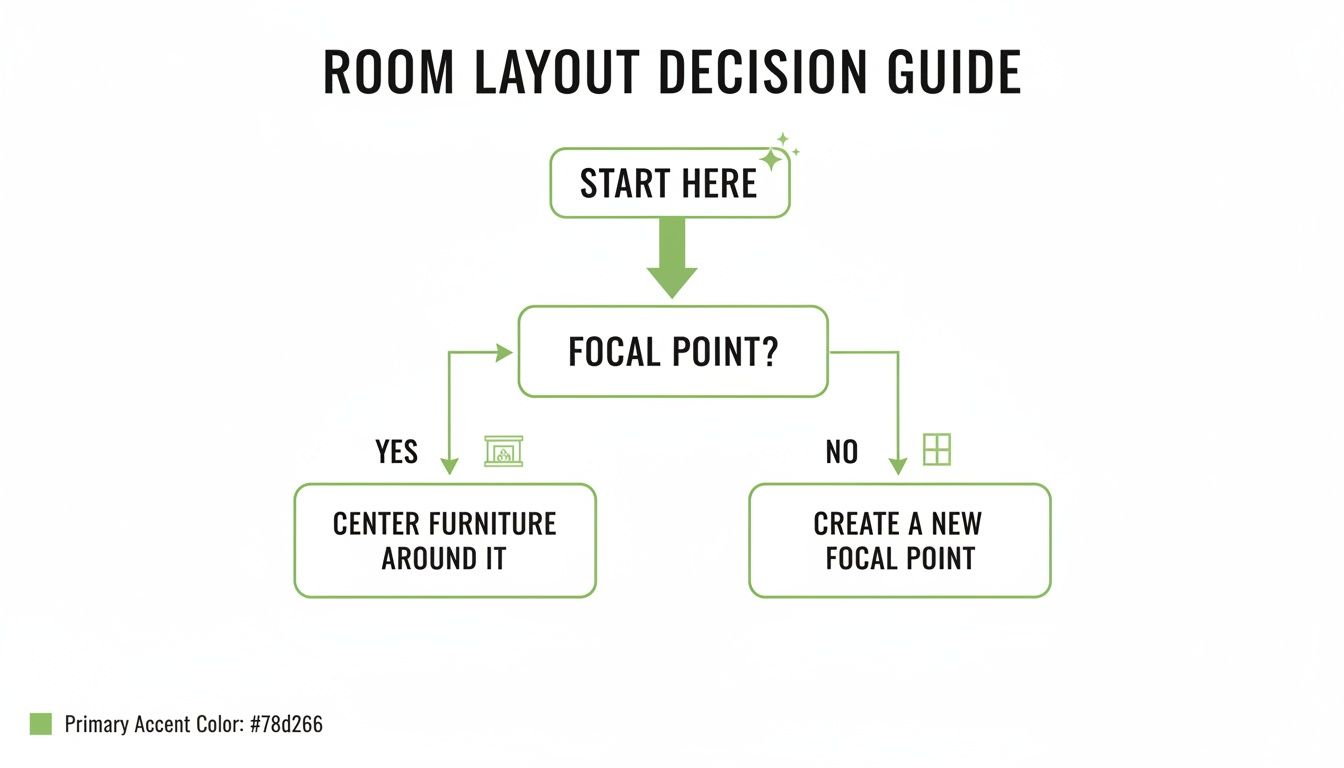
As you can see, figuring out your room's focal point is always the best place to start. It makes every other layout decision feel intentional and just… right.
Deciding between these two mainstays can feel tricky. Here's a quick breakdown to help you figure out which is the right fit for your cozy vision.
Sofa vs Sectional Which Is Right for Your Cozy Space?
| Feature | Sofa | Sectional |
|---|---|---|
| Best For | Smaller spaces, formal living rooms, or rooms needing layout flexibility. Encourages conversation. | Large families, movie lovers, and creating a dedicated, super-casual lounge zone. |
| Layout | Highly versatile. Can be easily paired with accent chairs, reconfigured, or moved. | More fixed. Defines a corner or area of the room, creating a cozy "nook" effect. |
| Coziness Factor | Creates individual cozy spots. Can be styled with throws and pillows to feel very inviting. | The ultimate "cuddle up" furniture. Perfect for sprawling out and sharing space. |
| Style | Comes in a huge range of styles, from sleek and modern to traditional and overstuffed. | Tends to lean more contemporary and casual, but many modern, modular styles are available. |
Ultimately, both can create an incredibly cozy space. It just comes down to how you plan to use your living room day-to-day.
Focus on Fabrics and Fill
The feel of your seating is just as crucial as its shape. For that irresistible cozy factor, you want fabrics that are soft to the touch. Think about sinking into rich velvets, the incredible texture of a soft bouclé, or the relaxed, casual vibe of a rumpled linen. These materials are tactile and just make you want to curl up.
And don't forget, what's on the inside counts just as much. The fill is what determines just how plush your sofa feels:
- Down-filled cushions: These are the gold standard for that cloud-like, sink-right-in softness. The trade-off? They need regular fluffing to look their best.
- Foam cushions: A bit more practical, foam provides more structure and support. They bounce back and hold their shape incredibly well over time.
- Hybrid fills: Often the perfect compromise. A blend of down and foam gives you that initial softness of down with the resilience and support of foam.
My best advice? Never underestimate the power of a "test sit." If you can, always try out a sofa in person. You simply can't gauge the true coziness factor from a picture online—how it feels is the ultimate test.
This obsession with comfort isn’t just in our heads. Sofas and sectionals now command a massive 30.92% of the living room furniture market's revenue. We all want pieces that work for both quiet nights alone and lively gatherings. As people continue to invest in making their homes true sanctuaries, the global furniture market is seeing a major comeback. You can dive deeper into these evolving furniture market dynamics to see how our collective desire for comfort is shaping modern design.
The Art of Layering Textures and Textiles
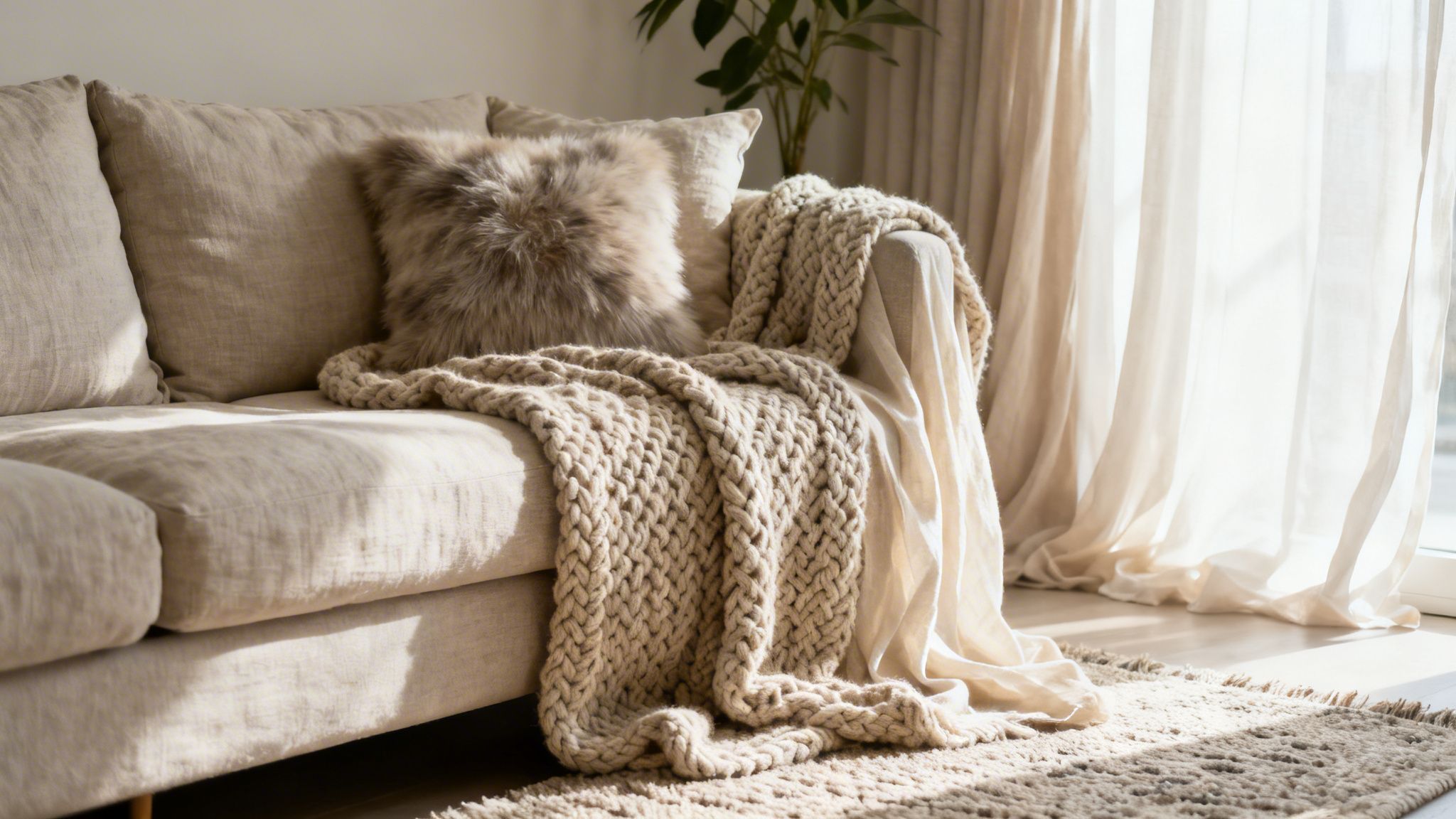
Here's where we get to the fun part—transforming a room from just "furnished" to genuinely welcoming. True coziness is all about layering textures. It’s the secret sauce that gives your space that sought-after, lived-in warmth that makes you want to curl up and stay a while.
Let’s start from the ground up. An area rug is so much more than floor covering; it anchors your entire seating area. The moment you step onto a soft, textured rug, you’ve set the tone for comfort. It’s the first—and arguably most important—layer.
Building Your Textile Foundation
Once the floor feels grounded and soft, look to your windows. Bare windows can feel stark, almost unfinished. Adding a set of flowing drapes is an instant fix, immediately softening the room's hard edges. Go for fabrics with a bit of weight, like linen or velvet, to add a touch of insulation and boost that intimate, enclosed feeling.
The real magic, though, happens with the smaller details. This is where you can get creative and build a truly tactile experience.
The whole point of layering is to create comfort you can see and feel. Every textile, from a nubby throw pillow to a soft chenille blanket, should invite you to touch it.
Think about how different materials play off each other. Materials like soft and warm fleece polyester fabric for a cozy feel can instantly dial up the comfort level. It's all about creating contrasts that feel deliberate but look completely effortless.
The Pillow and Throw Blanket Formula
The quickest win for a cozy vibe? Pillows and blankets. They’re what make your sofa go from a piece of furniture to an irresistible place to crash. But just tossing a few random pillows won't cut it—you need a simple strategy for that perfectly curated look.
Here’s my go-to formula for a balanced sofa arrangement:
- Start with Solids: Grab two large, solid-colored pillows (around 22-24 inches) that pull from your room's main color palette. Stick one in each corner of the sofa to create a solid base.
- Introduce Pattern: Next, layer in two slightly smaller pillows (around 20 inches) with a subtle pattern. This adds just the right amount of visual interest without getting too busy.
- Add a Fun Accent: Finish with a single lumbar pillow or a unique shape in a standout texture. This is your "statement" piece—think faux fur, a chunky knit, or even something with beaded detail.
As a final touch, casually drape a soft throw blanket over one arm of the sofa or across the back. It breaks up the solid mass of the couch and adds that final, inviting layer.
Want to dive deeper into getting the mix just right? Check out our full guide on how to choose throw pillows for a sofa. Mixing up sizes, shapes, and materials is the key to creating that dynamic and welcoming feel that defines a cozy living room.
Setting the Mood with Layered Lighting
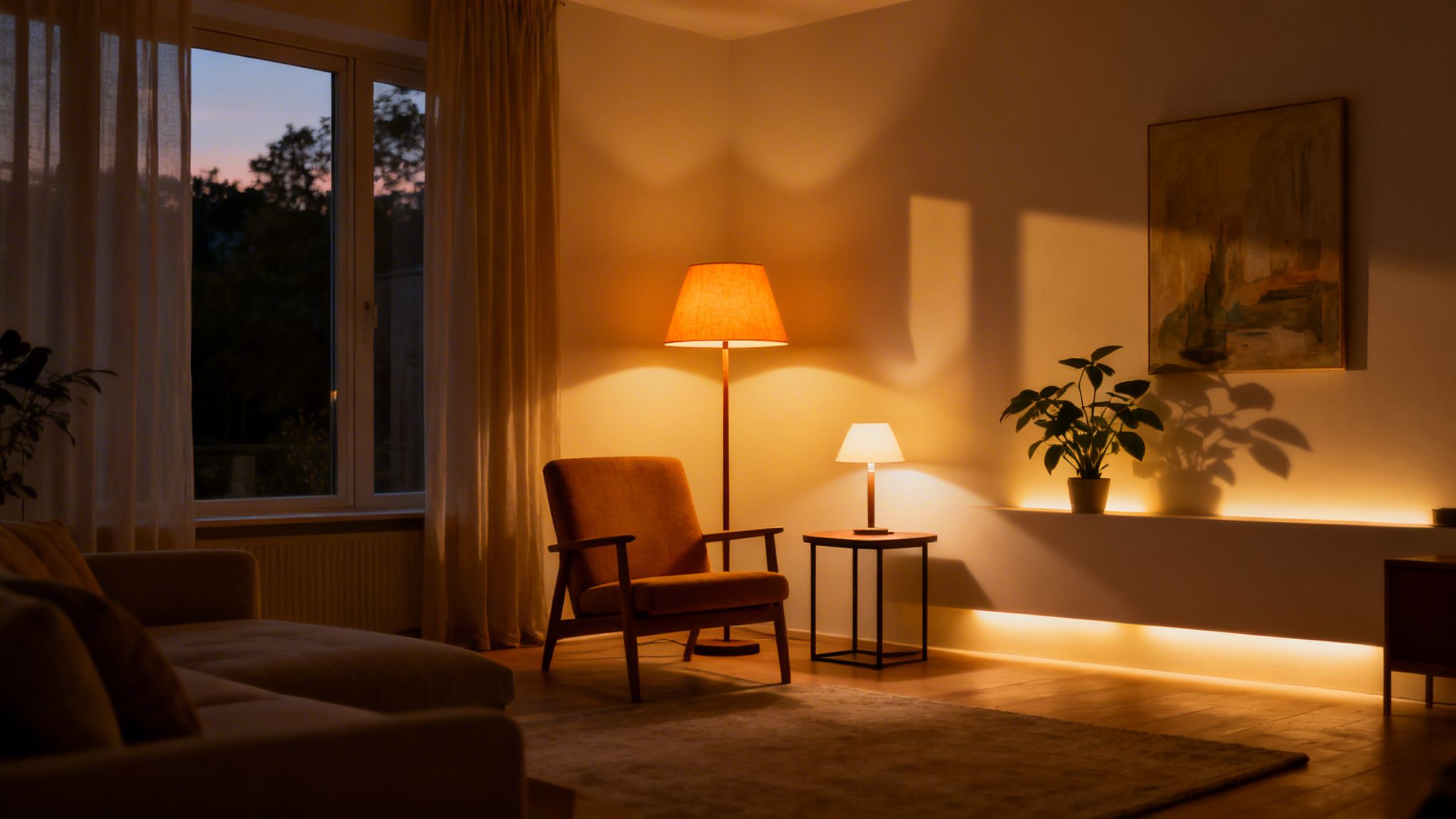
Lighting is, without a doubt, the single most powerful tool you have for setting the atmosphere in a room. You can have the most comfortable sofa in the world, but if it’s sitting under a single, harsh overhead light, the space will always feel more like a waiting room than a sanctuary.
The real secret to achieving that warm, inviting glow you see in professionally designed spaces isn't about one big, bright light. It's about layering multiple, smaller sources of light to create a soft, welcoming vibe that draws you in.
The Three Layers of Light, Demystified
The first rule of cozy lighting is to move beyond that one central fixture. A thoughtfully lit room uses three different types of light, each with its own job, to build depth and eliminate those stark, unwelcoming shadows.
Think of it like painting a picture, but with light instead of brushes.
- Ambient Light: This is your foundation—the overall glow that fills the room. But instead of a glaring ceiling light, think softer. A stylish floor lamp casting light upwards or even some subtle LED strips tucked behind a TV console can provide a beautiful, diffuse base.
- Task Light: This is your focused, functional lighting. It’s for getting things done. A chic table lamp next to your favorite armchair creates the perfect reading nook. An adjustable sconce over a small desk makes it a usable workspace without flooding the whole room with light.
- Accent Light: Now for the fun part—the "jewelry" of your lighting plan. Use accent lights to highlight the things you love. A tiny spotlight aimed at a piece of art or an uplight placed behind a large plant can create gorgeous, dramatic shadows and draw the eye.
Weaving these three layers together is what creates those lovely pockets of light and soft shadows that are the very definition of a cozy atmosphere. A room with varied light sources just feels more dynamic, intimate, and intentional.
Getting the Glow Just Right
The fixture is only half the battle; the lightbulb you choose is just as critical. The "color temperature" of a bulb, measured in Kelvins (K), dictates whether the light feels warm and golden or cool and sterile.
For that quintessential cozy feeling, you should always look for bulbs in the 2200K to 3000K range. This will give you that classic warm white light that feels like candlelight or a beautiful sunset.
And here’s one final, non-negotiable tip: install dimmer switches. They are a relatively cheap upgrade that gives you an incredible amount of control over the room's mood. Being able to dim the lights way down for a movie night and then bring them back up for a get-together gives you the power to craft the perfect atmosphere for absolutely any occasion. It’s the ultimate mood-setting tool.
Choosing a Warm Palette and Natural Materials
The colors and materials you bring into your living room are what truly set the mood. Think of them as the silent storytellers—they're what make a space feel either buzzy and bright or deeply calming and personal. When you're aiming for that cozy, curled-up-on-the-sofa feeling, you want a palette that feels like a warm hug the moment you walk in.
This doesn’t automatically mean you have to stick to beige. In fact, some of the most sophisticated cozy rooms are built on a foundation of complex, earthy neutrals. We’re talking about shades like taupe, mushroom, or a warm greige—colors that have a natural, grounding quality and create a soft, elegant backdrop for everything else.
On the flip side, you can create an incredible sense of coziness by going dark and moody. Deep, enveloping colors like charcoal gray, a rich navy blue, or even a dark moss green can make a room feel like a protective cocoon. This works especially well in smaller rooms or spaces that get a ton of natural light.
Embrace Organic Textures
Paint is just the beginning. The real magic, the part that gives a room its soul, comes from layering in natural materials. Imagine the rich, visible grain of a solid wood coffee table, the cool, earthy feel of a ceramic vase, or the soft gleam of brass on a floor lamp. These are the elements that bring a bit of the outdoors in, grounding the space with organic texture and a feeling of authenticity.
- Wood Tones: You can easily bring in warmth with oak, walnut, or acacia. Think furniture pieces, simple picture frames, or even a decorative bowl on the coffee table.
- Woven Elements: You can't go wrong with baskets. Whether they're made of jute or rattan, they're perfect for stashing blankets and add a wonderfully relaxed, textural layer.
- Stone and Ceramic: A simple marble tray on an ottoman or a cluster of handmade ceramic pots can add a sense of weight and a tangible connection to the earth.
This move toward natural, wellness-centered design isn't just a fleeting trend. The collective desire for comfort has reshaped the home furnishings industry, which is now projected to hit USD 996.38 billion by 2034. It’s a huge shift; post-pandemic, 70% of shoppers are now putting comfort first, choosing sustainable materials and ergonomic pieces over mass-produced decor. This focus on real comfort is what's driving the market now. You can dive deeper into these global furniture market trends to see just how much consumer values have changed.
Your material choices create a full sensory experience. The smooth finish of a wooden armrest, the cool touch of a stone coaster, and the nubby texture of a linen pillow all work together to build a rich, layered environment that feels deeply personal and comforting.
By thoughtfully blending a warm color palette with a mix of natural materials, you prove that genuine coziness isn't just about looks—it’s about a connection to timeless, quality elements. The end result is a living room that doesn’t just look inviting; you can feel it on every level.
Adding Personality with Decor, Greenery, and Scent
This is the fun part—where your living room stops being just a "designed space" and starts feeling like home. The final layers of decor, plants, and even scent are what give a room its soul. These are the details that tell your story and transform a collection of furniture into a true sanctuary.
The trick is to make your surfaces—like coffee tables, consoles, and bookshelves—feel intentionally styled, not just cluttered with stuff. I always think of it as creating little "vignettes," or small, interesting scenes that catch your eye. The easiest way to nail this is by grouping objects with different heights, shapes, and textures.
On a coffee table, for instance, try stacking two or three of your favorite art books. Pop a small, handmade ceramic bowl on top. Right next to that stack, place something taller, like a slender vase with a single stem or a unique candle. This simple formula of low, medium, and high creates a visual rhythm that just feels right.
Infuse Life with Greenery
Nothing breathes life and softness into a room faster than a houseplant. They’re a living, breathing pop of color that purifies the air and breaks up all the hard lines of furniture and walls. And you absolutely do not need a green thumb to pull this off.
There are so many gorgeous, low-maintenance plants that are practically built for creating a cozy vibe:
- Snake Plant: This one is nearly indestructible. Its striking, upright leaves are perfect for adding a bit of height to a forgotten corner or the end of a console table.
- ZZ Plant: With its waxy, deep green leaves, the ZZ plant can handle low light and infrequent watering like a champ. It looks incredibly lush with minimal effort.
- Pothos: This is the ultimate trailing plant. Let it cascade down a bookshelf or hang it from the ceiling to add a soft, whimsical touch to any spot.
Pro Tip: Don't just stick your plant in the plastic pot it came in. Placing it inside a textured ceramic planter or a woven basket instantly elevates the look. It’s a small move that layers in another natural material, making the whole room feel more grounded.
Complete the Sensory Experience with Scent
The final, and often most overlooked, element is scent. A subtle, welcoming aroma is that invisible layer that makes a room feel incredible the second you walk through the door. It’s one of the most powerful tools for setting a specific mood.
You can bring scent in through the warm flicker of a candle or a simple vase of fresh flowers. A diffuser with essential oils like sandalwood, lavender, or cedarwood works wonders for creating a consistent, calming atmosphere. In the fall and winter, switching to scents with notes of cinnamon, clove, or pine can make a room feel cozier in an instant.
It’s this last sensory detail that really solidifies that feeling of a perfectly crafted, deeply personal, and cozy living room.
Common Questions About Creating a Cozy Living Room
As you start pulling your cozy living room together, a few common questions always seem to pop up. Trust me, I've heard them all. Getting these little details right is what separates a room that feels genuinely warm from one that just feels… busy. Let's dig into some of the most frequent hurdles.
How Do I Make a Big Room Feel Intimate?
This is probably the number one challenge, especially with modern open-plan layouts. How do you stop a large, airy space from feeling like a cold, empty hall? It's all about creating defined zones.
Your first move should be a substantial area rug. Use it to create a visual anchor for your main seating group, carving out a dedicated conversation spot. Then, pull your furniture away from the walls. I know it can feel counterintuitive, but floating your sofa and chairs in a tighter arrangement instantly fosters a sense of intimacy. Finally, switch off the harsh overhead lights and use floor and table lamps to cast warm, inviting pools of light.
What Are the Best Colors for a Cozy Vibe?
There are no hard and fast rules here, but some colors definitely lend themselves to that snug, enveloping feeling more than others. Warm neutrals are a classic for a reason—think soft taupes, rich creams, and earthy mushroom tones. They create a beautiful, soft backdrop that just begs you to relax.
But don't be afraid to go a little moodier if that's your style. Deep, saturated colors can make a room feel like a protective hug. I've seen stunning spaces done in charcoal gray, rich navy, or a deep forest green. The secret is to pick shades with warm undertones so they feel embracing rather than chilly.
Coziness is often confused with clutter. True coziness comes from curated layers of meaningful items and functional textiles, while clutter is simply an excess of disorganized things. Stylish storage is your best friend here.
Where's the Line Between Cozy and Cluttered?
It’s a valid worry—how do you add all those lovely layers without the room looking like a mess? The difference comes down to one word: intention. Cozy design is about curated comfort. Every item should have a reason for being there, whether it's a soft blanket for warmth, a plush pillow for support, or a stack of your favorite books for a quiet afternoon.
Focus on adding meaningful decor, not just "stuff" to fill shelves. And get smart with your storage. A beautiful woven basket can hide remote controls and charging cords, while an ottoman with a hidden compartment is perfect for stashing extra throws. This keeps surfaces clear for the personal touches that make your living room feel like home. And to add another layer of personal touch, you can explore things like home-made perfumes to create a scent that’s uniquely yours.
At Fluent Trends, we believe your home should be a true sanctuary of comfort and style. Explore our collections of designer-approved furniture and decor to find the perfect pieces to bring your cozy living room to life.