

Decorating Your Home on a Budget: Chic Ideas to Feel Luxe without the Price Tag
Donna MaloneDecorating your entire home on a budget isn’t about sacrificing style—it’s about being smart. The real secret is blending a little creativity with a solid plan. When you focus on high-impact changes like a fresh coat of paint or a new furniture layout, and you know where to save versus where to splurge, you can create a personal, chic sanctuary without that eye-watering price tag.
The Art of Affordable Elegance
We all dream of a home that looks and feels more expensive than it is. But the old myth that you need a massive budget to get there? Totally outdated. Honestly, achieving that elegant, curated look is far more about being resourceful and having a clear vision than it is about how much you spend.
This isn't about finding cheap, temporary fixes. It’s about using smart, affordable home design ideas that deliver a genuinely high-end feel. The philosophy is simple: combine strategic planning, savvy shopping, and a touch of your own creativity to build a space that feels like you.
It all starts with training your designer's eye. Before you even think about buying a single thing, take some time to really understand your personal style. Are you drawn to clean, minimalist lines? Or do you lean more towards a cozy, rustic vibe? Getting a handle on foundational elements like color, scale, and texture is crucial. For instance, just mixing different materials—a soft velvet pillow on a linen sofa, next to a rough-hewn wooden side table—adds a layer of depth and luxury that costs very little to pull off.
Develop Your Vision with a Mood Board
One of the most powerful tools in your budget-decorating arsenal is a simple mood board. This doesn't have to be some complex design project. It can be a physical corkboard you pin things to or a digital one on a platform like Pinterest. The goal is to gather images that capture the feeling you want to create in your home.
This visual guide becomes your North Star, keeping you focused and preventing those impulse buys that look great in the store but don't quite fit your overall vision. A mood board ensures every single item you bring home, whether it’s a thrifted lamp or a brand-new rug, works together to create a cohesive, intentional design.
Mix Savvy Finds with Timeless Pieces
The global home decor market is set to explode, projected to hit USD 1,097.51 billion by 2032. This incredible growth is fueled by shoppers just like us who are prioritizing stylish, budget-friendly options. In North America alone, which holds a 38% global share, homeowners are saving an average of 20-30% by mixing high-end accents with DIY projects and affordable finds, according to insights from Fortune Business Insights. This data confirms what we already know: you don't need to buy everything new or from expensive retailers to create a beautiful home.
The most beautiful homes feel collected over time, not purchased from a showroom floor. Your space should tell your story through a mix of old, new, handcrafted, and found objects.
It’s easier than ever to find unique, handcrafted pieces that look far more expensive than they are, especially with the rise of accessible online boutiques. By artfully mixing these affordable gems with a few timeless accents, you create a layered, deeply personal look. Imagine pairing a vintage dresser you scored at a flea market with a beautiful, modern ceramic vase from a curated shop like Fluent Trends. That single vignette can become a stunning focal point that feels both polished and completely personal.
Your Blueprint for Budget Decorating
Diving into a home decorating project without a clear plan is a recipe for disaster. It's like going to the grocery store starving—you’ll inevitably walk out with a random assortment of things you don't really need and a much bigger bill than you planned for.
A solid plan is your secret weapon for decorating on a budget. It’s what transforms a vague wish into a concrete, actionable strategy. This isn't about stifling your creativity; it's about giving it direction.
Your first move is to do a brutally honest walk-through of your home. Grab a notepad, go room by room, and ask yourself two simple questions about each space:
-
What is this room's main job? (Is it for relaxing, working, or entertaining?)
-
What’s just not working in here? (Think cluttered corners, terrible lighting, or a lack of comfy seating.)
This little exercise is gold. It helps you shift from a fuzzy goal like "I want a nicer living room" to a specific problem you can actually solve, like "I need a good reading lamp by the armchair and a rug to pull the seating area together." That kind of clarity is what leads to smart, high-impact decisions.
Prioritizing Your Projects and Funds
With a list of needs for each room, it’s time to get real about priorities. You can’t do it all at once, and frankly, you shouldn't even try. One of the biggest mistakes I see is people spreading a small budget thinly across their entire house. The result? A bunch of tiny, unsatisfying changes that don't make a real difference.
Instead, zero in on the areas that will have the biggest impact on your day-to-day life. For most of us, that means starting with the living room and the primary bedroom—the spaces where we unwind, recharge, and connect.
A beautifully decorated home is a marathon, not a sprint. The best spaces feel collected and curated over time, telling the story of your life, not just one big shopping trip.
By focusing your initial budget on one or two key rooms, you get the amazing feeling of a finished project. You create a functional, comfortable sanctuary you can enjoy right away. Other spots, like a guest room or home office, can wait for phase two.
This focused strategy is catching on. The home decor market is massive, and more people are looking for smart, budget-friendly ways to improve their spaces.
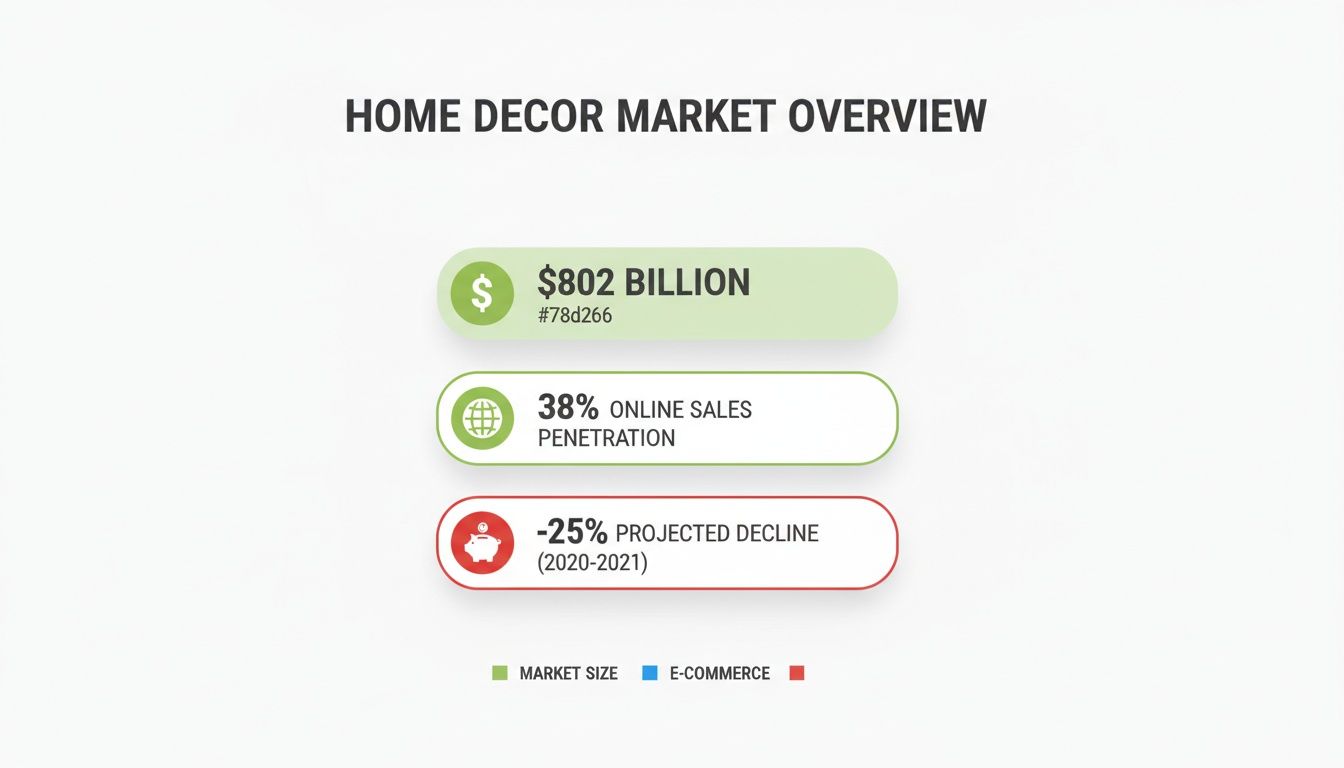
The data shows a booming market where 38% of sales happen in North America alone. More importantly, savvy decorators are figuring out how to cut project costs by up to 25% just by making strategic, budget-conscious choices.
Building Your Room-Specific Budget
Once you’ve picked your priority room, it's time to map out a detailed budget. This is where you get specific about where to save and where it might be worth splurging. A big-ticket item like a sofa is often a worthy investment, while you can find amazing deals on things like accessories, textiles, and even side tables.
To give you a clearer picture, I've put together a sample budget for a living room and bedroom refresh. Think of it as a starting point—feel free to adjust the numbers to fit your own needs. And if you’re looking for some great ideas on how to make a big impact in your sleep space, check out these stylish bedroom decor ideas on a budget to see how far every dollar can go.
Sample Room Budget Allocation
Here's a practical look at how you could break down a budget for a complete room refresh. It's all about making every dollar count.
| Item/Category | Living Room ($750 Budget) | Bedroom ($500 Budget) | Key Strategy |
|---|---|---|---|
| Paint & Supplies | $75 (10%) | $50 (10%) | Maximum Impact: Nothing transforms a room's entire vibe for less money than a fresh coat of paint. |
| Anchor Furniture | $300 (40%) | $150 (30%) | Invest Wisely: Focus on one key piece, like a great secondhand sofa or a solid bed frame. |
| Lighting | $115 (15%) | $75 (15%) | Set the Mood: Layering is key. Mix floor lamps, table lamps, and maybe an overhead fixture. |
| Textiles (Rug, Curtains) | $150 (20%) | $125 (25%) | Add Coziness: A good-sized area rug and curtains are what make a space feel truly finished and inviting. |
| Decor & Accessories | $110 (15%) | $100 (20%) | Personalize: This is the fun part! Add your personality with pillows, art, and plants. Thrift stores are your best friend here. |
This blueprint—assessing, prioritizing, and budgeting—is the essential foundation for any decorating project. It makes sure every dollar you spend is intentional, moving you one step closer to a home you absolutely love.
Unlocking the Power of Paint and Layout
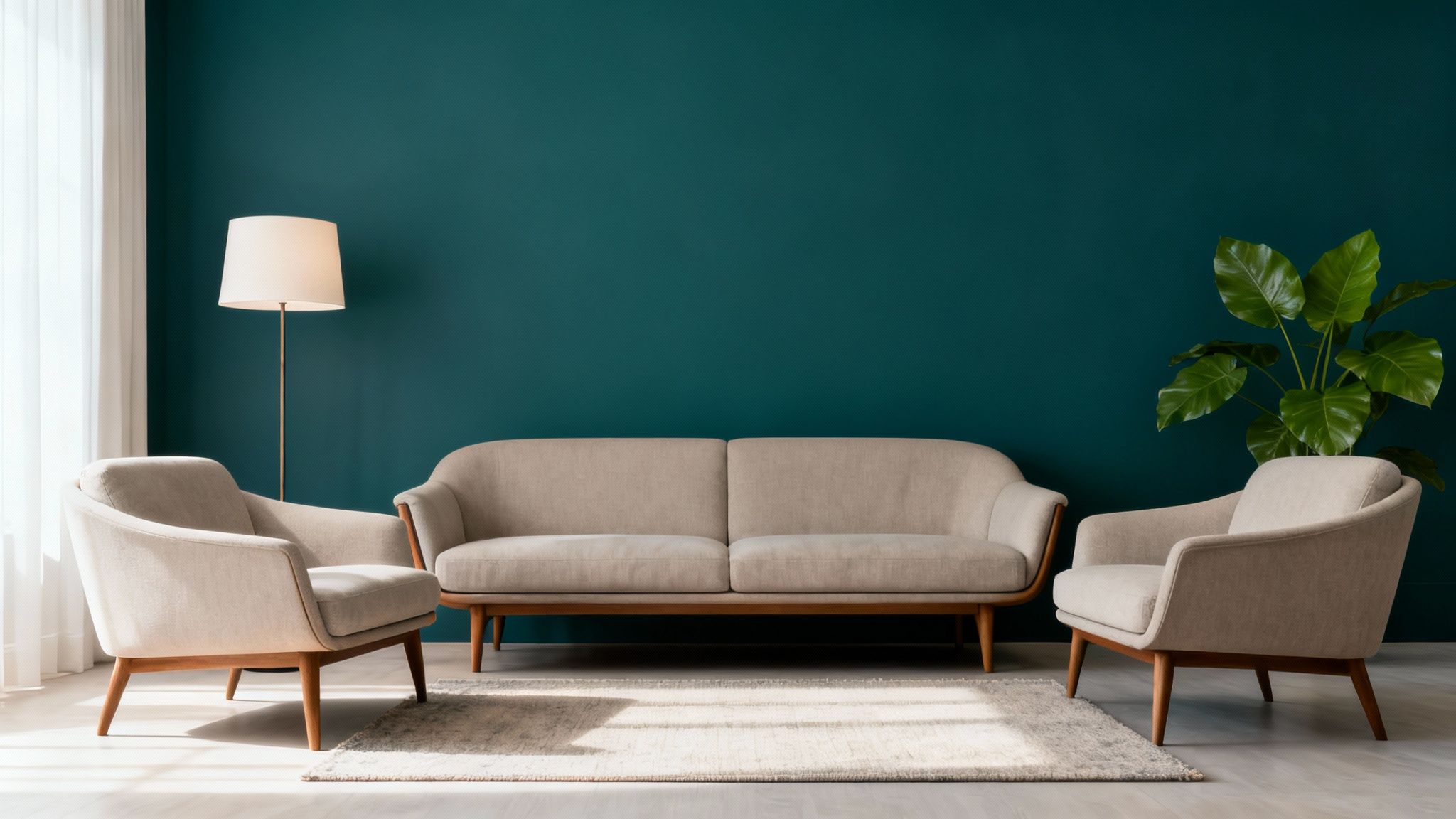
If there's one secret weapon for completely changing a room with the smallest possible dent in your wallet, it’s paint. Nothing else delivers such a dramatic return for just a few dollars and a weekend's worth of effort.
But it’s about more than just slapping a new color on the walls. With a little strategy, paint can trick the eye, making a small room feel airy, a dark hallway feel bright, or a boring, boxy room suddenly feel like it has character. It’s all about learning to use paint as a design tool.
Right behind paint is the second most powerful tool in your arsenal, and this one is completely free: a smart furniture layout. How you arrange your stuff dictates how you move through and experience a space. A bad layout feels cramped and awkward, but a thoughtful one can make the same room feel open, welcoming, and perfectly designed for your life.
Harnessing Color for Maximum Impact
Think beyond just picking a color you like. Instead, approach painting like a designer—use it to solve problems. Different techniques create wildly different vibes, and knowing which one to pull out of your hat is key when you're working with a tight budget.
A few of my favorite high-impact painting strategies:
-
The Accent Wall: This is a classic for a reason. Painting just one wall a bold, contrasting color creates an instant focal point. It draws your eye, adds depth, and doesn't overwhelm the space. It’s perfect for the wall behind your sofa or headboard.
-
Color Drenching: For a seriously high-end, dramatic look, paint the walls, trim, doors, and even the ceiling all in the same color. This monochromatic move blurs the room’s edges, making it feel bigger and more cohesive. A deep, moody green or a soft, earthy terracotta can look incredibly chic.
-
Painting Outdated Furniture: That orange-y pine dresser or scuffed-up side table? Don't toss it. A fresh coat of paint in a modern shade like charcoal gray or navy blue can give it a whole new life, turning a thrifted find into what looks like a custom piece.
Pro Tip: Lighter colors like soft whites, pale grays, and light blues are your best friend for small spaces. They reflect more light and create an illusion of spaciousness. On the flip side, dark, saturated colors can make a large, cavernous room feel cozier and much more intimate.
The Art of a Functional Layout
Once your walls are looking fresh, it’s time to tackle the layout. Before you even think about buying a single new thing, work with what you've got. The goal here is to improve the room’s flow, create clear zones for different activities, and establish a focal point.
If you can, completely empty the room. If not, at least pull everything away from the walls. This simple act works like a mental reset, helping you see the space with fresh eyes and break out of the "it's always been this way" trap. Ask yourself: what is the main thing I do in this room? Build your layout around that.
Creating Cohesive Furniture Arrangements
In a living room, the main event is usually conversation or kicking back to relax. So, stop pushing all your furniture against the walls! Pull your sofa and chairs closer together to create an intimate conversation area that actually feels connected. Just make sure you leave a clear path for walking through the room.
Think about these fundamentals:
-
Find the Focal Point: What’s the first thing you notice? A fireplace, a big window, a great piece of art? Arrange your main seating to face it.
-
Anchor with a Rug: An area rug is essential for defining the seating area. Make sure at least the front legs of your sofa and chairs are on the rug—it visually pulls the whole arrangement together.
-
Create Zones: If you have a larger room, break it up. You could have your main seating area, a small reading nook by the window with an armchair and a lamp, or even a small desk area for getting work done.
Nailing your furniture placement is a total game-changer. For a deeper dive, check out our guide on living room layout ideas for tons of practical examples. By combining the power of paint with a strategic layout, you can completely reshape your home for next to nothing.
The Thrill of the Hunt for Thrifting and DIY
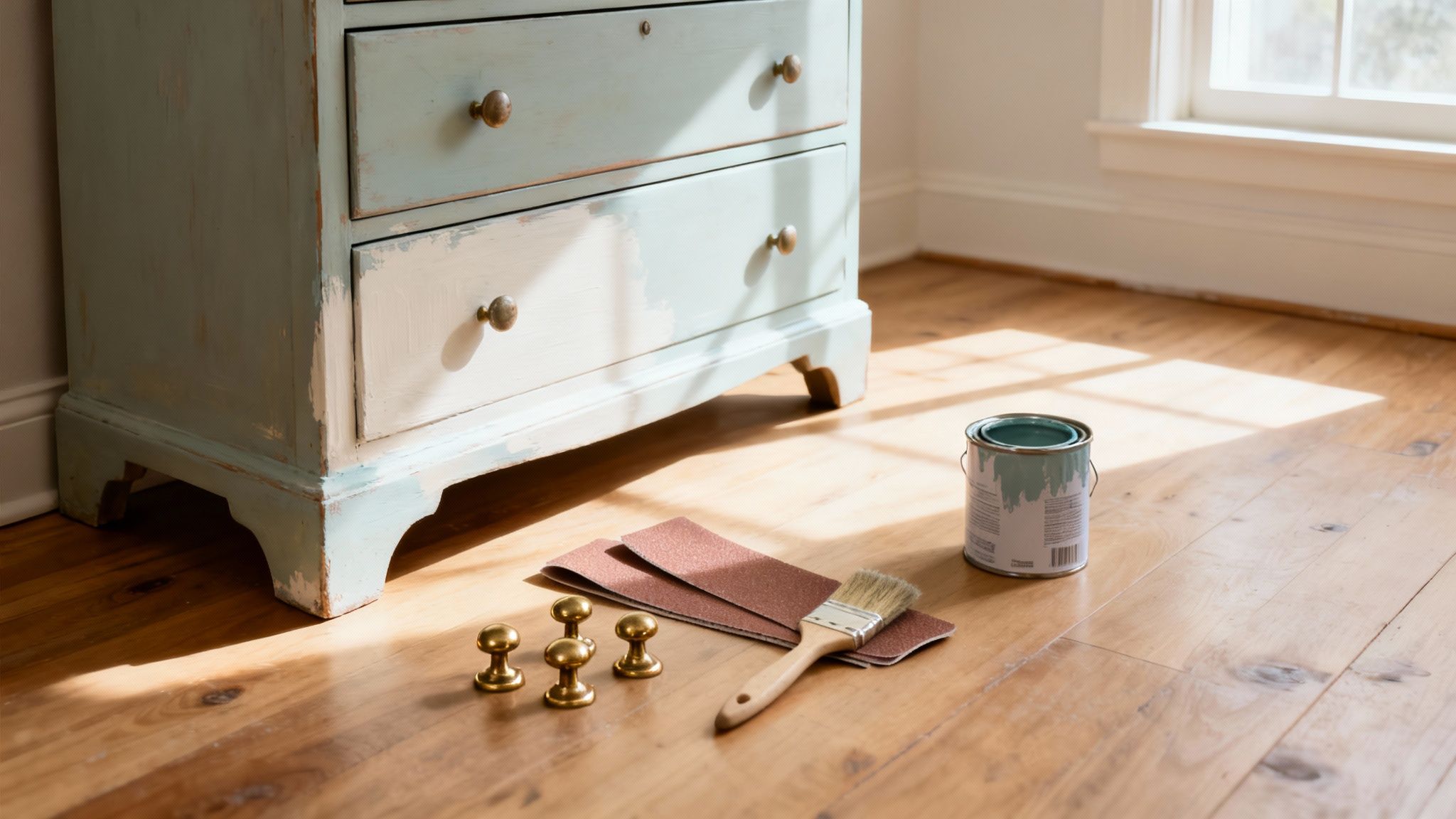
This is where the real fun begins. Seriously. If you want to create a home that feels collected, personal, and looks incredible without draining your bank account, you have to embrace the worlds of secondhand shopping and DIY.
Forget paying full price for the same big-box furniture everyone else has. The thrill is in the hunt. Thrift stores, flea markets, and online spots like Facebook Marketplace are modern-day treasure chests.
This approach does more than save money—it gives your home a story. That solid wood dresser you scored for $30 and refinished? That’s a conversation starter and a point of pride, not just a place to store your sweaters.
Navigating the World of Secondhand Finds
Walking into a thrift store without a plan can be overwhelming. The key is to train your eye to see potential, looking right past a dated finish or ugly hardware to the piece's "good bones." It's a skill, and it gets better with every trip.
I always keep a running list on my phone of what I'm looking for, complete with ideal dimensions. This keeps me focused and prevents me from buying things I don't truly need. When you find a contender, give it a good look-over.
What to hunt for:
-
Solid Wood Furniture: You're looking for quality construction. Dovetail joints on drawers are a dead giveaway. Don't sweat a few scratches or an ugly finish—paint and stain are your best friends.
-
Unique Accessories: Vintage brass candlesticks, cool-shaped lamps, and interesting pottery are what give a room that layered, collected-over-time vibe.
-
Frames and Mirrors: Ornate, old-school frames can be painted for a fresh, modern look. Big mirrors are gold for making any space feel larger and brighter.
What to pass on:
-
Funky Odors: Heavy smoke or mildew smells are notoriously hard to get out of furniture, especially upholstery. Just walk away.
-
Major Structural Damage: A wobbly leg can often be fixed, but a cracked frame or serious water damage usually isn't worth the headache.
-
Stained Upholstery: Unless you're ready to shell out for professional cleaning or reupholstery, it’s a hard pass on stained sofas and chairs.
To really level up your thrifting game, learn these pro thrift store shopping tips and start finding the good stuff every time.
Beginner-Friendly DIY Projects for Big Impact
DIY is your secret weapon for personalizing your space on a dime. You don’t need a fancy workshop or a ton of experience to make a huge difference. The most effective projects are often the simplest.
This isn’t just a niche hobby anymore; it’s a smart financial move. Post-pandemic, 62% of homeowners opted for cost-effective updates like these, cutting their project costs by an average of 50%.
Here are a few easy wins to get you started:
-
Upgrade Hardware: This is the easiest trick in the book. Swapping out boring knobs on a dresser or kitchen cabinets takes minutes but makes the piece look instantly more custom and expensive.
-
Create Custom Wall Art: Grab a cheap, oversized canvas from a craft store and go to town with a few sample pots of paint to create your own abstract art. You can also frame cool textiles, high-quality wrapping paper, or even pages from a pretty coffee table book.
-
Refinish a Small Furniture Piece: Start small. Find a little side table or a simple bookshelf at a thrift store. A quick sand and a fresh coat of chalk paint can completely transform it without a ton of prep work.
Don't be afraid to just go for it! The great thing about working with a cheap thrifted item is that the stakes are low. If you mess up or hate the color, you can just paint over it and try something else.
These hands-on projects are the heart and soul of budget decorating. They let you get a high-end, curated look for a fraction of the cost while creating a home that is 100% you.
Mixing High and Low for a Curated Look
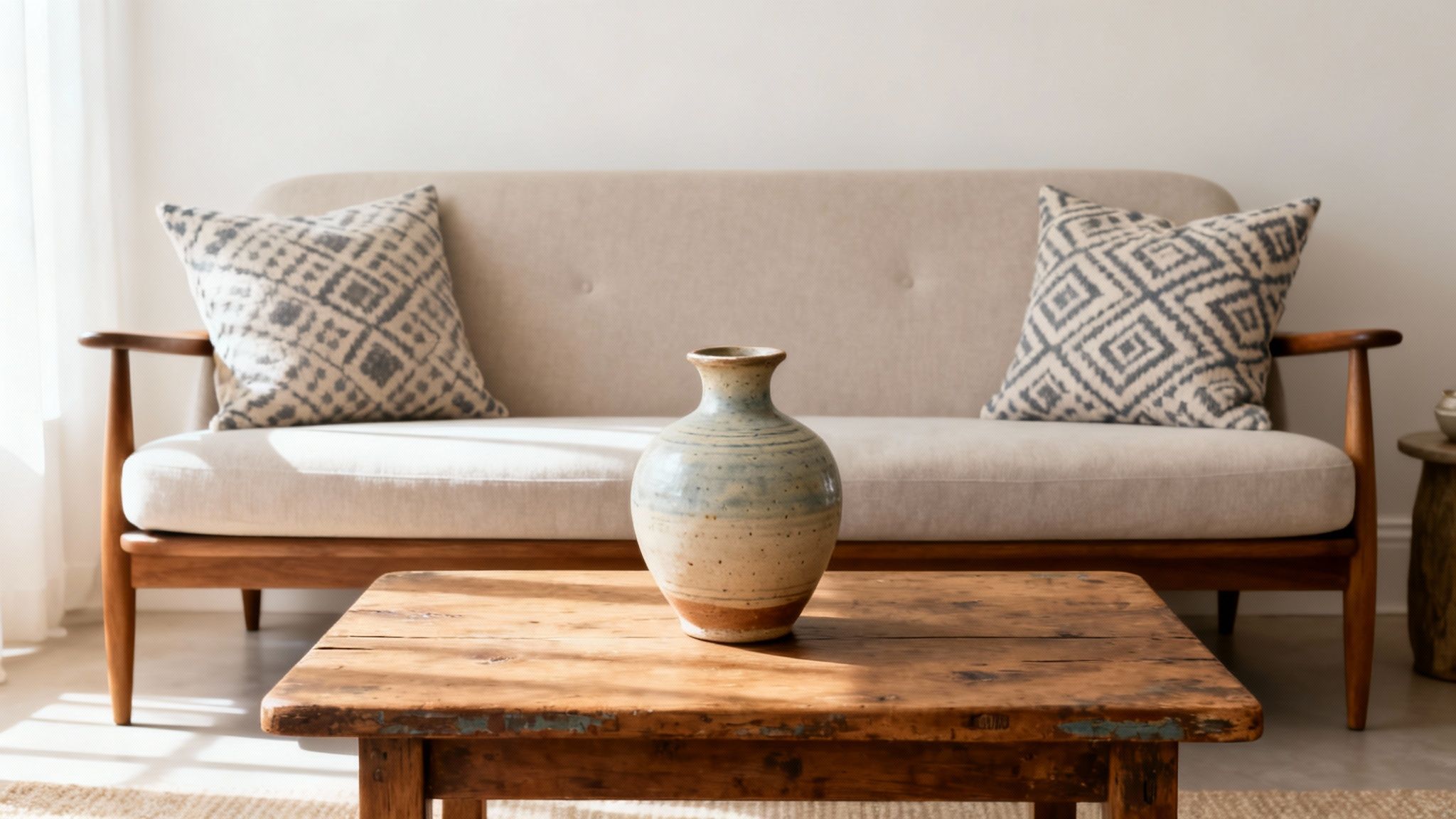
Here's a little secret from the world of interior design: the most beautiful homes aren't necessarily the most expensive ones. The real magic comes from mastering the high-low mix—knowing when to invest in quality and when to score a brilliant bargain.
It’s all about creating a space that feels collected and personal, not like it was pulled straight from a catalog page. When you learn how to blend splurge-worthy pieces with amazing budget finds, you end up with a layered, sophisticated room that tells your story. This is how you make every dollar in your budget work harder.
Think about it like putting together a great outfit. You might save up for a timeless leather jacket or a designer handbag, but you’ll pair it with a fun, affordable top and trendy jewelry. The exact same logic applies to decorating your home.
Where to Splurge: Your Investment Pieces
Some items in your home are true workhorses. They're the pieces you touch, use, and rely on every single day. These are the foundational elements that anchor a room, and spending a little more on them isn't a splurge—it's a smart investment in durability, comfort, and style that lasts.
So, where should you direct the bigger chunks of your budget? Focus on the high-traffic, high-impact pieces you want to keep for years.
-
The Sofa: This is where life happens. It’s for Netflix binges, afternoon naps, and chats with friends. A quality sofa with a solid frame and durable fabric is worth every cent and will save you from the disappointment of a saggy, uncomfortable couch in a year or two.
-
The Mattress: Never underestimate the power of a good night's sleep. Investing in a comfortable, supportive mattress is one of the best things you can do for your overall well-being. It’s a non-negotiable.
-
The Dining Table: If this is where you gather for meals, homework, and game nights, you need a solid, well-made table that can handle daily life and become the true heart of your home.
The key with these investment pieces is to choose classic shapes and neutral colors. This gives them staying power, creating a versatile foundation that you can easily update with less expensive decor as your tastes—and trends—evolve.
Where to Save: The Fun Finishing Touches
Once you’ve got your anchors in place, it’s time for the fun part! This is where you can fill in the gaps with affordable decor that injects your personality into the space. Think of these as the "low" items in your high-low mix; they bring the color, texture, and character that make a room feel uniquely yours.
You’d be amazed at where you can save serious money without anyone ever guessing the price tag. This is where the thrill of decorating on a budget really kicks in.
It’s also the perfect place to bring in unique, designer-approved pieces from curated online shops like Fluent Trends. You can find stunning, handcrafted items that feel incredibly luxe without the hefty cost. Imagine pairing a thrifted side table with a gorgeous ceramic vase or unique serveware. That one special piece instantly elevates the entire look.
Here are some of the best areas to find stylish savings:
-
Throw pillows and blankets
-
Decorative objects (vases, trays, bowls)
-
Side tables and small accent furniture
-
Lamps and other lighting
-
Wall art and picture frames
-
Rugs (especially in low-traffic areas)
The 70/30 Rule in Action
This balanced approach isn't just a niche trick—it's a global strategy. With the worldwide home decor market projected to hit US$125.21 billion by 2025, there are more options than ever. A successful approach used by 65% of global shoppers is the 70/30 rule: dedicate about 70% of your budget to affordable items and 30% to those key investment pieces. This proves that great style is accessible to everyone. You can dig into how smart shoppers are transforming their homes with this mix over at Statista.
Let’s picture this in a living room. You invest in that quality sofa (your 30% splurge). Then, you hunt down a cool vintage coffee table on Facebook Marketplace, snag an affordable rug during an online sale, and find some chic pillow covers on Amazon. You finish the space with a beautiful, handcrafted ceramic vase from Fluent Trends that acts as the perfect centerpiece.
The result? A thoughtfully curated, high-end look built on a budget-friendly foundation.
Answering Your Top Budget Decorating Questions
Stepping into the world of decorating an entire home on a budget can bring up a lot of questions. It's completely normal to feel a bit stuck trying to make your vision and your wallet see eye-to-eye. We get it.
So, let's clear up some of the most common hurdles. Here are the practical answers you need to move forward with confidence.
What Should I Prioritize When Decorating a Whole House on a Budget?
When you’re staring at multiple empty rooms, it’s easy to feel pulled in a dozen different directions. The secret is to resist the urge to do a little bit everywhere. You'll just end up with a house that feels half-finished.
Instead, zero in on the rooms where you spend the most time. For nearly everyone, that’s the living room and the primary bedroom. These are the spaces that impact your daily life the most, so making them comfortable and functional first will give you the biggest return on your happiness.
Start with paint—it's the cheapest, most dramatic update you can make. From there, think about the big, functional pieces you'll use every single day. A comfy sofa you can't wait to sink into or a solid bed frame are the right places to focus your initial funds.
Key Takeaway: Don't get sidetracked by small decorative items just yet. Your money is best spent on the larger anchor pieces, like a great secondhand sofa or a versatile rug. These foundational items make a room feel complete and usable right away, which is a huge win.
How Can I Make My Inexpensive Decor Look Expensive?
This is the fun part—it's all about styling magic. Making affordable finds look high-end has very little to do with the price tag and everything to do with how you pull it all together. The goal is a space that feels curated and intentional, not just assembled.
To instantly elevate your look, focus on these three game-changers:
-
Texture and Layers: This is the designer's secret weapon. Mix different materials to create depth and a sense of history. Think a smooth velvet pillow against a chunky knit throw, or a sleek metal tray sitting on a rustic wood coffee table. It's these little contrasts that make a room feel rich and thoughtfully designed.
-
Scale and Proportion: Size really does matter in decor. Instead of scattering a bunch of tiny, dinky frames on a large wall, go for one or two oversized pieces of art. The impact is so much more dramatic and sophisticated. The same rule applies to rugs—one that's too small for the space will instantly make the entire room feel off-balance and cheap.
-
Curation and Grouping: Fight the instinct to place small objects all over the room. It just creates visual clutter. Instead, group them. Cluster a few candles of varying heights on a decorative tray or arrange a collection of vases on a bookshelf. This simple trick turns random items into a deliberate, stylish collection.
Where Are the Best Places to Find Affordable Home Decor?
Building a unique, layered home means shopping from a mix of places. If you only hit up one or two big-box stores, your home will look like a page from their catalog—and not in a good way. The real gems are found when you do a little hunting.
Thrift stores, consignment shops, and flea markets are your best friends for finding one-of-a-kind pieces with soul. You can score incredibly well-made vintage furniture for a fraction of the cost of new, mass-produced stuff. Don't sleep on Facebook Marketplace either; it can be a goldmine for local deals.
For new items, look beyond the obvious giants. Online boutiques often offer beautiful, designer-approved collections at much more accessible prices. And finally, don't forget to "shop your own home." Sometimes all a room needs is a lamp borrowed from the bedroom or art swapped from the hallway. It’s a fresh look for $0.
What Are Some Common Budget Decorating Mistakes to Avoid?
Knowing what not to do is just as crucial as knowing what to do. A few common missteps can easily derail your budget and leave you feeling frustrated.
The biggest offender? Buying everything in a matching "set." It might feel like an easy solution, but that five-piece matching bedroom suite often looks dated and completely impersonal. You’ll create a much more interesting, high-end vibe by mixing and matching pieces for a collected-over-time feel.
Another pitfall is falling for fast-fashion trends on your big-ticket items. That bouclé sofa might be all over your feed right now, but will you still love it in five years? Save the trends for small, inexpensive accents like pillows and throws. Keep your larger, more expensive pieces timeless and versatile—they’ll serve you much better in the long run.
Ready to find those perfect, affordable pieces that elevate your home? At Fluent Trends, we've curated a collection of designer-approved decor and furniture that brings a high-end feel to any space without the intimidating price tag. Discover our collections and start building a home you love today.