

How to Choose a Sofa Color the Right Way
Donna MaloneBefore you even think about browsing for sofas, take a good, hard look at the room it's going into. This is the single most overlooked step, and it's the one that separates a perfect fit from a costly mistake.
Start with Your Room, Not the Showroom
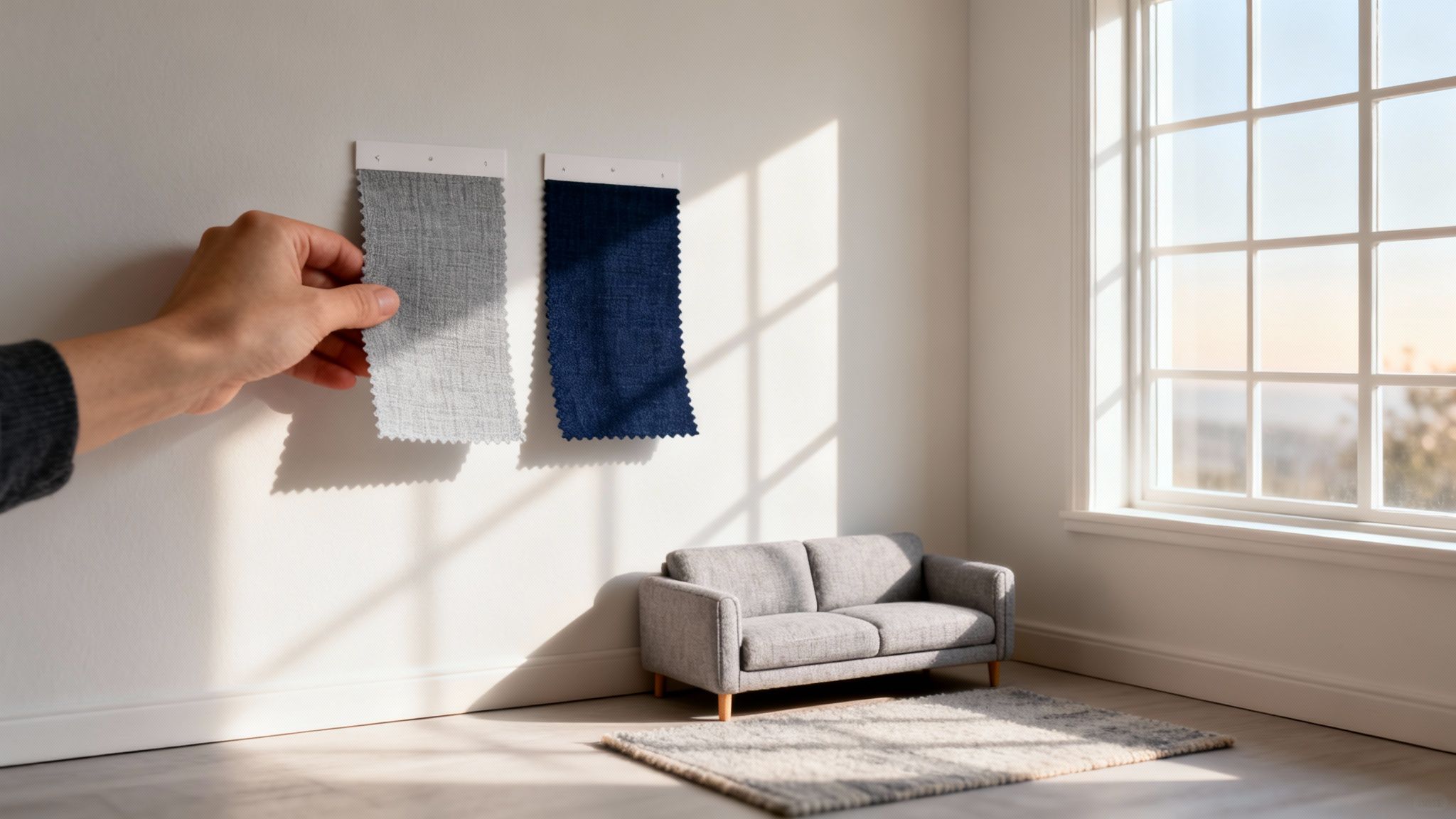
We’ve all been there. You fall head-over-heels for a sofa under the perfectly engineered lighting of a showroom, only to get it home and wonder, "Is that even the same color?" It happens more often than you’d think.
The truth is, a color's personality can completely change depending on its environment. That's why the real work begins right in your own living room, focusing on two things that showrooms can't replicate: your unique lighting and the actual scale of your space.
Assess Your Room's Light and Scale
First, become a light-watcher for a day. Seriously. Pay attention to how the natural light moves across the room from morning to night. Does your space get drenched in warm, golden afternoon sun? Or is it lit by cooler, indirect northern light for most of the day? This will tell you if your room has a naturally warm or cool "cast," which will dramatically affect how a fabric color reads.
Next up is scale. The size of your room and the color of your sofa have a direct relationship. It’s all about perception.
-
Lighter colors like oatmeal, soft gray, or linen can create an illusion of space, making a smaller room feel more open and airy.
-
Darker colors like a deep charcoal, rich navy, or emerald green can anchor a large, open-concept space and make it feel more intimate and grounded.
Don't be afraid of dark colors in a small room! A bold navy sofa in a tiny den can feel intentional and sophisticated, creating a cozy, jewel-box effect that a washed-out beige never could. It's all about playing with proportions.
The principles behind choosing a wall color are nearly identical here. This guide to selecting paint colors for challenging spaces offers some great insights that apply just as well to a massive piece of furniture like a sofa.
Ultimately, you want a sofa that feels like it belongs. Understanding how its color will vibe with your light and layout is crucial. For a deeper dive into placement, check out our guide on how to arrange living room furniture for a balanced feel. By starting with your own space, you’re setting yourself up for a choice you'll love for years, not just for a fleeting moment online.
Work with Your Existing Color Palette
A new sofa shouldn't walk into a room and start a fight. It should feel like it was always meant to be there, effortlessly joining the conversation your decor is already having. This is about moving beyond simple "matching" and into the art of creating true harmony.
Before you even think about fabric swatches, you need to decode your room's existing color story. And I don't just mean the paint on the walls. I'm talking about the big, unmovable elements that set the stage.
Take a good, hard look at the things you aren't changing anytime soon.
-
Flooring: Do you have warm, honey-toned hardwood? Cool gray tile? Or maybe a neutral beige carpet? Your sofa will sit directly on this massive block of color, so its undertones are critical.
-
Walls: Beyond the main color, what about the trim, wainscoting, or other architectural features? A room with crisp white walls has a completely different vibe than one with soft cream or moody gray.
-
Built-in Elements: Don't forget the fireplace surround—is it brick, stone, or marble? Or the kitchen countertops in your open-concept space.
These are the foundational colors of your room. Your sofa must play well with these undertones to avoid clashing. A sofa with a cool blue undertone, for example, is going to look jarring and out of place sitting on a warm terracotta tile floor.
Identify Your Accent Colors
Once you’ve got the foundational tones locked in, it's time for the fun part: the accent colors. These are the shades that inject personality into your space. You’ll find them hiding in plain sight—in your favorite artwork, the pattern on your area rug, or the decorative pillows you’ve already collected.
Pull three to five of these key colors from your existing pieces. Let's say your rug is a mix of navy, rust, and a touch of gold. Boom. You've just been handed a pre-approved palette. You could opt for a rich navy sofa to anchor the room, or maybe a quieter gray that lets those rust and gold accents really sing.
Designer Tip: When in doubt, look to the largest patterned item in your room—usually the rug or a statement piece of art. It’s basically the room’s cheat sheet. Choosing a sofa color that’s pulled directly from that pattern is a nearly foolproof way to guarantee a cohesive look.
Real-World Color Scenarios
Okay, let's put this into practice. Picture a living room with light gray walls (a cool neutral), medium-toned oak floors (a warm neutral), and a big piece of art that features lots of blues and greens.
Here are a few ways you could go:
-
For a Harmonious Look: A muted sage green sofa would be gorgeous. It would complement the warmth of the wood floors and pick up on the greens in the artwork, creating a calm, nature-inspired space.
-
For a Grounded Contrast: A rich cognac leather sofa. This would bring in a warm, sophisticated element that really pops against the cool gray walls while still feeling connected to the oak floors.
-
For a Safe, Flexible Option: You can't go wrong with a classic charcoal gray. It would create a subtle, monochromatic depth against the light gray walls, allowing the artwork and other accents to be the main source of color.
By decoding your room’s palette first, you stop guessing and start making an informed decision. The result? A polished, intentional design that looks like it was put together by a pro.
Balance Color Choice with Lifestyle and Fabric
Let’s be honest for a moment. That dreamy ivory bouclé sofa you pinned looks incredible, but how will it hold up to your actual life? You know, the one with muddy paws, kids with sticky fingers, and the occasional Friday night pizza marathon. Choosing a sofa color is more than just an aesthetic call; it's a very practical one.
This is where we have to get real about matching the beautiful with the believable. The goal is to find a color that not only complements your room but can also handle the reality of living in it.
The fabric you pick will completely change how a color feels in your space. A deep navy velvet, for instance, soaks up light and looks incredibly rich and dramatic because of its plush texture. Take that exact same navy and put it on a crisp linen sofa, and suddenly it’s softer, more casual, and has a slightly heathered look. Same color, totally different vibe.
And, of course, this ties directly into durability and upkeep. Before you fall head-over-heels for a specific shade, have a brutally honest chat with yourself about your day-to-day. A pristine cream sofa might look amazing on Instagram, but it can quickly become a source of constant stress in a busy home.
The Impact of Material on Your Color Choice
Different fabrics don't just alter a color's appearance; they also determine its resilience. Getting this right is crucial for a sofa you'll love for years, not just for a season.
Here’s a quick rundown of how common materials play with color:
-
Velvet: This fabric makes colors feel deeper and more luxurious. It's perfect for a touch of glamour but be aware that it can show imprints and often requires special care.
-
Linen and Cotton: These give off a relaxed, airy feel. Colors on these natural fibers tend to look softer and more textured. They’re wonderfully breathable but can be prone to staining and wrinkling if they aren't treated.
-
Leather: A timeless classic. Colors like rich cognac or deep chocolate develop a gorgeous, lived-in patina over time. Plus, darker shades are famously durable and a breeze to wipe clean.
-
Performance Fabrics: These are the unsung heroes for busy households. Engineered to resist stains, moisture, and fading, they make lighter colors like soft gray and beige a genuine possibility, even with kids and pets in the mix.
This little decision tree can help you figure out if your room needs a color that blends in for a harmonious feel or one that stands out as a focal point.
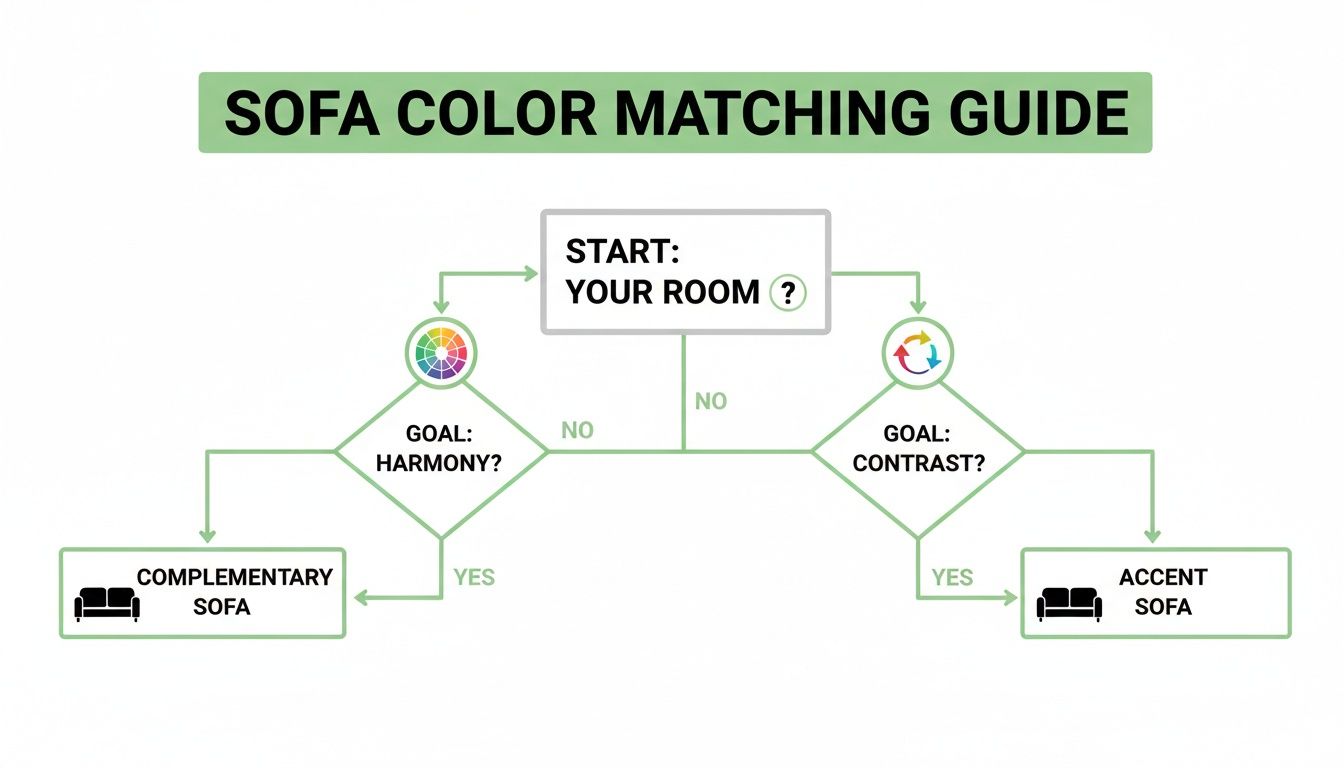
The main idea is to first decide on your room's goal—do you want cohesion or contrast? Once you know that, narrowing down your color options becomes so much easier.
Sofa Color Maintenance Guide: Light vs Dark Tones
Choosing between a light or dark sofa often comes down to maintenance. While a light sofa can brighten a room, it demands more care. A dark sofa might hide more, but it has its own set of considerations. Here’s a simple comparison to help you decide.
| Factor | Light-Colored Sofas (Cream, Beige, Light Gray) | Dark-Colored Sofas (Charcoal, Navy, Forest Green) |
|---|---|---|
| Visible Stains | Shows spills, dirt, and pet hair almost immediately. Requires quick action. | Excellent at hiding dark stains like wine or coffee. Can show lint and light pet hair. |
| Fading | Less prone to noticeable fading from sunlight, especially in neutral tones. | More susceptible to fading in direct sunlight, which can make colors look dull. |
| Best For | Lower-traffic homes, adults-only spaces, or households committed to regular cleaning. | Busy families, homes with pets, or high-traffic areas. |
| Styling Impact | Makes a room feel larger, brighter, and more airy. Creates a serene backdrop. | Adds drama, depth, and a cozy, grounding feel. Can make a strong style statement. |
Ultimately, performance fabrics are bridging this gap, but it's still a crucial factor to weigh. Your tolerance for cleaning should play a big role in your final color decision.
Finding the Sweet Spot Between Style and Sanity
At the end of the day, the best sofa color is one you won’t end up resenting. Light upholstery is everywhere in design magazines, but it comes with real-world consequences in terms of cleaning and wear. For anyone with kids or pets, it’s worth noting that many designers now steer clients toward performance fabrics or darker tones. Why? Advanced stain-resistant treatments can reduce visible staining by 70–90% compared to untreated fabrics. That’s a huge difference.
Don't sacrifice your sanity for a specific shade. If a pristine white sofa will make you anxious every time someone enters the room with a drink, it's not the right choice for you—no matter how beautiful it looks online. Your living room should be a place for living.
A slightly darker neutral like a medium gray, a versatile taupe, or a rich camel can offer the best of both worlds. These colors are fantastic at hiding minor spills and daily wear while still giving you a flexible foundation for any decor style. They’re proof you don’t have to pick between a sofa that’s practical and one that’s stylish.
Choose Between a Neutral Anchor or a Bold Statement
Alright, this is the big moment. Is your sofa going to be the quiet, dependable foundation of your living room, or the vibrant star of the show? This single decision sets the entire tone for your space, so let's walk through the thinking behind both paths.
One way to go is with a neutral anchor. This means picking a sofa in a timeless, versatile shade like beige, cream, or a sophisticated gray. Honestly, this is the ultimate choice for flexibility.
A neutral sofa is the perfect canvas. It lets you completely refresh your room’s vibe with seasonal shifts or as new trends catch your eye. Swapping out a few pillows and throws can take your space from a cozy winter den to a bright summer oasis without a huge investment. For some great ideas on that, check out our post on finding the best throw pillows for your couch.
Embracing the Neutral Sofa
Choosing a neutral sofa is a smart, long-term play. It’s far less likely to feel dated in a few years and gives you endless styling options down the road.
-
Longevity: Neutral tones have serious staying power, making sure your big investment stands the test of time.
-
Adaptability: It grows with you. As your taste evolves, a neutral sofa can easily adapt to new paint colors, rugs, and artwork.
-
Broad Appeal: If you ever decide to sell your home, a classic neutral sofa will appeal to a much wider range of potential buyers.
This strategy is all about playing the long game and prioritizing versatility. It’s a safe bet, but it's also an incredibly chic way to ground your living space.
It’s a common myth that "neutral" means "boring." A beautifully textured oatmeal sofa or a rich charcoal piece provides a sophisticated backdrop that makes everything else—your art, rugs, and curtains—truly shine.
Thinking about this decision is a lot like choosing the best curtain colors for your living room. The same logic of blending in or standing out applies to other big decor elements, too.
Making a Bold Statement
The other path? Go for a sofa that commands attention. This is where you get to inject your personality directly into the room with a powerful, expressive color.
I'm talking about a deep emerald green velvet, a warm terracotta linen, or a confident sapphire blue. A statement sofa isn't just a piece of furniture; it becomes the undeniable focal point of your entire design. This approach is perfect if you’re confident in your style and want a living room that feels uniquely yours.
What’s really interesting is how today's trends are making bold choices more timeless than ever. We're seeing a huge shift toward earthy, warm tones in the market. Deep greens, terracottas, and rich browns are top upholstery choices right now, driven by a collective desire to bring nature-inspired, expressive design into our homes.
So, picking a color that aligns with these bigger trends can actually boost your sofa's long-term appeal.
Ultimately, this choice comes down to your personal design philosophy. Do you crave the freedom to reinvent your space whenever the mood strikes, or do you want your sofa to be the unwavering heart of your home’s character? Both are fantastic options—the key is to pick the one that feels right for you.
Test Swatches in Your Space Like a Designer
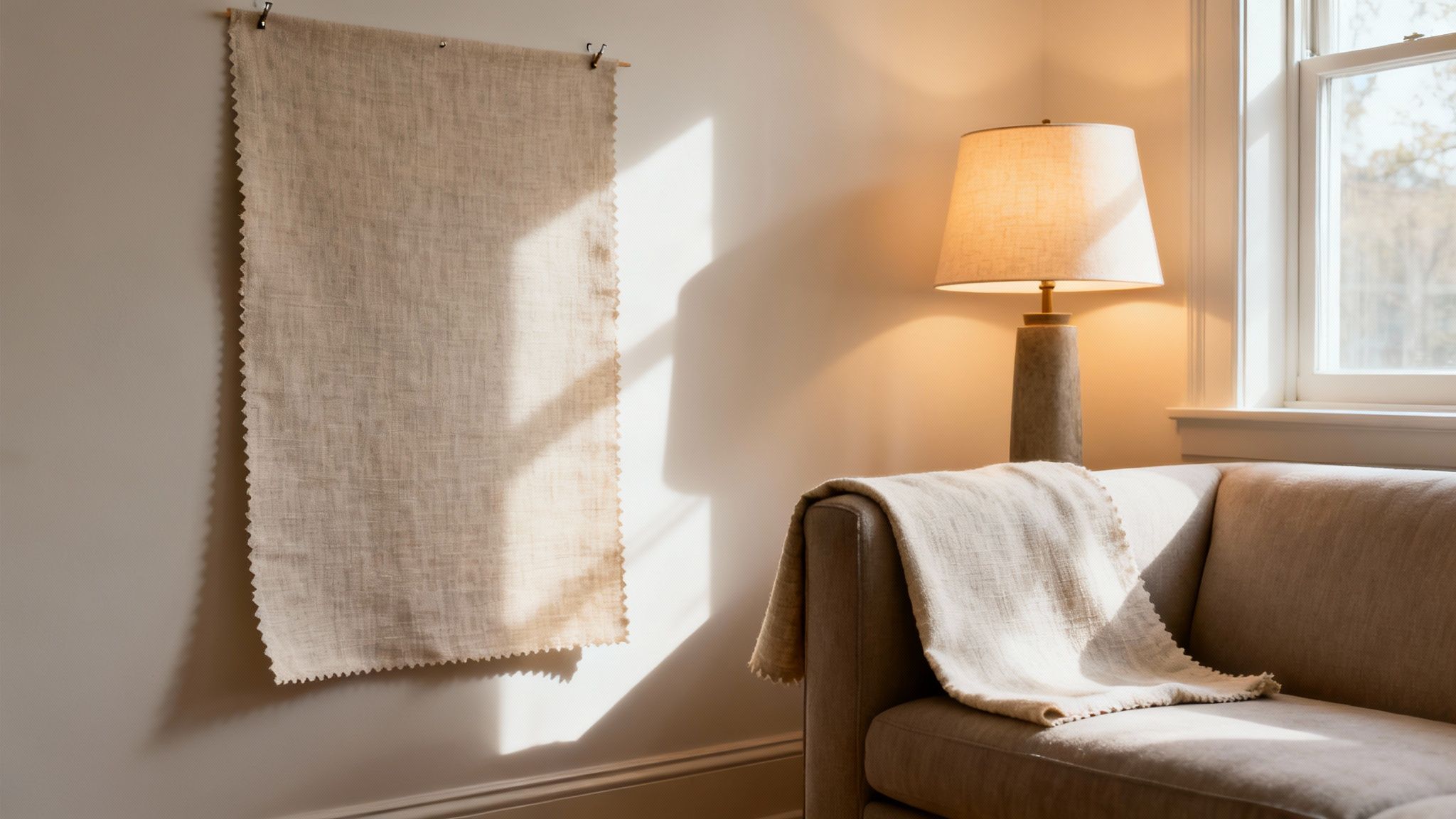
After all the thoughtful planning, we’ve arrived at the final checkpoint. Let’s be real: committing to a thousand-dollar sofa based on a tiny digital square on a screen is a huge gamble. This is the one step that separates a brilliant decision from a costly, frustrating mistake.
You absolutely must get physical samples. When you order them, don't just accept the tiny 2x2 inch squares if you can help it. It’s always worth politely asking customer service if a larger sample is available. A bigger piece of fabric gives you a much truer sense of the color and lets you see how any pattern repeats.
The 24-Hour Observation Test
A color’s personality isn’t static—it shifts dramatically as the light changes throughout the day. Once your swatches arrive, it’s time to put them through their paces in the room they’ll actually live in. Don't just glance at them on the coffee table and call it a day.
To do this right, try my go-to process:
-
Get Them Vertical: Tape or pin the swatches onto a big piece of white cardboard or, even better, pin them directly onto your existing sofa. Color looks completely different on a vertical plane than it does lying flat.
-
Check the Morning Light: First thing in the morning, see how the cool, bright light hits the fabric. Does it wash out that pale gray you loved online? Does it bring out an unexpected blue undertone in a charcoal?
-
Assess the Afternoon Glow: Look again during the warmer, golden hours of the afternoon. This is when colors often deepen and shift. A beige that looked flat in the morning might suddenly feel rich and inviting.
-
Test the Evening Ambiance: Finally, and this is crucial, see how the swatches look at night under your artificial lighting. This is where so many surprises happen. Your lamps cast either a yellow or a cool white glow that can completely transform a fabric’s appearance.
This simple 24-hour test is your secret weapon. It reveals a color's hidden undertones and guarantees you know exactly what you’re signing up for.
One of the most common mistakes I see is people only viewing samples under one type of light. A beautiful taupe might look perfect in the afternoon sun, only to turn a sickly green under warm-toned LED bulbs at night. Seeing the color in all its moods is the best way to prevent buyer's remorse.
Look Beyond Just the Swatch
While you're testing, don’t just stare at the fabric in isolation. You have to see it in context. Hold the swatch right up against your area rug, the leg of your wooden coffee table, and your curtains.
How does the color actually interact with the things it will live with day in and day out? Does it create a beautiful harmony, or does it clash?
This final, hands-on step is where all your planning comes together with the physical reality of your space. It’s how you confirm you’re not just picking a pretty color, but the right color for your home. Think of it as your ultimate insurance policy against a major design blunder.
Still Have Questions? Let’s Clear Things Up
Making the final call on a piece as important as a sofa can bring up a few last-minute doubts. It’s a big decision! Let's tackle some of the most common questions that pop up right before you take the plunge.
Think of this as your final gut-check to make sure you're moving forward with total confidence.
Should My Sofa Match My Accent Chairs?
This is a classic question, and honestly, the answer from a design perspective is a resounding no. Matching your sofa and accent chairs perfectly can create a very dated, showroom-floor look that lacks personality and dimension.
The goal isn't to match; it's to coordinate. You want your seating to feel like part of a thoughtfully curated collection, not a pre-packaged set.
-
Play with Materials: If your sofa is a soft fabric, why not try accent chairs in leather or with distinctive wooden arms? The mix of textures instantly adds depth.
-
Vary the Silhouettes: Pair a clean, modern sofa with chairs that have a more sculptural or traditional form. This contrast creates a far more interesting and dynamic conversation area.
-
Connect Through Color: The trick is to pull a less obvious color from your rug, curtains, or a piece of art and use that for your accent chairs. This creates a cohesive look that feels intentional and stylish.
A good rule of thumb: each piece should be strong enough to stand on its own but still feel connected to the room. For instance, a solid navy sofa is a perfect companion for patterned chairs that feature just a touch of navy in their design.
How Do I Choose a Sofa Color for a Small Room?
The old-school advice is to always go light in a small space to make it feel bigger. And sure, a light gray or soft beige sofa can absolutely make a room feel more open and airy. But it's far from your only choice.
Sometimes, going dark in a small room is the more interesting move. A rich charcoal, a deep navy, or even a forest green can turn a small space into a cozy, sophisticated jewel box—perfect for a den or reading nook. The secret is all about balance. If you opt for a dark sofa, just make sure you have:
-
Good lighting, both natural and artificial, to keep the mood inviting, not gloomy.
-
Lighter-toned walls or a pale rug to create some visual contrast and lift the space.
-
A sofa with raised legs. Seeing the floor underneath creates an illusion of more space.
What Is the Most Timeless Sofa Color?
If you want a sofa that will look just as good in ten years as it does today, you really can't go wrong with a classic neutral. These colors are design chameleons; they adapt beautifully as your style evolves and new trends come and go.
The undefeated champions of timelessness are:
-
Medium Gray: It’s the ultimate neutral, working seamlessly with both warm and cool color schemes. It’s practically foolproof.
-
Warm Beige or Greige: A bit softer than gray, these shades are incredibly inviting and pair wonderfully with natural wood tones and cozy textures.
-
Deep Navy: It might sound bold, but navy functions as a classic neutral. It provides the same depth as charcoal but with a touch more personality.
Choosing one of these colors gives you a solid foundation you can easily refresh over the years with new pillows, throws, and art. It's a smart investment in style that lasts.
At Fluent Trends, we believe finding the perfect sofa should be an exciting journey, not a stressful one. Our curated collection features designer-approved sofas in a wide range of timeless colors and durable fabrics to suit any home. Explore our collection and discover the ideal piece to complete your living space today at https://www.fluenttrends.com.