

How to measure for area rugs: Practical Guide for a Perfect Fit
Donna MaloneOf all the design choices you make, picking the right area rug can feel like the most daunting. It’s not just about finding a color or pattern you love—the real secret to a room that looks and feels right is scale.
Get the size right, and the rug perfectly anchors your furniture, defines the space, and gives the whole room a polished, intentional look. Get it wrong, and it can throw everything off, making your furniture look like it's floating in an empty sea.
Why Rug Size Changes Everything
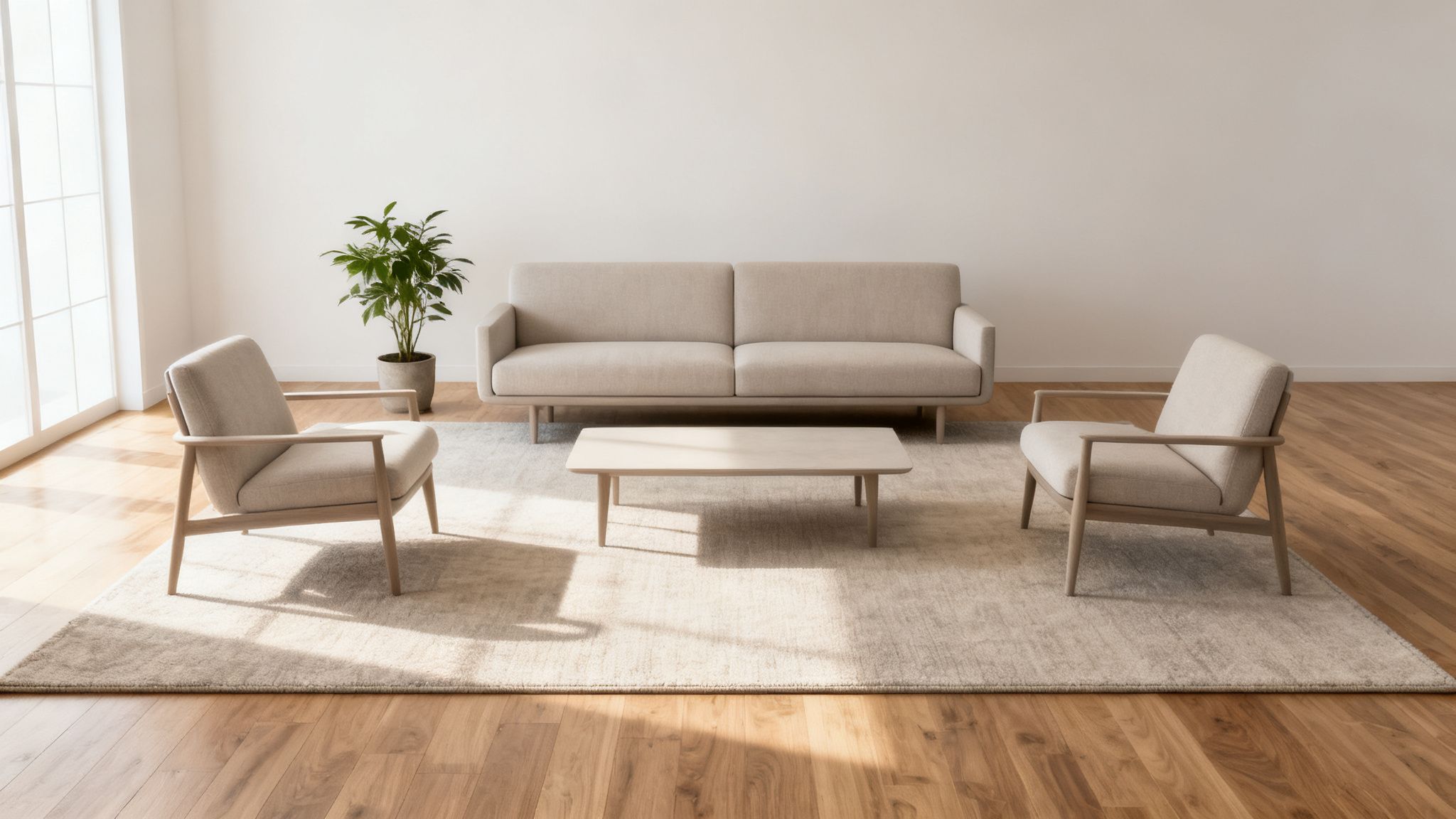
An area rug does so much more than just cover a patch of your floor. Think of it as the foundation that pulls the entire room together. A properly scaled rug creates a cohesive zone, connecting your sofa, chairs, and coffee table into a single, unified group. This simple visual trick is what makes a space feel larger, more organized, and professionally styled.
On the flip side, a rug that’s too small has the opposite effect. It can visually shrink your room and make your furniture feel disconnected and awkward. This is one of the most common decorating mistakes, and it’s often the reason a room feels "off" or incomplete, no matter how much you love the individual pieces.
From Guesswork to Confidence
Let's move past the fear of making a costly sizing mistake. This guide is all about demystifying the process with a simple, visual approach, showing you exactly how to measure for any room in your home. No more guessing. We’re going to walk through the core principles interior designers use to get it right every time.
The goal is always to create balance. Your rug should be large enough to ground your main furniture pieces, while still leaving an even border of flooring exposed. A gap of 12 to 24 inches between the rug and the walls is the sweet spot—anything less and it can start to look like an awkward, ill-fitting carpet.
We’ll dive into specific layouts for different rooms and the key rules of thumb that will guarantee a perfect fit. Once you nail the measurements, you can focus on the fun part. For a deeper look into the next steps, this guide on how to choose the perfect area rug offers some fantastic advice.
By mastering these simple techniques, you'll be able to shop for your next rug with total confidence, transforming it from a source of stress into your favorite new design element.
Your Pre-Measurement Toolkit And Setup
Spending just a few minutes on prep can save you hours of headaches later. Nail these first details, and you’ll know your rug dimensions match the way you actually live in the room.
Start by moving your largest pieces—sofa, armchairs, coffee table—into their permanent homes. An empty floor rarely tells the full story. You need to factor in scale, sight lines, and traffic flow before any tape goes down. For extra pointers on getting furniture sizing exactly right, check out this guide on how to measure furniture.
Knowing each piece’s footprint makes it easier to see where the rug belongs. In practice, that means no surprises when the new rug arrives.
Gather Your Simple Supplies
To bring your vision to life, you’ll only need three things:
- Measuring Tape: A metal retractable tape will give you the most reliable numbers.
- Painter’s Tape: Lay down outlines on the floor. It’s great for testing different rug shapes and sizes.
- Notebook Or Phone: Jot down lengths, widths, and any odd angles as you go.
With these tools in hand, you can sketch your future rug directly on the floor. It’s a tactile way to see how much room remains around door swings or between furniture legs.
Walking around the taped perimeter is an eye-opener. It’s far easier to peel off a few strips of tape than return a heavy, cumbersome 250-pound rug that’s just a tad too big.
This simple floor blueprint lets you play with layout ideas—whether you prefer all the furniture legs on the rug or just the front ones. By turning abstract measurements into a real-world template, you’ll head into the rug-buying process with complete confidence.
Getting the Rug Layout Right in Your Living Room
The living room is where we live, relax, and entertain, but all that furniture can make it a real puzzle when it comes to choosing a rug. Getting the size right is everything. It’s not just about covering the floor; it’s about creating a foundation that pulls the whole room together. Let's walk through the three go-to layouts that designers use to nail it every time.
The “All Legs On” Approach
For a truly cohesive and high-end feel, the all legs on layout is the ultimate goal. This one calls for a substantial rug—think 9’x12’ or even larger—where every piece of furniture in your main seating area sits comfortably on top. Your sofa, armchairs, coffee table, side tables… everything. It’s a move that beautifully unifies the entire conversation pit and makes the room feel grand and intentional.
To figure out the size you need, first arrange your furniture exactly how you want it. Then, grab your measuring tape and get the total width and length of that entire grouping. The secret here is to add at least 8 inches of breathing room on all sides. You want a generous border of rug peeking out from behind your furniture, which keeps it from looking like the furniture is about to fall off the edge.
This little infographic breaks down the simple prep work to do before you even start measuring. It's a lifesaver.
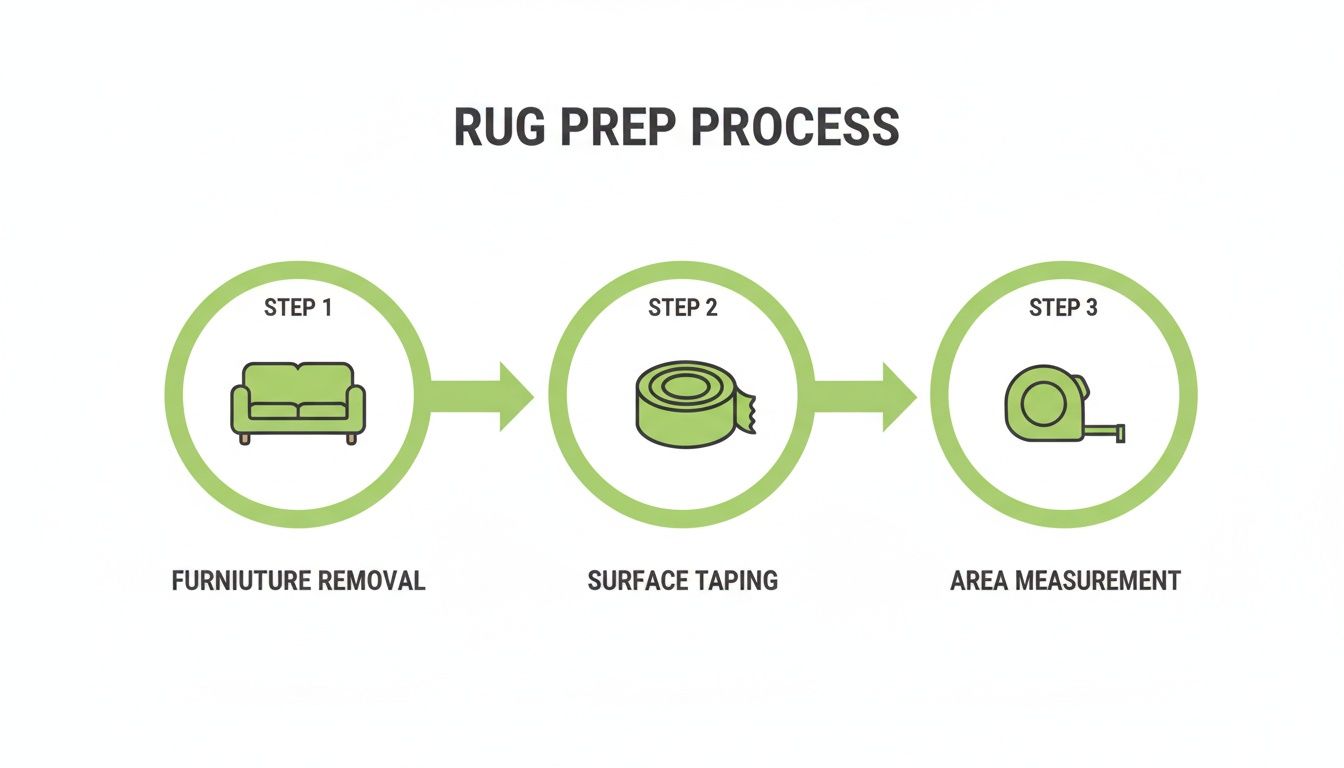
Seriously, using painter's tape to outline the rug on the floor after you've arranged your furniture is the best way to see if the dimensions feel right in the space.
The “Front Legs On” Approach
By far the most popular and flexible option is the front legs on method. It strikes that perfect sweet spot between anchoring the room and being budget-friendly, since you don't need a massive, room-sized rug. Here, just the front legs of the sofa and chairs rest on the rug, which is enough to visually connect all the pieces.
This is where a standard 8’x10’ rug really shines. To keep the proportions looking right, make sure the rug extends at least 6-8 inches past the ends of your sofa on both sides. When you’re measuring, try placing the front third of your chairs and sofa on your tape outline. It gives you a much better sense of how the final layout will ground the furniture.
The “Floating” Layout (for Smaller Spaces)
If you have a smaller living room or a more minimalist setup, the floating layout can be a clever solution. In this arrangement, only the coffee table sits on the rug, while all the other furniture "floats" off of it, sitting directly on the floor. This works best when the gap between the rug and the furniture is pretty small.
A non-negotiable rule for this one: the gap between the front of your sofa and the edge of the rug should be no more than 5 inches. Any more than that, and you get the dreaded "postage stamp" effect, where the rug looks tiny and disconnected, making the whole room feel off-balance.
Done right, this layout is a fantastic way to bring in a splash of color or a bold pattern with a smaller, more affordable rug (like a 5'x8') without it taking over the entire room.
The 18-Inch Rule: When to Follow It and When to Ditch It
You’ve probably heard of the "18-inch rule." It’s a classic design guideline that suggests leaving about 18 inches of bare floor showing between the edge of your rug and the walls. In a large, formal living room, this creates a really pleasing, symmetrical border that frames the space nicely.
But let’s be real—rules are meant to be broken. In smaller living rooms or open-concept spaces, sticking to that rule can force you into buying a rug that’s way too small for your furniture. Don’t be afraid to shrink that border down to 8-12 inches if it means getting a rug that properly anchors your seating area.
The goal is to fit the seating area, not the entire room. For a deeper dive into getting your furniture just right, check out our guide on how to arrange living room furniture.
Sizing Rugs for Bedrooms and Dining Rooms
Moving beyond the living room, let's talk about bedrooms and dining rooms. These spaces have completely different needs, and getting the rug size right is about more than just looks—it’s about how the room feels and functions every single day.
In the bedroom, the vibe is all about comfort. You want something soft to step onto when you first get out of bed. It’s a small detail, but that little touch of luxury can transform the entire room into a cozy, personal retreat.
Bedroom Rug Measurement Rules
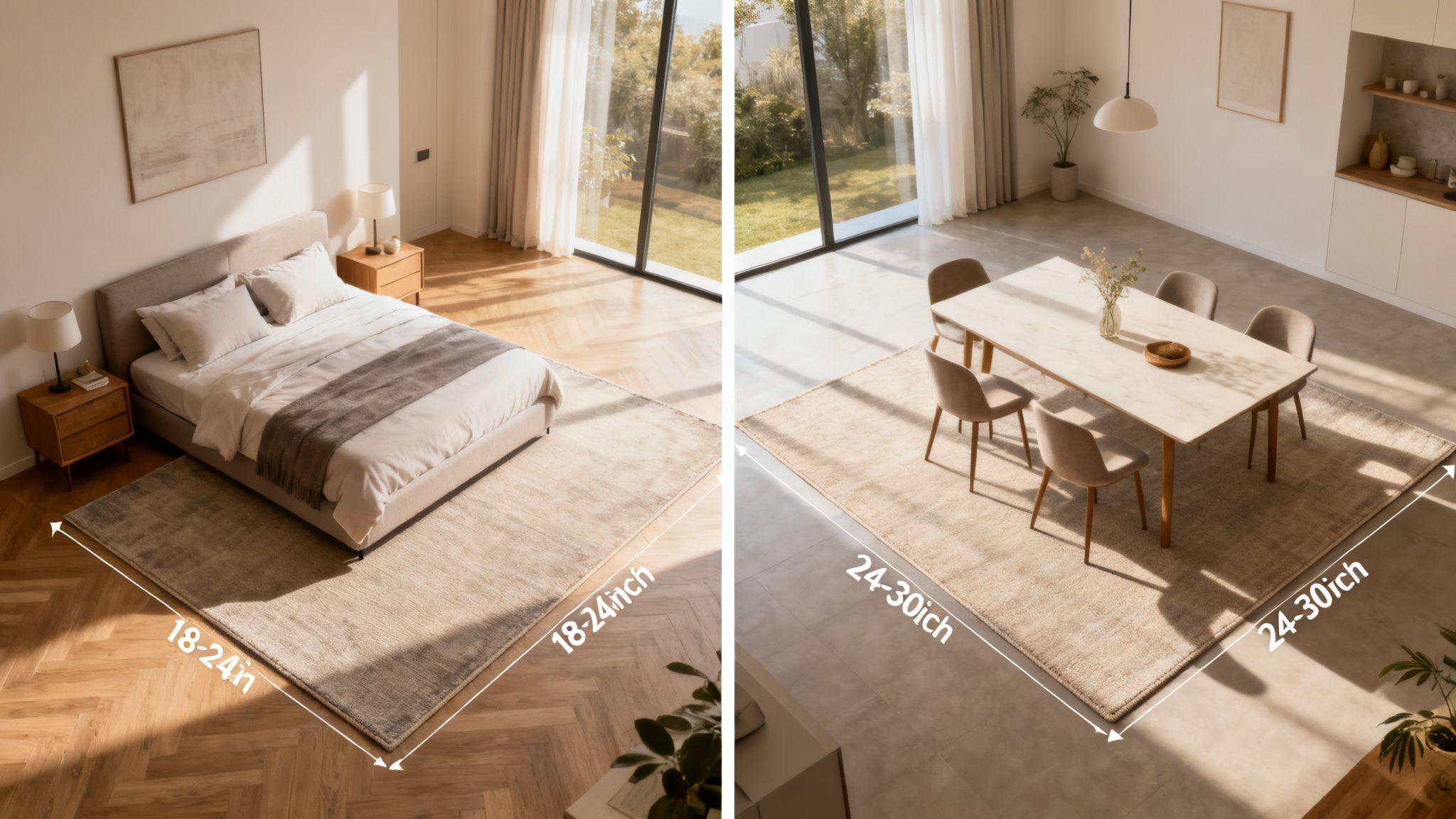
One of the most common mistakes I see is a rug that’s too narrow for the bed. To get that balanced, professional look, your rug needs to extend 18 to 24 inches out from the sides of the bed frame. This creates a generous, comfortable landing spot and helps anchor the bed as the room's true centerpiece.
For a Queen bed, an 8’x10’ rug is almost always the sweet spot. If you have a King, you'll want to size up to a 9’x12’ to maintain that essential 18-to-24-inch border on each side.
Pro Tip: Try positioning the rug under the bottom two-thirds of your bed. This layout lets your nightstands sit directly on the floor, which can make the room feel a bit more open and spacious. Plus, you still get plenty of rug extending at the foot of the bed.
You've got a few solid layout options, each creating a slightly different effect:
- The Full Foundation: Placing the entire bed and both nightstands completely on the rug creates a grand, unified look. This is a great choice for larger primary bedrooms.
- The Bed Anchor: This is the most popular method for a reason. You start the rug just in front of the nightstands, letting it run under the bed. It gives you that soft landing zone without needing a massive, room-filling rug.
- The Runner Solution: A smart pick for smaller rooms or tighter budgets. Just place a runner on each side of the bed. Make sure they’re a little wider than the nightstands and run past the foot of the bed for a finished look.
Perfect Sizing for the Dining Room
In a dining room, function is everything. Honestly, there's nothing more annoying than a dining chair that catches on the edge of the rug every time someone tries to stand up. It’s awkward for guests and a recipe for frayed rug edges.
To prevent this headache, there's one rule you can't ignore. Measure your dining table, then add at least 24 inches to every side. Personally, I think 30 inches is even better if you have the space.
This extra buffer is non-negotiable. It ensures that when someone pushes their chair back, all four chair legs stay on the rug. If you want to dive deeper, we have a whole guide on picking the right size area rug for your dining room.
A quick way to visualize this is to pull out a dining chair like you’re about to get up. Now, measure from the back of the chair legs to the edge of your table. That distance is the minimum clearance you need all the way around.
Dining Table and Rug Size Cheat Sheet
Choosing the right shape is just as important. A round table looks fantastic on a round or square rug, while a rectangular table naturally calls for a rectangular rug.
To take the guesswork out of it, here's a quick reference chart I use all the time.
| Table Seats | Typical Table Size | Minimum Rug Size |
|---|---|---|
| 4 People | 36"-48" Round/Square | 8' Round or 8'x8' Square |
| 6 People | 36"x60" to 42"x72" | 8'x10' Rectangular |
| 8 People | 42"x72" to 48"x96" | 9'x12' Rectangular |
| 10 People | 48"x120" or larger | 10'x14' or larger |
Using this table as your starting point helps you narrow down your search to options that are guaranteed to work for your space, making every meal smoother and more comfortable.
Common Rug Sizing Mistakes to Avoid
You’ve spent hours getting the furniture arrangement just right and you’ve finally found a pattern you love. But even with the perfect pieces, the wrong size rug can throw the entire room off balance.
Figuring out how to measure for a rug is just the start. The real secret to a flawless result is knowing which common pitfalls to sidestep. Let’s walk through the most frequent sizing errors so you can avoid them completely.
The number one mistake we see is what designers affectionately call the “postage stamp” rug. This is when a tiny rug floats in the middle of a room, completely disconnected from the furniture. It actually makes the room feel smaller and leaves your beautiful sofa and chairs looking like they're drifting in space. A rug is meant to anchor your seating area, not become a lonely island.
Choosing a rug that's too small is easily the most common mistake in home decor. If you're ever on the fence, always go for the larger size. An extra foot of rug can make a room feel significantly more spacious and pulled-together.
Another classic issue is trying to fight your room's natural shape. Forcing a standard rectangular rug into a long, narrow hallway or an oddly shaped room just puts a spotlight on the room's quirks—and not in a good way.
Practical Oversights That Cause Headaches
Beyond the visual missteps, there are some practical mistakes that can be incredibly frustrating to live with. It’s so easy to get wrapped up in the big picture and forget the little details that impact your daily life.
Forgetting about basic functionality is a huge one. Before you commit, think about how you actually use the space:
- Door Clearance: This is a big one. Can your doors actually swing open over the rug’s pile? A thick, high-pile rug might feel luxurious underfoot, but it's a constant pain if it jams your entryway or closet door every time.
- Floor Vents: It happens more than you’d think! Accidentally covering up a crucial HVAC vent with a heavy rug can mess with your home's heating and cooling. Always know where your vents are before deciding on placement.
- Traffic Flow: Your rug should never be a tripping hazard. Make sure the edges won't curl up in high-traffic paths. In a dining room, it’s critical that chairs can slide back easily without snagging on the rug's border.
The Problem With Ignoring Furniture Scale
Finally, failing to consider the scale of your furniture is a surefire way to create a room that just feels off. A massive, overstuffed sectional will completely dwarf a small rug, making both pieces look awkward. On the flip side, a tiny accent chair can get totally lost on an enormous rug.
Your rug and your furniture should feel like they're in a happy relationship. The goal is to create a cohesive look where every piece complements the others in proportion and style. By steering clear of these common errors, you’re not just buying a rug—you’re making a thoughtful design choice that elevates your entire home.
Your Rug Sizing Questions Answered
Even with a tape measure in hand, a few tricky questions always seem to pop up right when you think you’ve got it all figured out. Nailing these final details is what separates a good-looking room from a great one.
Let’s walk through some of the most common questions I hear from people trying to find that perfect area rug.
Should a Rug Go Under the Sofa?
My short answer? Ideally, yes. The most common and effective approach is to place at least the front two legs of your sofa and any surrounding accent chairs on the rug. This one move works like magic to anchor the entire conversation area, making the space feel connected and pulled together.
If you have a larger room and want to create a more luxurious, expansive feel, go for a rug big enough to fit all your furniture legs completely on it. It creates a grand, unified statement. A small "postage stamp" rug that just floats in front of the sofa can work in very tight spaces, but you have to be careful it doesn’t look like an afterthought.
Can I Use a Round Rug in a Square Room?
Absolutely! A round rug is one of my favorite designer tricks for softening all the hard angles and straight lines in a boxy, square room. It’s also a fantastic way to define a specific zone, like creating a cozy reading nook in a corner or a welcoming focal point in an entryway.
They work especially well under a round dining table, creating a beautiful sense of visual harmony. When you’re measuring, the same rules apply. For that dining table, make sure the rug is large enough for the chairs to stay on it, even when they’re pulled out. In a living room, it should be big enough to at least kiss the front legs of your main furniture pieces.
A round rug can instantly break up the monotony of a boxy room. It draws your eye to the center and makes the whole space feel more dynamic and interesting—an easy way to add a layer of design savvy.
Is a Rug Pad Really Necessary?
Yes, a thousand times, yes. A rug pad is a non-negotiable for almost any area rug you buy. It’s not just about adding a little extra cushion; it serves several crucial functions that protect your rug, your floors, and even you. Forgetting one is a rookie mistake that can lead to a lot of frustration down the road.
Here’s why it’s so important:
- Safety First: A good pad keeps your rug from slipping and bunching up, which is a major tripping hazard, especially on hard floors like wood or tile.
- Added Comfort: It provides that extra layer of plushness underfoot, making the entire room feel cozier and more luxurious.
- Floor Protection: Think of it as a buffer. It protects your hardwood or laminate from scratches and scuffs and prevents any potential color transfer from the rug’s dyes.
- Longevity: It absorbs the constant impact from foot traffic, which reduces wear and tear on your rug's delicate fibers and can significantly extend its life.
Just be sure to choose a pad that’s about one inch smaller than your rug on all sides. This keeps it completely hidden while it does its job.
How Do I Choose Rugs for an Open Concept Space?
In an open-concept home, area rugs are your best friend. They are the single most effective tool for creating distinct "zones" and bringing a sense of order to a large, undefined room. You can use different rugs to visually separate your living area from your dining area, or to carve out a home office nook.
The key to making it look cohesive is to choose rugs that complement each other in style, color palette, or texture. They don’t have to match perfectly, but they should feel like they're part of the same family. Just measure for each "zone" as if it were its own separate room. A large rug to anchor the main seating group and another to define the dining space will create a beautiful, harmonious flow throughout your home.
At Fluent Trends, we believe the perfect rug is the foundation of a beautiful room. Explore our curated collection of designer-approved indoor and outdoor rugs to find the ideal piece that will elevate your space.