

10 Actionable Interior Design Tips for Beginners in 2025
Donna MaloneStepping into the world of interior design can feel overwhelming. With endless inspiration on social media and a sea of furniture choices, it's easy to get lost before you even begin. Creating a space that feels both stylish and deeply personal doesn't require a professional degree; it demands a solid understanding of foundational principles. This guide is built to provide exactly that.
We've compiled 10 essential interior design tips for beginners, breaking down the core concepts that professionals use to transform a house into a cohesive, beautiful home. We will move beyond generic advice to give you actionable strategies you can implement immediately. You will learn how to build a functional color palette, why investing in quality statement furniture is crucial, and how to master the art of layering textures for a rich, inviting atmosphere.
Furthermore, we'll explore practical techniques for defining spaces with rugs, personalizing your rooms with meaningful decor, and understanding the critical role of proportion and scale when selecting furniture. These insights are designed to empower you to make confident, impactful decisions, whether you're decorating your first apartment or refreshing a long-loved home. This comprehensive list will serve as your roadmap, helping you cultivate a space that not only looks professionally designed but also truly reflects your unique style and personality. Let's dive in and start building the home you've always envisioned.
1. Start with a Color Palette
Establishing a cohesive color palette is one of the most fundamental interior design tips for beginners. Instead of choosing items piecemeal, a predefined palette acts as your roadmap, guiding every decision from major furniture purchases to minor decorative accessories. This foundational step ensures visual harmony and prevents the common mistake of buying items that clash or feel out of place, saving you time and money.
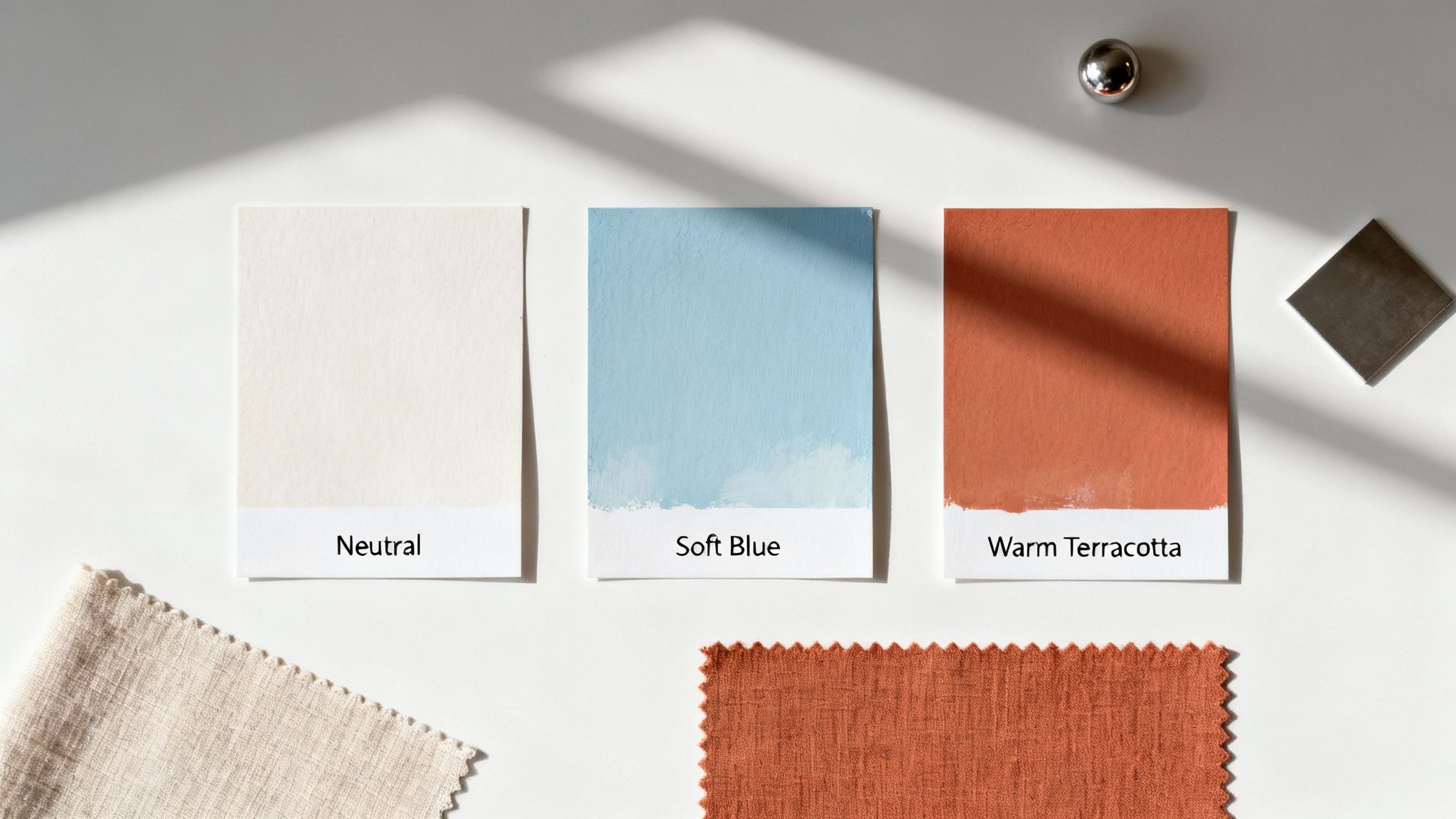
This approach creates a unified look that feels intentional and professionally curated. By selecting a limited set of colors, you simplify the design process and build a space where every element works together seamlessly.
How to Build Your Palette
A balanced palette typically includes two to three primary colors and one to two accent colors. Your primary colors will cover the largest surfaces like walls and sofas, while accents provide pops of interest on items like pillows, artwork, or vases. A great starting point is to find an inspiration piece, a rug, a piece of art, or even a fabric swatch you love, and pull colors directly from it.
Applying the 60-30-10 Rule
To implement your palette effectively, use the classic 60-30-10 rule. This timeless design principle provides a simple formula for creating a balanced and visually appealing space.
- 60% Dominant Color: This is your main color, typically used on walls, large rugs, or a sofa. It sets the overall tone of the room.
- 30% Secondary Color: This color supports the dominant one and is used for furniture, curtains, or an accent wall. It adds visual interest without competing for attention.
- 10% Accent Color: Used sparingly for decorative accessories like throw pillows, artwork, and metallic finishes. This is where you can be bold and introduce vibrant hues or unique textures.
For example, a living room might feature soft gray walls (60%), a navy blue sofa (30%), and small touches of gold in lamps and picture frames (10%). This structured approach ensures a sophisticated and balanced outcome every time.
2. Invest in Quality Statement Furniture Pieces
Instead of filling a space with numerous low-cost items, beginners should prioritize investing in one or two high-quality statement pieces that anchor the room. These foundational items, such as a premium sofa, a solid wood dining table, or a unique accent chair, serve as the focal point of your design. This approach emphasizes longevity and aesthetic value over quantity, giving your space a sophisticated, well-curated feel from the start.
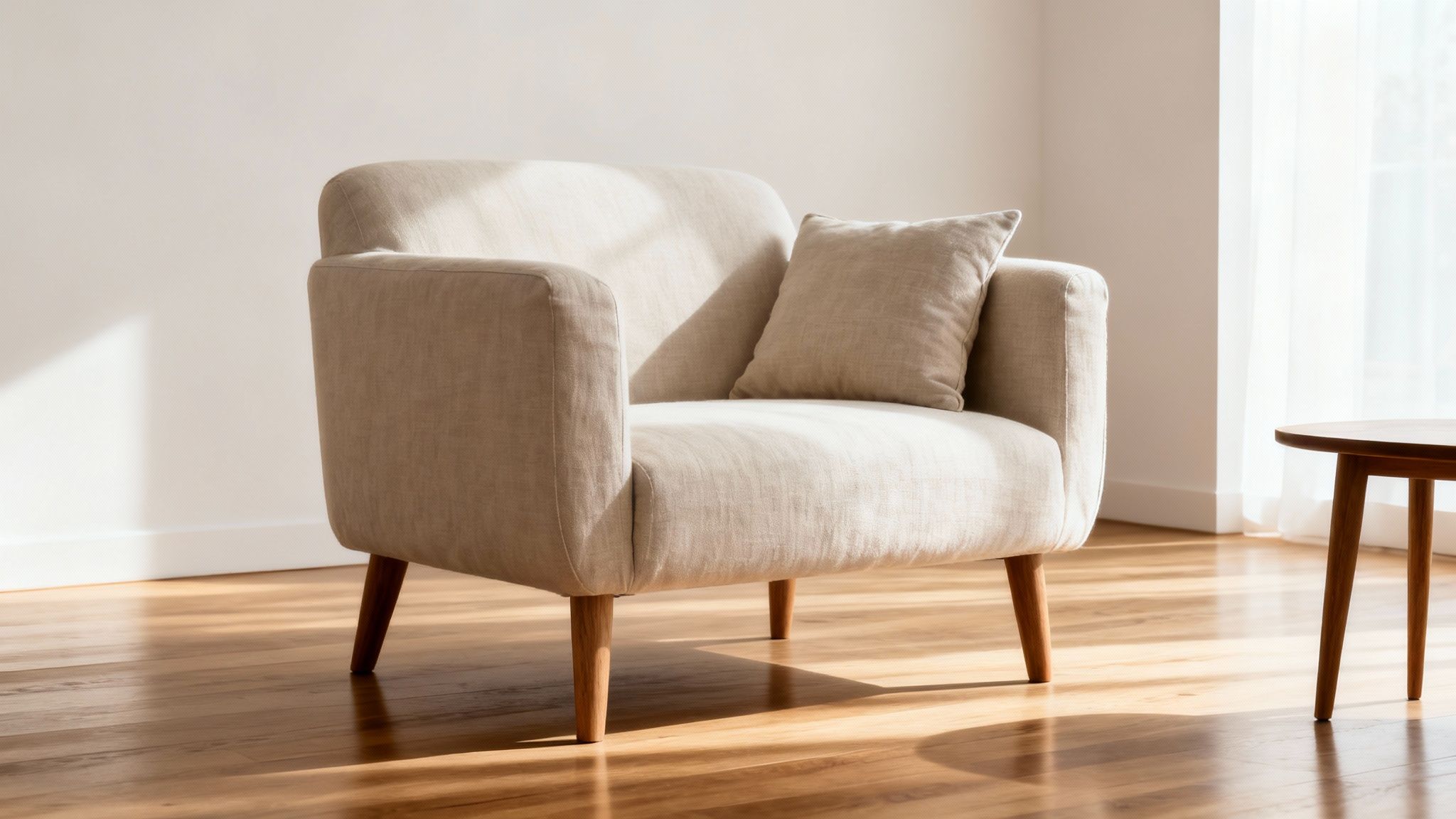
By focusing your budget on pieces that will last for decades, you create a foundation that can be built upon over time. Quality furniture offers superior comfort, durability, and timeless style, making it a wise investment that elevates the entire room's design. To truly make a room pop, explore inspiring statement pieces for living room design that serve as the heart of your space.
How to Choose Your Investment Piece
The key is to select furniture that is both functional and visually impactful. Start with the most used item in the room, like a sofa in the living room or a bed frame in the bedroom. Look for pieces crafted from premium materials such as solid wood, high-grade leather, or durable, handcrafted upholstery. These materials not only look better but also withstand daily use far longer than cheaper alternatives.
Smart Shopping Strategies
When investing in a statement piece, it's crucial to make an informed decision. This is one of the most practical interior design tips for beginners to avoid costly mistakes.
- Start with One Piece: Begin with a single investment piece per room to avoid overwhelming your budget. A great sofa or dining table can single-handedly define a space.
- Opt for Timeless Neutrals: For large, expensive items, choose neutral colors and classic silhouettes. A timeless design ensures the piece won't go out of style, allowing you to update smaller accessories around it as trends change.
- Do Your Research: Before committing, read customer reviews, check warranty information, and understand the return policy. Brands like Restoration Hardware, Article, and Herman Miller are known for their quality.
- Balance High and Low: Pair your investment furniture with more affordable accessories. An expensive sofa can be styled with budget-friendly pillows and throws, creating a high-end look without a high-end total cost.
3. Master the Art of Layering Textures
While a color palette creates harmony, texture is what gives a room its soul and depth. Layering different textures is one of the most effective interior design tips for beginners to create a space that feels rich, inviting, and professionally designed. By combining various materials and finishes, you add tactile and visual interest that prevents a room from feeling flat or one-dimensional.
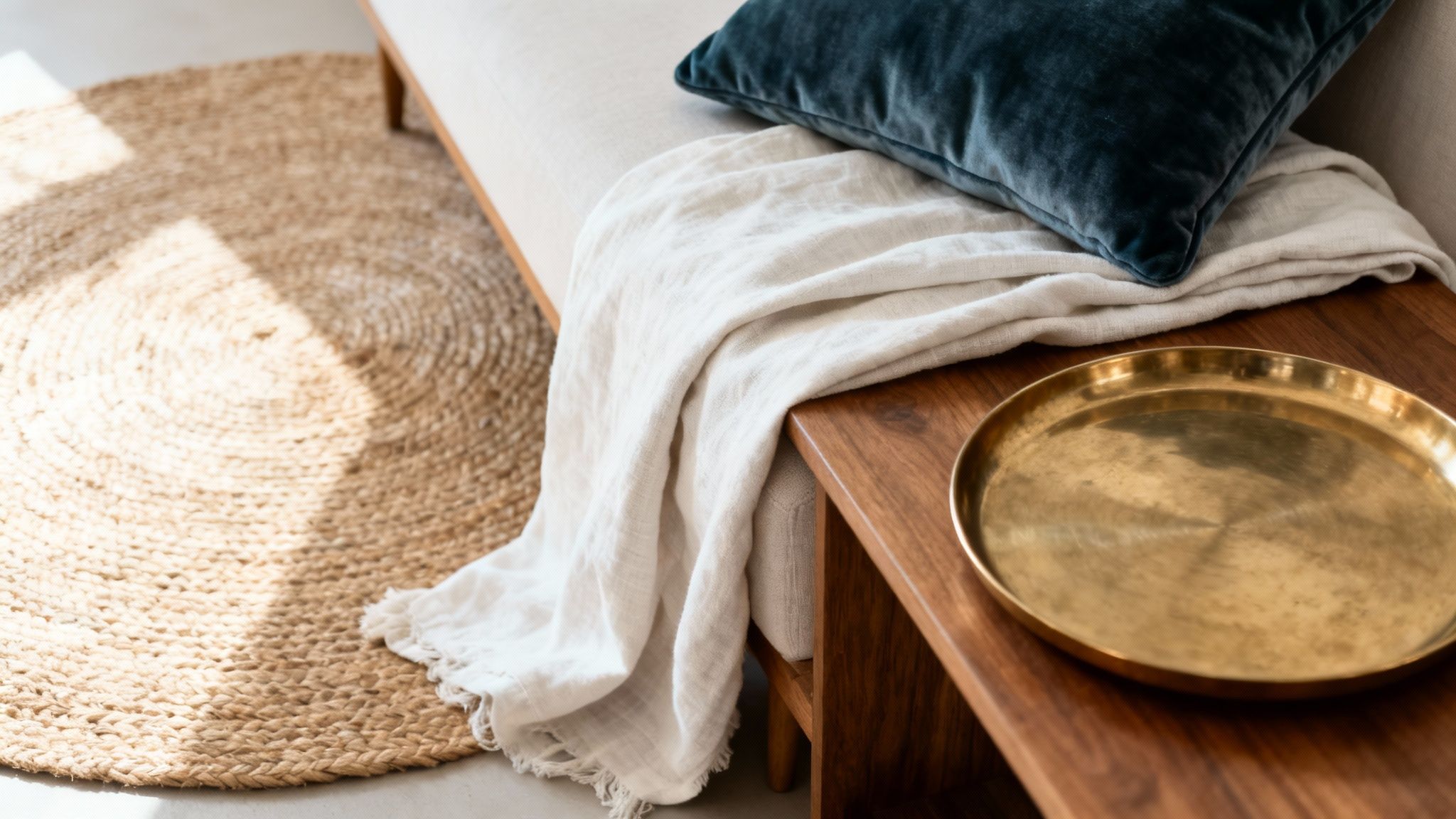
This technique engages the senses and makes a space feel more dynamic and curated. A successful mix of textures, from rough and smooth to soft and hard, encourages interaction with the environment and elevates the overall design.
How to Introduce Texture
Start by looking at the key elements in your room. A woven area rug provides a foundational texture, while a velvet accent chair adds a touch of luxury. You can then layer smaller items, such as smooth ceramic vases, rough linen pillows, or a chunky knit throw from Fluent Trends' curated collection, to build complexity. The goal is to create contrast that is pleasing to both the eye and the touch.
A Formula for Tactile Balance
A simple way to ensure a balanced mix is to contrast different material properties. Think about pairing soft, warm materials with hard, cool ones.
- Combine Soft and Hard: Place a smooth, cool marble tray on a warm, rustic wood coffee table. Drape a soft wool throw over a sleek leather armchair to create an inviting contrast.
- Mix Finishes: Integrate both matte and shiny surfaces. For example, pair matte black cabinet hardware with a glossy tiled backsplash, or place a polished brass lamp next to a raw ceramic pot.
- Layer Textiles: Don't be afraid to mix different fabrics. A smooth silk pillow can sit next to a nubby bouclé one on a linen sofa. This layering adds immediate comfort and visual sophistication.
By thoughtfully combining textures, you create a multi-layered sensory experience. This approach transforms a simple room into a thoughtfully designed space that feels complete, comfortable, and full of character.
4. Incorporate Lighting as Both Function and Design Element
Lighting is one of the most transformative yet commonly overlooked interior design tips for beginners. A thoughtful lighting plan does more than just illuminate a room; it sets the mood, enhances functionality, and acts as a powerful design element. Neglecting lighting can make even the most beautifully furnished space feel flat and uninviting, while a strategic approach can elevate your interior and highlight its best features.
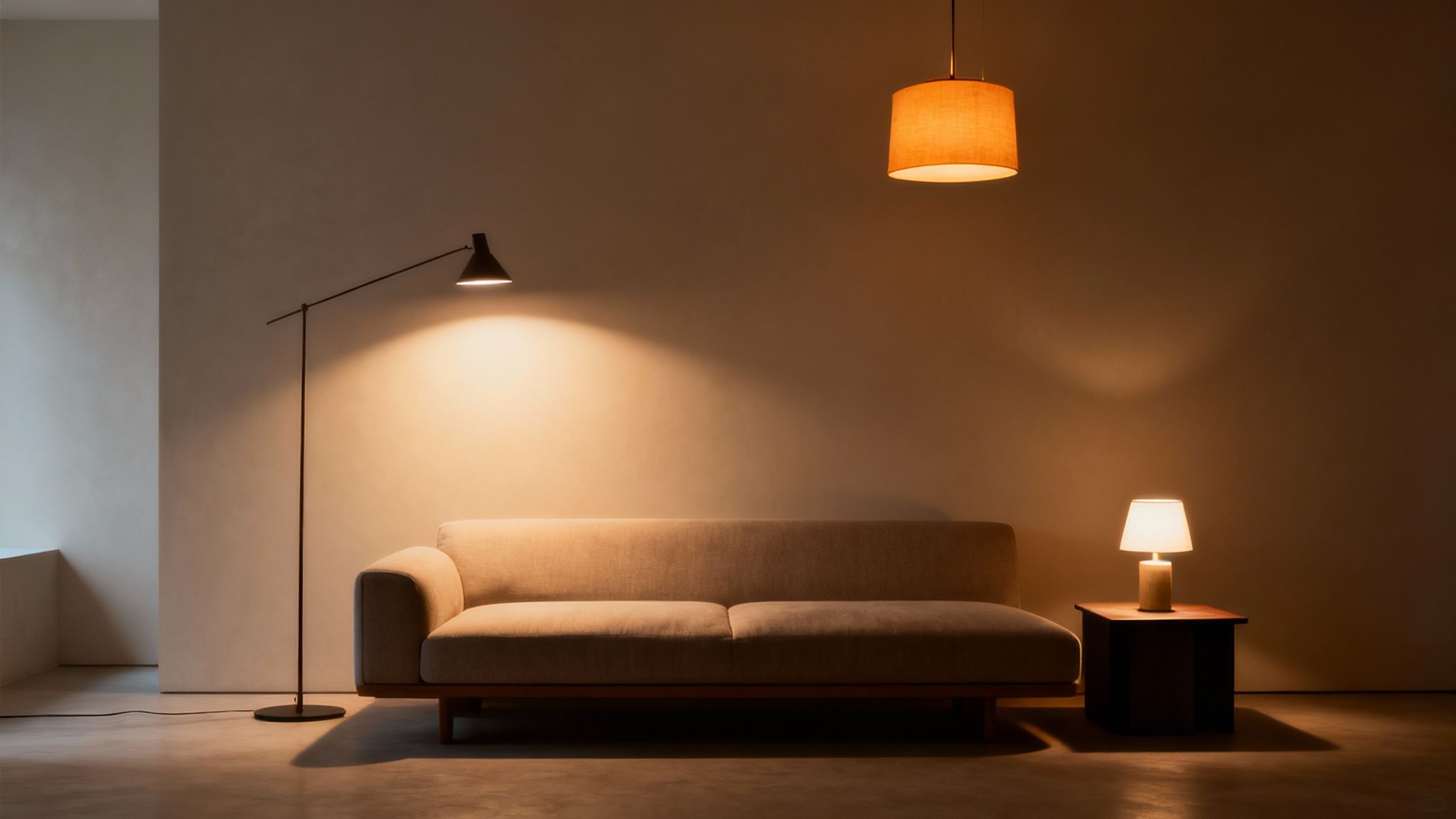
This method involves layering different types of light to create a space that is both practical and atmospheric. By treating light fixtures as integral parts of your decor, you can add sculptural beauty and personality while ensuring every corner of your home is comfortable and usable.
The Three Layers of Lighting
To create a balanced and dynamic lighting scheme, designers use three distinct layers. Integrating all three types ensures your room is adaptable for any occasion, from focused work to a relaxing evening.
- Ambient Lighting: This is the overall, general illumination of the room. It often comes from a central ceiling fixture like a chandelier, recessed lights, or flush mounts. Its purpose is to provide a comfortable level of brightness throughout the space.
- Task Lighting: This is focused light directed at a specific area where a task is performed. Examples include a desk lamp for a home office, under-cabinet lighting in a kitchen, or a floor lamp beside a reading chair.
- Accent Lighting: This is directional lighting used to highlight architectural features, artwork, or decorative objects. Picture lights, wall sconces, or track lighting aimed at a gallery wall are all forms of accent lighting that add depth and visual interest.
How to Implement a Layered Lighting Plan
A successful plan combines these layers seamlessly. For instance, a home office could feature recessed ceiling lights for ambient light, a stylish desk lamp for task lighting, and a small wall sconce to highlight a piece of art. Using dimmers on your ambient sources is a crucial tip, as it gives you complete control over the room's mood. By planning your lighting early in the design process, you can ensure it supports your furniture layout and creates a sophisticated, well-rounded interior.
5. Define Spaces with Rugs and Area Coverage
Using rugs to define spaces is a powerful yet simple interior design tip for beginners. A well-placed rug acts as an anchor for furniture, creating a distinct zone within a larger room or open-plan area. It adds warmth, texture, and color, effectively pulling disparate elements together into a cohesive and intentional arrangement. This foundational layer can make a space feel more complete and thoughtfully designed.
The right rug prevents furniture from feeling like it's "floating" and provides a visual boundary that makes a room feel more organized and inviting. Whether defining a living room seating group, a dining area, or a cozy reading nook, a rug is an essential tool for creating functional and beautiful layouts.
How to Select the Right Size
The most common mistake beginners make is choosing a rug that is too small for the space. An undersized rug can make a room feel disjointed and smaller than it actually is. The key is to ensure the rug is large enough to connect the main furniture pieces in a grouping, creating a unified foundation.
Applying Sizing Rules by Room
Proper placement and sizing are crucial for achieving a professional look. Follow these simple guidelines to ensure your rug fits the space perfectly. For a deeper dive, you can explore our complete guide on how to choose the right rug on fluenttrends.com.
- Living Room: The rug should be large enough for at least the front legs of your sofa and all chairs to rest comfortably on it. This visually connects the seating area.
- Dining Room: Choose a rug that extends at least 24 inches beyond the dining table on all sides. This allows chairs to be pulled out without their back legs catching on the rug's edge.
- Bedroom: The rug should frame the bed. Either place a large rug underneath the entire bed and nightstands, or have it start just in front of the nightstands and extend past the foot of the bed.
6. Personalize with Meaningful Décor and Accessories
While following design principles creates a beautiful room, it's the personal touches that transform a house into a home. For beginners, integrating meaningful décor is a crucial step that infuses personality and warmth into a space. This involves thoughtfully selecting items that tell your story, such as family photos, travel mementos, or inherited heirlooms, and blending them with curated decorative pieces.
This approach ensures your home feels authentic and lived-in, not like a sterile showroom. Balancing polished design with personal expression creates an environment that is not only aesthetically pleasing but also a genuine reflection of who you are.
How to Curate Personal Items
The key to successfully incorporating personal décor is intentional curation. Instead of displaying every memento you own, select the most impactful pieces. A great guideline is the 80/20 rule: aim for 80% professionally curated décor (like vases, sculptures, and textiles) and 20% deeply personal items. This balance prevents clutter and allows your meaningful objects to truly stand out.
Displaying Your Story with Style
Strategically grouping and styling personal accessories is more effective than scattering them throughout a room. This creates intentional focal points and visual narratives.
- Create a Gallery Wall: Group family photographs or children's artwork together in coordinating frames for a cohesive and high-impact display.
- Style a Vignette: Arrange travel souvenirs or a collection of ceramics on a bookshelf or console table. Mix them with books and other objects of varying heights and textures.
- Integrate Heirlooms: Give an inherited piece of art or a vintage chair a place of honor. Build the room's design around it to make it a central feature.
- Invest in Display Pieces: Use high-quality shelving and beautiful vessels to showcase your treasures. To further personalize your space, consider how the right display pieces can elevate your decor. Discover fresh ideas for vases to elevate your home and dramatically change the look of a room.
By carefully curating and styling your meaningful items, you create a space that is not only well-designed but also rich with personal history and character.
7. Understand Proportion and Scale in Furniture Selection
Grasping the principles of proportion and scale is a critical interior design tip for beginners that separates a functional, harmonious room from an awkward one. Scale refers to how the size of an object relates to the room itself, while proportion refers to how the size of different objects relate to each other. Getting this right ensures furniture fits comfortably, allows for easy movement, and creates a sense of visual balance.
This concept prevents common mistakes like an oversized sofa that consumes a small living room or a tiny rug that looks lost in a large space. Properly scaled furniture makes a room feel intentional, comfortable, and thoughtfully designed, maximizing both its function and its aesthetic appeal.
How to Master Scale
The key to mastering scale is to ensure your furniture is appropriately sized for your room's dimensions, including its ceiling height. Large, high-ceilinged rooms can handle substantial, statement-making furniture, whereas smaller rooms benefit from lighter, more delicate pieces with visible legs to create an illusion of spaciousness. An oversized sectional might feel luxurious in a grand family room but will make a small apartment feel cramped and difficult to navigate.
Applying Proportion in Your Layout
Once you've chosen appropriately scaled pieces, arranging them with a sense of proportion is the next step. This involves creating a visual hierarchy and ensuring objects look balanced together.
- Create Visual Balance: A bulky, heavy sofa should be balanced by other substantial items, such as two appropriately sized accent chairs, rather than a single, delicate one that would look out of place.
- Mind Your Walkways: A fundamental rule is to leave adequate space for movement. Aim for at least 18-24 inches for clear pathways around furniture groupings.
- Use Tape to Visualize: Before committing to a purchase, use painter's tape on the floor to outline the footprint of potential furniture. This simple trick allows you to physically experience the scale and proportion of a piece in your space.
For example, a low-slung sofa pairs best with a low-profile coffee table to maintain a cohesive horizontal line. This attention to the relationship between objects is what creates a polished and professionally designed look.
8. Establish a Style Foundation and Maintain Consistency
Before you buy a single item, one of the most crucial interior design tips for beginners is to define your personal style. This foundation acts as a compass, guiding every purchase and ensuring that your space doesn't become a collection of mismatched, impulsive buys. A clear style direction prevents costly mistakes and helps create a cohesive, intentional home that truly reflects you.
This approach brings clarity to the design process, making decisions simpler and more effective. By establishing your aesthetic from the start, you can build a layered, harmonious environment where every piece, from the sofa to the smallest accessory, contributes to a unified vision.
How to Find Your Style
Discovering your design style is a process of exploration. Start by gathering inspiration; create a Pinterest board or a digital folder and save images of rooms you are drawn to. After collecting 20-30 images, look for common themes. Are you consistently pinning spaces with clean lines and neutral colors (Modern), or rooms filled with rustic wood and cozy textures (Farmhouse)?
Sticking to Your Chosen Aesthetic
Once you've identified your primary style, use it as a filter for every decision. This discipline is key to creating a home that feels curated and flows seamlessly from one room to the next.
- Modern: Focus on clean lines, simple forms, and a neutral color palette. Materials like metal, glass, and plastic are common.
- Traditional: Opt for classic details, plush furnishings, and rich color schemes. Symmetrical arrangements and ornate accessories define this look.
- Bohemian: Embrace a free-spirited mix of patterns, textures, and global finds. Think layered textiles, natural materials, and a vibrant, eclectic feel.
- Minimalist: Adhere to the "less is more" philosophy. This style prioritizes essential, functional pieces and a calming, uncluttered atmosphere.
By committing to a core style, you ensure consistency and create a space that feels both personal and professionally designed. If you need more guidance, you can learn more about how to style your home at fluenttrends.com to refine your vision.
9. Create Visual Interest with Varying Heights and Levels
One of the most effective interior design tips for beginners is to avoid a flat, one-dimensional look by varying the heights of your furniture and decor. A room where everything sits at the same horizontal line can feel monotonous and static. By intentionally placing objects at different vertical levels, you create a dynamic composition that guides the eye around the space.
This principle applies to everything from large furniture to small decorative objects. The contrast between tall and short elements adds depth and dimension, making a room feel more curated, balanced, and visually engaging.
How to Implement Varied Heights
Start by assessing the "skyline" of your room. Are all your sofas, tables, and chairs roughly the same height? Introducing vertical elements will break up this monotony and create focal points. The goal is to create a visual rhythm with high, medium, and low points.
Layering for a Dynamic Effect
To successfully incorporate this technique, think in terms of layers and create visual triangles that draw the eye up and down.
- Furniture Groupings: Place a tall, slender floor lamp next to a low-profile armchair or sofa. Complete the arrangement with a medium-height side table. This creates a balanced, multi-level composition that feels complete.
- Wall Decor: Instead of hanging pictures in a single, straight line, create a gallery wall with frames of different sizes arranged at various heights. This turns a blank wall into an engaging feature.
- Styling Surfaces: When decorating a console table or bookshelf, mix objects of different scales. Combine tall vases or stacked books with shorter decorative bowls and picture frames to build a visually interesting vignette.
- Incorporate Greenery: Use tall floor plants like a Fiddle Leaf Fig or a snake plant to add instant verticality to an empty corner, drawing the eye upward and making the ceiling feel higher.
By thoughtfully varying heights throughout your space, you prevent visual boredom and create a sophisticated, professionally styled home that captivates attention from every angle.
10. Edit and Declutter Regularly to Maintain Design Intention
A beautifully designed room can quickly lose its impact when overwhelmed by clutter. One of the most vital interior design tips for beginners is to embrace regular editing and decluttering. This practice is not about stark minimalism but about maintaining the original design intention by ensuring every item in your space has a purpose, whether functional or aesthetic.
This ongoing process keeps your home feeling intentional, calm, and curated. By consistently removing items that no longer serve you, you allow your key design elements and cherished possessions to shine, preventing the visual chaos that undermines a thoughtful layout.
How to Implement Regular Edits
The key to successful decluttering is making it a sustainable habit rather than a one-time monumental task. Schedule quarterly or seasonal sessions to go through your spaces. A great approach is to perform a seasonal décor rotation, storing away off-season items to keep displays fresh and relevant. Another effective method is a quarterly shelf audit, where you remove dust-collecting objects that don't add value.
A Framework for Intentional Living
To make editing easier, adopt a simple but powerful mindset. For every item you assess, ask yourself two critical questions: "Does this serve a function?" and "Does this bring me joy?" If the answer to both is no, it's time to let it go.
- Keep a Donation Box: Have a designated box handy in a closet or garage. As you find items you no longer need, place them in the box immediately. Once full, schedule a donation drop-off.
- Limit Displayed Items: You don't need to display every single meaningful object you own. Rotate your favorite pieces and store others. This makes the items on display feel more special and prevents visual overload.
- Use Strategic Storage: Invest in beautiful baskets, ottomans with hidden storage, or closed cabinetry to conceal necessary clutter like remote controls, magazines, or kids' toys, keeping your primary living areas serene.
By adopting this practice, you preserve the integrity of your design and create a space that feels both functional and genuinely reflective of your personal style.
10 Beginner Interior Design Tips Comparison
| Item | 🔄 Implementation Complexity | ⚡ Resource Requirements | 📊 Expected Outcomes | ⭐ Key Advantages | 💡 Ideal Use Cases |
|---|---|---|---|---|---|
| Start with a Color Palette | Low — choose 2–3 primaries + accents | Low — swatches, paint samples, moodboard | Cohesive look; easier future purchases | Prevents clashing; consistent rooms | Beginners, whole-home cohesion, phased decorating |
| Invest in Quality Statement Furniture Pieces | Medium — research and deliberate buying | High — upfront cost, delivery, possible restoration | Long-term durability; room anchor | Elevates aesthetic; better value over time | Living room/dining anchors; long-term homes |
| Master the Art of Layering Textures | Medium — balance multiple materials | Medium — varied textiles, finishes, accessories | Richer, more tactile and sophisticated spaces | Adds depth; blends styles seamlessly | Neutral schemes or rooms that feel flat |
| Incorporate Lighting as Both Function and Design Element | Medium–High — plan layers and placement | Medium–High — fixtures, wiring, dimmers | Improved ambiance, color accuracy, functionality | Versatile mood control; highlights features | Living rooms, workspaces, dining areas |
| Define Spaces with Rugs and Area Coverage | Low–Medium — measure and place correctly | Medium — rug cost varies by quality | Defined zones; warmth; improved acoustics | Flexible update; anchors furniture groupings | Open-plan layouts, seating zones, entryways |
| Personalize with Meaningful Décor and Accessories | Low — curate and arrange intentionally | Low — personal items, framing, small decor | Authentic, lived-in atmosphere; conversation pieces | Cost-effective; easily changeable | Final styling, gallery walls, shelving displays |
| Understand Proportion and Scale in Furniture Selection | Medium — measure, plan floor layout | Low–Medium — measuring tools, possible returns | Better traffic flow; visual balance | Prevents costly mistakes; improves function | Small spaces, buying large pieces, room planning |
| Establish a Style Foundation and Maintain Consistency | Low–Medium — research and define aesthetic | Low — time to collect references; shopping discipline | Cohesive homewide aesthetic; easier choices | Simplifies decisions; avoids mismatched pieces | Whole-home planning; novice decorators |
| Create Visual Interest with Varying Heights and Levels | Medium — deliberate styling and placement | Low–Medium — mix of tall/short pieces and decor | Dynamic, engaging visuals; guided eye movement | Adds sophistication without full overhaul | Shelving, gallery walls, surface styling |
| Edit and Declutter Regularly to Maintain Design Intention | Low — scheduled editing sessions | Low — time, storage solutions if needed | Clean, intentional spaces; highlighted favorites | Cost-effective; preserves design integrity | Ongoing maintenance for all homes |
Start Creating a Home You Love
Embarking on your interior design journey is an exciting venture, a unique opportunity to craft a space that is a true reflection of your personality and lifestyle. As we've explored, creating a beautifully designed home isn't about following rigid, unbreakable rules. Instead, it’s about understanding a core set of principles that empower you to make confident, intentional choices. The foundational interior design tips for beginners we've covered provide a reliable roadmap to navigate this creative process, transforming what might feel overwhelming into a series of achievable, rewarding steps.
From establishing a cohesive color palette to mastering the art of layering textures and lighting, each piece of advice builds upon the next. You now have the tools to avoid common pitfalls like poor scale and proportion, ensuring that your investment in quality, statement furniture enhances your space rather than overpowers it. Remember, your home should tell your story. Personalizing with meaningful décor is what breathes life into a room, turning a well-arranged space into a sanctuary that feels distinctly yours.
Key Takeaways for Your Design Journey
To truly succeed, it's crucial to internalize a few core concepts. Think of these as your guiding stars as you select, arrange, and refine your home's aesthetic:
- Foundation First: Always begin with the big picture. Your color scheme, style foundation, and key investment pieces (like a sofa or dining table) set the stage for everything else. Getting these right makes all subsequent decisions easier and more harmonious.
- Balance is Everything: Effective design is a delicate dance between elements. Balance function with form, statement pieces with subtle accents, and varied heights with anchoring elements like area rugs. This creates a dynamic yet uncluttered environment that feels both stimulating and serene.
- The Power of Editing: Perhaps the most underrated of all interior design tips for beginners is the art of subtraction. A well-designed room knows what to leave out. Regularly decluttering and editing your accessories ensures that your carefully chosen pieces can shine, maintaining the original design intention and preventing visual noise.
Your Actionable Next Steps
Feeling inspired? The best way to begin is to start small and build momentum. Don't try to redesign your entire home over a single weekend. Instead, choose one room or even a single corner to focus on.
- Create a Mood Board: Before you buy anything, gather inspiration. Use Pinterest or a physical board to collect images, color swatches, and fabric samples that resonate with you. This visual blueprint will become your most valuable tool for maintaining consistency.
- Measure and Plan: Take precise measurements of your space. Create a simple floor plan, even a rough sketch, to map out furniture placement. This practical step will save you from costly mistakes and help you visualize the flow of the room.
- Invest Intentionally: Prioritize your budget on the items that matter most, the pieces you interact with daily. A high-quality sofa, a sturdy bed frame, or an ergonomic desk chair are investments in your comfort and the longevity of your design. You can then supplement these with more affordable, trend-driven accessories.
Ultimately, designing your home is a deeply personal and evolving process. Your tastes will change, and your home can adapt with you. Embrace experimentation, trust your instincts, and celebrate the small victories along the way. With this comprehensive guide of interior design tips for beginners, you are no longer just a resident; you are the curator of your own beautiful, functional, and deeply personal space.
Ready to put these principles into practice with pieces that embody quality and timeless style? Explore the curated collections at Fluent Trends, where you’ll find designer-approved furniture and décor to bring your unique vision to life. Find your next statement piece and start building a home you'll love for years to come at Fluent Trends.